
Contractor Job Estimator
Price remodels and GC work, then send a quote with no internal numbers.
Excel or Google Sheets. Best on a computer.
$29.00
BuySteel, galvanized steel, stainless steel, and aluminum — decimal, fractional, and mm
Gauge numbers run backwards — the higher the gauge number, the thinner the metal. A 10-gauge steel sheet is nearly twice as thick as 18-gauge. This chart gives you the exact decimal, fractional, and millimeter equivalents for every common gauge across four materials.

Standard sheet steel gauges follow the Manufacturers Standard Gauge (MSG). Use these values for structural fab, auto body, and general fabrication work.
| Gauge | Decimal (in) | Fractional (in) | Thickness (mm) |
|---|---|---|---|
| 3 | 0.2391 | 15/64 | 6.07 |
| 4 | 0.2242 | 7/32 | 5.69 |
| 5 | 0.2092 | 13/64 | 5.31 |
| 6 | 0.1943 | 3/16 | 4.94 |
| 7 | 0.1793 | 11/64 | 4.55 |
| 8 | 0.1644 | 5/32 | 4.18 |
| 9 | 0.1495 | 9/64 | 3.80 |
| 10 | 0.1345 | 9/64 | 3.42 |
| 11 | 0.1196 | 1/8 | 3.04 |
| 12 | 0.1046 | 7/64 | 2.66 |
| 13 | 0.0897 | 3/32 | 2.28 |
| 14 | 0.0747 | 5/64 | 1.90 |
| 15 | 0.0673 | 1/16 | 1.71 |
| 16 | 0.0598 | 1/16 | 1.52 |
| 17 | 0.0538 | 3/64 | 1.37 |
| 18 | 0.0478 | 3/64 | 1.21 |
| 19 | 0.0418 | 3/64 | 1.06 |
| 20 | 0.0359 | 1/32 | 0.91 |
| 21 | 0.0329 | 1/32 | 0.84 |
| 22 | 0.0299 | 1/32 | 0.76 |
| 24 | 0.0239 | 1/32 | 0.61 |
| 26 | 0.0179 | 1/64 | 0.45 |
| 28 | 0.0149 | 1/64 | 0.38 |
| 30 | 0.0120 | 1/64 | 0.30 |
Common gauges in fabrication shops run from 10 to 22. Heavy structural work typically uses 10–14 gauge. HVAC ductwork runs 22–26 gauge. Auto body panels are typically 18–20 gauge.
Galvanized steel uses the same gauge system as mild steel but adds a zinc coating that increases the total thickness slightly. The values below reflect the base metal plus coating.
| Gauge | Decimal (in) | Thickness (mm) |
|---|---|---|
| 8 | 0.1681 | 4.27 |
| 10 | 0.1382 | 3.51 |
| 12 | 0.1084 | 2.75 |
| 14 | 0.0785 | 1.99 |
| 16 | 0.0635 | 1.61 |
| 18 | 0.0516 | 1.31 |
| 20 | 0.0396 | 1.01 |
| 22 | 0.0336 | 0.85 |
| 24 | 0.0276 | 0.70 |
| 26 | 0.0217 | 0.55 |
| 28 | 0.0187 | 0.47 |
Galvanized is the standard for HVAC ductwork and outdoor enclosures. When cutting or welding galvanized, work in a ventilated area — the zinc coating releases toxic fumes when heated.
Stainless steel follows the same Manufacturers Standard Gauge as mild steel but is measured differently in practice — many suppliers list stainless by decimal thickness rather than gauge. The values below are widely accepted industry standards.
| Gauge | Decimal (in) | Thickness (mm) |
|---|---|---|
| 7 | 0.1875 | 4.76 |
| 8 | 0.1719 | 4.37 |
| 10 | 0.1406 | 3.57 |
| 11 | 0.1250 | 3.18 |
| 12 | 0.1094 | 2.78 |
| 14 | 0.0781 | 1.98 |
| 16 | 0.0625 | 1.59 |
| 18 | 0.0500 | 1.27 |
| 20 | 0.0375 | 0.95 |
| 22 | 0.0313 | 0.79 |
| 24 | 0.0250 | 0.64 |
| 26 | 0.0188 | 0.48 |
Stainless is harder and springier than mild steel. When bending stainless, increase your inside radius and expect more springback — typically 10–20% more than mild steel at the same gauge.
Aluminum uses the Brown & Sharpe (American Wire Gauge / AWG) system, which is completely different from the steel gauge system. Do not mix them up — a 14-gauge aluminum sheet is much thinner than 14-gauge steel.
| Gauge | Decimal (in) | Thickness (mm) |
|---|---|---|
| 6 | 0.1620 | 4.11 |
| 8 | 0.1285 | 3.26 |
| 10 | 0.1019 | 2.59 |
| 12 | 0.0808 | 2.05 |
| 14 | 0.0641 | 1.63 |
| 16 | 0.0508 | 1.29 |
| 18 | 0.0403 | 1.02 |
| 20 | 0.0320 | 0.81 |
| 22 | 0.0253 | 0.64 |
| 24 | 0.0201 | 0.51 |
| 26 | 0.0159 | 0.40 |
| 28 | 0.0126 | 0.32 |
Aluminum is measured on a different scale entirely. Always confirm with your supplier whether they mean steel gauge or aluminum gauge — the difference can be significant.
Common aluminum sheet for fab work runs 14–20 gauge (approximately 0.040–0.064 inches), sometimes called "0.040 sheet" or "0.063 sheet" in the trade rather than by gauge number.
Price remodels and GC work, then send a quote with no internal numbers.
Excel or Google Sheets. Best on a computer.
$29.00
BuyCheckout opens in a new tab.
Five shop picks for cutting, notching, and finishing sheet stock once you know your gauge thickness.
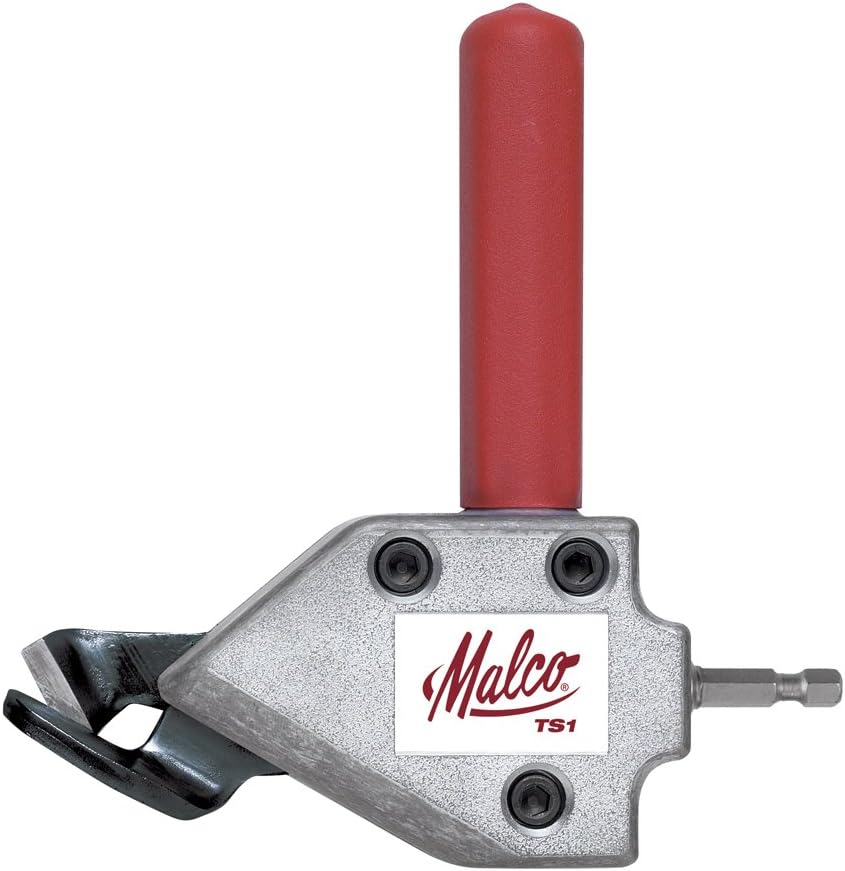

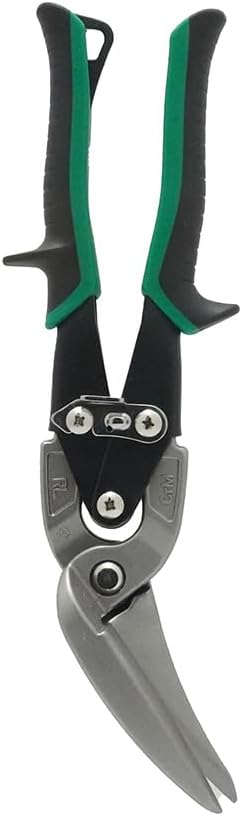


As an Amazon Associate, TestTalkHQ earns from qualifying purchases.
Gauge numbers originated with wire drawing — each pass through a die reduced the wire diameter by a step, and more passes meant a higher number and thinner wire. Sheet metal adopted the same convention. The gauge system is not linear — the thickness difference between consecutive gauges is not constant.
This is why fabricators increasingly prefer to spec sheet metal by decimal thickness rather than gauge number, especially in precision work. Always verify with your material supplier before ordering.
In a fabrication shop, gauge numbers are convenient shorthand everyone understands. On a drawing or purchase order, decimal thickness is always more precise. If you're calculating bend allowance, flat pattern length, or cut settings for a plasma cutter, always convert to decimal first — your calculator needs a real number, not a gauge.
Run your numbers with our Metal Gauge to Thickness Converter, Sheet Metal Bend Allowance Calculator, Press Brake Tonnage Calculator, Bend Radius Calculator, and Plasma Cutting Calculator once you have the thickness dialed in.
After you convert gauge to thickness, flat-pattern method matters: Bend Allowance vs Bend Deduction — Which to Use. If formed parts still miss print, diagnose with Sheet Metal Bending Troubleshooting.
Gauge numbers come from the wire drawing process. Each drawing pass pulled wire through a die, reducing its diameter. More passes meant a thinner final product — and a higher gauge number was assigned to track how many reductions had been made.
When sheet metal adopted the same numbering system, the convention stuck even though it feels counterintuitive to newcomers. Higher gauge always means thinner material, regardless of whether you're working with steel, galvanized, or stainless.
Commercial HVAC ductwork typically runs 22–26 gauge galvanized steel. Residential systems are often 26–28 gauge. Round duct tends to use lighter gauge than rectangular duct because the curved shape provides structural rigidity without as much metal.
When ordering duct stock, confirm whether your supplier quotes base metal gauge or coated thickness — galvanized values in the chart above include the zinc layer and will read slightly thicker than bare mild steel at the same gauge number.
For precision fabrication, CNC work, laser cutting, or any job going to a machine shop, always specify decimal thickness on the drawing. Gauge is workshop shorthand — it has no place on a formal purchase order where tolerances matter.
Machine tools, bend calculators, and plasma cut charts all work in decimal inches or millimeters. Convert at the quoting stage and you eliminate the most common source of material mix-ups on the shop floor.
A 14-gauge aluminum sheet (0.064 in) is thinner than a 14-gauge steel sheet (0.075 in). Aluminum uses the Brown & Sharpe AWG scale; steel uses Manufacturers Standard Gauge. Same number, different standards — always confirm the material before assuming thickness.
If a drawing says "14 ga" without specifying the alloy, stop and clarify. Mixing steel and aluminum gauge tables is one of the fastest ways to order the wrong stock for a job.
For developed cone, frustum, and lobster-back templates (printable PDF), use the Cone / Transition Flat-Pattern Generator, the usage guide, troubleshooting, and seam allowance by joining method.