You’re standing in the welding supply aisle staring at spools of wire, and the choice between solid wire and flux-core feels like it matters more than it should. It does. Pick the wrong wire type and you’ll fight spatter, porosity, and weak welds all day. Pick the right one and your welds flow smooth, your cleanup is minimal, and your projects actually get done.
I’ve burned through hundreds of pounds of both wire types over 10 years in the shop. Solid wire when I need clean, precise welds indoors. Flux-core when I’m welding outside in the wind or dealing with rusty, dirty metal. Each has its place, and knowing which to use when saves time, money, and a lot of frustration. This guide breaks down exactly when to use solid wire, when to grab flux-core, and how to set up your machine for each.
By the end of this article, you’ll know the real differences between these wire types, how much each costs to run, what settings work best, and which one actually makes sense for your specific welding situation. Let’s cut through the confusion and get you welding with the right wire.
Jump to what you need
Fundamental Differences Between Solid Wire and Flux-Core
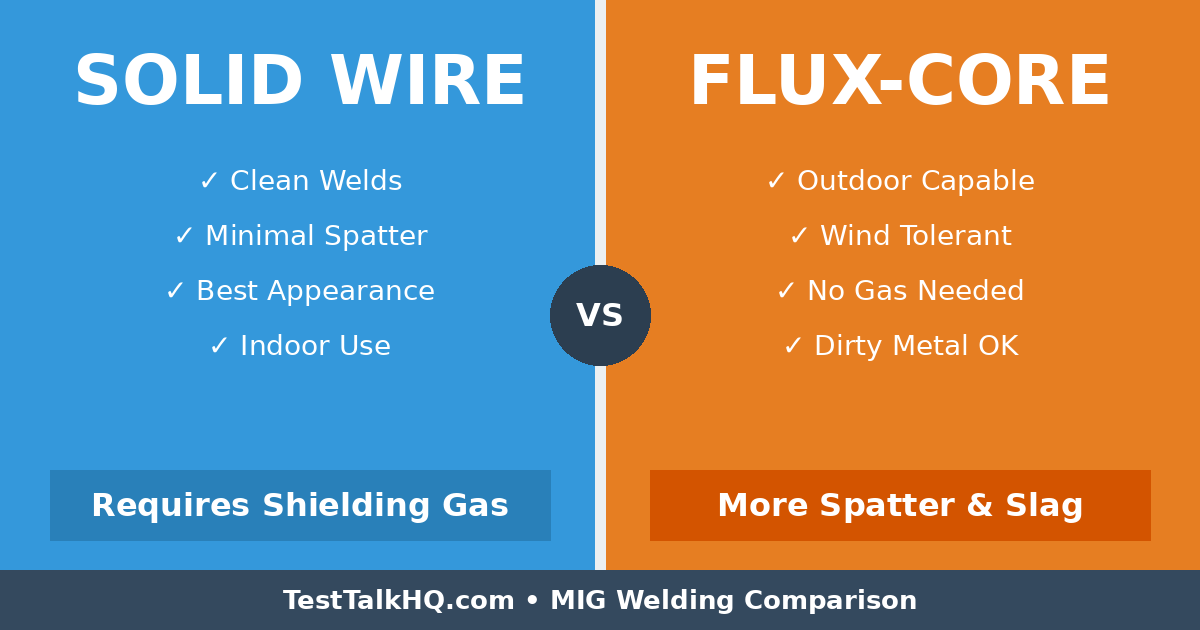
Solid wire and flux-core wire look similar on the spool, but they work completely differently when you pull the trigger. Solid wire is exactly what it sounds like—a solid metal electrode with no flux inside. It requires an external shielding gas (usually 75% argon, 25% CO2) to protect the weld pool from atmospheric contamination. Flux-core wire has a tubular design with flux powder inside that creates its own shielding gas when it burns.
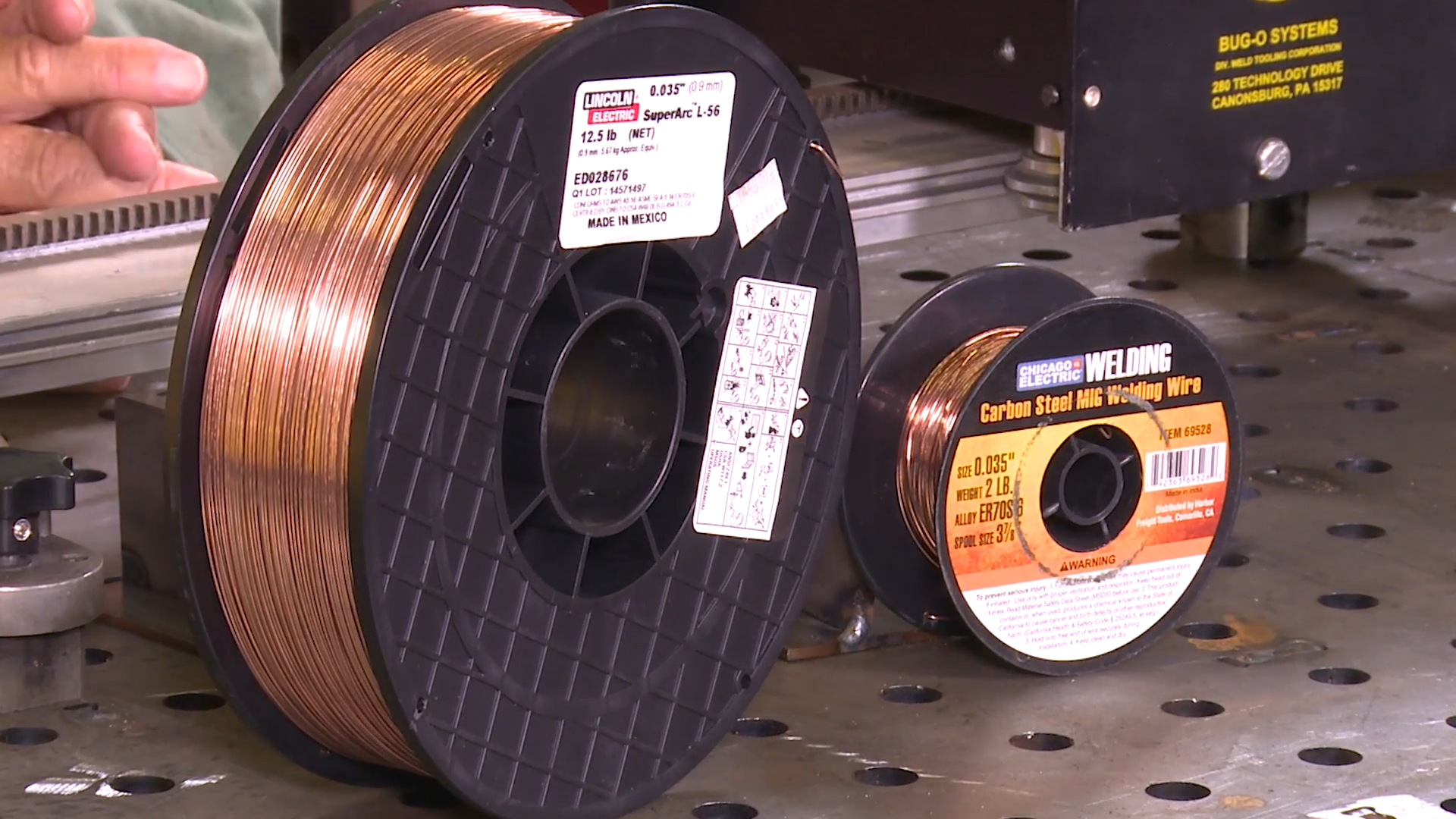
Solid wire produces cleaner welds with minimal spatter. The external shielding gas provides precise control over the weld atmosphere, resulting in consistent penetration and smooth bead appearance. Solid wire works best on clean metal and requires proper gas flow—typically 15-25 cubic feet per hour (CFH) depending on your amperage and wind conditions. Calculate your optimal gas flow with our Shielding Gas Flow Rate Calculator.
Flux-core wire generates its own shielding through the flux inside the wire. When the flux burns, it creates a gas cloud and a slag layer that protect the weld pool. This self-shielding capability means you can weld outdoors in wind up to 15-20 mph where solid wire would fail. The trade-off is more spatter, slag that must be chipped off, and rougher weld appearance.
There are two types of flux-core wire: self-shielded and gas-shielded. Self-shielded flux-core (like E71T-11) requires no external gas. Gas-shielded flux-core (like E71T-1) uses both internal flux and external CO2 gas for even better weld quality. Most DIY welders use self-shielded flux-core when they want the portability and outdoor capability.
| Feature | Solid Wire | Flux-Core Wire |
|---|---|---|
| Shielding Method | External gas required | Self-shielding or gas-shielded |
| Weld Appearance | Clean, smooth beads | Rougher, requires slag removal |
| Spatter Level | Minimal (5-10%) | Heavy (15-30%) |
| Wind Tolerance | Poor (5 mph max) | Excellent (15-20 mph) |
| Metal Preparation | Must be clean | Tolerates rust, paint, dirt |
The wire feeding mechanism works the same for both types, but flux-core typically runs DC electrode negative (DCEN) polarity while solid wire uses DC electrode positive (DCEP). Switching between wire types means changing your polarity setting and adjusting your wire feed speed and voltage. More on that in the settings section.
Cost Comparison: Which Wire Type Saves Money
Flux-core wire costs 50-100% more per pound than solid wire, but the total cost picture is more complex. A 10-pound spool of .035″ solid ER70S-6 wire runs $25-35. The same size spool of .035″ E71T-11 flux-core costs $45-65. That’s a significant price gap, but solid wire requires shielding gas which adds $8-15 per hour of welding depending on your gas supplier and cylinder rental fees.
Let’s break down the real costs for a typical project: welding 100 feet of 1/8″ mild steel at 18 volts and 250 inches per minute wire feed speed. Use our Electrode Wire Consumption Calculator to see exactly how much wire you’ll burn.
| Cost Factor | Solid Wire | Flux-Core Wire |
|---|---|---|
| Wire Cost (per lb) | $2.50-3.50 | $4.50-6.50 |
| Shielding Gas (per hour) | $8-15 | $0 (self-shielded) |
| Wire Consumed (100 ft weld) | 2.5 lbs | 2.8 lbs (less efficient) |
| Gas Consumed (100 ft weld) | 15-20 cubic feet | $0 |
| Total Cost (100 ft weld) | $15-25 | $12-18 |
For short-term projects or occasional welding, flux-core can be cheaper because you avoid gas cylinder rental fees ($60-120 per year) and initial regulator purchase ($40-80). If you’re welding 20+ hours per month, solid wire with a gas cylinder becomes more economical because the per-foot welding cost is lower once you’ve absorbed the equipment costs.
Cleanup time affects the cost equation too. Solid wire welds need minimal cleanup—maybe 30 seconds per foot to wire brush. Flux-core requires chipping slag (1-2 minutes per foot) and grinding spatter (another 1-2 minutes per foot). At $50/hour shop rate, that cleanup time adds $2-4 per foot of weld. For production work or customer projects, solid wire’s cleaner output can save significant labor costs.
The break-even point for most welders happens around 30-40 hours of annual welding. Below that, flux-core’s upfront simplicity wins. Above that, solid wire’s lower consumable and cleanup costs make it the better value. Calculate your specific costs with our Welding Cost Calculator to see which wire type makes financial sense for your situation.
Shielding Gas Requirements and Costs
Solid wire absolutely requires shielding gas—there’s no way around it. The standard mix for mild steel is C25 (75% argon, 25% CO2), though straight CO2 works for thicker material where bead appearance doesn’t matter. A 125 cubic foot cylinder of C25 costs $150-250 to buy or $60-120 annually to rent, plus $25-40 for refills. That cylinder lasts 6-8 hours of continuous welding at 20 CFH flow rate.
Gas flow rate matters more than most welders realize. Too little flow (under 15 CFH) and you get porosity from atmospheric contamination. Too much flow (over 30 CFH) creates turbulence that actually pulls air into the weld pool. The sweet spot for most MIG welding is 18-22 CFH for indoor work, 25-30 CFH if you have any air movement. Wind above 5 mph makes solid wire nearly impossible to use effectively.
| Condition | Recommended Gas Flow | Wire Type |
|---|---|---|
| Indoor, no drafts | 15-20 CFH | Solid wire ideal |
| Indoor, some air movement | 20-25 CFH | Solid wire works |
| Outdoor, calm (under 5 mph) | 25-30 CFH | Solid wire marginal |
| Outdoor, breezy (5-15 mph) | Not effective | Switch to flux-core |
| Outdoor, windy (15+ mph) | Impossible | Flux-core only option |
Self-shielded flux-core eliminates the gas requirement entirely. The flux inside the wire generates CO2 and other shielding gases when it burns, creating its own protective atmosphere. This makes flux-core perfect for field work, farm repairs, outdoor construction, and anywhere hauling a gas cylinder is impractical. You lose some weld quality and cleanliness, but you gain portability and wind tolerance.
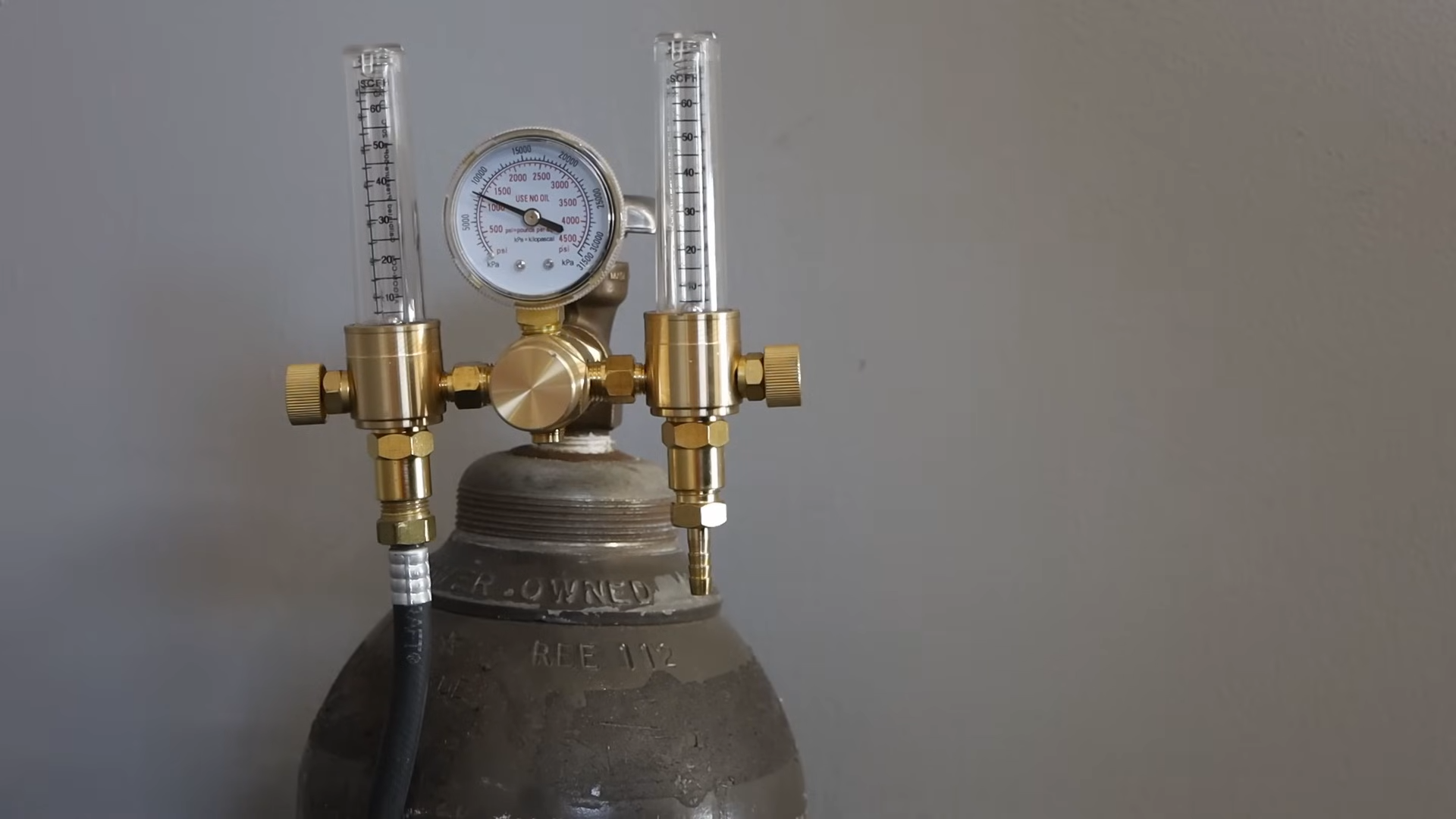
Gas-shielded flux-core wire (E71T-1) uses both internal flux and external CO2 or C25 gas. This hybrid approach delivers better penetration than self-shielded flux-core with less spatter than pure solid wire. It’s common in structural welding and production shops where weld quality matters but conditions aren’t pristine. Gas-shielded flux-core costs about the same as self-shielded but requires the gas cylinder, so it’s really only worth it for high-deposition welding where the productivity gains justify the added complexity.
The ongoing gas costs add up fast. At $40 per 125 cubic foot refill and 20 CFH flow rate, you’re spending about $6.40 per hour just on shielding gas. For a hobbyist welding 2-3 hours per month, that’s manageable. For a fabricator running production work 160 hours per month, that’s $1,024 monthly in gas costs alone. This is why production shops carefully optimize their gas mixtures and flow rates—small percentage improvements save thousands annually.
Weld Quality and Appearance Comparison
Solid wire produces cleaner, prettier welds. Period. The external shielding gas provides consistent protection, resulting in smooth beads with minimal spatter and no slag. A properly set solid wire weld looks professional straight off the gun—just a quick wire brush and you’re done. The weld pool is visible and controllable, making it easier to watch your penetration and adjust your technique in real time.
Flux-core welds look rougher. The flux creates a slag layer that must be chipped off after welding, revealing a bead that’s typically more textured and irregular than solid wire. Spatter levels are 2-3x higher with flux-core, covering the base metal around the weld with tiny metal beads that require grinding or chipping. If appearance matters—automotive work, visible welds, customer-facing projects—solid wire is the clear winner.
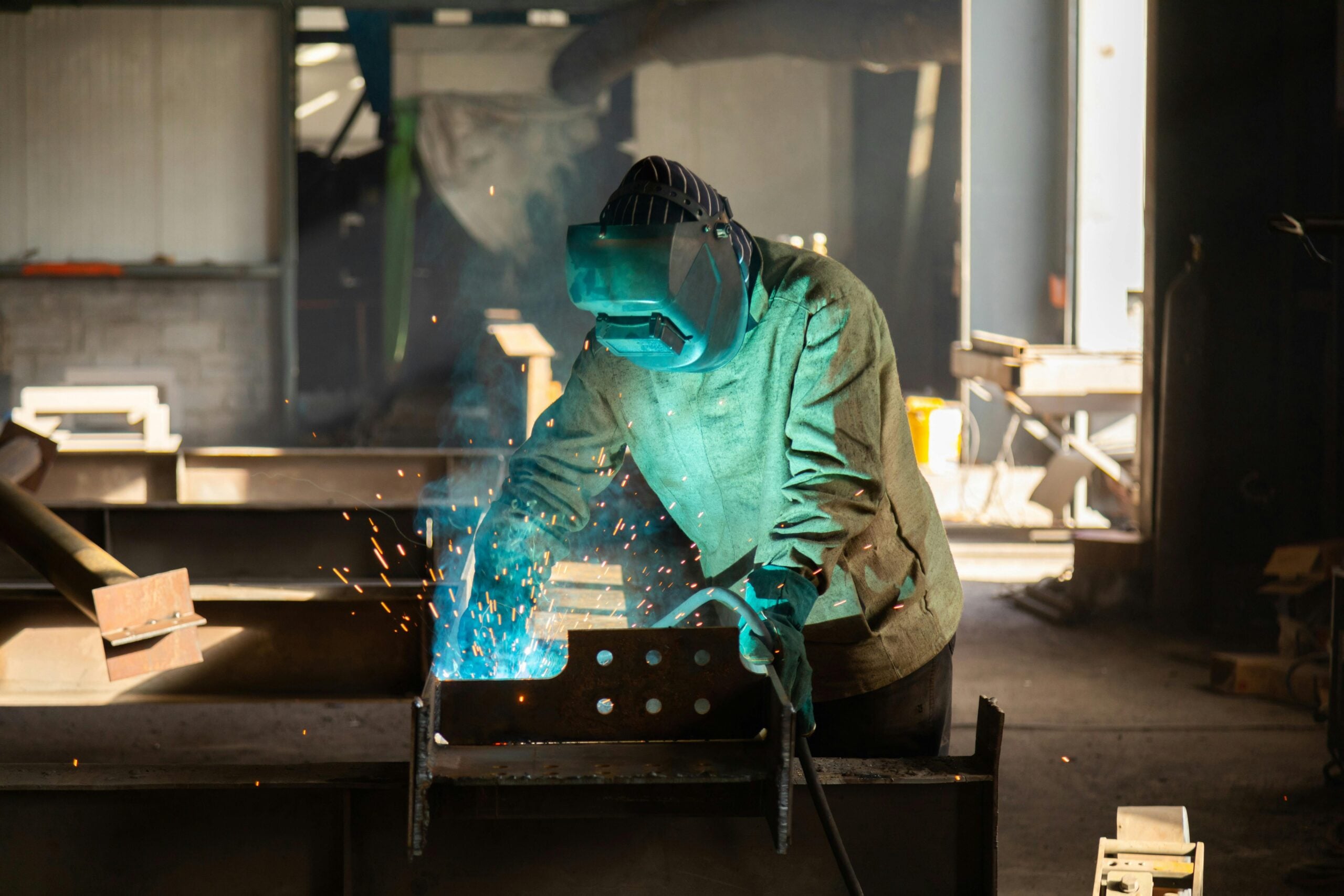
But weld quality goes deeper than appearance. Solid wire excels on clean metal where you can achieve full penetration with minimal heat input. The precise gas coverage allows for lower amperage settings while maintaining good fusion, reducing distortion on thin material. Flux-core requires more heat to burn the flux properly, which can cause warping on sheet metal under 14 gauge.
Penetration characteristics differ significantly. Solid wire with spray transfer (above 200 amps) provides deep, narrow penetration ideal for thick material and structural welds. Flux-core penetration is broader and shallower, which works well for lap joints and fillet welds but can leave lack-of-fusion defects on thick butt joints if your settings aren’t dialed in. Use our MIG Welding Calculator to determine optimal settings for both wire types.
| Quality Factor | Solid Wire | Flux-Core Wire |
|---|---|---|
| Visual Appearance | Excellent – smooth beads | Fair – rough, slag-covered |
| Spatter Amount | 5-10% of wire weight | 15-30% of wire weight |
| Porosity Risk | Low (with proper gas) | Moderate (flux quality dependent) |
| Tensile Strength | 70,000 PSI (ER70S-6) | 70,000 PSI (E71T-11) |
| X-Ray Quality | Excellent | Good (more inclusions possible) |
For code welding and structural applications, solid wire generally produces more consistent results. The controlled atmosphere reduces porosity and slag inclusions, making it easier to pass X-ray and ultrasonic testing. Flux-core can meet structural codes (AWS D1.1 allows certain flux-core wires), but it requires more attention to technique and may need multiple passes where solid wire would do it in one.
Don’t dismiss flux-core’s quality entirely though. On dirty, rusty, or painted metal, flux-core often produces stronger welds than solid wire because the aggressive flux action burns through contamination. In these real-world conditions, flux-core’s “dirty” characteristics become an advantage. Solid wire on rusty metal produces porous, weak welds no matter how good your technique—the contamination compromises the shielding gas effectiveness.
Settings Guide for Solid Wire vs Flux-Core
Voltage and wire feed speed settings differ significantly between solid wire and flux-core. Solid wire typically runs 1-2 volts lower than flux-core for the same material thickness because it doesn’t need to burn flux. Flux-core requires extra heat to properly consume the flux and create adequate shielding, so you’ll bump voltage up 10-15% when switching from solid wire to flux-core on the same thickness material.
Here’s a practical settings comparison for common thicknesses using .035″ wire diameter. These are starting points—adjust based on your specific machine, wire brand, and welding position. For complete settings guidance, check our MIG Welding Settings Chart.
| Material Thickness | Solid Wire Settings | Flux-Core Settings |
|---|---|---|
| 16 ga (0.060″) | 14-16V, 150-200 IPM | 16-18V, 180-220 IPM |
| 14 ga (0.075″) | 15-17V, 200-250 IPM | 17-19V, 220-270 IPM |
| 1/8″ (0.125″) | 17-19V, 250-300 IPM | 19-21V, 280-330 IPM |
| 3/16″ (0.1875″) | 19-21V, 300-350 IPM | 21-23V, 330-380 IPM |
| 1/4″ (0.250″) | 21-23V, 350-400 IPM | 23-25V, 380-430 IPM |
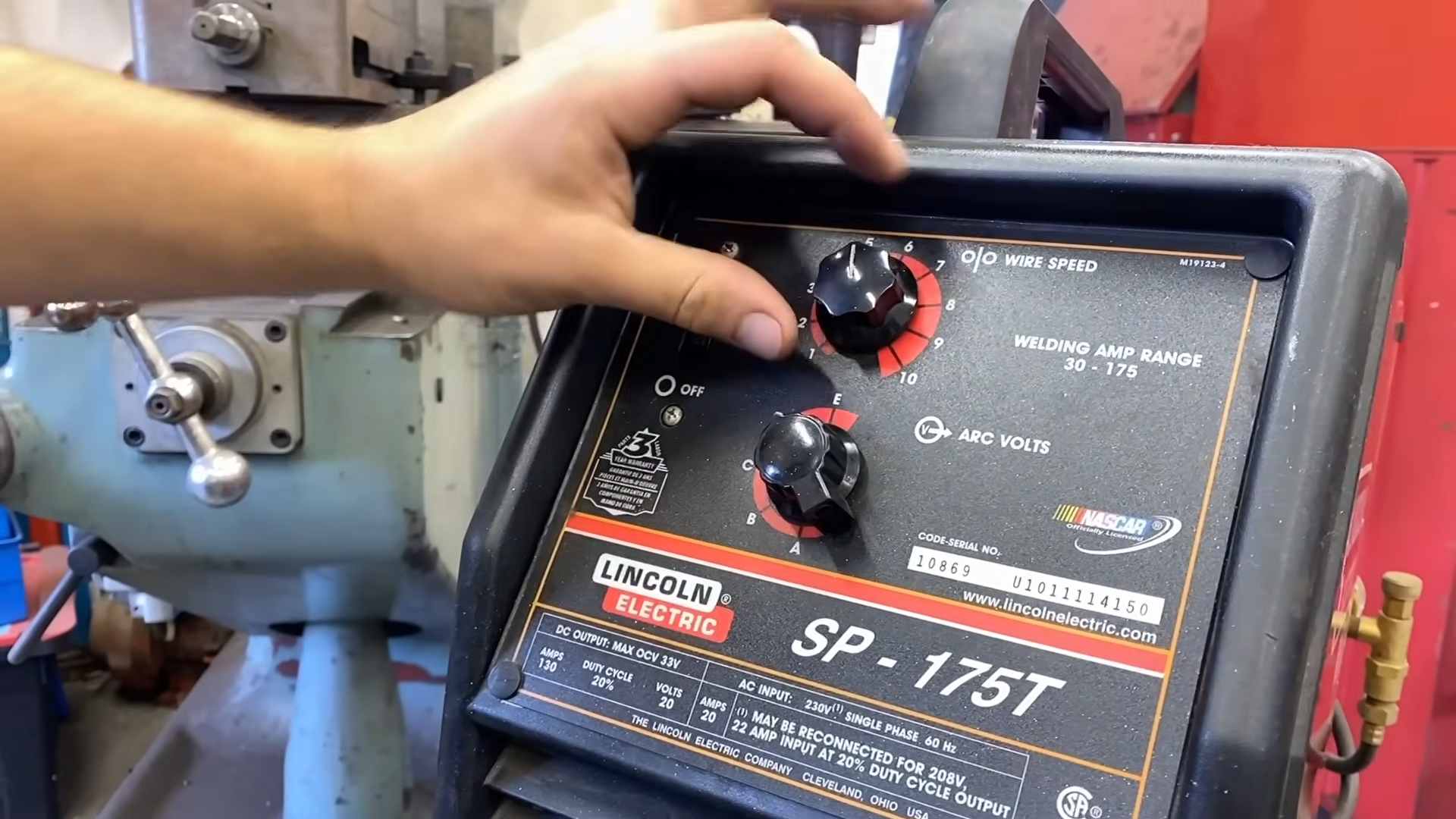
Polarity is critical and easy to get wrong. Solid wire runs DC electrode positive (DCEP or reverse polarity). Flux-core runs DC electrode negative (DCEN or straight polarity). Get this backwards and your welds will spatter violently and look terrible. Most modern MIG machines have a polarity switch near the wire drive—flip it when changing wire types. Some machines require you to swap the welding cables at the terminals inside the machine.
Contact tip size matters differently for each wire type. Solid wire runs cooler and uses a contact tip that’s 0.010-0.015″ larger than the wire diameter. For .035″ solid wire, use a .045″ tip. Flux-core runs hotter due to the flux burning, so use a tip that’s 0.015-0.020″ larger than wire diameter. For .035″ flux-core, use a .050-.055″ tip. Using too tight a tip causes wire feeding problems and tip burnback.
Stick-out (electrode extension) affects both wire types but more dramatically with flux-core. Solid wire works best with 3/8-1/2″ stick-out. Flux-core prefers longer stick-out, 3/4-1″ or more, because the extended electrode preheats from electrical resistance, helping the flux burn completely. Too short a stick-out on flux-core causes excessive spatter and incomplete flux consumption.
Travel speed and angle work similarly for both wires, but flux-core tolerates faster travel better than solid wire. You can push flux-core at 15-20 inches per minute while maintaining penetration, while solid wire gets cold and ropey above 12-15 IPM. The drag angle should be 10-15 degrees for both wires when welding flat or horizontal positions. Vertical up welding works better with a slight push angle (5-10 degrees) for both wire types.
Best Applications for Each Wire Type
Solid wire dominates automotive work, sheet metal fabrication, and any application where weld appearance matters. The clean beads and minimal cleanup make it ideal for visible welds on car bodies, motorcycle frames, aluminum furniture, and decorative metalwork. If customers see the final product or if the part gets powder coated without extensive grinding, solid wire is your go-to choice.
Flux-core excels in outdoor construction, farm repairs, maintenance welding, and structural applications where strength matters more than appearance. Welding a gate in the field? Flux-core. Repairing a trailer hitch at the job site? Flux-core. Building a roll cage where every weld gets painted? Solid wire gives you better results with less cleanup time.
| Application | Recommended Wire | Reason |
|---|---|---|
| Automotive bodywork | Solid wire | Clean welds, minimal warping |
| Roll cage fabrication | Solid wire | Consistent penetration, clean beads |
| Farm equipment repair | Flux-core | Works on dirty metal, outdoor use |
| Outdoor construction | Flux-core | Wind tolerance, no gas required |
| Structural steel (indoor) | Solid wire | Code compliance, X-ray quality |
| Structural steel (outdoor) | Flux-core | Weather resistance, portability |
Thickness capability differs between wire types. Solid wire handles thin material (down to 24 gauge with proper technique) better than flux-core. The lower heat input and precise control let you weld sheet metal without blowing through. Flux-core struggles below 16 gauge because the flux requires significant heat to burn properly, often causing warping or burn-through on thin stock.

For thick material over 3/8″, flux-core can actually outperform solid wire in single-pass deposition. The higher amperage capability and aggressive arc force allow flux-core to achieve better penetration on heavy plate, especially in the vertical and overhead positions. Production shops welding structural steel often use flux-core for this reason—higher deposition rates mean faster welding and lower labor costs per foot of weld.
Maintenance and repair work often favors flux-core because real-world conditions are rarely ideal. That equipment you’re fixing has paint, rust, oil, and dirt. Flux-core burns through contamination where solid wire produces porous, weak welds. The extra cleanup time with flux-core (chipping slag, grinding spatter) is still faster than thoroughly cleaning metal to bare, shiny steel required for quality solid wire welds.
Outdoor vs Indoor Welding Performance
Wind is solid wire’s biggest enemy. Above 5 mph wind speed, the shielding gas blows away from the weld pool before it can protect the molten metal. The result is porosity—tiny holes in the weld from atmospheric contamination. At 10 mph wind, solid wire becomes nearly unusable even with increased gas flow rates. At 15+ mph, forget it—you need flux-core or stick welding.
I learned this the hard way welding fence posts on a breezy day. Set up with solid wire and C25 gas, cranked the flow rate to 30 CFH, and still got porous welds that looked like Swiss cheese when I ground into them. Switched to .035″ flux-core, same 18 volts, and the welds came out solid despite gusts hitting 20 mph. The flux creates a dense smoke that shields the weld even when air is moving rapidly.
| Wind Speed | Solid Wire Performance | Flux-Core Performance |
|---|---|---|
| 0-3 mph (calm) | Excellent | Excellent |
| 3-5 mph (light breeze) | Good (increase gas flow) | Excellent |
| 5-10 mph (moderate wind) | Poor (porosity likely) | Good |
| 10-15 mph (strong wind) | Fails (severe porosity) | Fair (some porosity possible) |
| 15+ mph (very windy) | Unusable | Marginal (switch to stick) |
Indoor welding strongly favors solid wire unless you’re dealing with contaminated metal. The controlled environment lets you use optimal gas flow rates without worrying about drafts. Solid wire’s cleaner operation means less smoke and fumes—important in enclosed shops where ventilation is limited. Flux-core produces significantly more fumes from the burning flux, requiring better exhaust systems or outdoor welding areas.
Temperature affects both wire types but in different ways. Cold weather below 40°F can cause issues with gas-shielded processes as the regulator and gas flow behavior change. Flux-core works fine in cold conditions because there’s no gas pressure to worry about. Hot weather above 90°F increases spatter with both wires due to changes in arc characteristics, but flux-core spatter gets worse faster because the flux melts more readily in heat.
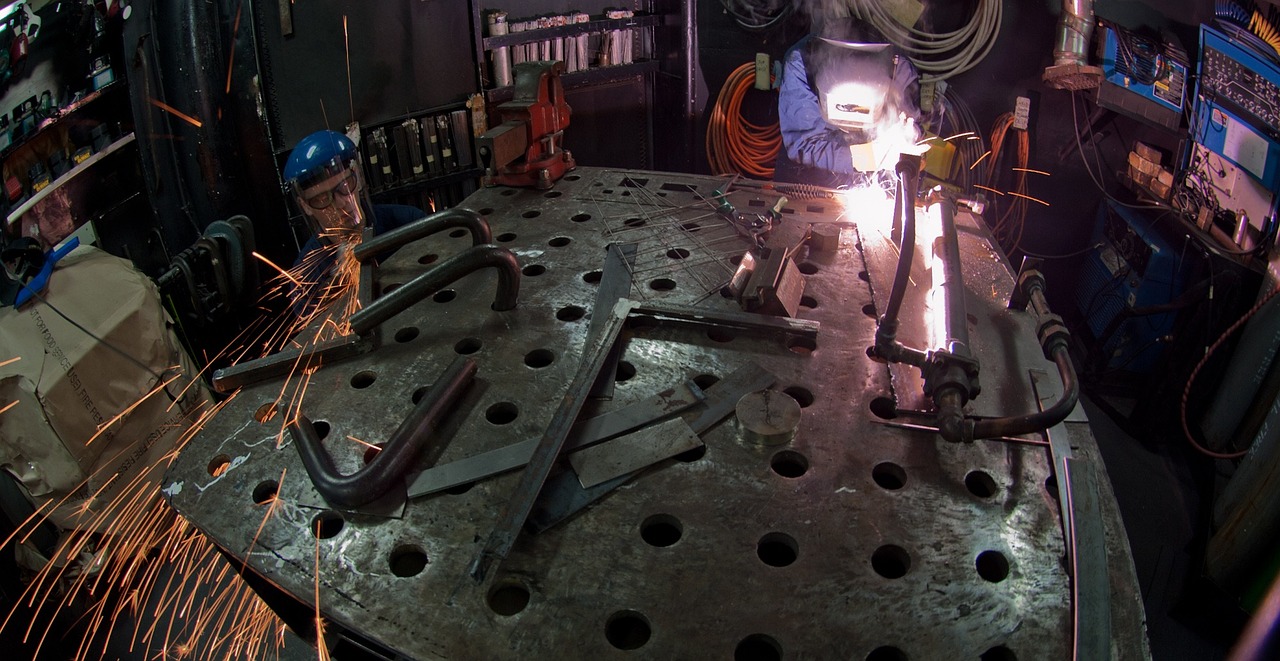
Portability matters more than welders often consider. Solid wire requires hauling a gas cylinder, regulator, and making sure you don’t run out of gas mid-project. Flux-core is just the machine, ground clamp, and gun—you can throw it in a truck and weld anywhere with power. For mobile welding, service calls, or farm work, flux-core’s simplicity wins even if the welds aren’t quite as pretty.
Metal Preparation Requirements
Solid wire demands clean metal. Rust, mill scale, paint, oil, or galvanizing all cause problems with solid wire welding. The shielding gas can’t protect the weld pool if contamination is creating smoke and gas inside the puddle itself. For quality solid wire welds, you need to grind or wire brush metal down to bare, shiny steel. This prep time adds up—figure 2-5 minutes per foot of weld depending on contamination level.
Flux-core tolerates dirt and contamination much better. The aggressive flux action burns through light rust, mill scale, and even thin paint layers. This doesn’t mean you can weld over thick rust or heavy paint—that still causes porosity—but flux-core lets you get away with surface contamination that would ruin solid wire welds. Wire brush the worst stuff off and flux-core will usually handle the rest.
| Surface Condition | Solid Wire Prep Required | Flux-Core Prep Required |
|---|---|---|
| Clean, bare steel | None (ideal) | None (ideal) |
| Light surface rust | Grind to bare metal | Wire brush only |
| Heavy rust/scale | Grind thoroughly | Wire brush or grind |
| Painted surface | Remove all paint | Remove thick paint only |
| Oily/greasy metal | Degrease completely | Wipe clean, flux helps |
| Galvanized coating | Grind off coating | Flux burns through (toxic fumes!) |
Real-world example: repairing a rusty trailer frame. With solid wire, you’d spend 30-45 minutes grinding rust off a 6-foot section to expose clean metal. With flux-core, 5-10 minutes of wire brushing gets you ready to weld. The flux-core welds might look rougher and produce more spatter, but the total project time is shorter because you’re not grinding for an hour before you even strike an arc.
Oil contamination affects both wires but differently. Solid wire on oily metal produces severe porosity as the oil smoke compromises the shielding gas. You must degrease with solvent and wipe completely dry. Flux-core can handle light oil—the flux burns it away—but heavy grease still causes problems. A quick wipe with acetone or brake cleaner usually suffices for flux-core where solid wire needs thorough degreasing.

Galvanized metal deserves special mention. Both solid wire and flux-core produce toxic zinc oxide fumes when welding galvanized steel. The coating must be ground off in the weld area for both wire types. Never weld galvanized indoors without excellent ventilation—the fumes can cause metal fume fever, a flu-like illness. If you must weld galvanized regularly, consider stick welding with E6010 or E6011 rods which handle galvanizing better than either MIG wire type.
Spatter and Cleanup Comparison
Spatter is the shower of tiny metal droplets that land around the weld. Solid wire produces 5-10% spatter as a percentage of wire weight consumed. Flux-core generates 15-30% spatter depending on settings and wire quality. This difference dramatically affects cleanup time and consumable costs. Welding 100 feet of 1/8″ steel with solid wire might produce 2-3 ounces of spatter. The same length with flux-core creates 8-12 ounces of spatter covering a much wider area.
Flux-core also produces slag—a glass-like coating over the weld bead that forms from the burnt flux. This slag must be chipped off with a chipping hammer or slag removal tool before you can inspect the weld or make additional passes. Slag removal adds 1-2 minutes per foot of weld, and you still need to grind the weld if appearance or fit-up for subsequent welds matters. Solid wire welds need only a quick wire brush pass—maybe 10-20 seconds per foot.
| Cleanup Task | Solid Wire Time | Flux-Core Time |
|---|---|---|
| Remove spatter (per foot) | 10-20 seconds | 1-2 minutes |
| Remove slag (per foot) | None required | 1-2 minutes |
| Wire brush weld | 10-20 seconds | 20-40 seconds |
| Total cleanup (per foot) | 20-40 seconds | 2.5-4.5 minutes |
| Cleanup for 100 ft project | 30-65 minutes | 4-7.5 hours |
Anti-spatter spray helps with both wire types but more dramatically with flux-core. A water-based or solvent-based spray applied to the base metal before welding prevents spatter from sticking. Spatter still forms but brushes off easily instead of requiring grinding. This cuts flux-core cleanup time by 40-60%, bringing it closer to solid wire levels. The spray costs $8-15 per can and covers 50-100 square feet depending on application thickness.
For production work where time is money, solid wire’s cleanup advantage compounds quickly. At $50/hour shop rate, the 4-hour cleanup difference on a 100-foot project translates to $200 in labor. Even though flux-core wire might save $5-10 in consumable costs, you lose $200 in cleanup labor. This is why professional fabrication shops use solid wire indoors despite the gas costs—the total job cost is lower.
Nozzle cleaning differs between wire types too. Solid wire guns need occasional nozzle cleaning to remove spatter buildup, maybe every 2-4 hours of welding. Flux-core guns require cleaning every 30-60 minutes because the heavy spatter clogs the nozzle quickly. A clogged nozzle disrupts gas flow (on gas-shielded flux-core) and makes the gun awkward to position. Keep nozzle gel or anti-spatter dip handy when running flux-core—you’ll need it.
Penetration and Weld Strength
Both solid wire and flux-core meet the same basic strength requirements when properly applied. ER70S-6 solid wire produces welds with 70,000 PSI tensile strength. E71T-11 flux-core wire delivers 71,000 PSI tensile strength. In properly executed welds, the strength difference is negligible—either wire exceeds the 58,000-65,000 PSI strength of the base metal being welded, making the weld stronger than the surrounding material.
Penetration profile differs between wire types. Solid wire with spray transfer (above 200 amps) creates deep, narrow penetration that’s ideal for thick butt joints and full-penetration welds on structural steel. The concentrated arc force and controlled heat input drive deep into the base metal. Flux-core penetration is broader and somewhat shallower—better for fillet welds and lap joints where you want fusion along a wider area rather than deep into thick material.
| Weld Characteristic | Solid Wire | Flux-Core Wire |
|---|---|---|
| Tensile Strength | 70,000 PSI (ER70S-6) | 71,000 PSI (E71T-11) |
| Penetration Profile | Deep and narrow | Broad and moderate |
| Deposition Rate | 3-5 lbs/hour at 200A | 4-7 lbs/hour at 200A |
| Impact Strength (Charpy) | 40-60 ft-lbs at 0°F | 30-50 ft-lbs at 0°F |
| Ductility | Excellent | Good to excellent |
Deposition rate—how much weld metal you can lay down per hour—favors flux-core. At the same amperage, flux-core deposits 20-30% more weld metal per hour than solid wire. This productivity advantage makes flux-core popular for high-volume structural welding where you’re running long beads on heavy plate. The faster deposition comes at the cost of that rougher appearance and cleanup time, but when you’re welding hundreds of feet per day, the time savings matter.
Impact toughness—the weld’s ability to resist cracking under shock loading—slightly favors solid wire. Charpy V-notch testing shows solid wire welds maintain better impact resistance at low temperatures, important for structures in cold climates or applications with dynamic loading. Flux-core impact strength is still good and meets most structural codes, but if you’re welding a bridge in Minnesota or a crane in Alaska, solid wire provides an extra margin of safety.
Crack resistance relates to hydrogen content in the weld. Solid wire produces very low-hydrogen welds when properly shielded, minimizing the risk of delayed cracking in high-strength steels. Flux-core can have higher hydrogen levels depending on flux quality and moisture absorption in storage. For critical applications on high-strength steel or thick sections with high restraint, solid wire offers more consistent low-hydrogen performance. Store flux-core in a dry location and use it within 6-12 months of opening for best results.
Common Problems and Solutions
Porosity is the most common problem with both wire types, but the causes differ. Solid wire porosity usually results from inadequate gas coverage—too low flow rate, wind, gas leaks, or contaminated shielding gas. Check your gas flow rate with a flowmeter, inspect hoses for leaks, and verify your gas supply is pure welding-grade C25 or CO2. Porosity from contamination means you didn’t clean the metal well enough—go back and grind more thoroughly.
Flux-core porosity typically comes from incorrect polarity, wire speed too fast for the voltage, or moisture in the flux. Verify you’re running DCEN (electrode negative) polarity. Reduce wire speed 10-15% if you see porosity—the flux needs time to burn and shield properly. If wire has been exposed to humidity, it may have absorbed moisture into the flux core. Use fresh wire stored in a dry location and the problem usually resolves.
| Problem | Solid Wire Solution | Flux-Core Solution |
|---|---|---|
| Excessive spatter | Reduce wire speed, check gas flow | Lower voltage 1-2V, reduce wire speed |
| Porosity in weld | Increase gas flow, clean metal better | Check polarity, reduce wire speed |
| Wire feeding erratically | Clean liner, check tip size | Use larger tip, clean liner, check polarity |
| Weld too cold/ropy | Increase voltage 1-2V | Increase voltage 2-3V |
| Burn-through on thin metal | Reduce wire speed, lower voltage | Switch to solid wire (better control) |
| Lack of penetration | Increase voltage and wire speed | Increase voltage, slow travel speed |
Wire feeding problems plague flux-core more than solid wire. The tubular construction makes flux-core wire softer and more prone to bird-nesting (tangling in the drive rolls) and liner clogging. Use a drive roll pressure setting that’s firm but not crushing—you should be able to stop the wire with moderate hand pressure. Clean or replace the liner every 20-30 pounds of flux-core wire to prevent buildup that causes erratic feeding.
Excessive spatter with solid wire usually means your wire speed is too fast for the voltage, creating a “stubbing” arc that spatters violently. Reduce wire speed 20-30 IPM or increase voltage 1-2 volts to smooth the arc. With flux-core, excessive spatter often means voltage is too high—drop it 1-2 volts and see if spatter decreases. The flux needs specific heat ranges to burn properly; too hot and it spatters everywhere.
Cold laps and lack of fusion happen when you don’t have enough heat to melt the base metal. Solid wire at low amperage (under 100A) can bridge gaps without fusing to the base metal, creating weak welds that fail in service. Increase voltage and wire speed until you see a small amount of base metal melting and flowing. Flux-core needs even more heat because the flux absorbs energy—don’t be afraid to run flux-core 2-3 volts hotter than feels comfortable with solid wire.
For detailed troubleshooting of specific MIG welding problems, check our Common MIG Welding Problems Guide which covers 15+ issues with specific solutions for both wire types.
Switching Between Wire Types
Changing from solid wire to flux-core (or vice versa) requires more than just swapping spools. You must change polarity, adjust voltage and wire speed, potentially change the contact tip size, and either connect or disconnect your shielding gas. Missing any of these steps results in terrible welds and wasted wire. Follow this checklist every time you switch wire types.
Step 1: Change the wire spool. Remove the old wire, install the new spool, and feed wire through the gun until fresh wire reaches the contact tip. Trim the wire end at a 45-degree angle for easier tip insertion. Make sure the wire unspools smoothly without tangling.
Step 2: Change polarity. For solid wire, set to DCEP (electrode positive / reverse polarity). For flux-core, set to DCEN (electrode negative / straight polarity). On most machines, this is a switch near the drive rolls. On some machines you must swap cables at the terminals—check your owner’s manual for the specific procedure.
| Changeover Step | Switching to Solid Wire | Switching to Flux-Core |
|---|---|---|
| Wire installation | Install ER70S-6 spool | Install E71T-11 spool |
| Polarity setting | DCEP (electrode positive) | DCEN (electrode negative) |
| Contact tip | .045″ for .035″ wire | .050-.055″ for .035″ wire |
| Shielding gas | Connect C25 or CO2 | Disconnect (self-shielded) |
| Voltage adjustment | Reduce 1-2V from flux-core | Increase 1-2V from solid wire |
Step 3: Change contact tip if needed. Flux-core runs hotter and needs a slightly larger tip than solid wire of the same diameter. For .035″ wire, use a .045″ tip with solid wire and a .050-.055″ tip with flux-core. Using the wrong tip size causes wire feeding problems and premature tip wear.
Step 4: Gas connection. When switching to solid wire, connect your gas hose and verify gas flow at 18-22 CFH. When switching to self-shielded flux-core, disconnect the gas or turn off the cylinder valve (leaving the hose connected won’t hurt anything, but why waste gas). Some machines have a gas-enable switch that must be in the correct position.
Step 5: Adjust voltage and wire feed speed for the new wire type. As a general rule, flux-core runs 10-15% higher voltage than solid wire on the same thickness material. Refer to the settings tables earlier in this article or use our MIG Welding Calculator to find optimal starting points for your specific material thickness and wire diameter.
Step 6: Test weld on scrap metal. Don’t trust your first weld on the actual workpiece. Run a test bead on similar thickness scrap to verify penetration, check for porosity, and fine-tune your settings. This test weld saves you from ruining good material because you forgot to flip the polarity switch (ask me how I know this matters).
Frequently Asked Questions
Can I use the same contact tip for solid wire and flux-core?
You can, but you shouldn’t. Solid wire runs cooler and works best with a contact tip that’s 0.010-0.015″ larger than the wire diameter. Flux-core runs hotter due to the flux burning and needs a tip 0.015-0.020″ larger than wire diameter to prevent burnback and feeding issues. For .035″ wire, use a .045″ tip for solid wire and a .050-.055″ tip for flux-core. Using the wrong tip size causes erratic wire feeding, excessive tip wear, and contact tip burnback. Tips cost $3-8 each—keep both sizes on hand and switch when you change wire types for best results.
Why does my flux-core weld have holes in it after I chip the slag off?
Those holes are porosity caused by one of three issues: wrong polarity, wire speed too fast, or moisture in the flux. First, verify you’re running DCEN (electrode negative) polarity—flux-core on DCEP creates severe porosity. Second, reduce your wire feed speed 10-15%. Flux-core needs time for the flux to burn and create proper shielding; too fast and the flux doesn’t completely consume. Third, check if your wire has been exposed to humidity. Flux-core stored in damp conditions absorbs moisture into the flux core, causing hydrogen porosity. Use fresh wire kept in a dry location and the problem usually resolves. If porosity persists, try increasing voltage 1-2 volts to ensure complete flux consumption.
Is flux-core wire stronger than solid wire for structural welding?
No, both wire types produce essentially the same strength when properly applied. ER70S-6 solid wire has 70,000 PSI tensile strength. E71T-11 flux-core has 71,000 PSI tensile strength. Both exceed the 58,000-65,000 PSI strength of mild steel base metal, making the weld stronger than the material being joined. Solid wire typically shows slightly better impact toughness (Charpy V-notch testing) at low temperatures, but flux-core meets AWS D1.1 structural welding code requirements. The real difference is in weld quality consistency—solid wire produces more reliable X-ray-quality welds because the controlled gas shielding reduces porosity and inclusions. For critical structural applications, solid wire offers more consistent results, but both wires are “strong enough” when settings and technique are correct.
How much does shielding gas cost compared to flux-core wire savings?
Shielding gas adds $8-15 per hour to welding costs depending on your gas supplier, flow rate, and cylinder size. A 125 cubic foot cylinder of C25 gas costs $150-250 to buy outright or $60-120 annually to rent, plus $25-40 per refill. At 20 CFH flow rate, that cylinder lasts about 6 hours of welding time, or roughly $6-10 per hour in gas consumption plus prorated cylinder rental. Flux-core wire costs 50-100% more per pound than solid wire ($4.50-6.50 vs $2.50-3.50), but eliminates the gas cost. For light use (under 30 hours annually), flux-core saves money because you avoid cylinder rental and purchase. For regular use (50+ hours annually), solid wire becomes cheaper despite the gas costs because the lower wire cost and dramatically reduced cleanup time (4-6x faster) offset the gas expense.
Can I weld aluminum with flux-core wire?
No, standard flux-core wire is designed for steel only. Aluminum requires different filler metals (ER4043 or ER5356) and either TIG welding or MIG welding with pure argon shielding gas and a spool gun or push-pull system. There is no practical flux-core wire for aluminum welding—the oxide layer and metal properties don’t work with flux-shielding chemistry. If you need to weld aluminum, use solid aluminum wire with 100% argon gas and follow our TIG Welding Aluminum Guide or switch to MIG with the appropriate equipment. Flux-core is strictly for ferrous metals—steel, stainless steel, and some cast irons.
Does flux-core work on galvanized metal?
Flux-core can burn through the zinc coating on galvanized steel, but you absolutely should not weld galvanized without proper ventilation and respiratory protection. The zinc coating vaporizes at welding temperatures, creating toxic zinc oxide fumes that cause metal fume fever—a flu-like illness with fever, chills, nausea, and difficulty breathing. Both solid wire and flux-core produce these toxic fumes when welding galvanized. The proper procedure is to grind off the zinc coating in the weld area (6-8″ on each side of the joint) before welding. If you must weld galvanized regularly, work outdoors or use forced ventilation with fume extraction directly at the arc. Never weld galvanized indoors without professional-grade exhaust systems. Flux-core’s ability to “burn through” the coating doesn’t make it safe—the fumes are still highly toxic.
Why does my solid wire weld look like Swiss cheese when I cut into it?
Internal porosity in solid wire welds comes from contamination or inadequate gas shielding. If the metal surface has rust, oil, paint, or mill scale, those contaminants vaporize during welding and become trapped in the weld pool, creating internal voids even when the surface looks fine. The other cause is insufficient gas coverage—flow rate too low (under 15 CFH), gas leaks in the hose or connections, wind blowing the shielding gas away, or contaminated shielding gas. Check your gas flow with a flowmeter and verify you’re getting 18-25 CFH at the nozzle. Inspect all gas hoses and connections for leaks using soapy water. Most importantly, grind the base metal to bare, shiny steel before welding—solid wire cannot tolerate surface contamination the way flux-core can. If problems persist, try increasing gas flow rate or adding a cup extension to better protect the weld pool from drafts.
Can I use CO2 gas instead of C25 for solid wire?
Yes, but with compromises. Straight CO2 costs less than C25 (75% argon/25% CO2) and works fine for solid wire on thicker material where weld appearance doesn’t matter. CO2 produces deeper penetration but rougher beads with more spatter than C25. The weld strength is equivalent—both gases produce 70,000 PSI tensile strength with ER70S-6 wire. Use CO2 for heavy structural welding, thick plate (1/4″ and up), and applications where the welds get painted or hidden. Use C25 for sheet metal, automotive work, visible welds, and anything requiring smooth bead appearance. The cost difference is typically $5-10 per refill ($20-30 for CO2 vs $25-40 for C25), so the savings are minimal unless you’re burning through multiple cylinders monthly. For best all-around performance, stick with C25.
How long does flux-core wire last in storage?
Unopened flux-core wire in original packaging lasts 2-3 years when stored in a dry location. Once you open the package, the flux can absorb moisture from the air, causing porosity and feeding problems. Use opened flux-core within 6-12 months for best results. If you live in a humid climate, store opened spools in a sealed plastic container with desiccant packs to prevent moisture absorption. You’ll know flux-core has absorbed too much moisture when welds show excessive porosity even with correct settings and technique. Unlike solid wire which essentially lasts forever, flux-core has a definite shelf life. Buy only what you’ll use within a year, and keep it sealed when not in use. Wire that’s been sitting in a damp garage for 18 months will give you nothing but frustration—throw it out and buy fresh wire.
Which wire type is better for vertical welding?
Both solid wire and flux-core work for vertical welding, but they require different techniques. Solid wire vertical-up welding uses a slight weaving motion with 0.035″ wire at 17-19 volts and 280-320 IPM, maintaining a 5-10 degree push angle. The cleaner arc makes it easier to see the puddle and control penetration. Flux-core vertical-up requires 20-22 volts and runs hotter, with the slag helping to support the puddle. The downside is you can’t see the puddle as clearly through the flux smoke, making penetration harder to judge. For learning vertical welding, start with solid wire—the visible puddle lets you develop proper technique faster. For production vertical welding on structural steel, flux-core offers higher deposition rates and better gap tolerance. Vertical-down welding works better with flux-core because the slag runs ahead of the puddle and can cause inclusions. Detailed vertical welding settings are in our Wire Feed Speed Chart Guide.
Do I need different drive rolls for solid wire vs flux-core?
Yes, ideally. Solid wire uses V-groove drive rolls that grip the wire firmly without deforming it. Flux-core wire is softer due to its tubular construction and should use knurled drive rolls that grip without crushing. Using V-groove rolls on flux-core can crush the wire, deforming the flux core and causing erratic feeding and porosity. Many modern welders come with dual-groove drive rolls—V-groove on one side for solid wire, knurled groove on the other for flux-core. Just flip the drive roll around when changing wire types. If your machine has only V-groove rolls, you can run flux-core by reducing drive roll pressure significantly—use just enough tension to feed the wire smoothly. Too much pressure crushes the tubular wire and causes the flux to crack inside, leading to feeding problems and weld defects. Drive rolls cost $15-30 per set and are worth having the correct type for the wire you’re running.
Running flux-core and the arc is failing? Use Flux-Core Welding Troubleshooting for FCAW-specific diagnosis (spatter, wind porosity, soft-wire feed, DCEN polarity, slag trapping).
Conclusion
Solid wire and flux-core wire each excel in specific situations, and picking the right one makes welding easier, faster, and more reliable. Here’s what matters:
1. Use solid wire for clean, precise welds where appearance matters. Automotive work, sheet metal fabrication, visible welds, and indoor production welding all favor solid wire. The cleaner operation, minimal spatter, and smooth beads justify the gas costs and metal preparation requirements.
2. Use flux-core for outdoor work, dirty metal, and portable welding. Farm repairs, field construction, maintenance welding, and anywhere you can’t control conditions demand flux-core’s wind tolerance and contamination resistance. The extra cleanup time is offset by not having to grind metal perfectly clean.
3. Cost depends on usage volume. Under 30 hours annually, flux-core saves money by avoiding gas cylinder rental. Over 50 hours annually, solid wire becomes cheaper due to lower consumable costs and dramatically faster cleanup. Calculate your specific situation with our Welding Cost Calculator.
4. Settings require adjustment when switching wire types. Flux-core runs 10-15% higher voltage than solid wire on the same material. Polarity must be correct—DCEP for solid wire, DCEN for flux-core. Contact tip size, stick-out, and wire feed speed all change between wire types.
5. Metal preparation requirements differ significantly. Solid wire demands clean, bare metal for quality welds. Flux-core tolerates rust, light paint, and surface contamination. This preparation time difference often exceeds the cleanup time difference, especially on real-world projects with less-than-perfect material.
6. Both wire types produce adequate strength for structural welding. 70,000-71,000 PSI tensile strength exceeds mild steel base metal in both cases. Solid wire shows slightly better X-ray quality and impact toughness, but flux-core meets AWS D1.1 structural codes when properly applied.
Keep both wire types on hand if you weld regularly. You’ll reach for solid wire for 80% of indoor work, but that 20% of outdoor or contaminated-metal situations demands flux-core. The $50-75 investment in a spool of each wire type gives you the flexibility to handle whatever welding comes your way. Get your settings dialed in with our MIG Welding Calculator and start welding with confidence, regardless of which wire type the job requires.
Related Tools and Calculators
MIG Welding Resources:
- MIG Welding Calculator – Optimal voltage and wire feed speed settings
- Shielding Gas Flow Rate Calculator – Proper gas flow for your amperage
- Wire Consumption Calculator – Estimate wire usage and costs
- Welding Cost Calculator – Compare solid wire vs flux-core costs
- Duty Cycle Calculator – Calculate weld time and cool down periods
MIG Welding Guides:
- MIG Welding Settings Chart – Complete settings reference
- Wire Feed Speed Chart Guide – Detailed wire speed settings
- Common MIG Welding Problems Guide – Troubleshooting porosity, spatter, and more
- MIG vs TIG vs Stick Welding – Choosing the right welding process
- Welding Wire Size Chart Guide – Selecting wire diameter
Welding
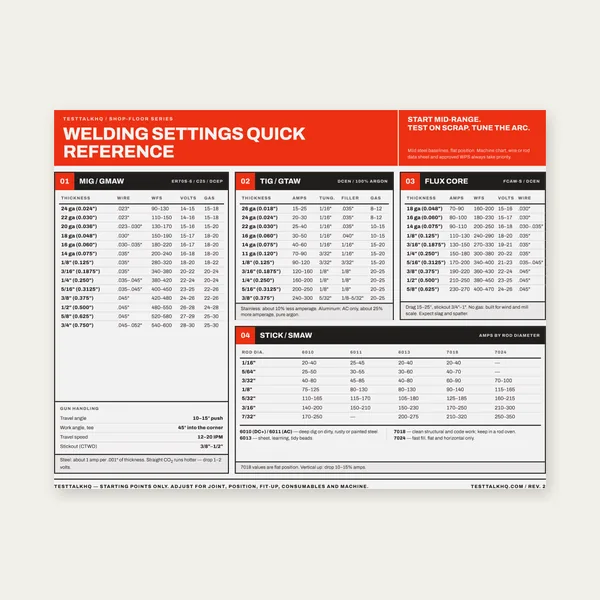
Welding Reference Card
One page. MIG, TIG, stick and flux core settings by thickness.
$3.99
Buy
Complete Welding Settings Guide
19 pages. Four processes, stainless and aluminum, symbols and inspection.
$12.99
Buy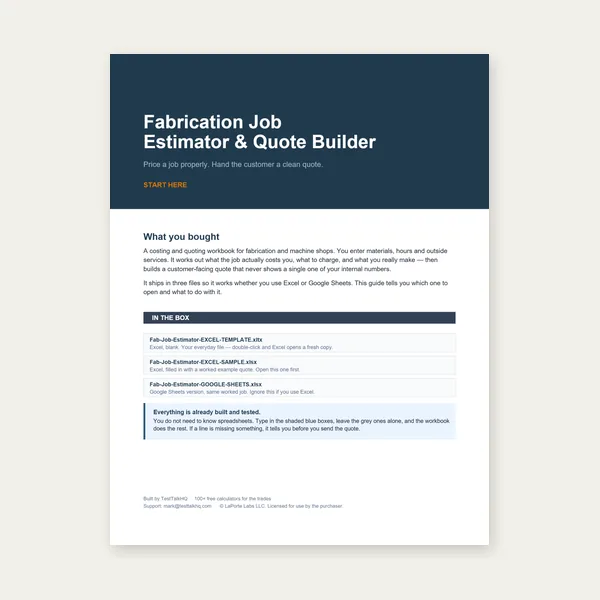
Welding Job Estimator
Price the job, then hand over a quote with no internal numbers.
Excel or Google Sheets. Best on a computer.
$29.00
Buy
Welding Complete Bundle
Card, 19-page guide and the estimator workbook. All six files.
Excel or Google Sheets. Best on a computer.
$34.99
$45.98 if bought separately — save $10.99
BuyCheckout opens in a new tab.