
Fast answer: if your MIG weld looks bad, do this order first – ground, contact tip, clean metal, then settings. Loud pops and BB spatter usually mean voltage/wire mismatch or dirty steel. Porosity usually means gas coverage or contamination. Wire stubbing and bird nesting usually mean feed path problems.
This page keeps the troubleshooting practical: what the defect looks like, likely causes, the first fix to try, and what calculator or guide to use next. Start with the MIG Welding Calculator, then use the Wire Feed Speed Chart Guide, Wire Size Guide, and Gas Flow Calculator to remove guesswork.
Wire Gauge Calculator for Welders
Shielding Gas Flow Rate Calculator
Wire Feed Speed Chart Guide
Welding Wire Size Chart Guide
MIG Welding Problems Quick Answer
Use this chart when the weld looks wrong and you want the first fix fast.
| Problem | What It Usually Means | First Fix | Calculator / Guide To Use |
|---|---|---|---|
| Porosity | Gas coverage, contamination, wind, or stickout issue | Verify gas flow and clean to bright metal | Gas Flow Rate Calculator |
| Excessive spatter | Voltage/wire mismatch, dirty steel, or poor stickout | Reduce voltage 1-2V and clean the joint | MIG Welding Calculator |
| Burn-through | Too much heat, too slow travel, or oversized wire | Drop heat and move faster | Wire Size Guide |
| Cold lap / poor fusion | Not enough heat, bad angle, fast travel, or dirty base | Increase heat and use slight drag angle | MIG Welding Calculator |
| Undercut | Too hot, too fast, or poor torch angle/weave | Reduce heat and slow travel | Wire Feed Speed Guide |
| Wire stubbing | Wire speed too low or tip condition issue | Increase WFS and replace questionable tip | Wire Feed Speed Guide |
| Bird-nesting | Drive tension, liner drag, tip mismatch, spool drag | Reset drive-roll tension and inspect liner | Wire Gauge Calculator for Welders |
| Burn-back | WFS too low, tip damage, stickout too long | Increase WFS and correct stickout | MIG Welding Calculator |
| Worm tracks | Gas contamination or slag/gas escape in bead | Check gas, clean metal, and verify prep | Gas Flow Rate Calculator |
| Tall ropey bead | Too much wire for voltage and slow wet-out | Reduce WFS or raise voltage carefully | Wire Feed Speed Guide |
Need the numbers, not the lecture?
Use the calculators below when you want MIG settings, wire size, gas flow, or wire usage without guessing.
How to Diagnose MIG Problems in 60 Seconds
- Loud pops: voltage/wire mismatch (usually too hot)
- Crackling: contaminated metal
- Stuttering: ground, contact tip, or liner/feed path issue
- Soft globby transfer: too much voltage or poor balance

Porosity
What it looks like
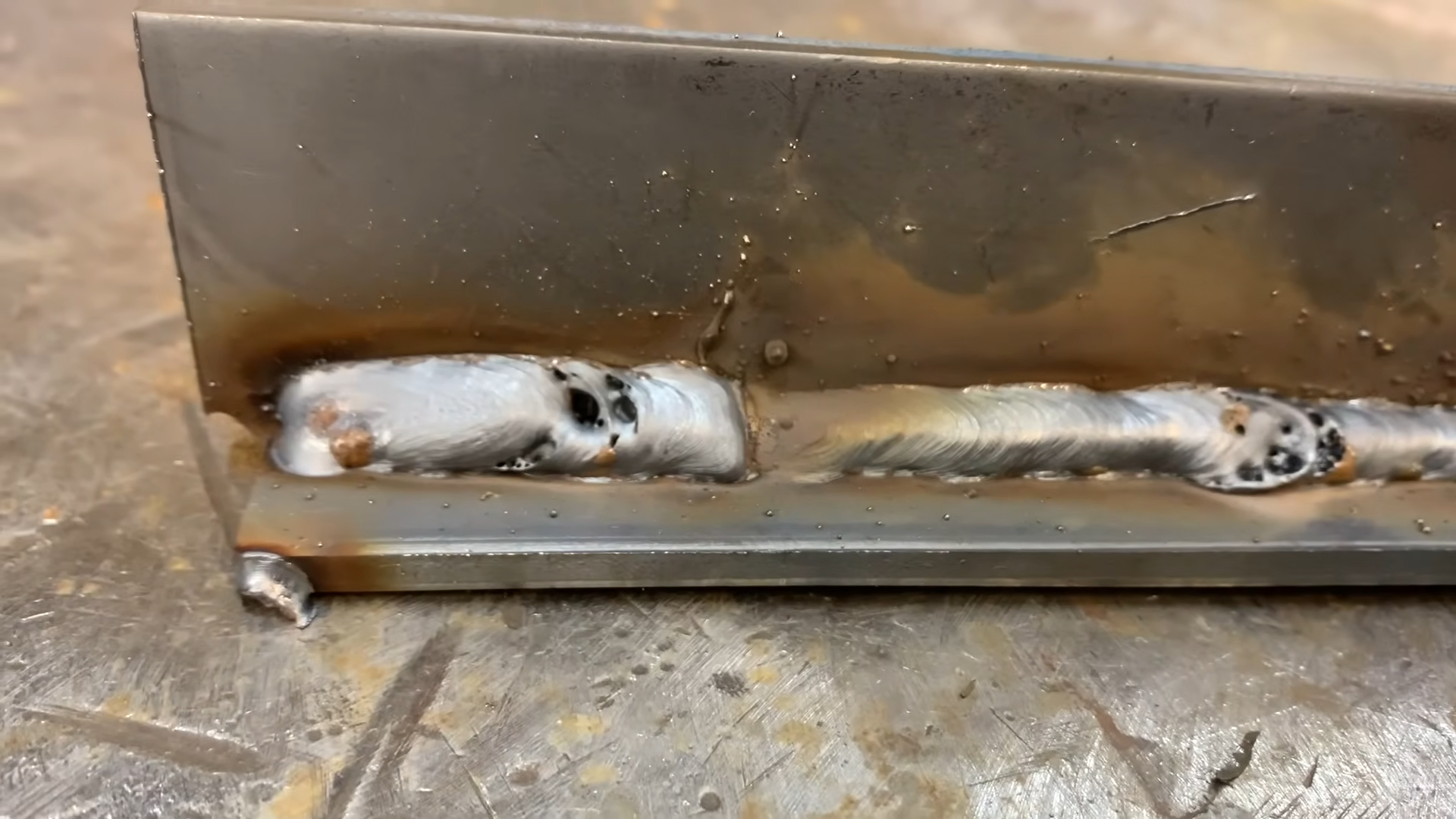
Wormholes, pinholes, or craters in the bead.
Likely causes
No shielding gas, flow too low, wind/drafts, dirty metal, moisture, or excessive stickout.
First things to check
- Open cylinder, verify flow when trigger is pulled.
- Set flow in a sane range before going extreme.
- Clean rust/oil/paint to bright bare metal.
How to fix it
Stabilize gas coverage, fix leaks, shorten stickout, and isolate from wind.
Related calculator / guide: Shielding Gas Flow Rate Calculator
Excessive Spatter
What it looks like
BB-sized metal balls everywhere and harsh popping arc sound.
Likely causes
Voltage too high, dirty steel, wire feed mismatch, long stickout.
First things to check
Reduce voltage in small steps, clean joint prep, verify stickout around 3/8 in to 1/2 in.
How to fix it
Balance voltage and WFS, improve prep, and keep consumables fresh. Anti-spatter helps cleanup but does not fix root cause.
Related calculator / guide: MIG Welding Calculator

Burn-Through
Problem: holes in thin material.
Likely causes: heat too high, slow travel, large wire, poor fit-up gaps.
Related calculator / guide: Welding Wire Size Chart Guide
Cold Lap / Poor Fusion
Problem: weld sits on top and breaks easily.
Likely causes: insufficient heat, fast travel, wrong angle, contamination barrier.
Related calculator / guide: MIG Welding Calculator
Undercut
Problem: groove at the weld toe.
Likely causes: too much heat, fast travel, poor angle, wide weave.
Related calculator / guide: Wire Feed Speed Guide
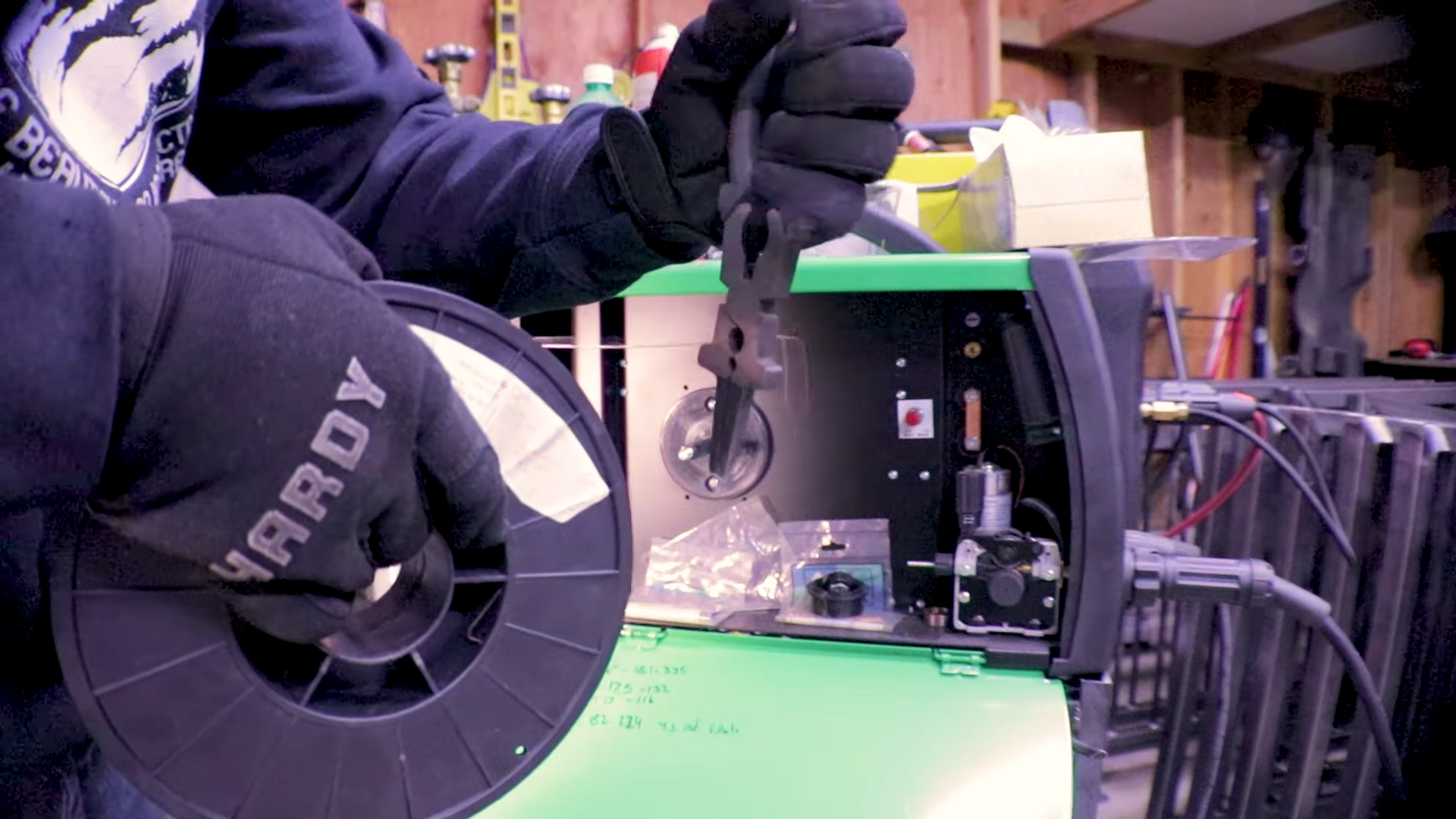
Wire Feed Problems (Stubbing, Bird-Nesting, Erratic Feed)
Likely causes: drive-roll tension wrong, liner drag/kink, tip mismatch, spool brake wrong, worn rolls.
| Wire Feed Symptom | Likely Cause | First Fix |
|---|---|---|
| Wire stubs into puddle | WFS too low or voltage too high | Increase WFS or reduce voltage |
| Bird-nesting at drive rolls | Drive tension/liner/tip drag | Reset tension, inspect liner, verify tip size |
| Stops and starts randomly | Liner restriction or worn tip | Replace questionable consumables |
| Overrun at spool | Spool hub too loose | Increase hub drag slightly |
Related calculator / guide: Electrode/Wire Consumption Calculator
Burn-Back
Problem: wire burns back into the contact tip.
Likely causes: low WFS, high voltage, long stickout, worn/damaged tip.
Bad Bead Shape (Tall, Ropey, or Flat and Cold)
Tall/ropey usually means too much wire for voltage. Flat/cold usually means not enough heat or poor fusion conditions. Balance settings one variable at a time.
Gas Problems
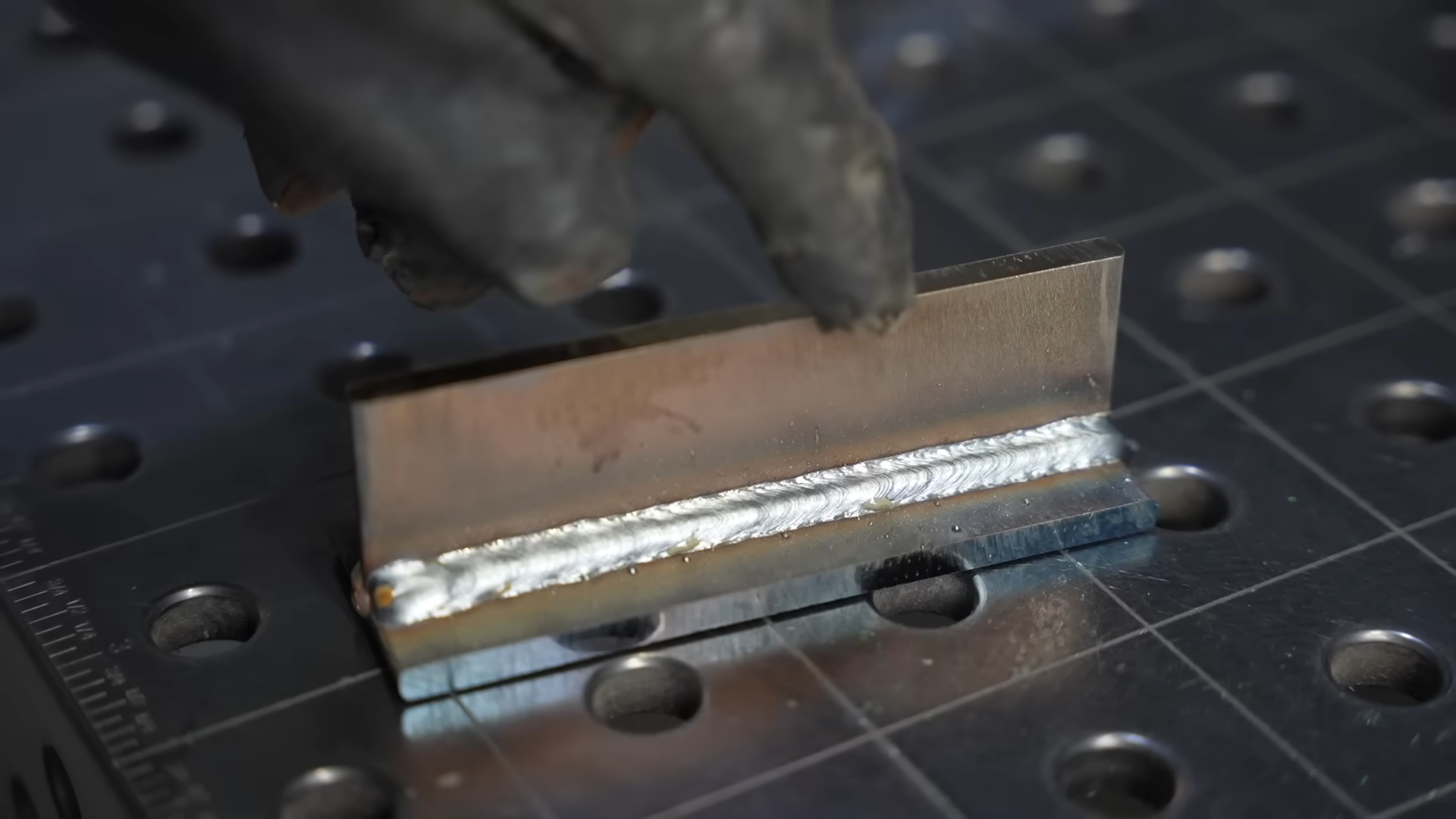
Porosity and worm tracks often start here. Check cylinder status, regulator setting, hose leaks, nozzle condition, and draft control before touching multiple machine settings.
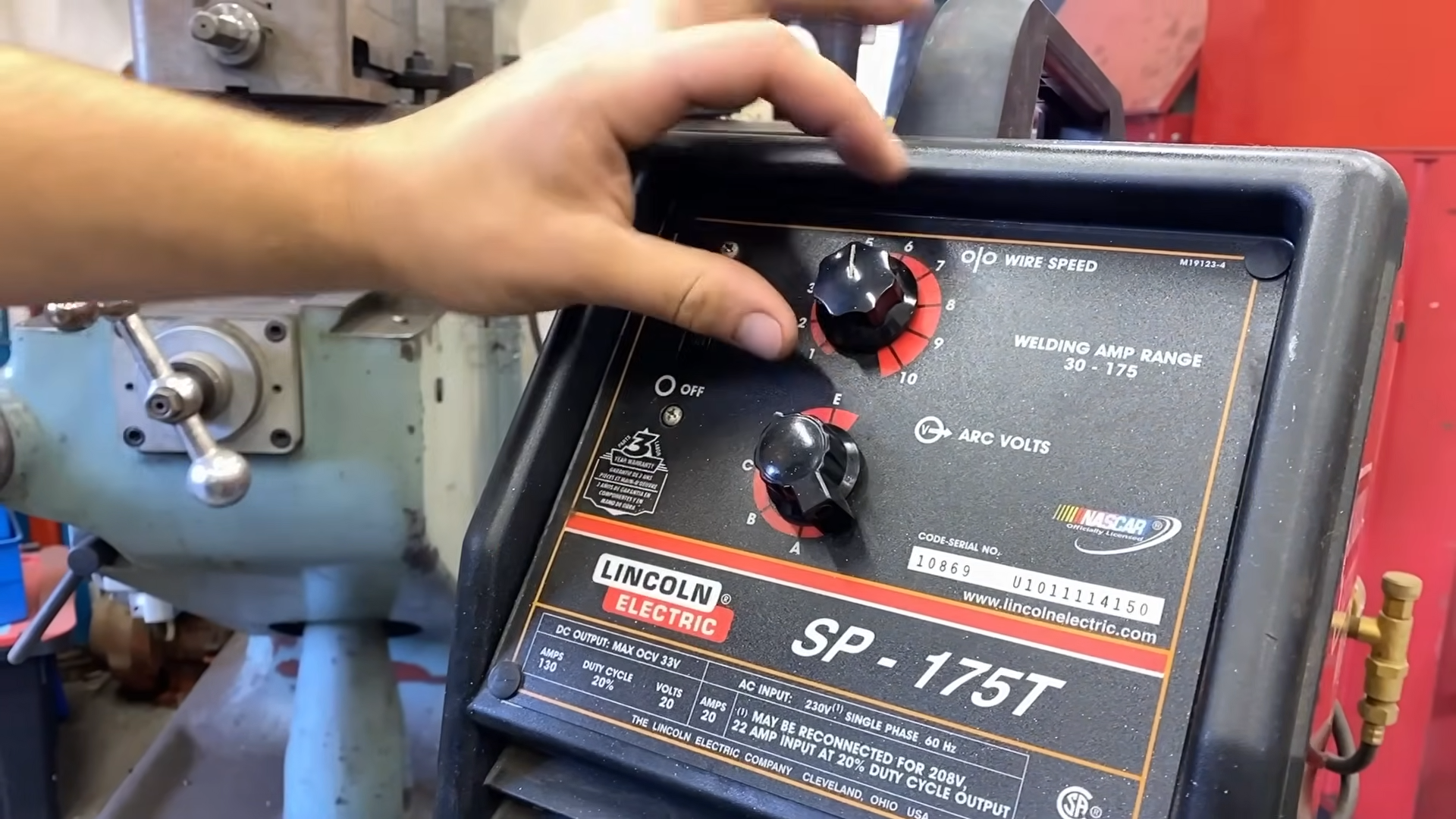
Settings Problems (Voltage / Wire Speed Balance)
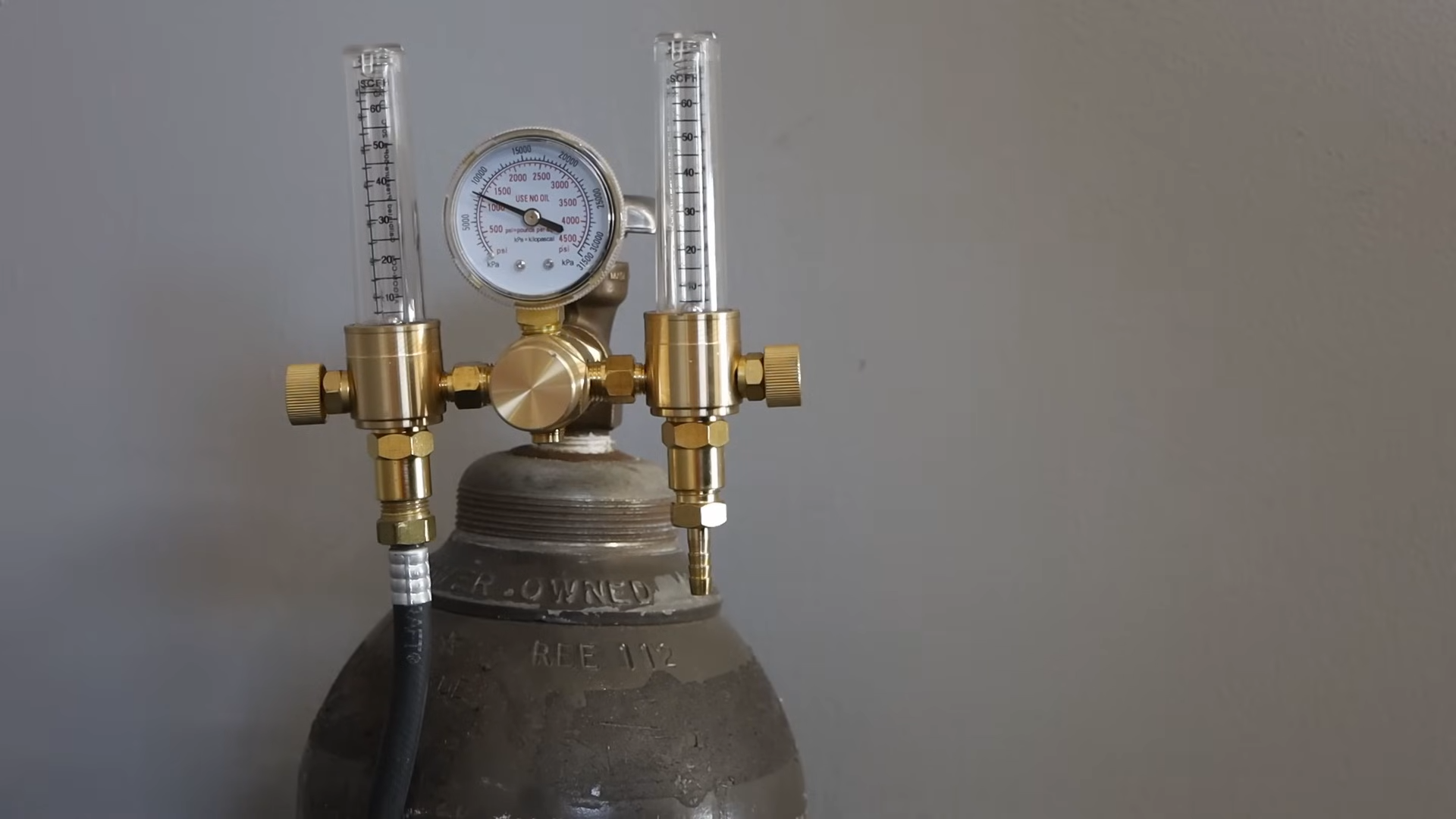
Most recurring MIG issues are settings + prep + consumables together, not one isolated knob.
Frequently Asked Questions
Why are my MIG welds porous?
Most often gas coverage or contamination. Confirm gas flow under trigger pull, remove drafts, and clean base metal to bright steel.
Why is my MIG welder spattering so much?
Usually voltage/WFS mismatch or dirty metal. Reduce voltage in small steps and improve prep before chasing advanced causes.
What causes burn-through when MIG welding?
Too much heat for material thickness, slow travel, large wire, or poor fit-up gaps.
Why does my MIG wire keep bird-nesting?
Drive-roll tension, liner drag, tip mismatch, or spool brake issues are common root causes.
Why does my wire burn back into the tip?
Low wire speed, high voltage, worn tip, or long stickout can all push burn-back.
What does cold lap look like?
The bead sits on top with poor tie-in and breaks easily instead of fusing into the base metal.
Why does my MIG weld sit on top and not penetrate?
Heat is usually too low, travel too fast, angle off, or base metal contaminated.
How much gas flow should I use for MIG welding?
Start with a reasonable range and confirm stable shielding at the nozzle while welding conditions are controlled.
Can dirty metal cause MIG welding problems?
Yes. Dirty steel drives porosity, spatter, poor fusion, and unstable arc behavior.
How do I know if my wire speed is wrong?
Stubbing, burn-back, tall ropey beads, and unstable transfer are common signs the voltage/WFS balance is off.
Conclusion: Fix the Process, Not Just the Symptom
When MIG goes sideways, troubleshoot in sequence: ground, tip, clean metal, then settings. That clears most issues fast and keeps you from chasing your tail. Use the calculators and guides below to lock in repeatable settings and stop wasting wire.
Convert measured IPM to estimated current—or amps back to starting IPM—with the Wire Feed Speed to Amps Calculator. Diameter tables and burn-off factors are in the Wire Feed Speed Chart Guide.
Welding
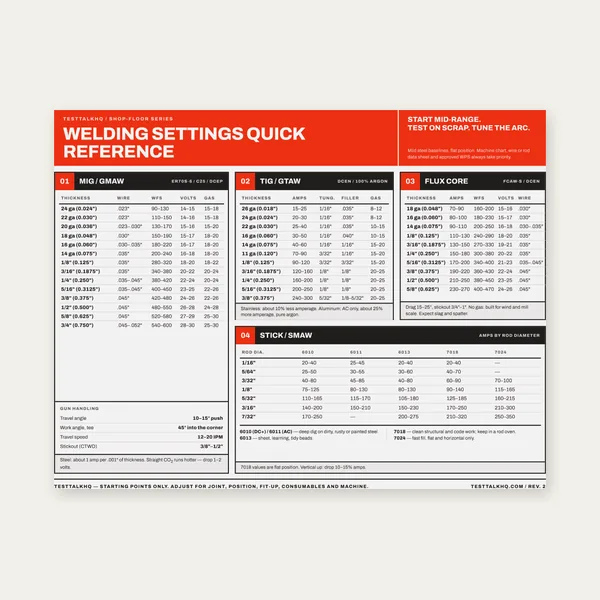
Welding Reference Card
One page. MIG, TIG, stick and flux core settings by thickness.
$3.99
Buy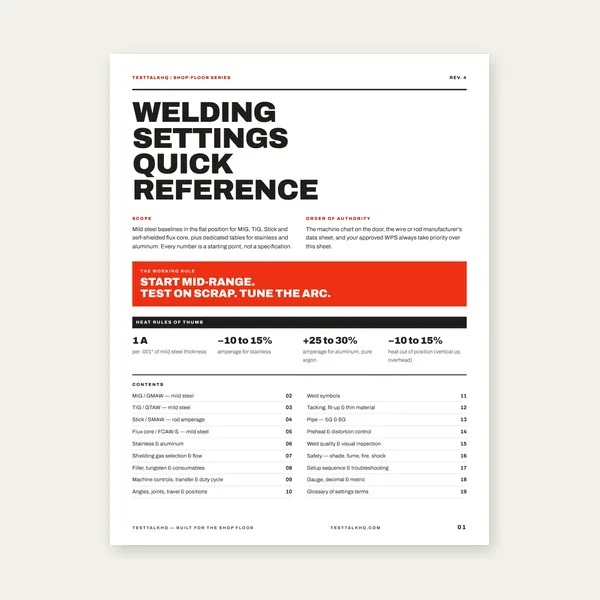
Complete Welding Settings Guide
19 pages. Four processes, stainless and aluminum, symbols and inspection.
$12.99
Buy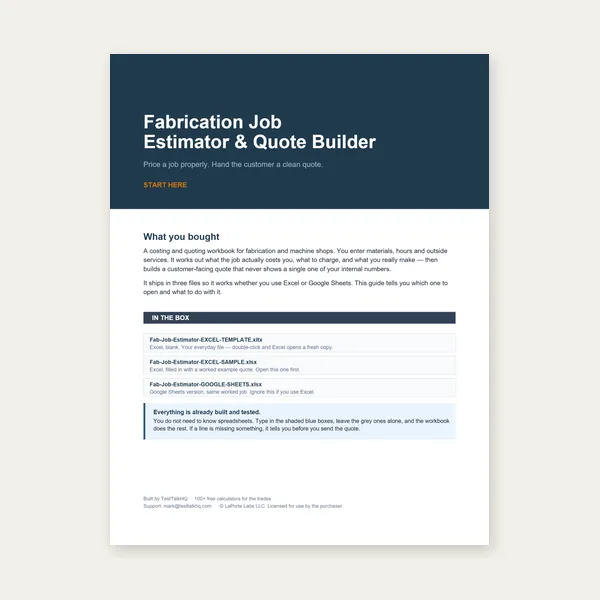
Welding Job Estimator
Price the job, then hand over a quote with no internal numbers.
Excel or Google Sheets. Best on a computer.
$29.00
Buy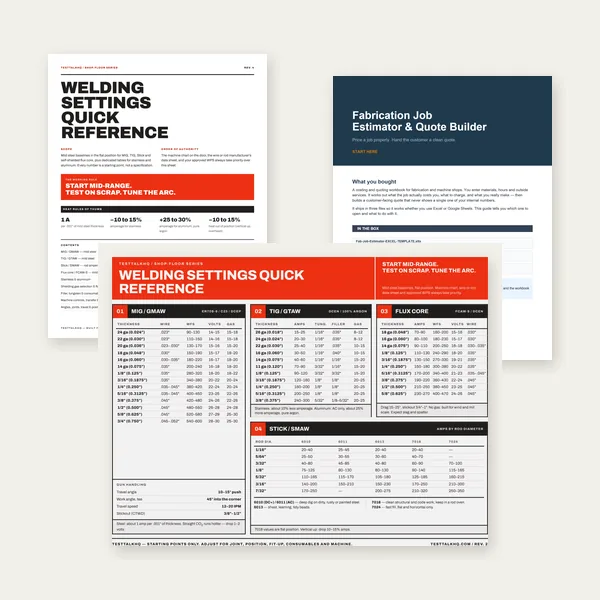
Welding Complete Bundle
Card, 19-page guide and the estimator workbook. All six files.
Excel or Google Sheets. Best on a computer.
$34.99
$45.98 if bought separately — save $10.99
BuyCheckout opens in a new tab.