Flux-Core Welding Troubleshooting
Diagnose self-shielded spatter & slag, wind/contamination porosity, burn-through on thin stock, flux-core wire feed, wrong polarity (DCEN), and slag trapping between passes
FCAW-specific diagnosis — not a restatement of the settings charts. Pair with the Flux Core Welding Calculator for voltage/WFS/amperage and the Flux Core Welding Settings Guide for diameter tables and polarity setup. Wire-type comparison (solid vs flux-core) lives in Solid Wire vs Flux-Core. Shared porosity/undercut vocabulary: Common Weld Defects. This page stays on failures after the wire and numbers looked right.

Flux-Core Welding Problems Quick Answer
Use this when self-shielded FCAW spatters heavily, pores open after slag chip, thin plate burns through, the soft cored wire bird-nests, penetration goes cold after a MIG→flux-core swap, or slag traps between multi-pass beads — process failures unique to tubular wire, not solid-wire MIG gas problems restated.
| Problem | What it usually means | First fix | Next tool |
|---|---|---|---|
| Excessive spatter / slag mess | Voltage too high for WFS; wrong polarity; stickout too short; push instead of drag | Confirm DCEN on self-shielded; drop voltage 1–2V; lengthen stickout; drag the gun | Settings Guide |
| Porosity after chip | Wind/draft on self-shield plume; contaminated/rusty wire; paint/oil at joint; gas-shielded FCAW outdoors without screens | Block wind; discard rusty spool; grind joint faces; switch to self-shielded outdoors | Flux Core Calculator |
| Burn-through on thin | Wire/amps too hot for gauge; long continuous beads; .035" on sheet | Downsize to .030"; stitch/skip; lower WFS/V; consider solid MIG for <18 ga | Settings Guide |
| Bird-nest / erratic feed | Drive-roll tension wrong for soft tubular wire; wrong roll type; liner/tip mismatch; kinked spool | Use knurled/V-groove for FCAW; ease tension; tip = wire OD; check liner | Flux Core Calculator |
| Cold lap / poor penetration | Still on DCEP after MIG (self-shielded wants DCEN); voltage/WFS too low; travel too fast | Swap polarity to DCEN; raise heat into chart range; slow travel; clean mill scale at root | Settings Guide |
| Slag trapping (multi-pass) | Incomplete chip/brush between passes; wrong weave; E71T-GS used multi-pass | Chip + wire-brush every pass; narrow beads; use E71T-11 for multi-pass | Settings Guide |
1. Excessive Spatter and Slag on Self-Shielded Flux-Core
What it looks like: Balls of metal stuck everywhere around the joint; thick, hard slag that fights the chipping hammer; bead looks sprayed rather than stacked. Self-shielded FCAW always spatters more than solid MIG — “excessive” means cleanup time dominates the job or slag hides defects.
Likely causes:
- Voltage too high for wire speed — arc flares, globules leave the puddle. The guide’s sound test (loud popping / spray) maps here.
- Wrong polarity — self-shielded wire on DCEP (still set for MIG) is a classic spatter bomb.
- Stickout too short — flux-core wants longer electrical stickout than solid wire (often ~½–¾"); short stickout overheats and spatters.
- Pushing instead of dragging — most self-shielded wires want a slight drag angle so slag trails behind the puddle.
Fixes: Verify DCEN first. Drop voltage 1–2 V or bump WFS into the chart band. Lengthen stickout. Drag the gun. Recalculate starting points with the Flux Core Welding Calculator; charts and listen-test notes live in the settings guide.
2. Porosity from Wind, Drafts, or Contaminated Wire
What it looks like: Pinholes or worm tracks after you chip the slag; worse on outdoor days or near shop fans; sometimes a whole pass of Swiss cheese when the spool sat open and rusty.
Likely causes:
- Wind / drafts dispersing the self-shield plume — “self-shielded” is not bulletproof. Roughly 20–25 mph starts to open pores; gas-shielded FCAW fails much earlier (~5 mph) without screens.
- Contaminated or rusty flux-core wire — moisture and rust on the tube poison the shield chemistry.
- Paint, oil, heavy rust, or galvanizing at the joint — flux-core tolerates light mill scale better than solid MIG, but coatings still trap gas.
- Running gas-shielded E71T-1 outdoors without wind protection — looks like “flux-core porosity” but is a gas-shield failure.
Fixes: Block wind or switch to true self-shielded wire outdoors. Discard compromised spools. Grind joint faces back to clean metal. For gas-shielded FCAW, use screens or move indoors. Outdoor process context (not a second decision article): see the calculator’s outdoor notes and Solid Wire vs Flux-Core.
3. Burn-Through on Thin Material
What it looks like: Holes in sheet or light tube; melt-through on 20–18 gauge with a continuous bead; edges collapse before a fillet fills.
Likely causes:
- .035" (or larger) self-shielded wire on sheet — process runs hot; minimum practical thickness is often ~18 gauge.
- Voltage/WFS still set for plate — hobby boxes default hot for “structural” charts.
- Long continuous beads — heat piles up; stitch/skip would have survived.
Fixes: Step down to .030" when the machine allows; lower WFS and voltage into the thin end of the chart; use short stitch welds and let the joint cool. For material thinner than ~18 gauge, solid-wire short-circuit MIG is usually the better process — that fork is covered in the settings guide FAQ and solid vs flux-core comparison, not duplicated here.
4. Wire Feed Issues Specific to Soft / Cored Wire
What it looks like: Bird-nesting at the drive rolls; erratic arc that surges then stubs; burn-back into the tip; wire that flattens or shreds in the rolls.
Likely causes:
- Drive-roll tension set for solid wire — tubular flux-core is softer; over-tension crushes the tube and dumps flux; under-tension slips.
- Wrong roll groove — many FCAW wires want knurled or dedicated V-groove rolls, not the U-groove that babied soft aluminum.
- Contact tip / liner mismatch — tip ID must match wire OD; worn liners amplify soft-wire buckling in the gun.
- Kinked or telescoping spool — flux-core cages nest easier than stiff solid wire when cast/helix is off.
Fixes: Fit the rolls the wire manufacturer specifies; start with lighter tension than solid MIG and increase until feed is steady without crushing; replace tips sized to the wire; clear the liner path. Feed problems that are actually polarity/heat issues belong in the next section — confirm the arc sounds right once wire is feeding.
5. Poor Penetration or Cold Lap from Wrong Polarity
What it looks like: Bead sits on top of the plate (cold lap); little root fusion; heavy spatter with a “globby” transfer after you swapped from solid MIG to flux-core without changing leads.
Likely causes:
- Self-shielded wire still on DCEP — most E71T-11 / NR-211-class wires run DCEN (electrode negative). Solid MIG runs DCEP. Forgetting the swap is the #1 FCAW setup mistake called out in the settings guide.
- Voltage/WFS too low for thickness — even with correct polarity, a cold chart setting will cold-lap.
- Travel too fast / dirty root — looks like polarity failure when heat was marginal.
Fixes: Swap gun/work leads or flip the polarity switch to DCEN for self-shielded wire (confirm on the spool label — gas-shielded E71T-1 is typically DCEP). Then walk voltage and WFS up into the calculator / chart band. Do not grind “technique” for hours on a polarity mistake.
6. Slag Trapping Between Passes on Multi-Pass Work
What it looks like: After grinding or cutting into a multi-pass weld, dark slag islands sit between layers; UT/x-ray rejects; toes look filled but the joint has inclusions.
Likely causes:
- Incomplete slag removal between passes — flux-core always leaves slag; skipping chip + brush traps the next pass.
- Wide weaves that bury slag at the toes — stringers with thorough cleanup beat lazy weaves on critical joints.
- E71T-GS used for multi-pass — GS wires are single-pass chemistry; E71T-11 is the multi-pass class (see guide FAQ).
Fixes: Chip every pass, then wire-brush until bright metal shows in the groove. Prefer stringer beads on critical multi-pass. Confirm the wire is multi-pass rated (E71T-11 family). Cleanup tools from the catalog are below — slag removal is part of the process, not optional polish.
Wrong Settings — or Wrong Process?
If voltage, WFS, polarity, and stickout are still wrong, stay on the Flux Core Settings Guide and calculator — do not invent a second chart page. Self-shielded vs gas-shielded setup and outdoor wind limits are already covered there and on the calculator’s outdoor section. Solid MIG vs flux-core wire choice: Solid Wire vs Flux-Core. Process-level outdoor decisions (MIG / TIG / Stick, with flux-core as a MIG option): MIG vs TIG vs Stick.
Flux-Core Tools That Support Diagnosis
Six CSV-sourced picks — multi-process machines that run flux-core, slag cleanup, anti-spatter, outdoor PPE, and a helmet to watch the puddle
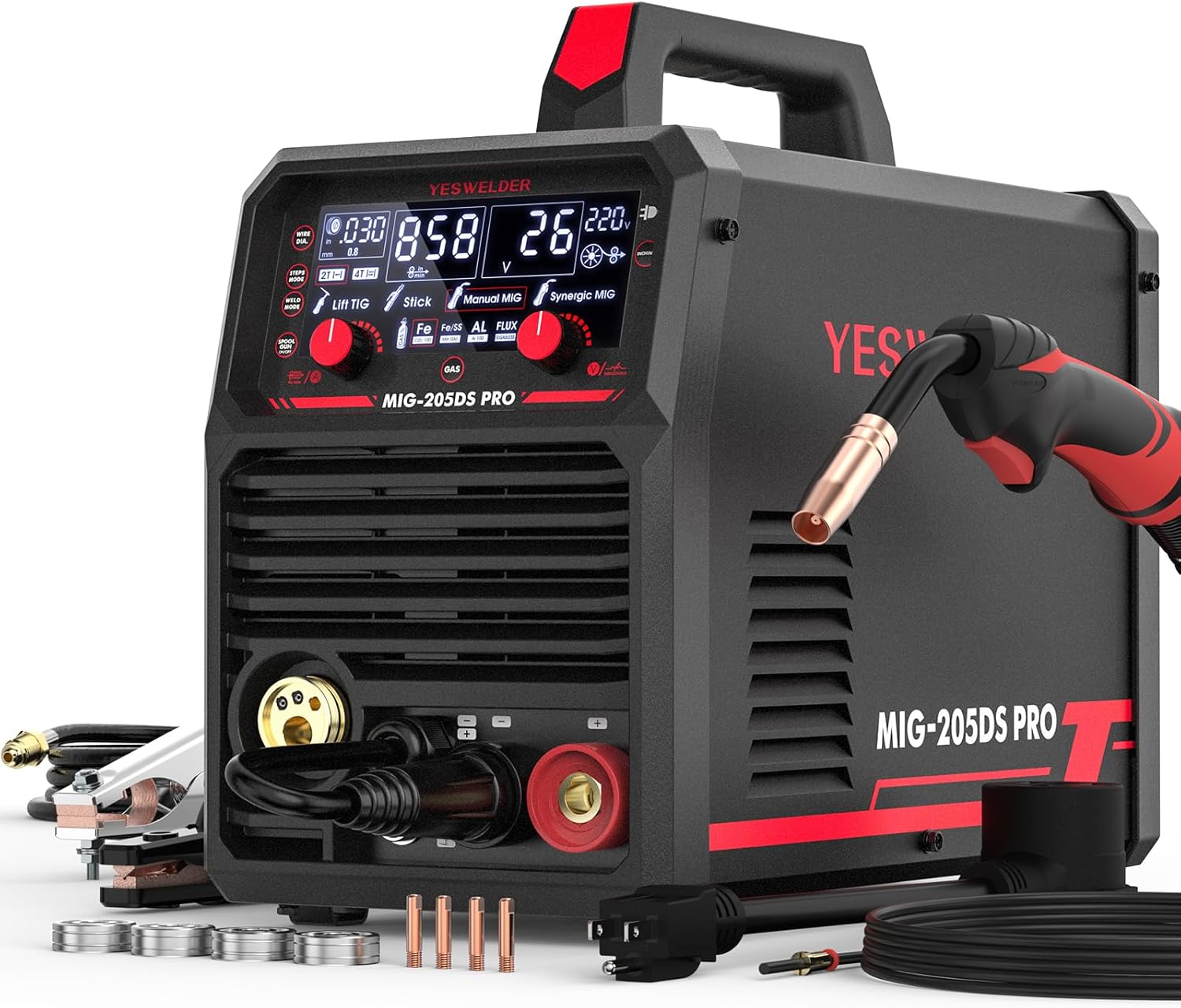
YESWELDER MIG-205DS PRO 5-in-1
- Flux-core / MIG / Stick modes in one box
- Swap polarity when diagnosing DCEN faults
- 110/220V for shop and field
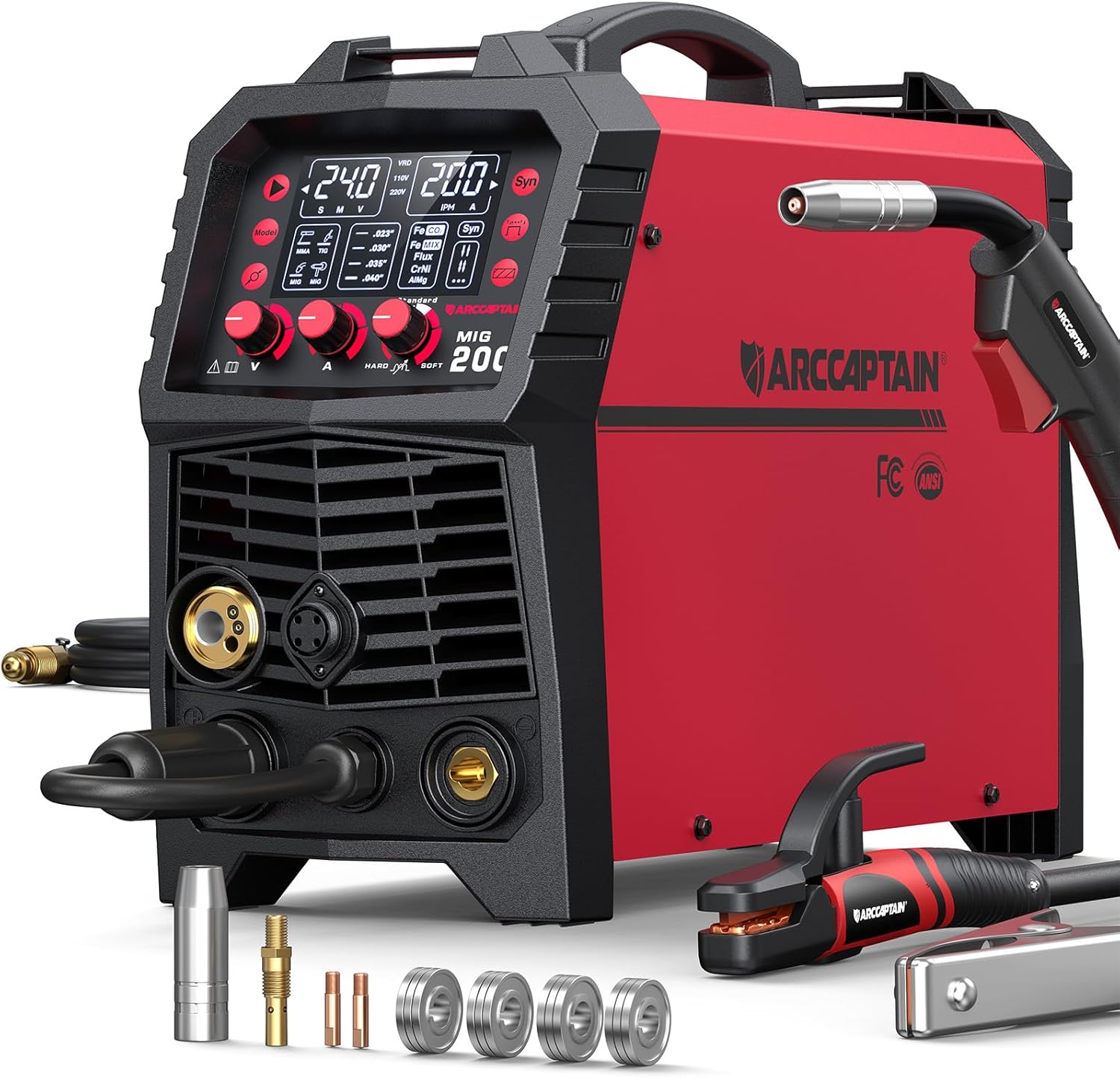
ARCCAPTAIN MIG 200A 6-in-1
- Multi-process with flux-core capability
- Dial voltage/WFS while chasing spatter
- Dual-voltage inverter for outdoor work
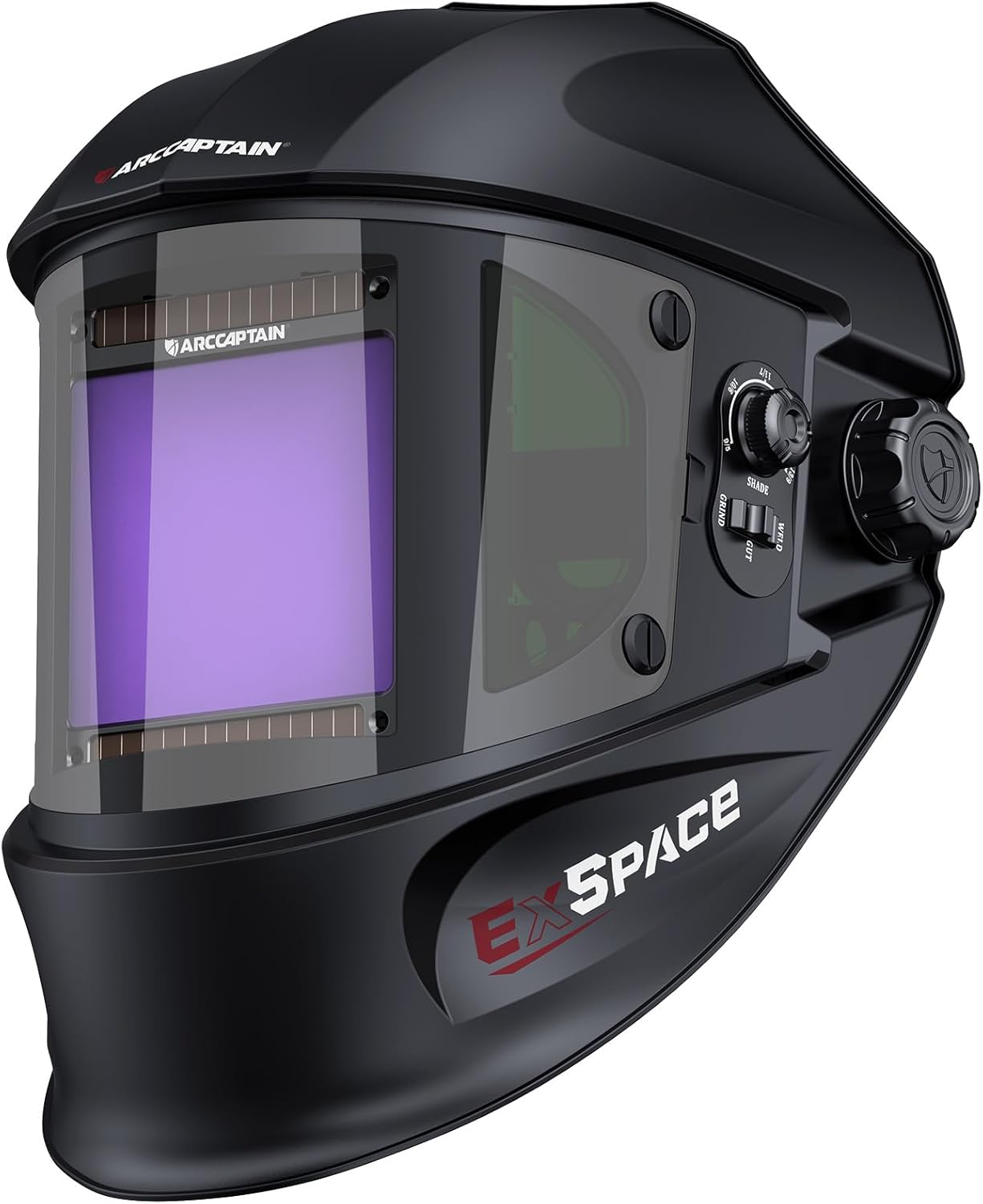
ARCCAPTAIN Auto-Darkening Helmet
- Watch slag trail and cold-lap toes
- Wide view for outdoor FCAW beads
- MIG / Stick / TIG sensors
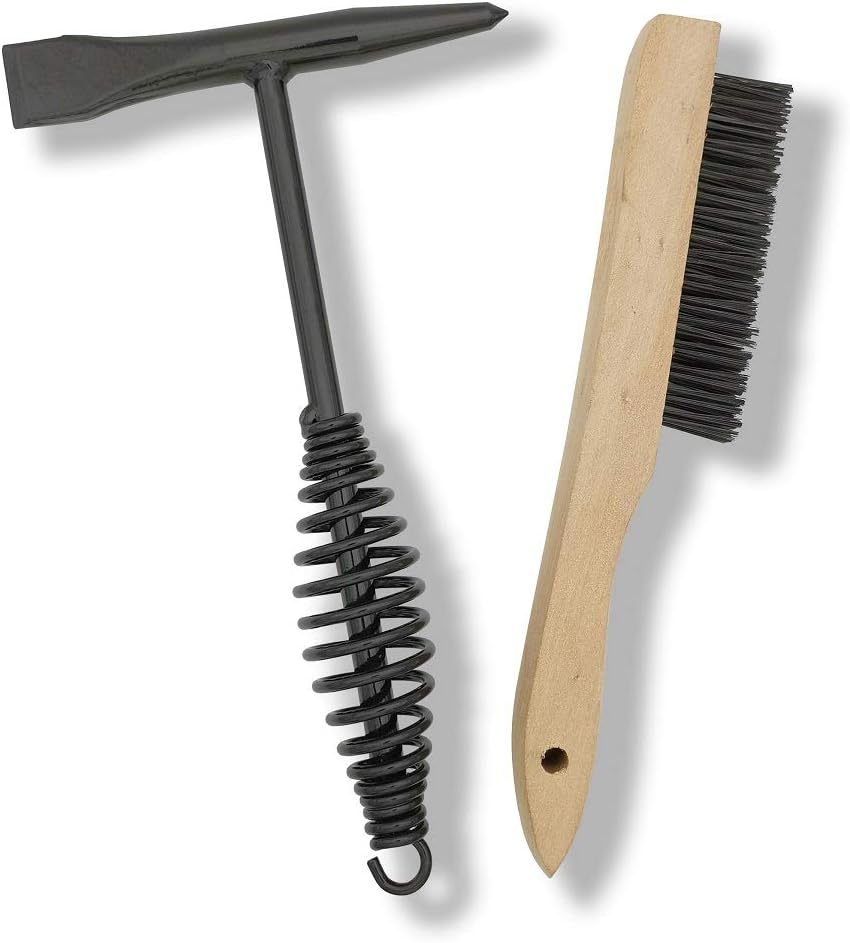
VASTOOLS Chipping Hammer + Brush
- Chip slag between multi-pass beads
- Inspect porosity only after slag is gone
- Coil-spring handle for field FCAW
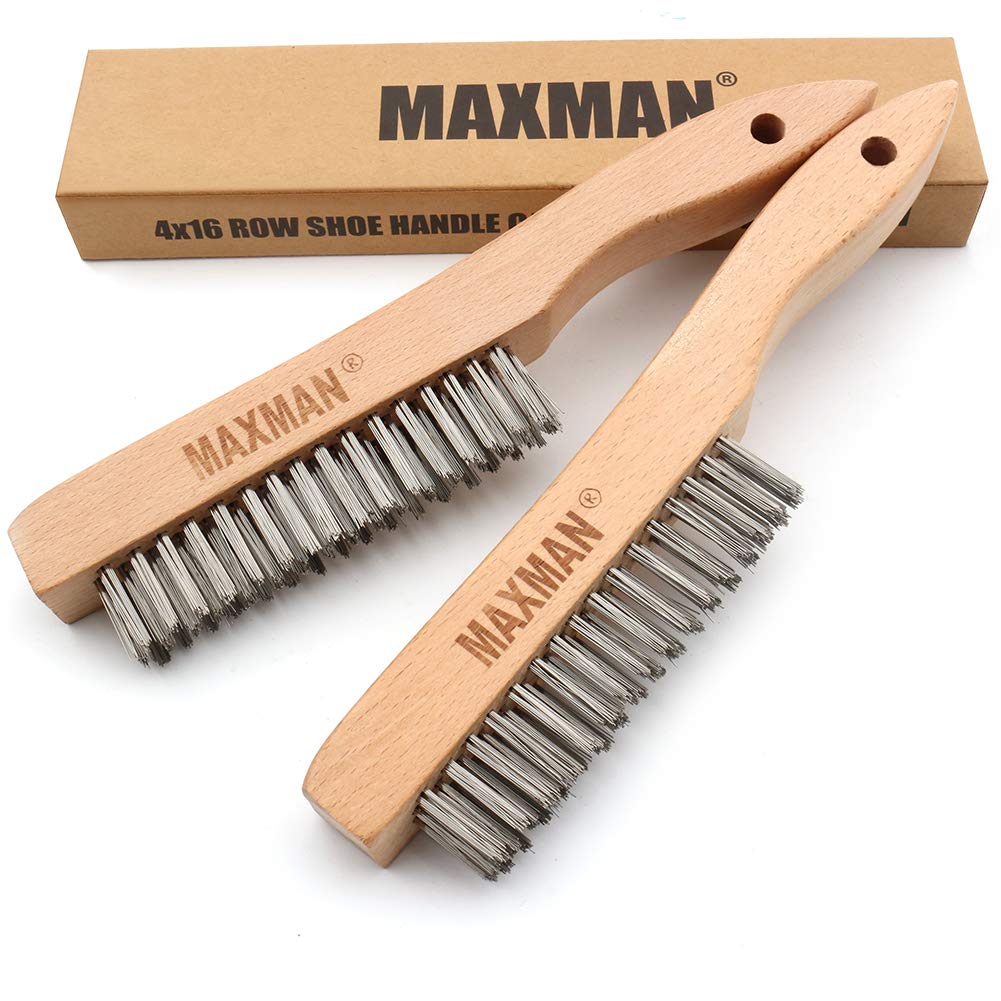
MAXMAN Heavy-Duty Wire Brush
- Brush to bright metal between passes
- Clean joint faces before blaming wire
- Pairs with chipping hammer on slag jobs
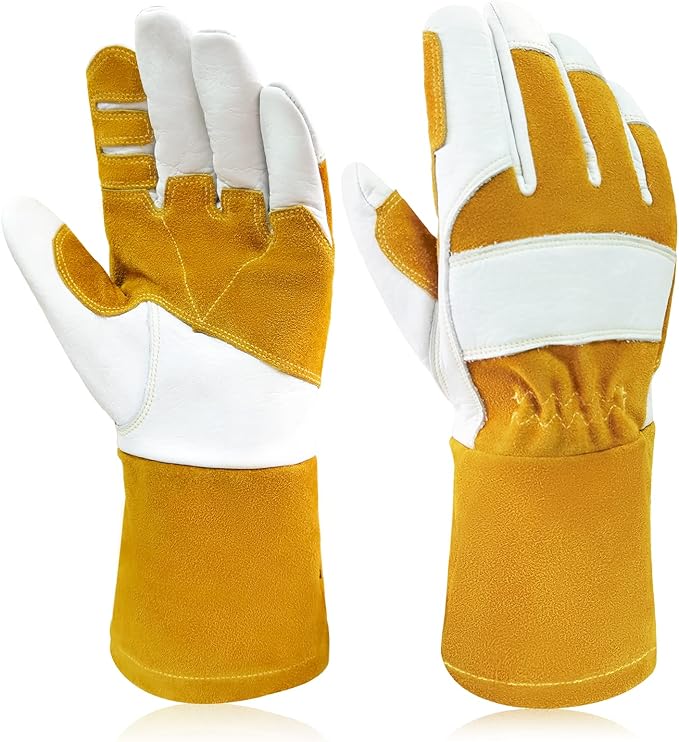
Intra-FIT Cowhide MIG Gloves
- Long cuff for outdoor flux-core spatter
- Heat protection while chipping hot slag
- Durable leather for field work
As an Amazon Associate, TestTalkHQ earns from qualifying purchases. Catalog gap: no flux-core wire SKU (E71T-11 / Fabshield / NR-211 class) in the live affiliate CSV — multi-process machines and slag-cleanup tools are used instead.
Frequently Asked Questions
Why is my flux-core weld full of spatter?
Self-shielded FCAW spatters more than solid MIG by design. Excessive spatter usually means voltage too high, stickout too short, push instead of drag, or — most often — wrong polarity (still on DCEP).
Why do I get holes after I chip the slag?
Porosity after chip is often wind dispersing the self-shield plume, rusty/contaminated wire, or coated base metal. Gas-shielded flux-core outdoors without wind screens fails the same way.
I switched from MIG to flux-core and nothing penetrates — why?
Check polarity. Most self-shielded wires run DCEN; solid MIG runs DCEP. Leave the machine on reverse polarity and you get cold, globby beads.
Why does my flux-core wire keep bird-nesting?
Tubular wire is softer than solid MIG wire. Over-tight drive rolls crush it; wrong roll type and worn liners make it buckle. Ease tension and match rolls/tip to the wire.
Is this the same as the Common MIG Problems guide?
No. Common MIG Welding Problems covers solid-wire gas-metal-arc failures. This page is FCAW-specific (slag, DCEN, soft wire feed, wind on self-shield).