📏 Filler Metal Weight Calculator

Calculate how much welding wire, rod, or electrode you need for any job

This filler metal weight calculator helps you determine exactly how many pounds of welding wire, rod, or electrode you need for any welding project. Stop over-ordering materials that sit on shelves and stop under-ordering materials that delay projects. Whether you're welding fillet welds, groove welds, or pipe joints, this calculator accounts for weld geometry, material density, process efficiency, and overfill to give you accurate material estimates.

Embed this calculator Free · no API key · keep the attribution link

Copy the snippet below to embed this calculator on your site. The attribution link must stay intact and dofollow (no rel="nofollow"). Browse all embeddable calculators

<div class="ttq-embed" style="max-width:100%;margin:0 auto;">
  <iframe src="https://testtalkhq.com/embed/filler-metal-weight-calculator/?theme=light&utm_source=embed" width="100%" height="980" frameborder="0" loading="lazy" scrolling="no" title="Filler Metal Weight Calculator — TestTalkHQ" style="border:0;max-width:100%;width:100%;"></iframe>
  <p style="font:400 13px/1.4 system-ui,sans-serif;text-align:center;margin:6px 0 0;">Powered by the <a href="https://testtalkhq.com/filler-metal-weight-calculator/?utm_source=embed&utm_medium=referral&utm_campaign=calculator_embed&utm_content=filler-metal-weight-calculator" target="_blank" rel="noopener">Filler Metal Weight Calculator</a> from <a href="https://testtalkhq.com/?utm_source=embed&utm_medium=referral&utm_campaign=calculator_embed&utm_content=filler-metal-weight-calculator" target="_blank" rel="noopener">TestTalkHQ</a></p>
</div>

Welding

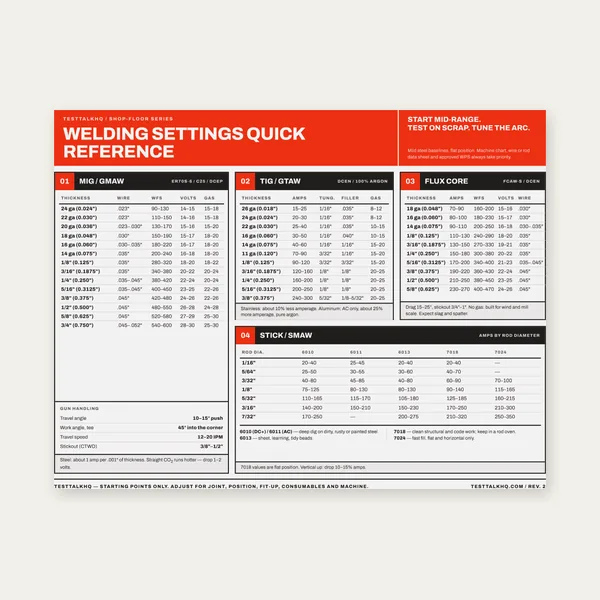
Welding Reference Card

Welding Reference Card

One page. MIG, TIG, stick and flux core settings by thickness.

$3.99

Buy
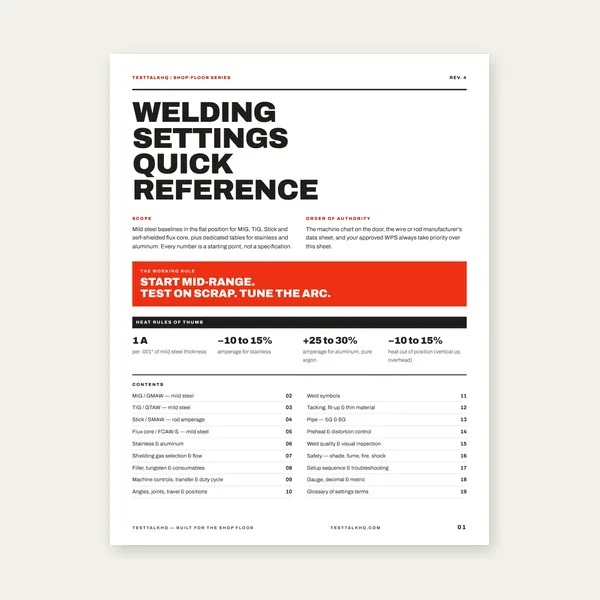
Complete Welding Settings Guide

Complete Welding Settings Guide

19 pages. Four processes, stainless and aluminum, symbols and inspection.

$12.99

Buy
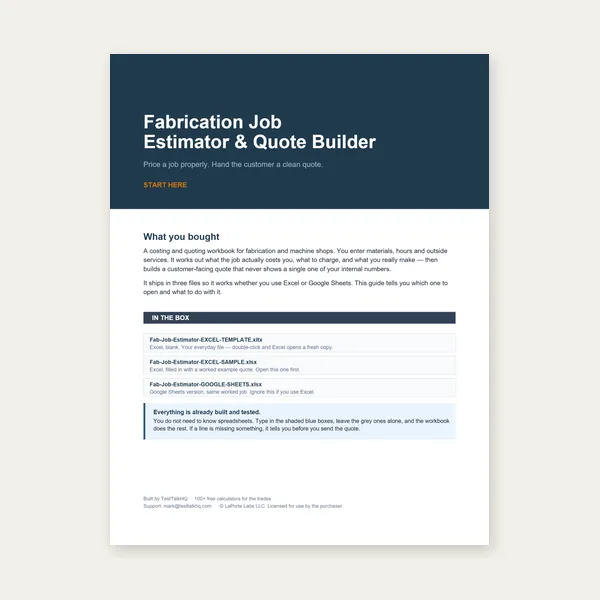
Welding Job Estimator

Welding Job Estimator

Price the job, then hand over a quote with no internal numbers.

Excel or Google Sheets. Best on a computer.

$29.00

Buy
BEST VALUE
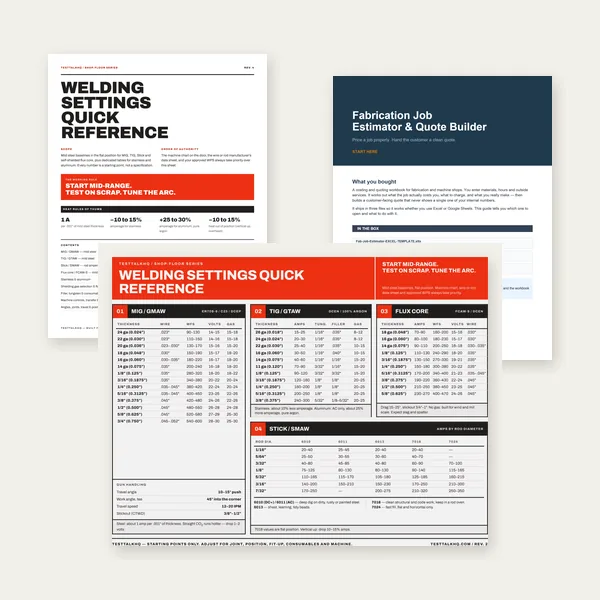
Welding Complete Bundle

Welding Complete Bundle

Card, 19-page guide and the estimator workbook. All six files.

Excel or Google Sheets. Best on a computer.

$34.99

$45.98 if bought separately — save $10.99

Buy

See all Welding products

Checkout opens in a new tab.

Recommended tools & consumables

Stock and verify filler orders with common shop picks.
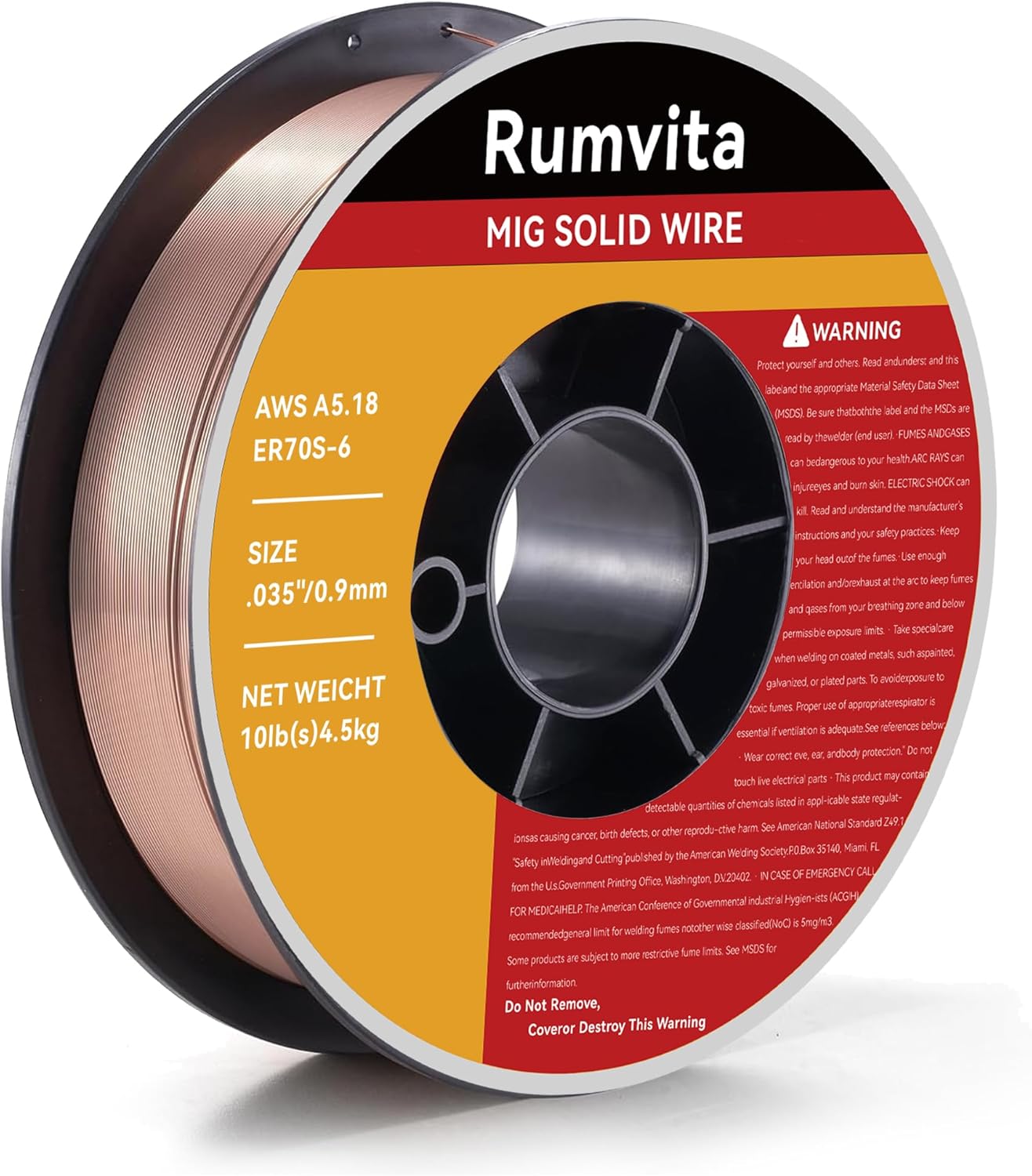
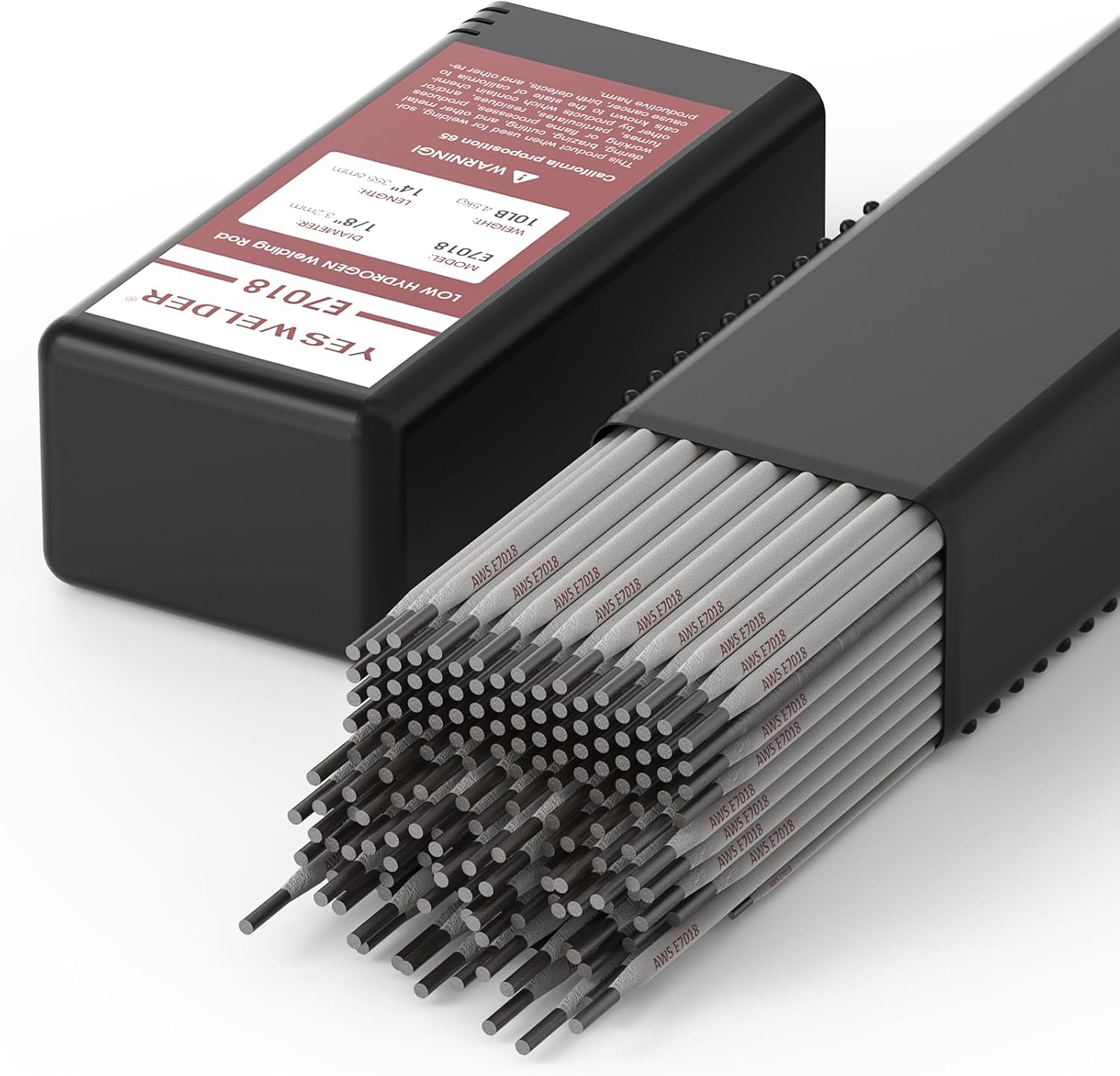
7018 stick welding rods

Yeswelder 7018 Electrode Pack

  • Structural stick jobs by rod weight
  • Common 1/8" low-hydrogen size
  • Good baseline for SMAW estimates
View on Amazon →
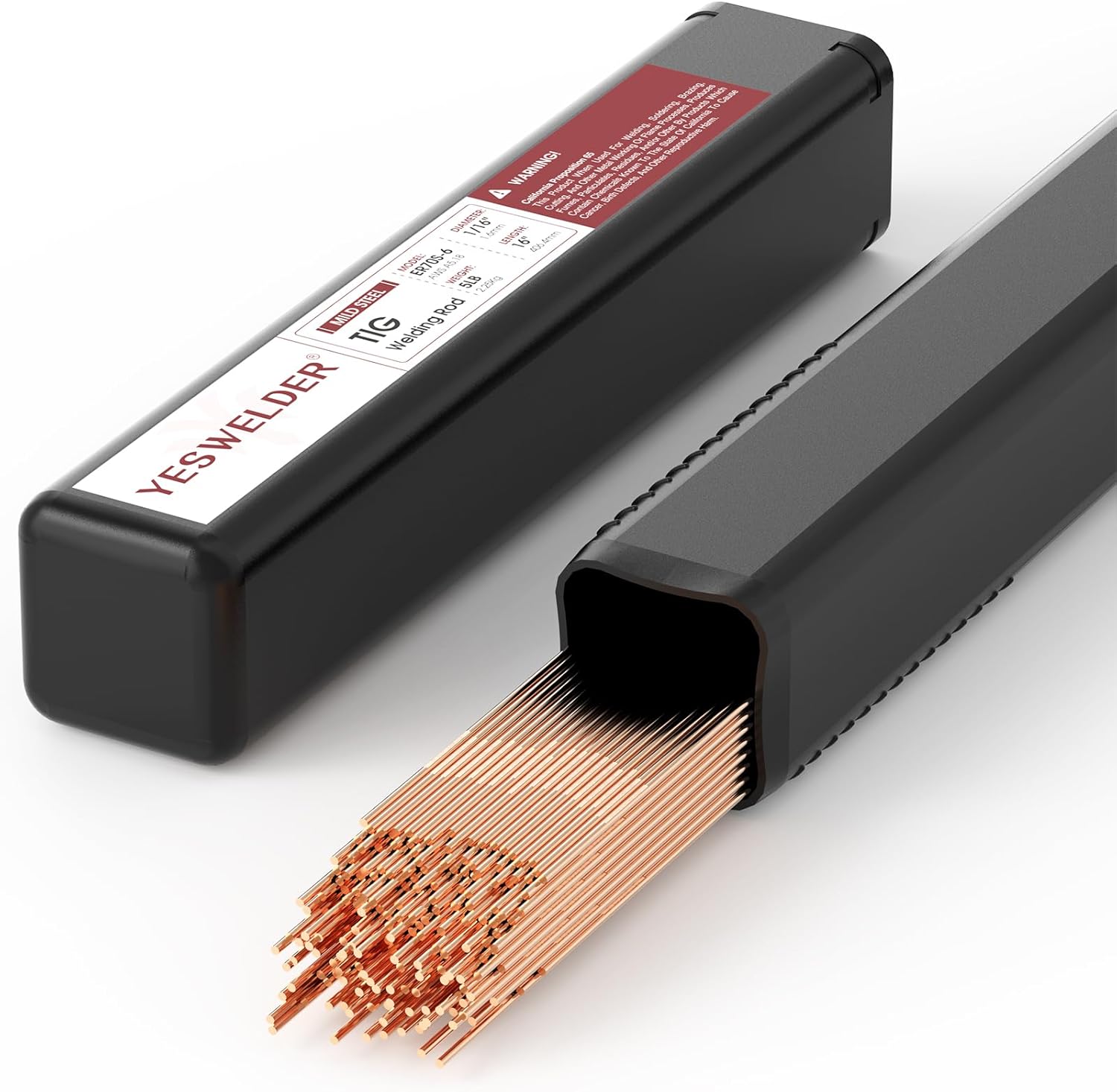
ER70S-6 TIG filler rods

Yeswelder ER70S-6 TIG Filler Rods

  • TIG filler by the pound
  • Multiple diameters for schedules
  • Matches steel TIG planning
View on Amazon →
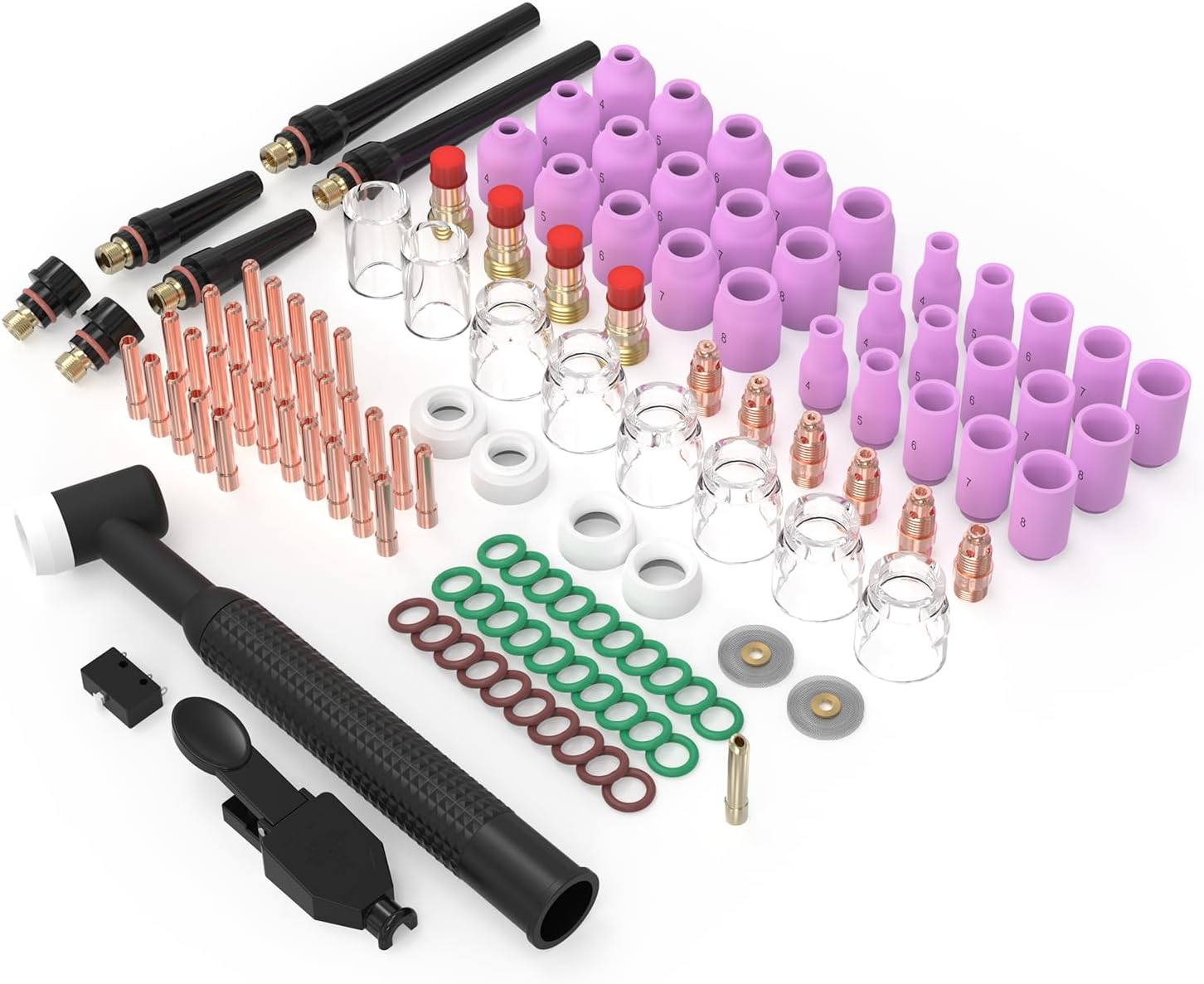
TIG consumables kit

Complete TIG Consumables Kit

  • Gas lenses, cups, collets
  • Keep torch running for long runs
  • Reduces downtime on TIG work
View on Amazon →
660 lb digital platform scale

660 lb Digital Platform Scale

  • Verify spool / box weight on receipt
  • Heavy capacity for shop stock
  • Useful for inventory & quotes
View on Amazon →

As an Amazon Associate, TestTalkHQ earns from qualifying purchases.

How to Calculate Filler Metal Weight

What Is Filler Metal Weight?

Filler metal weight is the total amount of welding wire, rod, or electrode needed to complete a welding job. Calculating this accurately prevents two costly problems:

  • Over-ordering – Wasted money on unused materials sitting on shelves
  • Under-ordering – Project delays waiting for materials, lost productivity
  1. Calculate Weld Volume – Based on joint type and dimensions
  2. Convert to Weight – Multiply volume by material density
  3. Account for Waste – Divide by process efficiency

Step-by-Step Formula & Process

Step 1: Calculate Weld Volume

Fillet Welds: Volume = 0.5 × Leg Size² × Length
Example: 1/4" fillet, 100" long = 0.5 × 0.25² × 100 = 3.125 in³

Groove Welds: Volume = (Gap Area + Bevel Area) × Length

Step 2: Convert Volume to Weight

  • Carbon Steel: 0.283 lbs/in³
  • Stainless Steel: 0.286 lbs/in³
  • Aluminum: 0.098 lbs/in³
  • Nickel Alloys: 0.323 lbs/in³

Step 3: Account for Process Waste

  • SMAW (Stick): 70% efficiency → divide by 0.70
  • FCAW (Flux-Core): 87% efficiency → divide by 0.87
  • GMAW (MIG): 95% efficiency → divide by 0.95
  • GTAW (TIG): 98% efficiency → divide by 0.98

Weld Joint Geometry Reference

Fillet welds — weight per foot (steel)

Reference values for common leg sizes. Weight per foot uses carbon steel density (0.283 lbs/in³).

Leg Size Weld Area (per inch) Weight per Foot (Steel)
1/8" (0.125")0.0078 in²0.027 lbs/ft
3/16" (0.1875")0.0176 in²0.060 lbs/ft
1/4" (0.25")0.0313 in²0.106 lbs/ft
5/16" (0.3125")0.0488 in²0.166 lbs/ft
3/8" (0.375")0.0703 in²0.239 lbs/ft
1/2" (0.50")0.125 in²0.425 lbs/ft

⚠️ Multi-Pass Considerations: Thick joints requiring multiple passes may need 15–25% more filler due to overlap between passes and inter-pass cleaning.

Process Efficiency & Waste Factors

Plan extra material beyond pure weld metal based on typical process loss ranges.

SMAW (Stick) — 65–75% efficient

Highest waste due to slag coating and electrode stubs. Plan 30–35% extra material.

FCAW (Flux-Core) — 80–90% efficient

Self-shielded runs lower (80–85%), gas-shielded higher (85–90%). Plan 15–20% extra.

GMAW (MIG) — 92–98% efficient

Highest efficiency, minimal spatter, no slag. Plan 5–8% extra.

GTAW (TIG) — 95–99% efficient

Precise filler addition, almost no spatter. Plan 2–5% extra.

Real-World Calculation Examples

Example 1: Structural Steel Frame

Project: 400 feet of 5/16" fillet weld, carbon steel, MIG, 15% overfill

  1. Weld area: 0.5 × 0.3125² = 0.0488 in²
  2. Volume: 0.0488 × 4,800" = 234.4 in³
  3. With overfill: 234.4 × 1.15 = 269.6 in³
  4. Pure weight: 269.6 × 0.283 = 76.3 lbs
  5. With waste: 76.3 ÷ 0.95 = 80.3 lbs
  6. Order: 88 lbs (with 10% margin) — four 25-lb spools

Example 2: Aluminum Tank

Project: 60 feet of groove weld, 1/8" gap, 1/4" thick aluminum, TIG, 10% overfill

  1. Volume: 0.125 × 0.25 × 720" × 1.10 = 24.75 in³
  2. Pure weight: 24.75 × 0.098 = 2.43 lbs
  3. With waste: 2.43 ÷ 0.98 = 2.48 lbs
  4. Order: 2.75 lbs (with 10% margin)

Ordering Strategies & Best Practices

Safety margins

  • 10–15% for shop work – Controlled environment, experienced welders
  • 15–25% for field work – Weather, position changes, access issues
  • 20–30% for critical work – X-ray quality, rework allowance

💡 Pro Tip: Buy wire in the largest practical package. A 44 lb spool costs 15–25% less per pound than 2 lb spools, and you'll never run out mid-weld.

Common Mistakes to Avoid

Using steel calculations for aluminumAluminum is ⅓ the density. You'll order 3x too much material.
Forgetting process efficiency5–30% of wire doesn't become weld metal depending on process.
Ignoring overfillA flush calculation will leave you 10–25% short.
Mixing up linear feet and inchesEnter 50 feet as 600 inches, not "50".

Frequently Asked Questions

Should I round up or down when ordering?

Always round up. Running out of filler metal mid-job costs far more in delays than having a bit of extra material on the shelf.

Does wire diameter affect how much I need?

No — wire diameter affects deposition rate (how fast you weld), not total weight needed. A 1/4" fillet weld requires the same weight whether you use .035" or .045" wire.

How much extra should I order for rework?

Plan 5–10% for typical shop work, 10–15% for critical work requiring X-ray or code inspection, 15–20% for challenging positions or new welders.

Related Calculators

Key Takeaways

Accurate filler metal weight calculation saves money and prevents project delays. Whether you're bidding jobs, ordering materials, or planning a project, this calculator helps you order exactly what you need — no more, no less.

💡 Key Takeaways:

  • Always account for process efficiency — 5–30% of material becomes waste
  • Add safety margins: 10–15% for shop work, 15–25% for field work
  • Material density matters — aluminum is ⅓ the weight of steel
  • Over-ordering by 10% costs less than running out mid-job
  • Track actual vs. calculated usage to improve future estimates

Volume takeoffs that still miss the spool: Consumption Troubleshooting. Method choice: Estimating Methods.