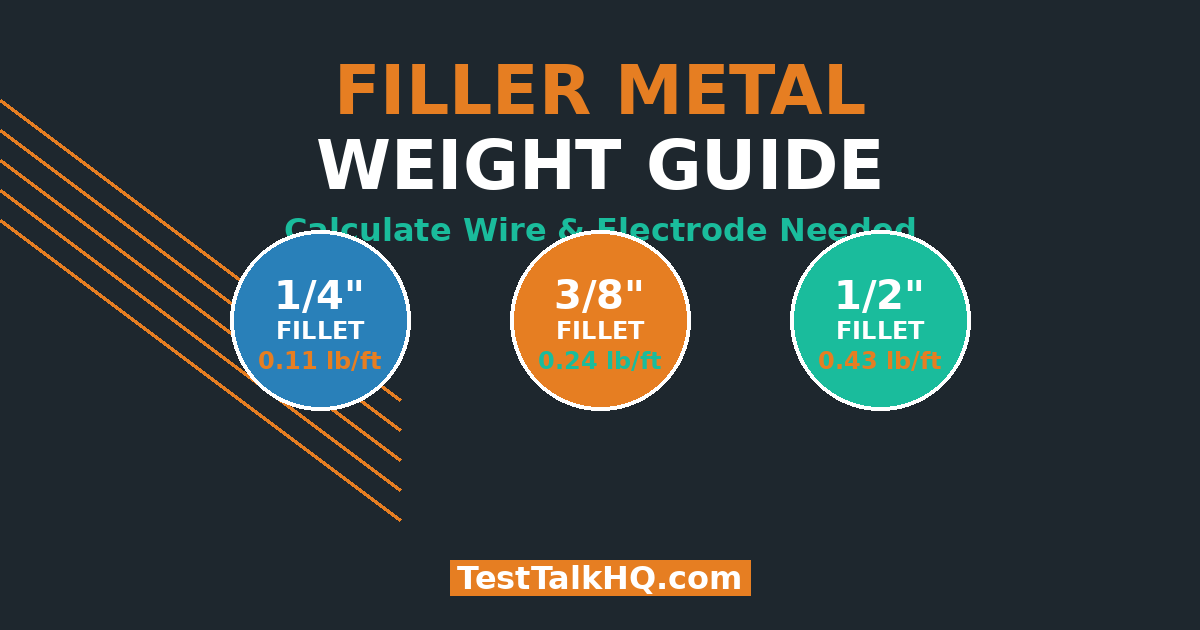
You’re bidding on a structural steel job with 500 linear feet of 1/4″ fillet welds and estimate you’ll need “about 10 pounds of wire” based on gut feel—but the actual requirement is 37.5 pounds (500 ft × 0.075 lbs/ft), meaning your material estimate is off by 275%, which either forces you to stop mid-job for emergency wire purchases or causes you to overbid by including excessive safety margins that lose the job to competitors. Professional fabricators calculate filler metal weight precisely using joint type, weld size, and length to determine pounds needed, then multiply by deposition efficiency factors (MIG 1.02-1.10x for spatter, Stick 1.50-1.65x for slag and stub loss) to convert theoretical weld metal into actual consumables that must be ordered.
Filler metal weight determines material ordering accuracy, job cost estimation, and whether you run out of wire at 4:45 PM on Friday or have exactly what’s needed to complete the work. A fabricator who underestimates by 30% faces either project delays (waiting for wire delivery), rushed trips to suppliers (wasting 2-3 hours and premium retail pricing), or “creative” welding techniques like stretching intermittent welds to make material last (compromising quality). Conversely, overestimating by 50% ties up capital in excess inventory and inflates bid prices by including consumable costs that won’t actually be used, making bids non-competitive.
This guide shows you how to calculate filler metal weight for fillet welds, groove welds, and plug welds using simple formulas based on weld dimensions and length, provides complete weight-per-foot charts for common weld sizes in steel, stainless, and aluminum, and explains how to account for deposition efficiency, multi-pass requirements, and joint preparation losses. You’ll learn why a 1/4″ fillet weld weighs 0.075 lbs/ft while a 3/8″ fillet weighs 0.17 lbs/ft (2.25x heavier despite only 1.5x larger leg size), how groove weld weight calculations differ fundamentally from fillet welds, and the five specific mistakes that cause 20-50% material estimation errors on real jobs.
Use our free Filler Metal Weight Calculator to determine exact wire and electrode requirements for your welding projects.
Jump to what you need
Why Filler Metal Weight Matters
Accurate filler metal weight calculation is the foundation of profitable job bidding and efficient material management.
The Business Impact of Weight Estimation
Real-world scenario: Steel staircase fabrication
Project specs:
- 300 linear feet of 3/16″ fillet welds
- 150 linear feet of 1/4″ fillet welds
- Process: MIG .035″ solid wire
Wrong estimate (guessing “about 25 pounds”):
- Actual requirement: 28.1 lbs theoretical weld metal
- With MIG efficiency (92%): 30.5 lbs wire needed
- Shortage: 5.5 lbs (18% underestimate)
- Impact: Mid-project wire run, 2 hours downtime, $45 rush purchase at retail vs. $21 wholesale cost
Correct estimate (calculated precisely):
- 3/16″ welds: 300 ft × 0.042 lbs/ft = 12.6 lbs
- 1/4″ welds: 150 ft × 0.075 lbs/ft = 11.25 lbs
- Total theoretical: 23.85 lbs
- MIG efficiency factor (1.09): 23.85 × 1.09 = 26 lbs
- Safety margin (10%): 26 × 1.10 = 28.6 lbs
- Order: 30 lbs (one spool), complete job without interruption
Cost difference: $6 extra wire vs. $24 wasted time + $24 premium pricing = $42 saved through accurate estimation
Weight Estimation Affects Three Critical Areas
1. Material Ordering Accuracy
- Underestimate: Project delays, emergency purchases at premium prices
- Overestimate: Capital tied up in excess inventory, inflated bid costs
- Accurate: Right material arrives when needed, optimal pricing
2. Job Cost Estimation
- Consumables represent 10-20% of total welding costs
- 50% estimation error = 5-10% job cost error
- On $10,000 job: $500-1,000 profit impact from material estimation alone
3. Production Planning
- Wire spool changes interrupt workflow (5-10 minutes downtime)
- Knowing exact spool requirements allows strategic scheduling
- Example: 35 lb job on 33 lb spools = plan for one mid-job change vs. surprise shortage
Basic Weight Calculation Formulas
Filler metal weight calculations use simple geometry to determine weld cross-sectional area, then convert to weight using material density.
Universal Weight Formula
Weight = Cross-Sectional Area × Length × Material Density
For welds measured in inches and feet:
Weight (lbs) = Area (in²) × Length (ft) × Density (lbs/ft³) ÷ 12
Material Densities (Steel Family)
| Material | Density (lbs/in³) | Density (lbs/ft³) |
|---|---|---|
| Mild Steel (A36, 1018) | 0.284 | 490 |
| Stainless Steel (304, 316) | 0.289 | 500 |
| Aluminum (6061, 7075) | 0.098 | 169 |
Simplified Formula for Mild Steel Welds
For convenience, mild steel calculations use a constant derived from density:
Weight (lbs/ft) = Weld Cross-Section (in²) × 3.4
This 3.4 factor comes from: (0.284 lbs/in³ × 12 in/ft) = 3.408, rounded to 3.4
Example: Weld with 0.05 in² cross-section
Weight per foot = 0.05 × 3.4 = 0.17 lbs/ft
For 100 feet: 100 × 0.17 = 17 lbs total
Fillet Weld Weight Calculations
Fillet welds are triangular cross-sections, typically specified by leg size. Weight calculation requires determining triangle area.
Fillet Weld Formula
For equal-leg fillet welds:
Cross-Sectional Area = (Leg Size)² ÷ 2
Weight per foot (mild steel) = (Leg Size)² ÷ 2 × 3.4
Step-by-Step Fillet Weld Calculation
Example: 1/4″ fillet weld, mild steel
Step 1: Convert leg size to decimal inches
1/4″ = 0.25 inches
Step 2: Calculate cross-sectional area
Area = (0.25)² ÷ 2
Area = 0.0625 ÷ 2
Area = 0.03125 in²
Step 3: Calculate weight per foot
Weight/ft = 0.03125 × 3.4
Weight/ft = 0.106 lbs/ft
Industry standard rounds this to 0.11 lbs/ft for 1/4″ fillet
Step 4: Calculate total weight for length
For 200 feet of 1/4″ fillet:
200 × 0.11 = 22 lbs weld metal
Quick Reference: Common Fillet Sizes
| Fillet Size | Area (in²) | Weight/Foot (lbs) | 100 ft Total (lbs) |
|---|---|---|---|
| 1/8″ | 0.0078 | 0.027 | 2.7 |
| 3/16″ | 0.0176 | 0.060 | 6.0 |
| 1/4″ | 0.0313 | 0.106 | 10.6 |
| 5/16″ | 0.0488 | 0.166 | 16.6 |
| 3/8″ | 0.0703 | 0.239 | 23.9 |
| 1/2″ | 0.125 | 0.425 | 42.5 |
Unequal Leg Fillet Welds
Some welds have different horizontal and vertical leg dimensions:
Formula: Area = (Leg 1 × Leg 2) ÷ 2
Example: 1/4″ × 3/8″ fillet weld
Area = (0.25 × 0.375) ÷ 2 = 0.0469 in²
Weight/ft = 0.0469 × 3.4 = 0.159 lbs/ft
Groove Weld Weight Calculations
Groove welds fill gaps between pieces and require calculating the volume of the joint preparation.
Square Butt Joint (No Gap)
Simplest groove weld: two pieces butted together with minimal gap, single-pass weld:
Area ≈ Penetration Depth × Material Thickness
For full-penetration weld on 1/4″ plate:
Area ≈ 0.25″ × reinforcement factor (1.1-1.2)
Area ≈ 0.275-0.30 in² per inch of thickness
Simplified: Weight/ft ≈ Material Thickness² × 4.1
Example: 1/4″ plate, square butt, full penetration
Weight/ft = (0.25)² × 4.1 = 0.0625 × 4.1 = 0.256 lbs/ft
V-Groove or Bevel Groove Welds
Prepared joints with bevel create larger weld volume:
Area = (Root Opening + Face Width) ÷ 2 × Depth
Example: 1/4″ plate, 30° bevel each side (60° included angle)
- Root opening: 1/16″ (0.0625″)
- Depth: 1/4″ (0.25″)
- Face width at top: 1/4″ × tan(30°) × 2 = ~0.289″
Area = (0.0625 + 0.289) ÷ 2 × 0.25
Area = 0.176 ÷ 2 × 0.25
Area = 0.044 in²
Weight/ft = 0.044 × 3.4 = 0.15 lbs/ft
Practical Groove Weld Estimation
For field estimation without precise joint measurements, use these approximations:
| Material Thickness | Single-V (60°) | Double-V | Square Butt |
|---|---|---|---|
| 1/8″ | 0.08 lbs/ft | 0.12 lbs/ft | 0.06 lbs/ft |
| 3/16″ | 0.13 lbs/ft | 0.20 lbs/ft | 0.11 lbs/ft |
| 1/4″ | 0.18 lbs/ft | 0.30 lbs/ft | 0.16 lbs/ft |
| 3/8″ | 0.35 lbs/ft | 0.58 lbs/ft | 0.32 lbs/ft |
| 1/2″ | 0.55 lbs/ft | 0.95 lbs/ft | 0.50 lbs/ft |
Rule of thumb: Double-V grooves use 1.6-1.8x more filler than single-V on same thickness.
Complete Weight Per Foot Charts
These charts provide quick reference for common weld configurations.
Fillet Weld Weight Chart (Mild Steel)
| Leg Size | lbs/ft | 50 ft | 100 ft | 250 ft | 500 ft |
|---|---|---|---|---|---|
| 1/8″ | 0.027 | 1.4 lbs | 2.7 lbs | 6.8 lbs | 13.5 lbs |
| 5/32″ | 0.042 | 2.1 lbs | 4.2 lbs | 10.5 lbs | 21 lbs |
| 3/16″ | 0.060 | 3.0 lbs | 6.0 lbs | 15 lbs | 30 lbs |
| 1/4″ | 0.106 | 5.3 lbs | 10.6 lbs | 26.5 lbs | 53 lbs |
| 5/16″ | 0.166 | 8.3 lbs | 16.6 lbs | 41.5 lbs | 83 lbs |
| 3/8″ | 0.239 | 12.0 lbs | 23.9 lbs | 59.8 lbs | 119.5 lbs |
| 1/2″ | 0.425 | 21.3 lbs | 42.5 lbs | 106.3 lbs | 212.5 lbs |
Common Structural Weld Combinations
Example: Steel building frame column
Typical column-to-beam connection:
- 4 sides × 12″ long = 48″ (4 feet) of 3/8″ fillet
- Weight: 4 ft × 0.239 lbs/ft = 0.96 lbs per connection
- 100 connections = 96 lbs weld metal
Example: Stair stringer
Typical stair stringer with treads:
- Each tread: 2 sides × 36″ = 6 feet of 3/16″ fillet
- 12 treads: 72 feet total
- Weight: 72 × 0.060 = 4.32 lbs
Accounting for Deposition Efficiency
Theoretical weld weight assumes 100% of filler metal becomes weld. Reality includes losses from spatter, slag, and stub waste.
Deposition Efficiency by Process
| Process | Efficiency (%) | Multiplier | Example: 30 lbs Weld |
|---|---|---|---|
| TIG | 98% | 1.02 | 30.6 lbs wire |
| MIG Spray | 96% | 1.04 | 31.2 lbs wire |
| MIG Short-Circuit | 90% | 1.11 | 33.3 lbs wire |
| Flux-Core (gas) | 85% | 1.18 | 35.4 lbs wire |
| Flux-Core (self-shield) | 82% | 1.22 | 36.6 lbs wire |
| Stick E7018 | 65% | 1.54 | 46.2 lbs electrodes |
| Stick E6010 | 60% | 1.67 | 50 lbs electrodes |
Why Efficiency Matters
MIG example: 40 lbs theoretical weld metal needed
- Wrong (ignoring efficiency): Order 40 lbs wire
- Result: Run out with ~4 lbs of welding remaining (10% shortage)
- Correct (90% efficiency): 40 ÷ 0.90 = 44.4 lbs → order 45 lbs
Stick example: 40 lbs theoretical weld metal needed
- Wrong (ignoring efficiency): Order 40 lbs E7018
- Result: Run out with 14 lbs welding remaining (35% shortage!)
- Correct (65% efficiency): 40 ÷ 0.65 = 61.5 lbs → order 65 lbs electrodes
Combined Safety Margin
Professional practice adds efficiency factor PLUS safety margin:
Total Material = Theoretical Weight × Efficiency Factor × Safety Margin
Recommended safety margins:
- Production/repetitive work: 1.05 (5% extra)
- General fabrication: 1.10 (10% extra)
- One-off/complex jobs: 1.15-1.20 (15-20% extra)
Example: 50 lbs weld metal, MIG short-circuit, general fab
Order quantity = 50 × 1.11 (efficiency) × 1.10 (safety) = 61 lbs
Calculate exact consumable needs with our Wire Consumption Calculator.

Multi-Pass Weld Considerations
Thick plate and large groove welds require multiple passes, which affects weight calculations and efficiency.
Why Multi-Pass Affects Weight
Each weld pass adds slight overlap and reinforcement, increasing total filler metal beyond pure joint volume:
Single-pass 1/4″ fillet: 0.106 lbs/ft (pure triangle geometry)
Multi-pass 1/2″ fillet (3 passes):
- Theoretical (pure geometry): 0.425 lbs/ft
- Actual (with inter-pass overlap): 0.48-0.52 lbs/ft
- Increase: 13-22% more filler than calculation suggests
Multi-Pass Weld Strategy
For large welds requiring multiple passes:
- Calculate theoretical weld volume
- Add 10-15% for inter-pass reinforcement
- Apply deposition efficiency factor
- Add safety margin
Example: 1/2″ fillet, 200 feet, MIG, 4 passes required
Step 1: Base calculation
200 ft × 0.425 lbs/ft = 85 lbs
Step 2: Multi-pass factor (15%)
85 × 1.15 = 97.75 lbs
Step 3: MIG efficiency (90%)
97.75 ÷ 0.90 = 108.6 lbs
Step 4: Safety margin (10%)
108.6 × 1.10 = 119.5 lbs
Order: 120 lbs wire (four 30-lb spools or three 44-lb spools)
Groove Weld Pass Estimation
Number of passes depends on material thickness and process:
| Material Thickness | MIG Passes | Stick Passes |
|---|---|---|
| 1/8″ | 1 | 1 |
| 1/4″ | 1-2 | 2-3 |
| 3/8″ | 2-3 | 3-4 |
| 1/2″ | 3-4 | 5-7 |
| 3/4″ | 5-7 | 8-12 |
| 1″ | 8-12 | 12-18 |
General rule: Each additional pass beyond single-pass adds 3-5% to total filler weight.
Steel vs Stainless vs Aluminum Weight
Material density affects filler metal weight significantly.
Weight Multipliers by Material
Base: Mild steel = 1.0 (reference)
| Material | Density vs Steel | Weight Multiplier |
|---|---|---|
| Mild Steel | 100% | 1.00 |
| Stainless Steel | 102% | 1.02 |
| Aluminum | 35% | 0.35 |
| Copper | 183% | 1.83 |
Practical Material Weight Differences
Example: 1/4″ fillet weld, 100 feet
| Material | Weight (lbs) | Difference |
|---|---|---|
| Mild Steel | 10.6 lbs | — |
| Stainless Steel | 10.8 lbs | +0.2 lbs (+2%) |
| Aluminum | 3.7 lbs | -6.9 lbs (-65%) |
Key insight: Aluminum welding uses dramatically less filler metal by weight, but aluminum filler wire costs 2-3x more per pound than steel wire, making material costs comparable or higher.
Stainless Steel Considerations
Stainless weight is nearly identical to mild steel (within 2%), so use same formulas:
- 304/316 stainless: Same weight calculations as mild steel
- Filler cost difference: Stainless wire costs $8-12/lb vs. $2-4/lb for mild steel
- Job cost impact: Material cost difference matters more than weight difference
Aluminum Weight Calculation
Formula for aluminum: Multiply steel weight by 0.35
Example: 200 feet of 1/4″ fillet
Steel calculation: 200 × 0.106 = 21.2 lbs
Aluminum weight: 21.2 × 0.35 = 7.4 lbs
Or use aluminum-specific constant:
Weight (lbs/ft) = Weld Cross-Section (in²) × 1.18 (instead of 3.4 for steel)
Calculate weights for different materials with our Metal Weight Calculator. When plate, bar, or scrap weight still fights the scale after density and dimensions look right, see metal weight troubleshooting.

Real-World Job Estimation Examples
Applying filler metal weight calculations to complete job estimates.
Example 1: Steel Railing Project
Project scope:
- 40 feet of 2″ × 2″ × 1/8″ wall square tube (top rail)
- 80 feet of 1″ × 1″ × 1/16″ wall square tube (balusters)
- Connections: 3/16″ fillet welds
Step 1: Measure total weld length
- Rail connections: 40 sections × 4 sides × 2″ = 320″ = 26.7 feet
- Baluster connections: 80 balusters × 4 sides × 1″ = 320″ = 26.7 feet
- Total: 53.4 feet of 3/16″ fillet
Step 2: Calculate weld metal weight
53.4 ft × 0.060 lbs/ft = 3.2 lbs theoretical
Step 3: Apply efficiency (MIG 90%)
3.2 ÷ 0.90 = 3.56 lbs
Step 4: Add safety margin (10%)
3.56 × 1.10 = 3.9 lbs
Order: 5 lbs wire (one small spool), ~$15 material cost
Example 2: Heavy Equipment Repair
Project scope:
- Crack repair on bucket: 18″ length, 1/2″ deep groove weld
- Build-up worn area: 6″ × 4″ area, 1/4″ thick
- Process: Stick welding E7018
Step 1: Calculate crack repair weight
Estimate 1/2″ groove as 0.55 lbs/ft (from chart)
18″ = 1.5 feet
Weight = 1.5 × 0.55 = 0.83 lbs
Step 2: Calculate build-up weight
Volume = 6″ × 4″ × 0.25″ = 6 in³
Weight = 6 in³ × 0.284 lbs/in³ = 1.7 lbs
Step 3: Total weld metal
0.83 + 1.7 = 2.53 lbs theoretical
Step 4: Stick efficiency (65%)
2.53 ÷ 0.65 = 3.9 lbs
Step 5: Safety margin (20% for repair work)
3.9 × 1.20 = 4.7 lbs
Order: 5 lbs E7018 electrodes, ~$18-25 material cost
Example 3: Structural Steel Frame
Project scope:
- 12 beam-to-column connections
- Each connection: 4 sides, 10″ long, 3/8″ fillet
- Process: Flux-core (gas-shielded)
Step 1: Calculate total weld length
12 connections × 4 sides × 10″ = 480″ = 40 feet
Step 2: Calculate weld metal
40 ft × 0.239 lbs/ft = 9.56 lbs theoretical
Step 3: Flux-core efficiency (85%)
9.56 ÷ 0.85 = 11.25 lbs
Step 4: Safety margin (5% – production work)
11.25 × 1.05 = 11.8 lbs
Order: 12-15 lbs flux-core wire, ~$36-45 material cost
Estimate complete job costs with our Weld Cost Calculator.
5 Critical Estimation Mistakes
These mistakes cause material shortages, overruns, and bidding errors.
Mistake #1: Ignoring Deposition Efficiency
The error: Calculating 30 lbs weld metal needed, ordering 30 lbs Stick electrodes
Why it’s wrong: Stick E7018 is only 65% efficient—30 lbs electrodes deposits only 19.5 lbs weld metal
Result: 35% material shortage, project stoppage
Fix: Always divide theoretical weight by efficiency: 30 ÷ 0.65 = 46 lbs electrodes needed
Mistake #2: Forgetting Multi-Pass Overhead
The error: Calculating pure joint geometry for 1″ thick groove weld, not accounting for multiple passes
Why it’s wrong: 1″ groove requires 8-12 passes with MIG, each pass adds overlap/reinforcement
Result: 10-20% underestimate on thick welds
Fix: Add 10-15% multi-pass factor for welds requiring 3+ passes
Mistake #3: Using Wrong Formula for Joint Type
The error: Using fillet weld formula (leg² ÷ 2) for groove weld
Why it’s wrong: Groove welds are rectangular cross-sections, not triangular
Result: Massive underestimate (groove welds use 2-3x more filler than equivalent-sized fillet)
Fix: Identify joint type first, then use correct formula or chart
Mistake #4: Not Adding Safety Margin
The error: Ordering exactly calculated amount with zero buffer
Why it’s wrong: Real-world variations (extra tacks, grinding rework, measurement errors) consume 5-15% extra material
Result: Running out with 90-95% of job complete
Fix: Always add 5-20% safety margin depending on job complexity
Mistake #5: Mixing Units (Inches vs. Feet)
The error: Measuring weld length in inches, using lbs/ft chart, not converting
Example gone wrong:
- 360 inches of 1/4″ fillet
- 0.106 lbs/ft from chart
- Calculation: 360 × 0.106 = 38 lbs (WRONG!)
- Correct: 360″ = 30 feet → 30 × 0.106 = 3.2 lbs
Result: 12x overestimate, massively inflated bid
Fix: Convert all measurements to feet before using lbs/ft values
Smart Ordering Strategy
Professional shops optimize wire ordering to balance cost, availability, and project requirements.
Spool Size Selection
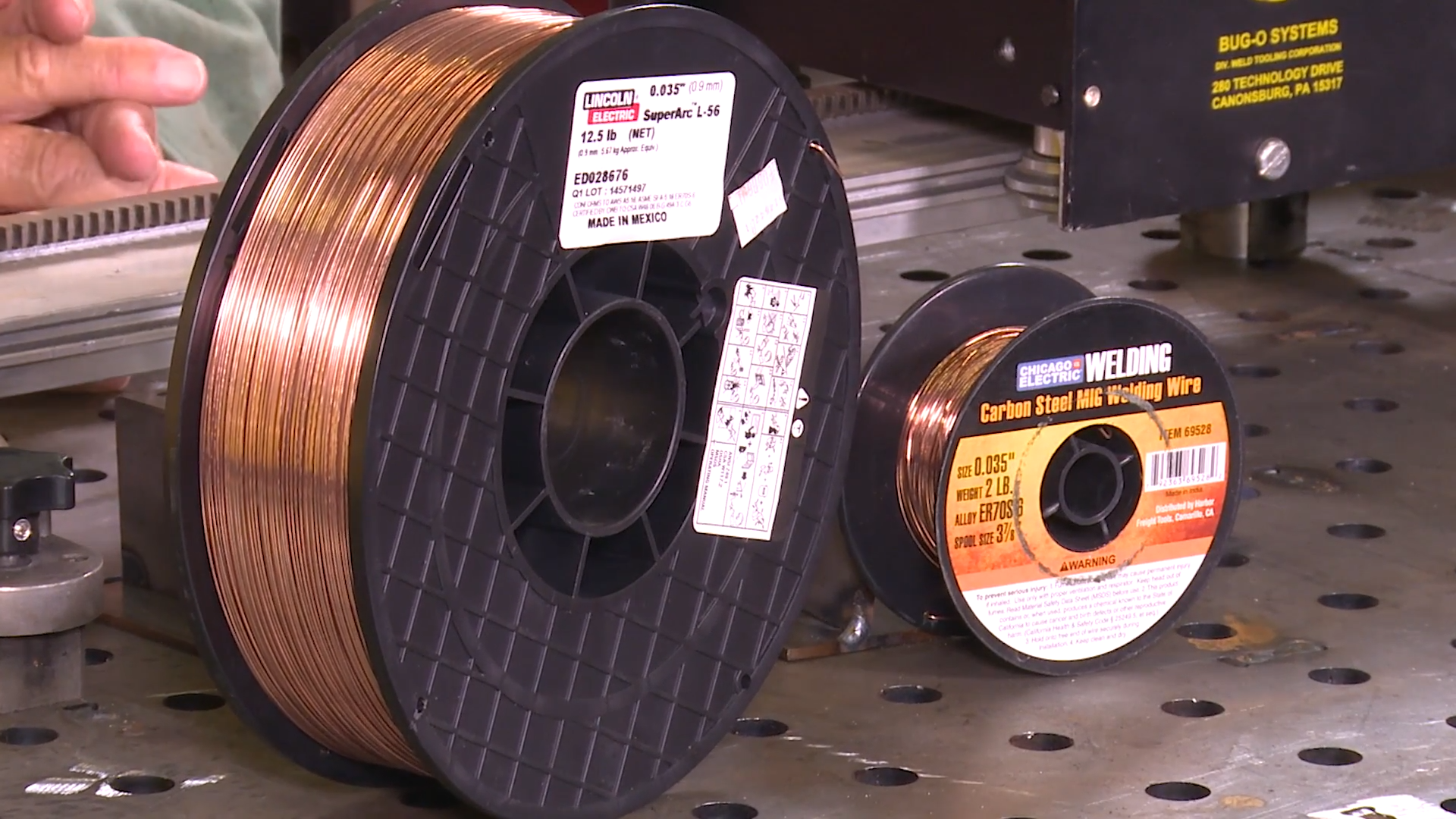
Common MIG wire spool sizes:
- 2 lb spools: $8-12, frequent changes, good for small jobs
- 10 lb spools: $25-35, standard hobby/small shop
- 25 lb spools: $50-70, best $/lb, fewer changes
- 33-44 lb spools: $65-100, professional shops
Selection strategy:
- Job needs 8-12 lbs: Buy one 10 lb spool
- Job needs 28-35 lbs: Buy two 25 lb spools OR one 33 lb spool
- Job needs 55 lbs: Buy two 33 lb spools (66 lbs total, 11 lbs buffer)
Bulk Ordering Savings
Price per pound decreases with spool size:
| Spool Size | Total Cost | Cost per lb |
|---|---|---|
| 2 lb | $10 | $5.00/lb |
| 10 lb | $30 | $3.00/lb |
| 25 lb | $60 | $2.40/lb |
| 44 lb | $88 | $2.00/lb |
Example: 50 lb project requirement
- Option A: Five 10 lb spools = $150 ($3/lb)
- Option B: Two 25 lb spools = $120 ($2.40/lb)
- Savings: $30 (20% reduction) by buying larger spools
Inventory Management
For shops with regular workload:
- Track monthly consumption by wire size
- Maintain minimum stock (1-2 spools of each size used)
- Order large spools when on sale/bulk pricing available
- Never run completely out—emergency retail purchases cost 40-60% more
Example: Shop uses 80-100 lbs .035″ wire monthly
- Stock: Four 25-lb spools (100 lbs) minimum
- Reorder trigger: When down to two spools (50 lbs)
- Reorder quantity: Four more spools
- Never runs out, always bulk pricing
Calculate deposition rates to optimize ordering with our Deposition Rate Calculator.
Frequently Asked Questions
How do you calculate filler metal weight for a weld?
Calculate filler metal weight using weld cross-sectional area × length × material density. For fillet welds: Weight (lbs/ft) = (Leg Size)² ÷ 2 × 3.4 for mild steel. Example: 1/4″ fillet = (0.25)² ÷ 2 × 3.4 = 0.106 lbs/ft. For 100 feet: 100 × 0.106 = 10.6 lbs theoretical weld metal. Then account for deposition efficiency—MIG at 90% efficiency requires 10.6 ÷ 0.90 = 11.8 lbs wire. Add 10% safety margin for total order of 13 lbs. Use our Filler Metal Weight Calculator for instant calculations.
What is deposition efficiency and why does it matter?
Deposition efficiency is the percentage of filler metal that becomes weld metal versus losses from spatter, slag, and stub waste. MIG spray transfer achieves 95-98% efficiency while Stick E7018 is only 62-68% efficient. This dramatically affects material ordering: a job requiring 40 lbs deposited weld metal needs only 41 lbs MIG wire (40 ÷ 0.98) but requires 62 lbs Stick electrodes (40 ÷ 0.65). Ignoring efficiency causes material shortages—ordering 40 lbs Stick for a 40 lb weld job leaves you 35% short with project incomplete.
How much does a 1/4 inch fillet weld weigh per foot?
A 1/4″ fillet weld on mild steel weighs approximately 0.106 lbs per linear foot of weld. This comes from: Cross-sectional area = (0.25″)² ÷ 2 = 0.03125 in², then Weight = 0.03125 × 3.4 (steel density factor) = 0.106 lbs/ft. For stainless steel, weight is nearly identical at 0.108 lbs/ft. For aluminum, weight is dramatically less at 0.037 lbs/ft (35% of steel weight). Over 500 feet, a 1/4″ fillet requires 53 lbs steel wire, 54 lbs stainless wire, or 18.5 lbs aluminum wire theoretically before accounting for deposition efficiency.
How do groove welds differ from fillet welds in weight calculation?
Groove welds fill the gap between beveled edges and use significantly more filler metal than equivalent-sized fillets because they have rectangular (not triangular) cross-sections. A 1/4″ fillet weld weighs 0.106 lbs/ft, but a groove weld on 1/4″ plate with V-bevel can weigh 0.15-0.18 lbs/ft (40-70% heavier). Groove weld weight depends on root opening, bevel angle, and plate thickness. Use approximation charts for field estimation or calculate actual joint preparation volume for precise requirements. Multi-pass groove welds also require 10-15% additional filler due to inter-pass overlap.
Do I need to account for multi-pass welds differently?
Yes, multi-pass welds require 10-15% more filler metal than pure joint geometry suggests because each pass slightly overlaps the previous pass and adds reinforcement. Single-pass 1/4″ fillet uses exactly 0.106 lbs/ft, but a 1/2″ fillet requiring 3-4 passes uses 0.48-0.52 lbs/ft instead of theoretical 0.425 lbs/ft (13-22% increase). For thick groove welds (1″ requiring 10+ passes), add 15-20% to geometric calculations. The more passes required, the higher the overhead percentage. This matters significantly on heavy plate welding where multi-pass overhead can add 10-20 lbs to a 100 lb job.
How much filler metal should I order for a job?
Order filler metal by calculating: (1) Theoretical weld weight from geometry, (2) Divide by deposition efficiency (MIG 0.90, Stick 0.65), (3) Add safety margin (5-20% depending on job complexity). Example: Job requires 30 lbs theoretical weld, using MIG short-circuit (90% efficient), general fabrication (10% safety margin). Calculation: 30 ÷ 0.90 = 33.3 lbs, then 33.3 × 1.10 = 36.6 lbs. Order 40 lbs (round up to spool sizes). Never order exactly calculated amount—real-world variations always consume 5-15% beyond estimates.
What’s the difference between steel and aluminum filler weight?
Aluminum weighs 35% as much as steel for equivalent weld size due to density difference (0.098 lbs/in³ for aluminum vs 0.284 lbs/in³ for steel). A 1/4″ fillet weld that weighs 0.106 lbs/ft in steel weighs only 0.037 lbs/ft in aluminum. For 100 feet: 10.6 lbs steel wire versus 3.7 lbs aluminum wire. However, aluminum filler wire costs 2-3x more per pound ($6-9/lb vs $2-3/lb for steel), so despite using less weight, aluminum material costs are similar or higher than steel on equivalent projects.
How do I estimate filler metal for stair fabrication?
Calculate stair filler metal by breaking down into components: stringers (usually groove welds or large fillets), treads (fillet welds on both sides), and railings (fillet welds at connections). Example: 12-tread stair with 36″ wide treads, 3/16″ fillet welds. Each tread: 2 sides × 36″ = 6 ft × 0.060 lbs/ft = 0.36 lbs. Total treads: 12 × 0.36 = 4.3 lbs. Add stringers, rail, and connections typically totaling 12-18 lbs for complete stair. Apply MIG efficiency (÷ 0.90) and safety margin (× 1.10) for final order quantity of 15-22 lbs wire depending on design complexity.
What happens if I run out of filler metal mid-job?
Running out of filler metal mid-job creates three problems: (1) Productivity loss—2-4 hours downtime waiting for delivery or driving to supplier, (2) Premium pricing—retail emergency purchases cost 40-60% more than bulk wholesale, (3) Quality concerns—switching wire brands/lots mid-project can cause appearance variations. A welder making $35/hr who wastes 3 hours = $105 lost labor plus $20-40 premium on emergency wire purchase = $125-145 total cost from poor estimation. Professional shops avoid this by calculating precisely and adding 10-15% safety margins on all material orders.
Should I buy larger spools to save money?
Yes, buying larger spools significantly reduces cost per pound—44 lb spools cost $2.00/lb while 2 lb spools cost $5.00/lb (150% premium for small sizes). However, balance bulk savings against: (1) Wire shelf life (solid wire lasts years, flux-core degrades if exposed to moisture), (2) Wire size variety needs (better to have three 10 lb spools of different sizes than one 44 lb spool of single size), (3) Storage space. For regular production work, buy largest spools of most-used wire size. For varied small jobs, buy medium spools (10-25 lbs) of multiple sizes for flexibility.
Conclusion: Accurate Filler Metal Weight Calculation Drives Profitability
Filler metal weight calculation is the difference between profitable jobs and money-losing projects because material estimation errors create two failure modes: underestimating causes project delays, emergency purchases at premium pricing, and quality concerns from switching wire mid-job, while overestimating ties up capital in excess inventory and makes bids non-competitive through inflated consumable costs. Professional fabricators calculate filler metal requirements to within 5-10% accuracy using joint geometry formulas (fillet = leg² ÷ 2 × 3.4 lbs/ft, groove = bevel area × length), deposition efficiency factors (MIG 1.10x, Stick 1.54x for E7018), and appropriate safety margins (5-20% depending on job complexity).
Key takeaways for accurate filler metal estimation:
- Weld geometry determines base weight—1/4″ fillet = 0.106 lbs/ft while 3/8″ fillet = 0.239 lbs/ft (2.25x heavier despite 1.5x larger leg)
- Deposition efficiency is non-negotiable—ordering 40 lbs Stick electrodes for 40 lb weld leaves 35% shortage; must divide by efficiency (40 ÷ 0.65 = 62 lbs needed)
- Multi-pass welds require 10-15% overhead beyond pure geometry due to inter-pass overlap and reinforcement
- Material density matters enormously—aluminum uses 65% less weight than steel but costs 2-3x more per pound, making costs comparable
- Safety margins (10-15%) prevent mid-project material shortages that cost $100-150 in wasted time and premium pricing
For hobby welders doing occasional projects, rough estimates with generous safety margins work fine. For professional shops bidding competitive jobs, precise filler metal calculations are mandatory—the difference between 10% profit margin and 25% profit margin often comes down to accurate material estimation that prevents waste while ensuring project completion without delays.
Related calculators and tools:
- Filler Metal Weight Calculator – Calculate wire and electrode requirements
- Weld Deposition Rate Calculator – Determine productivity for job scheduling
- Wire Consumption Calculator – Estimate consumables with efficiency factors
- Weld Cost Calculator – Complete job cost estimation including materials
- Metal Weight Calculator – Calculate base metal weights
- Pipe & Tube Weight Calculator – Weight calculations for tubular materials
Have questions about filler metal calculations or job estimation? Drop a comment below or reach out—we’re here to help!
After volume math, pick the right estimating approach with Estimating Methods — Which to Use, or diagnose overruns via Consumption Troubleshooting.
Calculated pounds still miss? Diagnose shortages, over-orders, wrong deposition efficiency, and joint-volume errors with Filler Metal Weight Troubleshooting.
Welding
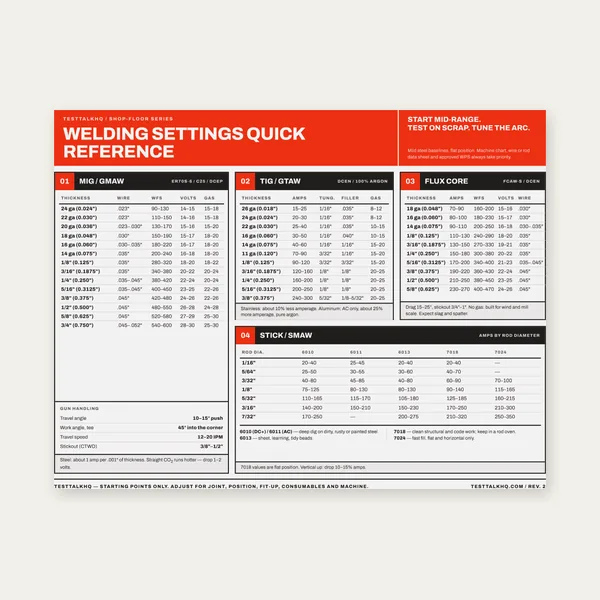
Welding Reference Card
One page. MIG, TIG, stick and flux core settings by thickness.
$3.99
Buy
Complete Welding Settings Guide
19 pages. Four processes, stainless and aluminum, symbols and inspection.
$12.99
Buy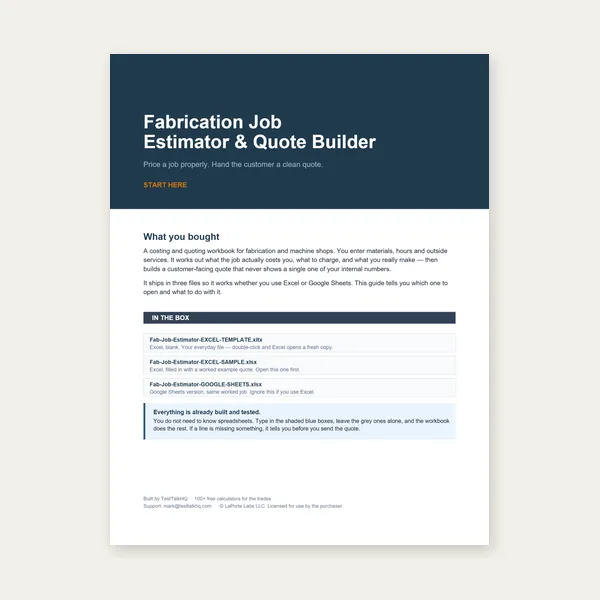
Welding Job Estimator
Price the job, then hand over a quote with no internal numbers.
Excel or Google Sheets. Best on a computer.
$29.00
Buy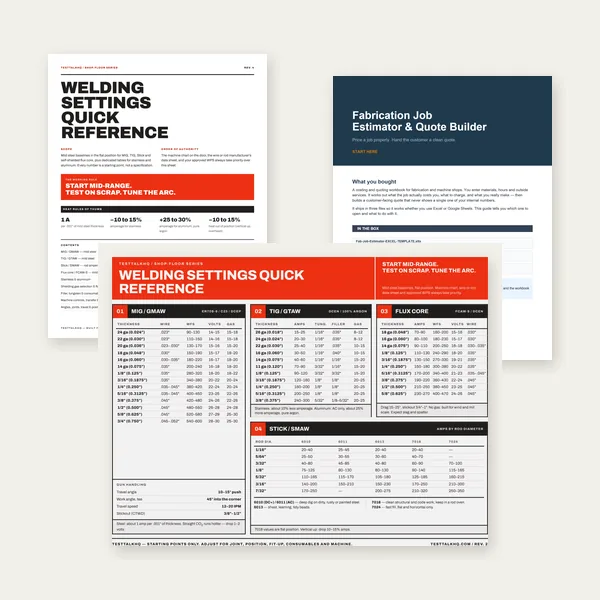
Welding Complete Bundle
Card, 19-page guide and the estimator workbook. All six files.
Excel or Google Sheets. Best on a computer.
$34.99
$45.98 if bought separately — save $10.99
BuyCheckout opens in a new tab.