
The control decision the six-to-eight starts per hour band is actually asking you to make

The question is not really about controls
Nobody sets out to choose a compressor control scheme. What happens is that a machine starts too often, somebody counts the starts, and then there is a decision to make — and CAGI’s guidance names it precisely: “if the compressor starts more than six to eight times per hour, you should operate constant speed control or choose a larger compressor. If the compressor starts less than six times per hour, start/stop control should be sufficient.”
So the band from six to eight starts an hour is the threshold where the control scheme becomes the live question. Below it, start/stop is the right answer and anything else is wasted money and wasted energy. Above it you have a genuine fork, and — importantly — changing the control is only one of the branches.
What the three schemes actually do
CAGI’s buyer’s guide describes all three. The differences are mechanical and they matter.
| Scheme | How it works | CAGI’s description |
|---|---|---|
| Start/stop | The motor stops at cut-out and restarts at cut-in. No motor rotation between demands. | “Used for applications where air is not required continually, allowing the compressor sufficient cooling time.” |
| Constant speed | The motor keeps turning. The pump cycles between compressing and free-wheeling (not compressing) instead. | “Keeps the compressor from excessively starting and stopping… prevents premature motor failure and minimizes operating costs associated with high amp-draw.” |
| Dual control | Either of the above, selectable, so the mode can follow the season or the shift. | “Allows the compressor to operate in either start/stop mode or constant speed control mode… dependent upon compressed air usage.” |
The single most important consequence: on constant speed control the starts per hour figure stops being a useful measurement. The motor is not starting. Everything this site’s duty cycle calculator says about cycling applies to a start/stop machine; on constant speed the duty cycle still describes how hard the pump works, but the starts count does not describe anything.
The decision, by measured starts per hour
Measure the cycle before you decide anything: time the motor’s run, time its off period, add them, divide sixty by the total. Then:
| Starts/hr per motor | What CAGI points to | Try first | Why |
|---|---|---|---|
| Under 6 | Start/stop is sufficient | Nothing | The motor stops, stays stopped long enough to cool, and draws nothing between demands. This is the cheapest state to be in. |
| 6 to 8 | The band where start/stop stops being the answer | Storage or pressure band | You are a small change from compliance. Receiver gallons or a wider differential will usually clear it for less than a control change costs. |
| 8 to roughly 15 | Constant speed, or a larger compressor | Storage first, then controls | Still often fixable with storage, but check the duty cycle: if it is also high, you have a capacity problem and the control change will not address it. |
| Over 15 | Constant speed control, or a larger compressor | Controls, capacity, or both | The storage needed to get this under 7 by tank alone is usually impractical. Run the numbers before dismissing it, though — sometimes it is one more receiver. |
The reason “try storage first” appears in three of those four rows is that storage has no operating penalty. A bigger receiver costs money and floor space once. Constant speed control costs energy every hour the compressor is powered, because the motor is turning whether or not air is being made.
Any trade
Contractor Job Estimator
Price remodels and GC work, then send a quote with no internal numbers.
Excel or Google Sheets. Best on a computer.
$29.00
BuyCheckout opens in a new tab.
What the three fixes actually cost
Storage and pressure band are the two fixes you can buy; the third is a switch setting you verify with a gauge. Leak hunting is cheaper than all of them and moves the duty cycle as well as the cycling.
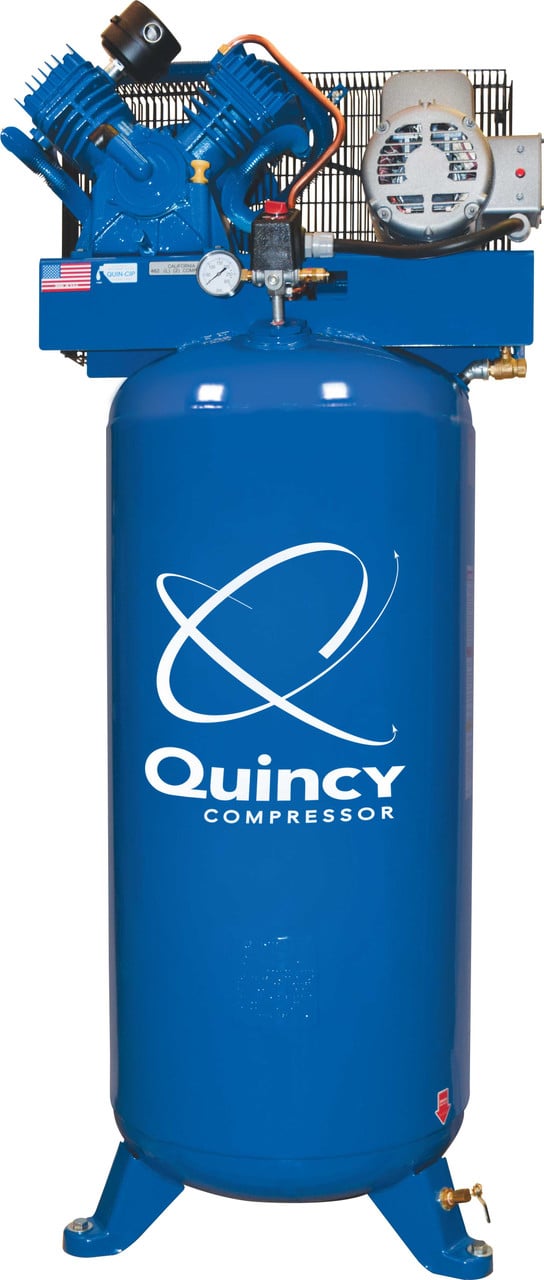
Quincy QT‑54 5 HP 60 Gallon Two‑Stage
- 60 gallons is 8.02 CF of receiver before any piping is counted
- Two-stage pumps run a wider pressure band, which is fix two built in
- Pressure-lubricated pumps are the ones rated for long loaded runs
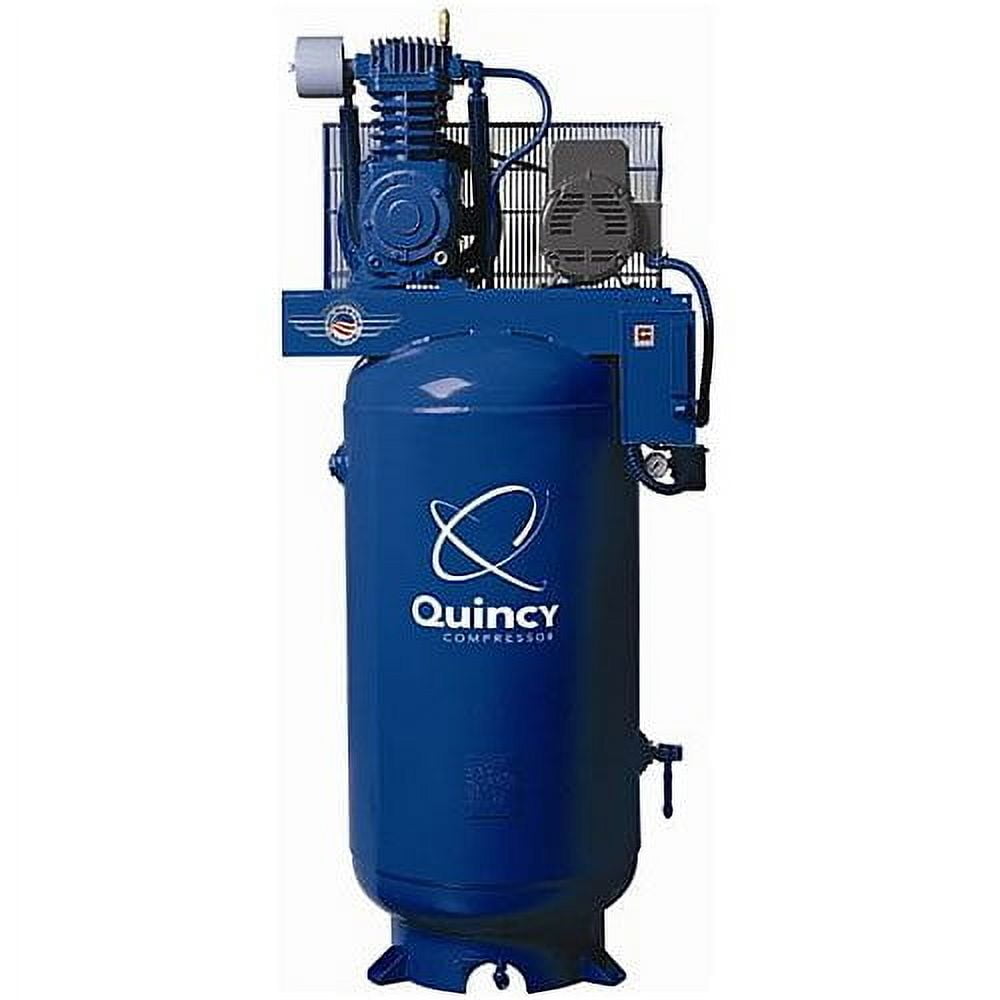
Quincy QT‑7.5 7.5 HP 80 Gallon
- 80 gallons is 10.70 CF — a third more free air per cycle than a 60
- More delivered CFM moves the worst-case demand point up with it
- Where demand has outgrown the pump, storage alone will not save it

LE LEMATEC Regulator & Gauge 0‑150 PSI
- Every cycle figure hangs on the actual cut-in and cut-out, not the label
- A drifted differential is a short-cycle you can often fix for free
- Set the regulator to what the tool needs, not to what the tank holds
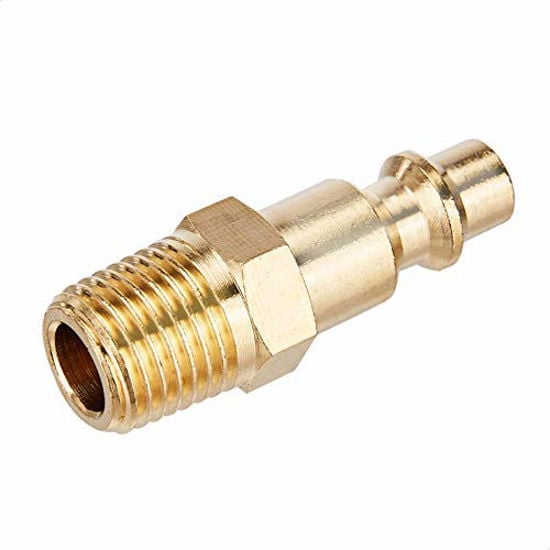
Quick‑Connect Brass Coupler & Plug Kit
- Leaks are demand, and demand sets both the duty cycle and the cycling
- Worn couplers are the most common hidden CFM on any shop air system
- CAGI calls under 10 percent leakage well maintained, over 30 percent common
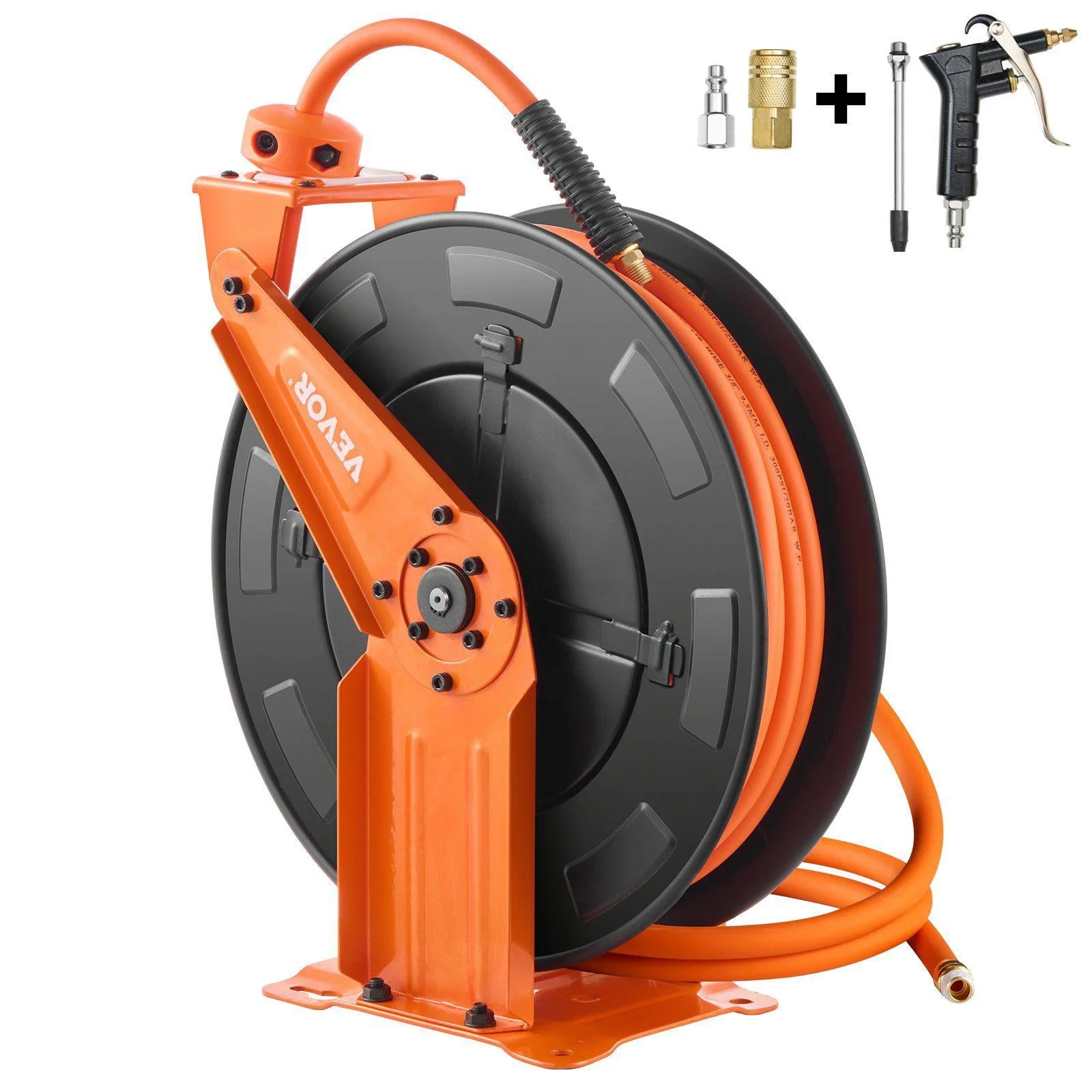
Relhost Retractable Air Hose Reel 65 ft x 3/8 in
- CAGI counts piping as storage — a long fat main genuinely lengthens the cycle
- Undersized hose is pressure drop, which pushes the regulator and switch up
- Storage near a heavy intermittent user is CAGI’s fix for demand gulps
As an Amazon Associate, TestTalkHQ earns from qualifying purchases. Prices and availability can change.
The trade you are actually making
Each branch pays for the starts reduction in a different currency, and the right answer depends on which currency you have.
| Branch | What it costs | What it does not cost | Best when |
|---|---|---|---|
| More storage | Capital and floor space. A longer fill from cold. | Nothing operational. No energy penalty at all. | Almost always the first thing to try, and the only option under 10 HP |
| Wider pressure band | Nothing, if the machine is rated for it. More leakage and more energy per CFM at the higher pressure. | No capital at all | There is unused headroom between your cut-out and the pump’s rating, and your tools tolerate the lower cut-in |
| Constant speed control | Energy, continuously — the motor turns while the pump free-wheels | Motor starts, and the thermal and current stress that come with them | Demand is near-continuous and the machine is 10 HP or larger |
| Dual control | The hardware, plus remembering to switch modes | Being locked into the wrong mode for half the year | Demand genuinely changes between shifts or seasons |
| Alternate a second machine | Two machines to maintain. Needs the alternation to actually happen. | Any change to the system cycle — it shares starts rather than reducing them | You already have, or need, redundancy |
| A larger compressor | Capital, and a worse cycling position if the receiver stays the same size | — | The duty cycle is high too, i.e. it is a capacity problem |
Where the duty cycle decides it for you
There is one measurement that settles most of this table, and it is not the starts count. Because the storage term cancels out of the pump-up over cycle-time ratio, the duty cycle is exactly demand divided by capacity — no tank term, no pressure term.
Read the two numbers together and the branch chooses itself:
- Starts high, duty low. A pure cycling problem. Storage or pressure band, and controls are overkill. This is the common case in a small shop with a modest tank.
- Starts high, duty high. Demand is sitting near half of capacity and the machine is working. Cut demand — leaks first — then add storage. A control change treats neither cause.
- Starts low, duty high. Not a controls question at all. The machine is running most of the hour and has no headroom; it needs more CFM or less demand. Constant speed control would change nothing, because the motor is barely stopping as it is.
That third case is the one that gets money spent on the wrong thing most often, and it is why bigger tank vs more CFM is a separate decision from this one. Settle capacity versus storage there; settle control scheme here.
Things that are not a control decision
Three adjacent choices get folded into this conversation and should not be.
Compressor technology. Reciprocating versus rotary screw is a different question with a different answer, and it inverts the duty-cycle logic entirely. CAGI: reciprocating machines are “ideally suited for intermittent duty cycles”, while rotary screw, vane, scroll and centrifugal compressors “are all designed to run best fully loaded all of the time” and running them at low duty cycles “is not optimal for reliability.” A screw compressor does not want your intermittent load. See rotary screw vs piston.
Single-stage versus two-stage. That is a pressure and efficiency choice — CAGI puts single-stage at 125 to 135 PSI and two-stage at 175 PSI, and notes that pressures under 100 PSIG can be handled single-stage with multi-stage above that. It touches cycling only because a two-stage machine’s wider usable band gives you more free air per cycle for free. Covered in single-stage vs two-stage.
Variable speed drive. A VSD machine modulates output to track demand and may not cycle at all, which makes both the starts count and the fixed-speed duty cycle the wrong frame. CAGI lists variable-speed-plus-multiple-fixed-speed as the usual answer to large demand swings, with the caveat that multiple compressors need a master controller “to ensure efficient system operation.” That is a system design conversation rather than a switch setting.
Putting it together
A workable order of operations, assuming you have measured the cycle:
- Read both numbers. Starts per hour and duty cycle. One without the other misleads.
- If the duty cycle is high, stop here. You have a capacity or demand problem. Fix leaks, then capacity. Controls are irrelevant.
- Check the pressure band is what the label claims. A drifted switch is the cheapest fix there is, and it is common.
- Price the storage. Work out the receiver gallons needed to get under your limit at the worst-case demand, not just today’s. It is often less than you expect, and it has no operating cost.
- Only then consider controls — and only if the machine is large enough to offer them, which CAGI puts at roughly 10 HP and up.
- Choose dual control if demand genuinely varies between shifts or seasons; constant speed if it is reliably continuous.