Two-stage compressors are sold as the efficient option and the claim is usually left there, which is a shame, because the real story is more useful than the sales version. The benefit is genuine, it is larger than most people expect, and it comes from one specific mechanism that also tells you precisely when the extra hardware is not worth paying for. It also produces a number on a data sheet that looks like cheating and is not. Here is the physics, the published data, and the decision.
The claim, and what the data says about it
Two-stage compressors are sold as the efficient choice, and the claim is usually left at that. It is true, it is bigger than most people expect, and it has a physical reason that is worth understanding — because that reason also tells you exactly when two stages are not worth paying for.
Here is what the published data shows. From 126 CAGI data sheets covering one manufacturer’s current lubricated rotary screw range:
Two-stage (n = 12) isentropic efficiency 83.6% – 88.6%, median 86.2%
The two ranges barely overlap. The worst two-stage sheet in the set, at 83.6%, beats 113 of the 114 single-stage sheets. That is not marketing; it is intercooling.
Why intercooling wins, in one paragraph
Compressing air heats it, and hot air resists being compressed further. A single-stage machine takes the air from inlet to final pressure in one uninterrupted squeeze, so the second half of the compression is fighting against air that the first half has already heated. Split the job in two, run the partly compressed air through a cooler, and the second stage starts with cold air again. Less work for the same pressure.
The theoretical limit of that idea is isothermal compression — infinitely many stages with perfect cooling between each — and it needs considerably less work than adiabatic compression. Two stages with perfect intercooling capture a decent chunk of the gap:
at 100 psig (7.90:1) 14.7%
at 125 psig (9.62:1) 16.0%
at 175 psig (13.07:1) 18.2%
Notice that the benefit grows with the pressure ratio. That is the whole decision in one line: the higher the pressure, the more two stages are worth.
When two stages pay, and when they do not
Pressure is the first question
Below about 100 psig the intercooling benefit is at its smallest and the extra hardware is at its least justified. At 175 psig it is at its largest. If your plant genuinely runs high pressure — and the honest check is whether it needs to, not whether it currently does — two stages start to make the case on their own.
Running hours are the second
The two-stage premium is capital; the saving is energy. A machine that runs two hours a day recovers a premium slowly. One that runs two shifts recovers it quickly. Take the specific power difference, multiply by your loaded hours and your tariff, and compare against the price difference — the compressed air cost calculator does that arithmetic.
Size is the third, and it is mostly decided for you
Two-stage screw packages cluster at the larger end. In our set the twelve two-stage sheets were all 100, 125 or 150 hp, while the single-stage sheets ran from small machines upward. Below a certain size the choice does not really exist in the rotary market, and the decision becomes piston-versus-screw instead — a different question, covered in rotary screw vs piston compressor.
Where it does not pay
- Low pressure, low hours. A 100 psig machine running a few hours a day will not see the premium back inside a reasonable horizon.
- Highly variable demand. If the machine spends most of its life unloaded, full-load efficiency is not what is costing you. Storage, control strategy or a variable-speed machine will do more than a second stage.
- When the real problem is elsewhere. Leaks and an inflated system pressure routinely waste more than the entire single-to-two-stage difference. Fix those first, then decide; the machine you need afterwards may be smaller as well as simpler.
The instruments that settle it
Nearly every argument about compressor efficiency is really an argument about a number nobody has measured. The capacity came off a brochure, the power came off a nameplate, and the pressure came off a gauge that has not been checked since it was installed. Three instruments end that: something that reads current with the machine loaded, something that reads the voltage it is loaded at, and for a small single-phase unit, something that simply reads watts at the plug.

Klein Tools CL800 Digital Clamp Meter
- True RMS, so a drive-fed motor reads honestly
- Clamp one leg with the machine loaded and you have the current
- 1000V rating covers 480V three-phase compressor rooms
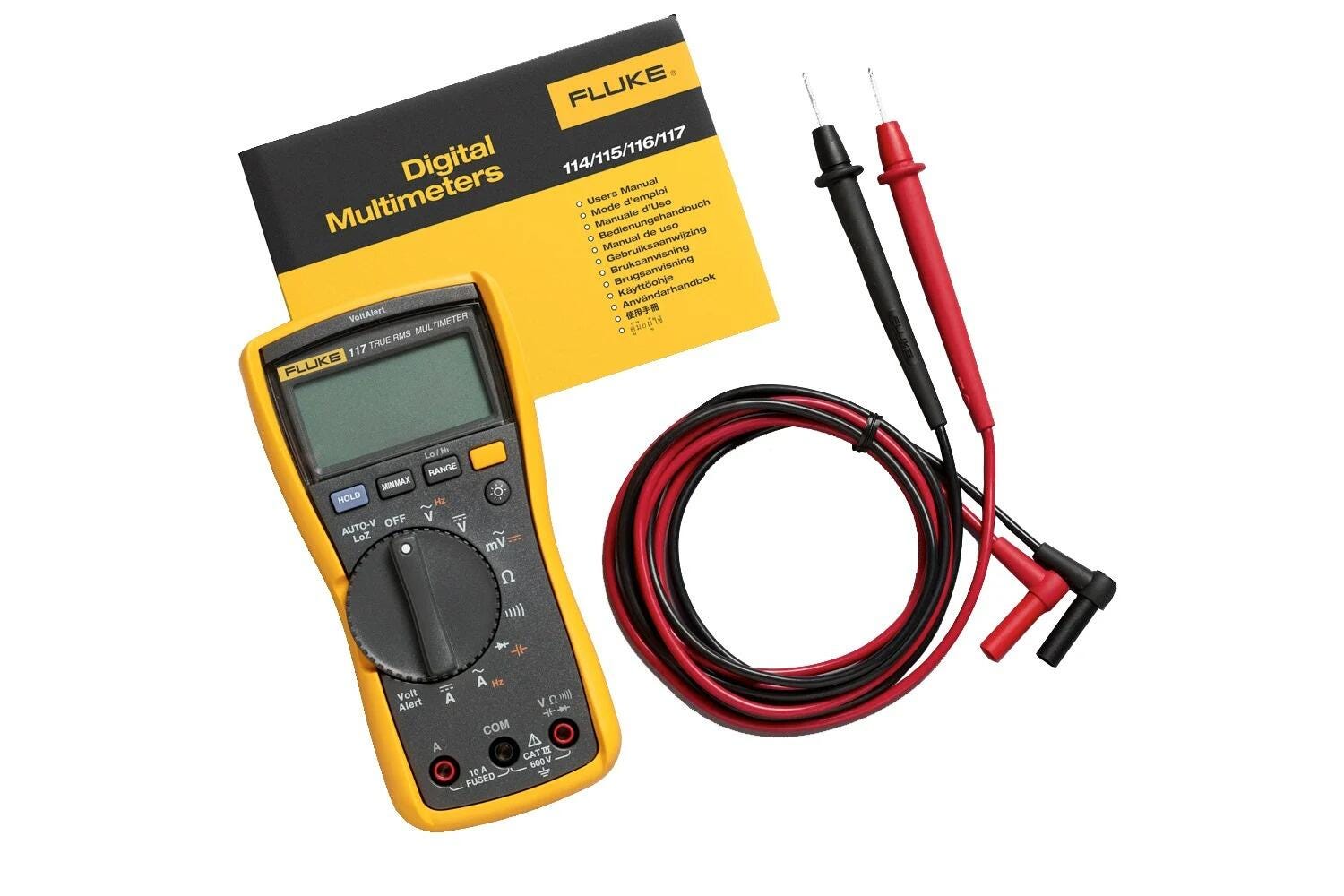
Fluke 117 Digital Multimeter
- Amps alone are not kilowatts — you need volts under load
- True RMS with a low-impedance mode that ignores ghost voltage
- The reference meter most compressor rooms already trust
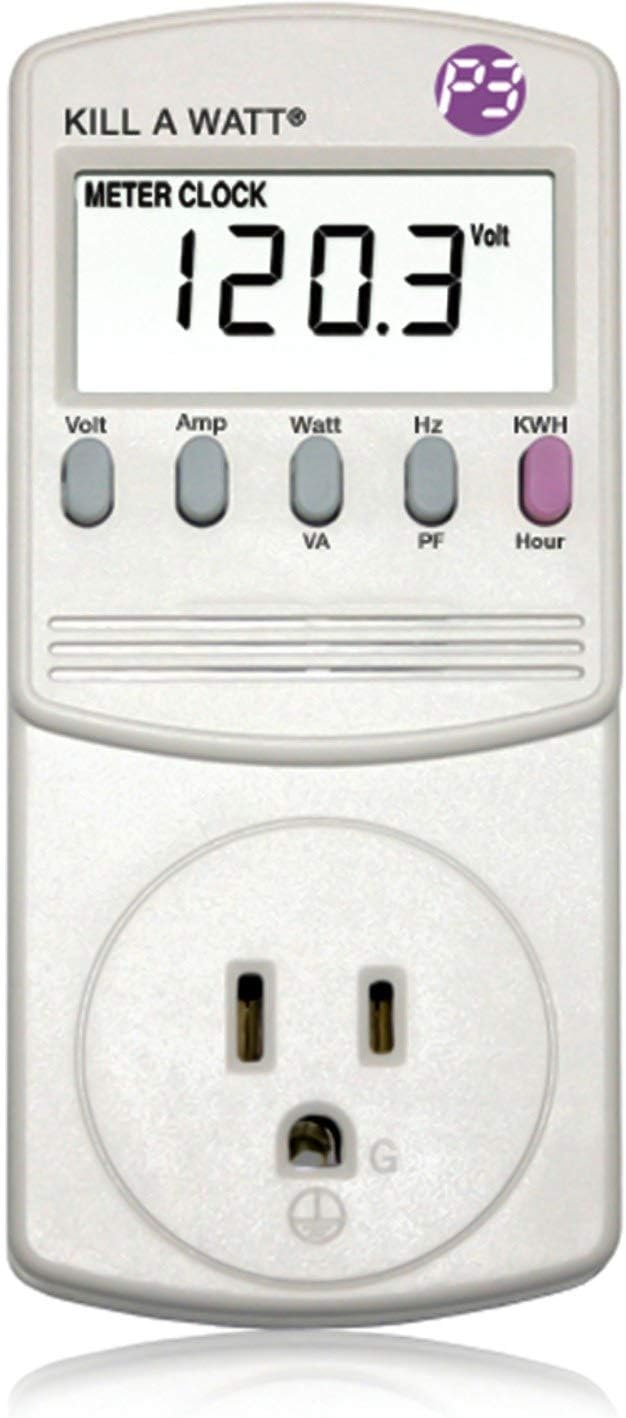
P3 P4400 Kill A Watt Monitor
- Plugs inline with a 120V compressor and reads true watts
- Totalises kWh, so you get loaded hours as well as power
- The cheapest way to find what a garage unit really costs
LE LEMATEC Regulator 0–150 PSI
- Regulate the one thirsty tool instead of the whole system
- Lets the header come down without starving the outlier
- The cheapest kilowatt is the one you never compress
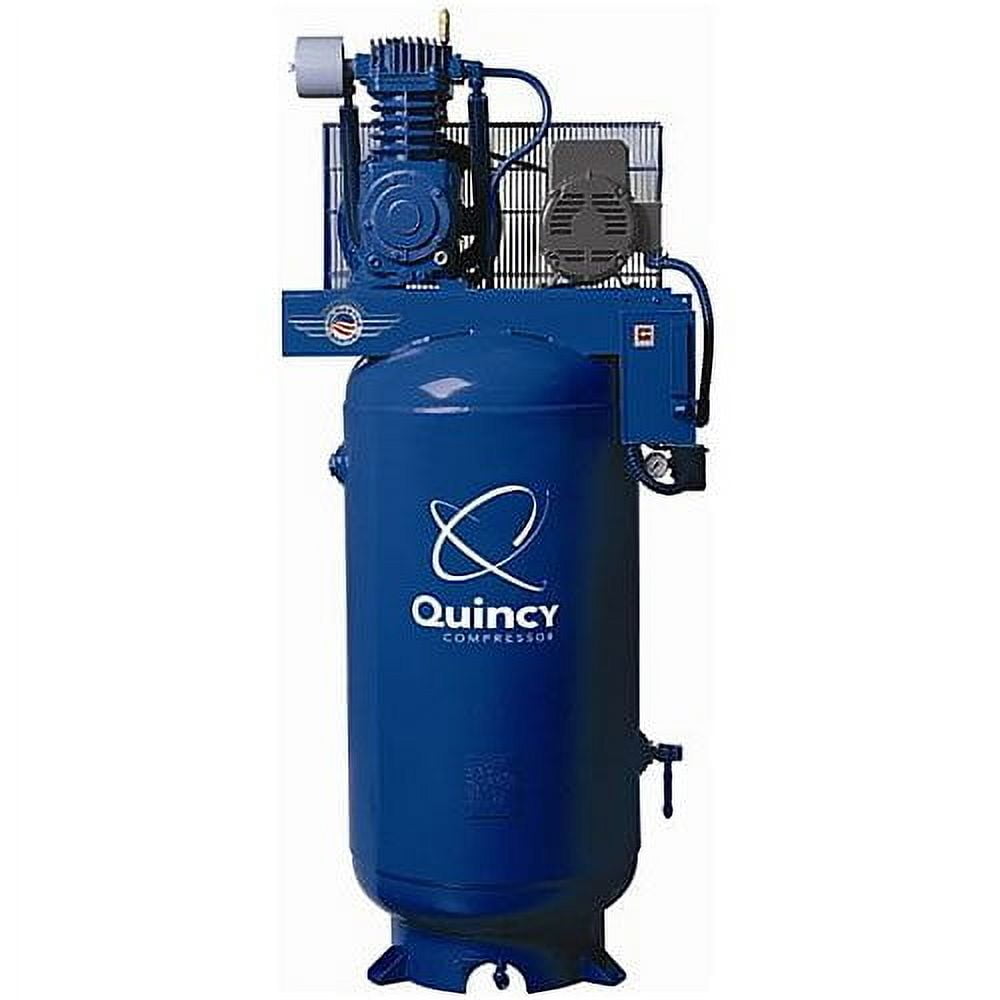
Quincy QT-7.5 Two-Stage Compressor
- Intercooled two-stage pump, the arrangement these pages explain
- 80-gallon receiver keeps the duty cycle honest
- Meter it when it arrives and you have a real baseline
As an Amazon Associate, TestTalkHQ earns from qualifying purchases. Prices and availability can change.
What the second stage costs you back
None of the efficiency argument is free, and a fair comparison has to price the other side of it. A two-stage machine has more of almost everything.
An intercooler that has to stay clean
The whole benefit lives in the intercooler. Foul it — oil mist, dust, a radiator packed solid in a woodshop — and the second stage starts with warm air instead of cold, the interstage pressure drifts up, and the efficiency advantage quietly evaporates while the machine carries on running. A single-stage machine has nothing equivalent to lose. If you buy two stages, the intercooler goes on the maintenance schedule as a first-class item, not as part of a general clean-down.
Condensate between the stages
Cooling compressed air is how you make liquid water, and an intercooler makes it deliberately and at interstage pressure. On a two-stage machine that means an interstage drain that has to work, because water carried into the high-pressure stage is bad news in a piston machine and unhelpful in a screw. It also means the machine removes a chunk of the moisture load before the aftercooler ever sees it, which is a genuine benefit downstream — the compressed air condensate calculator shows how much water is in play.
More heat, in the same room
Virtually all the electrical energy going into a compressor comes back out as heat, so a more efficient machine rejects less heat for the same air — but a two-stage machine of the size where two stages make sense is usually a large machine, and it now has two coolers to reject through rather than one. That is a compressor room ventilation question, and it is the one that quietly limits what you can install: see the compressor room ventilation calculator.
More to go wrong, and more to buy
Two airends or two cylinder sets, an intercooler, an interstage relief and an interstage drain, plus the instrumentation to watch them. Capital cost is higher, service parts cost more, and a shop with no maintenance discipline will lose the efficiency advantage inside a couple of years. This is not an argument against two stages; it is an argument for being honest about what you will actually maintain.
Questions to ask before you sign
- “Can I have the CAGI data sheet for this exact model at this exact pressure?” Not the brochure, not the range. If the answer is no, the performance is not verified and everything else is a conversation about opinions.
- “What is item 3, at what pressure?” Capacity in acfm at the inlet, measured to ISO 1217, at the operating pressure in item 4 — not at some other pressure and not a displacement figure.
- “What is item 11?” Total package input power at that capacity and pressure, drive motor plus fan plus controls. Work out specific power yourself and check it matches item 12.
- “What is item 10?” Package power at zero flow. On the published sheets this ran from 22.5% to 40.6% of full-load power. If your demand is intermittent, this number will cost you more than item 13 ever will.
- “How many stages?” Because it decides which band item 13 should be judged against, and a vendor comparing a two-stage 86% against a competitor’s single-stage 76% is either confused or hoping you are.
- “Is this model in the Performance Verification Program?” The starred items on the sheet are the ones a third-party administrator verifies. The rest are the manufacturer’s own claims on a standard form.
Two stages on a piston machine is a different animal
Everything above is rotary screw data, because that is what the CAGI Performance Verification Program covers — rotary compressors from 5 to 200 hp. Reciprocating packages are not in the programme, so there is no equivalent set of independently verified sheets and no honest band to quote.
The physics does not change. A two-stage piston compressor runs a large-bore low-pressure cylinder, passes the air through an intercooler, then a small-bore high-pressure cylinder, and gains from intercooling for exactly the same reason. In the shop market it is also how you get to 175 psig at all: single-stage piston machines are generally a 125 to 135 psig proposition, and two-stage is what puts the higher pressure on the table.
The short version
- Two stages genuinely are more efficient, by 14.7% at 100 psig, 16.0% at 125 and 18.2% at 175 in ideal terms — and the published sheets show 86.2% median against 73.3% in practice.
- The benefit grows with pressure. If you run high pressure and you have checked that you need to, two stages is the answer.
- The benefit is energy, so it needs hours to pay a capital premium back.
- Never compare a two-stage item 13 against a single-stage one. Use specific power at an identical pressure to cross that line.
- Fix leaks and system pressure first. Both routinely waste more than the entire single-to-two-stage difference, and both are cheaper.