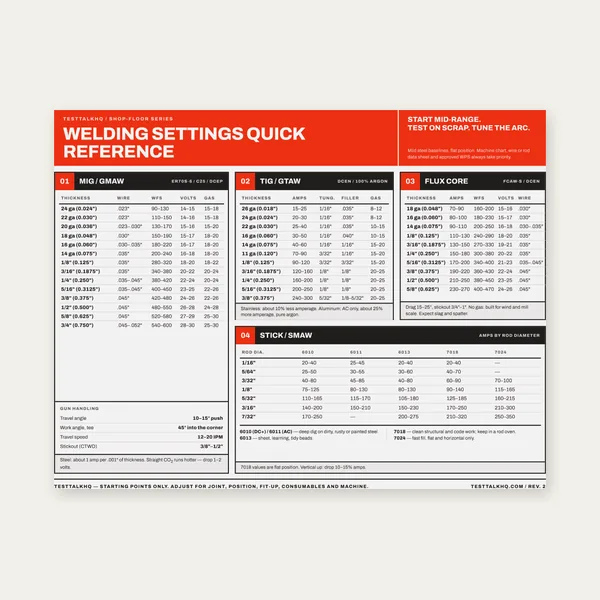
Welding Reference Card
One page. MIG, TIG, stick and flux core settings by thickness.
$3.99
BuyElectrode & work lead AWG — ampacity + voltage drop
Enter welding output amperage, combined electrode + work cable length, and optional duty cycle. Get recommended Class K-style welding cable size. Not MIG filler wire — see the Welding Cable Size Guide for lead vs wire vs building-wire distinctions.
| AWG | Typical ampacity (A) | Ω per 1000 ft |
|---|---|---|
| 6 | 105 | 0.510 |
| 4 | 140 | 0.321 |
| 2 | 190 | 0.202 |
| 1 | 220 | 0.160 |
| 1/0 | 260 | 0.127 |
| 2/0 | 300 | 0.101 |
| 3/0 | 340 | 0.080 |
| 4/0 | 380 | 0.063 |
Values align with common AWS/NEMA flexible welding cable ratings — not NEC building-wire ampacity. Long runs often require larger AWG than ampacity alone due to voltage drop.
One page. MIG, TIG, stick and flux core settings by thickness.
$3.99
Buy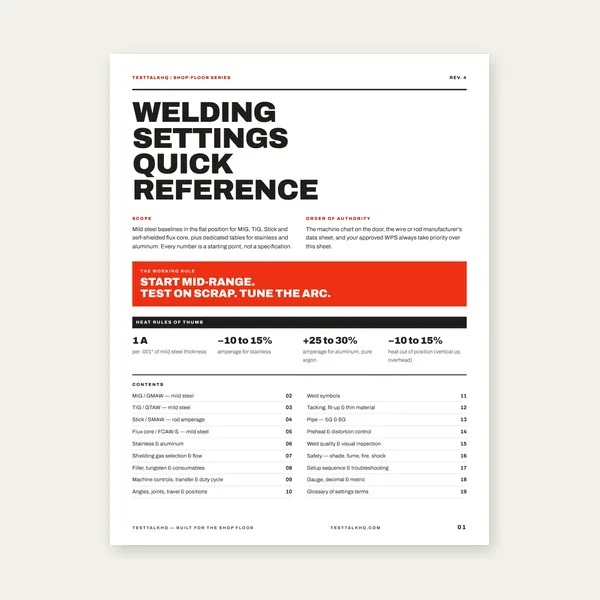
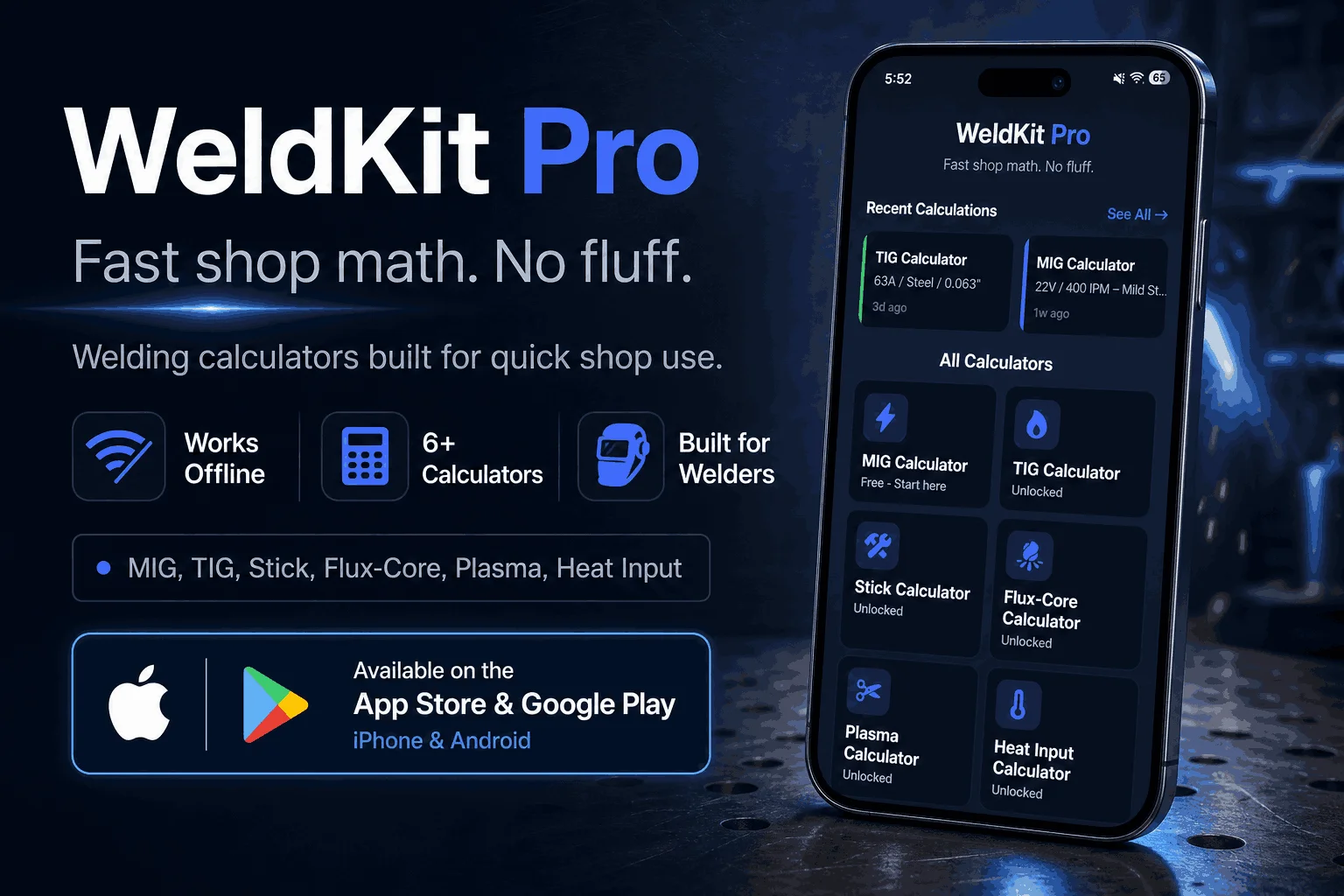
19 pages. Four processes, stainless and aluminum, symbols and inspection.
$12.99
Buy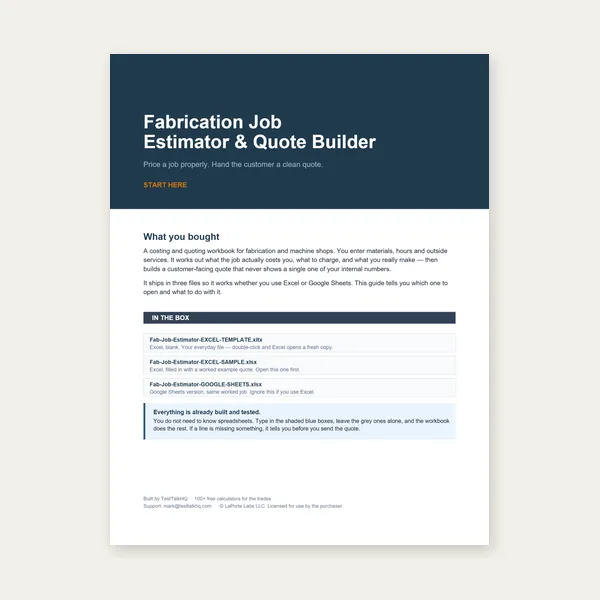
Price the job, then hand over a quote with no internal numbers.
Excel or Google Sheets. Best on a computer.
$29.00
Buy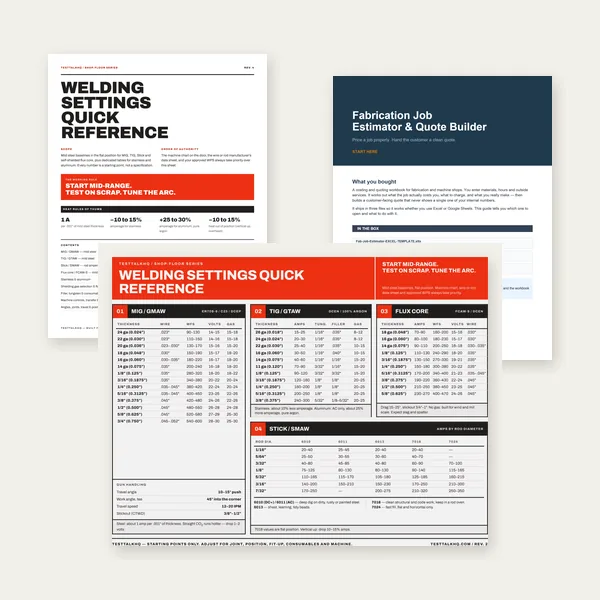
Card, 19-page guide and the estimator workbook. All six files.
Excel or Google Sheets. Best on a computer.
$34.99
$45.98 if bought separately — save $10.99
BuyCheckout opens in a new tab.
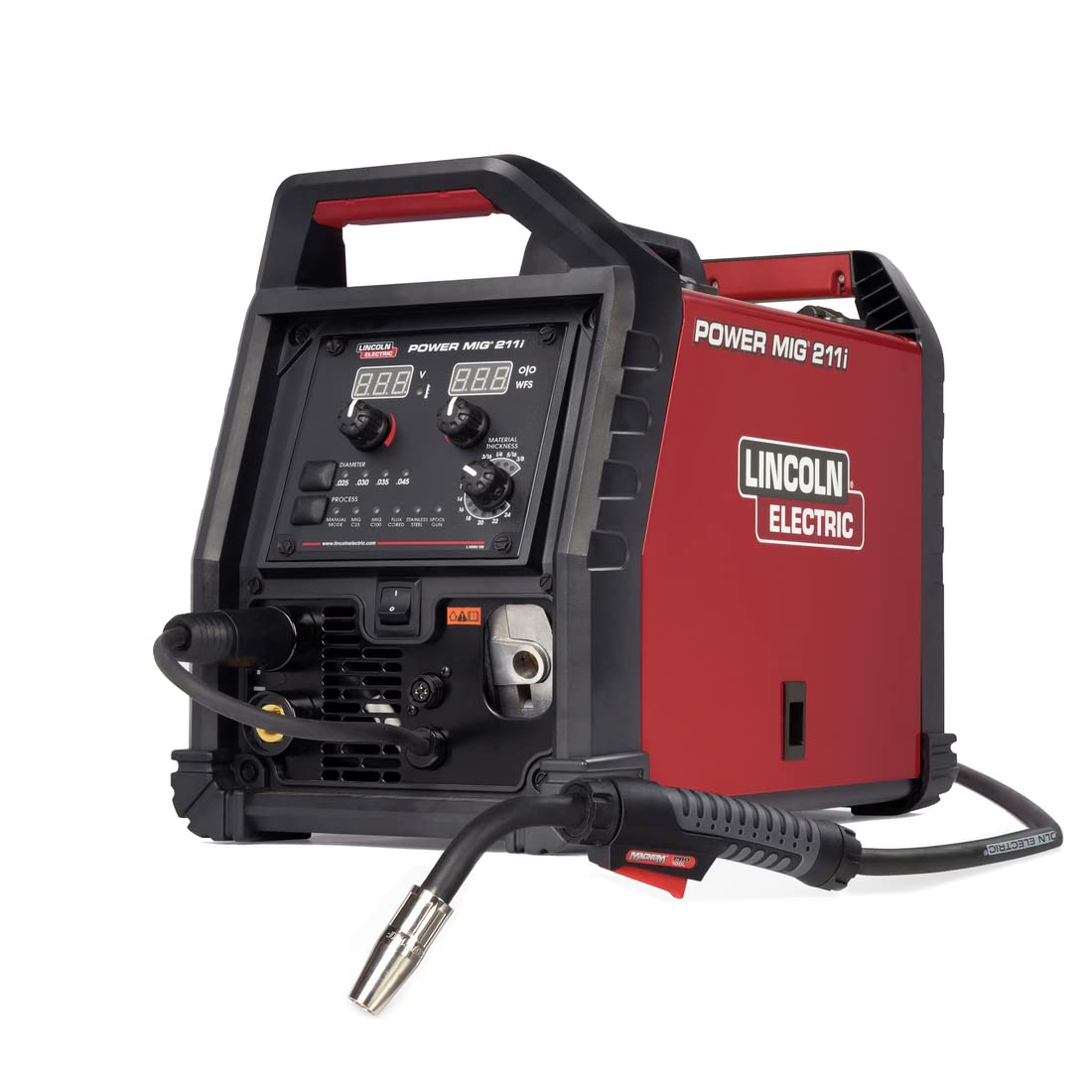
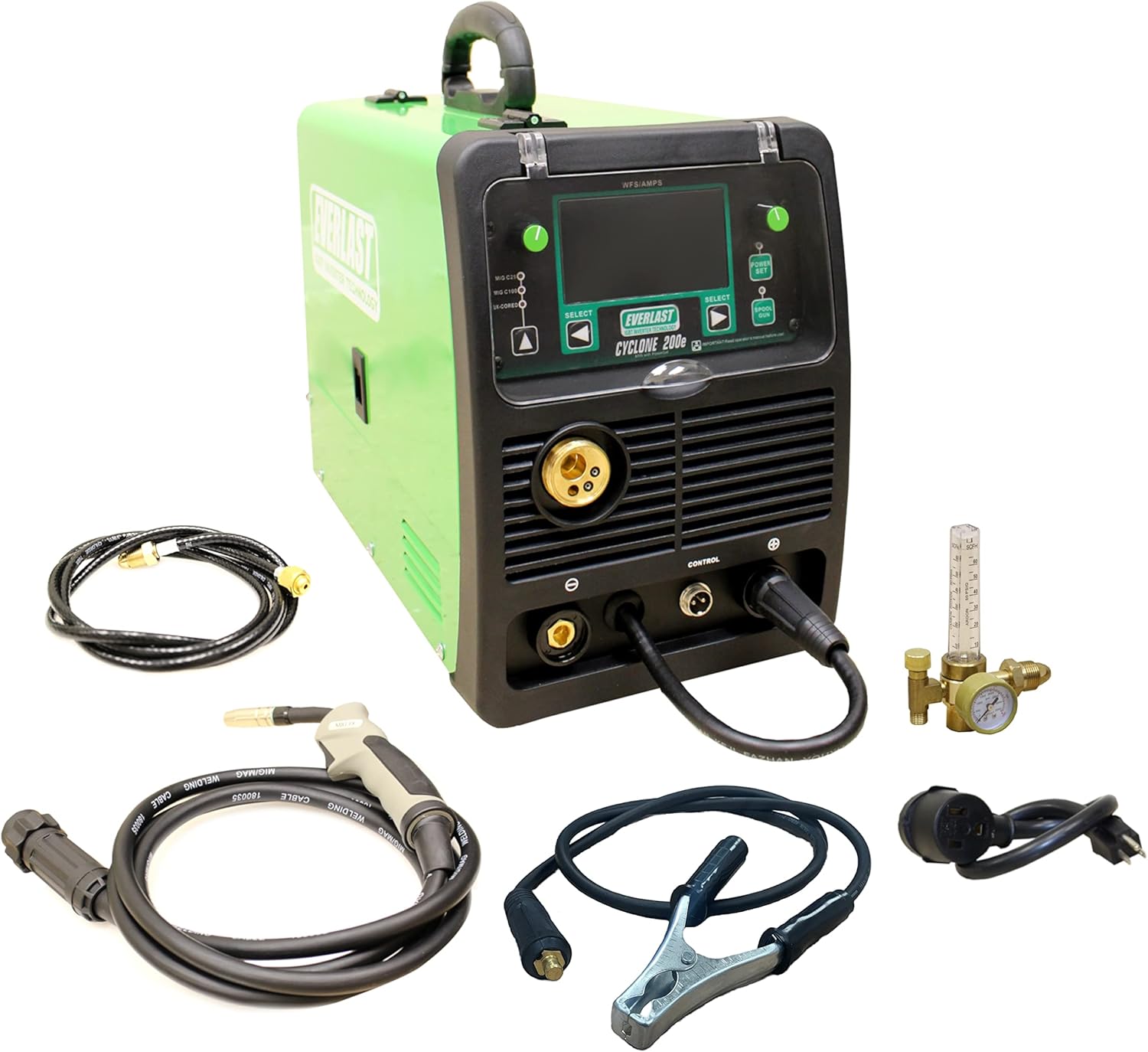
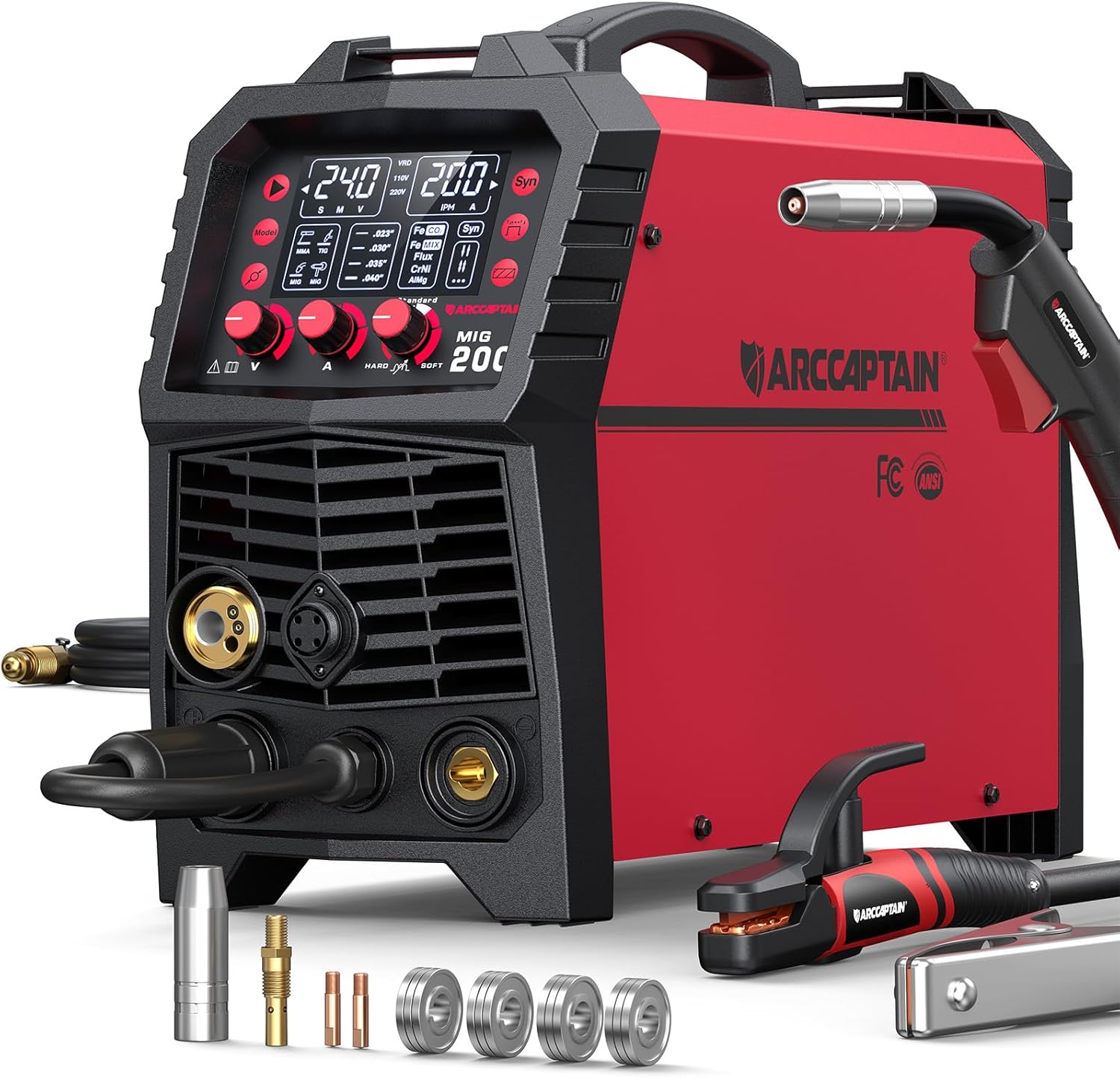
Machines with published output ratings plus holders and cart space for long lead runs.
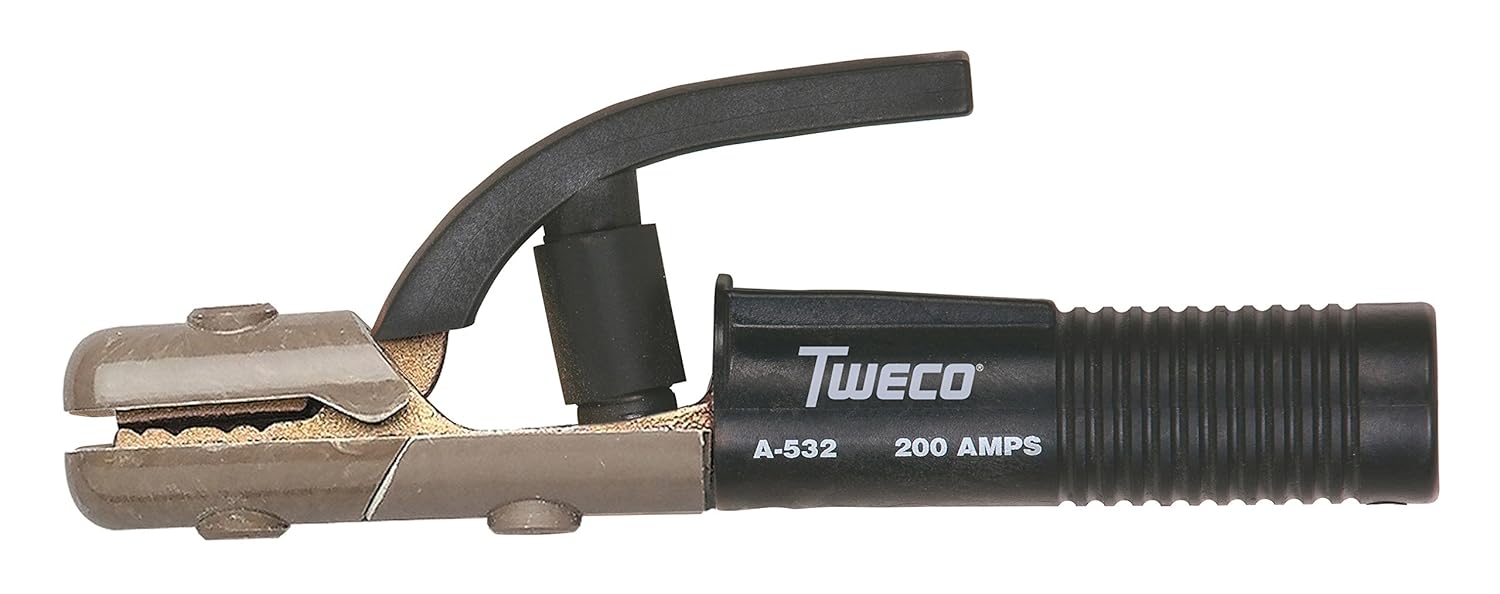
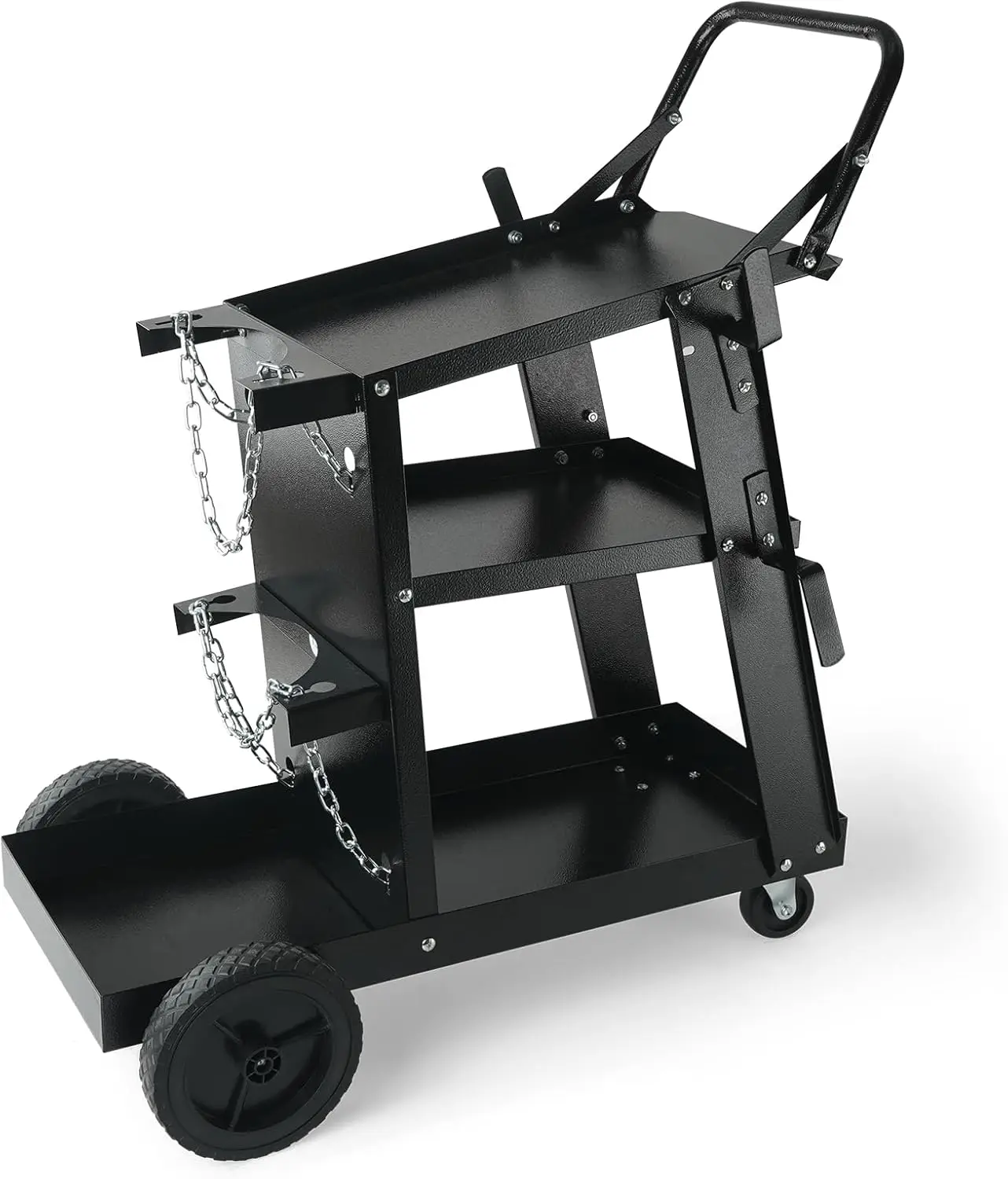
As an Amazon Associate, TestTalkHQ earns from qualifying purchases. Prices and availability subject to change.
This tool sizes the flexible copper cable between your welder and the stinger or work clamp — sometimes called welding lead, electrode cable, or work cable. It is not the Wire Gauge Calculator for Welders, which sizes branch-circuit building wire to the wall outlet, and it is not MIG wire diameter selection from the MIG Welding Calculator. Filler wire is consumed in the arc; welding cable carries hundreds of amps to the arc.
Welding cable uses fine-stranded Class K or equivalent copper with EPDM or neoprene jacketing built for flexing and short-duration overloads. Manufacturer ampacity tables assume open-air use and welding duty cycles — not the same as NEC Table 310.16 conductors in raceways. You cannot size a 200-amp stinger lead from Romex ampacity charts; use welding cable ratings and voltage drop across the complete loop.
Current travels out on the electrode cable and back on the work cable. Enter the sum of both legs — a 25-foot stinger and 25-foot ground clamp lead equals 50 feet total. Longer combined runs increase resistance and voltage drop at the arc even when amperage stays constant, which is why field rigs upsize cable or move the machine closer instead of adding cheap extension leads.
Hot cable jackets, stiff arc, excessive spatter, and the machine showing lower volts at the same dial setting often trace to lead voltage drop — not wrong MIG wire. The stinger or clamp may feel warm during heavy beads. If adding length fixes arc quality when you move the machine closer, your cable is likely undersized for that amperage and total length. Pair cable sizing with duty cycle guidance so thermal limits at the machine and in the cable both stay within spec.