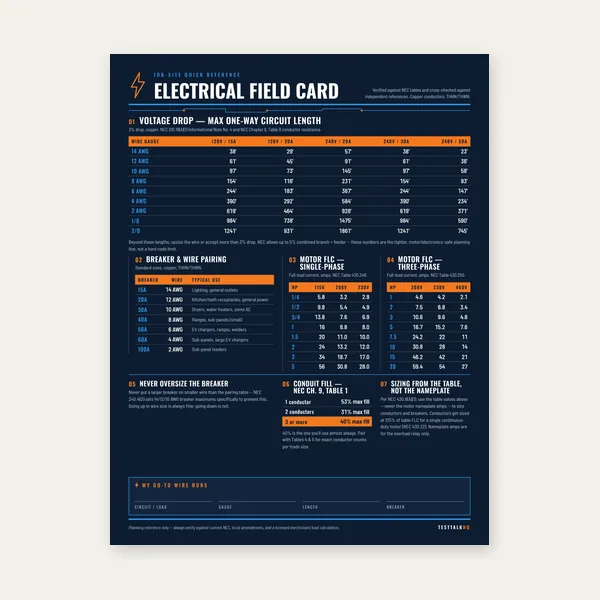
Electrical Reference Card
One page. Voltage drop lengths, breaker and wire pairing, motor FLC.
$3.99
BuyNEC Table 250.122 — EGC from overcurrent device rating
Select the breaker or fuse rating ahead of the equipment, choose copper or aluminum, and get the minimum EGC size. See the Equipment Grounding Conductor Guide for how EGC differs from the GEC and when upsizing is required. When size “should” pass but inspection or the fault path fails, use EGC Troubleshooting. Conceptual fork: Grounding vs Bonding Explained.

| OCPD rating (A) | Copper EGC | Aluminum EGC |
|---|---|---|
| 15 or less | 14 AWG | 12 AWG |
| 20 | 12 AWG | 10 AWG |
| 60 | 10 AWG | 8 AWG |
| 100 | 8 AWG | 6 AWG |
| 200 | 6 AWG | 4 AWG |
| 300 | 4 AWG | 2 AWG |
| 400 | 3 AWG | 1 AWG |
| 500 | 2 AWG | 1/0 AWG |
| 600 | 1/0 AWG | 2/0 AWG |
| 800 | 2/0 AWG | 3/0 AWG |
| 1000 | 3/0 AWG | 4/0 AWG |
| 1200 | 4/0 AWG | 250 kcmil |
| 1600 | 250 kcmil | 400 kcmil |
| 2000 | 300 kcmil | 600 kcmil |
| 2500 | 350 kcmil | 750 kcmil |
| 3000 | 400 kcmil | 800 kcmil |
| 4000–6000 | 400–600 kcmil | 800–1500 kcmil |
Intermediate ratings use the next higher table row (e.g. 30 A or 50 A → 60 A row). For GEC sizing at the service, use Table 250.66 instead.
One page. Voltage drop lengths, breaker and wire pairing, motor FLC.
$3.99
Buy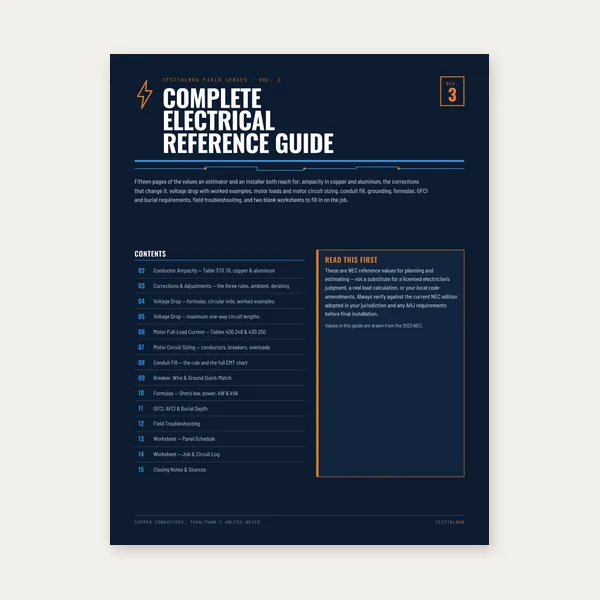
15 pages. Ampacity, corrections, voltage drop, motor circuits, conduit fill.
$12.99
Buy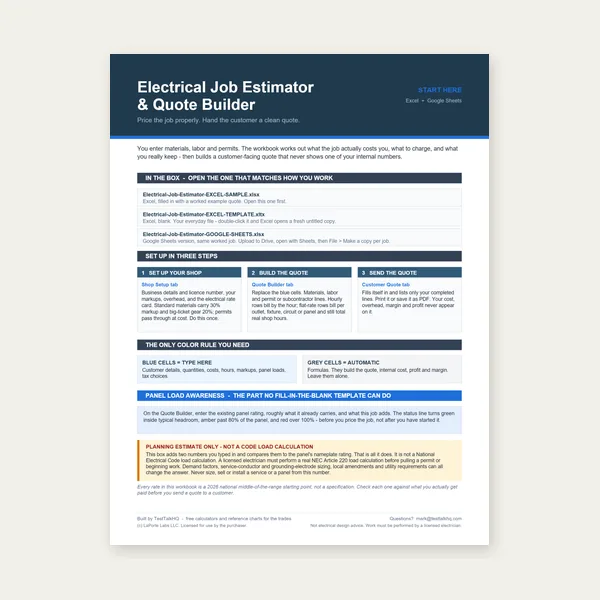
Quote electrical work and flag panel headroom before you price it.
Excel or Google Sheets. Best on a computer.
$29.00
Buy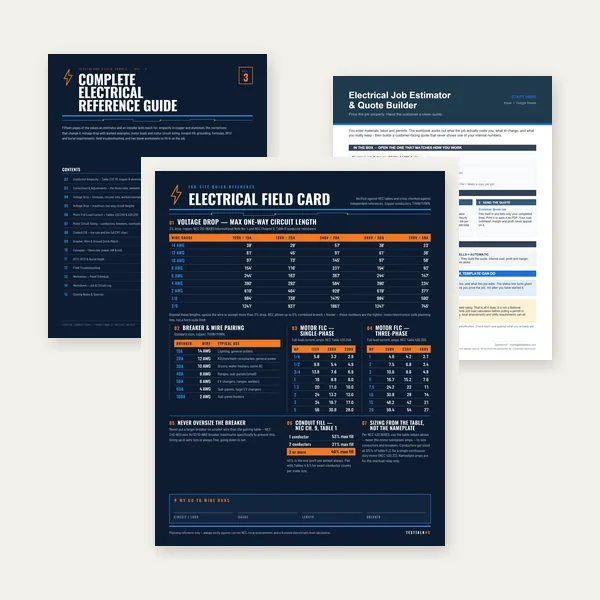
Card, 15-page guide and the estimator workbook. All six files.
Excel or Google Sheets. Best on a computer.
$34.99
$45.98 if bought separately — save $10.99
BuyCheckout opens in a new tab.
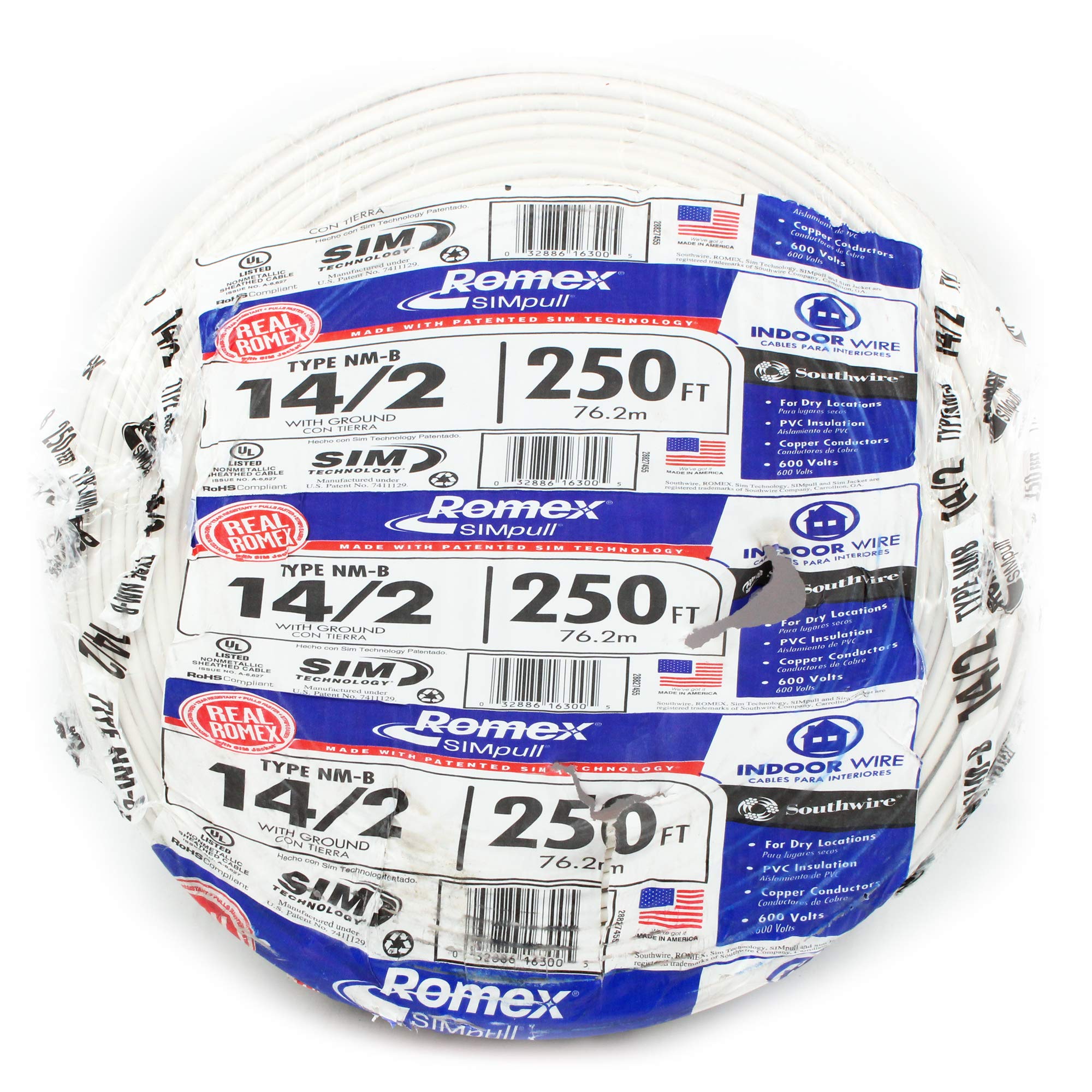
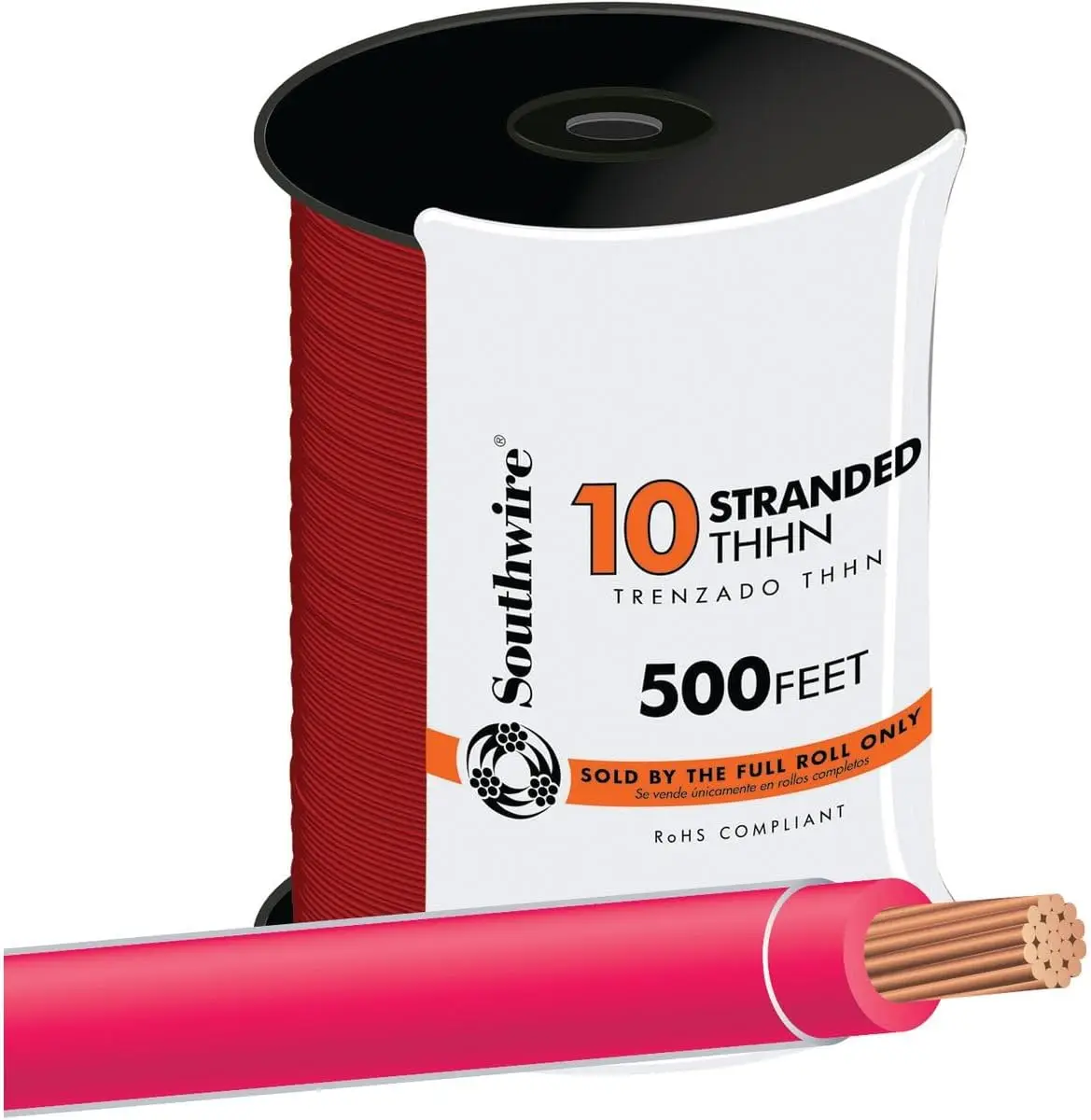
Breakers, Romex, ground wire, and test gear for EGC work in panels and raceways.



As an Amazon Associate, TestTalkHQ earns from qualifying purchases. Prices and availability subject to change.
Table 250.122 sizes the equipment grounding conductor — the green or bare wire that runs with ungrounded and grounded conductors in cables and raceways. Its job is to bond metal equipment together and provide a low-impedance path for fault current back to the source so the overcurrent device can open. The table input is the rating or setting of the automatic overcurrent device ahead of the equipment, conduit, or cable — not the ampacity of the ungrounded conductors. A 60-amp breaker protecting #8 AWG conductors still requires a #10 copper EGC minimum, even though #8 alone might carry 40 or 50 amps depending on conditions.
The grounding electrode conductor (GEC) connects the grounded service neutral to earth through electrodes and is sized from NEC Table 250.66 based on the largest ungrounded service-entrance conductor. The EGC is sized from Table 250.122 based on breaker or fuse rating. Think of the EGC as the emergency return lane that gets fault current back to the panel so the breaker trips — it does not need to reach a ground rod. The GEC is the separate wire that ties the system to earth for voltage stabilization. Using a fat ground wire to a rod does not satisfy branch-circuit EGC requirements, and sizing the green wire in a 60-amp feeder from Table 250.66 instead of 250.122 is a common plan-review error.
NEC 250.122(B) requires the EGC to be increased in size when ungrounded conductors are upsized for voltage drop — the EGC must increase proportionally. If you bump a 12 AWG circuit to 10 AWG for voltage drop on a 20-amp breaker, the EGC stays at 12 AWG minimum from the table, but if conductor size increases further relative to the OCPD, apply the same proportional upsizing to the EGC. For parallel ungrounded conductors in the same raceway or cable, 250.122(F) requires combining the circular mil area of parallel EGCs; the calculator result is the minimum per conductor before parallel rules. Motor circuits, transformers, and tap rules may impose additional requirements beyond this table lookup.
Using the bare wire size molded into Romex without checking the breaker rating fails when the OCPD is oversized relative to the conductor. Reusing a 14 AWG ground from old 15-amp wiring on a new 20-amp breaker violates the table. Running an isolated ground without a proper EGC path back to the source equipment leaves metal enclosures unbonded. At feeders, installing parallel phase conductors without parallel EGCs sized per 250.122(F) is a frequent commercial inspection hit. Substituting the water pipe or ground rod conductor for the circuit EGC confuses GEC and EGC roles entirely — see the GEC Sizing Guide for electrode conductor rules.