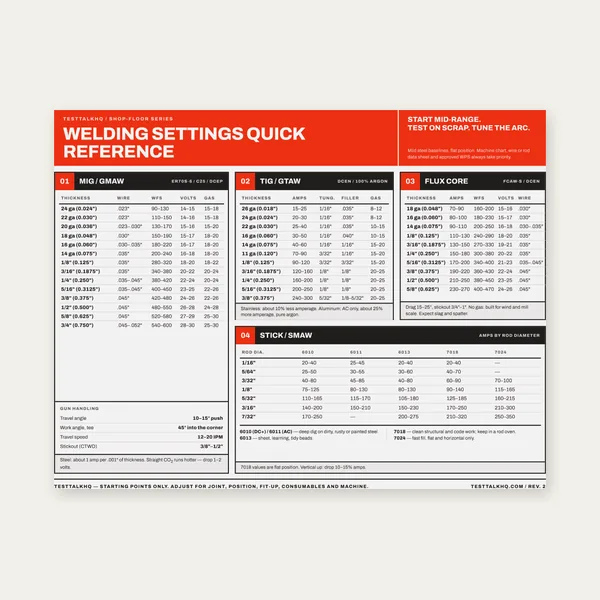
Welding Reference Card
One page. MIG, TIG, stick and flux core settings by thickness.
$3.99
BuyFind the Right Electrode for Any Job
Enter base metal, thickness, position, power source, and surface condition — get a primary electrode recommendation with amperage range, storage requirements, and a link to exact settings. Read the Welding Rod Chart & Selection Guide for full electrode breakdowns.
| Electrode | 3/32" | 1/8" | 5/32" | 3/16" |
|---|---|---|---|---|
| E6010 | 40–75 A | 75–125 A | 110–165 A | 140–215 A |
| E6011 | 40–80 A | 80–130 A | 115–170 A | 145–220 A |
| E6013 | 40–85 A | 90–140 A | 120–175 A | 150–230 A |
| E7018 | 70–100 A | 110–160 A | 150–220 A | 180–275 A |
| E7024 | — | 140–190 A | 180–250 A | 220–300 A |
| E308L / E309L / E316L | 60–90 A | 90–130 A | 120–170 A | 150–200 A |
| ENi-Cl / ENiFe-Cl | 50–80 A | 70–110 A | 90–140 A | 110–160 A |
Starting ranges — adjust for machine, rod brand, and fit-up. See the Welding Rod Chart Guide for full electrode breakdowns.
One page. MIG, TIG, stick and flux core settings by thickness.
$3.99
Buy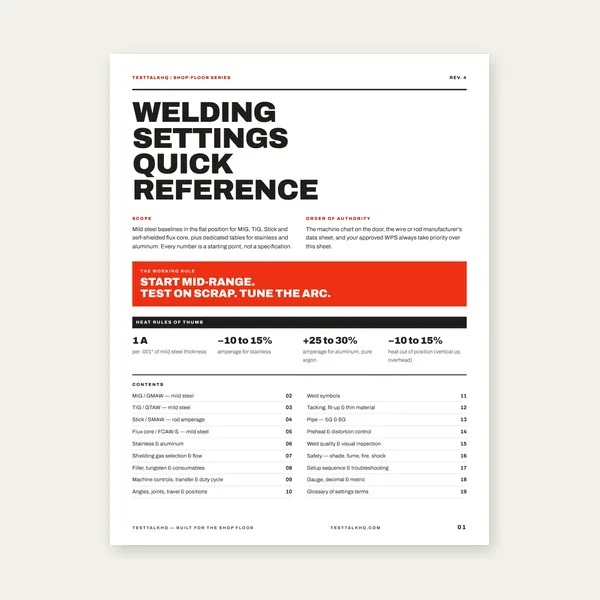
19 pages. Four processes, stainless and aluminum, symbols and inspection.
$12.99
Buy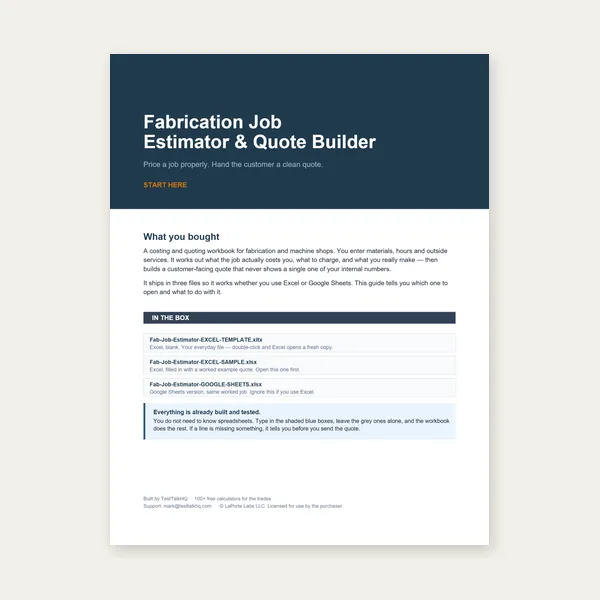
Price the job, then hand over a quote with no internal numbers.
Excel or Google Sheets. Best on a computer.
$29.00
Buy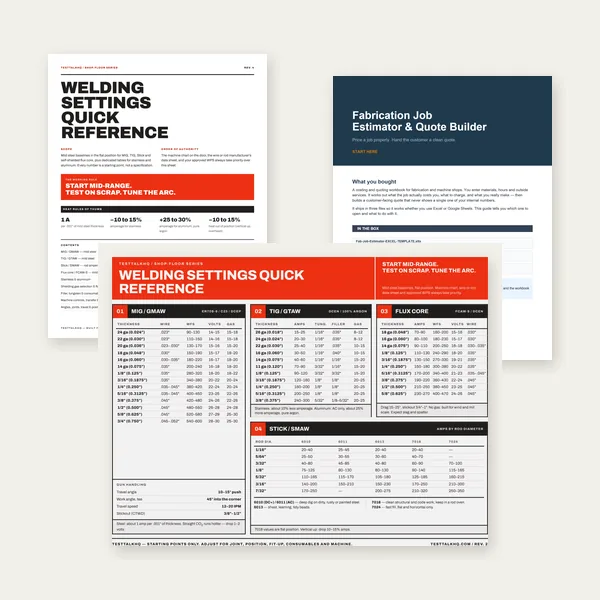
Card, 19-page guide and the estimator workbook. All six files.
Excel or Google Sheets. Best on a computer.
$34.99
$45.98 if bought separately — save $10.99
BuyCheckout opens in a new tab.
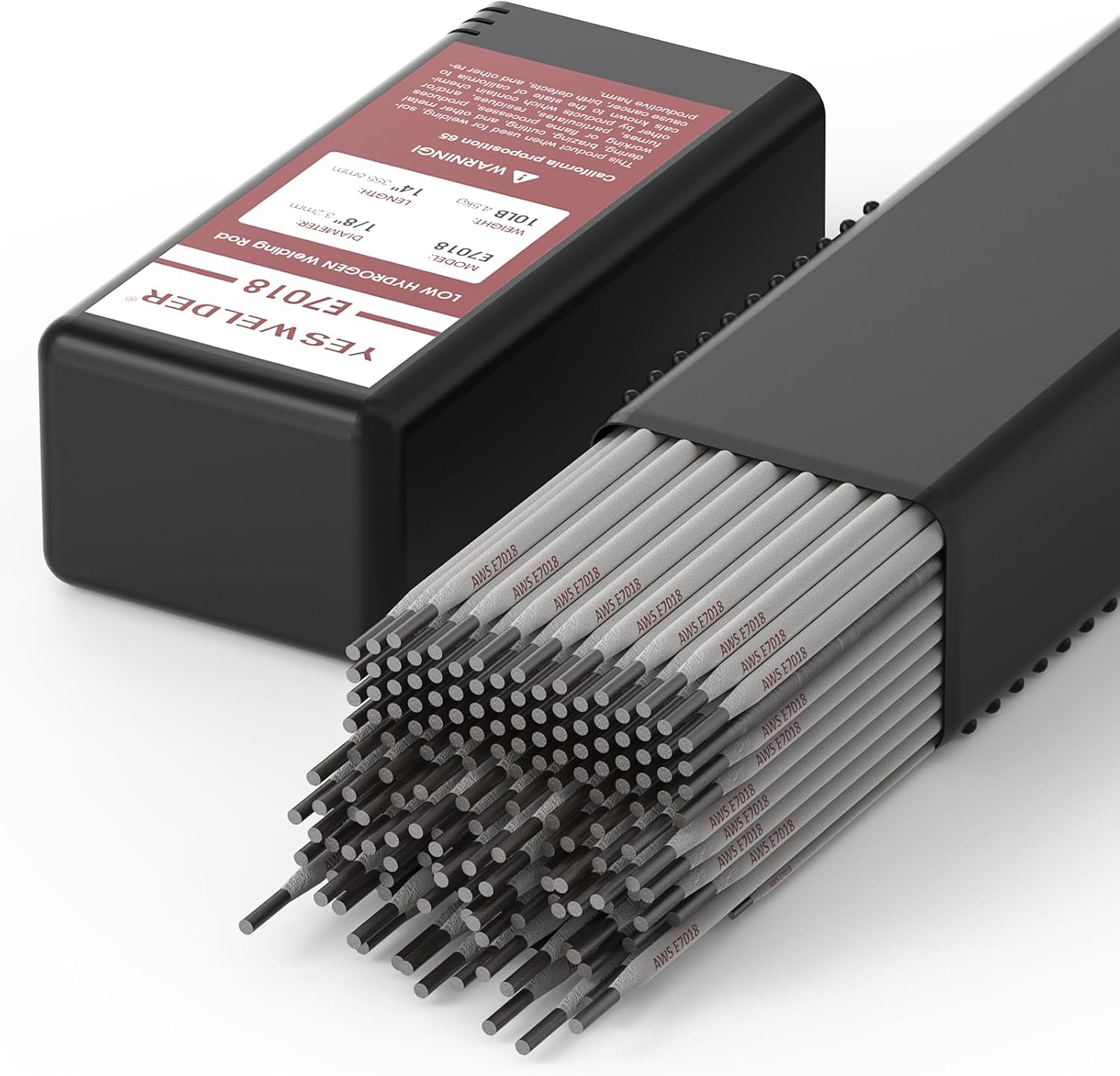
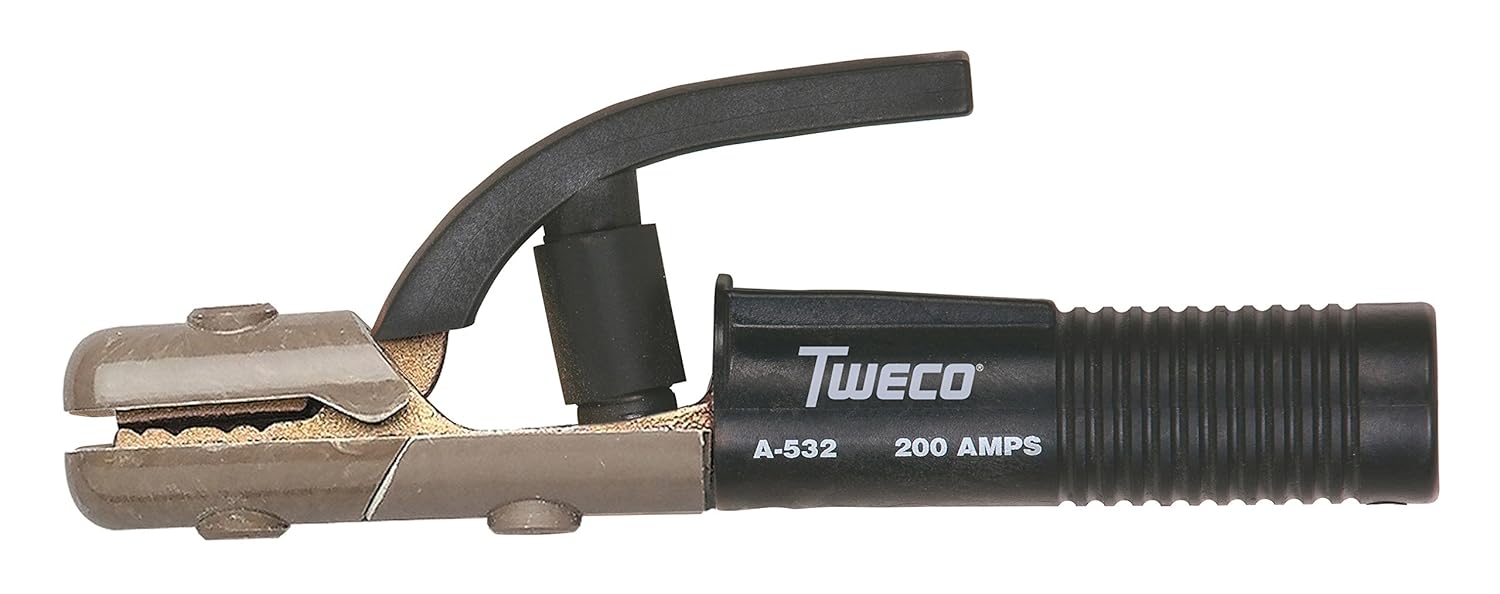
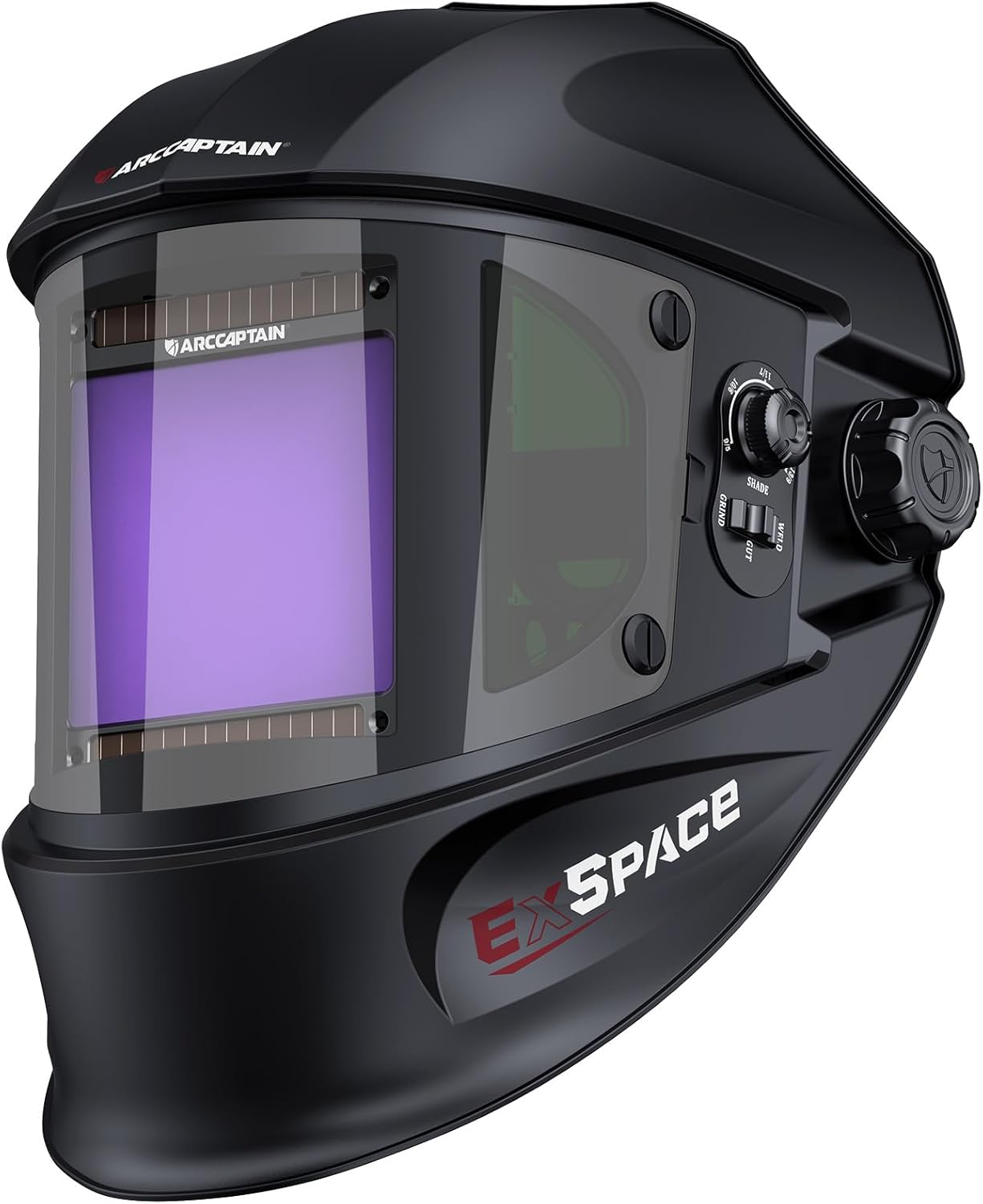
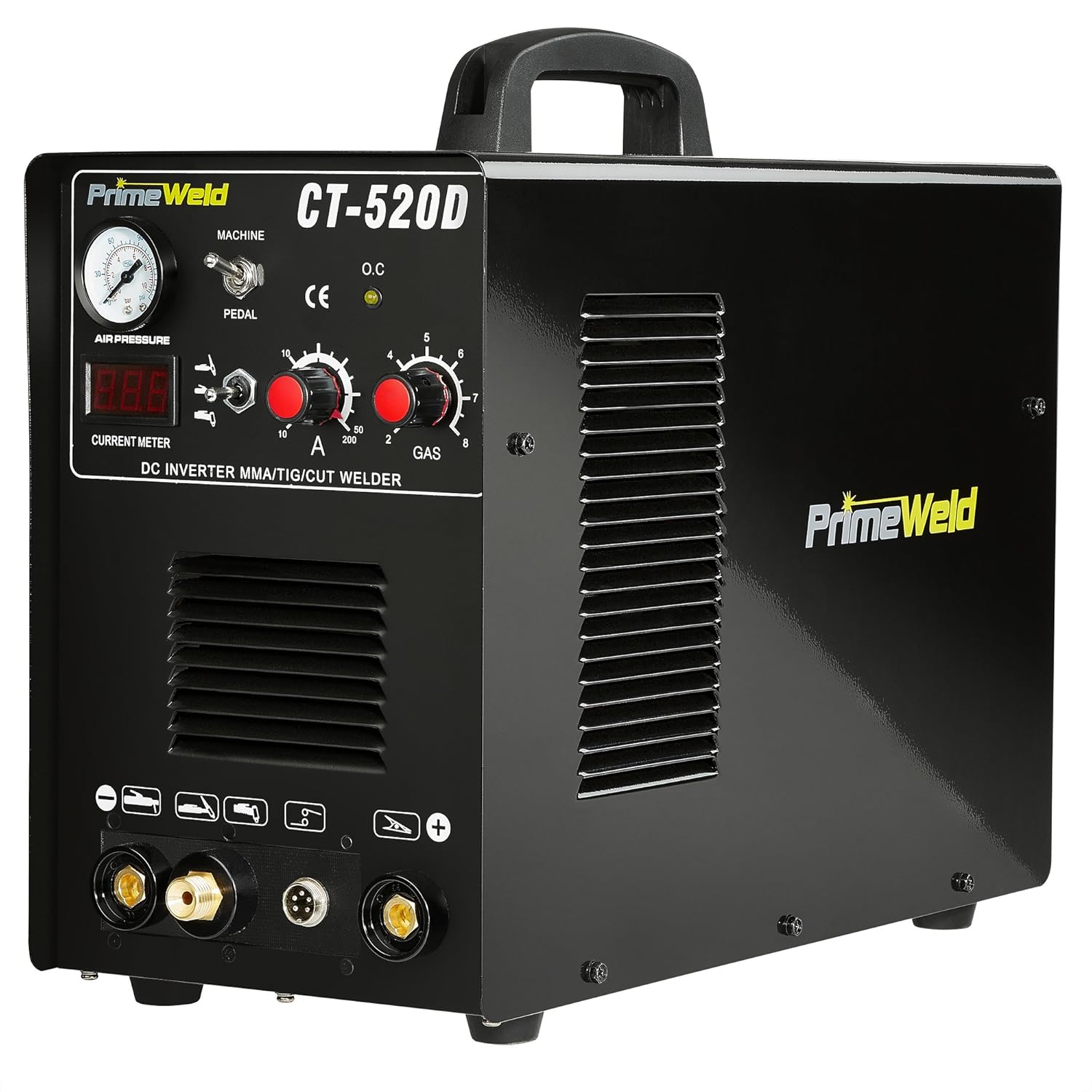
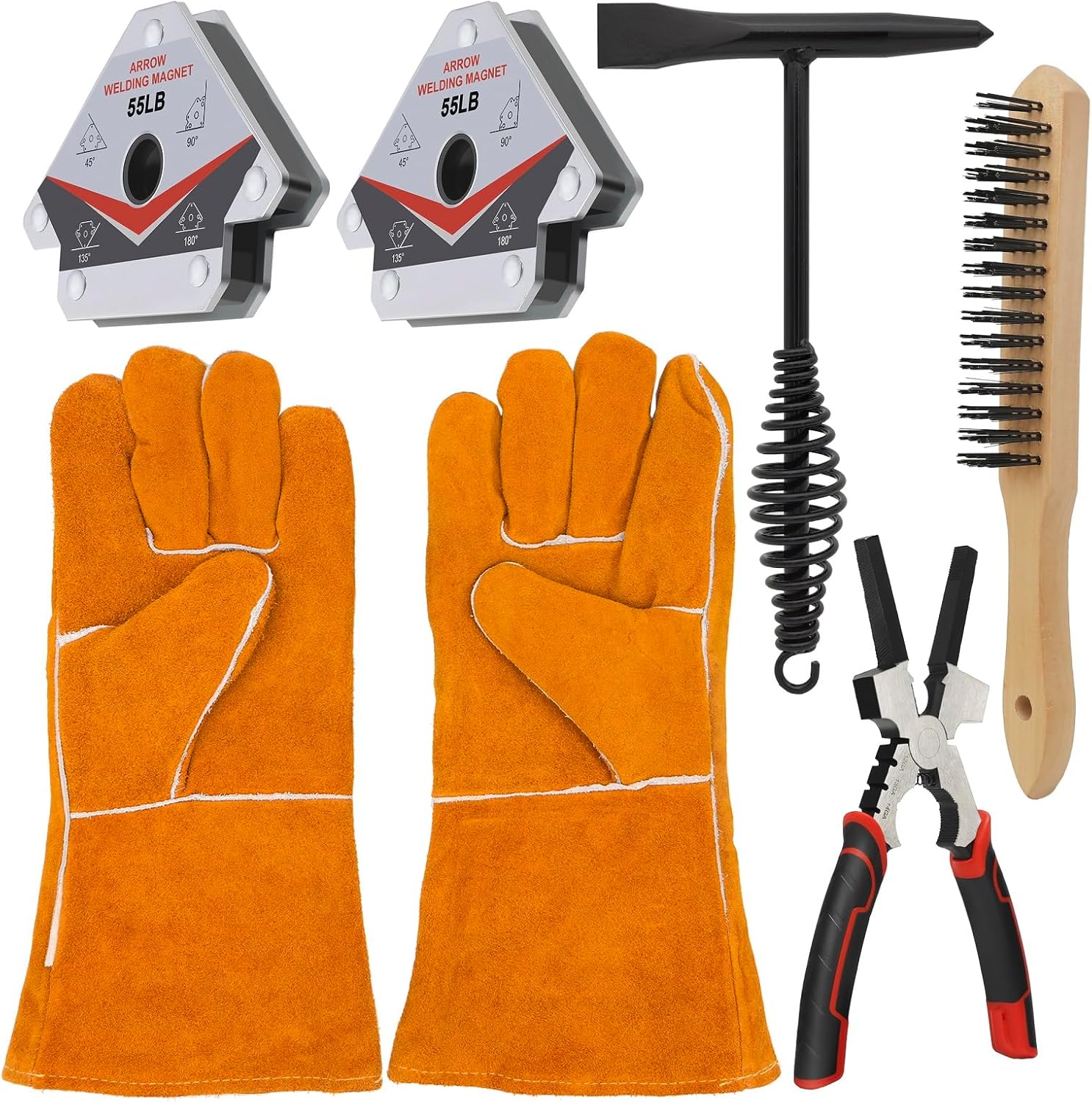
Electrodes, torch accessories, PPE, and machines matched to SMAW workflow.
As an Amazon Associate, TestTalkHQ earns from qualifying purchases.
An AWS stick electrode number like E7018 tells you tensile strength, positions, and coating type in four digits after the E. The first two digits are minimum weld metal tensile strength in thousands of PSI — 60 means 60,000 PSI, 70 means 70,000 PSI. The third digit is position capability: 1 means all positions, 2 means flat and horizontal only. The fourth digit defines the coating and current type — 0 is cellulosic sodium (6010, DC+ only), 1 is cellulosic potassium (6011, AC/DC), 3 is rutile potassium (6013, easy arc), 8 is low-hydrogen potassium (7018, structural), and 4 is iron powder high deposition (7024). Once you decode the number, you know whether the rod belongs on a pipe root, a coded structural joint, or a flat production run before you ever strike an arc.
Low-hydrogen electrodes like E7018 and most stainless SMAW rods are formulated to limit diffusible hydrogen in the weld metal. Hydrogen trapped in a hard, restrained joint causes delayed cracking — sometimes hours or days after the weld looks fine. That is why AWS D1.1 and pressure vessel codes specify 7018 or equivalent low-hydrogen filler on critical joints. The coating is hygroscopic: open a box of 7018 in humid air and the flux absorbs moisture that shows up as porosity, worm tracks, and failed bend tests. Treat opened 7018 like perishable stock — rod oven at 250–300°F on the job, sealed container in the field, and never mix damp rods back into dry inventory.
Not every stick welder runs both polarities. E6010 requires DC+ (DCEP) — it will not run correctly on AC-only buzz boxes. E6011 fills the same penetrating, dirty-metal role on AC or DC and is the field maintenance rod when DC is unavailable. E6013 and E7018 both run on AC and DC+, which makes them versatile on older farm rigs and modern inverters alike. E7024 is a flat-and-horizontal drag rod that runs AC or DC+ but is eliminated for vertical and overhead by position code, not by power type. Most stainless electrodes (308L, 309L, 316L) want DC+. Match the rod to your machine output before you buy a box you cannot burn.
Cellulosic rods — 6010 and 6011 — tolerate moisture better than low-hydrogen but still weld best from dry stock. Iron powder 7024 stores like general fabrication rod: keep the box closed, but it is not oven-critical. Low-hydrogen 7018 and stainless electrodes need active dry storage once opened. A portable rod oven on the job site beats a damp gang box every time. Cast iron nickel rods (ENi-Cl, ENiFe-Cl) should stay dry and are burned with short stringer beads and minimal heat input — peening between passes helps on heavy sections. When in doubt, check the manufacturer label for reconditioning temperature and time before you commit production welds to rods that sat overnight in the rain.
Rod sticking, spatter/arc blow, 7018 porosity, undercut, or burn-through vs lack of fusion: Stick Welding Rod Troubleshooting. Rod family choice (6011 vs 6013 vs 7018) stays on the Stick Rod Chart & Selection Guide. Process choice (why Stick at all): MIG vs TIG vs Stick.