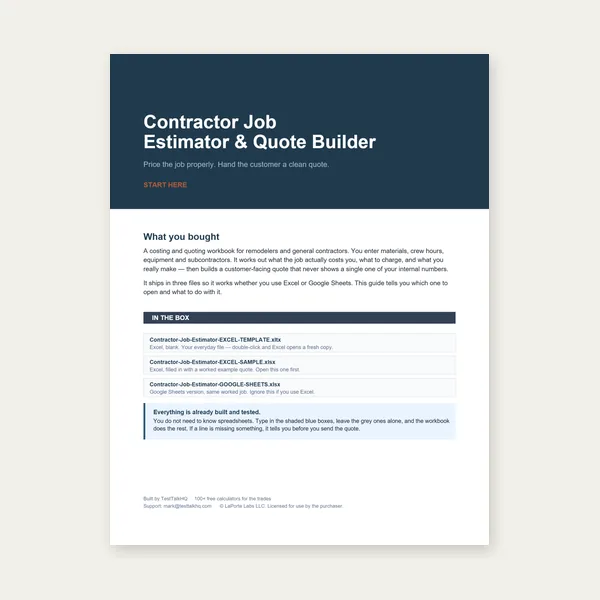
Contractor Job Estimator
Price remodels and GC work, then send a quote with no internal numbers.
Excel or Google Sheets. Best on a computer.
$29.00
BuyReceiver sizing for intermittent compressed-air demand
Estimate minimum receiver volume from tool demand, draw time, pressure swing, and safety factor. This helps you choose a practical tank size with enough stored air buffer between cut-out and cut-in.
Price remodels and GC work, then send a quote with no internal numbers.
Excel or Google Sheets. Best on a computer.
$29.00
BuyCheckout opens in a new tab.
Practical compressor and air-line picks to match your tank-sizing plan.
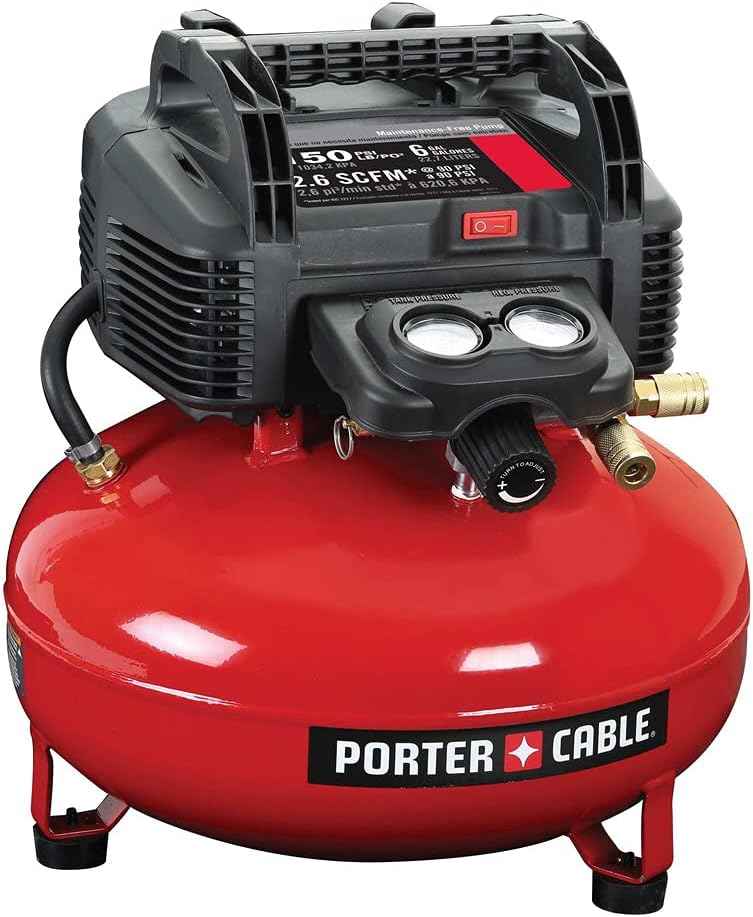
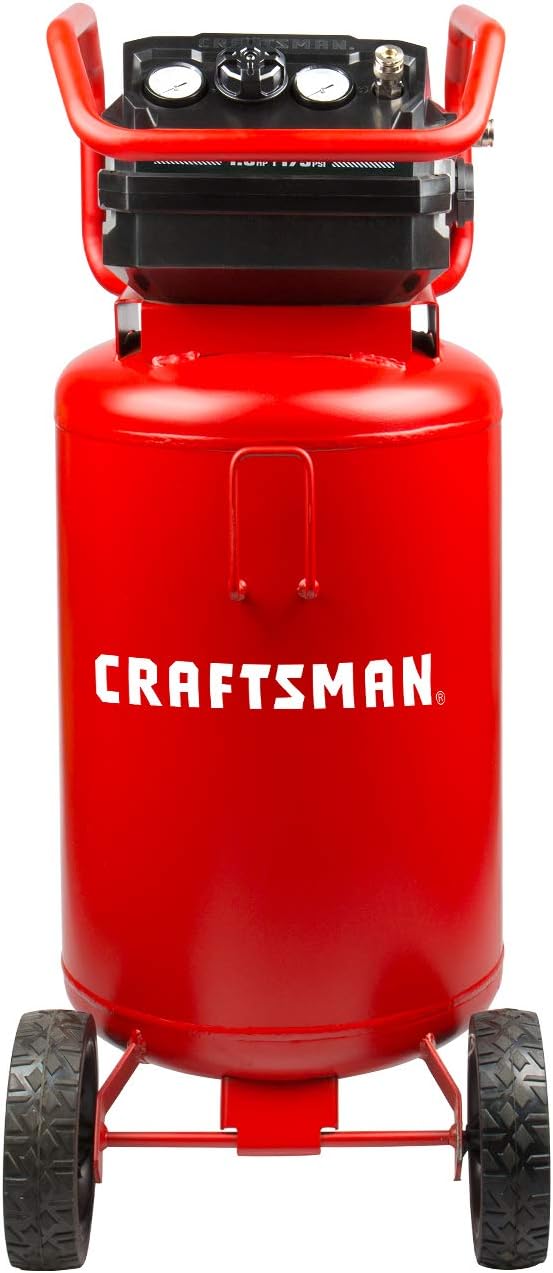

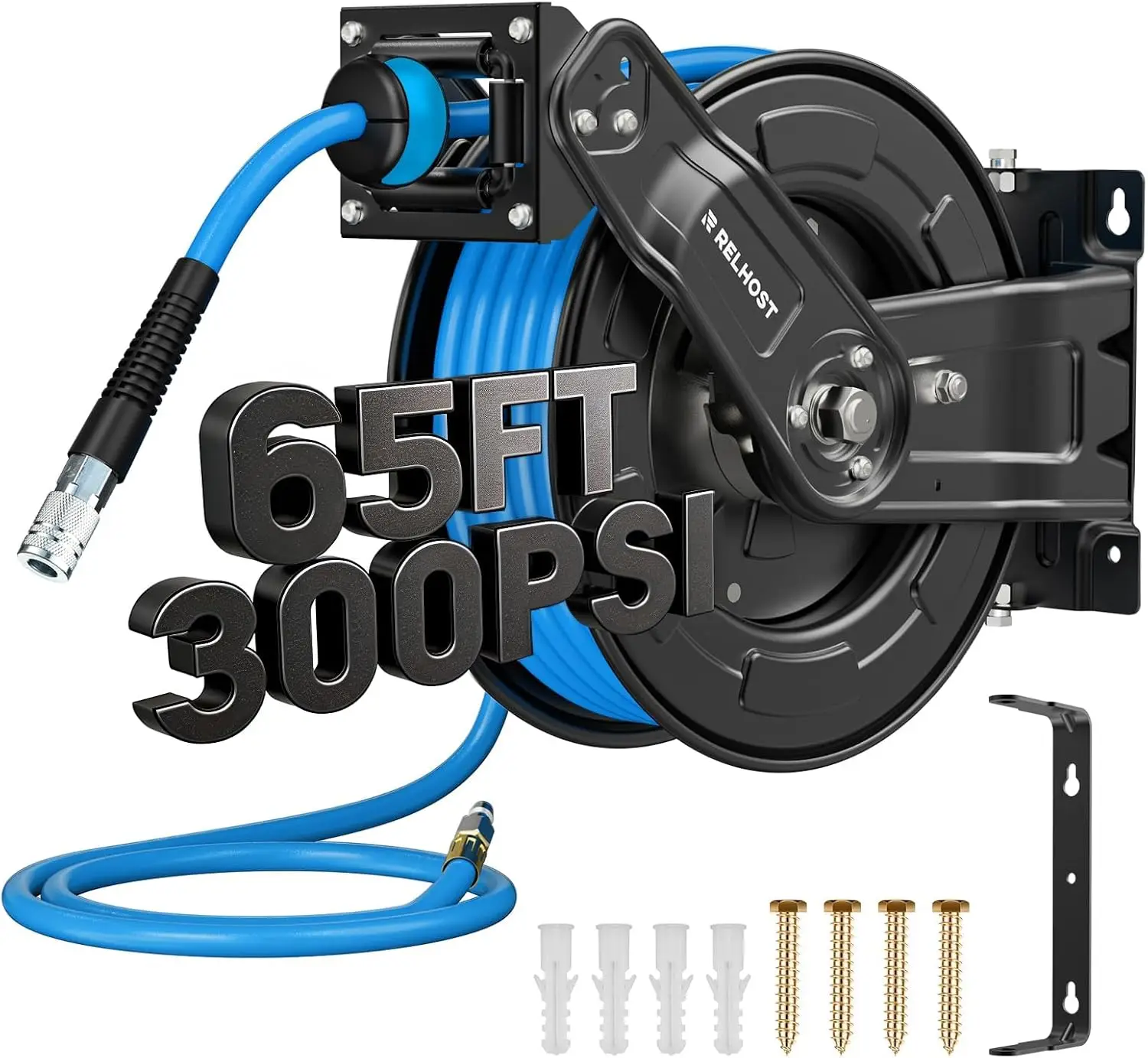
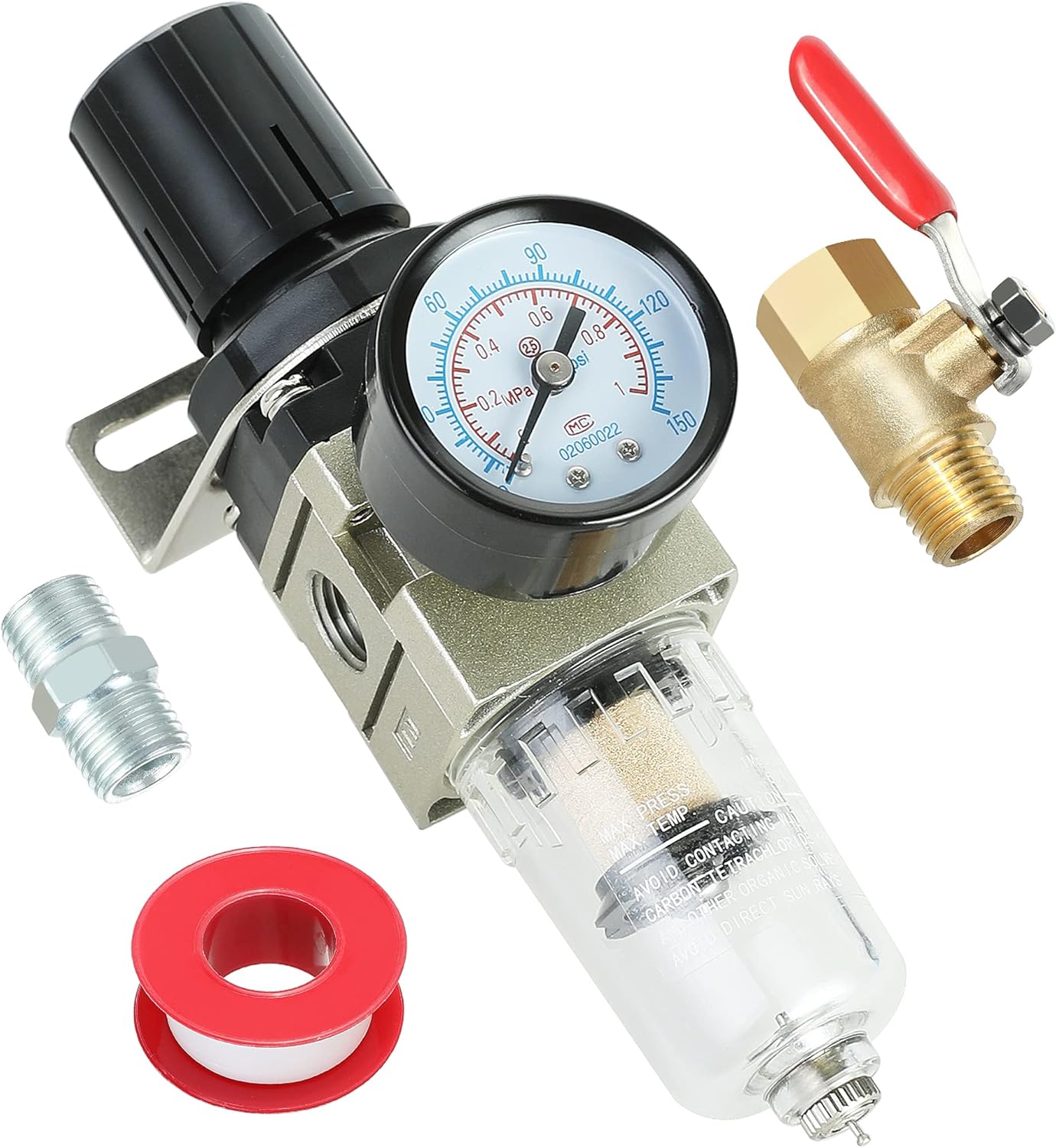
As an Amazon Associate, TestTalkHQ earns from qualifying purchases. Prices and availability may change.
Receiver sizing here assumes isothermal free-air equivalence, using usable pressure swing between cut-out and cut-in. It estimates the storage needed to support a target SCFM for a selected draw duration.
Required SCF = Peak SCFM x Draw Minutes
Receiver ft3 = (Required SCF x 14.696 x Safety Factor) / Delta PSIA
Receiver Gallons = Receiver ft3 x 7.4805
The result is a minimum planning value. Production environments should add extra margin and verify compressor output at working pressure.
A wider pressure swing stores more usable air in the same tank. Small pressure bands require larger receiver volume for the same runtime target.
Usually yes. A larger receiver reduces cycling, improves pressure stability, and gives better operational headroom for changing workloads.
No. Receiver sizing and compressor flow sizing are related but separate. You still need delivered compressor CFM to sustain long duty cycles.