Oxy-Fuel Cutting Troubleshooting
Dross, drag lines, flashback, incomplete penetration, and popping — when chart tip/pressure already looked right
Pair this with the Tip & Pressure Calculator and Oxy-Fuel Cutting Guide. For plasma-specific failures on stainless or thin sheet, see the Plasma Cutting Troubleshooting cluster.

Oxy-Fuel Cut Problems — Quick Diagnosis Matrix
Use this when scrap of the same thickness was cut with calculator tip/pressure and production still failed.
| Problem | Field tell | Most likely cause | First fix |
|---|---|---|---|
| Excessive dross | Heavy beads top and/or bottom; hard to knock off | Too slow, tip too small, or low O₂ pressure | Speed up slightly; verify O₂ PSIG; step up one tip size on thick plate |
| Poor cut quality / curved drag lines | Drag lines hook backward or curve on cut face | Too fast — oxygen outruns preheat | Slow 10–20%; confirm tip size; check for worn cutting orifice |
| Incomplete penetration | Bottom not severed; plate hangs together | Tip too small, low O₂, insufficient preheat, or rusty scale | Step up tip; raise O₂ within chart; longer preheat; grind start line |
| Popping / sputtering | Intermittent stream; noisy kerf | Clogged tip, wet hose, or fuel/O₂ ratio off | Clean tip orifices; dry hoses; reset preheat to neutral flame |
| Tip backfire / flashback | Pop at tip, flame retreats into torch, or bang at regulator | Blocked tip, reversed hose, low tank pressure, missing arrestor | Shut valves O₂-first; clean/replace tip; verify arrestors; leak-check with soap |
| Wide top kerf / slag top edge | Top edge melted back; funnel-shaped kerf | Torch angle too low, preheat too high, or tip too large for thin plate | Square torch; reduce preheat; smaller tip on thin stock |
1. Excessive Dross
What it looks like: Rounded or globular slag on the bottom edge, sometimes top spatter on thin plate. Soft dross knocks off with a chisel; hard dross welds to the edge.
Likely causes: Travel speed too slow for the tip/pressure combo; cutting oxygen pressure below chart; tip orifice partially blocked so the jet lacks velocity; plate heavily scaled so preheat is uneven.
Fixes: Increase travel speed in small steps while watching drag lines. Confirm cutting oxygen at the torch — not just cylinder/regulator static pressure. Clean or replace the tip. On thick plate, ensure full preheat before opening the cutting oxygen lever.
2. Poor Cut Quality — Curved Drag Lines
What it looks like: The fine lines on the cut face curve or hook opposite travel direction instead of running straight vertical.
Likely causes: Almost always travel speed too high for thickness and tip size. Less often: cutting oxygen pressure too high without matching speed, or preheat cone lagging on thick plate.
Fixes: Slow down until drag lines straighten. Re-check tip number against the guide chart. On 1/2" and thicker, a slight lead angle can help — but curved lines still mean you are outrunning the heat.
3. Incomplete Penetration
What it looks like: The cut stops partway through; parts tear apart instead of dropping clean; bottom shows a dark unfused line.
Likely causes: Undersized tip; cutting oxygen too low; insufficient preheat time (especially pierce starts); thick mill scale blocking heat transfer; attempting stainless or aluminum with oxy-fuel (wrong process).
Fixes: Step up one tip size and re-run calculator O₂ range. Edge-start instead of pierce when possible. Grind a clean start line through scale. For alloy plate that will not oxidize cleanly, switch to plasma — see Oxy-Fuel vs Plasma.
4. Popping & Sputtering
What it looks like: The cutting stream stutters; audible pops in the kerf; intermittent slag ejection.
Likely causes: Partially plugged preheat or cutting orifices; contaminated tip (oil, filing debris); acetylene pressure above safe stable range; moisture in hoses; fuel gas type mismatched to tip (propane tip on acetylene settings or vice versa).
Fixes: Clean with proper tip drills — never oversize the cutting oxygen bore. Replace damaged tips. Verify fuel gas and tip series match. Dry out hoses if water has been trapped. Set preheat to a neutral flame before cutting.
5. Tip Backfire & Flashback
What it looks like: A sharp pop at the tip with flame briefly burning inside the torch head; in severe cases flame travels down the hose toward regulators (flashback).
Likely causes: Blocked tip orifices; oxygen/fuel ratio wildly rich or lean at idle; operating with near-empty acetylene cylinder (acetone draw); missing or expired flashback arrestors; reversed hose connections.
Fixes: Immediately close oxygen valve at the torch, then fuel. Close cylinder valves if flashback continues. Clean or replace tip before relighting. Purge lines per manufacturer procedure. Never operate without functioning arrestors at the torch and regulator end of each hose.
Re-Dial Tip & Pressure Before Changing Technique
Confirm Victor-style tip number, O₂ PSIG, and fuel PSIG for your thickness before chasing technique fixes.
Shop Picks — Verified CSV Only
One genuine hose match. Tips, regulators, and arrestors are catalog gaps — not substituted with unrelated products.
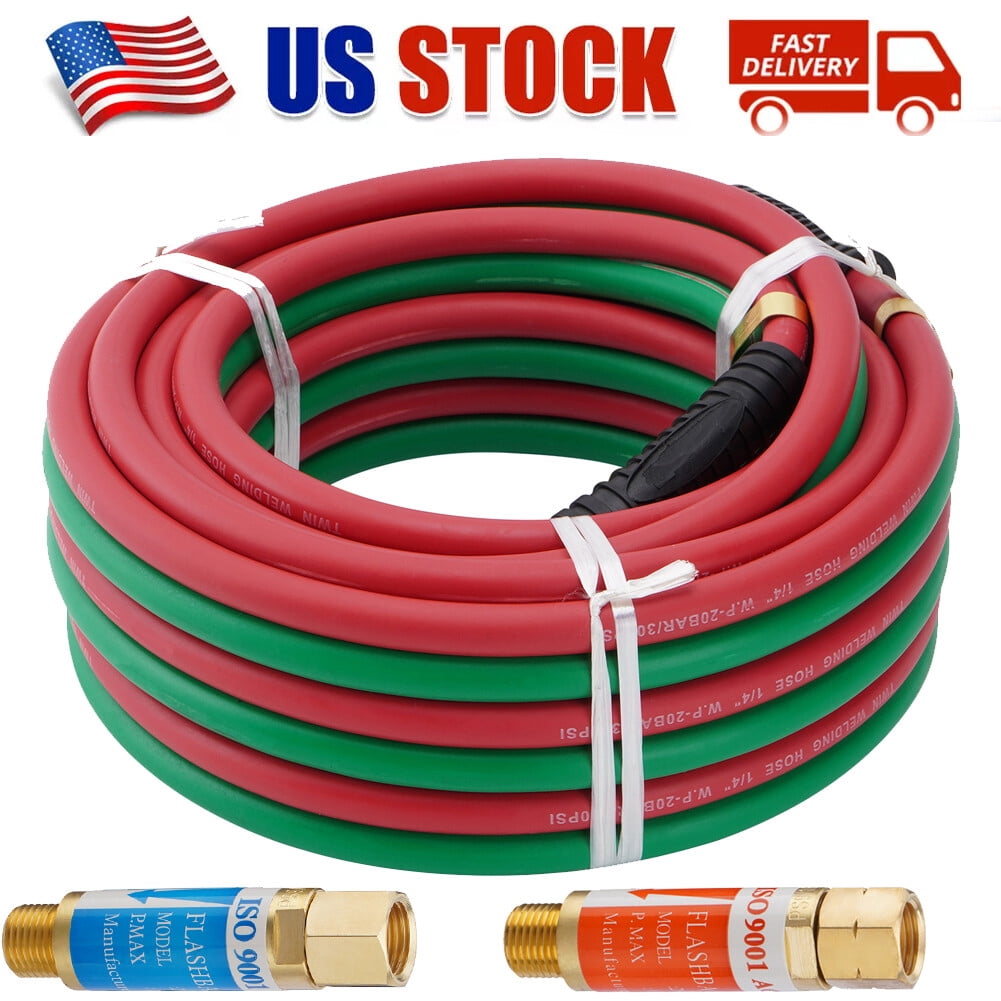
RX WELD Oxygen Acetylene Hose 1/4-Inch 50 Feet B Fittings
- Grade-T twin hose for oxy-fuel service
- Inspect for cracks when pops trace to hose damage
- Keep hoses off floor grindings and hot slag
As an Amazon Associate, TestTalkHQ earns from qualifying purchases.