Oxy-Fuel Cutting Guide
Preheat, oxygen jet, tip charts, technique, and maintenance for mild steel
Oxy-fuel cutting oxidizes iron with a high-velocity oxygen stream after the plate reaches kindling temperature. This guide covers how the process works, Victor-style tip and pressure tables, propane differences, torch technique, and tip care. Dial exact values with the Oxy-Fuel Cutting Tip Calculator.

How Oxy-Fuel Cutting Works
Preheat flame: Fuel gas (acetylene, propane, or natural gas) mixes with oxygen at the tip to heat the steel to roughly 1,800°F (980°C) — the kindling temperature where iron readily oxidizes. You see a cherry-red cone on the top surface before cutting oxygen is engaged.
Cutting oxygen jet: When you pull the cutting-oxygen lever, a separate high-pressure oxygen stream blows through the tip orifice. It reacts with the hot iron to form iron oxide (slag), which is blown out of the kerf. The preheat flame follows behind to keep the leading edge at temperature.
Why mild steel only: The process depends on an exothermic iron-oxygen reaction. Stainless forms a refractory chrome oxide skin; aluminum oxide melts above the base metal. For those alloys, use plasma cutting or mechanical methods — see Oxy-Fuel vs Plasma.
Acetylene Cutting Chart — Victor-Style Tip Numbering
These are approximate mild steel starting values for one-piece acetylene cutting tips using Victor-style numbering (000, 00, 0, 1, 2…). Harris, ESAB, and Purox use different tip codes — cross-check your torch manufacturer chart before production cuts.
| Thickness | Tip # (Victor-style) | O₂ Cutting (PSIG) | Acetylene (PSIG) | Travel Speed (IPM) |
|---|---|---|---|---|
| 1/8" (0.125") | 000 | 20–25 | 3–5 | 20–28 |
| 1/4" (0.250") | 00 | 25–30 | 3–5 | 14–18 |
| 3/8" (0.375") | 0 | 30–35 | 3–5 | 10–14 |
| 1/2" (0.500") | 1 | 35–40 | 3–5 | 8–12 |
| 3/4" (0.750") | 2 | 40–45 | 5–8 | 6–9 |
| 1" (1.000") | 3 | 45–55 | 7–10 | 5–7 |
| 1-1/2" (1.500") | 4 | 50–60 | 8–12 | 3–5 |
| 2" (2.000") | 5 | 55–70 | 9–14 | 2–4 |
Propane / LP Cutting Chart — Multi-Flame Tips
Propane burns cooler than acetylene and needs higher oxygen cutting pressure for the same thickness. Tips are typically multi-flame designs labeled 1-GPP, 2-GPP, 3-GPP, etc. (manufacturer naming varies). Do not reuse acetylene tip numbers or pressures on propane.
| Thickness | Tip (propane class) | O₂ Cutting (PSIG) | Propane (PSIG) | Travel Speed (IPM) |
|---|---|---|---|---|
| 1/8" | 1-GPP | 35–40 | 4–6 | 16–22 |
| 1/4" | 2-GPP | 40–45 | 5–7 | 12–16 |
| 3/8" | 3-GPP | 45–50 | 6–8 | 9–12 |
| 1/2" | 4-GPP | 50–55 | 7–9 | 7–10 |
| 3/4" | 5-GPP | 55–60 | 8–10 | 5–8 |
| 1" | 6-GPP | 60–65 | 9–11 | 4–6 |
Natural gas setups use similar multi-flame tips (often GPN series) with slightly higher fuel flows. The tip calculator includes natural gas ranges.
Tip Cleaning & Maintenance
- Daily inspection: Check preheat orifices and the cutting oxygen bore for spatter, scale, or burrs. A blocked cutting oxygen port causes popping, incomplete penetration, and flashback risk.
- Cleaning method: Wire-brush the tip face only. Use tip cleaners sized for each orifice — never ream the cutting oxygen bore with oversized tools or files.
- Storage: Keep tips in a clean box; oil or grit in an orifice shows up as sputtering on the next cut.
- Replacement: Replace when orifices are enlarged, oval, or the cutting stream wanders. Running a worn tip forces higher pressures and poor drag-line quality.
- Flashback arrestors: Install at the torch and at the regulator end of each hose. Inspect and replace per manufacturer schedule — arrestors are not optional on oxy-fuel rigs.
Cutting Technique — Angle, Speed & Drag Lines
Torch angle: Hold the torch near 90° to the plate for square cuts. On thick plate some operators use a 5–10° lead angle in the direction of travel so the preheat cone stays ahead of the oxygen jet. Excessive tilt widens the top kerf.
Travel speed: Move steadily once the cut starts. Too slow builds excessive dross and widens the HAZ; too fast leaves incomplete penetration and curved drag lines on the cut face.
Reading drag lines: Straight, vertical drag lines parallel to the torch path usually indicate balanced speed and pressure. Lines that curve or hook backward often mean too fast — the oxygen jet outruns the preheat zone. Wavy or irregular lines can mean tip damage, low oxygen pressure, or contaminated plate.
Starting the cut: Edge-start when possible. For pierce starts, preheat until a small pool forms, then open cutting oxygen smoothly — never slam the lever on thick plate.
Compare machine cutting speeds with the Cutting Speed & Feed Rate Calculator where applicable.
Quick Lookup for Your Plate
Enter thickness and fuel gas in the calculator for interpolated tip size and PSIG ranges — same chart logic as the tables above.
Oxy-Fuel Shop Picks
One verified CSV match. Cutting tips and oxy/fuel regulators remain catalog gaps — no mismatched plasma or TIG substitutes.
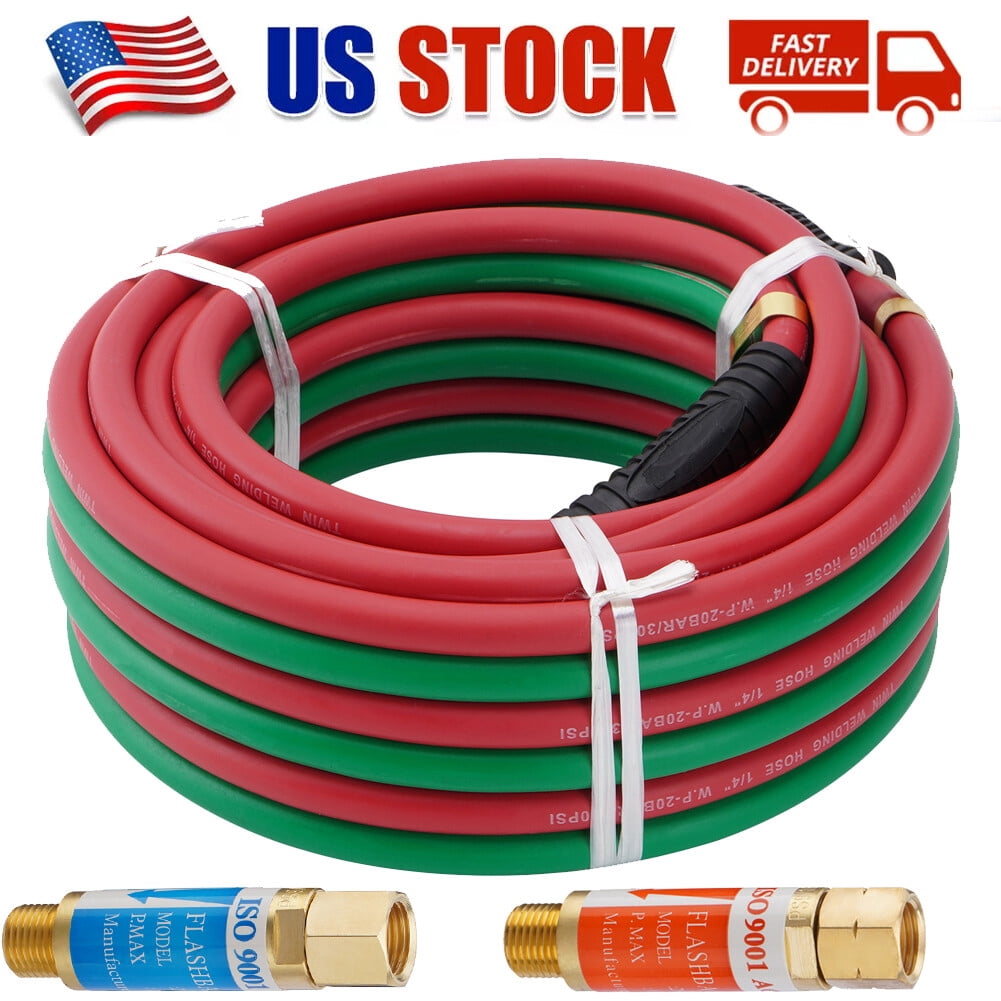
RX WELD Oxygen Acetylene Hose 1/4-Inch 50 Feet B Fittings
- Grade-T twin hose for cutting and heating
- 50 ft reach across typical fab bays
- B fittings common on Victor-style rigs
- Pair with flashback arrestors at both ends
As an Amazon Associate, TestTalkHQ earns from qualifying purchases.