
The same dryer in the same room reads a 1.00 correction factor on one catalogue and 0.63 on another, and both are right

Put one shop — 100 PSIG, 100°F air into the dryer, 100°F in the compressor room — in front of two manufacturers’ correction tables. The American one reads a combined factor of 1.00. The SI one reads 0.63. Same room, same air, same physics, and a 59 percent difference in the dryer you would buy. Neither table is wrong, and understanding why is the difference between reading a data sheet and guessing at one.
Every rated capacity is a conditional statement
A dryer rated “500 SCFM” has had a sentence removed from the end of it. The full statement is “500 SCFM, at these conditions, to this dew point”, and the conditions are the part that gets dropped in catalogues, quotations and conversations until somebody has to size something.
There are two conventions in common use. They are close enough to look interchangeable and far enough apart to be dangerous.
| Reference | US convention | SI / ISO-style convention | Gap |
|---|---|---|---|
| Inlet pressure | 100 PSIG | 0.7 MPa = 101.5 PSIG | 1.5 PSI — negligible |
| Inlet air temperature | 100°F | 35°C = 95°F | 5°F — small but real |
| Ambient temperature | 100°F | 25°C = 77°F | 23°F — this is the one |
| Outlet pressure dew point | 38 to 40°F | 3°C = 37.4°F | Under 3°F |
Three of those four differences are rounding. The fourth is not. The SI convention assumes the dryer is standing in a 77°F room; the American convention assumes a 100°F room. That single assumption is what drives almost the whole 1.00-versus-0.63 gap.
Walking the same shop through both tables
Take the American shop above and run it through SMC’s published IDFA factors, which are the SI convention and are separable — three independent curves rather than a joint grid:
Ambient at 100°F = 37.8°C → factor B = 0.761
Pressure at 100 PSIG = 0.690 MPa → factor C = 0.988
Combined = 0.839 × 0.761 × 0.988 = 0.631
Now look at where that came from. The pressure factor is essentially 1.00, as you would expect — the two conventions agree on pressure. The inlet temperature factor is 0.839, a real penalty, because 100°F is 5°F above the SI reference of 35°C. But the ambient factor is 0.761, and that is almost entirely because the SI table starts counting from a 77°F room. The American table calls the same 100°F room its reference and scores it 1.00.
This is not a disagreement about machines. It is a disagreement about where zero is. An SI-rated dryer in a 100°F American compressor room really has lost about a quarter of its capacity relative to what it was measured at — and a US-rated dryer in that same room has lost nothing relative to what it was measured at, because it was measured there.
So which convention is more honest?
Neither. They are measuring different things on purpose.
The American 100/100/100 point is a realistic worst case: a hot compressor room on a hot day with an aftercooler that is working but not heroically. Rating there means the catalogue number is close to what you get, and the correction factors are mostly small adjustments around it. That is why US factors cluster near 1.00 across ordinary conditions and why a US table’s numbers look reassuring.
The SI 0.7 MPa / 35°C / 25°C point is closer to a laboratory reference: a cool, well-ventilated plant room. Rating there produces a larger headline number for the same machine and pushes more of the work into the correction factors, which is why SI factors fall away so steeply — SMC’s inlet temperature curve runs from 1.42 at 25°C down to 0.21 at 65°C, a range no US table approaches.
Both get to the same place if you do the arithmetic. The failure mode is identical in both directions: using a headline capacity without its conditions.
Any trade
Contractor Job Estimator
Price remodels and GC work, then send a quote with no internal numbers.
Excel or Google Sheets. Best on a computer.
$29.00
BuyCheckout opens in a new tab.
The parts of the chain we have verified links for
There is no dryer on this list, because we do not have a verified affiliate link for a refrigerated or desiccant dryer and we are not going to invent one. What is here is everything either side of it — and on a sizing question the upstream half genuinely matters more, because the temperature of the air arriving at the dryer moves the answer further than any other number.
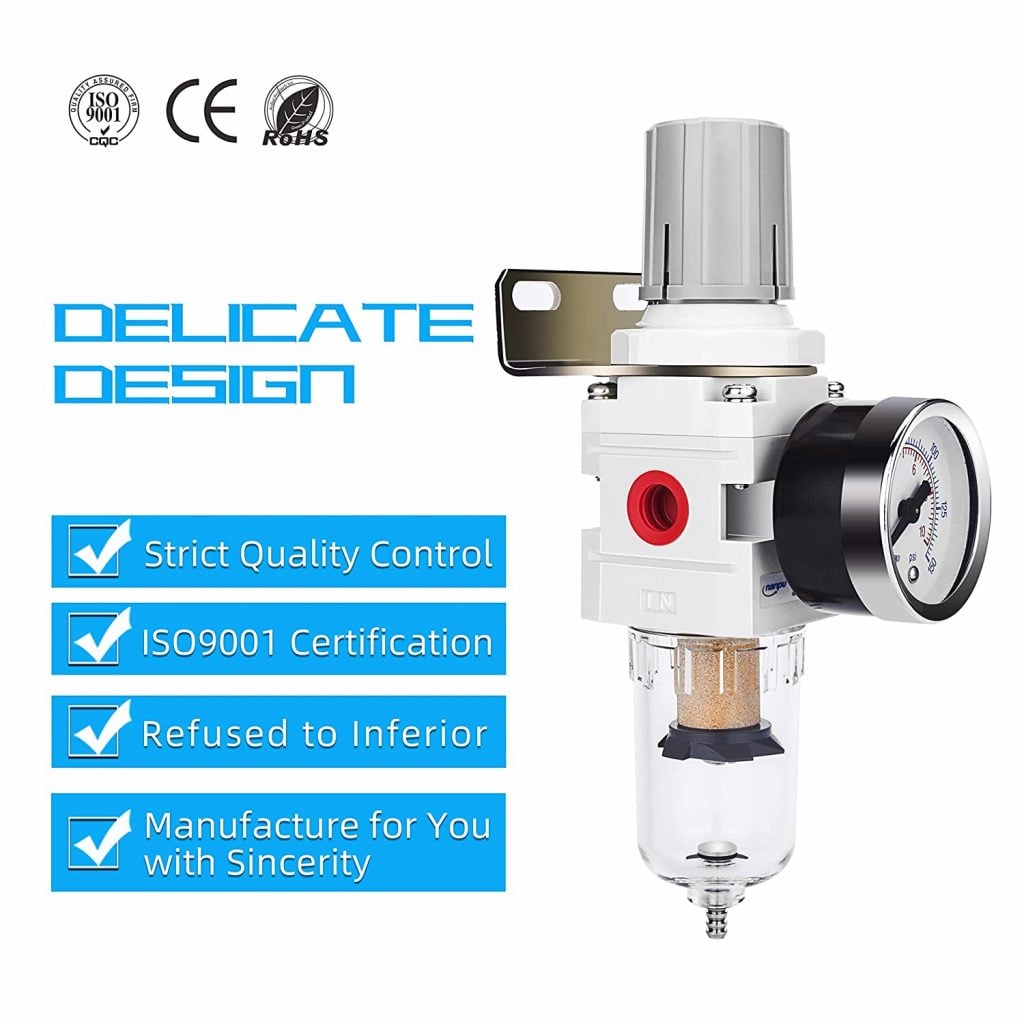
Hromee AW2000‑02 Filter / Regulator
- A coalescing filter before a desiccant bed is a Sourcebook recommendation, not an option
- Filter pressure drop is part of the PSID the compressor has to make back
- Change elements on differential pressure, and at least once a year
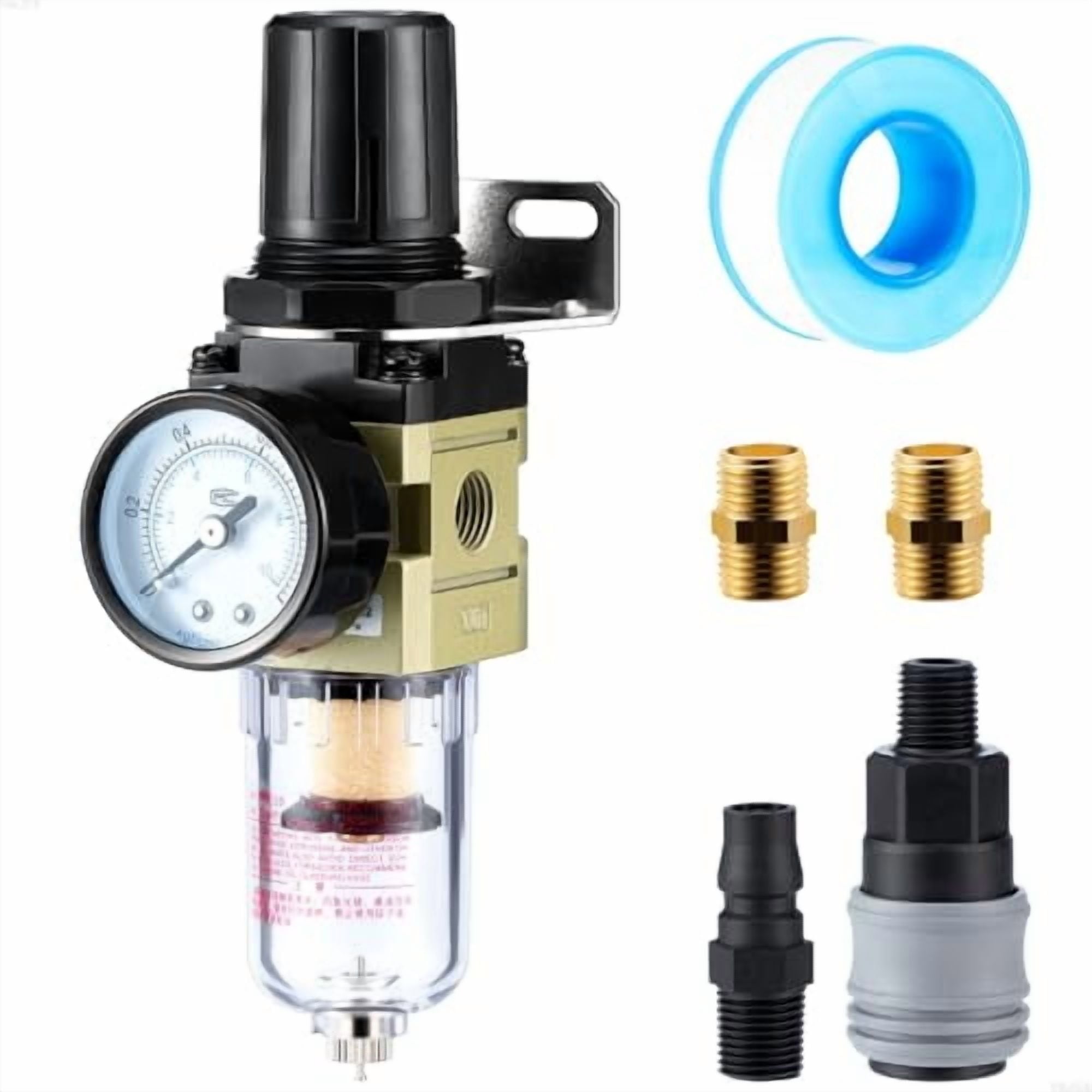
Hromee 1/4" Filter / Regulator
- Treating one dry drop beats drying the whole plant to that standard
- The Sourcebook’s own advice is to group equipment by the air quality it needs
- A one micron after-filter keeps desiccant fines out of the line

LE LEMATEC Regulator & Gauge 0‑150 PSI
- The lowest pressure the dryer sees is the one you size on
- Deltech’s table drops to 0.84 at 50 PSIG against 1.00 at 100
- Creeping the header up to cover a dryer costs 1 percent per 2 PSI, forever
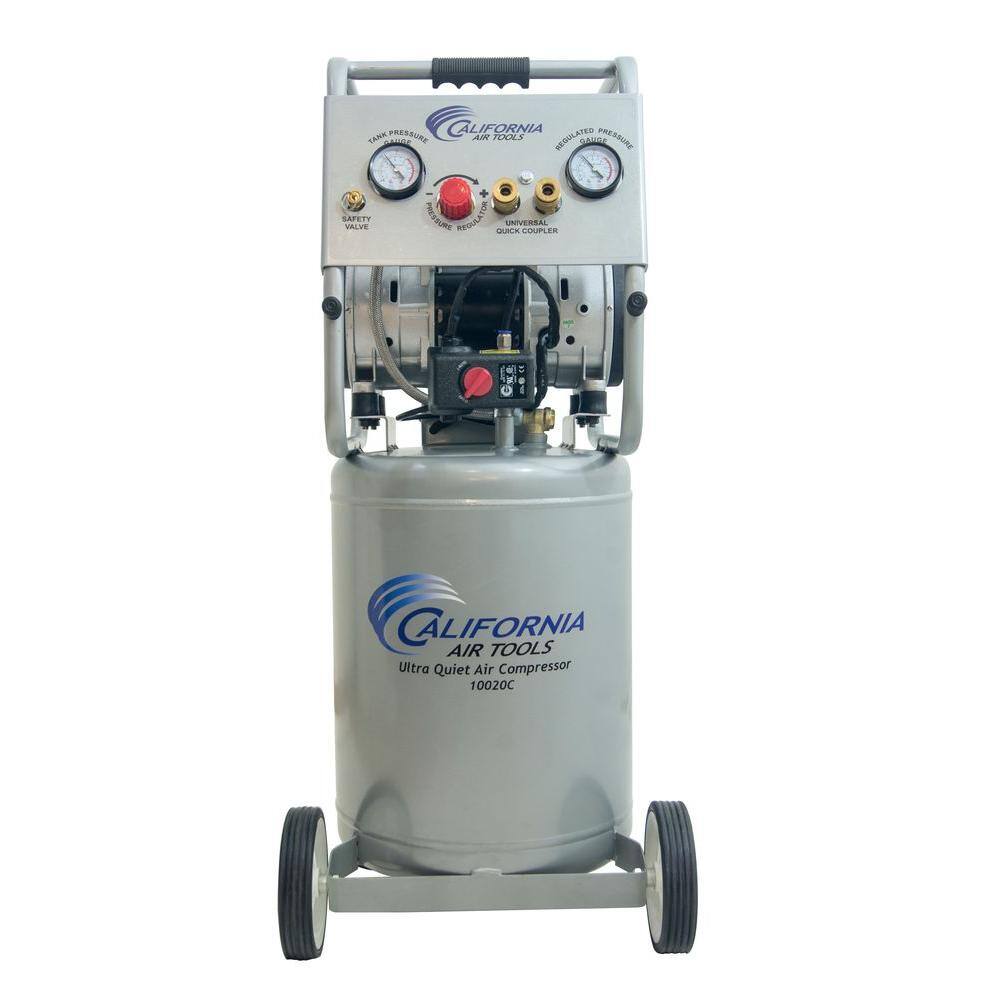
California Air Tools 10020CAD Auto Drain
- No dryer copes with liquid water arriving at the inlet in slugs
- An automatic drain is the upstream part that works while nobody watches
- Condensate volume belongs to the condensate calculator
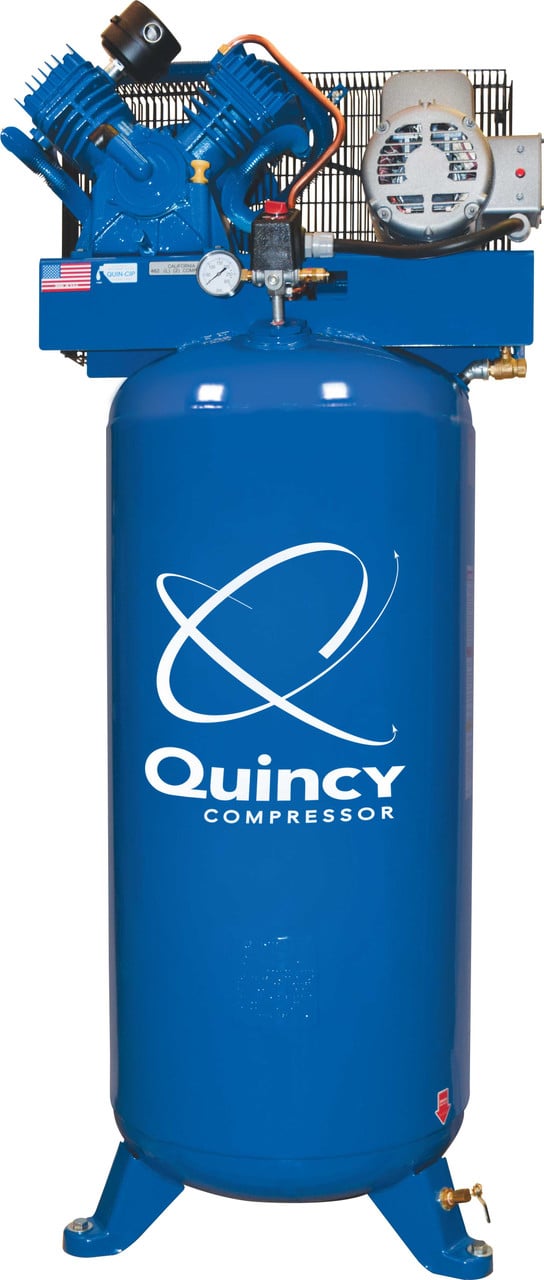
Quincy QT‑54 5 HP 60 Gallon Two‑Stage
- The aftercooler sets the dryer inlet temperature, the strongest input of all
- 20°F hotter inlet can double the water load the dryer must handle
- A receiver before the dryer cools the air and drops water out first
As an Amazon Associate, TestTalkHQ earns from qualifying purchases. Prices and availability can change.
And they disagree inside one convention, too
If you were hoping the reference point was the only problem, it is not. Three US publications, all at 100/100/100, all at the same off-rating condition of 80 PSIG and 110°F inlet:
| Published table | Factor | Implied rating needed for 800 SCFM |
|---|---|---|
| Kaeser SECOTEC | 0.68 | 1,176 SCFM |
| Deltech | 0.79 | 1,013 SCFM |
| Best-Aire RGD | 0.82 | 976 SCFM |
Two hundred SCFM of difference in what you would order, from three honest tables at an identical reference point. The reason is that a correction factor is a property of the machine, not of the air. It carries how the evaporator behaves at reduced load, how much heat exchanger surface was paid for, how the condenser copes with a warm room, and how conservative the manufacturer chose to be in print. A heavily built dryer genuinely holds capacity better in the heat.
Which produces the one rule that has no exceptions: the factor and the rating must come from the same document. Not the same brand — the same document, because ranges within a brand differ too.
What you can convert, and what you cannot
| Quantity | Converts? | Why |
|---|---|---|
| Flow, m³/h (ANR) to SCFM | Yes | A unit conversion, nothing more. Check the standard reference conditions attached to it, not just the unit. |
| Pressure, MPa to PSIG | Yes | Arithmetic. 0.7 MPa is 101.5 PSIG. |
| Temperature, °C to °F | Yes | Arithmetic. The trap is the reference, not the unit. |
| Dew point class to a temperature | Yes, carefully | ISO 8573-1 dew point classes map to temperatures, but a class is a ceiling, not a typical value. |
| A correction factor from one table to another | No | Not a unit conversion. The factor encodes a reference point and a specific machine, and neither travels. |
| A rated capacity across conventions | No | You would have to know the machine’s real behaviour between the two reference points, which is the thing the tables exist to tell you. |
There is one useful partial exception. If a manufacturer publishes the same model rated at both conventions — some do, in regional catalogues — the ratio between the two headline figures is a genuine, machine-specific conversion for that model. It is the only one you will get, and it will not transfer to the next model in the range.
Reading a data sheet that is not laid out the way you expect
SI catalogues often do something that looks alien at first and is actually more honest than the US layout. Rather than giving one rated capacity and a dew point multiplier, they publish a capacity table indexed by outlet dew point directly. SMC’s IDFA range, for instance, lists each model’s flow at a 3°C, 7°C and 10°C outlet dew point — the same dryer carries three different capacities depending on how hard you are asking it to work.
That matters when you are typing a “rated capacity” into any sizing calculation, because you have to pick the row that matches the dew point you actually need. Use the 10°C row on a job that needs 3°C and you will oversize by a comfortable 30 to 40 percent on that range. Use the 3°C row on a job that only needs 10°C and you will buy more dryer than the duty called for.
Two further things to look for on any sheet before you trust a number:
- Maximum inlet and ambient temperatures, which are separate from the correction factors. SMC’s IDFA range tops out at a 65°C inlet and a 45°C ambient; past those the machine is not derated, it is outside its rating entirely. A correction table that simply stops is telling you something.
- Whether the quoted flow is at inlet conditions or standard conditions. “m³/h (ANR)” means normalised; a bare m³/h may not be.
Three questions that settle a quotation
You do not need to own every manufacturer’s tables. You need to make the person quoting use theirs.
- “What conditions is that capacity rated at?” The answer should be four numbers without hesitation. If it is a shrug, the figure is a catalogue headline and nothing has been calculated.
- “What is the corrected capacity at my conditions?” — and give all three: lowest inlet pressure, highest dryer inlet temperature, highest ambient. A supplier who asks you for the ambient before answering is doing the job properly.
- “What pressure drop at that flow?” Typical is 3 to 5 psid, you will pay for it at roughly 1 percent of compressor energy per 2 PSI forever, and it is the number most likely to be missing from a quotation.
Then write the conditions into the order rather than the capacity: a dryer that delivers a 38°F pressure dew point at 500 SCFM, 100 PSIG, 110°F inlet and a 100°F ambient. That specification survives a change of brand, a change of convention and a change of salesperson, and a nameplate CFM does none of those things.