
Almost every comparison of compressed air dryers opens with capital cost, and almost every one of those comparisons ends with the wrong dryer installed. The choice is not primarily an economic one, because the two technologies do not do the same job: one of them physically cannot reach the dew point the other is sold for. Get the requirement right first and the shortlist usually has one item on it. Here is how each type works, what each really costs to run, and the order to decide in.
The question that settles it
What is the coldest metal your compressed air will ever touch? Not the compressor room. Not the average shop temperature. The coldest surface anywhere in the distribution system, on the coldest day of the year, including outdoor runs, unheated stores, buried lines and rooftop pipework.
Subtract 15 to 20°F of margin from that and you have the pressure dew point you need. Now:
- Required dew point above about 35°F — a refrigerated dryer does it, at a fraction of the running cost. Choose refrigerated.
- Required dew point below freezing — a refrigerated dryer physically cannot get there, because it works by chilling the air and its own condensate would freeze. Choose desiccant.
That single test decides most installations before any cost comparison begins. The rest of this article is for the cases where it does not: where the answer sits near the boundary, where both would technically work, or where part of the system needs one and part needs the other.
How each one actually works
Refrigerated
A refrigerated dryer is a small refrigeration circuit wrapped around a heat exchanger. Incoming warm air is pre-cooled against the cold outgoing air, then chilled by the evaporator to just above freezing. Water condenses out, a separator and drain remove it, and the air is re-warmed by the incoming stream on its way out — which is useful, because it stops the outlet pipe sweating and recovers a little of the volume.
The hard floor is the freezing point of the condensate. Chill the air below 32°F and the water you just condensed turns to ice inside the evaporator and blocks it. That is why practical refrigerated dryers are set to hold a pressure dew point in the mid-to-high 30s Fahrenheit, and why a "cold set" unit at 33°F is at the edge of what the technology can do rather than a different class of machine.
Two sub-types matter. A non-cycling dryer runs its compressor continuously and dumps surplus capacity through a hot gas bypass valve, so it draws roughly the same power at 10% load as at 100%. A cycling dryer stores cold in a thermal mass — a glycol loop or a chilled block — and switches its refrigeration compressor off when the load is low. On a shop that runs its compressor intermittently, which is most shops, that difference in part-load power is substantial and is the main reason to pay more for a cycling unit.
Desiccant
A desiccant dryer has no refrigeration at all. It passes the air through a bed of activated alumina or molecular sieve, which adsorbs the water vapour onto its surface. Because it is removing vapour rather than condensing liquid, there is no freezing floor — dew points of −40°F are routine and −100°F is available.
The catch is regeneration. The bed fills up and has to be driven off, so desiccant dryers are built as twin towers: one on line, one regenerating. How the regeneration is done defines the sub-types and their running cost:
- Heatless (pressure swing). A fraction of the dried output air is expanded to atmosphere through the offline tower, carrying the moisture out with it and venting. Simple, reliable, no heaters — and that purge air is continuously consumed compressed air that you paid to make. This is the dominant running cost of a heatless dryer and it is far larger than its electrical draw.
- Heated / blower purge. A heater, or a blower with a heater, drives the moisture off instead, so much less compressed air is thrown away. More capital, more to go wrong, much lower air loss. Generally the right answer at larger flows.
- Heat of compression. Uses the compressor’s own discharge heat to regenerate. Only available with certain oil-free compressors, and essentially free to run where it applies.
The parts of the chain we have verified links for
Point-of-use filtration, regulation and a receiver with a working drain. Refrigerated and desiccant dryers, oil/water separators and zero-loss demand drains are discussed throughout this article but are not linked, because TestTalkHQ does not carry sourced affiliate links for them yet.
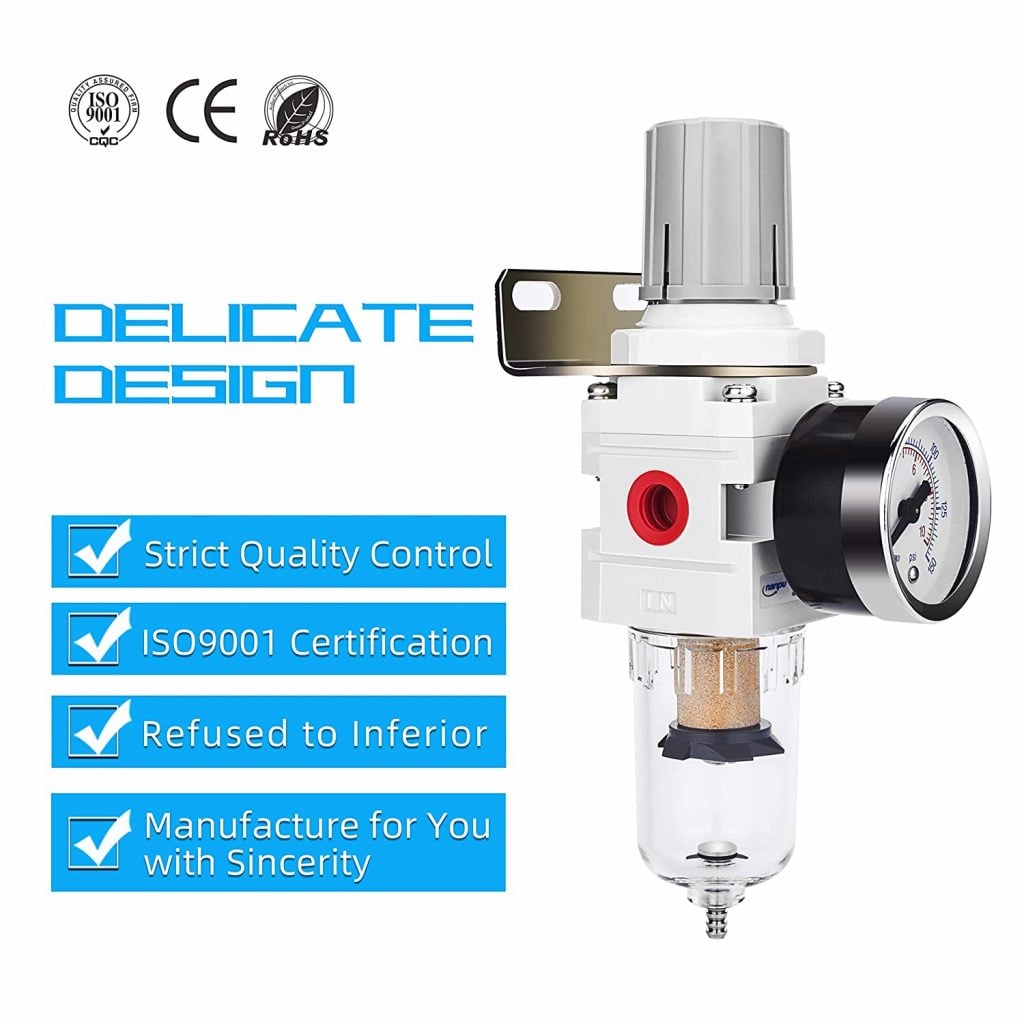
Hromee AW2000-02 Filter / Regulator
- Catches free water the upstream drains missed
- The bowl tells you how bad the problem really is
- Belongs at the drop, not back at the compressor
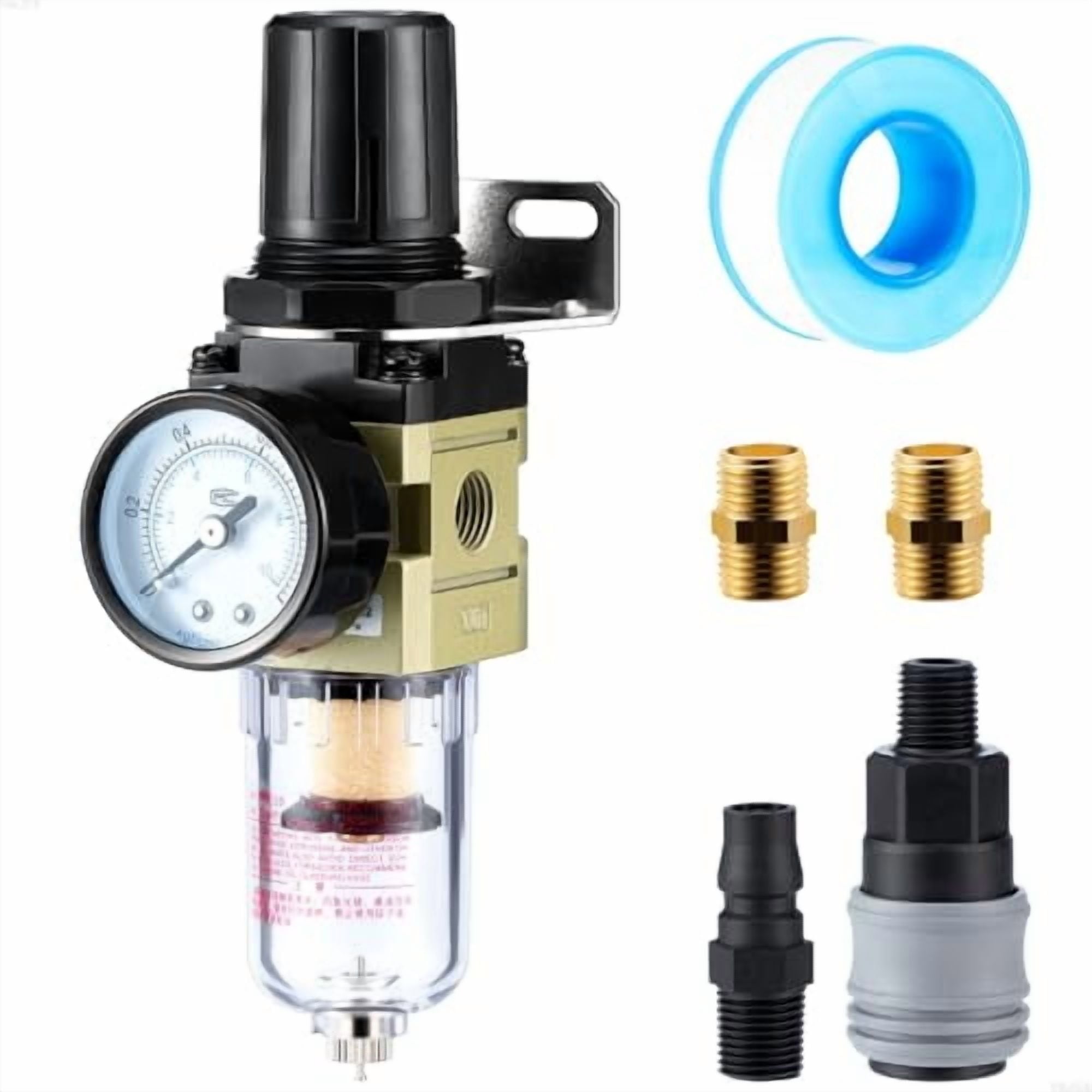
Hromee 1/4" Filter / Regulator
- One per bench beats one for the whole shop
- Every drop sees a different pipe temperature
- Cheap enough to fit everywhere water matters

LE LEMATEC Regulator 0–150 PSI
- Line pressure sets how much water the air can hold
- Holds the pressure the dew point was specified at
- Gauge reads against the local atmosphere
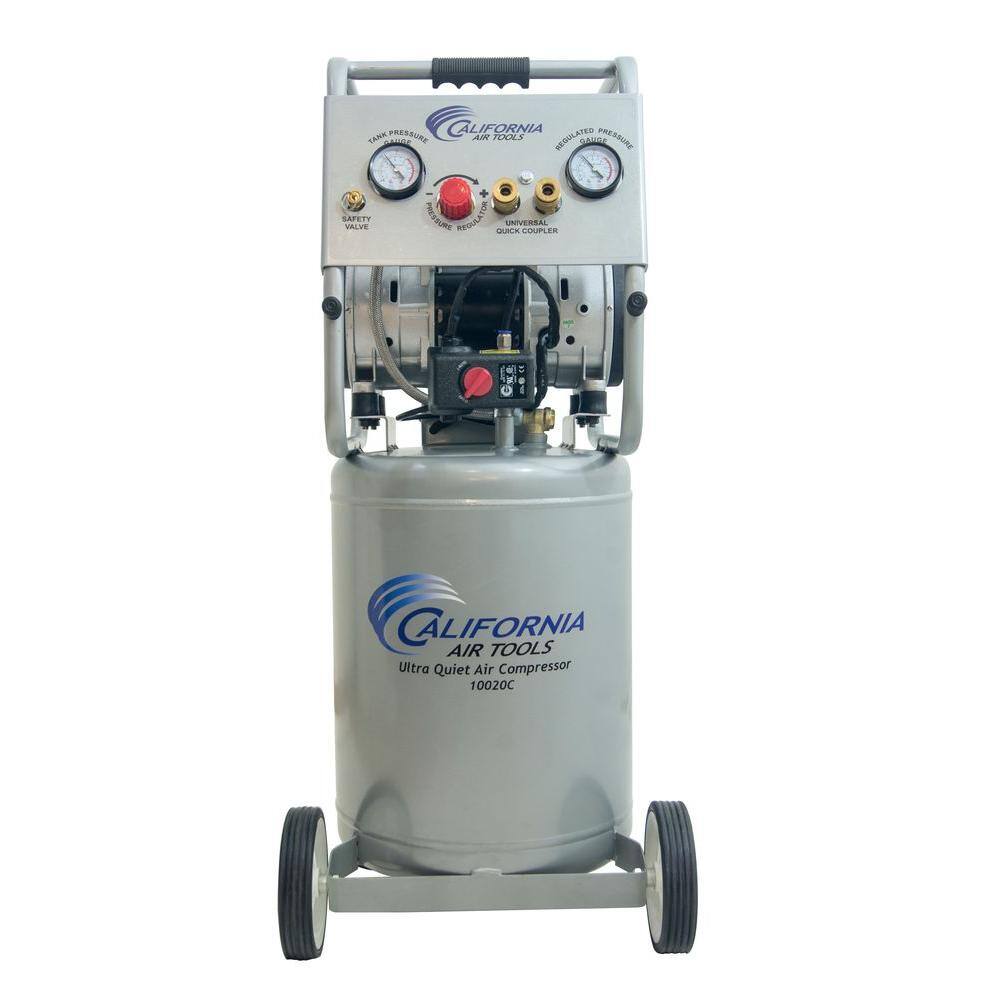
California Air Tools 10020CAD Auto Drain
- Condensate leaves without anyone remembering
- A forgotten manual drain rusts tanks from inside
- Oil-free, so the condensate is far less troublesome
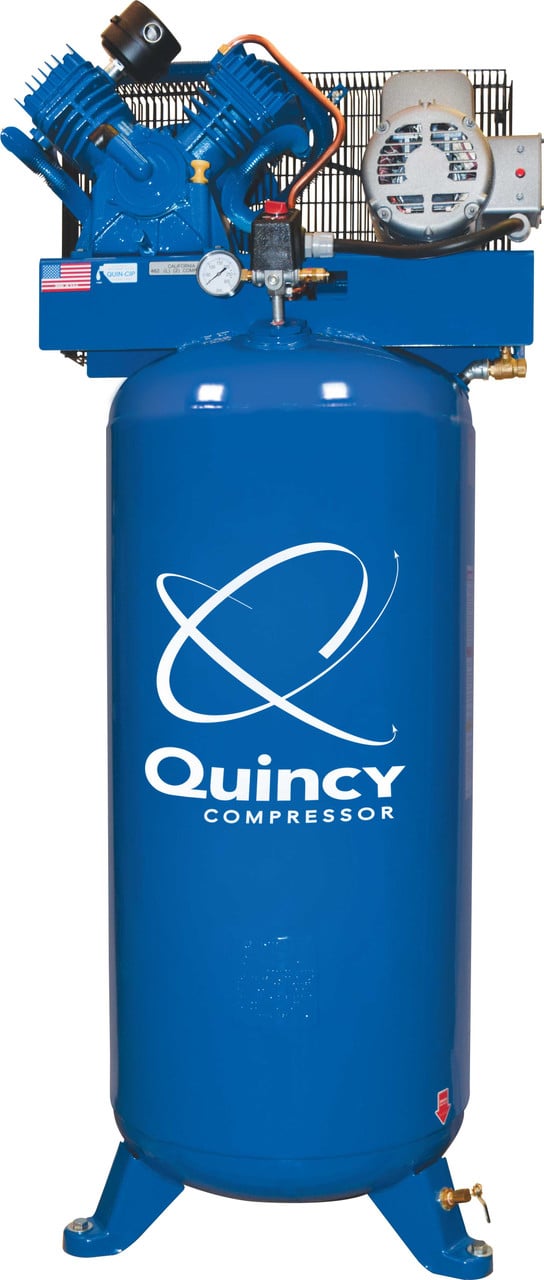
Quincy QT-54 5 HP 60-Gallon
- A big receiver is the shop’s first real separator
- Air slows, cools and drops water before the mains
- Drain it daily or it becomes a water tank
As an Amazon Associate, TestTalkHQ earns from qualifying purchases. Prices and availability can change.
Side by side
| Refrigerated | Heatless desiccant | Heated desiccant | |
|---|---|---|---|
| Pressure dew point | About 38°F, floor near 33°F | −40°F typical, −100°F available | −40°F typical, −100°F available |
| ISO 8573-1 humidity class | Class 4 | Class 2 or 1 | Class 2 or 1 |
| Compressed air consumed | None | A published percentage of rated flow, continuously | Much lower than heatless |
| Electrical load | Refrigeration compressor and fan | Controls only — very small | Heater or blower — significant |
| Capital cost | Lowest | Higher | Highest |
| Consumables | None beyond filters | Desiccant bed, periodically | Desiccant bed, periodically |
| Main failure modes | Icing, blocked condenser, internal drain blocked, bypass left open | Purge misset, valve not switching, bed flooded or oil-poisoned | All of the heatless modes plus heater and blower faults |
| Tolerates a hot inlet | Poorly — capacity falls quickly | Poorly — more water to adsorb | Poorly — same reason |
| Best fit | Indoor, heated shop, all pipe warm | Outdoor runs, unheated space, instrument air, small to mid flows | Same duty at larger flows where purge loss dominates |
Two rows in that table are worth dwelling on. First, both types hate a hot inlet for the same reason: hot air carries more water, and both technologies are sized on water. Second, the running-cost comparison is not electricity versus electricity. A refrigerated dryer’s cost is on your electricity bill. A heatless desiccant dryer’s dominant cost is compressed air it consumes, which is also your electricity bill — but it arrives disguised as compressor load, which is why it so often goes uncounted. The compressed air cost calculator will convert a purge figure in CFM into dollars per year for your own tariff and compressor.
The cases that are not obvious
Most of the shop is warm, one run is not
This is the most common awkward case and it has a good answer: do not specify the whole system for the worst run. Fit a refrigerated dryer for the plant, and either heat-trace and insulate the cold run, or fit a small point-of-use desiccant dryer at the branch that needs it. Buying a plant-sized desiccant dryer because of one twenty-foot outdoor run is an expensive way to solve a small problem.
The requirement lands right on the boundary
If your calculated requirement is a dew point around freezing, a refrigerated dryer is at the very edge of what it can do and has no margin left for a dirty condenser, a hot week or a growth in flow. Boundary cases should go desiccant, or the system should be changed so it is no longer a boundary case — usually by insulating or rerouting whatever is making the pipe cold.
Only one process needs dry air
A paint booth, a plasma table, a powder line or a laboratory bench inside an otherwise ordinary shop does not justify treating every cubic foot in the building. Point-of-use dryers, including small membrane units, exist precisely for this. Membrane dryers pass air through hollow fibres that let water vapour permeate out; they have no moving parts, are quiet, and are practical at small flows. They achieve their dew point by a fixed suppression below the inlet dew point rather than by holding an absolute figure, and they also consume a sweep of purge air — so the same questions apply: what suppression, at what inlet, at what purge rate, on the data sheet.
The compressor is oil-free
Some oil-free rotary screw machines can drive a heat-of-compression desiccant dryer from their own discharge heat, which removes both the purge loss and the heater load. Where that combination is available it changes the economics enough to be worth asking about specifically. It also makes the condensate far simpler to dispose of, since it is not an oil emulsion.
You are being sold on dew point you do not need
The opposite mistake exists too. A general fabrication shop with all its pipework indoors does not need −40°F air, and buying it means paying for purge loss forever. Specify against the coldest metal, add the margin, and buy that. If the answer is Class 4, buy Class 4.
A decision order that works
- Find the coldest metal. Walk the system with an infrared thermometer on the coldest morning of the year. Include everything.
- Subtract 15 to 20°F. That is your required pressure dew point, and it is the specification.
- Above freezing? Refrigerated. Below? Desiccant. This settles the technology on most sites.
- Size on corrected capacity, not the nameplate. Apply the manufacturer’s correction factors for your real flow, inlet temperature, line pressure and ambient. Get the aftercooler approach measured first, because it sets the inlet temperature.
- If desiccant, get the purge figure in CFM and add it to the compressor duty. Then price it as air, not as a percentage.
- If refrigerated, decide cycling versus non-cycling on your load profile. Intermittent duty pays for cycling; continuous duty often does not.
- Fit the filters in the right order and put a drain on everything. Coalescing before a desiccant bed, particulate after it, and a drain at every collection point.
- Prove it in August and again in January. One season is not a commissioning test.