
They are not three prices for the same thing. Each gives you a different kind of control, and two of them stop obeying the fan laws in ways worth knowing about
A fan law calculation ends with a speed. Getting to that speed is a separate decision with three answers, and they are not three prices for the same outcome. One gives you a fixed new speed. One gives you any speed you like, with a cooling problem attached. One takes the speed question away from you entirely and answers a different question instead. Choosing badly is how a cheap job becomes an expensive one twice.
The three, side by side
| Sheave change | Variable frequency drive | ECM replacement | |
|---|---|---|---|
| What you set | One fixed speed, chosen now | Any speed, changeable later | An airflow, or a torque |
| Obeys the fan laws? | Yes | Yes | Only if it is a constant-torque type and you fix the tap |
| Fits | Belt drive only | Three-phase, and some single-phase | Residential and light commercial air handlers |
| Main catch | Discrete sizes; you land near the target | Self-cooled motors need de-rating at low speed | Tied to the OEM airflow programming |
| Changes later | Another shutdown and another part | A parameter | A tap or a dip switch |
| Adds to the motor | Nothing | Harmonic current, voltage stress, noise | It is the motor |
The mechanical detail behind the first column — sheave ratios, belt length, alignment, wear — is covered properly in the pulley and belt ratio guide and the pulley and belt ratio calculator, and belt type is settled in V-belt vs flat belt vs timing belt. This page is about the choice between the three, not the execution of any one of them.
The sheave change
The oldest answer and still frequently the right one. With the fan sheave left alone, the required motor sheave pitch diameter is just the present one multiplied by the speed ratio: a 2.8 in sheave at a ratio of 1.167 wants 3.27 in.
Choose it when the required speed is a single value you are confident about, the equipment is belt drive, the load does not vary through the year, and the motor has the headroom. It is cheap, it adds nothing electrically, and there is nothing new to fail.
Do not choose it when any of these are true:
- The motor cannot take the cubed power. This is the one that catches people, and it catches them because the sheave is so cheap that nobody prices the motor first. Example B in the fan laws guide is the canonical shape: +16.7 percent more air, +58.8 percent more power, and a half-horse motor 0.26 BHP short including its service factor.
- The load genuinely varies. A fixed sheave sized for the design day runs at the design day all year.
- You are not sure of the target. A sheave is a shutdown, a part and a commissioning visit each time you change your mind.
- The new speed passes the wheel’s maximum safe speed. At which point none of the three options helps and the answer is a different fan.
Any trade

Contractor Job Estimator
Price remodels and GC work, then send a quote with no internal numbers.
Excel or Google Sheets. Best on a computer.
$29.00
BuyCheckout opens in a new tab.
Commissioning whichever one you pick
Whichever of the three you choose, the commissioning is identical: take the four readings before, make the change, take them again, and check the answer against what the fan laws said. A speed change nobody measured afterwards is a speed change nobody can defend.

NEIKO 20713A Digital Laser Tachometer
- Standard sheaves come in steps, so you land near the target, not on it
- Three percent of speed is nine percent of power, so measure it
- Also reads a drive output speed without trusting the display
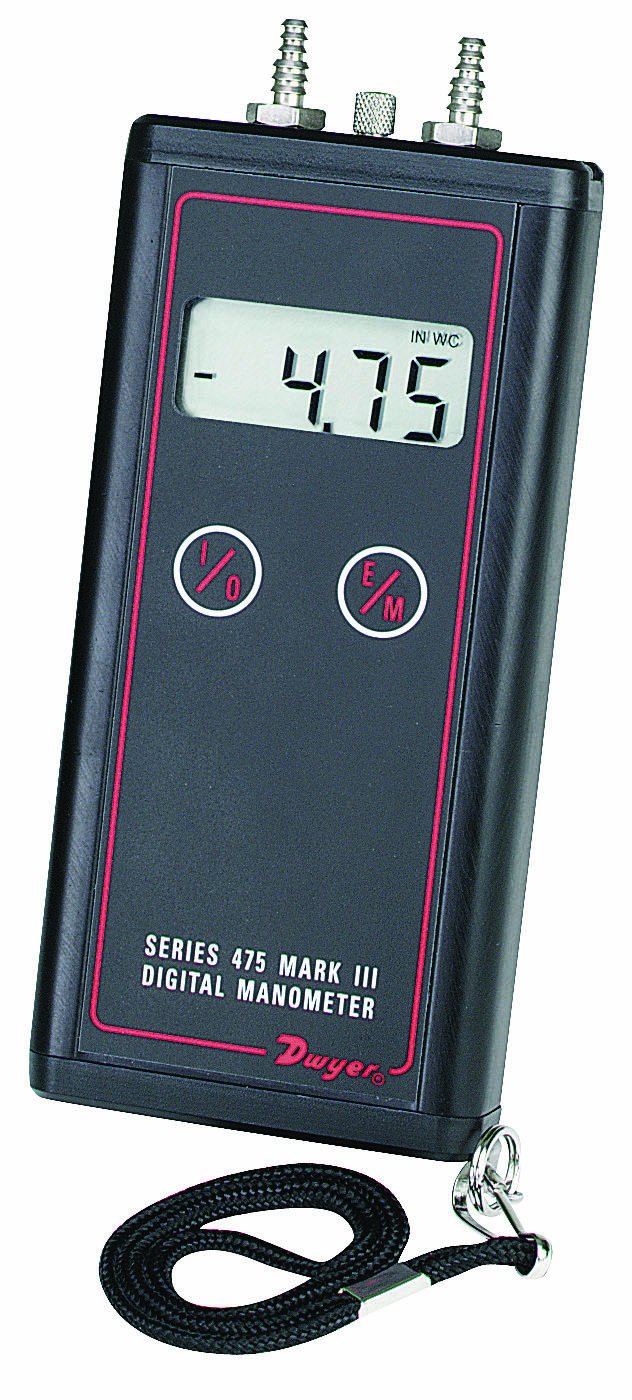
Dwyer Series 475 Mark III Digital Manometer
- High static pressure is an argument for the duct, not for more speed
- None of the three options fixes a crushed flex or a loaded coil
- Take it before you price anything
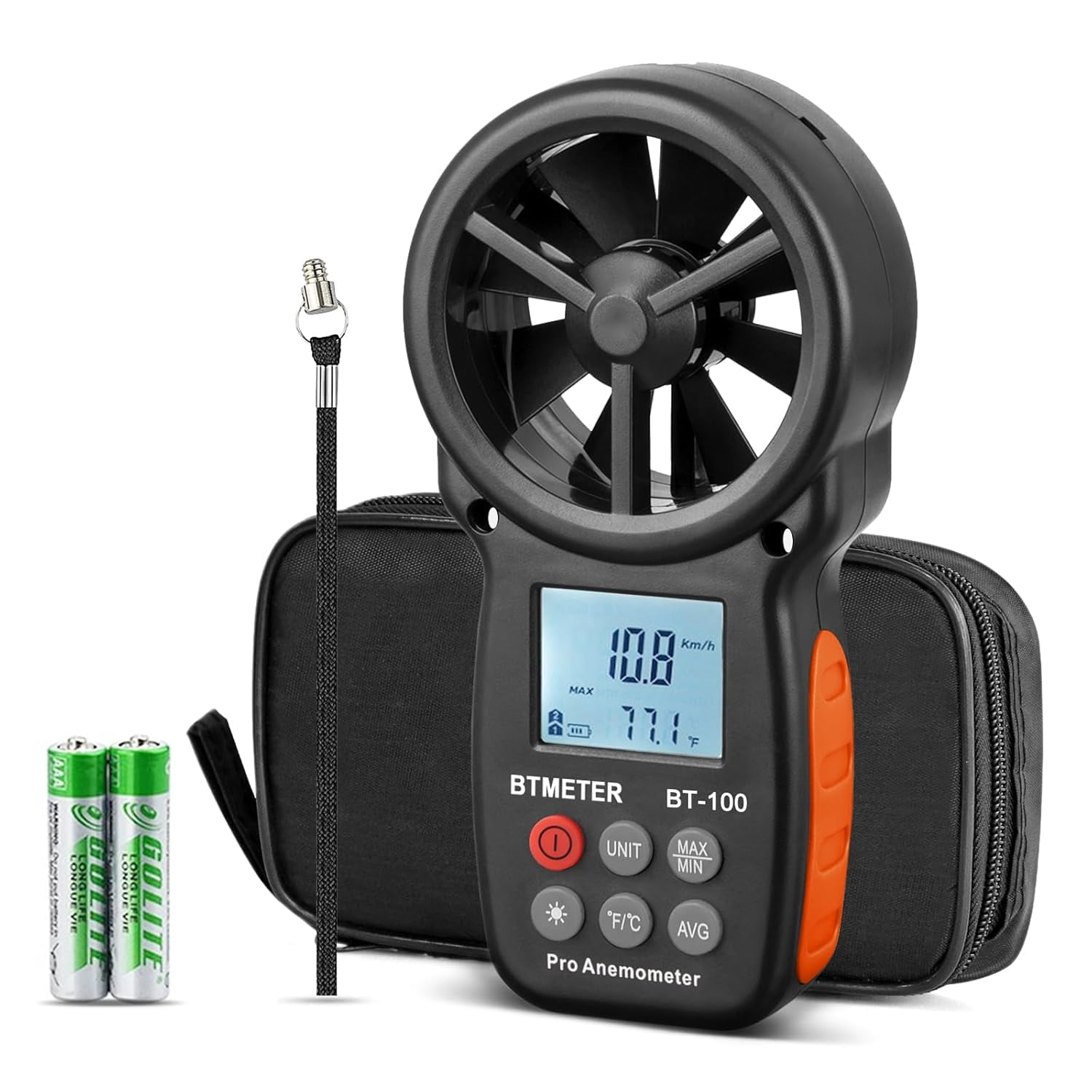
BTMETER BT‑100 Handheld Anemometer
- An ECM holding CFM means the proof is in the watts, not the airflow
- Register by register, so you see where the change actually went
- The only way to show a client what they bought
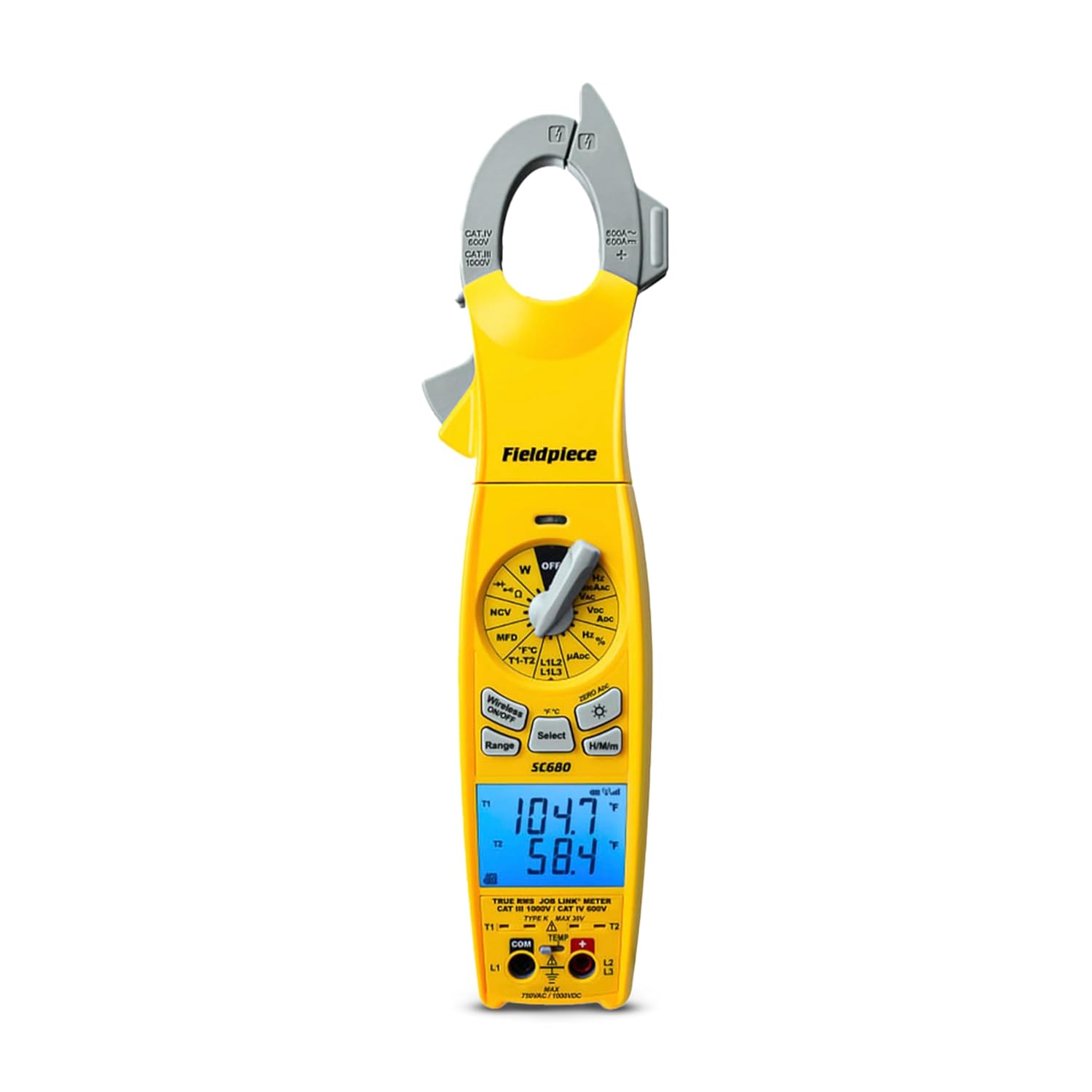
Fieldpiece SC680 Wireless Clamp Meter
- A sheave change can push a motor past nameplate in one step
- A drive adds harmonic current on top of the shaft load
- True RMS, which an averaging meter on a drive output is not
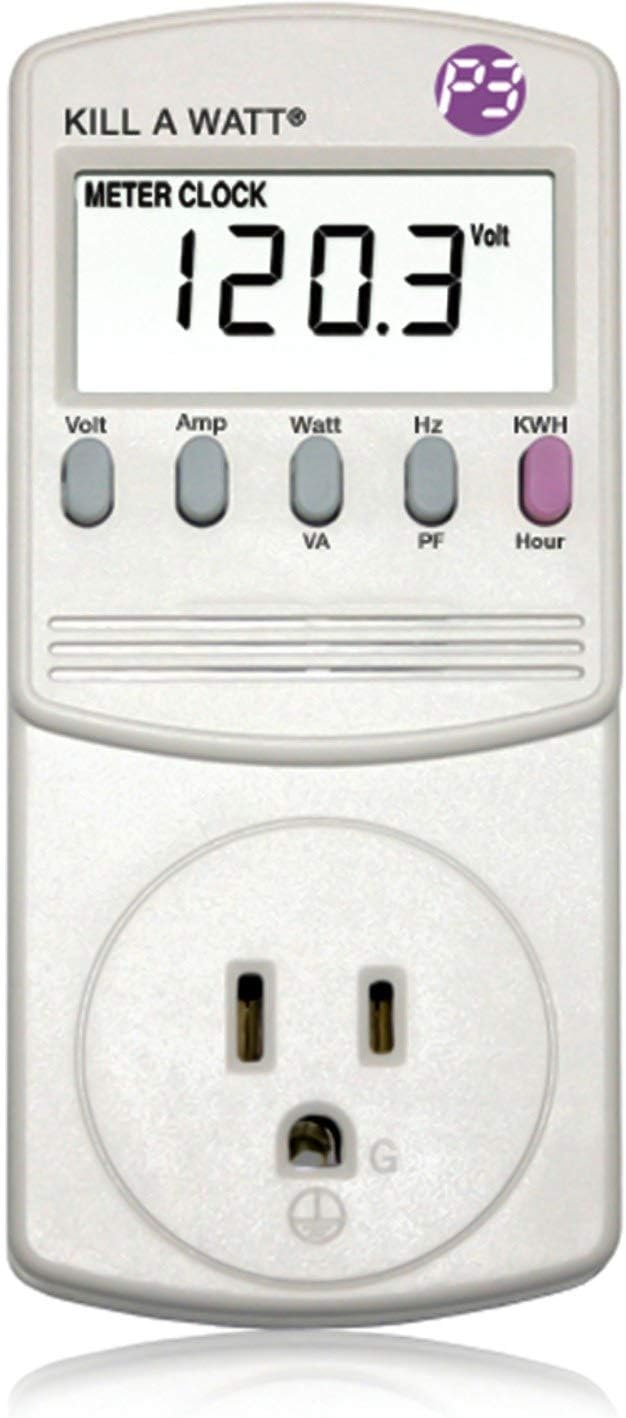
P3 P4400 Kill A Watt Energy Monitor
- The cube law is the whole argument for slowing a fan down
- Watts before and watts after is the argument made concrete
- Works on any 120 V air handler without touching the wiring
As an Amazon Associate, TestTalkHQ earns from qualifying purchases. Prices and availability can change.
The variable frequency drive
A drive sets the speed by setting the frequency, so a percentage of base speed is a percentage of 60 Hz, and the fan obeys exactly the same three laws it would on a sheave. What changes is everything around the motor.
Choose it when the load varies, when you want to commission by trying settings rather than by buying parts, when the savings case rests on part-load hours, or when the equipment is already three-phase. The economic argument is simply the cube law read downwards: Example C in the guide drops a fan to 80 percent speed and the power falls to 51.2 percent — 1,456 W saved for a fifth less air. A damper cannot do that, because a damper adds resistance while the fan keeps turning at full speed.
What comes with it. Joliet Technologies, summarising NEMA MG 1-2007, sets out the considerations that actually decide whether a drive retrofit works:
- Cooling at low speed. “When operating a self-cooled motor at reduced speeds, temperature rise must be factored in… it is advisable to de-rate a self-cooled motor to ensure temperature rise is maintained within the range dictated by insulation classification.” A motor with its cooling fan on its own shaft cools less as it slows. The remedies listed are de-rating, auxiliary cooling such as a motor-mounted blower, or more frame mass.
- Why that matters quantitatively. Same source: “each increase of 10 degrees Celsius in winding temperature above rated levels reduces winding insulation life by 50%.”
- Insulation stress. “NEMA MG1 Part 31 requires motor insulation systems for 460V rated motors to be capable of withstanding 1,600 volts peak, at a rise time of 0.1 microsecond”, and the same note observes that although many motors are labelled inverter duty, “the only mandated standard remains NEMA MG1 Part 31” — so confirm it rather than reading the sticker.
- Noise. “Operating motors with pulse-width modulated (PWM) ASD’s can result in an increase in A-weighted noise of 5 dB to 15 dB.” That is on top of whatever the speed change itself does.
- Current. Harmonic loading “may increase total demand by 5 – 10%”, which has to be allowed for in the drive and the circuit. Motor full load amps is the starting point for that side of it.
- Above base speed. Horsepower stays constant and torque falls, because the volts-per-hertz ratio drops once base speed is passed. NEMA Design A and B general purpose motors are rated for constant horsepower up to 90 Hz. So over-speeding a fan on a drive runs into the one thing a fan needs most of as it speeds up — torque — falling away exactly when the cube law is demanding more of it.
The ECM, which answers a different question
An electronically commutated motor is not a speed control in the sense the other two are, and the distinction is worth getting right because it changes what you can predict.
A constant-airflow ECM is programmed with a set of curves, one per airflow setting, plotting torque against speed. Its manufacturer describes the mechanism plainly: “Each motor has a set of constant CFM curves that are programmed into the motor; they are unique for each motor/air handler system determined by the OEM”, and when pressure changes, the motor “will gradually increase torque in small increments, checking the speed after each change” until speed and torque sit back on the airflow curve. Speed is an output. You set an airflow and the motor finds whatever speed delivers it, typically across a range of about 0.1 to 0.9 in. w.c.
That means you cannot use a fan law to predict what it will do. The laws still govern the machine underneath — which is exactly why the same manual warns that “Constant airflow means the system capacity will be maintained, but the motor will be using more energy as well” — but the control loop has taken the speed variable away from you.
A constant-torque ECM (the X13 class) is a different animal and is frequently confused with the above. Its maker is explicit: it “is programmed to provide constant torque… This should not be confused with constant airflow. Even though the X13 can maintain torque, if static pressure increases, airflow will decrease, similar to the PSC motor curve… Only it holds that curve up a little better than the PSC motor does.” The example given is a system at 0.8 in. w.c. where the X13 makes almost 1,200 CFM and a PSC makes 1,000.
| Motor type | Holds constant | What happens as static pressure rises | Predictable by fan law? |
|---|---|---|---|
| PSC | Roughly, speed | “Simply moves less air” — 1,625 CFM at 0.2 in. falls to 990 at 1.0 in. on the published table | Yes, per tap |
| Constant-torque ECM (X13) | Torque | Airflow falls, but less steeply than a PSC | Yes, per tap |
| Constant-airflow ECM | Airflow | Airflow holds; speed, torque and watts all rise | No — speed is an output |
Choose an ECM when the equipment is residential or light commercial, when continuous low-speed fan operation matters for air quality or comfort, and when the airflow needs to hold against a duct you cannot economically fix. Do not choose it as a way to avoid fixing the duct: holding airflow against a restriction is paying the cube-law bill rather than escaping it, and the manual says so. And be clear that a retrofit is usually tied to the OEM’s programming for that air handler, so it is a specified replacement rather than a universal part.
The decision, as a sequence
- Take the four readings and ask whether the duct is the problem. High static pressure with low airflow is a duct complaint and none of the three options is a fix for it. All three will make noise instead.
- Work the brake horsepower at the target speed. If the existing motor cannot cover it inside nameplate, you are buying a motor whatever else you buy, which changes the economics of all three.
- Check the wheel’s maximum safe speed. If the target passes it, stop; the answer is a different fan.
- Ask whether the load varies. If it genuinely does not, a sheave is cheap, reliable and adds nothing to fail. If it does, a drive pays for itself on the cube law and a sheave cannot.
- Check what drive type the equipment is. Belt drive opens the sheave option. Direct-drive three-phase points at a drive. A residential direct-drive air handler points at an ECM or a motor tap, because there is no sheave and a drive on a single-phase PSC motor is rarely the right move.
- If a drive, confirm the motor. Inverter duty to MG 1 Part 31, and de-rated or auxiliary-cooled for the lowest speed you intend to run continuously.
- Commission with the same four readings and check them against what the fan laws predicted. A change nobody measured afterwards cannot be defended.
What none of the three fixes
- A restricted duct. A sheave and a drive push harder into it at cube-law cost; an ECM holds the airflow at the same cube-law cost. None of them removes the restriction.
- System effect. An elbow on the fan inlet, spin into the wheel eye, no outlet duct, an obstruction in front of a double inlet. New York Blower is clear that these cannot be detected with field instruments and that AMCA Publication 201 is where the per-configuration numbers live. A speed increase masks the symptom and raises the bill.
- A wheel past its maximum safe speed. A mechanical limit on the wheel, published by its manufacturer, that nothing in the fan laws knows about.
- A fan that was the wrong selection. If the required operating point sits at the unstable left-hand end of the pressure curve, New York Blower’s own advice is to alter the system, fit a smaller fan, or fit one with a stable curve — not to change the speed.
- An airflow target that was wrong. Worth saying because it is common: scaling to a number somebody assumed rather than calculated just gets you to the wrong place faster.