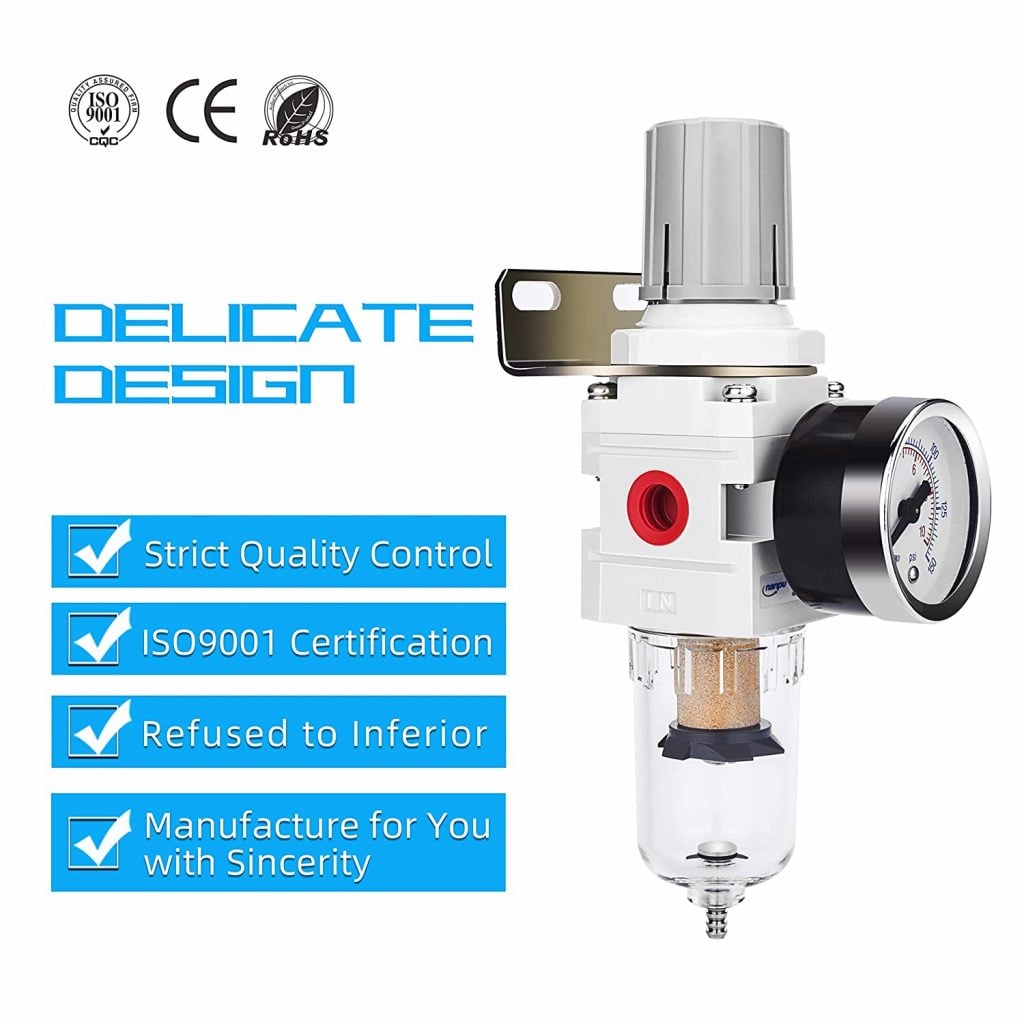
Filter / Regulator Combo
- Sets the exact pressure this calculation assumes
- Water in the bore wrecks cylinder seals and cycle counts
- Mounts at the machine, where the regulation belongs
The SCFM an air cylinder really draws — and the force you get for it
Compressor sizing for an automated fixture almost always goes wrong in the same place: somebody adds up cylinder bores instead of air volumes. A cylinder does not consume its swept volume — it consumes that volume multiplied by the compression ratio of the line feeding it. Enter bore, rod, stroke, pressure and cycle rate to get free air per cycle, the SCFM your compressor has to supply, the force at each end of the stroke, and how every other common bore compares.
A correctly calculated SCFM figure still fails at the machine if the air arriving is wet, unregulated, or squeezed through the wrong coupler. These are the parts between the compressor and the cylinder port.

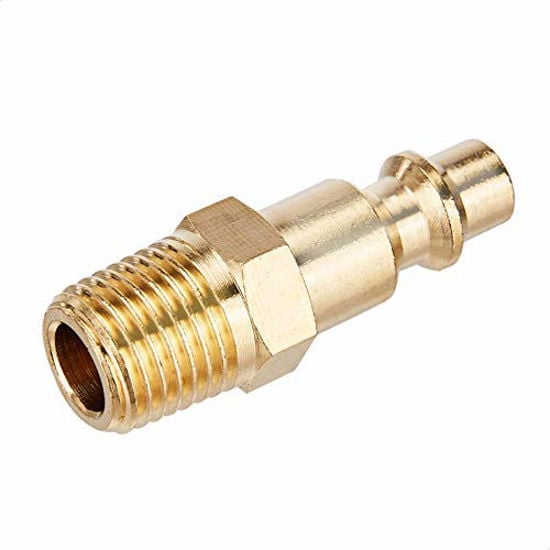
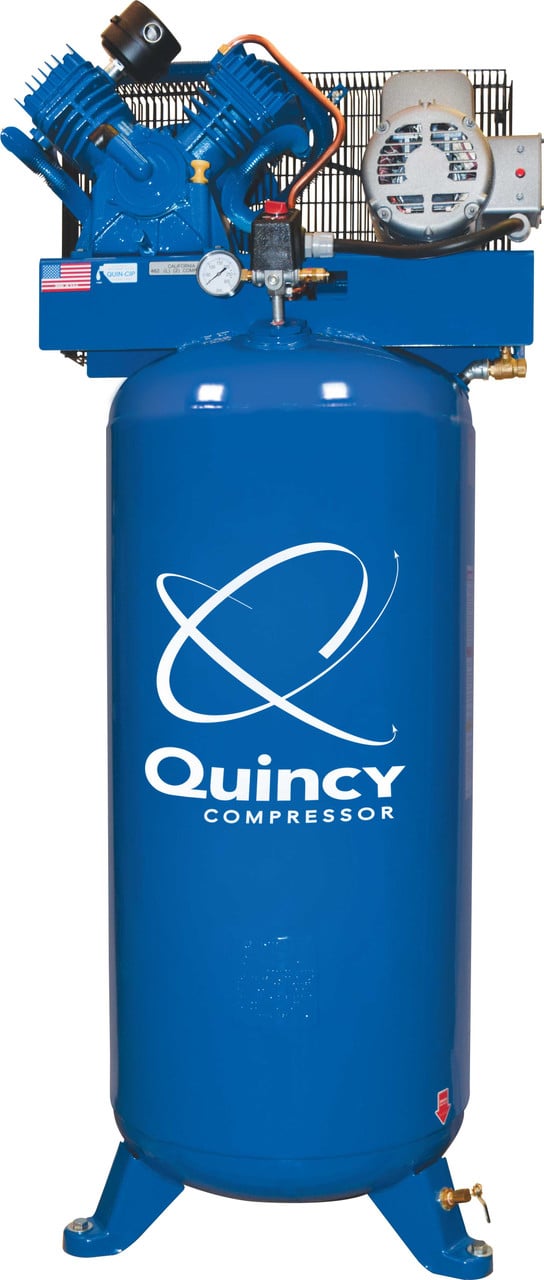
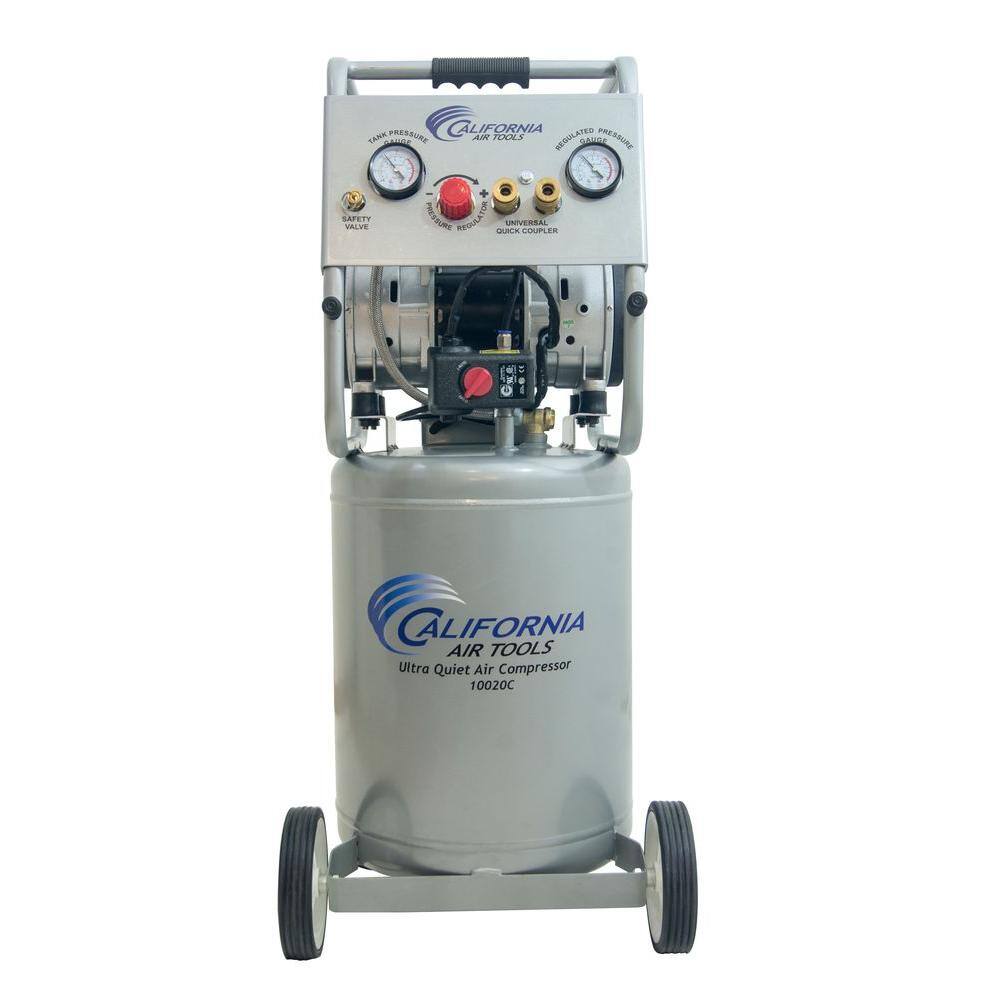
As an Amazon Associate, TestTalkHQ earns from qualifying purchases. Prices and availability can change.
There is no lookup table behind this tool. Cylinder air consumption is one of the few shop calculations that falls straight out of geometry and the gas laws, so the whole thing is four steps you can check on a phone calculator.
The extend stroke sweeps the full piston area. The retract stroke sweeps the piston area minus the rod, because the rod is already occupying that part of the barrel:
D is bore, d is rod diameter, L is stroke, all in inches, giving cubic inches. That rod term is not a rounding detail. On a 2 inch bore with a 5/8 inch rod the return stroke uses about 10 percent less air; on a heavy 2 inch rod in a 4 inch bore it is 25 percent less.
This is the step that separates a right answer from a wrong one by a factor of six or seven. Your compressor is rated in SCFM — cubic feet of atmospheric air per minute. The cylinder is filled with compressed air. Boyle's law converts between them at constant temperature:
At 80 psig on a sea-level day that ratio is (80 + 14.7) / 14.7 = 6.44. A cylinder whose barrel holds a fifth of a cubic foot is buying nearly a cubic and a third of free air every time it fills. Divide by 1728 because there are 1728 cubic inches in a cubic foot.
A double-acting cylinder does not only fill its barrel. Each port line is charged to line pressure on its working stroke and then exhausted to atmosphere on the next one. That air is bought and thrown away, every cycle, and it never does any work:
On a short-stroke cylinder at the end of a long tube run this is not a correction term, it is the headline. A 1 inch bore with a 1 inch stroke sitting 20 feet of 1/4 inch tube away from its valve spends more air filling the tube than the cylinder. Mounting the valve on the cylinder is the fix, and it is also why manifold-mounted valve banks at the far end of a machine are worth questioning.
A cycle here means one complete extend plus one complete retract. This is worth being pedantic about, because a machine that makes 40 moves a minute is doing 20 cycles a minute, and getting that wrong doubles the answer.
Force is the other half of the decision, and it is simply pressure acting on area:
Gauge pressure is correct here, not absolute, because atmospheric pressure is already pushing back on the other side of the piston and on the outside of the rod. These are theoretical figures. Real output is a few percent lower from seal friction, and it drops further if a meter-out flow control or a restrictive muffler is holding back pressure on the exhaust side — which on a fast, lightly loaded cylinder can be substantial.
The reason the calculator prints force and air side by side is that both scale with the square of the bore. Going up one bore size to be safe does not cost a bit more air, it costs the ratio of the squares. Moving from a 2 inch to a 3.25 inch bore is 2.6 times the force and 2.6 times the air bill, forever.
Because the compressor rating and the cylinder volume are measured in different air. The barrel volume is compressed air at line pressure; the compressor is rated in free air at atmospheric pressure. At 100 psig you buy about 7.8 cubic feet of free air for every cubic foot of barrel you fill. Multiply, do not compare directly.
Slightly less than twice, because the rod takes up part of the return volume. A spring-return cylinder of the same bore and stroke typically consumes a little over half what the double-acting version does — but it also gives you no controllable return force, so the choice is rarely made on air alone.
Both, in different places. Absolute pressure goes in the compression ratio that converts swept volume to free air. Gauge pressure goes in the force calculation, because atmosphere is already pushing on the other side. Mixing them up is the most common error in hand calculations.
The calculated figure is the demand while the machine runs at that rate. What you add on top is a judgement about duty cycle, future stations, leak growth, and how badly a starved machine hurts. A modest allowance covers measurement error; a large one is really a decision to buy capacity you have not specified yet. Enter your own factor rather than accepting a default you did not choose.
That is a flow and storage problem, not a consumption problem. Consumption is an average over the cycle; the actual draw during the 0.3 seconds a cylinder is stroking can be many times the average. Local receiver volume, larger valves, or shorter tube runs fix it. Sizing the compressor to the average SCFM will not.
Usually, yes, and in this order: fix leaks, drop the regulator to the lowest pressure that still makes the force with margin, shorten the tube between valve and cylinder, and consider running the return stroke at a lower pressure than the working stroke if the machine allows it. The pressure reduction is the one people skip, and the compression ratio makes it pay twice.