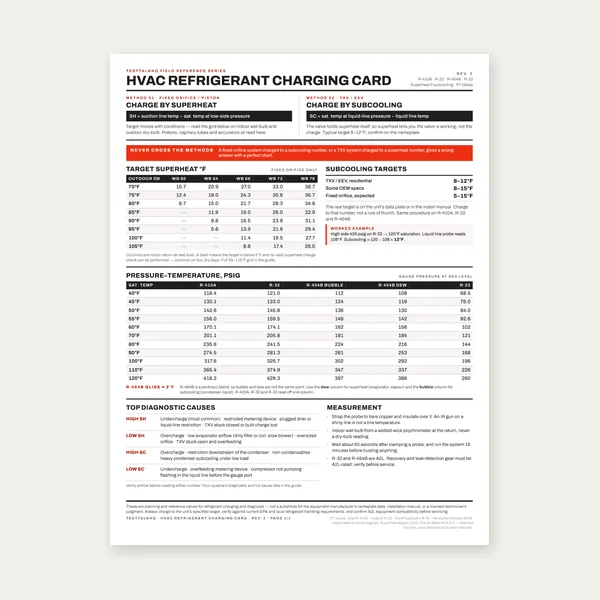
HVAC Refrigerant Charging Card
$3.99
BuyHow to calculate the right BTU output for your home — climate-zone factors, insulation, ceiling height, AFUE, and standard furnace sizes
The furnace sizing calculator runs this exact formula. This page is the why: DOE climate-zone BTU/sqft ranges, how insulation and ceiling height shift the number, why you shop furnace input not output, and how rounding to a catalog size can oversize the job. Cooling counterpart: cooling load & tonnage guide.
Wrong-size symptoms: troubleshooting. When ROT is not enough: rule of thumb vs Manual J heat loss. Cooling twin: rule of thumb vs Manual J cooling load.
Have a floor area and a climate zone? Get the output range, AFUE input, and standard size with the disclaimer on-screen.
Open Calculator →A house in Houston does not lose heat like a house in Minneapolis. Design outdoor temperature, wind, and heating-season length change the BTU the envelope dumps to the outdoors. DOE climate zones group those conditions. Public furnace-sizing rules of thumb (including manufacturer guidance such as Bryant’s published furnace sizing tables, cited consistently across independent HVAC sources) turn those zones into a BTU-per-square-foot band for average insulation and 8 ft ceilings.
| Zone | Example cities | Heating factor |
|---|---|---|
| 1 | Miami, New Orleans, Houston | 30–35 BTU/sqft |
| 2 | Coastal CA, Atlanta, Little Rock | 35–40 BTU/sqft |
| 3 | Virginia, Missouri, Kansas | 40–45 BTU/sqft |
| 4 | Chicago, New York | 45–50 BTU/sqft |
| 5 | N. Minnesota, Maine, Mountain West | 50–60 BTU/sqft |
The calculator keeps the range. It does not collapse 45–50 into a single 47.5. That matches how the cooling-load calculator presents sq-ft-per-ton bands: a low, a high, and a midpoint “recommended” figure.
Insulation: Poor / leaky construction adds 10%. Average is 0%. Well-insulated subtracts 10%. That is a coarse envelope knob, not an R-value takeoff or a blower-door ACH. It exists because a 1970s ranch and a 2018 tight house in the same city are not the same load.
Ceiling height: 8 ft is the baseline baked into the BTU/sqft tables. Each foot above 8 ft adds 12.5%, prorated for partial feet. A 9.5 ft ceiling is 1.5 × 12.5% = +18.75%. Heights at or below 8 ft get no ceiling adder in this tool.
$3.99
Buy
$12.99
Buy
$29.00
Buy
$39.00
BuyCheckout opens here — you stay on this page.
A BTU estimate is only a starting point. Confirm runtime, air-side split, and static before you chase the wrong size. Products below are from the live TestTalkHQ affiliate CSV. Furnace filters and duct sealant were not in the CSV.
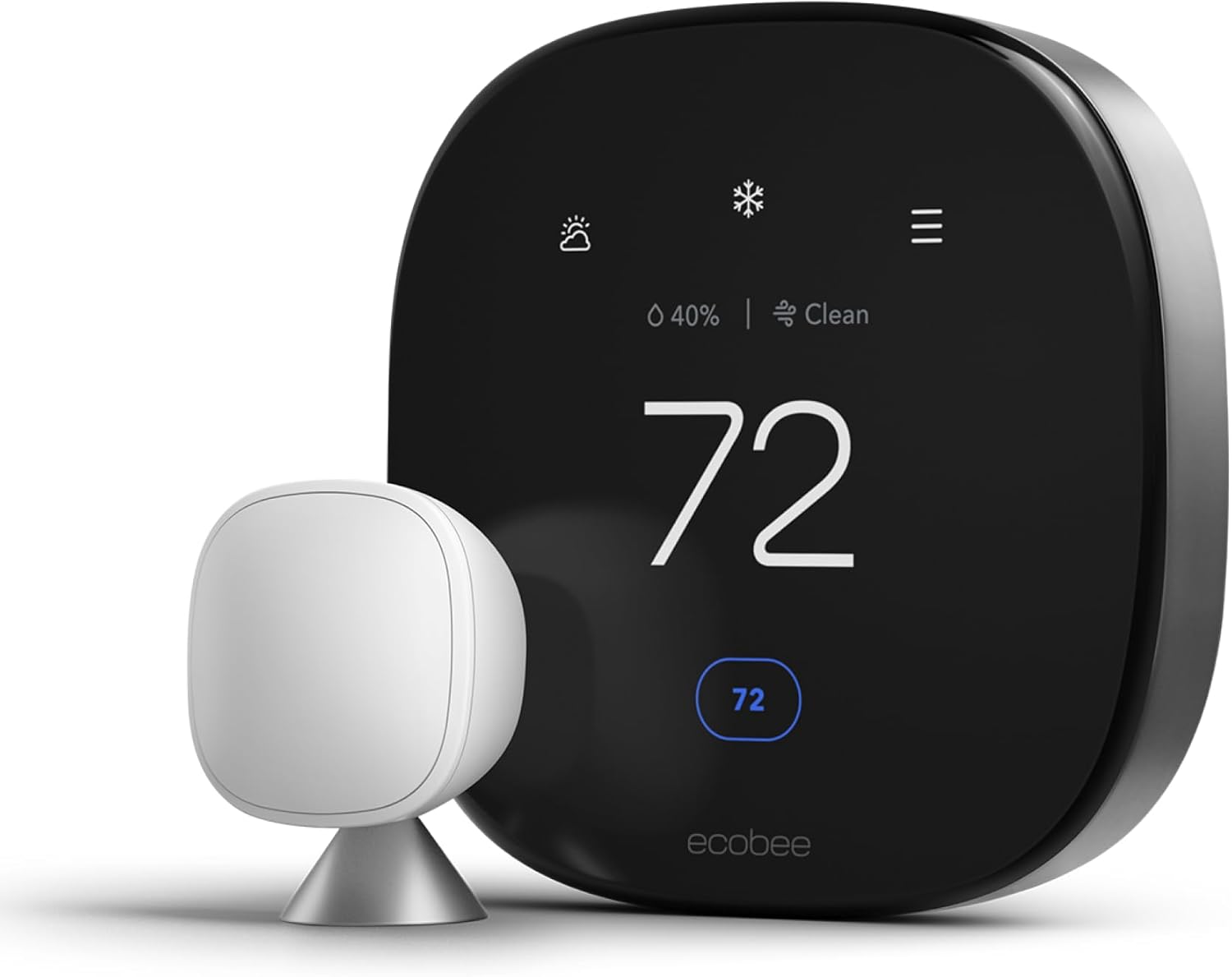
Cycle history and remote sensors show short-cycling versus a furnace that never reaches set point.
View on Amazon →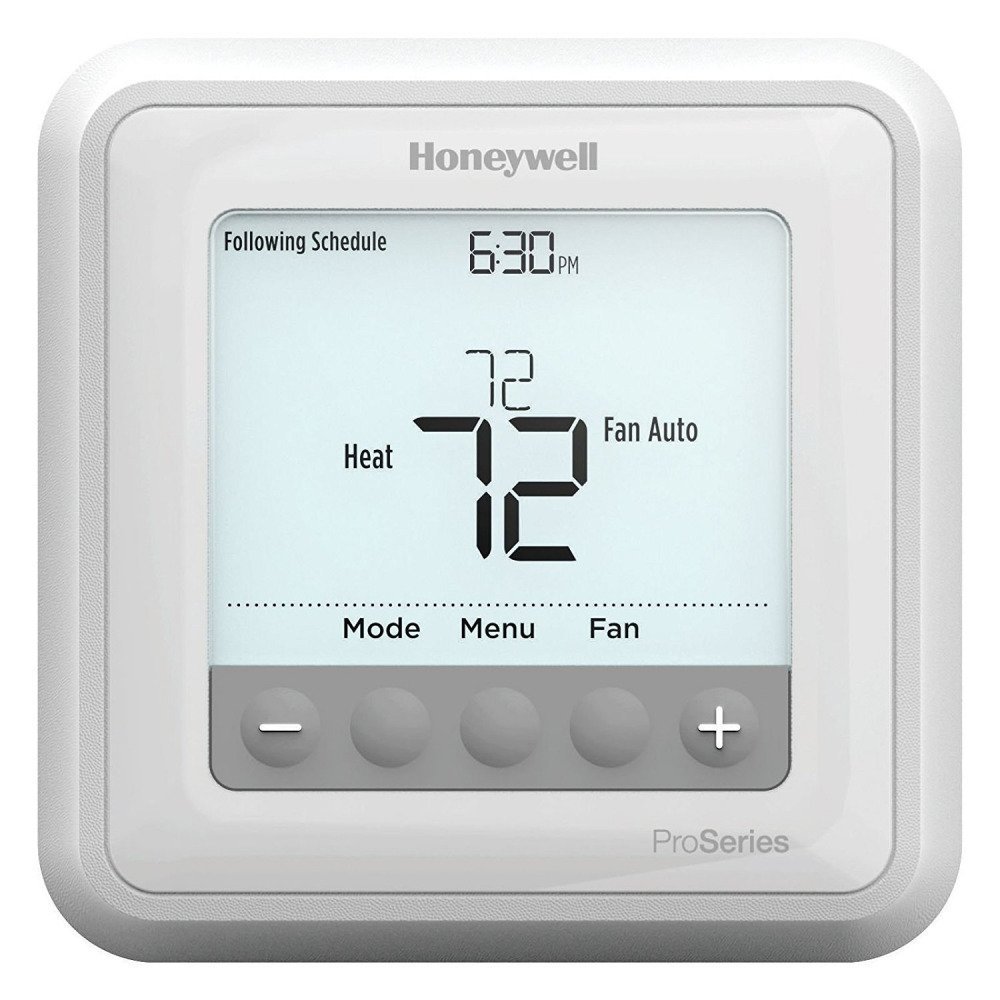
A stable setpoint and cycle count beat guessing whether the cabinet is too big or too small.
View on Amazon →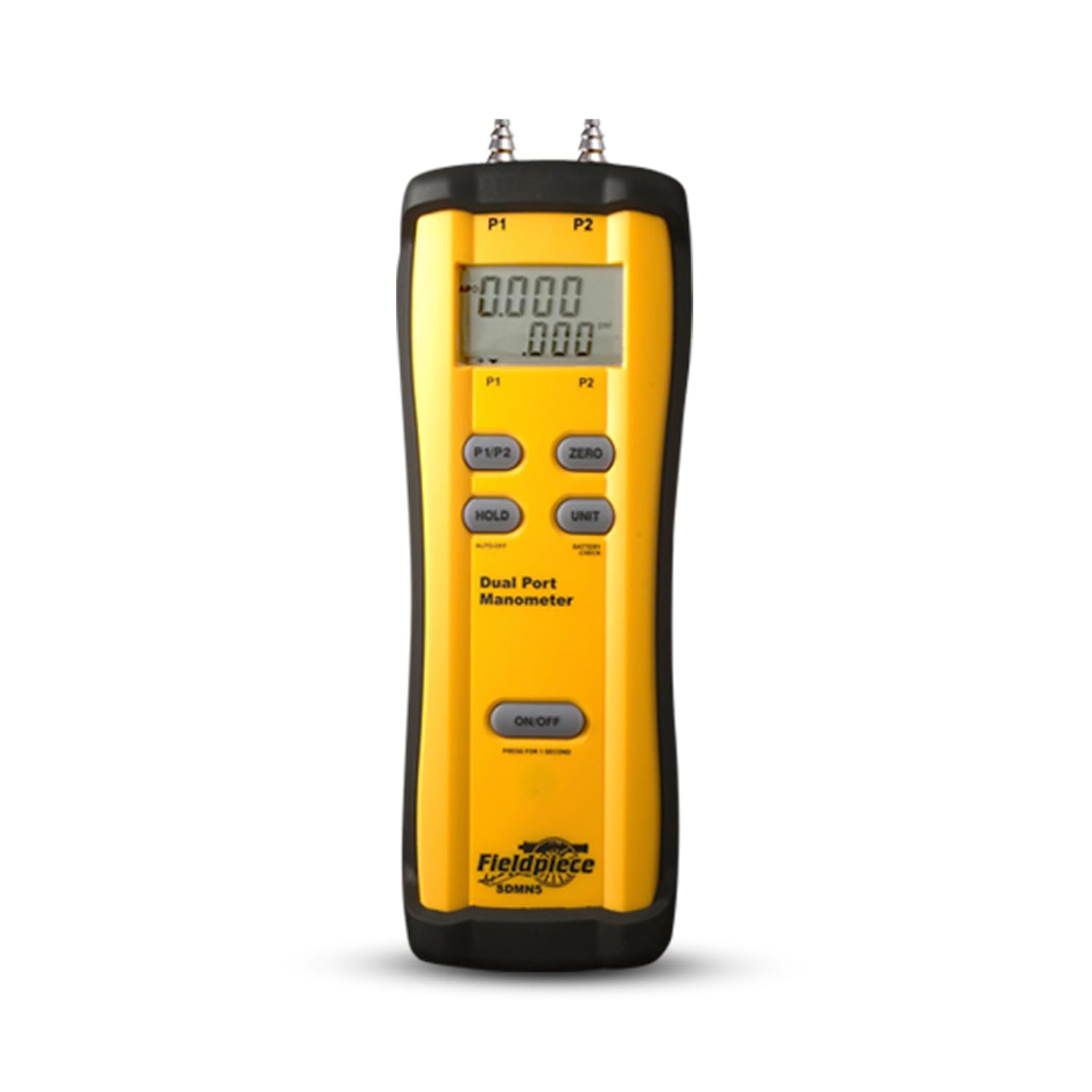
High TESP starves airflow and looks like an undersized heat exchanger. Measure before you upsize.
View on Amazon →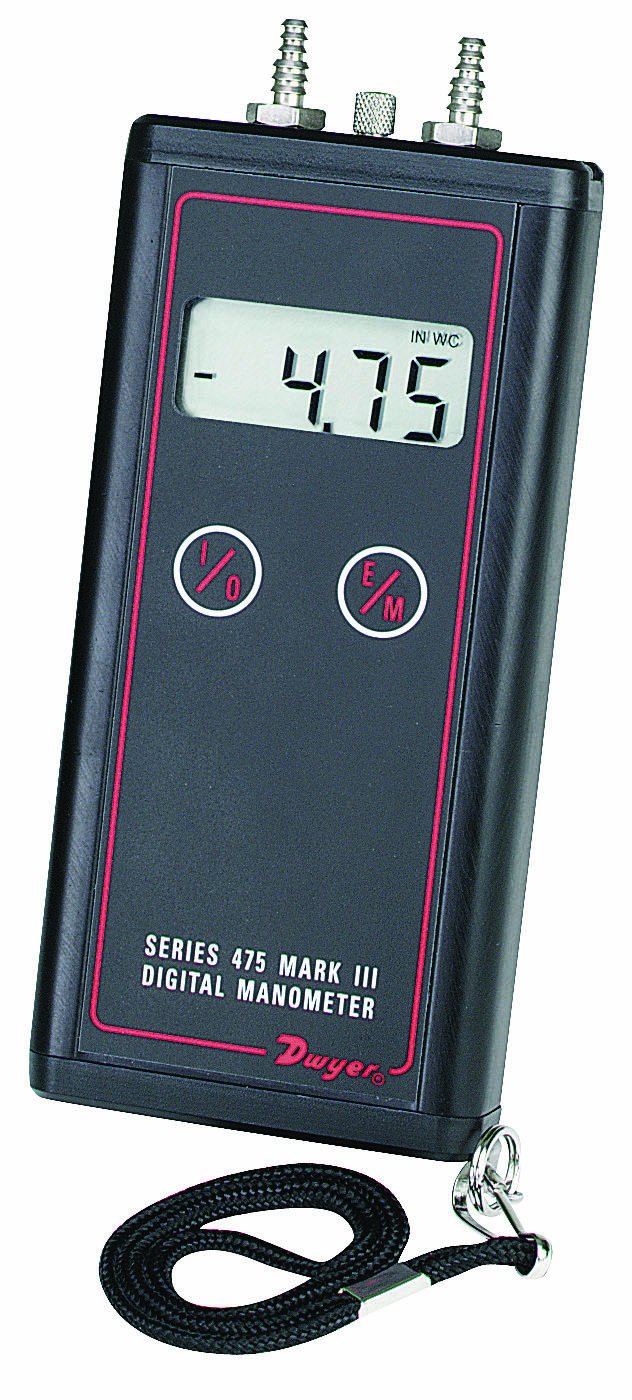
Handheld differential pressure for filter drop, coil drop, and total external static versus the blower nameplate.
View on Amazon →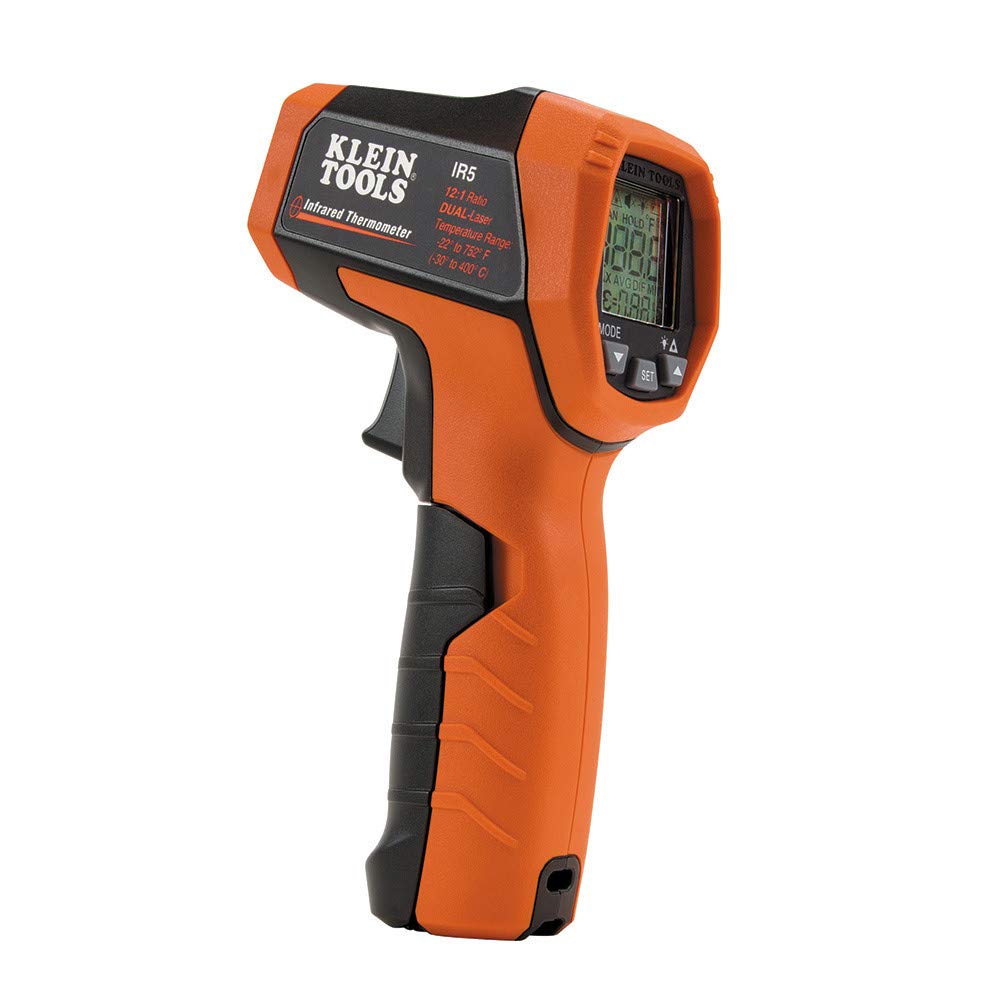
Non-contact supply and return temps for a heating-mode delta-T check after the furnace runs.
View on Amazon →As an Amazon Associate, TestTalkHQ earns from qualifying purchases. Product links are from the live TestTalkHQ affiliate CSV only.
AFUE (Annual Fuel Utilization Efficiency) is the fraction of fuel energy that becomes usable heat over a heating season. An 80% AFUE furnace turns 80% of the gas it burns into heat delivered to the air stream. The other 20% leaves with flue gases. A 95% condensing furnace recovers most of that.
The house needs output BTU/hr. The number on the carton and the nameplate is almost always input — how much gas the burner is rated to consume. Contractors quote “a 100k furnace.” That 100,000 is input. At 80% AFUE it delivers about 80,000 BTU/hr to the ducts. At 95% AFUE the same 100k input delivers about 95,000.
That is why a high-efficiency replacement is often a smaller input cabinet for the same house. Replacing an 80% 120k with a 95% 120k without rerunning the load is how you oversize. Common ratings: 80%, 90%, 95%, 97%. The calculator accepts those presets or a typed value.
Residential gas furnaces are commonly cataloged at 40,000 / 60,000 / 80,000 / 100,000 / 120,000 BTU input. The calculator rounds the recommended (midpoint) input up to the next step. 118,750 becomes 120,000. 86,000 becomes 100,000. 105,000 also becomes 120,000 — a 15,000 BTU jump that is already an oversize risk.
If the recommended input is above 120,000, do not cram the load into one 120k cabinet and call it sized. Two furnaces, a commercial cabinet, or a Manual J that might shrink the load are the next conversation.
As a Zone 4–5 public rule of thumb, it is still widely cited. As a substitute for Manual J on a tight modern house, it often oversizes. As a substitute on a leaky 1950s ranch, it can undersize.
No. Heating load and cooling load are different physics. Run the furnace calculator and the cooling-load calculator separately. Dual-fuel and heat-pump hybrids make that split even more important.
Because the published factors are ranges, not a single number. Collapsing them hides uncertainty. The midpoint is the recommended figure; the low and high show how wide the guess still is.