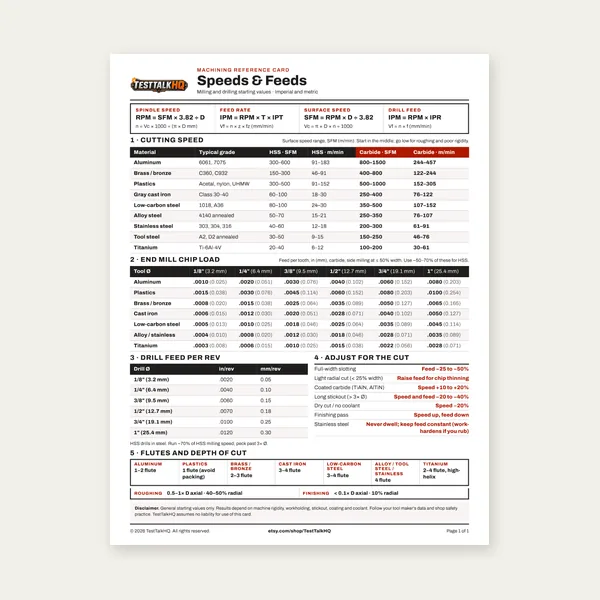
Machining Speeds & Feeds Card
One page. Speeds, chip load and drill feed, imperial and metric.
$3.99
BuyCLR, Arc Length & Bend Deduction for Round Tube & Pipe
Enter your tube OD, wall thickness, centerline radius, and bend angle to calculate arc length, bend deduction, D/t ratio, and outer wall thinning. See the Tube Bending Guide for setup, mandrel selection, and springback compensation.

| D/t ratio | Wall category | Min CLR multiplier | Typical use |
|---|---|---|---|
| Under 10 | Heavy wall | 1.5 × OD | Structural DOM, mandrel optional |
| 10 to 14.9 | Medium wall | 2.0 × OD | Standard fab tube — mandrel on tight radii |
| 15 and above | Thin wall | 3.0 × OD | Exhaust, roll cage — mandrel usually required |
Arc length = (π / 180) × angle × CLR. Bend deduction = (2 × CLR × tan(angle/2)) − arc length.
One page. Speeds, chip load and drill feed, imperial and metric.
$3.99
Buy
27 pages. Milling, drilling, tapping, turning and CNC routing.
$12.99
Buy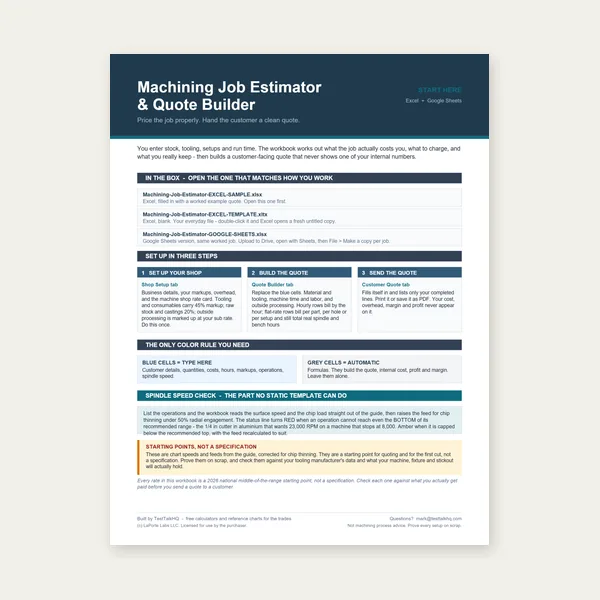
Quote shop work and check operations against your spindle's top speed.
Excel or Google Sheets. Best on a computer.
$29.00
Buy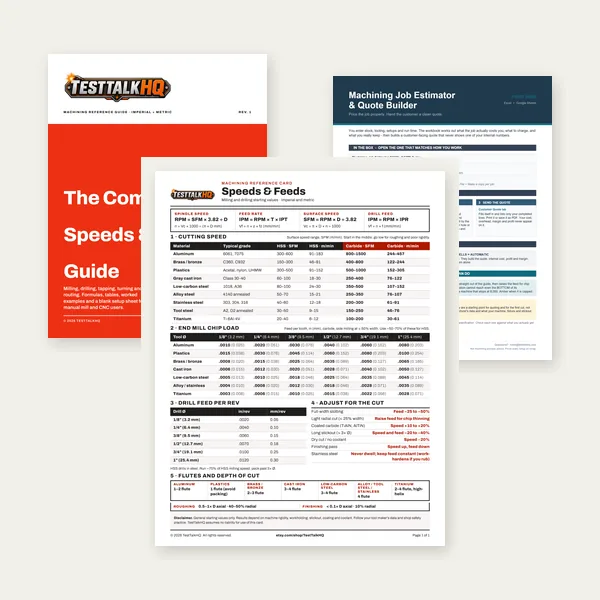
Card, 27-page guide and the estimator workbook. All six files.
Excel or Google Sheets. Best on a computer.
$34.99
$45.98 if bought separately — save $10.99
BuyCheckout opens in a new tab.
Deburring, measurement, lubrication, and PPE for tube and pipe fabrication — pair with the calculator before you load the bender.
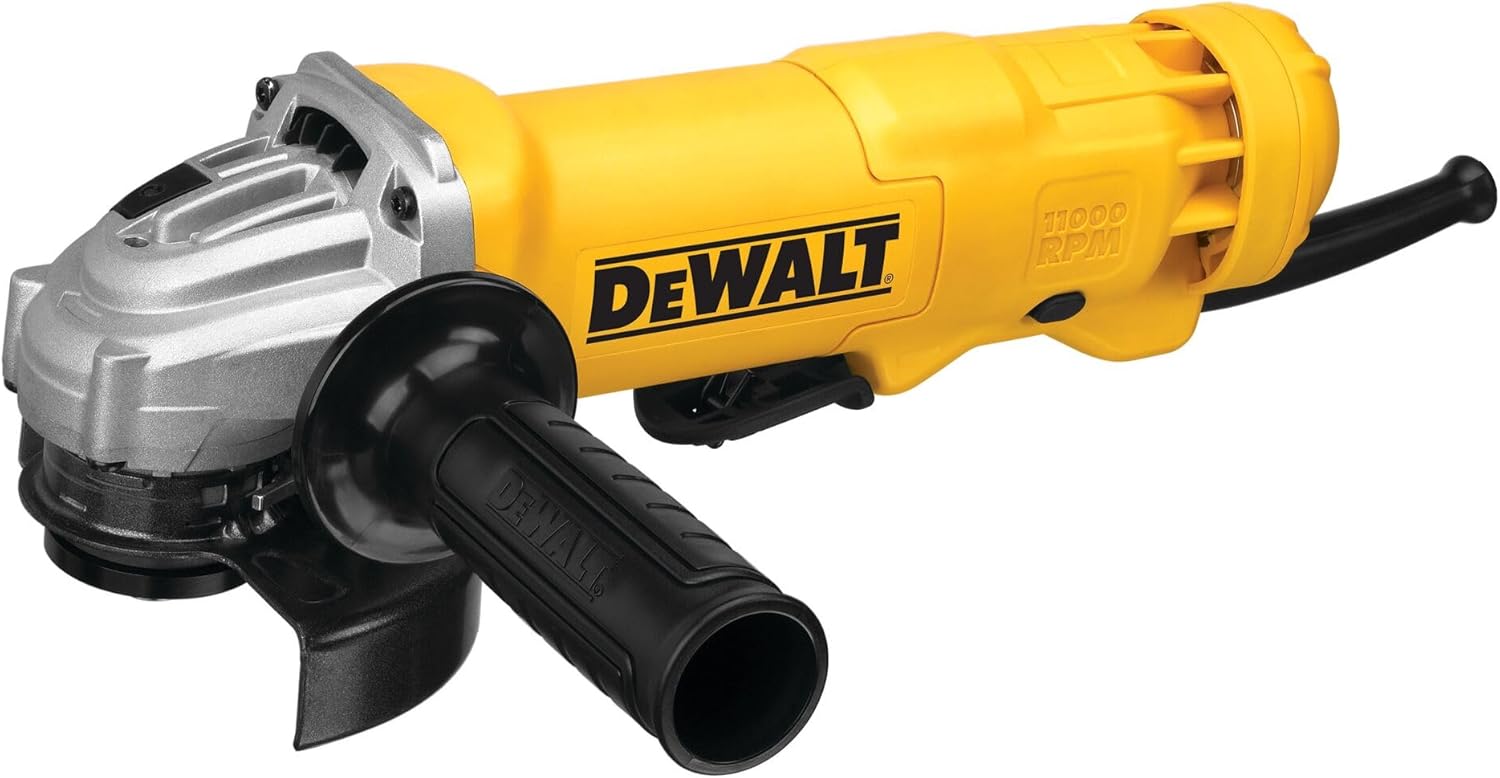




As an Amazon Associate, TestTalkHQ earns from qualifying purchases. Prices and availability subject to change.
The D/t ratio — outside diameter divided by wall thickness — predicts how difficult a bend will be. Low D/t (heavy wall relative to diameter) means the tube can resist compression on the inner wall without mandrel support. High D/t (thin wall) means the tube is prone to collapse, wrinkling, and ovality. A D/t below 10 is forgiving. Above 15, a mandrel is typically required for any CLR under 3x OD. Use the D/t output from this calculator as your first read on whether your setup needs internal support.
Arc length tells you how much tube is consumed in the bend — use it for layout when marking tangent points before loading the tube. Bend deduction tells you how much shorter your total part becomes compared to the sum of its straight leg dimensions — use it when calculating blank length from a finished-part drawing. Both values come from the same inputs. If you're marking tube for a single bend, arc length is your number. If you're figuring total tube length for a multi-bend assembly, work with bend deduction for each bend.
The outer wall of any tube thins during bending because the material stretches to cover a longer arc. This calculator estimates that thinning as a percentage of original wall thickness. Under 15% is generally acceptable for structural applications. Over 20% warrants a mandrel to redistribute stress and limit further thinning. Over 33% indicates the CLR is too tight for the wall — the outer wall is at high risk of cracking, especially in stainless or hardened aluminum. If your thinning percentage is high, the fix is a larger CLR die or a heavier-wall tube, not a tooling adjustment.
Springback — the elastic recovery after a bend is released — cannot be calculated from geometry alone. It depends on the specific yield strength and temper of your material lot, your bending speed, lubrication condition, and tooling wear, none of which are knowable inputs. The correct approach is to run a calibration bend at your target angle, measure the actual rested angle, and set your overbend accordingly. For mild steel DOM at standard CLR, expect 3–5°. For 304 stainless, 5–12°. For 6061-T6 aluminum, 8–15°. Characterize per setup and document it.