TestTalkHQ.com

Generator Sizing
Calculator

Estimate running watts, startup surge demand, recommended generator size, and fuel runtime in one place.

Use this calculator to size a generator for home backup, storm prep, RV, and job site loads. Add your expected loads, then compare running and surge demand before choosing final equipment.
Embed this calculator Free · no API key · keep the attribution link

Copy the snippet below to embed this calculator on your site. The attribution link must stay intact and dofollow (no rel="nofollow"). Browse all embeddable calculators

<div class="ttq-embed" style="max-width:100%;margin:0 auto;">
  <iframe src="https://testtalkhq.com/embed/generator-sizing-calculator/?theme=light&utm_source=embed" width="100%" height="980" frameborder="0" loading="lazy" scrolling="no" title="Generator Sizing Calculator — TestTalkHQ" style="border:0;max-width:100%;width:100%;"></iframe>
  <p style="font:400 13px/1.4 system-ui,sans-serif;text-align:center;margin:6px 0 0;">Powered by the <a href="https://testtalkhq.com/generator-sizing-calculator/?utm_source=embed&utm_medium=referral&utm_campaign=calculator_embed&utm_content=generator-sizing-calculator" target="_blank" rel="noopener">Generator Sizing Calculator</a> from <a href="https://testtalkhq.com/?utm_source=embed&utm_medium=referral&utm_campaign=calculator_embed&utm_content=generator-sizing-calculator" target="_blank" rel="noopener">TestTalkHQ</a></p>
</div>

Electrical

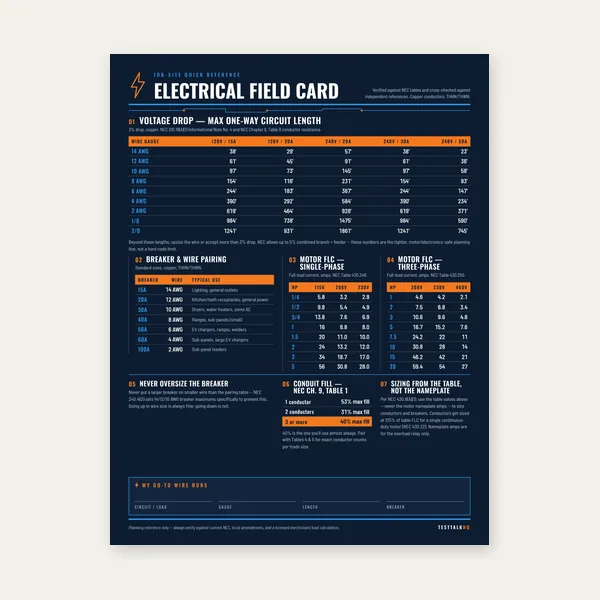
Electrical Reference Card

Electrical Reference Card

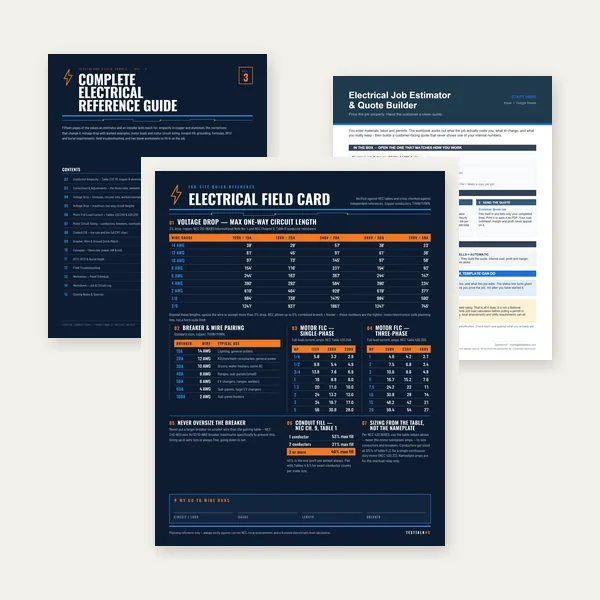
One page. Voltage drop lengths, breaker and wire pairing, motor FLC.

$3.99

Buy
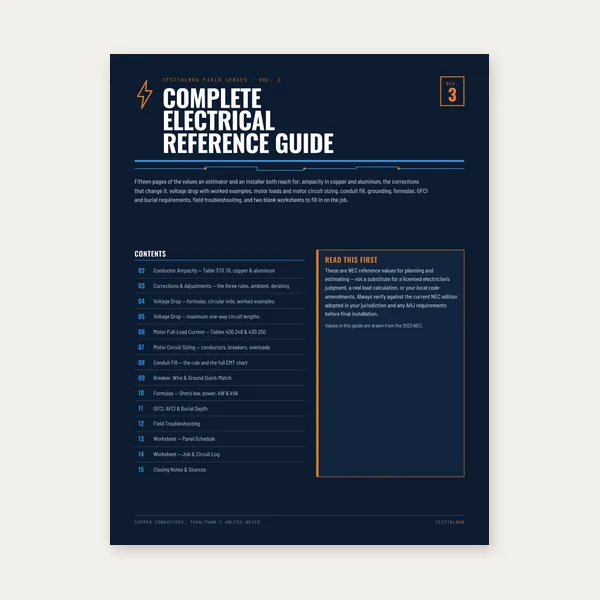
Complete Electrical Reference Guide

Complete Electrical Reference Guide

15 pages. Ampacity, corrections, voltage drop, motor circuits, conduit fill.

$12.99

Buy
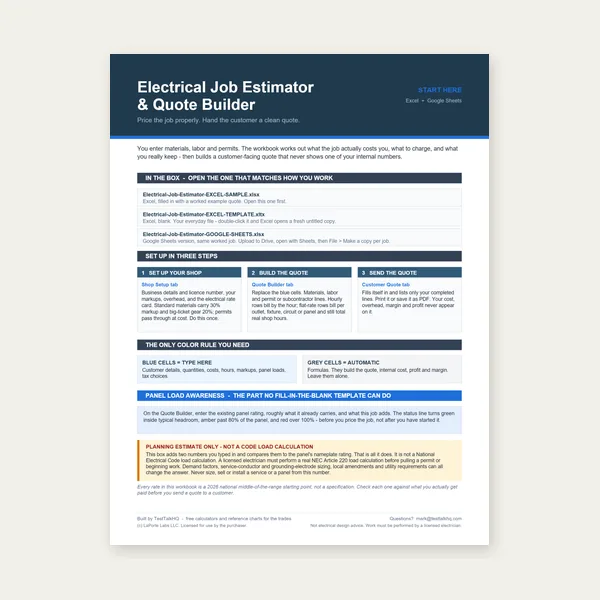
Electrical Job Estimator

Electrical Job Estimator

Quote electrical work and flag panel headroom before you price it.

Excel or Google Sheets. Best on a computer.

$29.00

Buy
BEST VALUE
Electrical Complete Bundle

Electrical Complete Bundle

Card, 15-page guide and the estimator workbook. All six files.

Excel or Google Sheets. Best on a computer.

$34.99

$45.98 if bought separately — save $10.99

Buy

See all Electrical products

Checkout opens in a new tab.

Recommended Electrical Tools

Generator-adjacent tools to validate load assumptions and improve installation safety.
Fluke 117 multimeter

Fluke 117 Digital Multimeter

  • Verify generator output voltage
  • True RMS field diagnostics
  • Transfer switch checks
View on Amazon ->
Klein CL800 clamp meter

Klein CL800 Clamp Meter

  • Read feeder current safely
  • Useful for startup surge checks
  • Confirms live load assumptions
View on Amazon ->
Klein NCVT-6 voltage tester

Klein NCVT-6 Non-Contact Voltage Tester

  • Fast hot/dead checks
  • Useful during outage calls
  • Compact electrical safety tool
View on Amazon ->
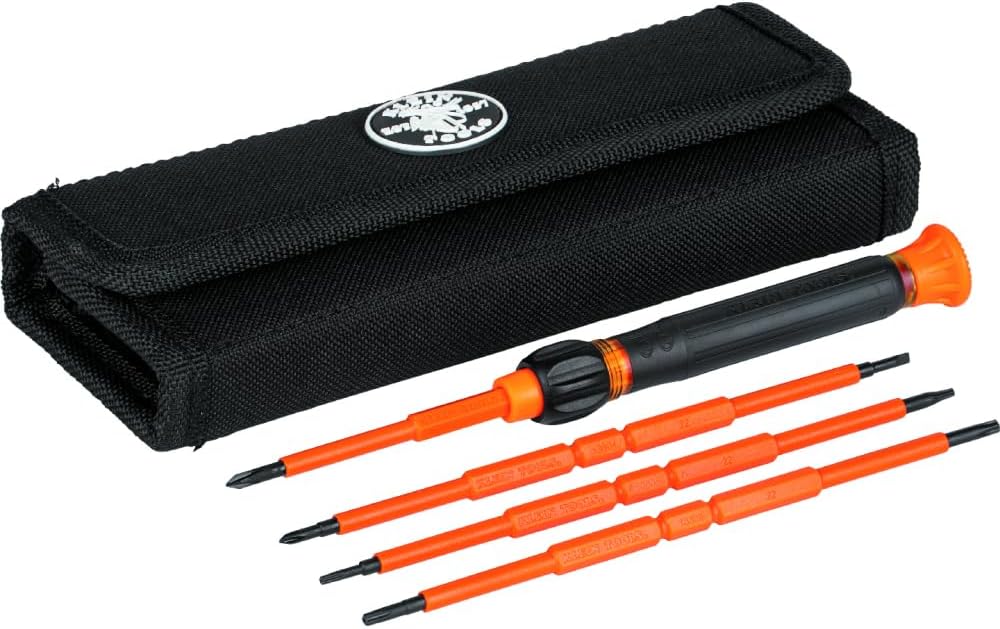
Klein insulated screwdriver set

Klein 1000V Insulated Screwdriver Set

  • Safe panel terminal adjustments
  • Useful for transfer/interlock installs
  • Insulated for electrical work
View on Amazon ->

Running vs. Surge Load Curve

Motor loads (AC compressors, well pumps, saws) draw a short startup surge several times their running watts, then settle. Size the generator for the running total plus the largest surge delta — not the sum of every appliance’s nameplate surge.

Watts Time → Run Surge Motor start Running load Startup surge spike Peak demand = running + largest surge Δ
Fig. 1 — Typical motor-start surge on top of steady running watts. Generators must cover the short peak; continuous rating still needs to cover total running load with headroom.

How to Size a Generator

Generator sizing starts with total running demand and then adds startup surge from the largest motor load. That combined peak determines minimum practical generator size.

Running and Surge Demand

Running watts represent steady demand. Surge watts represent startup spikes from compressors, pumps, and motors.

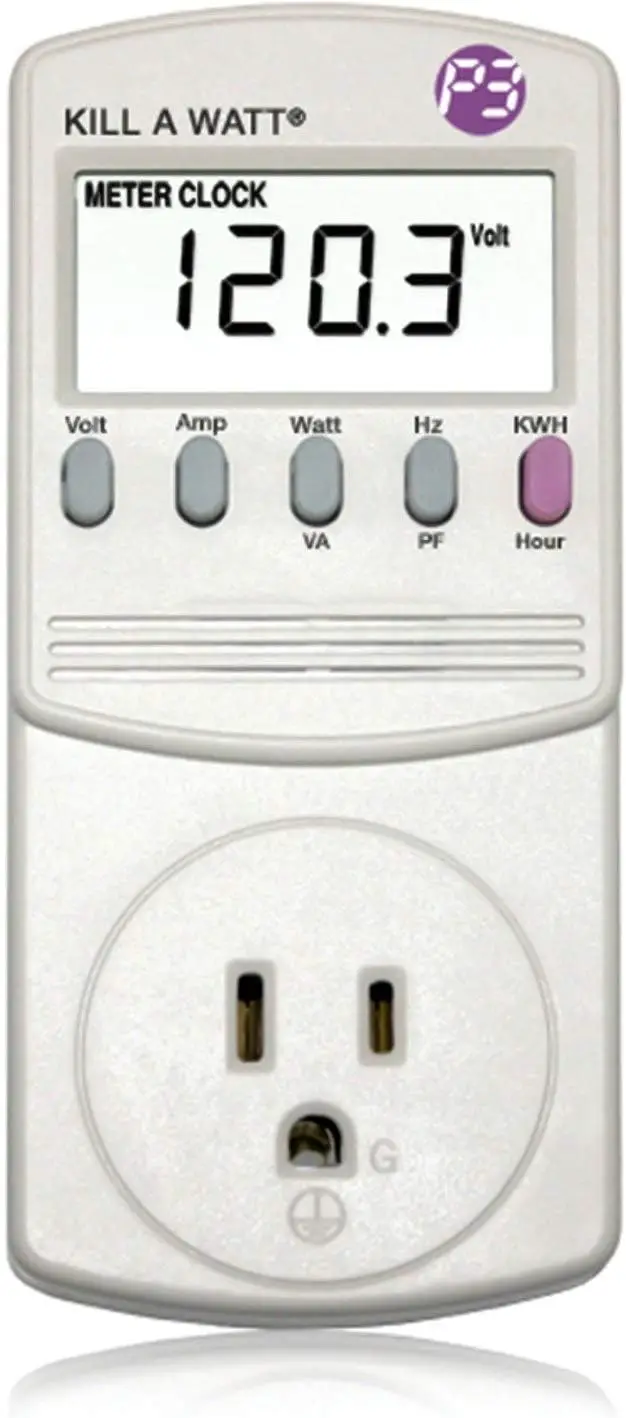
Pro tipMeasure real demand using a watt meter and clamp meter before final purchasing decisions.

Transfer Safety

Any generator tied into building wiring should use approved transfer equipment. Avoid any backfeed method.

Frequently Asked Questions

What size generator runs most home essentials?
Most homes land between 5.5kW and 12kW for essentials, depending on air conditioning, pump loads, and electric heat usage.
Do I need transfer equipment?
Yes. A transfer switch or approved interlock is required to isolate utility and generator sources.
Can portable generators run central AC?
Yes, if startup surge is covered and other simultaneous loads are managed during compressor start.

Related Electrical Calculators

What this calculator does

Build a load list for home backup, RV, or jobsite power and see running watts, starting (surge) watts, and a recommended generator size in one pass. Pick common appliances from categories or add custom loads with your own nameplate values. Fuel type and tank inputs support runtime planning so you know whether a portable unit will last through a shift or an outage.

What each input means

  • Use case preset: Home backup, construction, RV, or event—starts you with typical load groups you can edit.
  • Appliance selection and quantity: Running watts from nameplates; quantity multiplies load when you run more than one of the same item.
  • Starting / surge watts: Inrush for motors (fridges, compressors, well pumps)—often 2–3× running watts and usually sets minimum generator size.
  • Custom loads: Name, running watts, and surge for welders, trailer heat, or anything not in the list.
  • Fuel type: Gas, propane, or diesel—affects runtime estimates and what you can legally store on site.
  • Tank size: Gallons on board; pairs with load to estimate hours at your selected operating level.

Using the results on the job

Size to the higher of total running watts or largest single surge, then leave headroom—running a generator at 100% continuous load shortens life and trips breakers when something else starts. Stagger motor starts on site when you are near the limit. Verify cord and twist-lock ratings match the generator output, and log actual amp draw once tools are running so the next rental or purchase is not undersized.

Inverter welders and variable-speed drives may show lower running watts than older transformer machines but can still spike on arc start—use nameplate data when in doubt. For home backup, decide whether essentials-only or whole-panel matters before you accept a smaller kW rating. Jobsite rentals: photograph the load list and generator size on the daily log for insurance and safety audits.

Get VoltKit on Google Play