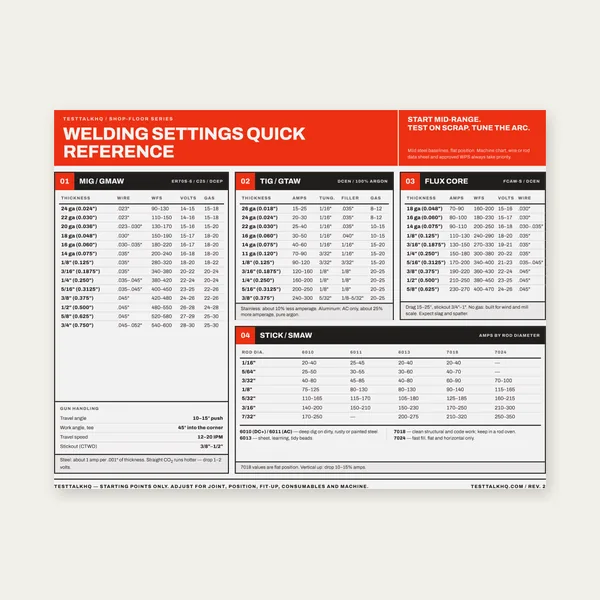
Welding Reference Card
One page. MIG, TIG, stick and flux core settings by thickness.
$3.99
BuyWhat causes weld metal to pull, how transverse and longitudinal shrinkage differ, and how to compensate in layout
Use this with the free Weld Shrinkage & Distortion Allowance Calculator. For diagnosing warp after the fact, see Distortion Troubleshooting. For sequence recipes, see Weld Sequencing.
When you deposit weld metal, a narrow strip of base metal reaches melting or near-melting temperature. That hot metal expands. As the puddle solidifies and cools, the weld and heat-affected zone contract. Because the solidified weld is already fused to colder plate, the contraction does not happen freely — it pulls the surrounding parts toward the weld.
Think of the weld as a short, strong cable that shortens as it cools. The plates have to move or the assembly has to store residual stress. In lightly restrained work, you see movement (distortion). In heavily restrained work, you see stress — and sometimes cracking — instead of obvious warp.
Transverse shrinkage acts across the joint — plates pull together, gaps close, and overall width shrinks. This is the allowance most layout people care about when cutting blanks or setting root openings.
Longitudinal shrinkage shortens the assembly along the weld length. Long seams on frames, beams, and tanks can pull hole patterns out of position even when the transverse gap looks fine.
| Direction | What you see | Typical planning response |
|---|---|---|
| Transverse | Gap closes; width undersize | Add layout allowance / root opening budget |
| Longitudinal | Length foreshortens; bowing | Leave extra length; balance seams; check hole datums |
| Angular | Joint rotates out of plane | Preset, clamp, alternate sides (see troubleshooting) |
Shop estimates start from thickness, joint type, material, and pass count — exactly the inputs in the shrinkage calculator. Mild steel is the baseline. Stainless typically moves more for the same joint because of higher thermal expansion. Aluminum moves still more and conducts heat farther, so thin aluminum can buckle even when the calculated transverse number looks small.
Each pass reheats metal near the joint and adds another contraction cycle. Pass two does not simply double pass one — the first pass already ties the plates together, so later passes work against a stiffer joint. Shrinkage still rises with pass count, but with diminishing returns. That is why thick-plate multi-pass grooves need both allowance planning and sequence control.
Heat stacking makes it worse: if you weld pass after pass without letting the joint cool, the thermal field widens and more base metal participates in shrinkage. Interpass temperature control (see the Interpass Temperature Calculator) is therefore a distortion control tool, not only a metallurgy tool.
Parts end up out of tolerance when drawings assume “cut to size, weld, done.” Common failure modes:
Joint selection also matters. Double-sided grooves and balanced fillets reduce angular pull compared with single-sided heavy welds — covered in the Weld Joint Design Guide distortion section. Heat input bands that drive how much metal you heat are covered in the Heat Input Guide. This guide stays focused on shrinkage mechanics and layout compensation.
One page. MIG, TIG, stick and flux core settings by thickness.
$3.99
Buy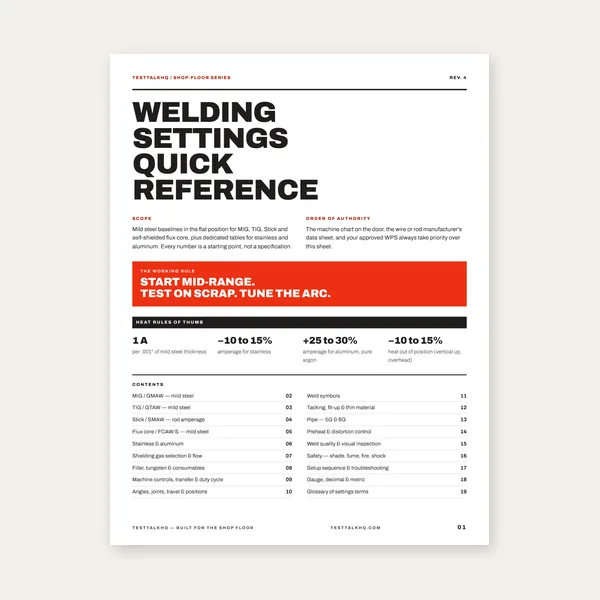
19 pages. Four processes, stainless and aluminum, symbols and inspection.
$12.99
Buy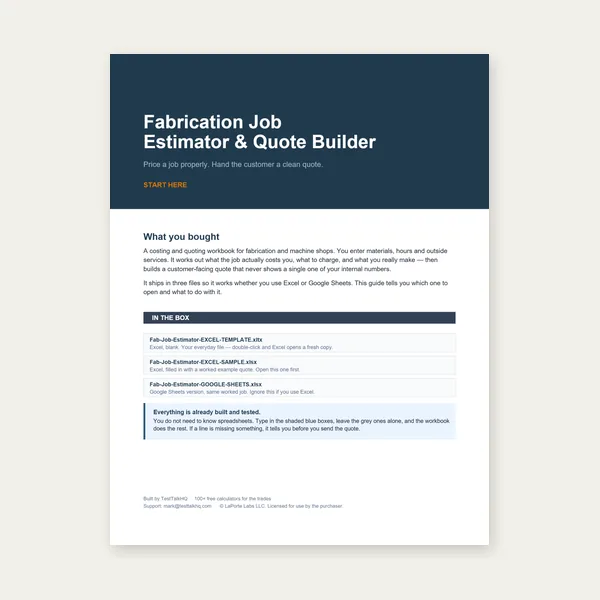
Price the job, then hand over a quote with no internal numbers.
Excel or Google Sheets. Best on a computer.
$29.00
Buy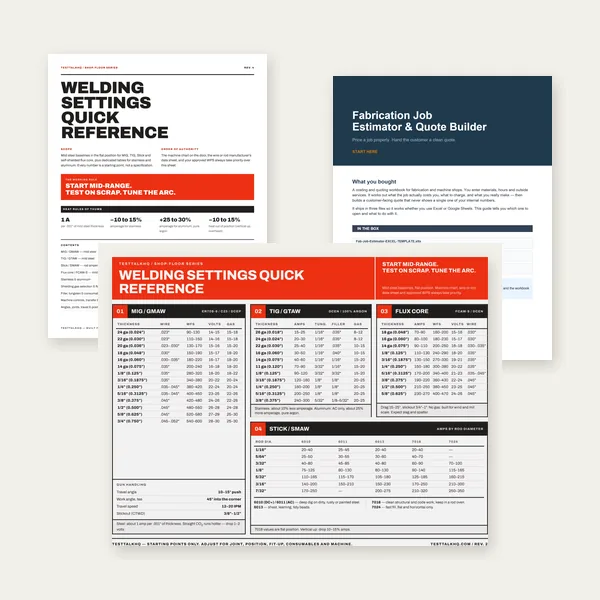
Card, 19-page guide and the estimator workbook. All six files.
Excel or Google Sheets. Best on a computer.
$34.99
$45.98 if bought separately — save $10.99
BuyCheckout opens in a new tab.
Gear that supports clean fit-up and controlled heat while you fight distortion
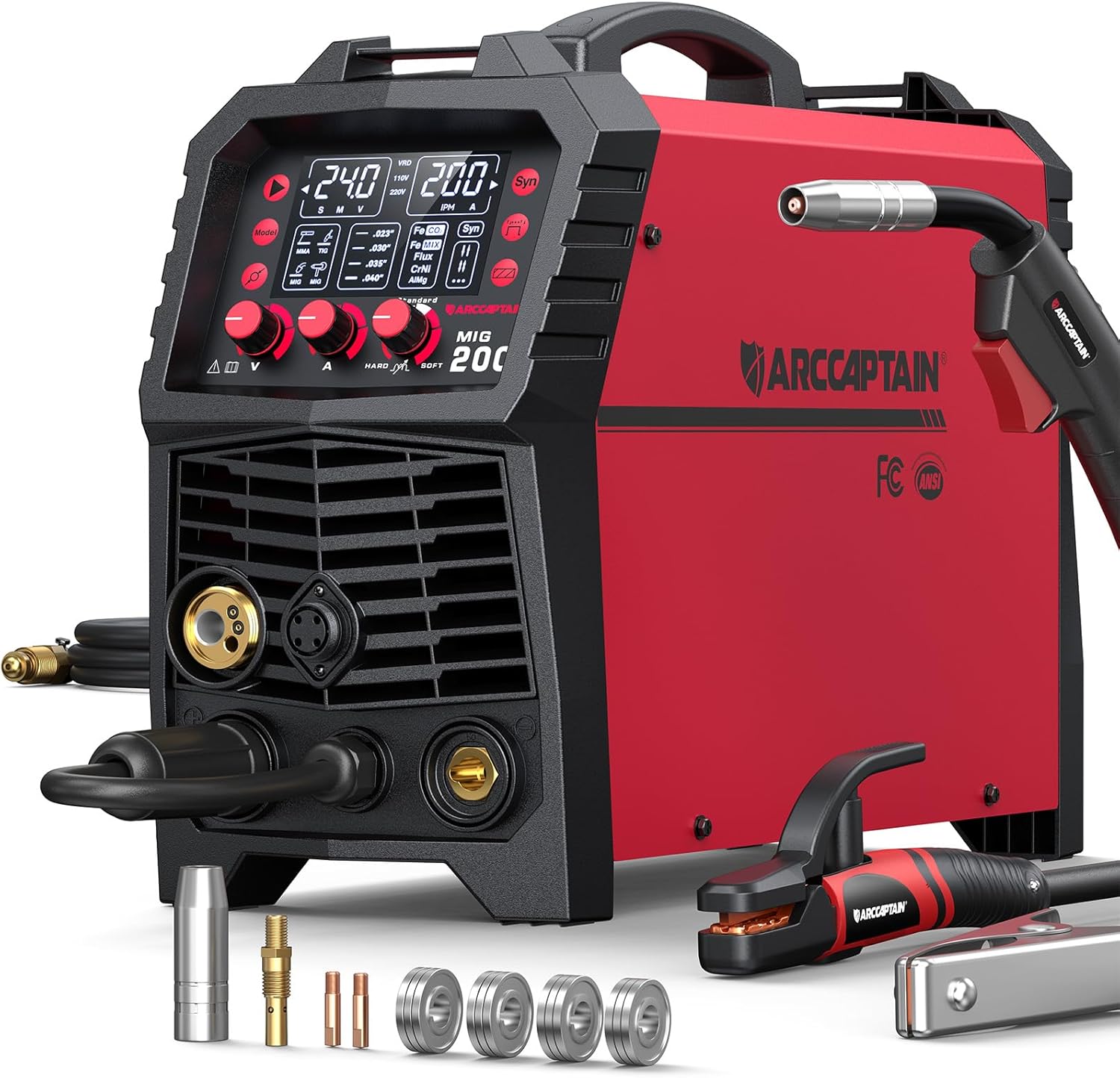
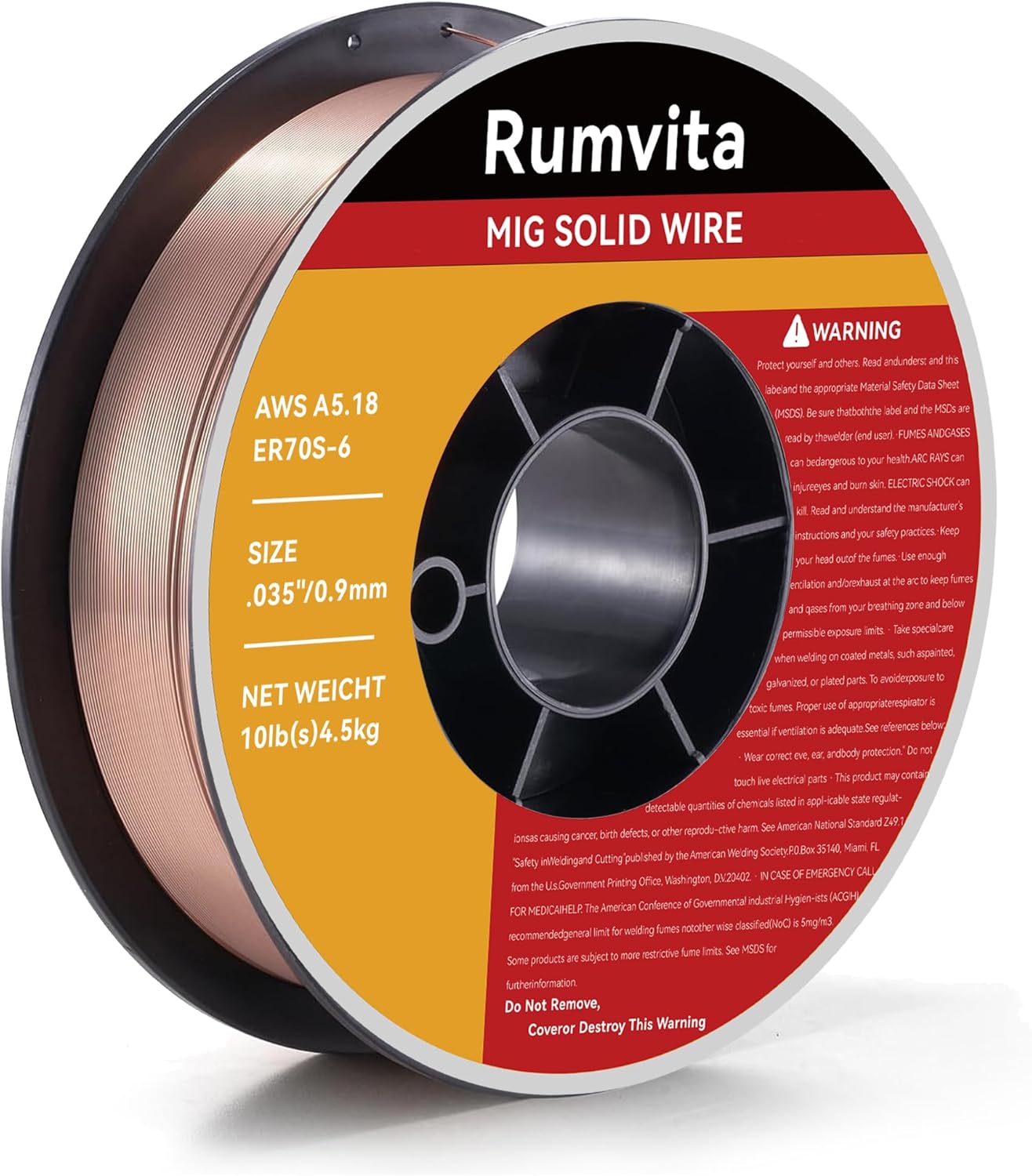
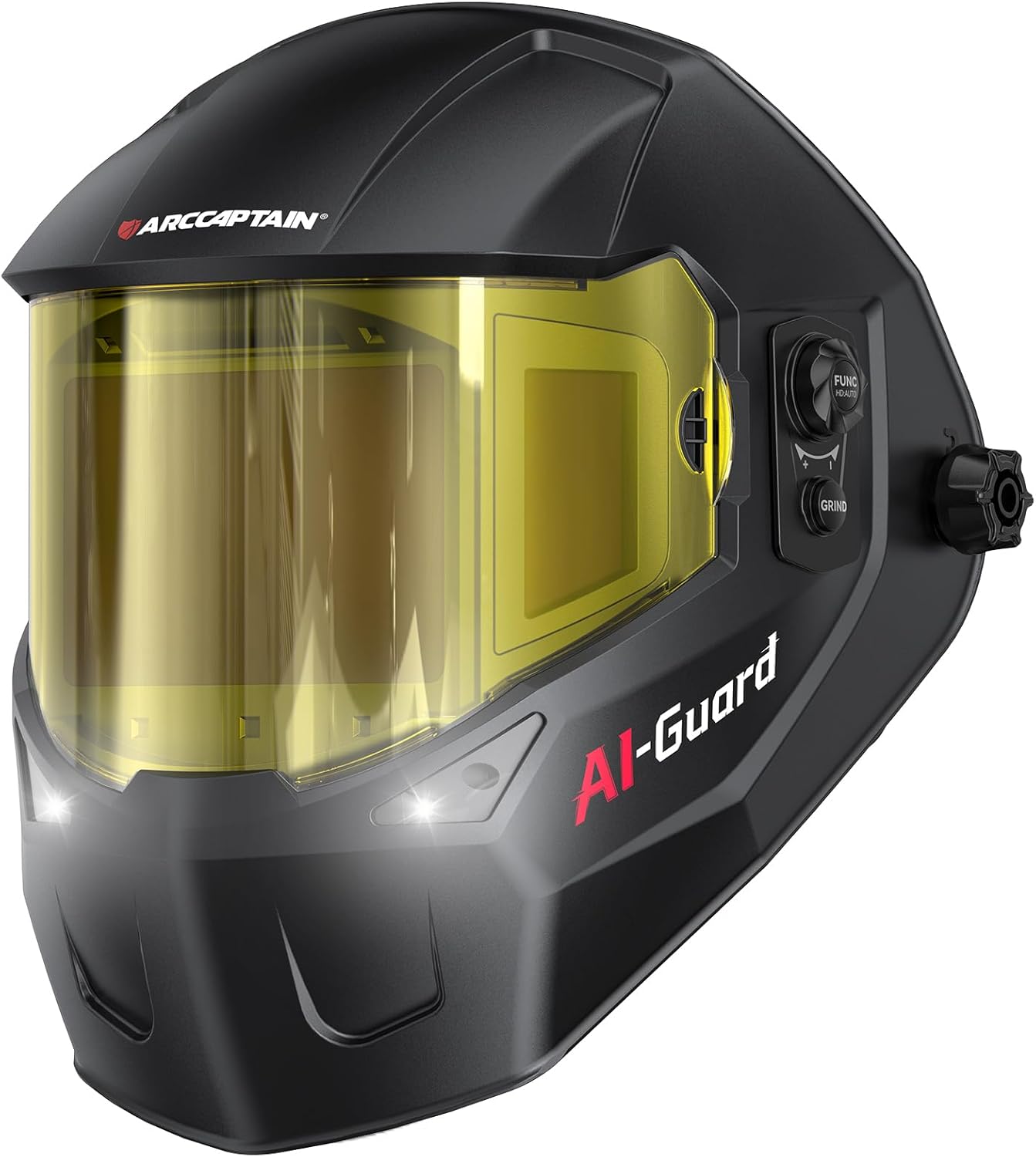
As an Amazon Associate, TestTalkHQ earns from qualifying purchases.
Mild steel is the reference. Stainless often needs roughly 40–50% more transverse allowance for similar joints. Aluminum can approach roughly double mild-steel movement and is far more buckling-prone on sheet. Always confirm on your alloy and temper.
A free plate on sawhorses shrinks differently than a frame locked in a fixture. Heavy restraint reduces visible movement but stores residual stress. If you fixture hard, reduce allowance and watch for cracking on hardenable steels.
Any online estimate — including ours — assumes average technique and light-to-moderate restraint. Aerospace fit-ups, code-critical bridges, and precision machine bases deserve coupon data under the real WPS.
Run your joint in the calculator, then plan the weld order with sequencing technique. If the part already warped, jump to troubleshooting.