Eleven causes in diagnostic order, starting with the only measurement that settles the argument
A firm pedal that will not stop the car is not the same fault as a soft pedal, and it is almost never a friction problem. It is a leverage problem, an area problem, or a bias problem wearing a disguise. There is one measurement that separates the first two from everything else, and it takes ten minutes. Do that first, then work down this list in order.
Before anything else: put a gauge on it
Wilwood’s answer to exactly this complaint names the causes and then names the test: “Common contributors to ‘hard pedal, won’t stop’ issues are an oversized master cylinder bore and/or inadequate pedal lever ratio. Another contributing factor is the ‘aggressiveness’ of the pad compound being used. Disc brakes require approximately 900-1200 psi at the caliper for effective functioning.” Their recommendation is a pressure gauge at the caliper, and if the pressure is short: “we recommend increasing your pedal ratio, and/or going to a smaller bore master cylinder.”
So fit a gauge in place of a bleeder, push the pedal with the effort you would use in an emergency stop, and read it. That single number splits the whole diagnosis in two:
| Reading at a hard push | What it means | Where to go |
|---|---|---|
| Well under 900 psi | The hydraulics are not making pressure | Faults 1 to 5 below |
| 900 to 1200 psi or more, car still will not stop | Pressure is fine; the problem is downstream or it is bias | Faults 6 to 11 below |
| Front gauge healthy, rear gauge much lower than expected | Proportioning is intervening more than you thought | Fault 10, and the valve article |
1. The pedal ratio is lower than you were told
Catalogue figures for pedal boxes are frequently optimistic, and a pedal that has been swapped, re-drilled or fitted with a different pushrod clevis is not the pedal in the catalogue. Measure it: straight-line distance from the pivot centre to the middle of the foot pad, divided by the straight-line distance from the same pivot centre to the pushrod attachment centre.
The common error inflates the answer. Measuring to the top of a tall pad, or following the curve of a bent pedal arm, can overstate the ratio by ten percent, and you will spend that ten percent believing you have pressure you have not got. There is a free cross-check: at a 5:1 ratio, one inch of master cylinder stroke is five inches of pedal travel, so measure both movements and the ratio of the travels must match the ratio of the arms.
2. The master cylinder bore is too big
The first cause on Wilwood’s list, and the most powerful fix because pressure goes as one over the bore squared. Dropping from 1 in to 7/8 in is 31 percent more pressure for the same foot. From 1‑1/8 in to 7/8 in is 65 percent.
Master cylinders are the most swapped part in a brake system, and a heavier model’s unit looks identical from the firewall. Measure the bore or identify the part number — do not assume it from the car. This is also the fault that appears immediately after an “upgrade”: somebody fits a larger master cylinder in the belief that bigger is better, and loses a third of their pressure.
3. The booster has stopped assisting
This is the classic overnight change: the car stopped fine yesterday and today the pedal is rock hard and nothing happens. A boosted car usually runs a pedal ratio near 4:1 precisely because the booster is doing the rest of the multiplication. Take the booster away and you have a 4:1 pedal trying to do a 7:1 job.
Check it the quick way: engine off, pump the pedal several times to exhaust the reservoir, hold the pedal down, start the engine. The pedal should sink noticeably as assist arrives. If it does not, you are looking at vacuum supply, the check valve, the hose, or the booster itself. On a hydro-boost system, the power steering side is the supply.
4. The booster has run past its knee
Subtler and nastier than a dead booster. A vacuum booster does not assist linearly forever — above a certain pedal effort it reaches the limit of what the available vacuum can contribute, and from there every extra pound of foot is multiplied only by the bare pedal ratio. The car feels fine in normal driving and goes wooden exactly when you need it.
Two things make it worse without anything breaking: low available vacuum (a tired engine, a big cam, a turbo at low load, altitude) and a brake system that now needs more pressure than it used to because somebody fitted larger caliper pistons. If the complaint is “fine until I really stand on it”, this is high on the list.
5. Somebody changed the calipers and not the hydraulics
Bigger caliper pistons need more fluid volume and they turn the same pressure into more clamp, so a big brake kit changes both budgets at once. Wilwood are explicit about the downside: larger pistons increase braking performance on that axle, but “if the caliper pistons are too large for the application, they are likely to cause excessive pedal travel and an adverse change in front to rear balance resulting in longer stopping distances.”
So a front big brake kit on an unchanged master cylinder can produce a car with a long pedal, less pressure at the point you need it, and a bias that has moved. If the symptom started with the kit, the kit is the suspect — and the fix is usually the master cylinder, not more pedal.
Any trade
Contractor Job Estimator
Price remodels and GC work, then send a quote with no internal numbers.
Excel or Google Sheets. Best on a computer.
$29.00
BuyCheckout opens in a new tab.
The diagnosis kit
Almost every fault on this page is found by measuring one of three things: line pressure, lining thickness, or whether the caliper is actually free. Wilwood’s advice when the pedal is firm and the car will not stop is explicitly to fit a gauge and read the pressure at the caliper — we have no verified affiliate link for a brake line pressure gauge, so that slot is deliberately empty rather than filled with something that measures tyres.
OMT One‑Man Brake Bleeding Kit
- Air in the circuit eats pedal travel before it makes any pressure
- Wilwood’s first answer to a spongy pedal is air in the system
- One-man kit means you can watch the gauge and the bleeder together
Lisle 81850 Brake Lining Thickness Gauge Set
- Tapered wear points straight at a seized slide pin or a dead piston
- Different wear front to rear means your bias has already moved
- Checks lining depth without pulling the caliper

8MILELAKE 24‑Piece Caliper Compressor Set
- A piston that will not retract drags, overheats and glazes the pad
- Also how you measure the bore to check the piston area you assumed
- Compresses without tearing the boot and starting the problem again
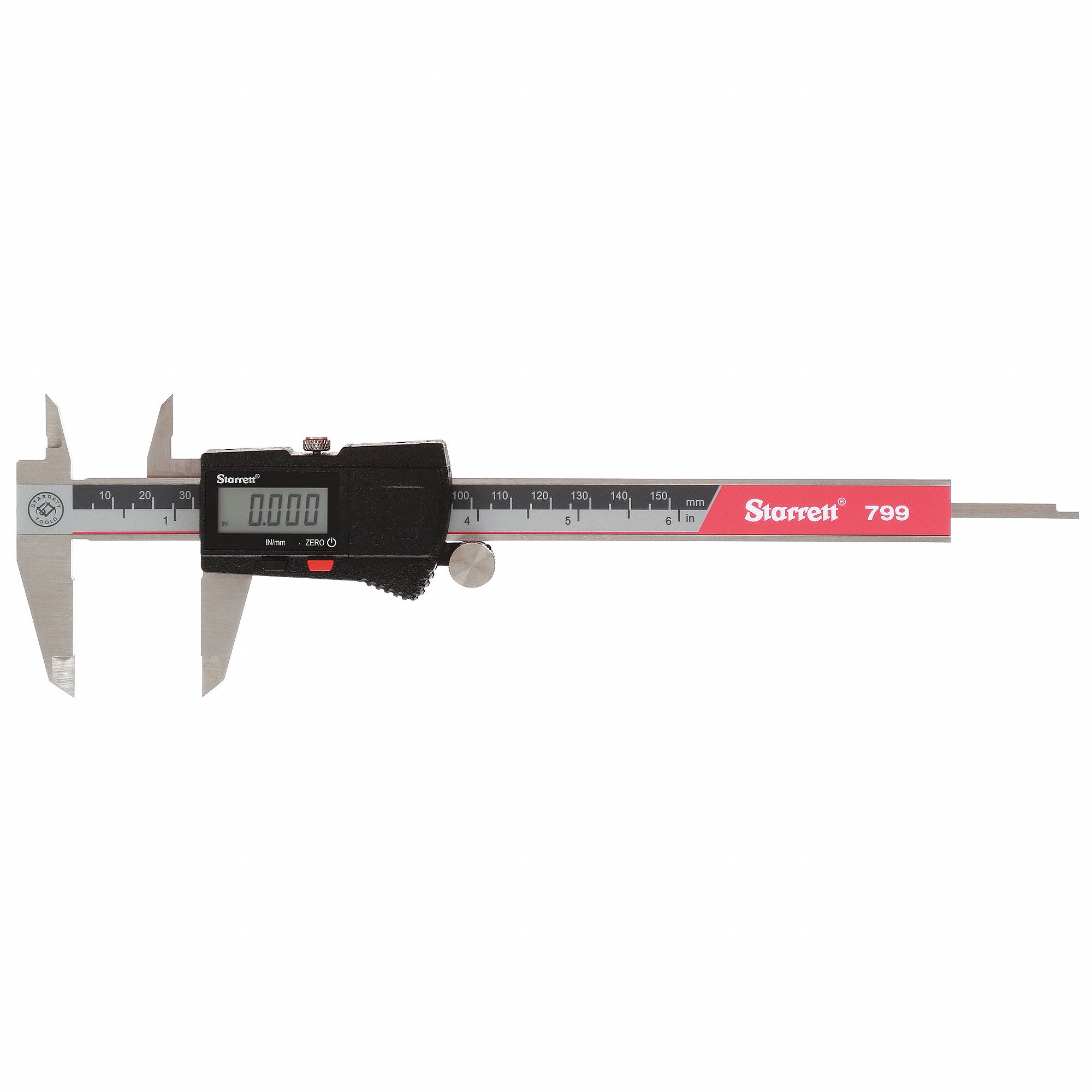
Starrett EC799A Electronic Caliper 0‑6"
- Fault 2 is an oversized master cylinder bore — measure it, do not assume
- Fault 12 is a parts swap that changed the effective radius
- Also settles whether the pedal ratio is what somebody told you
EPAuto 1/2" Drive Click Torque Wrench
- Loose caliper brackets flex, and flex shows up as pedal travel
- Every pound of brake torque is carried by those fasteners
- 10 to 150 lb-ft covers caliper, bracket and lug torque on most cars
As an Amazon Associate, TestTalkHQ earns from qualifying purchases. Prices and availability can change.
6. Air in the circuit — yes, even with a firm pedal
Air normally gives a soft pedal, and Wilwood’s first answer to a spongy pedal is air in the system. But a partially bled circuit can feel reasonably firm at the top and simply never reach pressure, because the first part of the stroke is spent compressing a bubble rather than loading the pads. The signature is a pedal that firms up on the second pump.
Bleed it properly and re-read the gauge. This is also the reason to bleed before judging any bias change: air in one circuit reads exactly like a proportioning problem.
7. The pads are glazed, contaminated or the wrong compound
Pressure is fine, clamp load is fine, and almost none of it becomes drag. Three versions:
- Not bedded. New pads and rotors need their bedding procedure. Until then the friction is not what the data sheet says.
- Glazed. Overheated pads develop a hard, shiny layer with much less bite. Usually caused by something else on this list — a dragging caliper, or a long descent on under-sized brakes.
- Wrong compound for the pressure available. Wilwood name pad aggressiveness as a direct contributor. A hard, high-temperature race compound in a system that makes 700 psi and never gets hot is a genuinely bad pairing, and it feels exactly like “hard pedal, won’t stop”.
Contamination — fluid, grease, gear oil from a leaking axle seal — does the same thing and usually on one wheel, which shows up as a pull. That symptom family belongs to degraded braking performance.
8. A seized piston or a frozen slide pin
A floating caliper with a seized slide pin presses one pad and barely touches the other, which roughly halves that corner’s torque while the pedal feels completely normal. A seized piston does the same thing more completely. Either one on a front corner costs you a quarter of your total front brake torque, and the car will not pull up.
The tells are all visual: tapered or one-sided pad wear, one pad much thinner than its partner, a rotor polished on one face and rusty on the other, or one wheel that is noticeably hotter than the others after a drive. A lining thickness gauge finds this faster than any amount of thinking.
9. The master cylinder piston is not fully retracting
Wilwood put this one in their pedal guidelines and it is worth quoting because it causes two different complaints at once: “If the master cylinder piston is not allowed to fully retract when the brake pedal is not applied, the primary inside seal will not return past the small pressure relief hole … This can cause excessive residual line pressure and contribute to brake drag and an overheating condition.”
Residual pressure drags the pads, the brakes get hot, the pads glaze, and now you have fault 7 as well. The causes are an over-adjusted pushrod, a pedal that is not returning fully, or a return stop set wrong. Wilwood’s related guidance: pedals should be free to return so the pushrod reaches its undepressed position, and where a strong return spring is used the pedal should have an adjustable return stop so the master cylinder is not banged against its internal snap ring.
10. It is not “won’t stop”, it is the rear locking and you lifting
This one is worth taking seriously because the driver’s description is honest and completely misleading. On a rear-biased car, the rear axle lets go early. The back of the car steps, the driver instinctively comes off the brake, and the stop that actually happened used a fraction of the available grip. The complaint is “it won’t stop”. The fault is bias.
The giveaways: a nervous feeling under hard braking, rear pads wearing faster than fronts, the car feeling worse empty than loaded, and good line pressure on the gauge. Run the numbers in the brake bias calculator and look at which axle reaches the available grip first.
This is also the one failure on the list with a regulatory opinion attached. FMVSS 135 S7.2.1 requires that “lockup of both front wheels occurs either simultaneously with, or at a lower deceleration rate than, the lockup of both rear wheels” for first-axle lockup anywhere between a braking ratio of 0.15 and 0.80. A rear axle that locks first is not a tuning preference, and the fix is taking rear pressure out rather than putting front pressure in — which is valve vs bore vs balance bar.
11. A parts swap quietly changed the effective radius or the tyre
Two geometry changes that nobody logs as a brake modification:
- A different pad footprint or a different rotor. The effective radius is the swept outer radius minus half the pad radial height. A pad with more radial height on the same rotor sits lower, and a rotor with a smaller swept band does the same. Either costs torque at that axle, and if it is only at one end, it moves the bias.
- Bigger wheels and tyres. Brake torque works through the tyre’s loaded radius, so a larger tyre turns the same brake torque into less force at the road. This is the one people genuinely do not expect, and it also changes your indicated speed, which is the tyre size calculator‘s job.
If the complaint started after a wheel, rotor or pad change, measure the new geometry and re-run it rather than assuming the brakes are “the same”.
What this list does not cover
Three families of brake complaint live elsewhere, and treating them as a pressure problem wastes an afternoon:
- It stops cold and fades hot. That is thermal capacity and pad temperature range, not leverage. Repeated hard stops and long descents, pulling to one side, and worn pads or tread all belong in degraded braking performance.
- The distance looks wrong on paper. If the disagreement is between a calculated stopping distance and reality, check the inputs to that calculation first — surface friction coefficient, units, reaction time — in stopping distance troubleshooting.
- ABS or EBD is intervening. A car whose ABS is cycling early on a dry road is telling you something about its bias, but the diagnosis runs through the scan tool and the wheel speed sensors, not through a pressure gauge.
Frequently asked questions
What line pressure should a disc brake system make? Wilwood’s published figure is approximately 900 to 1200 psi at the caliper for effective functioning. The way to find out what yours makes is to fit a pressure gauge in place of a bleeder and push the pedal with emergency-stop effort. If the reading is well short, the problem is on the leverage side — master cylinder bore, pedal ratio, or a booster that is not assisting — and no amount of pad or rotor change will fix it.
Hard pedal or soft pedal: what is the difference diagnostically? A soft or spongy pedal that travels a long way and firms up on a second pump is usually air in the system, or a flexing hose, or a master cylinder bypassing internally. A firm pedal that goes nowhere and does not stop the car is a leverage or area problem: not enough pedal ratio, too large a master cylinder bore, a dead booster, or not enough caliper piston area. They have almost no causes in common.
My pedal went hard overnight and the car barely stops. What is it? On a boosted car, suspect the booster first. Pump the pedal several times with the engine off to exhaust the reservoir, hold the pedal down and start the engine: the pedal should sink as assist arrives. If it does not, check the vacuum hose, the check valve and the booster, or the power steering supply on a hydro-boost system. A boosted car typically runs a low pedal ratio because the booster is doing the rest of the multiplication, so losing it leaves very little leverage.
Can a bigger master cylinder improve the brakes? It usually makes them worse. A larger bore means lower pressure for the same pedal force, because pressure is pushrod force divided by bore area, and Wilwood name an oversized master cylinder bore as the first contributor to a hard pedal that will not stop. A larger bore does move more fluid per inch of stroke, which gives a shorter pedal, so it is the right answer only when the actual complaint is excessive travel and the pressure is already comfortable.
Why do my brakes feel fine normally and wooden in an emergency stop? The most likely cause is a vacuum booster running past the point where the available vacuum can contribute any more assist. Below that point the pedal is multiplied by the booster, above it only by the bare pedal ratio. Low available vacuum from a tired engine, a large camshaft, a turbocharged engine at low load, or high altitude all bring that point lower, and fitting larger caliper pistons raises the pressure the system needs, which has the same effect.
Could one seized caliper really stop the car pulling up? Yes. A floating caliper with a frozen slide pin presses one pad hard and barely touches the other, which roughly halves that corner’s brake torque while the pedal feels entirely normal. On a front corner that is about a quarter of the car’s total front braking gone. Look for tapered or one-sided pad wear, one pad much thinner than its partner, a rotor face polished on one side and rusty on the other, or one wheel noticeably hotter after a drive.
The car feels nervous under hard braking and I keep lifting off. Is that a pressure problem? Probably not. That is the signature of a rear-biased system: the rear axle reaches its grip limit first, the back of the car moves, and the driver comes off the brake before the stop is finished. The line pressure is usually fine. Check which axle reaches the available grip first, and note that FMVSS 135 requires the front axle to lock before or simultaneously with the rear for first-axle lockup anywhere between a braking ratio of 0.15 and 0.80.
Can brake drag cause a hard pedal that will not stop? It causes the second half of it. Wilwood note that if the master cylinder piston is not allowed to fully retract, the primary seal does not return past the pressure relief hole, which causes excessive residual line pressure, brake drag and overheating. The overheating then glazes the pads, and glazed pads turn clamp load into very little drag. So the chain is a misadjusted pushrod or a pedal that will not return, then drag, then heat, then a car that will not stop.
Does a residual pressure valve matter here? It can. Wilwood flag the common mix-up directly: a two pound residual pressure valve is used to prevent fluid drain-back where the master cylinder reservoir sits below the calipers, and the ten pound version is for drum brakes only. A ten pound valve fitted in a disc circuit holds the pads against the rotor permanently, which drags, overheats and glazes exactly as above.
Why did my brakes get worse after fitting bigger wheels? Brake torque acts through the tyre’s loaded radius, so a larger overall tyre diameter converts the same brake torque into less force at the contact patch. Nothing about the brakes changed; the lever they work through got longer. The same change also makes the speedometer read low, which is often how people notice.