A bent rod is a symptom, and replacing it without finding the cause buys you a month. How to measure it properly, what the shape of the bow tells you, the six tests that separate column buckling from side load, misalignment and shock, and the fixes in order of cost.
Start with a measurement, not a verdict
“The rod is bent” is a diagnosis people reach by looking at it, and looking at a chrome rod is a poor way to tell. Chrome plating reflects every line in the shop, so a perfectly straight rod in a cluttered bay looks wavy and a genuinely bowed one can look fine against a blank wall. Before anything else, put a number on it.
The measurement. Extend the rod fully with no load on it — crack the line and push it out by hand if you can, or run it out on minimum pressure. Clamp a dial indicator on a magnetic base to the machine frame, not to the cylinder, and set the tip on the rod near the far end. Rotate the rod if the mounting lets you, or sweep the indicator along it if it does not. What you are looking for is total indicated runout and, just as importantly, where along the length the deviation peaks.
The five things that bend cylinder rods
Every bent rod comes from one of five causes, and they leave different evidence.
1. Column buckling
The load simply exceeded what the rod could carry as a strut at full extension. Evidence: a smooth, single, symmetrical bow peaking near the middle of the unsupported span. It happens instantly and usually at or very near full stroke. Often the machine has worked for months and then met something that did not move — a jammed part, a frozen hinge, a pallet that was not where it should have been — and the cylinder went to full pressure against it.
Confirm it with arithmetic. Put the rod diameter, the stroke, the mounting case and the stalled pressure into the rod buckling calculator. If the utilisation comes out over 100%, you have your answer and you also have the fix. If it comes out at 40%, buckling did not do this and you should read on.
2. Side load
Something pushed across the rod rather than along it. Evidence: the bow is in a consistent plane rather than random, the deviation is often worst close to the gland, and the rod usually shows wear or scoring on one side — a bright band where the bearing has been working hard against it. The gland seal will be leaking on that side first.
Side load has many sources and they are all geometric: a cylinder driving a lever through an arc without a pivot at both ends, a load hanging off the end of the rod, a door or gate that binds in its track partway through the stroke, a cylinder mounted on a frame that flexes under the load. Buckling arithmetic will not catch any of it — side load capacity is a separate figure the cylinder manufacturer publishes, because it depends on the gland bearing length and geometry of the specific series.
3. Misalignment
Related to side load but distinct: the cylinder and the load are not on the same axis, so the rod is bent a little on every single stroke rather than a lot on one. Evidence: gradual onset, wear on the rod bearing, a gland that has needed reseal more than once, a rod eye pin with an oval hole, and mounting bolts that keep coming loose. The bow may be modest, but the collateral damage is extensive.
The tell is history. A rod that bent in one event has a sharp story attached to it. A rod that bent from misalignment has a maintenance record.
4. End-of-stroke shock
A load arriving at speed and stopping on the cylinder rather than on a mechanical stop. Momentum can put a large multiple of the rated thrust into the rod for a few milliseconds, and no static calculation sees it. Evidence: damage concentrated at the ends — mushroomed cushion spears, a cracked end cap, a stretched rod thread — alongside the bow. Often the cushion adjusters are wound fully open or the flow controls have been opened up to make the machine faster.
5. It was already bent
A rod that has taken a buckling event once is permanently bowed, and the eccentricity left behind means it now buckles at a considerably lower load than a straight one would. So does a rod that was dropped, struck, or used as a step. Evidence: a repeat failure on a cylinder that calculates as comfortable, and a replacement rod that bends far sooner than the original did.
Any trade
Contractor Job Estimator
Price remodels and GC work, then send a quote with no internal numbers.
Excel or Google Sheets. Best on a computer.
$29.00
BuyCheckout opens in a new tab.
The gear this argument actually needs
Everything on this page comes down to three measurements and one adjustment: the rod diameter, the free span, whether the rod is still straight, and the pressure you are feeding it. The first two decide the answer, the third settles whether you have a problem at all, and the fourth is the only lever you can pull on an installed cylinder without changing hardware.
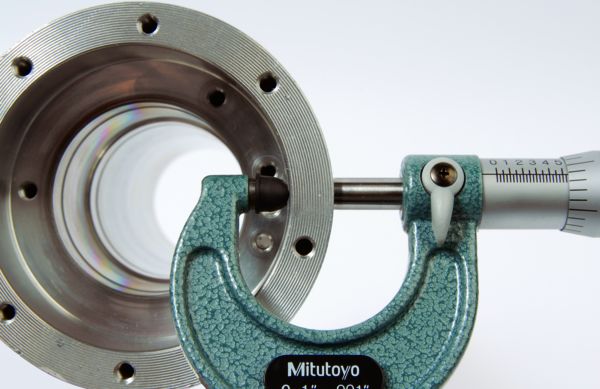
Mitutoyo 103-177 Outside Micrometer 0–1 in
- Buckling capacity goes as the fourth power of rod diameter
- A hard-chromed rod is ground under the plating — the finished size carries the load
- Also measures plating loss and wear on a rod that has been in service
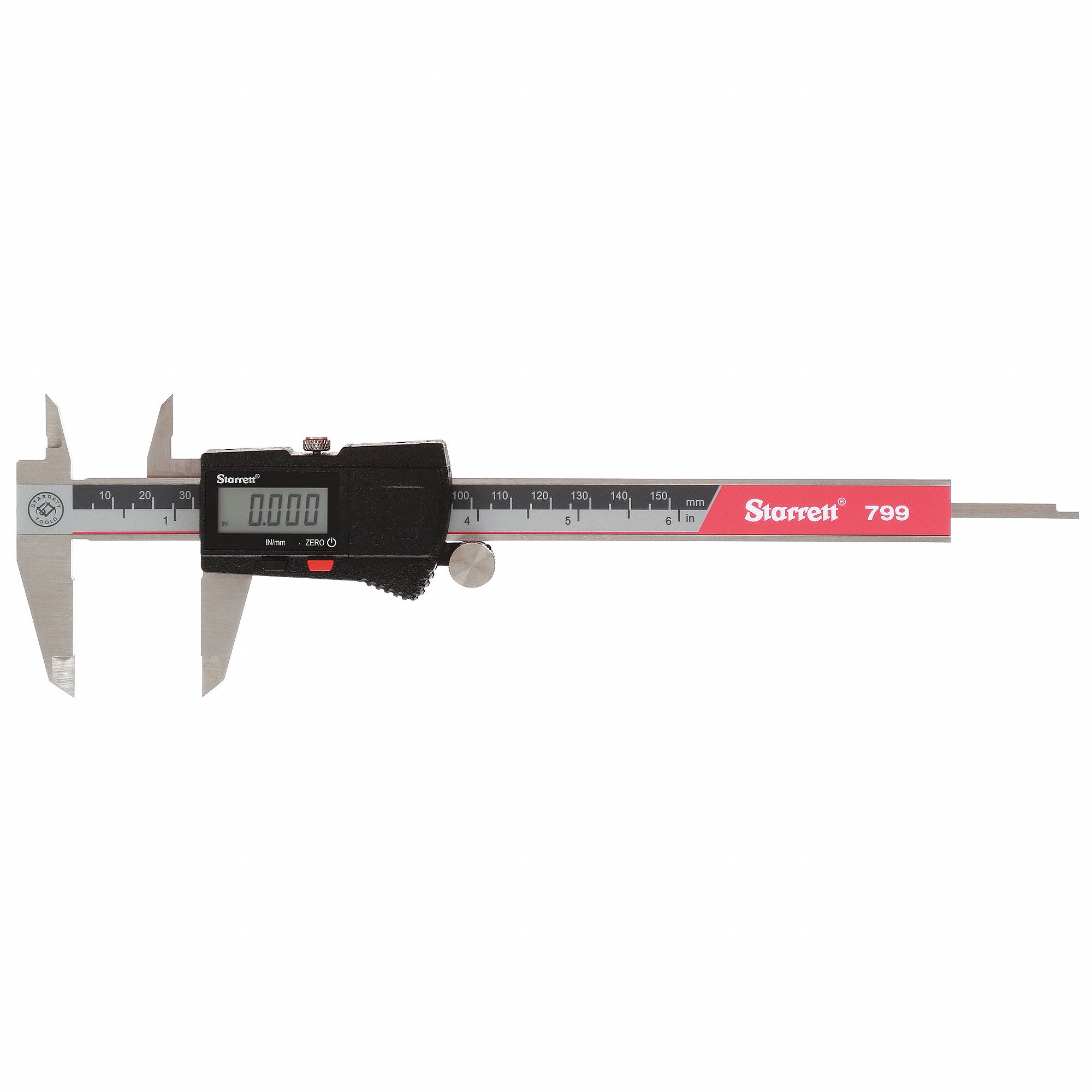
Starrett EC799A Electronic Caliper 0–6 in
- Free span is stroke plus every extension, clevis and coupling nut on the end
- Checks rod, pin bore and clevis in one pass
- Inch and metric together, which is the whole problem on an imported cylinder
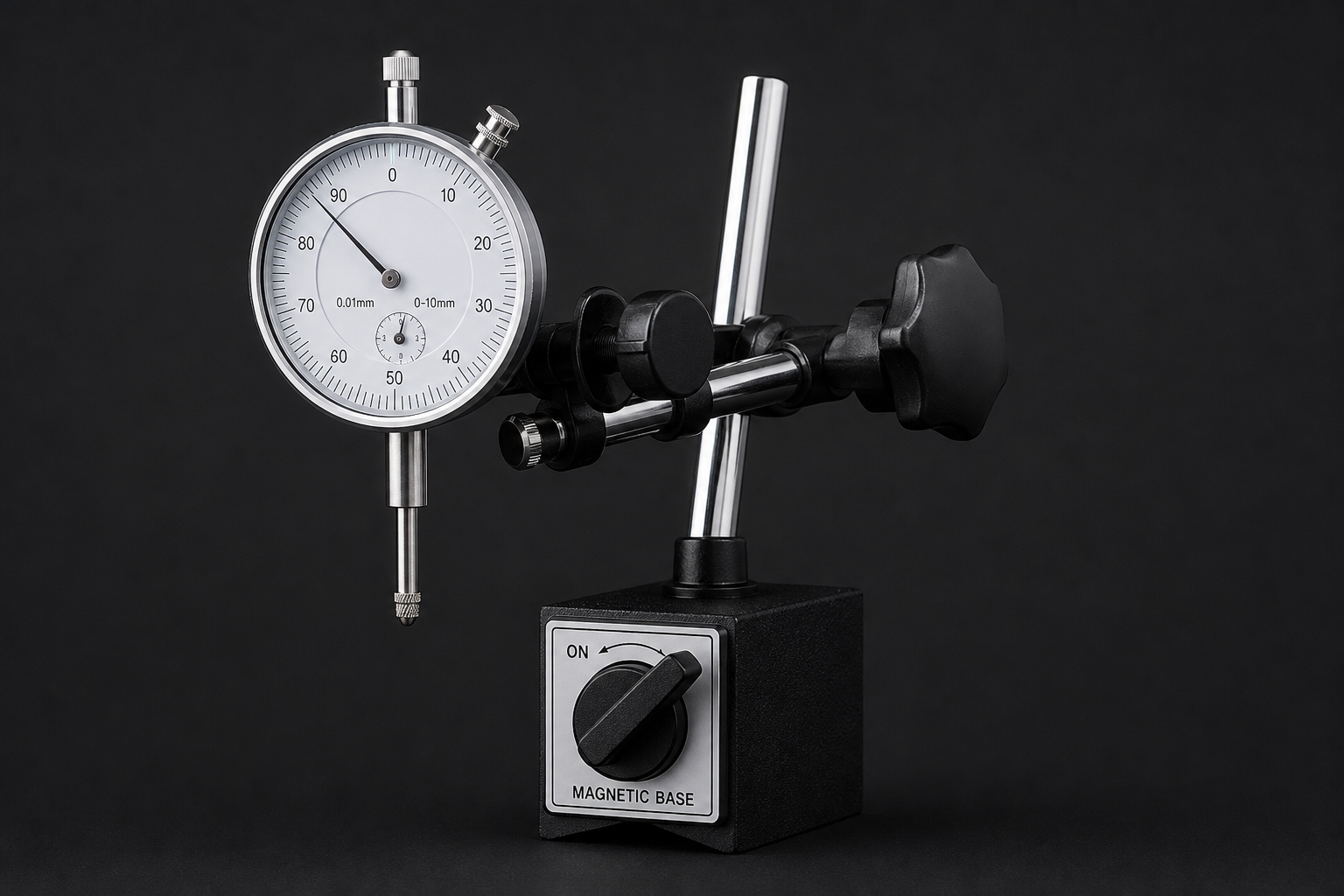
Dial Indicator Set with Magnetic Base
- Runout on an extended rod settles the “is it bent” argument with a number
- Magnetic base clamps to the machine frame, so you read against the real datum
- Finds the difference between a bowed rod and a worn gland

LE LEMATEC Regulator & Flow Control Valve
- Take a third off the pressure and you take a third off the load on the rod
- Flow control also takes the end-of-stroke shock out
- 0–150 psi covers ordinary shop supply
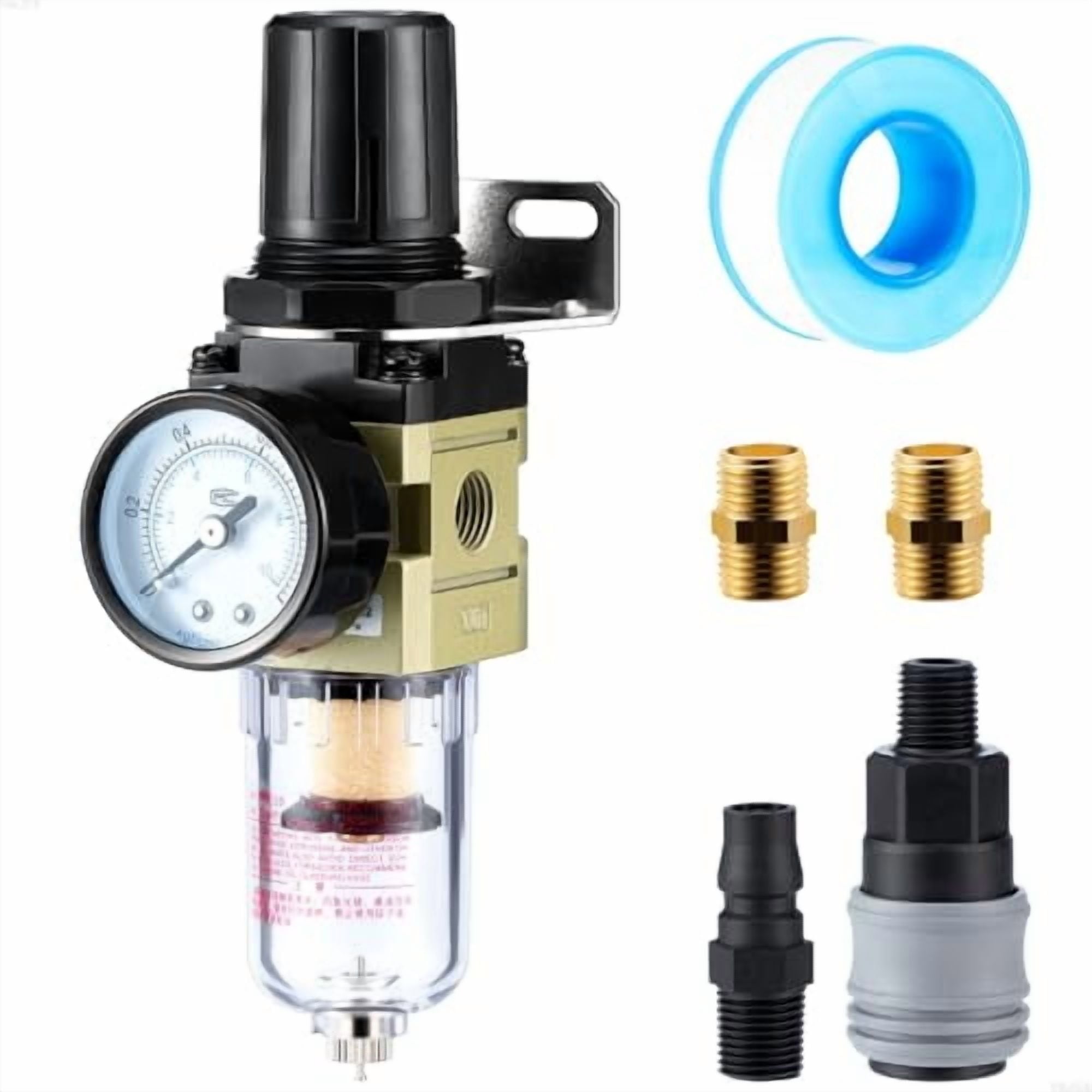
Hromee 1/4 in Filter Regulator AW2000-02
- A regulator at the cylinder is the only way to know what it really sees
- Header pressure with the rod stalled on a stop is the load it must survive
- Filtration keeps the gland and rod surface out of the failure story
As an Amazon Associate, TestTalkHQ earns from qualifying purchases. Prices and availability can change.
Diagnosis in order
Work these in sequence. Each one is cheap and each one eliminates a cause.
Test 1 — where is the peak?
From the indicator sweep. Peak near the middle of the free span points at buckling. Peak near the gland points at side load or misalignment. Damage at the extremes with a modest bow points at shock.
Test 2 — run the arithmetic at the worst case
Not the working pressure — the pressure the cylinder sees when the rod is stalled against something immovable, which is full header pressure. That is the load the rod actually has to survive. Use the real stroke, add any rod extension or clevis to the free span, and be honest about the mounting case. Over 100% utilisation confirms buckling; comfortably under it rules buckling out and sends you to the geometry.
Test 3 — check the mounting is what you think it is
This is where most surprises live. A cylinder specified with a guided load is only guided if the guide is actually carrying the load; a worn linear bearing, a loose guide rail or a slide that has picked up dirt is a guide in name only, and the effective length factor quietly reverts to something much worse. Push the load sideways by hand with the cylinder unpressurised. If it moves, it is not guided.
Test 4 — find the misalignment
With the rod disconnected from the load, extend it and see where the rod end sits relative to the attachment point. It should line up in both planes without being pulled. If you have to lever the clevis over to get the pin in, that offset is being fed into the rod on every stroke. Check it at both ends of travel, not just one — a cylinder driving an arc is aligned at exactly one point and misaligned everywhere else unless both ends pivot.
Test 5 — look for the shock
Watch the machine run at working speed. Does the load arrive and stop on the cylinder, or on a mechanical stop? Are the cushions doing anything? Is there an audible bang at the end of travel? Are the flow controls wound out? Shock damage that gets blamed on the rod is very often a cushion adjustment or a missing hard stop.
Test 6 — check what came with it
A bent rod is rarely alone. Inspect the gland seal, the rod wiper, the rod bearing, the cylinder bore at the far end, the rod thread, the clevis and the pin. A rod that has been working sideways will have scored its bearing, and fitting a new rod into a worn bearing sets up the next failure. Replacing the rod and nothing else is the single most common way to see the same fault again in a month.
What not to do
Do not straighten it. A rod that has yielded in bending is permanently deformed at the grain level, and pressing it back restores the shape without restoring the behaviour. It will buckle at a lower load than a new one, it works the gland seal sideways every stroke, and the chrome plating has already cracked wherever the steel yielded, which is where the corrosion starts. Replace it.
Do not raise the pressure. When a cylinder starts struggling, the reflex is to give it more air. If the rod is marginal, more pressure is more thrust and more thrust is exactly what bent it. It also raises the load on every other consumer on the header — see system pressure drop troubleshooting if the pressure is sagging for reasons that have nothing to do with this cylinder.
Do not simply fit a bigger cylinder. If the cause was side load or misalignment, a bigger bore gives you a bigger rod and more thrust to feed into the same bad geometry. You will bend the new one too, just later. Fix the geometry first; then check whether you still need a bigger cylinder.
Do not assume the catalogue rod diameter. Measure it. Buckling capacity goes as the fourth power of diameter, and a rod that has been in service, re-plated, or supplied as a pattern part may not be what the drawing says.
Fixing it, in order of cost
- Fix the alignment. Free. If the rod end has to be levered into position, that is your fault and no amount of new hardware cures it.
- Add a mechanical stop. Cheap. Stopping the load on steel rather than on the cylinder removes both the shock and the stall case in one move.
- Regulate the pressure down. Cheap, and immediately effective, because thrust is directly proportional to pressure. A cylinder set to what the job needs rather than to header pressure carries proportionally less load on its rod.
- Guide the load. Moderate. A linear guide carrying the load removes the side load entirely and improves the buckling case at the same time — the two most common causes, addressed together.
- Change the mounting case. Moderate. Putting a pivot at both ends, or converting a free rod end to a pivoted one, is worth a large factor. See pivot versus rigid mounting.
- Shorten the stroke. Often possible with a spacer, and allowable load goes as the inverse square of length.
- Bigger rod, then bigger bore. Last, because it is the most disruptive and because it does nothing about side load.
Frequently asked questions
Can a bent cylinder rod be straightened?
Replace it. A rod that has yielded in bending is permanently deformed and now buckles at a lower load than a straight one. Straightening restores the shape but not the behaviour, the chrome has already cracked where the steel yielded, and the underlying cause is still there.
How much runout is too much on a cylinder rod?
Any visible bow on a rod that should be straight is a fault to investigate, but the more useful reading is where the deviation peaks rather than how large it is. A mid-span peak and a near-gland peak have completely different causes and completely different fixes. Compare against the manufacturer’s straightness tolerance for the rod stock if you need an absolute figure.
Why did my cylinder rod bend when the calculation says it is fine?
Almost always side load, misalignment or end-of-stroke shock — none of which the buckling calculation covers. It assumes a perfectly axial load on a straight rod. Check whether the rod end lines up without being levered, whether the load runs on its own guide, and whether anything stops on the cylinder at speed.
What does the shape of the bow tell me?
A smooth single arc peaking mid-span points at column buckling from an axial overload. A kink or a peak close to the gland, usually with one-sided wear on the rod, points at side load or misalignment. Damage at the ends — mushroomed cushions, a stretched thread — with a modest bow points at shock loading.
Should I replace the gland seal and bearing as well?
Yes, and inspect the bore. A rod that has been working sideways has scored its bearing and cut its seal, and fitting a new rod into a worn bearing reproduces the failure. Replacing only the rod is the most common reason the same fault comes back.
Does the cylinder rod bend on the retract stroke?
Not from buckling — retract puts the rod in tension. It can still bend on retract from side load or from a load that binds, but the failure mode is different and so is the evidence.
Will a stainless rod be less likely to bend?
No, slightly the opposite. Stainless has a marginally lower elastic modulus than carbon steel, around 193,000 N/mm² against 210,000, and buckling depends on stiffness. Stainless is specified for corrosion resistance, not for column strength.
How do I know the pressure the rod actually saw?
Assume the worst the circuit can deliver with the rod stalled, which is full header pressure at the cylinder, not the regulator setting somewhere upstream. Fitting a regulator and gauge at the actuator is the only way to know, and it is also the cheapest fix if the answer is uncomfortable.