A cylinder is not making enough force. You can fit a larger bore or you can turn the pressure up, and at the cylinder the two look almost identical on an air bill. They are not remotely identical once you look at the rest of the system, and the counter-intuitive part is that the option which is slightly better at the cylinder is usually the worse decision overall.
The two levers, in one equation each
Force on a cylinder is gauge pressure acting on the piston area, so there are exactly two things you can change:
Force scales with the square of bore and linearly with pressure. That asymmetry is why bore changes feel so dramatic: going from a 2 inch to a 3.25 inch bore multiplies force by 2.64, while getting the same increase from pressure alone would mean taking 80 psig to 211 psig, which no standard shop cylinder will accept.
| Route to ~660 lbf | Bore | Pressure | Force | Air per cycle, 6″ stroke |
|---|---|---|---|---|
| Starting point | 2.0″ | 80 psig | 251 lbf | 0.1362 SCF |
| Bigger bore | 3.25″ | 80 psig | 664 lbf | 0.3595 SCF |
| Higher pressure | 2.0″ | 210 psig | 660 lbf | 0.3231 SCF |
Rod diameter is one quarter of bore in each row and port tubing is excluded, so the comparison is like for like. Both routes reach the same force. The pressure route uses about 10 percent less air per cycle to do it — and it is still, in almost every real shop, the wrong answer.
Why higher pressure wins at the cylinder
This is worth understanding properly, because it is the part that gets stated backwards constantly. Free air consumption is swept volume times the compression ratio, so air per unit of force works out as:
The bore terms cancel completely. Change the bore and air-per-pound-of-force does not move at all — you buy exactly proportionally more air for proportionally more force. Change the pressure and the ratio improves, because the atmospheric term becomes a smaller fraction of the total.
So if the cylinder were the whole system, the answer would be simple: turn it up. The cylinder is not the whole system.
Why bigger bore wins everywhere else
Leaks scale with pressure and nothing else
Flow through a leak is set by the absolute pressure behind it, not by what your machine is doing. Raise a system from 80 to 120 psig and every hole in it — and there are always holes — passes about 42 percent more air, continuously, whether the machine is running or not. In a plant with meaningful leakage, this single effect can swamp the efficiency gain at the cylinder several times over.
A larger bore leaks nothing extra. It consumes more air only while it is working.
Raising the header punishes every other consumer
If the pressure increase happens at the compressor rather than at one station, every tool, blow-off, vacuum generator and cylinder in the building now runs at the higher pressure and consumes proportionally more. The rule of thumb used across the compressed air industry is that each 2 psi of additional discharge pressure costs roughly 1 percent more compressor power. Taking a plant from 90 to 120 psig to satisfy one press is therefore something like a 15 percent energy penalty on the entire air system, forever.
Component ratings run out
Most general-purpose shop pneumatics — cylinders, valves, FRLs, push-to-connect fittings, poly tube — is built around a familiar working range, and going much above it means requalifying the whole station, not just the cylinder. Rod buckling limits, mounting loads, and machine frame stiffness also scale with the force you are now applying, and those do not care which lever you pulled to get it.
Gear that decides whether the numbers hold
Most of the gap between a calculated SCFM figure and the one a flow meter shows lives in these four items.
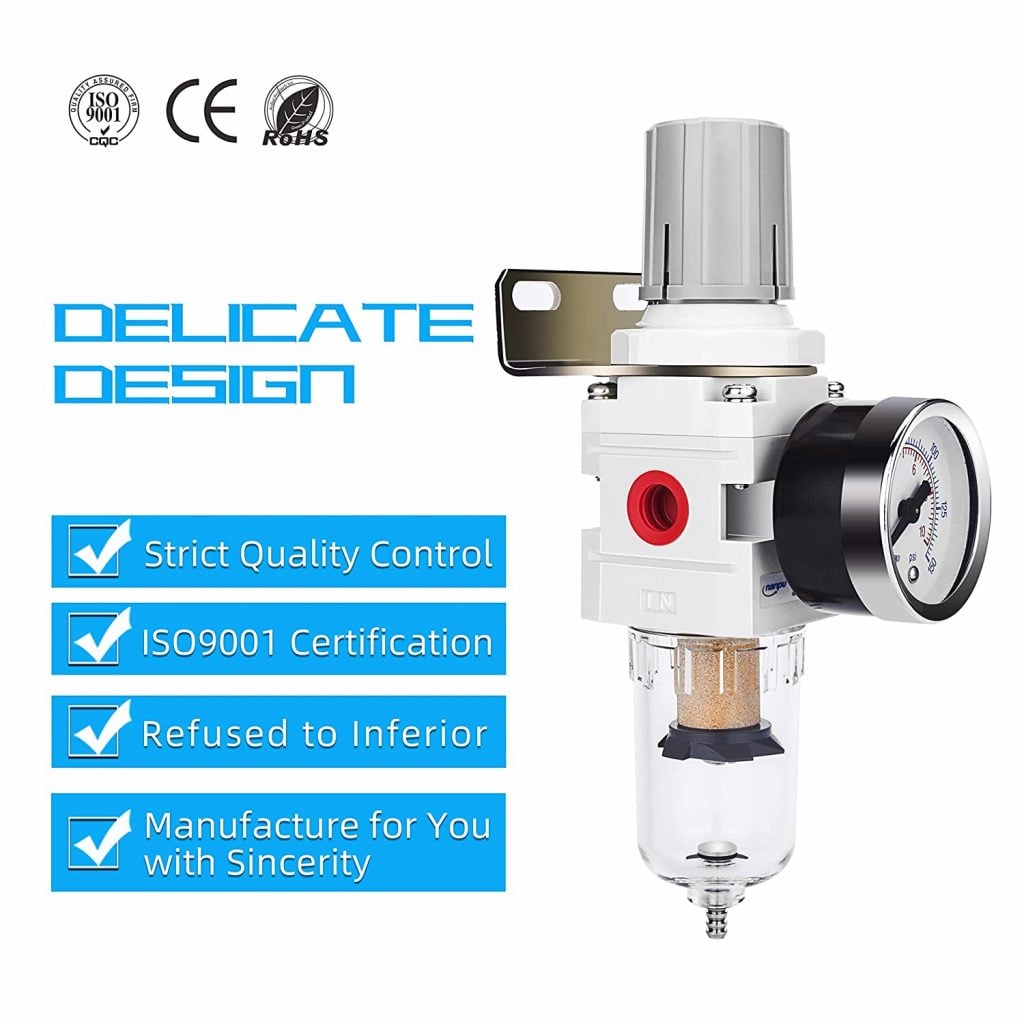
Filter / Regulator Combo
- Sets the station pressure your calculation assumed
- Keeps condensate out of cylinder seals
- Mounts at the machine, where regulation belongs

Regulator & Flow Control 0-150 PSI
- Run the lowest pressure that still makes the force
- Gauge makes the assumption checkable
- Station control instead of raising the whole header
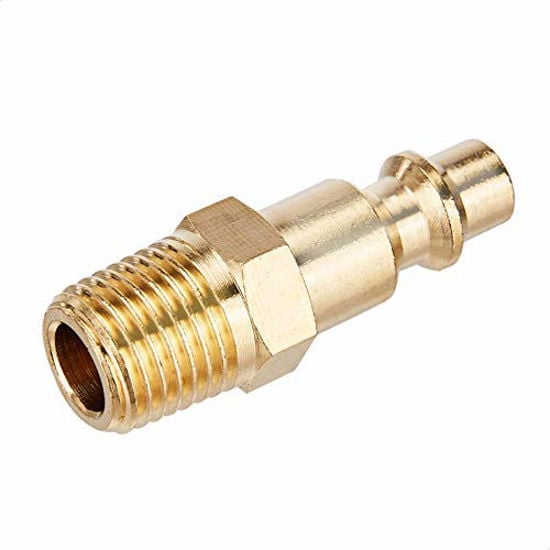
Quick Connect Brass Coupler Kit
- Undersized couplers starve a fast-cycling cylinder
- Same fitting standard at every station
- Brass resists the corrosion that shrinks bore
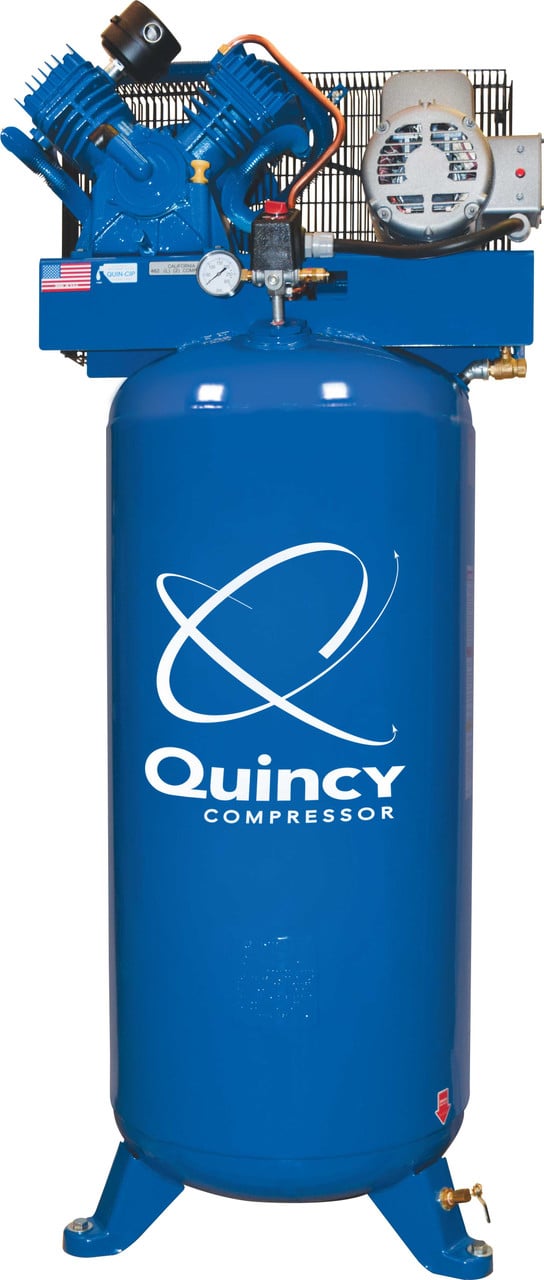
Quincy QT-54 5 HP 60-Gallon
- Continuous-duty supply for a continuously cycling cell
- Receiver volume absorbs per-cycle peaks
- Suits a small cell running several cylinders
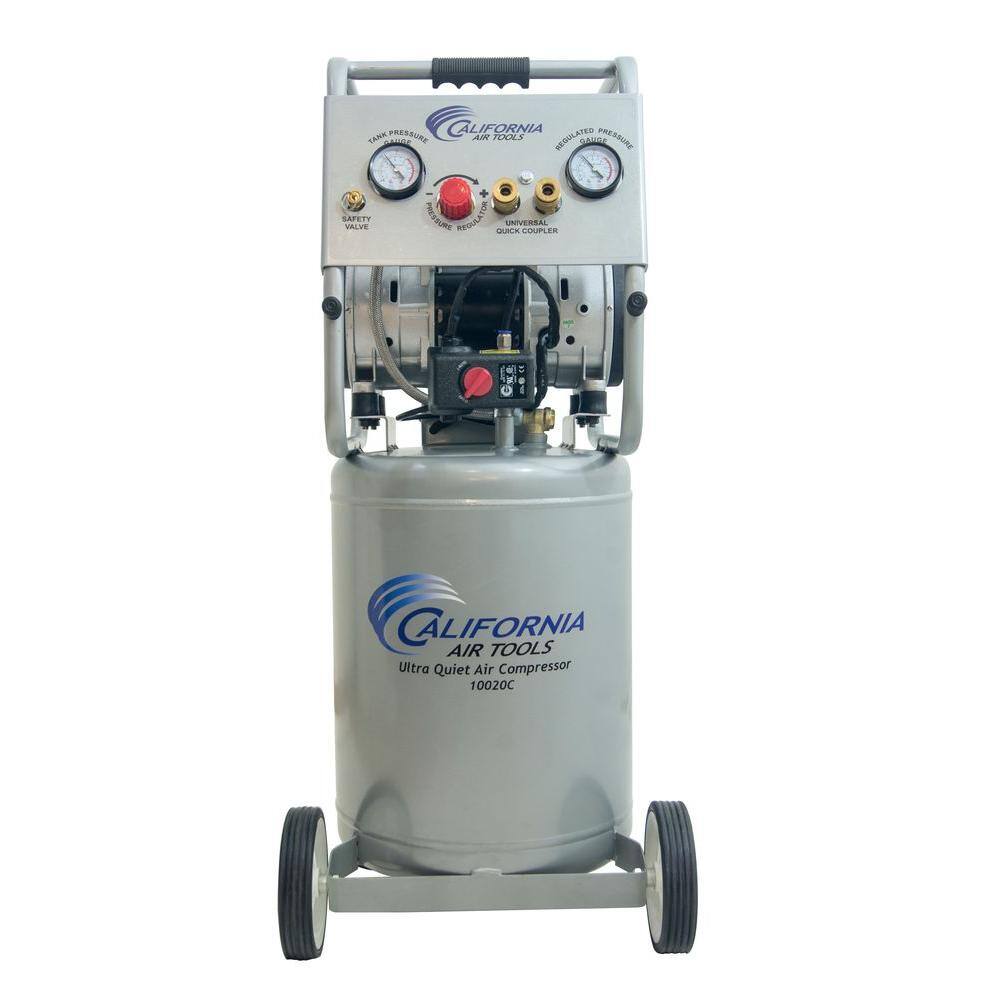
California Air Tools 10020CAD
- Low-SCFM cells running beside people all day
- Auto drain keeps water out of the cylinder feed
- Oil-free, so nothing carries over onto the work
As an Amazon Associate, TestTalkHQ earns from qualifying purchases. Prices and availability can change.
The things that are not about air at all
Speed
A larger bore at the same pressure moves slower through the same valve and tubing, because it needs more volume to fill in the same time. If the station is already near its cycle time limit, upsizing the bore can force a valve and tubing upgrade as well. Higher pressure on the existing bore generally moves the same or faster. On a cycle-time-critical machine this sometimes decides it.
Shock and control
More force is more energy to absorb at end of stroke. A bigger bore delivers it with more mass of air behind it and is generally gentler; higher pressure on a small bore arrives faster and hits harder. Cushions, shock absorbers, and the mechanism taking the load all need checking either way.
Physical room
Frequently the decider in practice. A 3.25 inch bore does not fit where a 2 inch bore is, the mounting is different, the rod thread is different, and the machine was built around the small one. This is the single most common reason people turn the pressure up: not because it is better, but because it takes twenty minutes instead of a rebuild.
So which one
| Situation | Choose | Why |
|---|---|---|
| Force shortfall is large (more than ~40%) | Bigger bore | Pressure cannot get there within component ratings |
| Plant has known leakage | Bigger bore | Higher pressure multiplies leak flow continuously |
| Fix would mean raising header pressure | Bigger bore | Penalises every consumer in the building |
| Small shortfall, one station, local regulator | Higher pressure | Cheap, contained, and slightly more air-efficient |
| Station already at cycle time limit | Higher pressure | Bigger bore is slower through the same valve |
| No physical room for a larger cylinder | Higher pressure | Decided for you — but regulate locally |
| Cylinder already near its pressure rating | Bigger bore | No headroom left to use |
The pattern behind the table: raise pressure locally, increase bore globally. A regulator at one station taking that station from 80 to 100 psig is a contained, cheap, slightly efficient decision. Turning the compressor up from 90 to 120 psig to achieve the same thing is one of the most expensive habits in a compressed air system.
The option neither column mentions
Before either: check whether the force requirement is real. A clamp that needs 600 lbf on the drawing frequently needs 200 lbf in practice, and the number came from a copied spreadsheet. And check mechanical advantage — a toggle linkage, a longer lever, or moving the cylinder’s mounting point can multiply force without spending a single extra cubic foot of air. That is the only genuinely free option on this page.