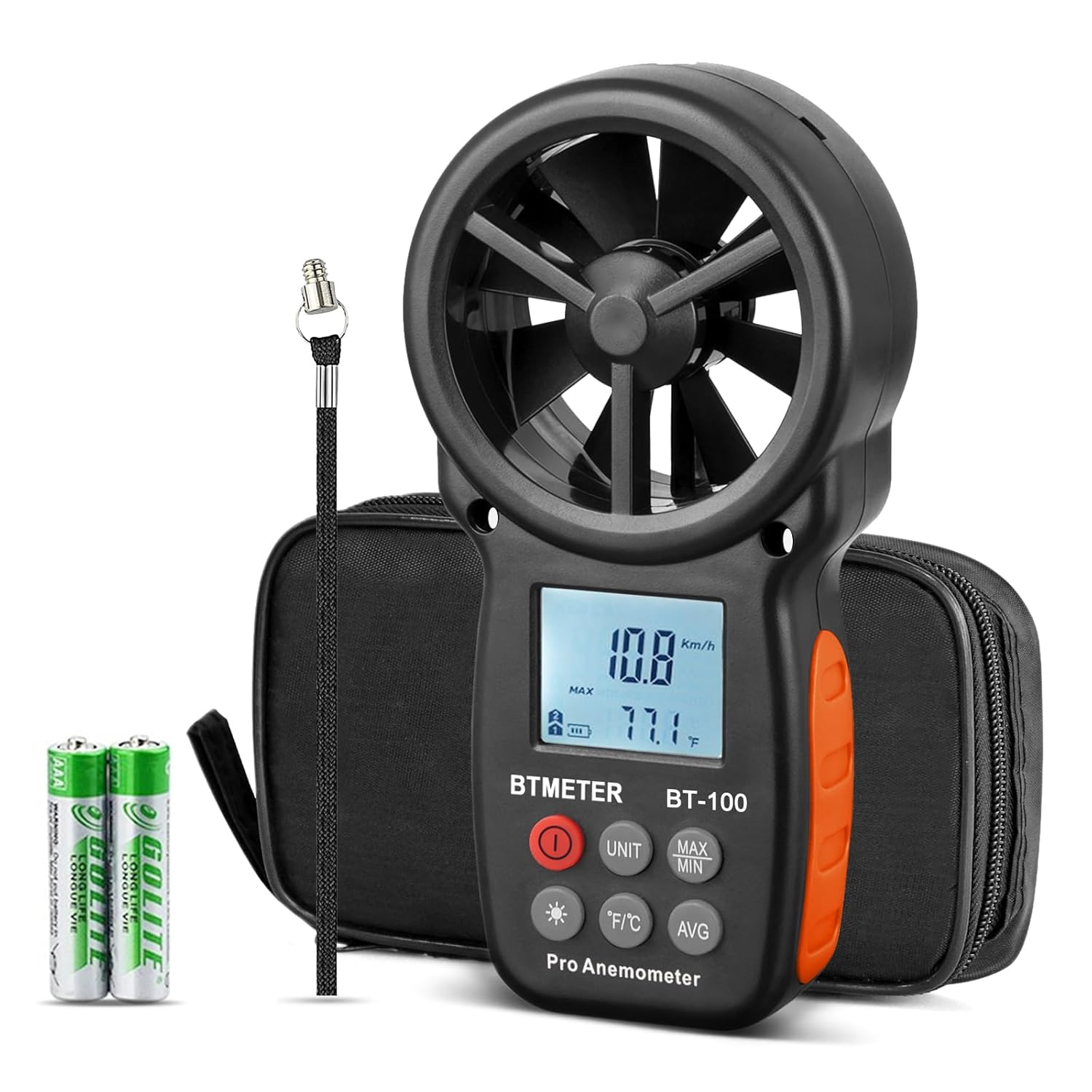
BTMETER BT-100 Handheld Anemometer
- Reads face velocity at the louver in fpm — the number this tool assumes
- Velocity × free area tells you the CFM you actually got
- Catches a fan that is nowhere near its rating
How much air has to leave the compressor room — and how big the hole it leaves through has to be
A compressor is a space heater that happens to make air. Nearly all of the electricity going into it comes back out as heat, and if that heat cannot leave the room, the room climbs until the machine is breathing its own exhaust. Then capacity falls, discharge temperature rises, the high-temperature switch starts tripping in the afternoon, and the dryer downstream stops holding dew point. This works out how much heat your machine is actually putting into the room, how much air has to move through the room to carry it away at your temperature limit, and how big the intake louver has to be to let that air in without choking it.

Everything above is arithmetic on numbers you supplied. These are the tools that let you check the numbers against the actual room — what the fan is really moving, what the intake and discharge temperatures really are, and what the compressor is really drawing. Exhaust fans and louvers themselves are sized from a curve and bought locally, so TestTalkHQ does not link them.
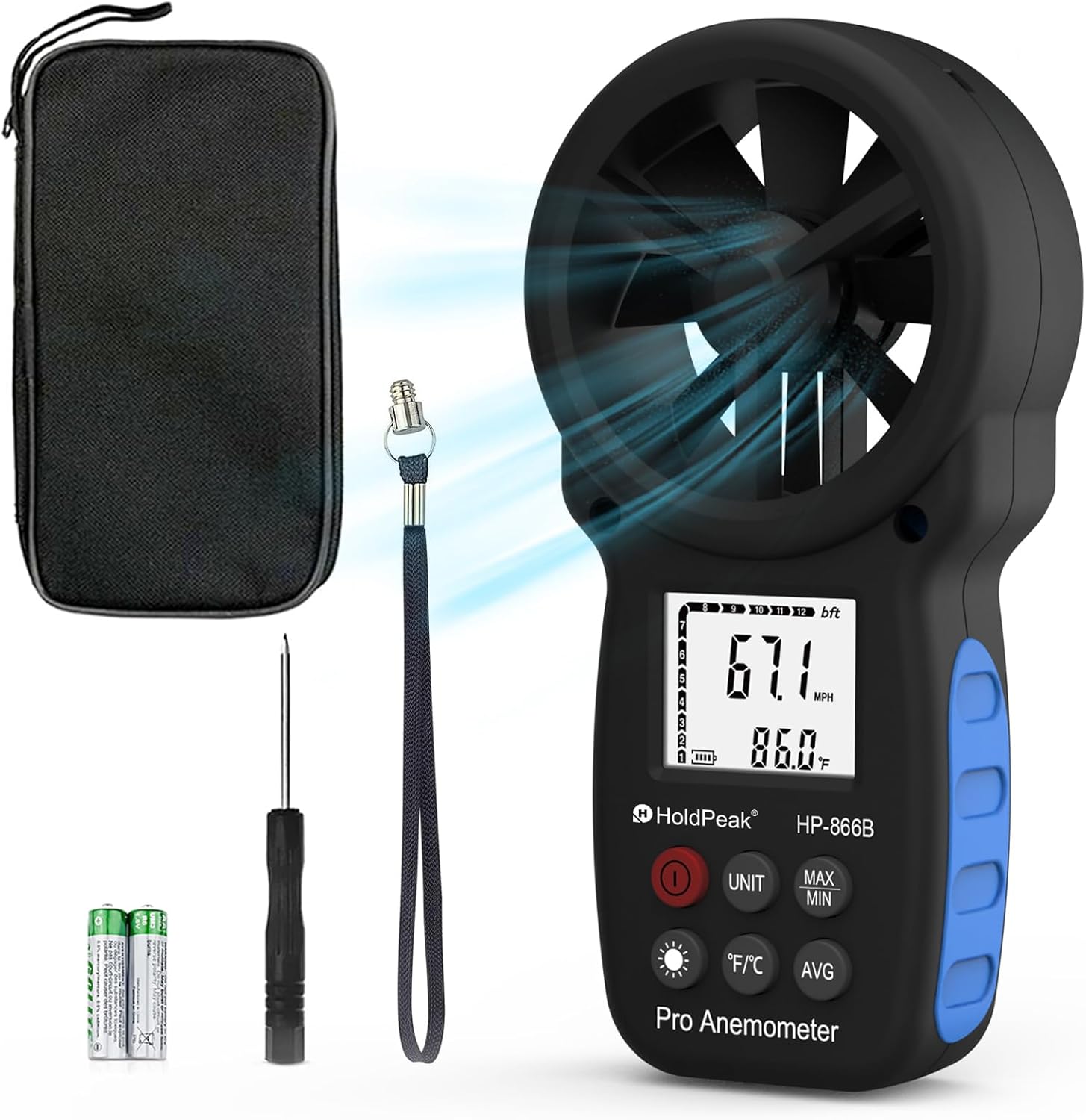
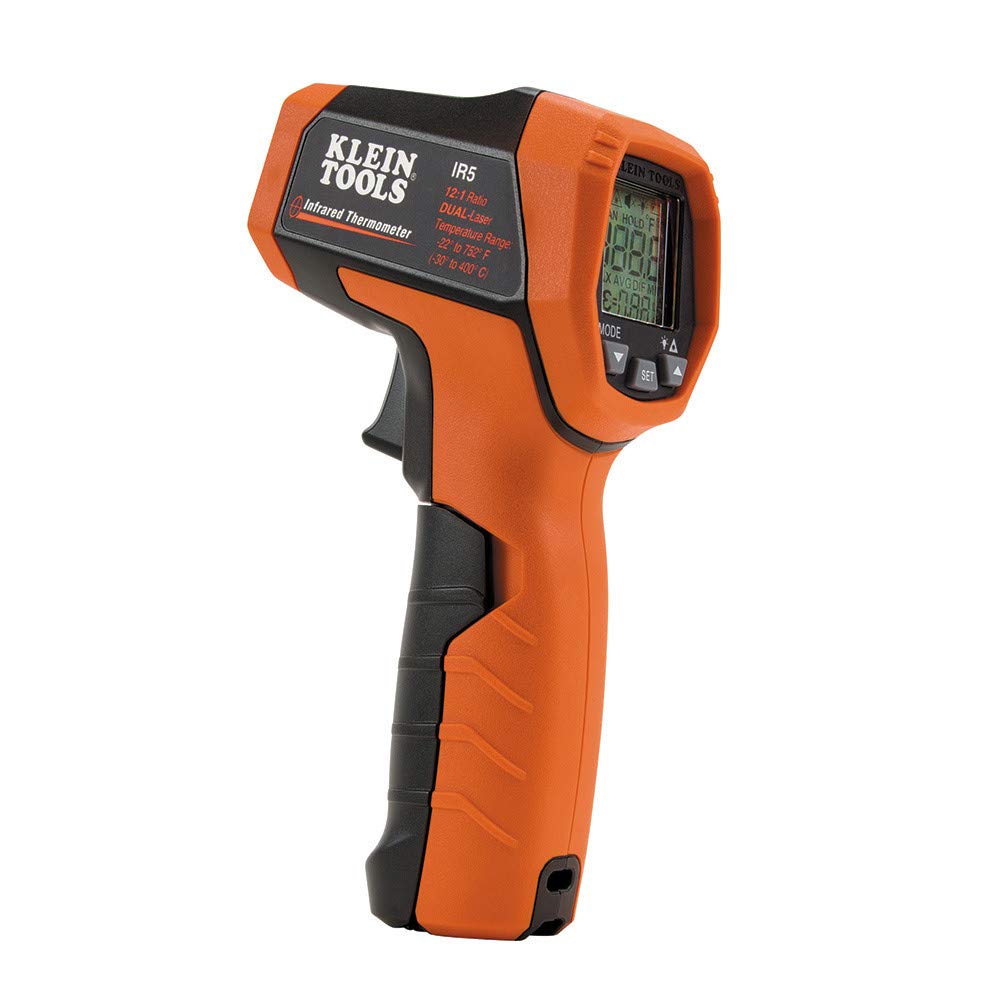
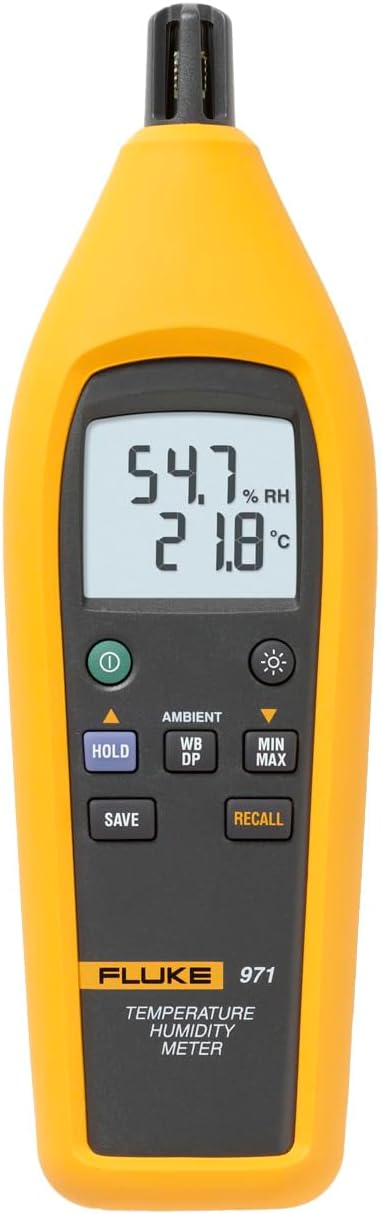

As an Amazon Associate, TestTalkHQ earns from qualifying purchases. Prices and availability can change.
The thing that surprises people about compressor room ventilation is the size of the answer. A 25 hp machine in a small room can genuinely need seven thousand cubic feet a minute of fresh air, which sounds absurd until you follow the two steps that get you there.
The Compressed Air and Gas Institute states it plainly in its heat recovery technical brief: “Nearly 96% of the electrical energy consumed by an industrial air compressor is converted into heat, and usually that heat is simply ejected into the compressor room or ducted outside.” That is not an efficiency failing peculiar to compressors — it is what has to happen. The energy that goes into the air as pressure is a small fraction of the input, and it does not stay in the room anyway; it leaves down the pipe and is dissipated wherever the air is eventually used. Everything else — compression heat removed by the aftercooler, oil cooler heat, motor losses, fan and bearing losses — ends up in the air around the machine.
The 72% comes from the same source: CAGI's heat recovery FAQ says “72% of the input energy is easily recovered from exhaust air through the coolers using ducting.” Duct the cooler discharge out of the building and roughly three-quarters of the problem leaves with it. What remains is radiation and convection off the enclosure, the motor and the pipework, and it is a much smaller fan.
A pound of air only holds about 0.24 Btu for every degree you heat it, and a cubic foot of air weighs about 0.075 lb. Multiply those together with sixty minutes in an hour and you get the constant every HVAC tradesperson knows:
That constant is the imperial form of the ASHRAE sensible-heat equation, and it is where the big numbers come from. At a 10 °F allowable rise you need roughly 93 CFM for every 1,000 Btu/hr. A 25 hp compressor makes about 66,000 Btu/hr. That is 6,100 CFM before you have corrected anything.
This calculator does not use the frozen 1.08. It computes the mass of air the room has to move and then divides by the real density at your elevation and your intake temperature:
The gap matters more than it looks. At 95 °F, sea level, the shorthand is about 5% optimistic. At 5,000 ft it is roughly 20% optimistic, because 1.08 assumes air that is denser than anything you have up there. A fan sized on the shorthand at altitude is a fan that does not do the job.
Every other number on this page follows from one subtraction: the maximum temperature the room is allowed to reach, minus the temperature of the air coming in through the louver. That difference is the only thing the fan has to work with, and required airflow is inversely proportional to it. Halve the allowance and you double the fan.
The compressor's own data plate. A maximum ambient of 104 °F (40 °C) is common on packaged machines, but it is not universal and it is not a number to assume — read the installation manual. Two things usually bite before the compressor does:
Outside air, and you cannot beat it. Ventilation dilutes heat with outdoor air; it cannot make the room colder than the air it is pulling in. If your summer design dry-bulb is 95 °F and your limit is 104 °F, you have nine degrees. That is the whole budget, and it is why compressor rooms that behave perfectly all winter start tripping in July.
There are only three levers, and the calculator shows all three:
That third option is a genuine decision rather than an obvious win, because the same duct that throws heat away in August is throwing away free building heat in January — which is the subject of ducting compressor heat out vs recovering it.
A fan rating is a promise about airflow at a stated static pressure. Starve it and it does not move the air it says on the box — it slides back up its own curve and moves considerably less while drawing much the same power. The intake louver is where that starvation usually happens.
Two things people get wrong here. The first is forgetting that a louver is mostly blade: a typical fixed louver is around 50% free, so the hole in the wall has to be about twice the free area the arithmetic asks for. The catalogue for the model you are buying gives the real percentage. The second is running the velocity too high to make the opening smaller. Louver manufacturers publish water-penetration and pressure-drop curves against free-area velocity for a reason; push past the point where the curve turns and you buy noise, pressure drop and rain in the plant room.
An air-cooled compressor has a cooling fan of its own, and it is usually moving more air than a small room exhaust does. CAGI's heat recovery FAQ notes that the discharge cooling air on these machines runs “30 °F to 40 °F higher (some up to 75 °F) than the cooling air inlet temperature”, which is enough to work out roughly what that fan is shifting.
If the room's exhaust moves less air than the package's fan does, the difference has to come from somewhere, and the only place available is the air the package just heated. The machine starts breathing its own discharge, the intake temperature climbs, capacity falls, and the high-temperature switch does the rest. This is why a room can be ventilated exactly to the heat balance and still overheat: the balance was right and the fan was still too small. The calculator flags this case explicitly and raises the requirement to match.
| Symptom | What it usually is | Where to look |
|---|---|---|
| Trips on high discharge temperature on hot afternoons only | Ventilation sized for average conditions, not design day | Measure the room temperature at 3 pm in August, not at 9 am in April |
| Room temperature rises steadily all day and never settles | Exhaust flow below the heat balance — the room has no equilibrium below its limit | Anemometer at the louver: velocity × free area against the number above |
| Intake air measurably hotter than outdoors | Recirculation — exhaust finding its way back to the intake, or the package out-flowing the room | Intake and discharge temperatures with the door shut; compare the package fan CFM |
| Water downstream in summer, fine in winter | The dryer, not the compressor. Refrigerated dryer capacity falls as ambient rises | Dryer troubleshooting and the room temperature at the dryer |
| Capacity noticeably down in summer, pressure sagging | Hot intake air is less dense, so mass flow falls — DOE Tip Sheet #14 | Duct the compressor's combustion-free intake to outside air, and check elevation with the altitude derate calculator |
| Fan runs, room still hot, fan motor current low | The fan is starved — louver, screen or duct too small, so it is riding high on its curve | Free area against the figure above, and the state of the intake screen |
Work it from the heat, never from a rule of thumb. Take the compressor's input power in kW, multiply by 3,412 to get Btu/hr, and multiply by the fraction that stays in the room — 96% for an air-cooled machine discharging into the room, about 24% if the cooler exhaust is ducted outside. Then divide by 1.08 times the temperature rise you are willing to allow. As a scale, a 25 hp air-cooled machine with a 9 °F allowance needs roughly 7,000 CFM; with a 20 °F allowance it needs roughly 3,200. The allowance drives the answer more than the horsepower does.
Nearly all of the electricity it draws. CAGI puts it at 96% of the electrical energy consumed, which for a 25 hp machine drawing about 20 kW is roughly 65,700 Btu/hr — about five and a half tons of cooling load. The equivalent check using CAGI's other stated figure, 2,545 Btu per brake-horsepower-hour, lands within a fraction of a percent of the same answer.
Below the maximum ambient on the compressor's data plate, which is commonly 104 °F (40 °C) but must be read rather than assumed. In practice the binding limit is often something else in the room — a refrigerated dryer with a lower ambient rating, or a motor whose insulation life you would rather not spend. Cooler is also better for capacity: DOE Tip Sheet #14 notes that as intake air temperature rises, air density falls and the compressor's mass flow falls with it.
Only if the air has somewhere to come in from. A fan can only exhaust what the intake will let in, and a starved fan moves far less than its rating while making the same noise. Size the intake free area for the flow — CFM divided by face velocity, then divided again by the louver's free-area percentage — and check the fan against its curve at the real static pressure of the louver, grille and any screens.
Usually, in summer. Ducting the cooler exhaust removes about three-quarters of the heat before it ever reaches the room, which cuts the required room ventilation to roughly a quarter and shrinks the louver to match. The catch is winter: that is a large quantity of free building heat you are throwing at the car park. The practical answer for most shops is a duct with a thermostatically controlled damper that sends heat to the building when it is cold and outside when it is not — the trade-off is worked through in ducting compressor heat out vs recovering it.
Yes, and by more than people expect. Fans move volume; heat is carried by mass. At 5,000 ft the air is about 17% less dense, so the same heat needs about 20% more CFM than the sea-level arithmetic suggests. The 1.08 constant has the sea-level density baked into it, which is why this calculator computes the real density from your elevation and intake temperature instead. The related capacity effect on the compressor itself is handled by the altitude derate calculator.
Measure the air temperature at the compressor's intake with the doors shut and the machine loaded, and compare it with the temperature outside. If the intake is meaningfully hotter than outdoors, the room is feeding the machine its own discharge. The two usual causes are an exhaust that moves less air than the package's own cooling fan, and an exhaust discharge sited where the intake can see it. The calculator flags the first case whenever the package fan flow exceeds the heat-balance requirement.