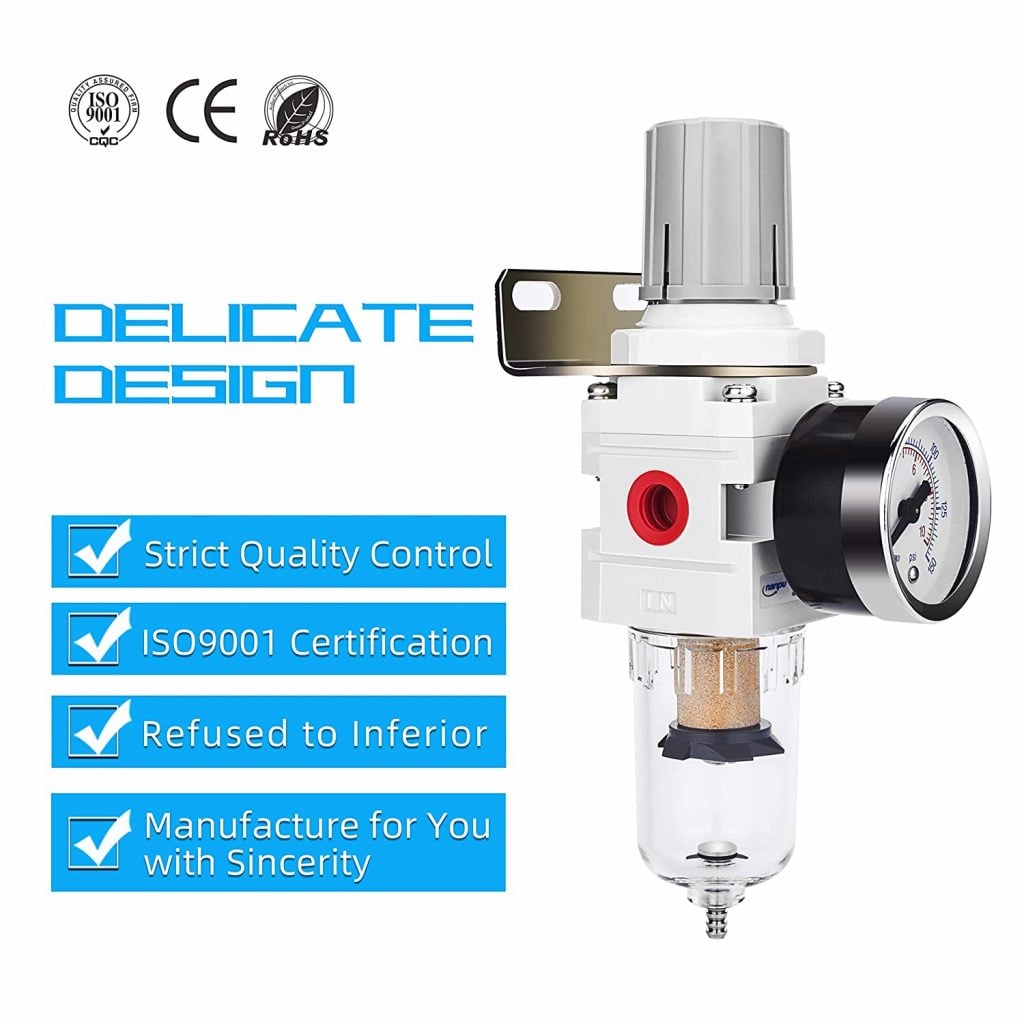
Hromee AW2000-02 Filter / Regulator
- Catches the free water the drains upstream missed
- Bowl shows you how bad the problem really is
- Belongs at the drop, not back at the compressor
How much water your compressor makes, where it drops out, and what is left in the line
A compressor is an accidental dehumidifier. Every cubic foot it swallows arrives carrying water vapour, and squeezing that air to a seventh of its volume forces most of that water back into liquid inside your equipment. The gallons have to go somewhere — a drain, a separator bowl, a dryer, or your tools. Enter your air flow, the weather at the intake, your system pressure and your air treatment, and this works out the water load at the inlet, how much falls out at the aftercooler, how much more the dryer takes, the peak rate a drain has to handle, and the dew point the air still carries when it reaches the bench.

These are the parts of the chain TestTalkHQ has verified affiliate links for — point-of-use filtration, regulation and receivers with a working drain. Refrigerated and desiccant dryers, oil/water separators and zero-loss demand drains are covered in the guide but are not linked here, because we do not carry sourced links for them yet.
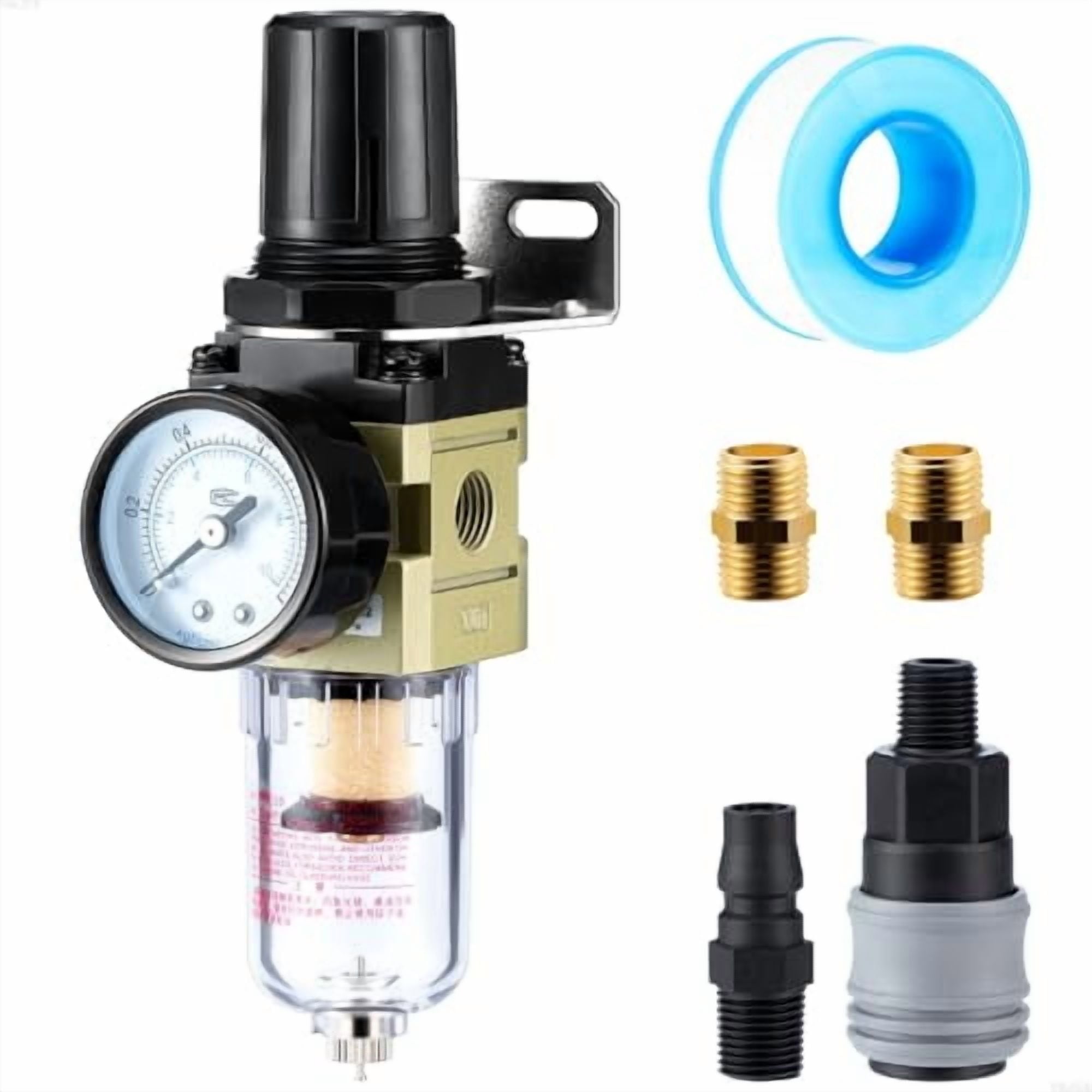

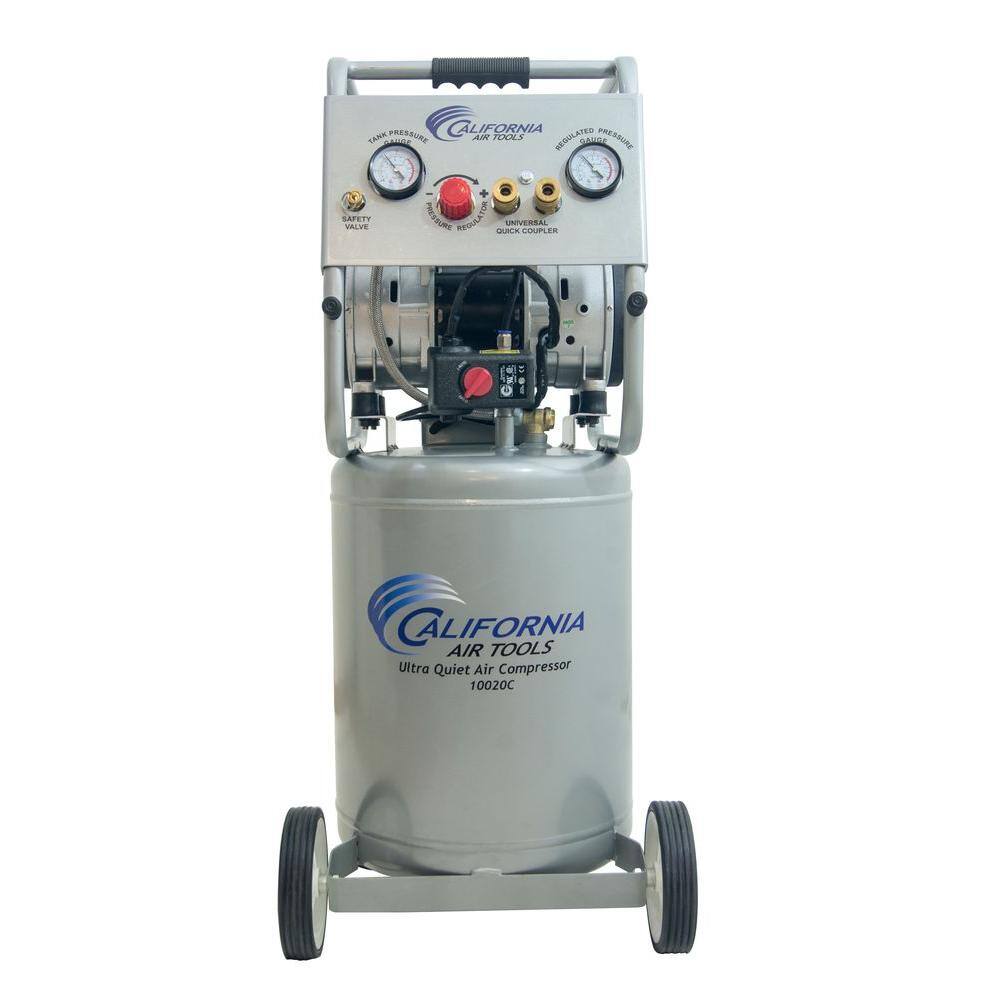
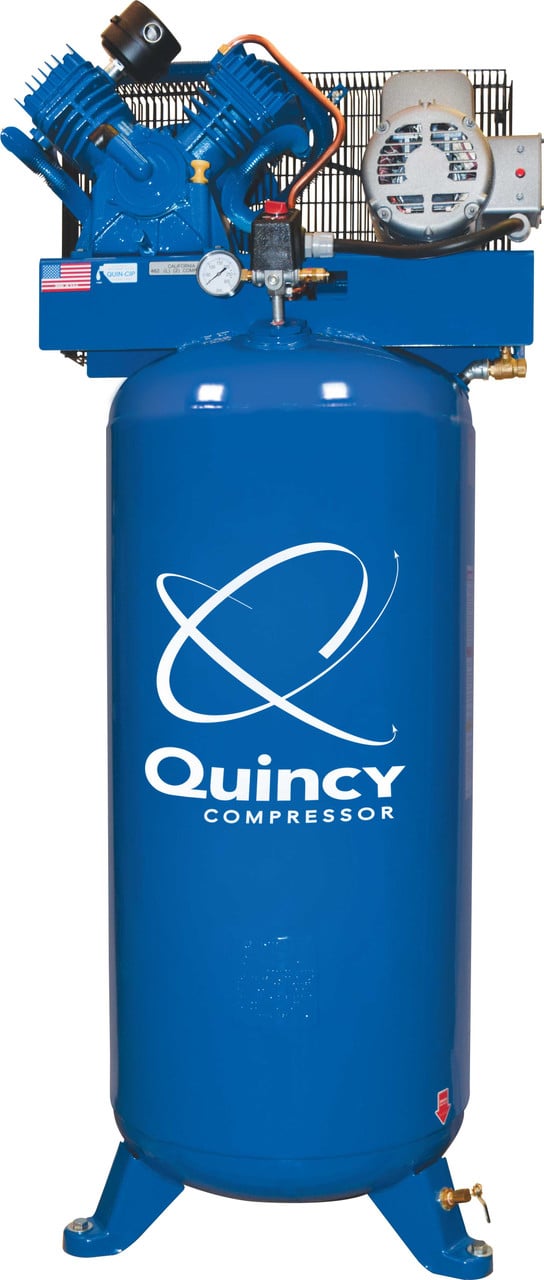
As an Amazon Associate, TestTalkHQ earns from qualifying purchases. Prices and availability can change.
There is no rule of thumb behind this tool and no manufacturer lookup table. Condensate is a moisture balance: the water that walked in the intake, minus the water the air can still hold when it leaves. Everything else is psychrometrics, and the equations are published.
Air holds water as vapour, and how much it can hold depends only on temperature. The saturation pressure comes from the ASHRAE Handbook of Fundamentals, Chapter 1, Equation (6) over liquid water and Equation (5) over ice:
Checked against the ASHRAE moist-air table, that returns 0.08865 psia at 32°F, 0.36328 psia at 70°F and 0.95031 psia at 100°F — table values 0.08865, 0.36334 and 0.95044. The actual vapour pressure is that figure multiplied by relative humidity, and the mass of water riding on each pound of dry air is the humidity ratio, ASHRAE Equation (20):
At 80°F and 75% relative humidity at sea level that is 0.01653 lb/lb, or 116 grains per pound — which is exactly where the psychrometric chart puts it.
A CFM rating is only useful here if you know what it is measured at, because the water rides on the mass of dry air, not on the volume. An SCFM figure is already a mass, expressed as a volume at reference conditions, so it converts with the ideal gas law at those conditions. An ACFM or FAD figure is an inlet volume, so it converts at your own inlet.
This is the step that makes a compressor a dehumidifier. Squeeze the air to 100 psig and its absolute pressure is roughly 7.8 times atmospheric, so the same partial pressure of vapour is now a much smaller fraction of the total. Cool it back down in the aftercooler and the air comes out saturated at that temperature and that pressure — anything it cannot hold has already become liquid.
Dryers are rated at a pressure dew point: the temperature at which the air would start to condense while it is still at line pressure. That is the number that matters, because that is the state the air is in inside your pipe. When the air blows out of a tool and expands to atmosphere, the vapour mole fraction stays the same but the total pressure collapses, so the partial pressure of the water collapses with it and the dew point falls a long way:
A 38°F pressure dew point at 100 psig comes out near −5°F once the air is released. That is why a refrigerated dryer is perfectly adequate for a shop that stays above freezing and hopeless for an outdoor line in January — what matters is not the atmospheric figure but whether the metal the air touches is colder than the pressure dew point. ISO 8573-1 classifies compressed air humidity by exactly this number: class 4 is a +3°C (37°F) pressure dew point, class 3 is −20°C, class 2 is −40°C and class 1 is −70°C.
Run the worked example again and look at the split: 4.36 gallons fall out at the aftercooler and separator, 1.96 at the dryer. Change nothing except the aftercooler outlet — 115°F instead of 100°F, which is what a dirty core or a hot compressor room does — and the split flips to roughly half and half, with the dryer now asked to remove more than twice as much water as before. Change it the other way to a 95°F outlet and the dryer's share drops to about a quarter.
Across ordinary shop conditions with a healthy aftercooler holding a 15 to 20°F approach, the pattern is consistent: the aftercooler and separator take roughly 70 to 80 percent of the water and the dryer takes the remaining 20 to 30. Let the approach slip to 35°F and the aftercooler's share falls into the 40s while the dryer's climbs past half. That single relationship explains most of the moisture complaints in a shop:
| Stage | What happens there | Typical share of the water | What fails |
|---|---|---|---|
| Intake filter | Nothing — all the water is still vapour | 0% | Nothing water-related |
| Compression | Air gets hot; it can hold more water hot than cold, so still no liquid | 0% | People assume the hot discharge is dry. It is not, it is just above its dew point. |
| Aftercooler + separator / receiver | Air cooled to within 15–20°F of ambient at full line pressure, velocity drops, droplets fall out. Most of the water condenses here. | 70–80% with a healthy 15–20°F approach; low as 40% if the approach slips to 35°F | Dirty fins, failed fan, hot compressor room, manual drain nobody opens — the water moves downstream instead |
| Dryer | Air chilled (refrigerated) or adsorbed (desiccant) to its rated pressure dew point | 20–30% normally, over half when the aftercooler is failing | Overloaded, inlet too hot, pressure too low, condenser dirty |
| Distribution piping | Should be nothing. Any further cooling below the dew point condenses more. | 0% if specified right | Cold runs, outdoor sections, dead legs, no slope, no drip legs |
| Point-of-use filter | Last chance. Catches what the chain above missed. | Whatever escaped | Bowl full because it is doing someone else's job |
The percentages above are what the balance in this calculator produces across ordinary shop conditions — 60°F to 95°F inlet air, 50% to 90% humidity, 100 psig — not a manufacturer claim. Change the aftercooler outlet temperature in the tool and watch the split move. That is the fastest way to see why aftercooler maintenance matters more than dryer brand. Note also that the calculator treats the aftercooler and the separator or receiver as one stage, because they sit at the same pressure and very nearly the same temperature; the balance cannot tell you which of the two actually caught a given gallon, only that it left the air before the dryer.
The daily total is the number that gets quoted, but the number a drain has to survive is the rate. Take the gallons per hour from the results and remember that a timed solenoid drain only opens for a few seconds at a time: a drain opening for 5 seconds every 10 minutes is open for 30 seconds an hour, and in those 30 seconds it must pass an hour's condensate through whatever orifice it has, against line pressure, along with any rust and sludge that came with it. That is why timed drains blow air (set too long) or back up (set too short), and why zero-loss demand drains that open on level rather than on a clock are worth the money on anything beyond a small shop machine.
It depends almost entirely on the air flow and the weather, which is what the calculator is for. As a scale: 100 SCFM running eight loaded hours on an 80°F, 70% humidity day produces around 6 gallons. The same machine on a 60°F, 50% day produces about 2. A 500 SCFM plant in a humid summer can make 30 gallons a shift. Anyone quoting you a single number without asking about your climate is guessing.
Four usual causes, in order of how often they turn out to be the answer. The aftercooler or separator drains are not working, so the dryer is being asked to remove several times the water it was sized for. The dryer is running above its rated inlet temperature or above its rated flow, so its real dew point is nowhere near the nameplate. The piping runs somewhere colder than the dryer's pressure dew point, so the air rains after the dryer. Or there is water already lying in low points in the mains from before the dryer was fitted, and it is being carried along in slugs.
It helps, and it is one of the cheapest things that does. A large receiver slows the air down so entrained droplets fall out, and gives the air surface area to cool against, which condenses more water where you can drain it rather than in the mains. It does not change the dew point of the air leaving it — that is set by temperature and pressure — but it moves more of the liquid to a place with a drain on it.
Match it to the coldest metal the air will touch, with 15 to 20°F of margin. An indoor shop that never drops below 55°F is fine on a refrigerated dryer at a 38°F pressure dew point. Anything outdoors, in an unheated building, or buried where the ground is cold needs a desiccant dryer at −40°F. Specific processes have their own requirements: breathing air, instrument air, food contact and pharmaceutical air are covered by ISO 8573-1 classes and by separate standards, and are not a judgement call.
Yes, slightly, and it also makes the remaining air drier. Higher absolute pressure means the same saturation vapour pressure is a smaller fraction of the total, so the saturated humidity ratio downstream is lower and more water has to leave. Running at 100 psig instead of 175 is normally the right call for energy cost, but it does leave marginally wetter air at the same dew point temperature. The effect is small next to the effect of the aftercooler outlet temperature.
Because the amount of water air can hold roughly doubles every 20°F. Air at 60°F and 50% RH carries about 38 grains of water per pound; the same air at 90°F and 70% RH carries about 150 grains, nearly four times more. Nothing on the compressor changed. Drains, separators and dryers should all be specified for the worst week of your summer, not for an average.
Draining the tank is essential and it is not a substitute. The tank drain removes liquid that has already fallen out; the dryer changes the dew point so that no more falls out downstream. If the air leaving your receiver is saturated at 100°F, it will condense in any pipe cooler than 100°F no matter how empty the tank is. If the shop is always warmer than the receiver, you may genuinely not need a dryer — run the numbers with the treatment set to none and check the margin against the coldest line temperature.