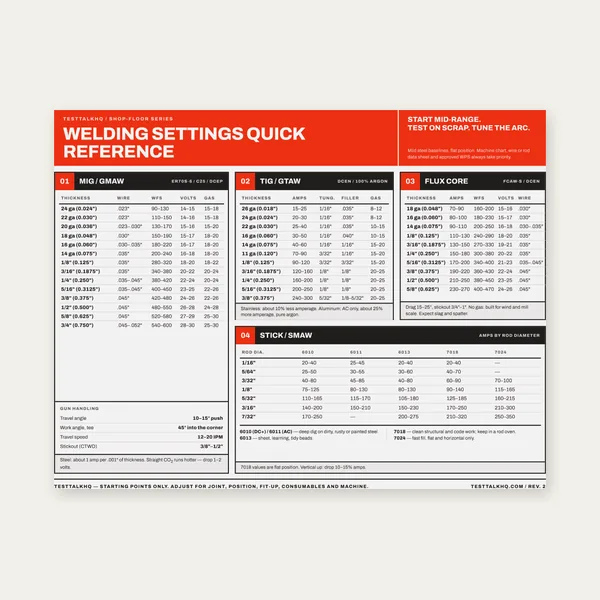
Welding Reference Card
One page. MIG, TIG, stick and flux core settings by thickness.
$3.99
BuyWhen MIG IPM ↔ amps from the burn-off factor does not match the puddle: wrong factor, alloy, wire diameter, machine WFS vs measured IPM, and FCAW
This is MIG welding wire-feed (inches per minute ↔ amps), not milling SFM/feed. Shop RPM and chip load live on Milling Speed & Feed Troubleshooting — different trade, different formula. Pair with the Wire Feed Speed to Amps Calculator. Voltage and gas on the same job: MIG welding calculator.

Re-run IPM ↔ amps with the actual wire diameter, alloy, and a measured inches-per-minute — not a mystery WFS number on the panel.
Open Calculator →| Problem | Usually means | First fix |
|---|---|---|
| Amps 20–40% off a clamp meter | Wrong burn-off factor for that diameter/alloy | Re-select .030/.035/.045 and steel vs SS vs Al |
| Same IPM, aluminum colder than steel | Steel factor left on; Al factors are lower | Switch material; same IPM ≠ same amps |
| Copied 350 IPM from .035 onto .030 | Diameter change without new factor | .030 steel ~0.45 A/IPM; .035 steel ~0.57 |
| Panel WFS ≠ coupon burn-off | Display units or uncalibrated feeder | Run 6 s, measure inches, ×10 = real IPM |
| TIG/stick amp chart used as MIG WFS | Process mix-up | This tool is GMAW wire only |
| Flux-core looks hot at “MIG” IPM | Solid-wire factor on FCAW | Use a FCAW schedule, not ER70S-6 burn-off |
What it looks like: Amps = IPM × factor. The calculator stores shop-typical factors (e.g. 0.035" mild steel 0.57 A per IPM so 350 IPM ≈ 200 A). A generic “2 amps per IPM” internet number, or a factor copied from a different diameter, will not match a clamp-on meter.
First fix: Pick the wire size and alloy in the tool. Then verify on scrap. Stick-out, C25 vs CO2, and contact-tip condition move the real amp draw. The factor is a starting line, not a WPS.
What it looks like: 4043/5356 at steel IPM. Aluminum factors in this tool are lower (0.035" Al ~0.43 vs steel 0.57). Same IPM produces fewer amps on aluminum, and aluminum wants a different voltage window and usually 100% argon / spool gun.
First fix: Change the material dropdown. Stainless is close to steel but not identical (0.035" SS ~0.55). Do not “add 10%” by guessing; re-select and then tune by puddle. Gas: shielding gas flow calculator.
What it looks like: A Handler chart for .030 copied onto a .035 spool, or a 0.023" hobby gun run at .035 IPM. Factors jump with cross-section: .023 steel ~0.35, .030 ~0.45, .035 ~0.57, .045 ~0.75 A/IPM in this table.
First fix: Confirm the stamp on the spool and the contact tip. Tip bore must match or feed and amps will not track. Recalculate instead of copying last week’s 300 IPM. Wire diameter selection: MIG wire gauge calculator.
What it looks like: Digital display says 400; a 6-second pull measures 28 inches (280 IPM). Some panels are unitless 0–10 knobs, some are IPM, some are “wire speed” that was never calibrated after a liner change. The calculator needs real inches per minute.
First fix: Depress the trigger into a dry run, 6 seconds, measure wire, multiply by 10. Compare to the display. Bird-nesting and a worn liner make the display lie. Then convert that measured IPM to amps.
What it looks like: A 1/8" 7018 chart (~90–140 A) pasted into the amps→IPM side, or TIG 1 A per 0.001" of thickness used as MIG wire speed. SMAW and GTAW do not have a burn-off factor in IPM. This calculator will happily invent a wire speed that does not exist on those processes.
First fix: Stick: stick welding calculator. TIG: TIG welding calculator. Heat input (kJ/in) after you have real amps: heat input calculator.
What it looks like: E71T-1 or E71T-11 run at ER70S-6 IPM/amps. Self-shielded and gas-shielded FCAW have different burn-off, polarity, and voltage. The solid-wire factors in this tool are GMAW, not a flux-core WPS.
First fix: Use a FCAW settings chart, not this steel MIG factor. Shop reference: flux-core welding settings guide. Solid vs flux-core choice: solid wire vs flux-core.
If the factor and diameter were honest and the puddle is still wrong, tune voltage and stick-out on the MIG calculator. Porosity and spatter are a different troubleshooting chart.
No. Milling uses SFM, RPM, and chip load. This page is MIG wire inches per minute and amperage. One mention is enough — stay on welding.
Stick-out, gas mix, and a cheap meter on a choppy short-circuit waveform. Recheck measured IPM first. Then treat ±10% as tune-by-puddle, not a broken formula.
Not with the solid-wire factors. Dual-shield has its own WFS/amp tables. Use the flux-core guide and the manufacturer’s schedule.
The calculator’s advanced position setting drops IPM ~10% so the puddle does not sag. Turn that off for flat/horizontal if you want the raw burn-off pair.
MIG problems chart — ground, tip, then settings. This page is IPM ↔ amps math only.
One page. MIG, TIG, stick and flux core settings by thickness.
$3.99
Buy
19 pages. Four processes, stainless and aluminum, symbols and inspection.
$12.99
Buy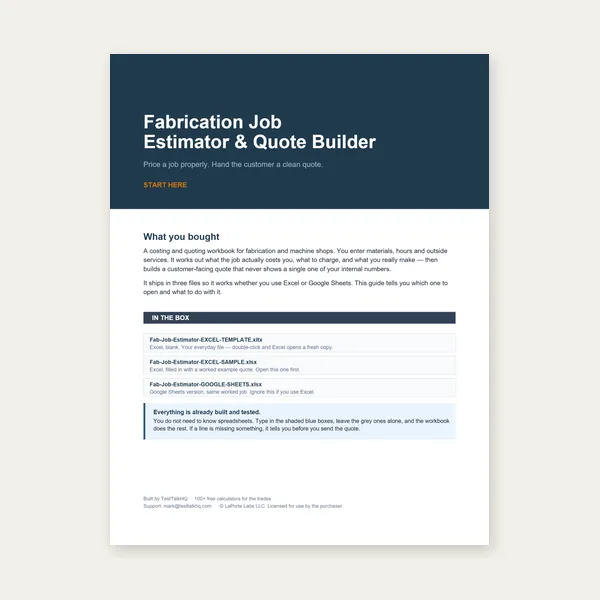
Price the job, then hand over a quote with no internal numbers.
Excel or Google Sheets. Best on a computer.
$29.00
Buy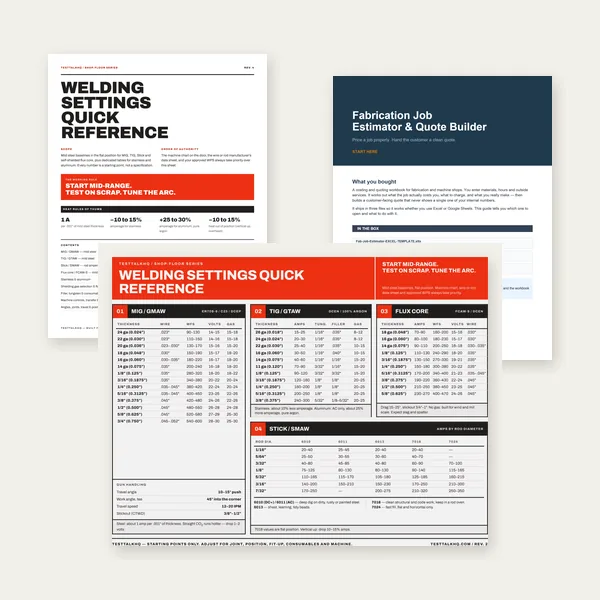
Card, 19-page guide and the estimator workbook. All six files.
Excel or Google Sheets. Best on a computer.
$34.99
$45.98 if bought separately — save $10.99
BuyCheckout opens in a new tab.
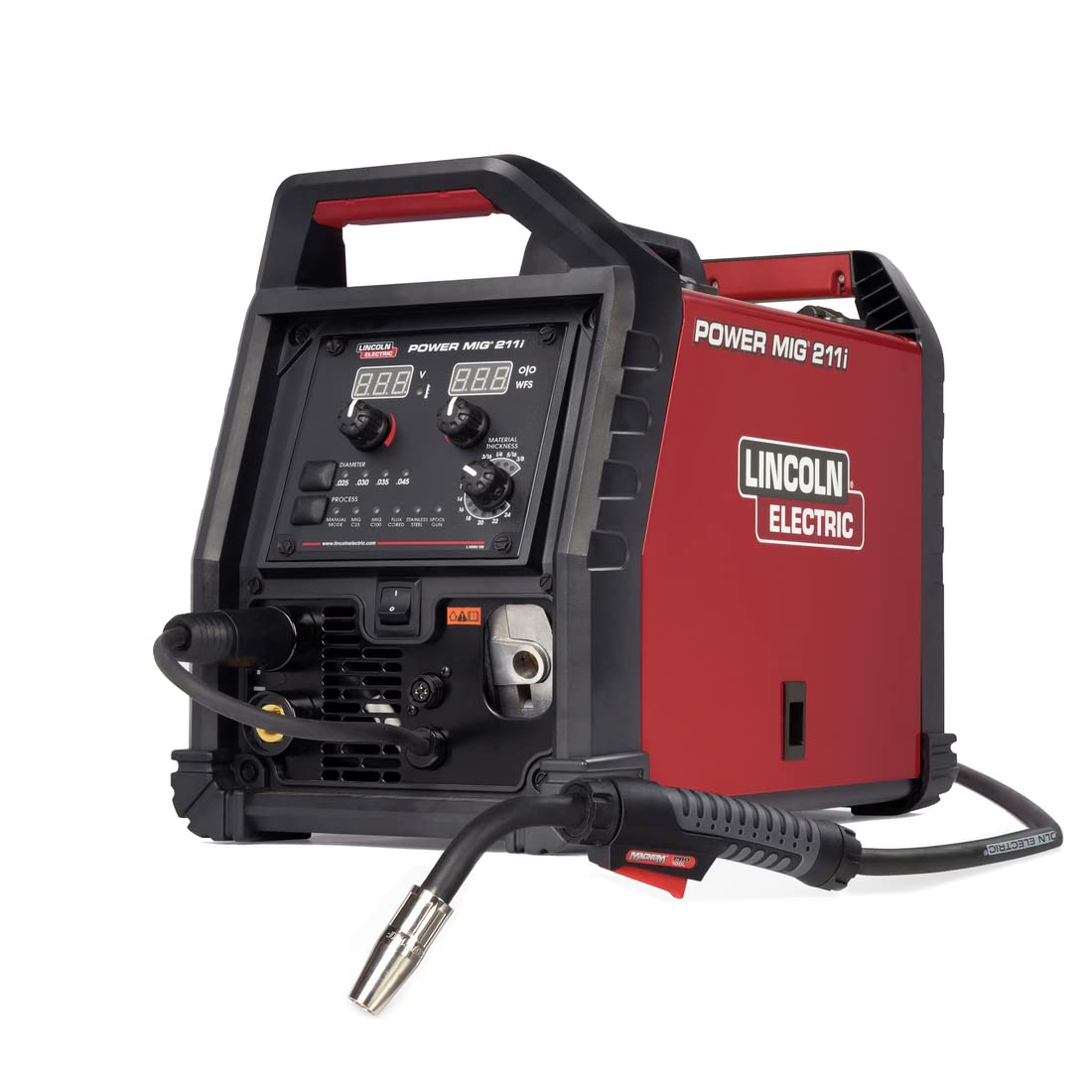
Machines and wire matched to wire-feed / amperage tuning
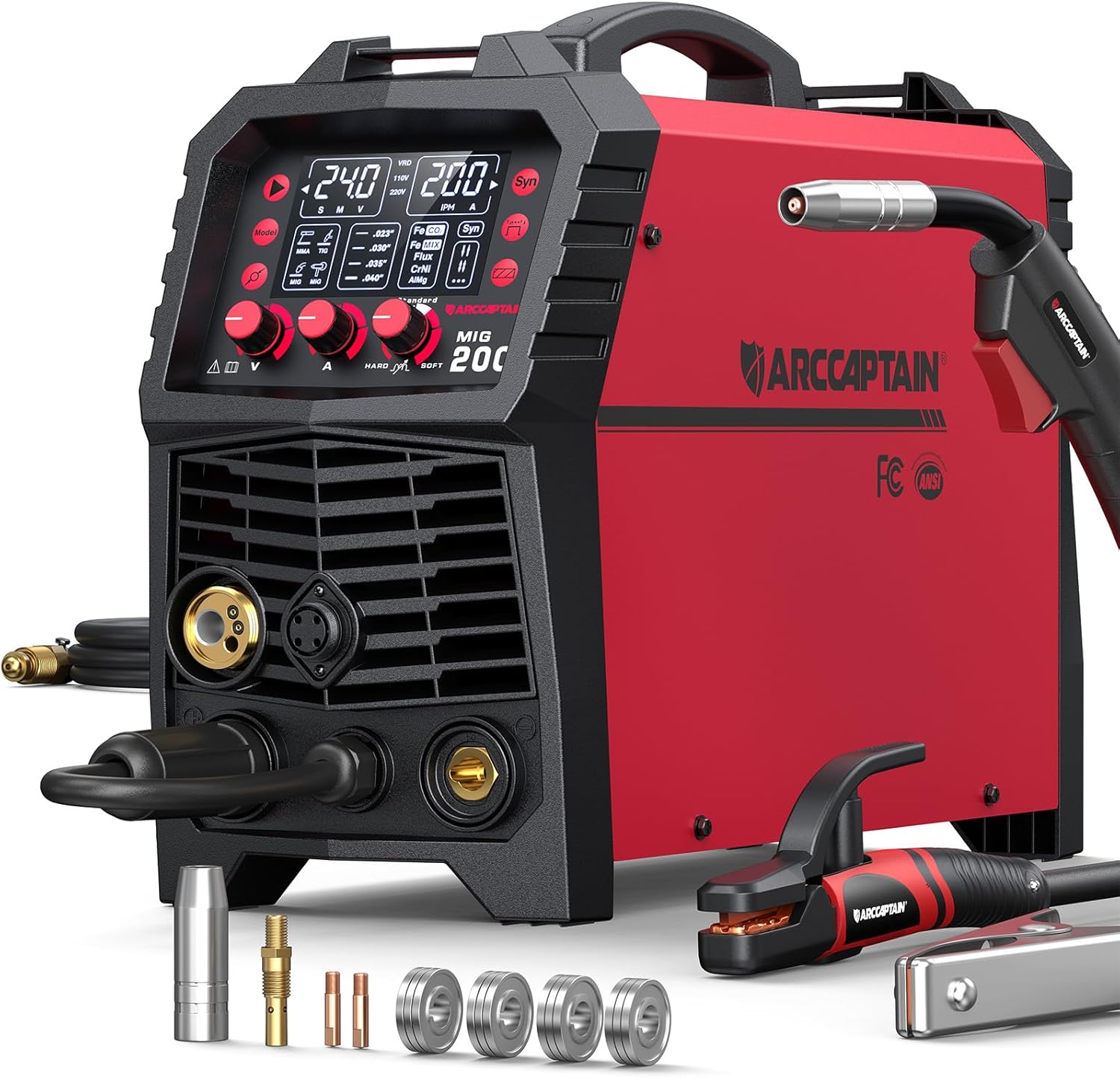
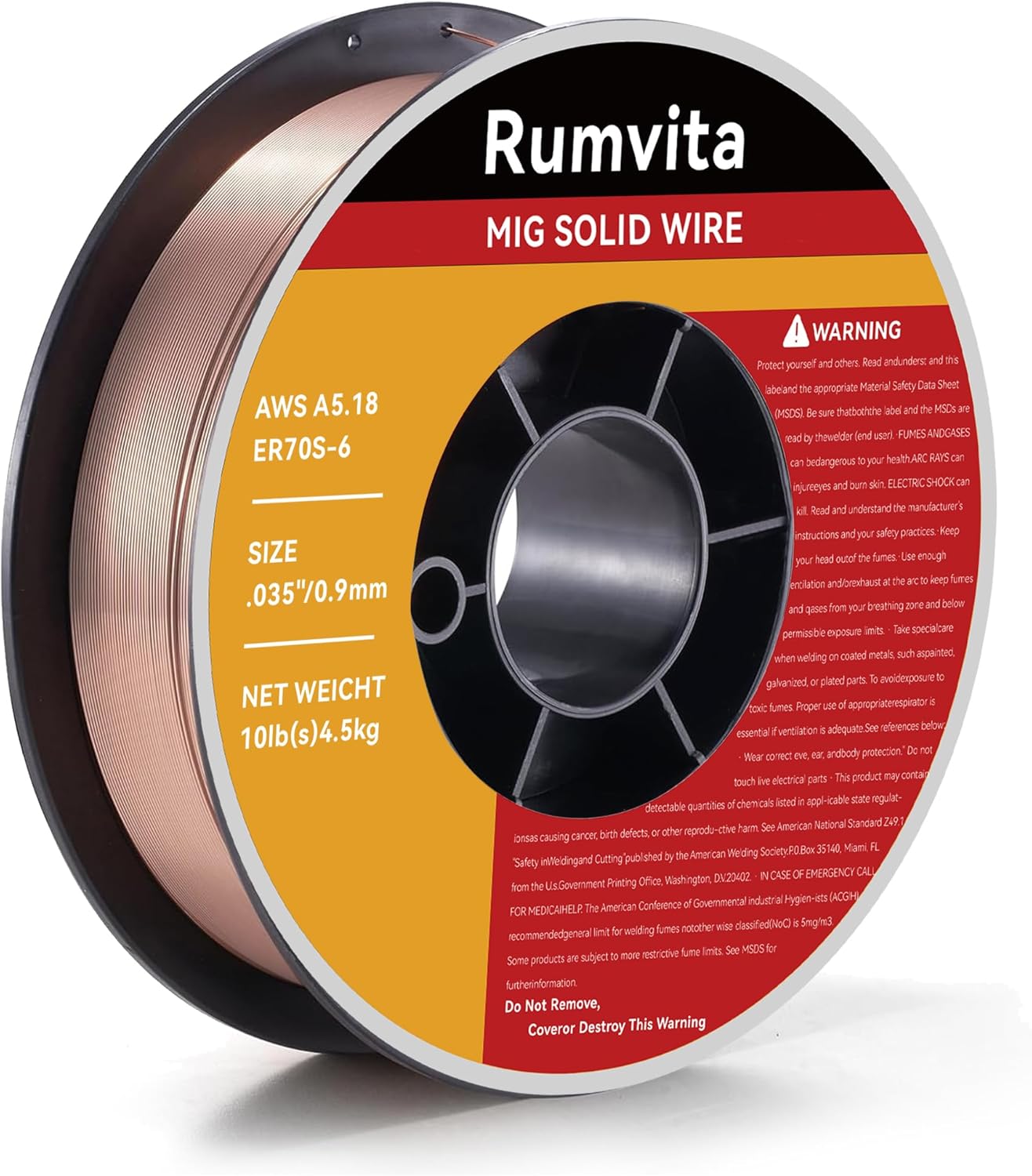
As an Amazon Associate, TestTalkHQ earns from qualifying purchases.
Starting point — prove the puddle on scrap. WeldKit