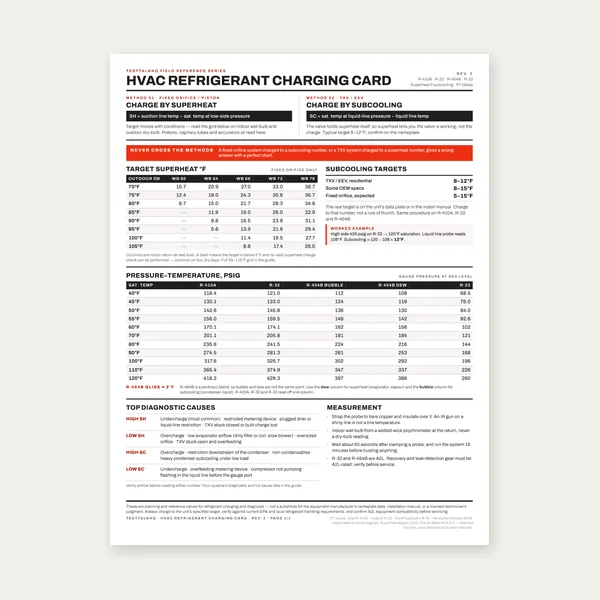
HVAC Refrigerant Charging Card
$3.99
BuyWhat temperature split actually measures, normal ranges by humidity, and how to place the probes
Delta-T (temperature split) is the air-side capacity check: how many degrees the coil or heat exchanger changed the air that actually went through it. It is not superheat. It is not CFM. It is two dry-bulbs, same mode, after the blower has been running long enough to settle.
Need the subtraction and the humidity-adjusted band done for you? Open the Delta-T Calculator.
Have return and supply already?Split vs a 16–22°F cooling band, shifted for outdoor humidity and temp.
Open Calculator →The coil (or heat exchanger) changes the temperature of the air that crosses it. Delta-T is that change:
It is a sensible check. On a wet cooling coil, a large share of capacity can go to dehumidification (latent) instead of dropping dry-bulb. That is why a 15°F split on a sticky 75% RH afternoon is not automatically “low charge,” and why a 22°F split in Phoenix dry air is not automatically “restricted duct.” The calculator shifts the expected band for outdoor humidity and outdoor temperature for that reason.
Delta-T cannot see refrigerant saturation. Charge lives on superheat / subcooling. Delta-T cannot see blower restriction. That is ESP and CFM. When to grab which: Delta-T vs SH/SC.
The meme “20°F split” is a midpoint, not a spec. Typical residential direct-expansion cooling at about 400 CFM/ton:
| Condition | Expected cooling ΔT | Why |
|---|---|---|
| Typical outdoor RH ~40–55%, ~95°F design day | 16–22°F | Textbook sensible band |
| Humid (RH ~55–70%) | 14–20°F | More latent, less dry-bulb drop |
| Very humid (RH ≥ 70%) | 12–18°F | Wet coil working as a dehumidifier |
| Dry / arid (RH < 40%) | 18–24°F | Almost all capacity is sensible |
| Outdoor ≥ 100–105°F | Band shifts down ~2–3°F | Condenser capacity falls |
| Gas furnace temperature rise | Nameplate, often 30–70°F | Not 20°F. Use the plate, not a cooling meme |
There is no honest one-page “delta-T by humidity” chart that replaces indoor wet-bulb, CFM/ton, and coil condition. The bands above are the same ones the calculator uses — field windows, not Manual J.
Two dry-bulbsReturn vs supply, with humidity context so 15°F is not always “broken.”
Open Delta-T Calculator →No. It is the middle of a typical sensible band. Humidity, outdoor temp, and CFM/ton move it. The calculator’s window is the field rule; the OEM data plate wins on furnaces.
Only as a room-comfort check. Coil split is at the equipment. Duct gain/loss between the plenum and the boot will fake a low cooling ΔT.
It is a proxy, not a psychrometric chart. Return wet-bulb is better if you have it. Outdoor RH is what most techs actually log on a humid-day call, so the tool uses that as context.
$3.99
Buy
$12.99
Buy
$29.00
Buy
$39.00
BuyCheckout opens here — you stay on this page.
From the TestTalkHQ HVAC Tools / Thermometers catalog — a dual-probe meter for return vs supply air, IR guns for a quick surface check (not a substitute for in-stream probes), plus the next meter when split says airflow or charge.
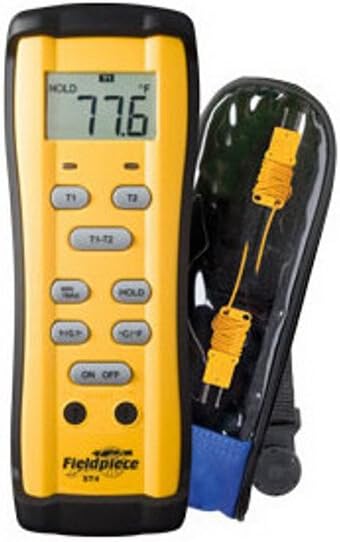
Two probes, one delta. Park one in the return stream and one in the supply after the coil — this calculator is the expected-range check against that display.
View on Amazon →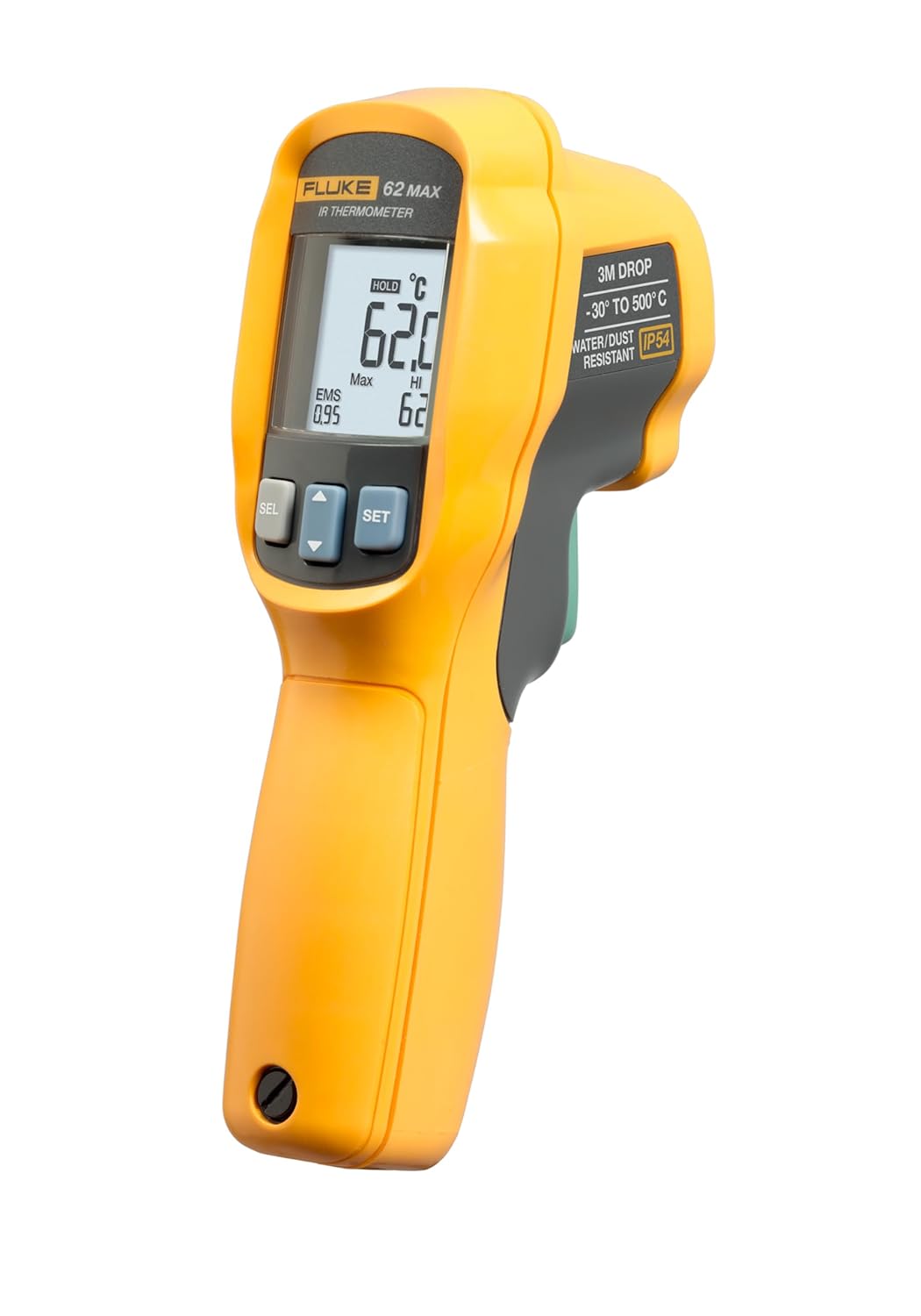
Fast surface scan of a supply plenum or register. IR is not in-stream dry-bulb — use it to find a hot/cold spot, then confirm split with probes.
View on Amazon →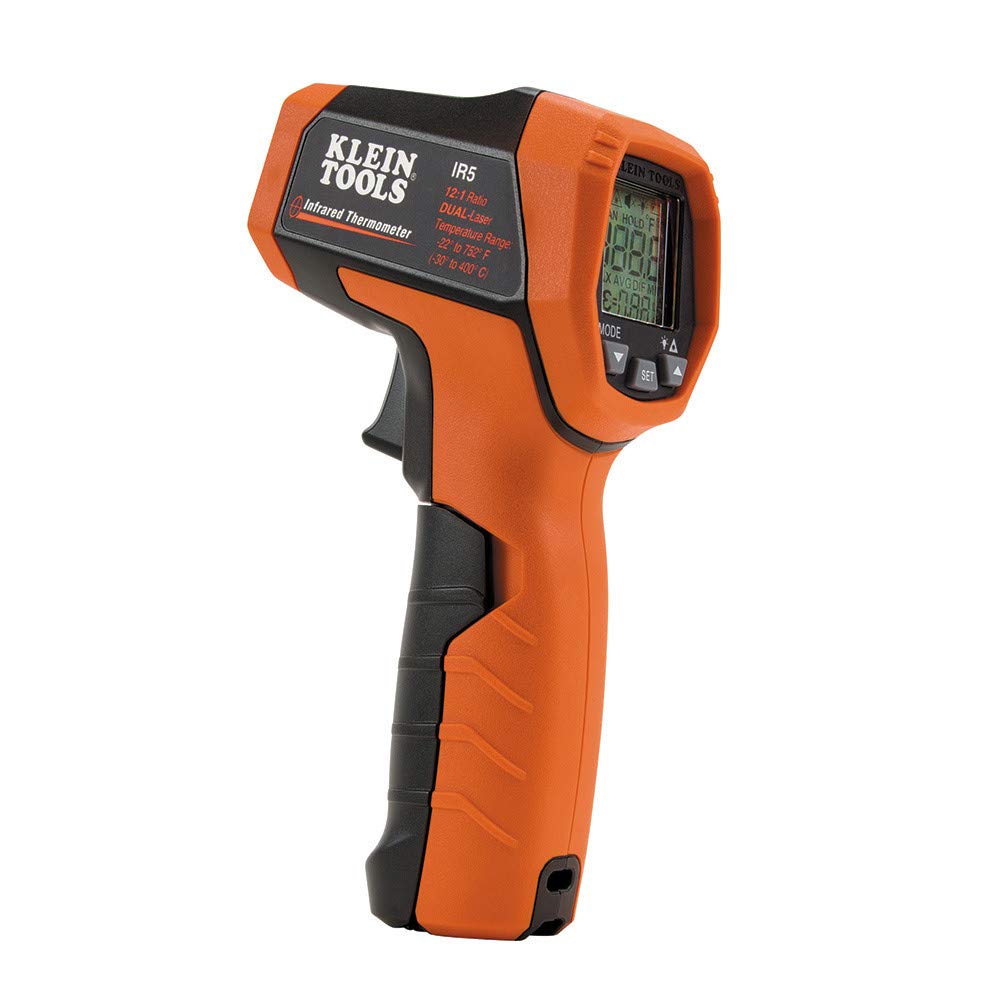
Dual-laser IR for a quick plenum or grille surface read. Same caveat as the Fluke: emissivity and mixing air will lie. Probes own the calculator inputs.
View on Amazon →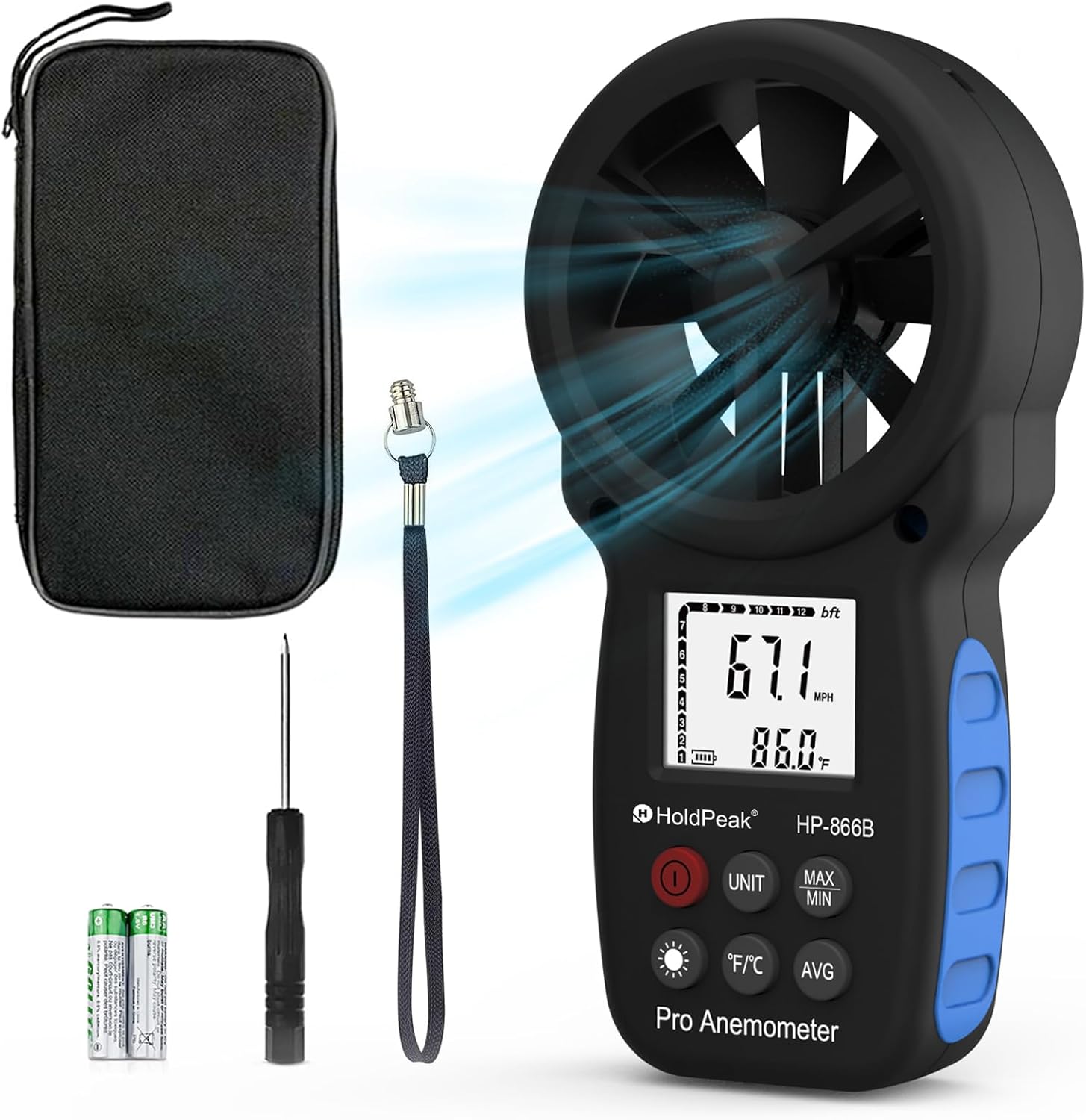
When split is high, you still need FPM. Vane meter for register face velocity after delta-T says the coil is seeing too little air.
View on Amazon →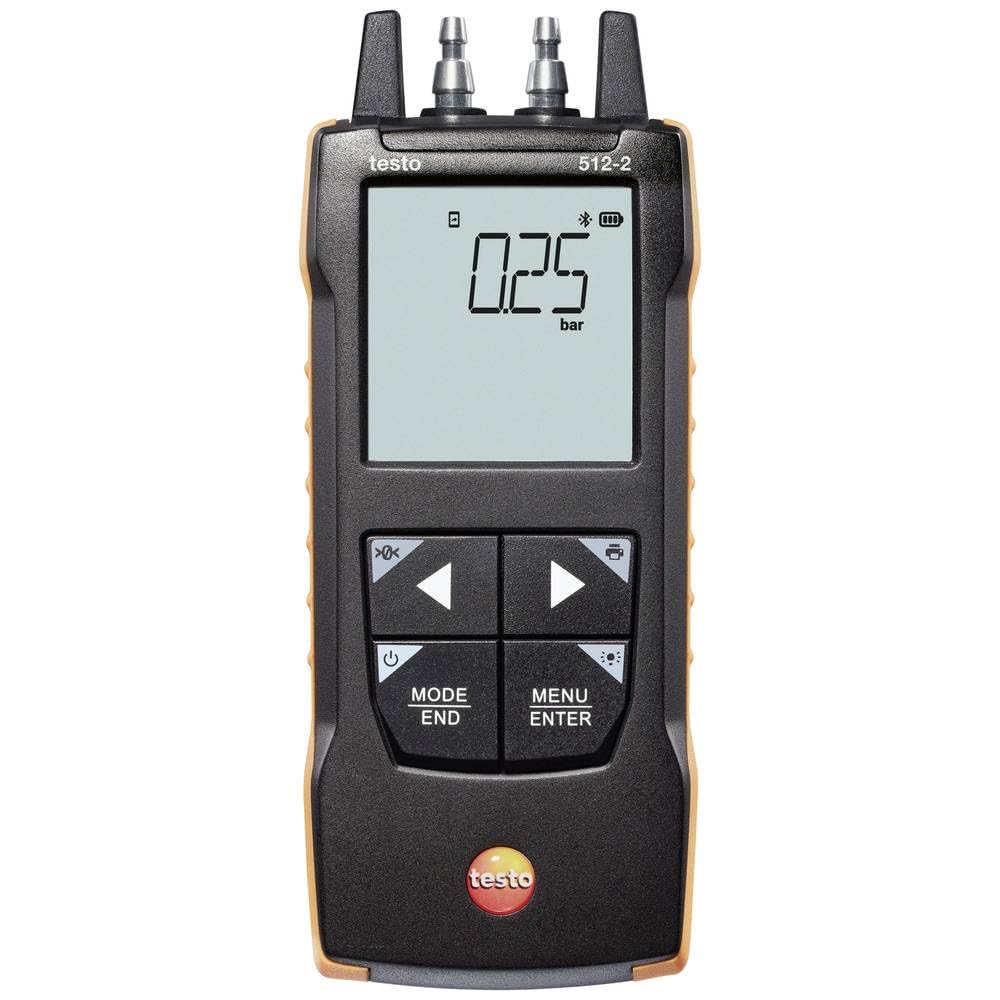
High cooling split usually means low CFM. TESP vs nameplate is the restriction check — pair with the ESP calculator, not a second guess at thermometers.
View on Amazon →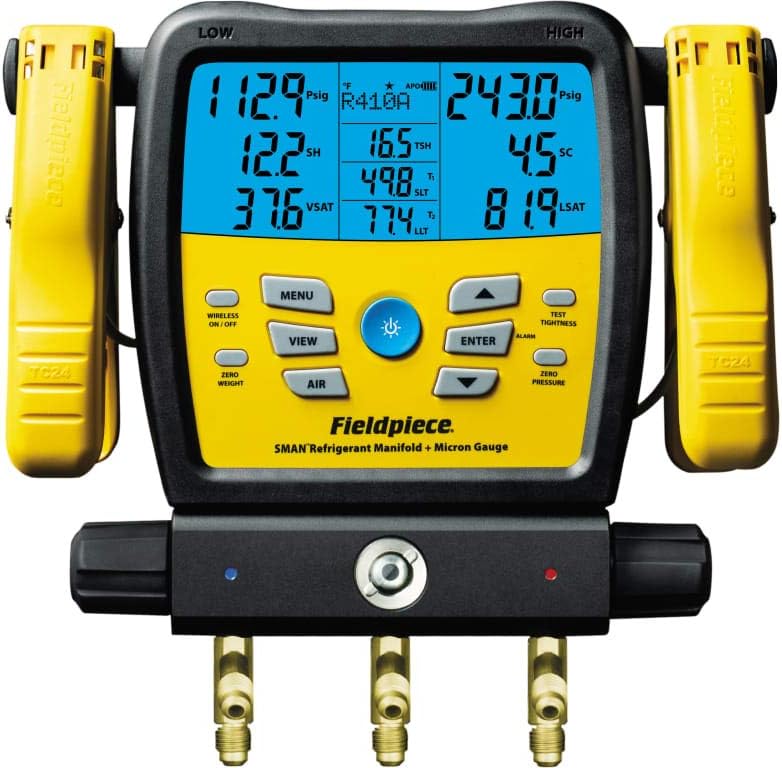
Low split with decent airflow is often charge. Hook gauges and run superheat / subcooling — delta-T is not a charging chart.
View on Amazon →As an Amazon Associate, TestTalkHQ earns from qualifying purchases.