Air Compressor Troubleshooting
Diagnose compressors that won’t reach cut-out, short-cycle despite a “correct” tank, run shorter than the calculator predicts, drop pressure under tools that should fit your CFM, and dump excess moisture into lines and finishes
This is a diagnostic guide — not another sizing lecture. Pair it with the Runtime Calculator, Tank Size Calculator, CFM Calculator, and Compressed Air Cost Calculator. For purchase specs use the Air Compressor Buying Guide. When the real question is tank buffer vs pump output, use Bigger Tank vs More CFM.

Air Compressor Problems Quick Answer
Use this when the motor runs, the gauge moves, and the tools still behave wrong — or when calculator numbers look fine and the shop air does not.
| Problem | What it usually means | First fix | Next tool |
|---|---|---|---|
| Runs but won’t reach full cut-out | Leak, worn check/reed valve, or motor/pump too weak for the tank volume | Soap-bubble leak hunt with tools off; listen at tank drain, fittings, unloader | Cost Calculator (leak $) |
| Short-cycles / runs more than expected | Hidden leaks, CFM demand above pump delivery, hot ambient derate | Isolate hose at tank outlet; re-check simultaneous tool CFM | CFM Calculator |
| Runtime shorter than calculated | Line loss, condensate volume, regulator set too high / restricted | Measure usable PSI band at the tool, not only tank gauge | Runtime Calculator |
| Pressure drops under “in-spec” tools | Hose ID/length loss, quick-connect choke, multiple tools at once | Upsize hose ID; remove restrictive couplers; one tool at a time test | Tank vs CFM |
| Water in lines / paint / plasma | Warm wet air + no dryer path — draining tank alone is not enough | Drain daily; add FRL + dryer/coalescer downstream; cool the plumbed run | Buying Guide |
1. Compressor Runs but Won’t Build to Full Pressure
What it looks like: Motor spins, you hear pumping, and the gauge climbs slowly — then stalls below the normal cut-out (for example hangs at 90–110 PSI on a 150–165 PSI unit). Sometimes it never opens the pressure switch. Tools feel soft even when the motor has been “working” for minutes.
Why it happens: The pump is either dumping air as fast as it makes it, or it cannot overcome tank volume and back-pressure. A leak past the check valve, a worn reed/valve plate, a stuck unloader, or a motor that stalls under rising head pressure all produce the same symptom: effort without cut-out.
Likely causes checklist:
- System leak with tools “off” — loose NPT fittings, cracked brass, open blow gun, bad quick-connect, weeping tank drain, or a hose left pressurized overnight.
- Worn or stuck check / reed valve — pump re-compresses the same air; tank gauge climbs then falls when the motor stops; you may hear reverse hiss at the pump head.
- Unloader / pressure-switch plumbing faults — continuous bleed from the unloader tube or a switch that never sees rising pilot pressure.
- Undersized motor/pump for the tank — a tired 1–2 HP pump on a large receiver can run forever without reaching cut-out once valves and rings wear. Tank size is not the cure; delivery CFM is.
- Voltage drop at the compressor outlet — soft shop circuit makes the motor sound busy while pump RPM collapses under load.
How to fix it:
- Soap-bubble every joint from tank drain to regulator with the outlet closed. Fix any weep before buying parts.
- With outlet closed, time climb from cut-in to cut-out. If climb is healthy only with outlet closed, the leak is downstream.
- Inspect/replace check valve and pump valve plate if the gauge falls quickly after shutoff with outlet closed.
- If the motor labors and never reaches cut-out on a known-tight system, treat it as a delivery problem — see Bigger Tank vs More CFM, not a bigger empty tank.
2. Short-Cycling / Running More Than Expected
What it looks like: You sized the tank with the tank calculator, duty looks intermittent on paper, but the motor kicks on every few seconds. Heat builds. Duty cycle feels like continuous production even for nailers and blow guns.
Why it happens: Short-cycling means stored air is leaving the system faster than the calculator assumed — or the pump’s real SCFM is lower than the brochure. Ambient heat reduces delivered CFM. A “correct” tank size cannot hide a continuous leak or a continuous tool draw.
Likely causes checklist:
- Leaks that only show under pressure — couplers, nailer seals, manifold plugs, and cracked poly lines.
- Oversized CFM demand — two grinders, a sander left idling, or a plasma torch on “air” between cuts.
- Ambient / altitude derate — hot garages and high elevation cut real SCFM; nameplate numbers were at standard conditions.
- Pressure switch set too narrow — tiny differential (for example 100–110 PSI) forces frequent restarts even with adequate tank volume.
- Regulator dumping or stuck open tool — air leaving downstream while the tank gauge only tells half the story.
How to fix it:
- Cap the tank outlet and watch cycle rate. If cycling stops, chase the distribution side.
- Re-total simultaneous tools in the CFM calculator with a 25% buffer — include “idle open” tools.
- Widen usable differential only within the switch’s rated range; never defeat safety valves.
- If demand is continuous (DA sander, HVLP), you need more CFM — a bigger tank only delays the same short-cycle pain.
3. Actual Runtime Shorter Than Calculated
What it looks like: The runtime calculator predicted several minutes between cut-in and cut-out. In the bay you get half that — or the tool goes soft long before the tank gauge hits cut-in.
Why it happens: Calculators model usable tank volume between two pressures. Real shops lose pressure in the hose, waste volume as liquid water, and starve tools at a regulator that is set high while the orifice is tiny. The tank gauge can still look “healthy” while tool inlet pressure collapses.
Likely causes checklist:
- Line loss — long 1/4" hose, coiled hose left on a reel, undersized whip, or multiple quick-connects in series.
- Moisture / condensate buildup — liquid water occupies tank volume and carries into tools; effective dry air volume drops after a humid day.
- Regulator restriction — cheap mini-regulators or clogged filter elements that look open on the dial but choke flow.
- Wrong pressure band inputs — calculator used tank cut-out/cut-in while the tool already dies at a higher floor pressure.
- Leaks during the “run” — slow weeps that the static leak test missed.
How to fix it:
- Put a gauge at the tool inlet. Re-run runtime math with the pressure the tool actually needs, not vanity tank PSI.
- Shorten and upsize hose ID for high-draw tools; keep 3/8" (or larger) for sanders and spray.
- Drain the tank until clear air; empty filter bowls; fix auto-drains that stick shut.
- Replace restrictive filter/reg stacks that show big gauge gap tank→tool under flow.
4. Pressure Drop Under Load (Tools “Within CFM Spec”)
What it looks like: Spec sheet says the compressor makes 5 CFM @ 90 PSI and the impact or die grinder wants 4 CFM. On paper you are fine. Under the load the tool bogs, the hose stiffens/softens oddly, and the tank gauge dives every trigger pull.
Why it happens: Brochure CFM is at the pump. Tools see whatever survives hose friction, coupler orifices, and branching. Two “2 CFM” tools together are a 4 CFM continuous event. Quick-connects with tiny bores can drop 10–20 PSI at high flow even when static pressure looks perfect.
Likely causes checklist:
- Hose diameter / length losses — especially 1/4" on continuous tools.
- Quick-connect restriction — automotive 1/4" industrial plugs used on HVLP or sanders.
- Multiple simultaneous tools — diversity assumptions in a calculator do not apply when two people actually pull air together.
- Clogged FRL / water-logged filter — element packed with sludge.
- True CFM shortfall — the unit never delivered nameplate SCFM once worn or heat-soaked.
How to fix it:
- A/B test: tool on a 10 ft large-ID hose straight off the regulator vs your normal long whip.
- Upgrade couplers to high-flow bodies; minimize series adapters.
- One-tool-at-a-time baseline, then add the second tool deliberately — if the second tool kills both, you need CFM, not gallons.
- Confirm with the CFM calculator, then decide tank vs pump using Bigger Tank vs More CFM.
5. Excess Moisture / Condensate — Cause and Real Fix
What it looks like: Water spits from blow guns, fish-eyes in paint, rusty tool internals, plasma cut quality swings, and a tank drain that never runs dry. You already “drain the tank every night” and the problem keeps returning by mid-afternoon.
Why it happens: Compressing ambient air concentrates water vapor. Hot compressed air holds more moisture; as it cools in the tank and lines, liquid drops out. Draining removes what already condensed in the receiver — it does not stop new water from forming on the next humid fill cycle, and it does nothing for vapor that condenses downstream of the tank in long cool piping.
Likely causes checklist:
- No FRL / dryer path — raw tank air to tools.
- Short, hot piping — no cool-down length before the filter.
- Failed or missing auto-drain — sludge sits and re-evaporates into the airstream when the pump reheats the tank.
- Oversized continuous demand — air spends less time cooling; wetter air hits the tool.
- Painting / plasma without coalescing or refrigerated drying — general shop FRLs are not finish-critical dryers.
How to fix it:
- Drain daily (or use a working auto-drain) — necessary, not sufficient.
- Add a filter-regulator-lubricator (lubricator only where tools need oil) at the drop; keep bowls emptied.
- For paint, powder, or plasma: add a coalescing filter and/or refrigerated dryer sized for your SCFM — not just a cheap “water trap” disc.
- Allow a cool-down run of metal pipe or longer hose before the final filter so condensate drops before the tool.
- Track leak and runtime waste in the cost calculator — wet, leaky systems also burn electricity.
When Troubleshooting Points to Tank vs CFM
If leak tests pass, hoses are adequately sized, and tools still starve under continuous draw, stop chasing gallons. If tools are bursty (nailers, impacts in short pulls) and the pump rarely runs except to refill a small tank, more receiver volume is the cheaper win. Full decision fork: Bigger Tank vs More CFM — Which Do You Need?
Gear That Helps Real Diagnosis
Six air-compressor catalog picks — FRL, regulator, high-flow fittings, hose management, quiet shop compressor, and a capable portable — sourced from the TestTalkHQ affiliate list
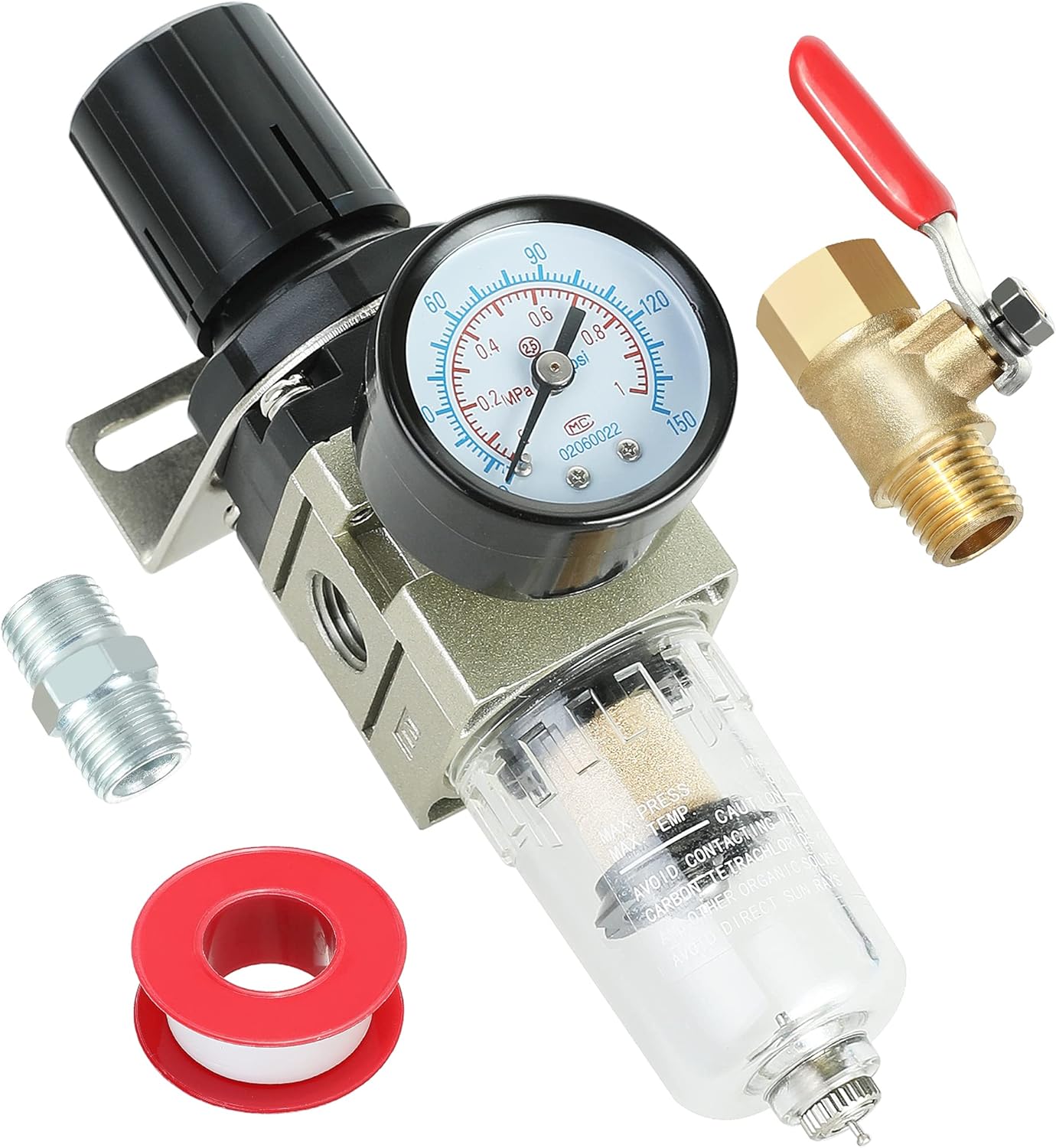
Hromee Filter Regulator Combo
- Catch water before tools
- Dial tool pressure under load
- Spot restriction vs true CFM loss
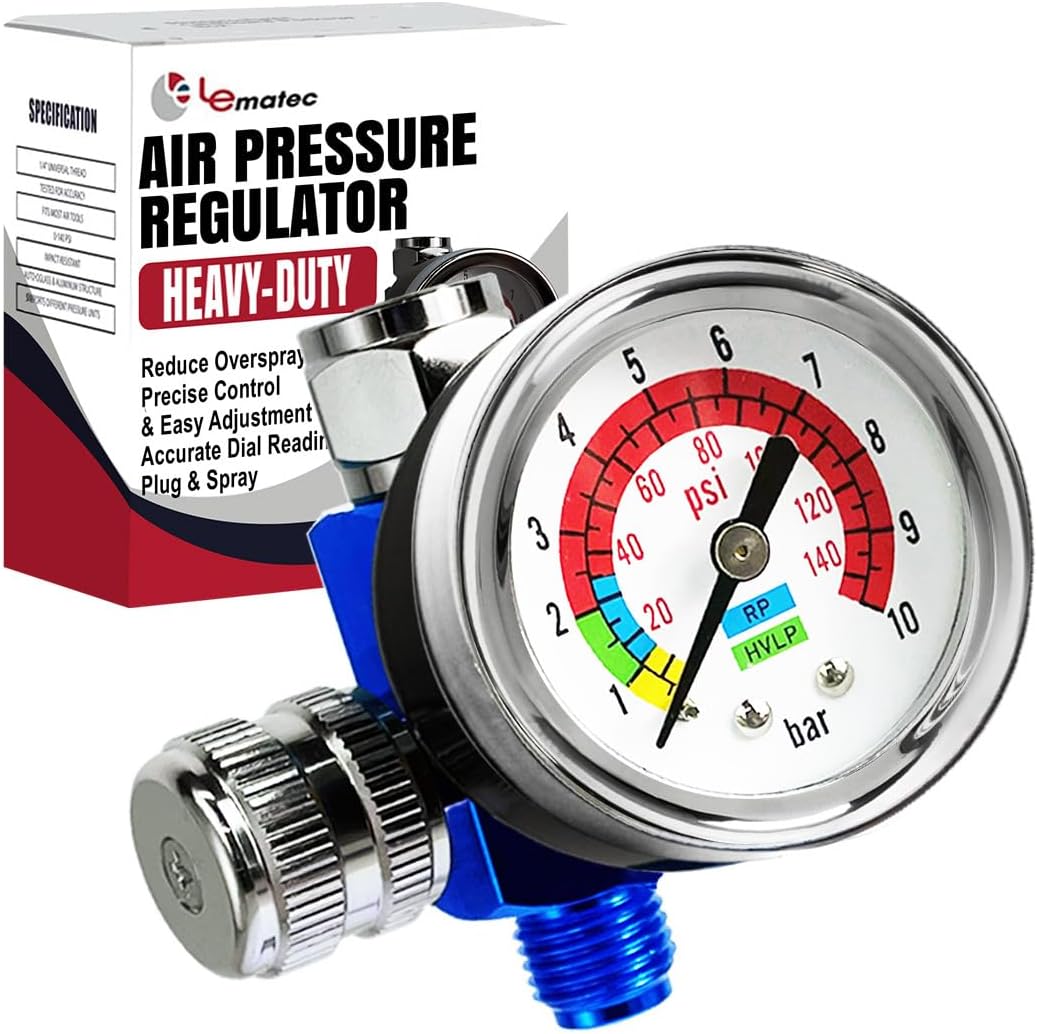
LE LEMATEC Flow Control Regulator
- 0–150 PSI tool-side control
- Helps separate tank PSI from tool PSI
- Useful for spray and plasma air
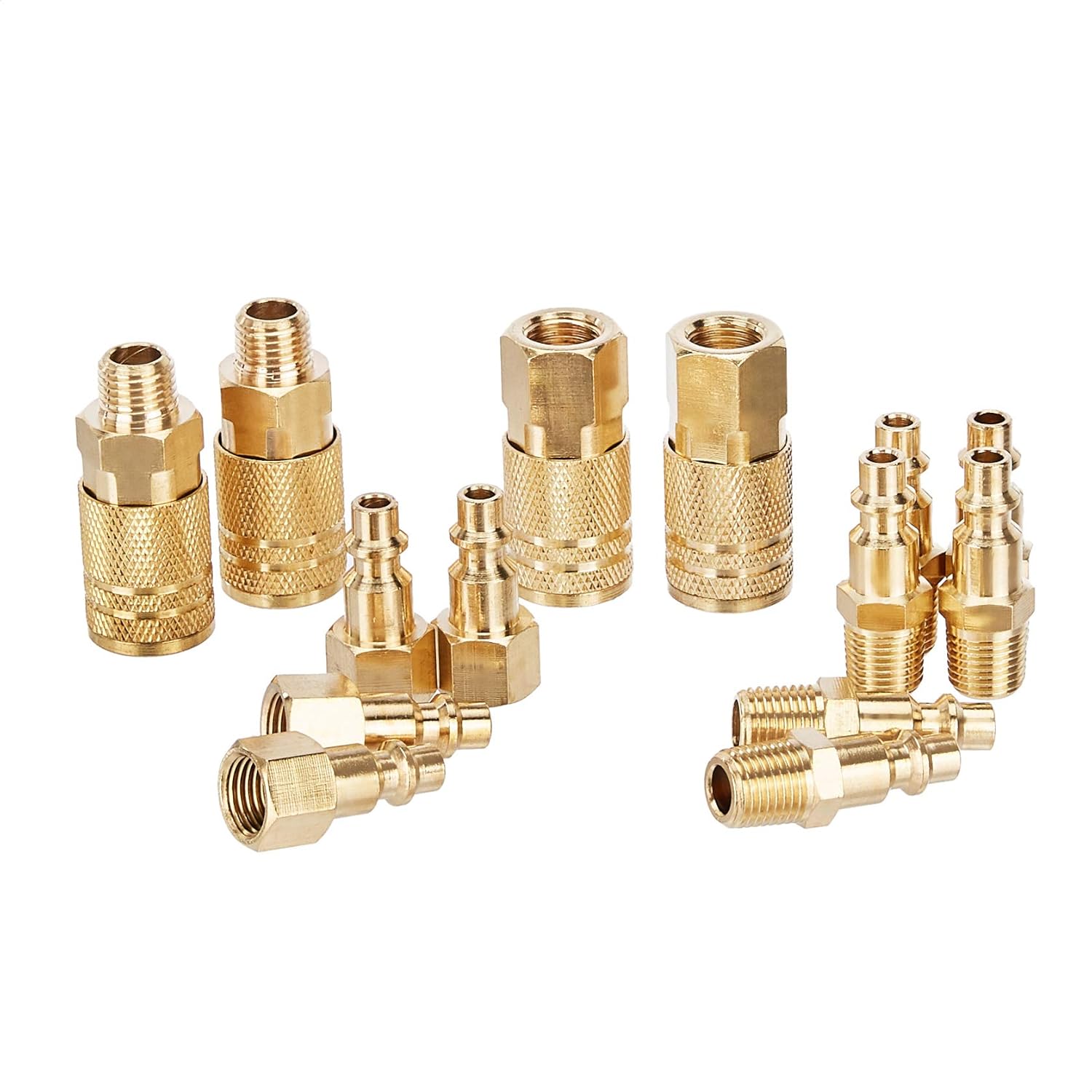
Amazon Basics Quick Connect Kit
- Replace leaky mismatched plugs
- Standardize coupler bodies
- Cut series-adapter restrictions
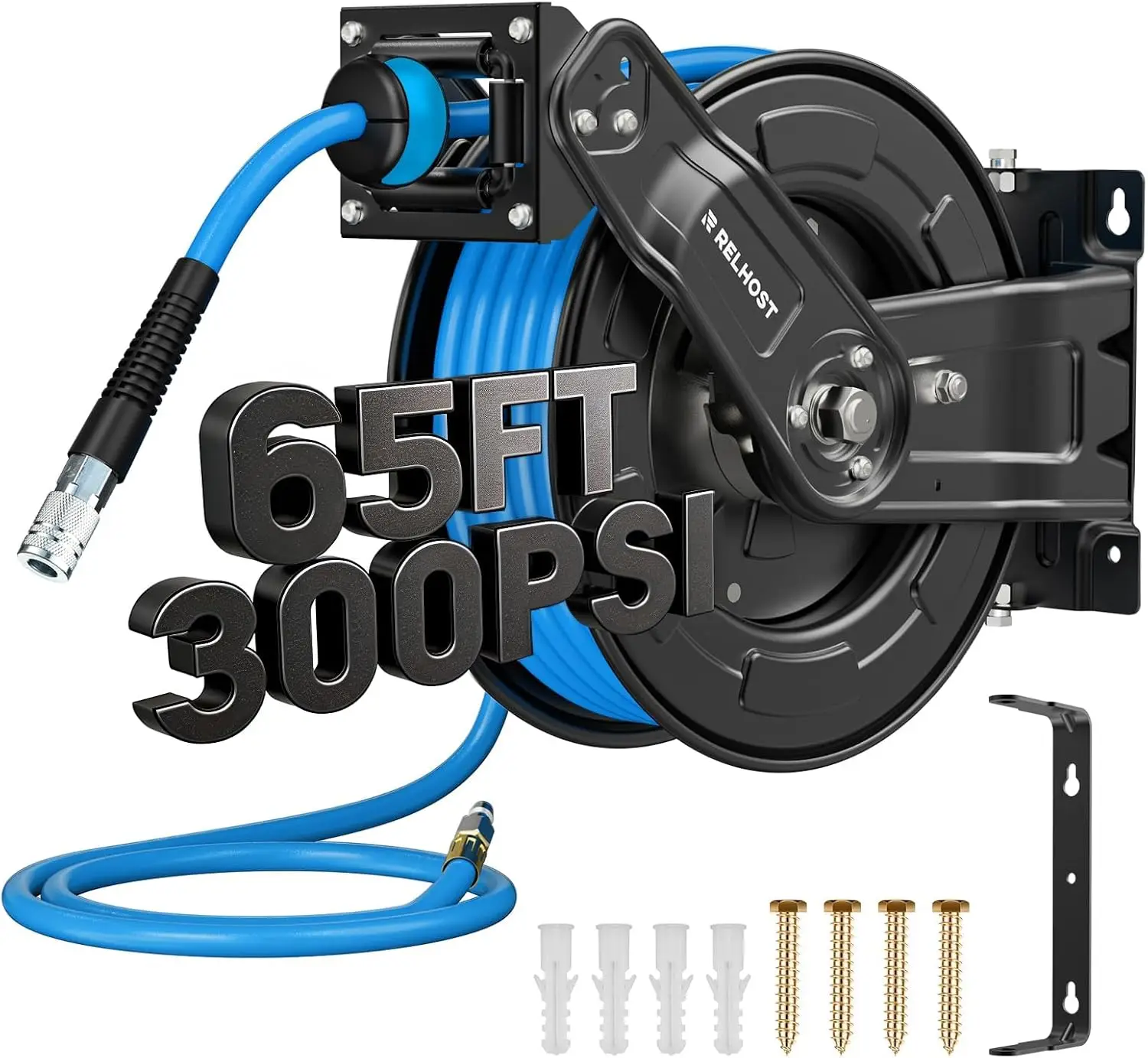
Relhost 65ft × 3/8in Hose Reel
- Larger ID than skinny whip hoses
- Less coil restriction on the floor
- Longer reach without 1/4" starvation
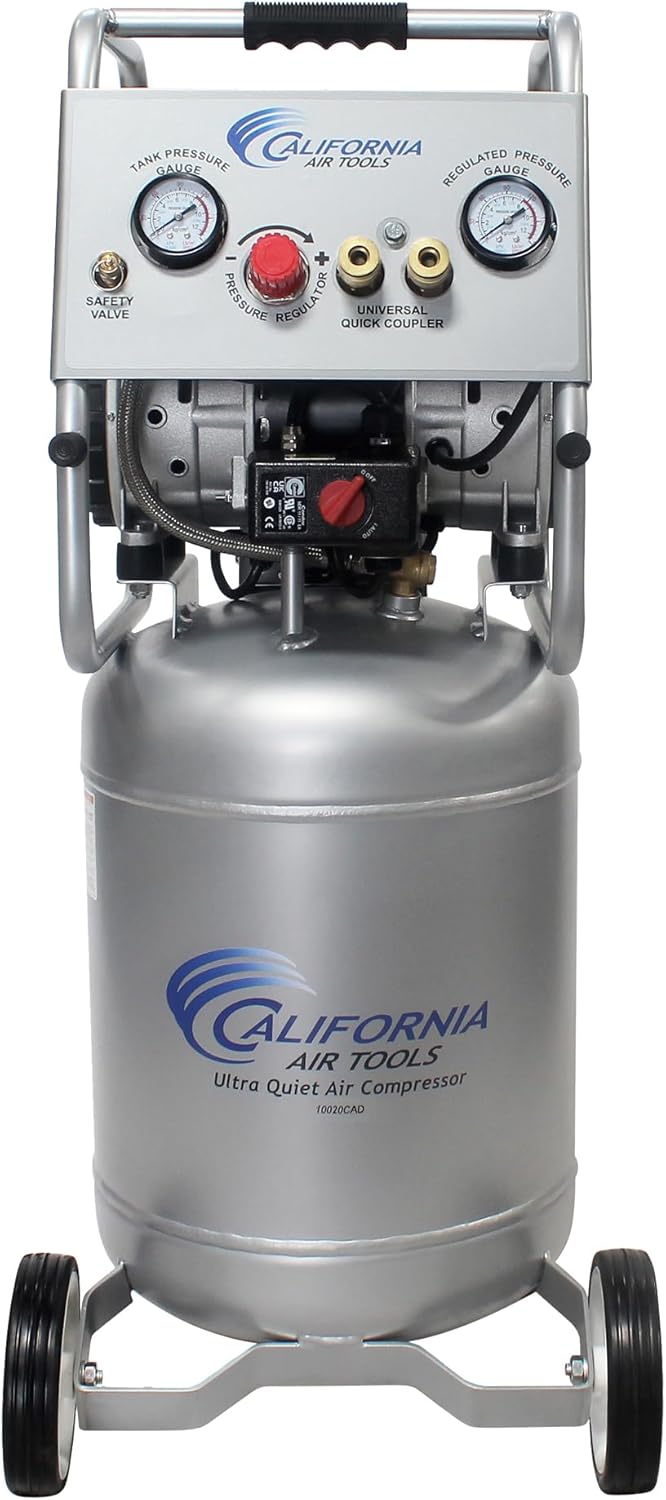
California Air Tools 10-Gal Auto Drain
- Auto drain fights condensate neglect
- Quiet enough for attached garages
- Good mid-shop moisture baseline
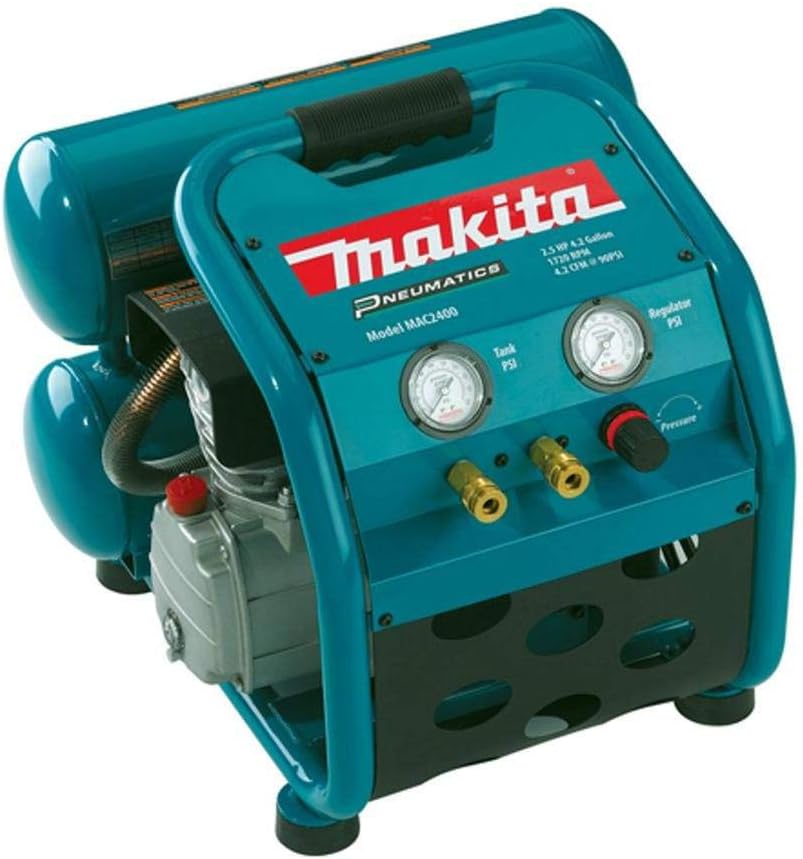
Makita MAC2400 Big Bore
- Stronger delivery for continuous tools
- Cast-iron pump for shop duty
- When CFM — not gallons — is the fix
As an Amazon Associate, TestTalkHQ earns from qualifying purchases.
Air Compressor Troubleshooting FAQ
Why does my compressor run constantly even with a large tank?
Large tanks only buffer intermittent demand. Continuous tools, leaks, or a pump below tool CFM will keep the motor loaded regardless of gallons. Cap the outlet to separate leaks from demand, then re-check CFM.
Tank gauge shows 120 PSI but my tool is weak — why?
You are reading stored pressure, not delivered pressure at the tool. Hose ID, length, quick-connects, and regulator restriction create a pressure drop under flow. Measure at the tool inlet while the tool runs.
Is draining the tank enough to stop water in my paint?
No. Draining removes condensed water in the receiver. Finish work needs a proper FRL plus coalescing filtration or a dryer sized for your SCFM, plus cool-down before the gun.
Can a bigger tank fix pressure drop on a DA sander?
Only briefly. Sanders are continuous-draw tools — once the buffer is gone, undersized CFM still loses. See Bigger Tank vs More CFM.
How do leaks show up on the cost calculator?
Leaks add runtime hours. Plug your duty and leak assumptions into the Compressed Air Cost Calculator to see why a “small” hiss becomes a real electric bill.