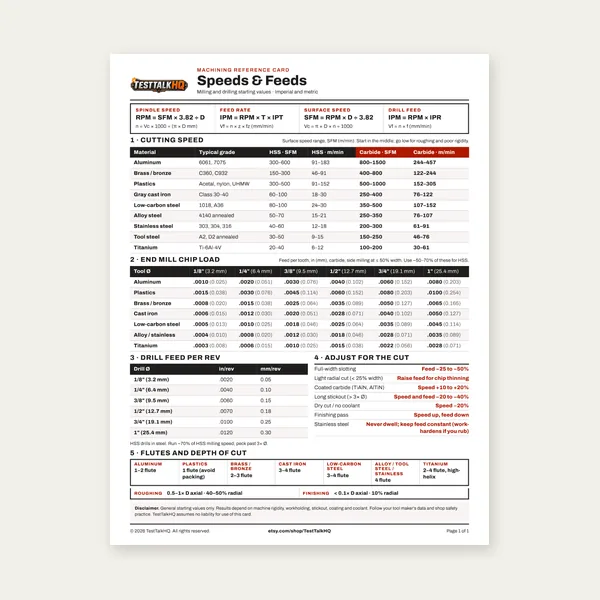
Machining Speeds & Feeds Card
One page. Speeds, chip load and drill feed, imperial and metric.
$3.99
BuyPress-brake flat patterns from BD and K
Enter material, thickness, bend angle from flat, inside radius, and outer flange lengths to get K-factor, bend allowance, outside setback, bend deduction, and flat blank length.
Also try our Bend Allowance Calculator and Press Brake Tonnage Calculator.

One page. Speeds, chip load and drill feed, imperial and metric.
$3.99
Buy
27 pages. Milling, drilling, tapping, turning and CNC routing.
$12.99
Buy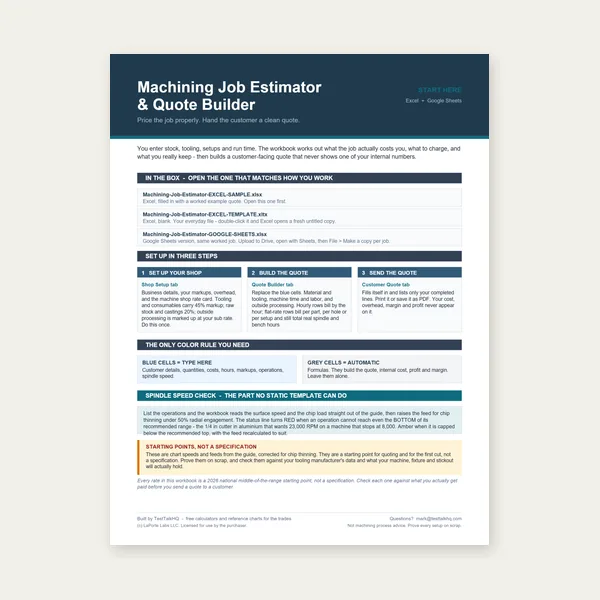
Quote shop work and check operations against your spindle's top speed.
Excel or Google Sheets. Best on a computer.
$29.00
Buy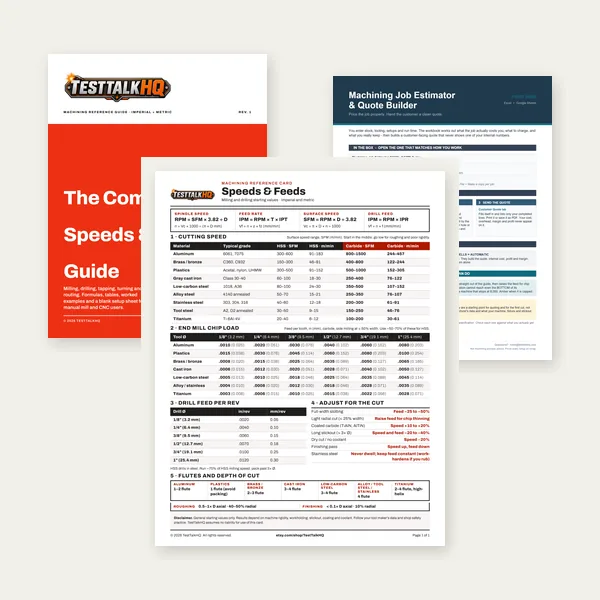
Card, 27-page guide and the estimator workbook. All six files.
Excel or Google Sheets. Best on a computer.
$34.99
$45.98 if bought separately — save $10.99
BuyCheckout opens in a new tab.
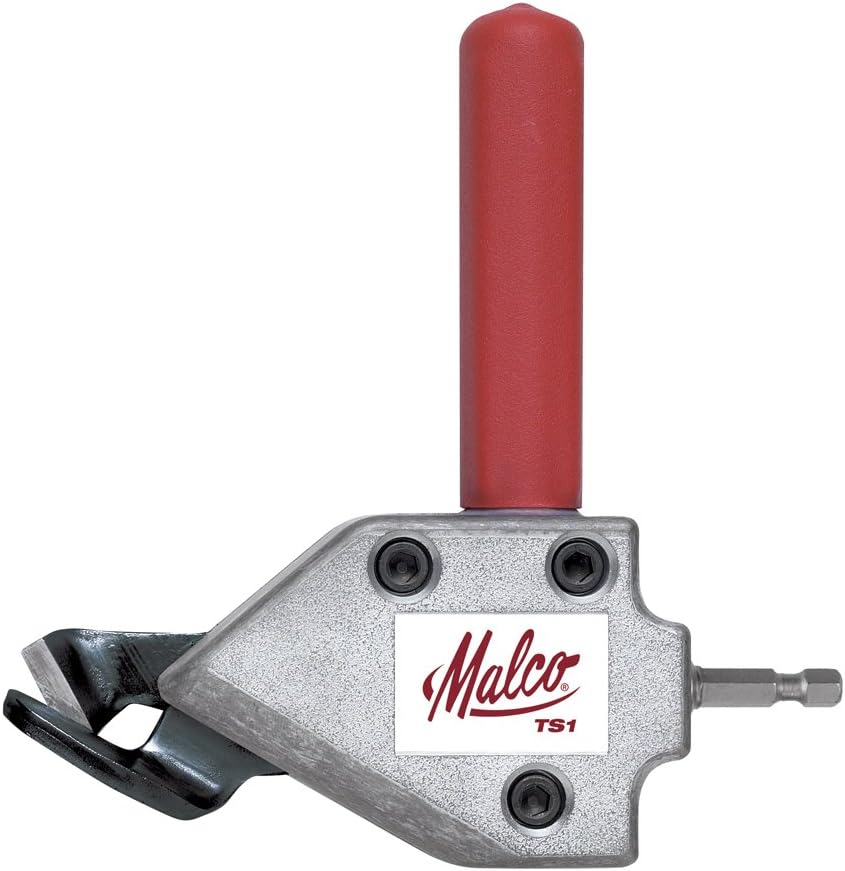
Shears, snips, and gauges that support press-brake flat patterns


As an Amazon Associate, TestTalkHQ earns from qualifying purchases.
This page focuses on the BD / K-factor workflow fabricators search for. Bend angle A is the angle from flat (90° for a right-angle flange), not the complement.
BA = (π/180) × A × (R + K × T)
OSSB = (R + T) × tan(A × π/360)
BD = 2 × OSSB − BA
Flat = L1 + L2 − BD
K-factor locates the neutral axis through the thickness (0 = inside, 1 = outside). Soft aluminum often uses a lower K than mild steel. Always prove K and BD on scrap with your die and punch set.
Also see the Bend Allowance Calculator for a BA-first workflow on the same geometry.
Finished dims wrong, cracks, springback, or short flanges: Sheet Metal Bending Troubleshooting. Additive vs subtractive flat-pattern method: Bend Allowance vs Bend Deduction — Which to Use.
Use BD when both flange lengths are outside dimensions. Use BA when you add the arc to the flange flats measured to the mold lines.