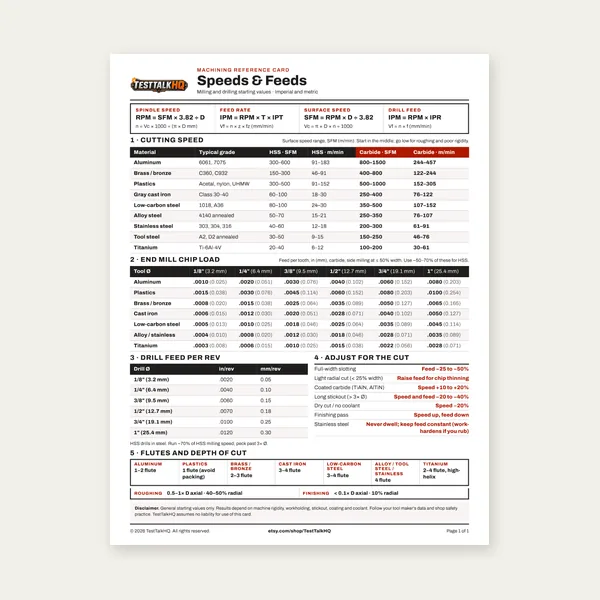
Machining Speeds & Feeds Card
One page. Speeds, chip load and drill feed, imperial and metric.
$3.99
BuyMinimum and recommended thread engagement by material and load
Calculate how deep a bolt or screw must engage in a tapped hole to resist pull-out and stripping. Enter nominal diameter, thread pitch, material, and load factor for instant results in inches and millimeters.
Pair this with our Tap Drill Size Calculator and Bolt Torque Calculator for complete fastener workflow. Browse all free calculators & tools.
One page. Speeds, chip load and drill feed, imperial and metric.
$3.99
Buy
27 pages. Milling, drilling, tapping, turning and CNC routing.
$12.99
Buy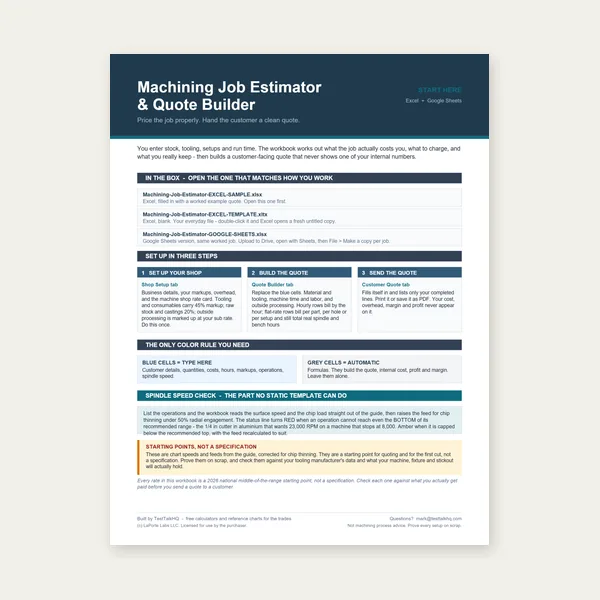
Quote shop work and check operations against your spindle's top speed.
Excel or Google Sheets. Best on a computer.
$29.00
Buy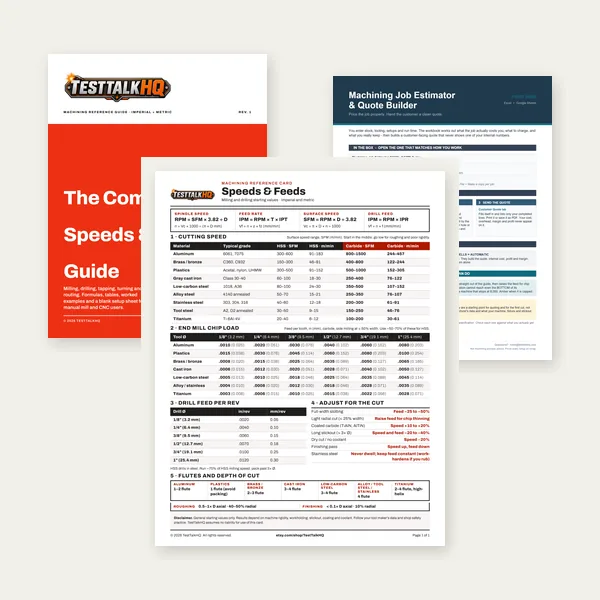
Card, 27-page guide and the estimator workbook. All six files.
Excel or Google Sheets. Best on a computer.
$34.99
$45.98 if bought separately — save $10.99
BuyCheckout opens here — you stay on this page.
Five shop essentials for verifying pitch, cutting threads, measuring depth, and identifying fasteners after you calculate engagement.
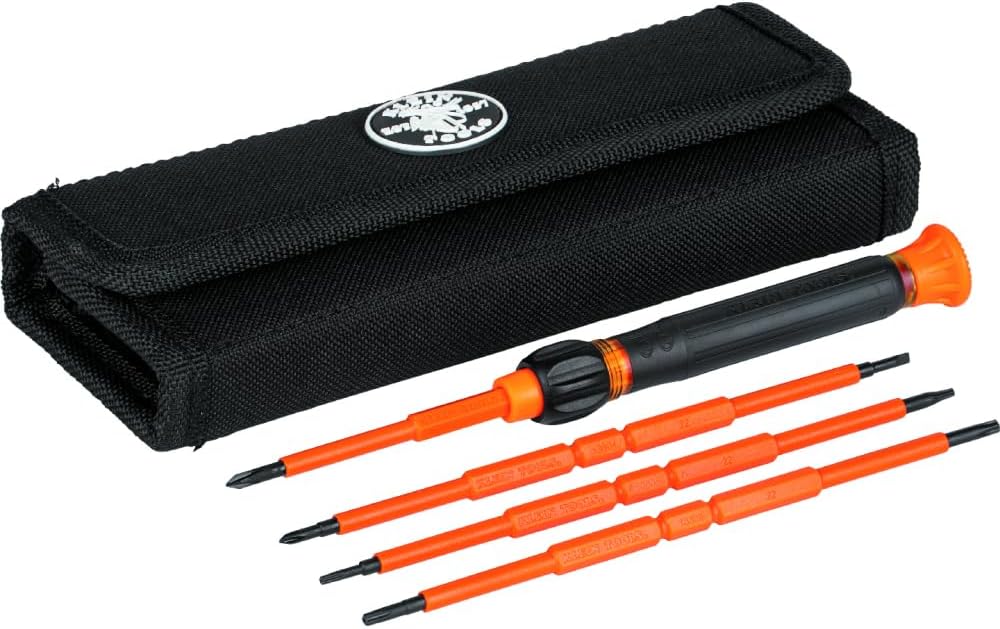
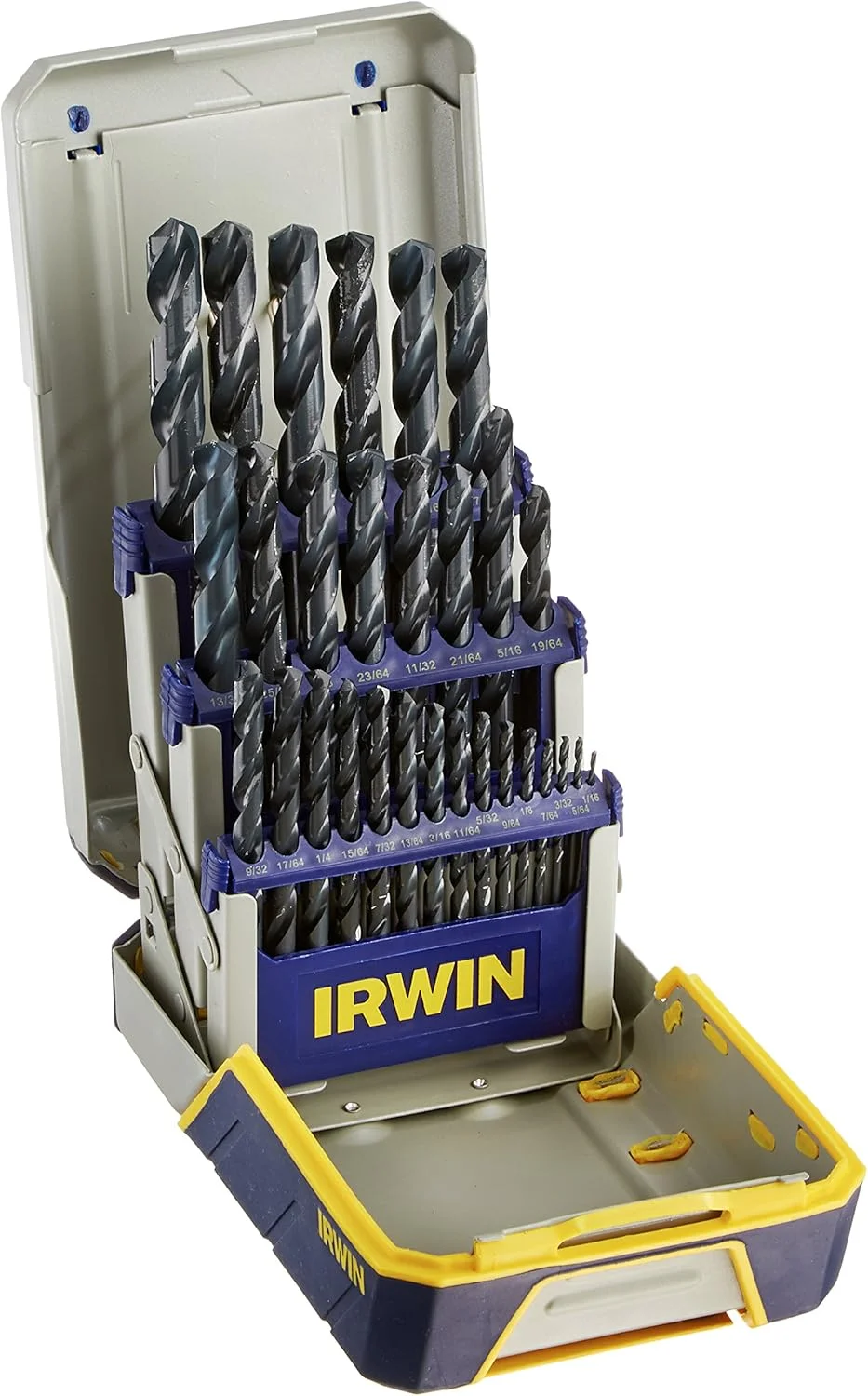

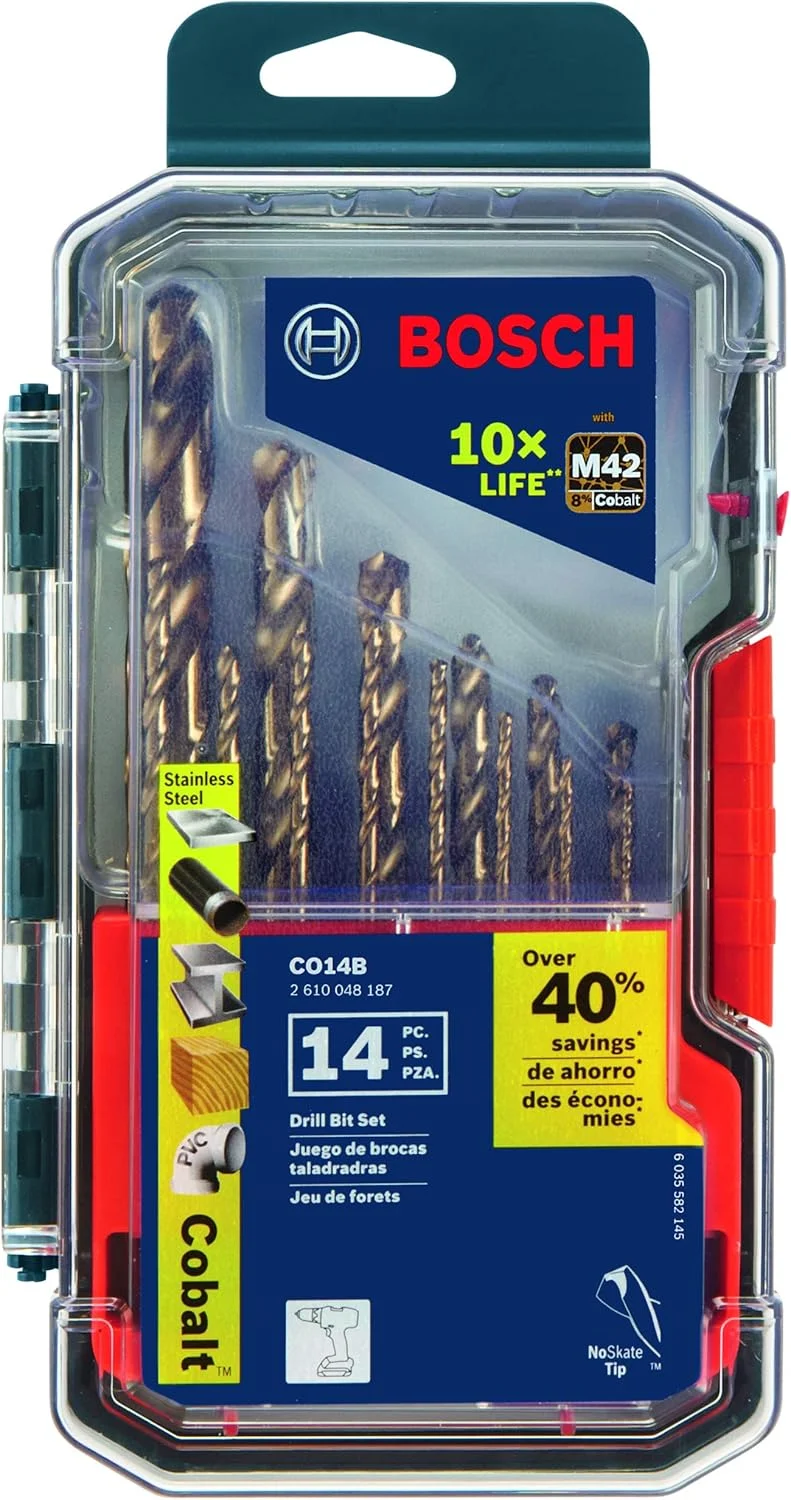
As an Amazon Associate, TestTalkHQ earns from qualifying purchases.
Thread engagement is the axial length over which a bolt or screw and a tapped hole are in threaded contact. It is measured from the first full thread at the entry of the hole to the last engaged thread — not simply how far the fastener protrudes.
Too little engagement is one of the most common causes of stripped threads and pull-out failure. When a bolt is loaded in tension, shear stress develops at the thread roots in the parent material. If the engaged length is insufficient, those threads yield or strip before the bolt reaches its rated strength.
Use this calculator to establish a defensible minimum depth before you tap, especially in blind holes where you cannot simply run the bolt deeper.
Softer and more ductile parent materials need longer engagement because the internal threads are weaker and more prone to stripping under load. Steel can often hold full bolt strength with roughly one diameter of engagement; aluminum typically needs about 1.5× diameter; plastic may require 2× or more.
Cast iron and brass fall between steel and aluminum — stronger than plastic but still more brittle or softer than hardened steel threads. Always consider the weaker member in the joint: a Grade 8 bolt in an aluminum block is limited by the aluminum threads, not the bolt.
After calculating engagement, confirm your tap drill size and apply correct bolt torque to avoid galling or over-stressing the threads during assembly.
The engagement-to-diameter ratio (Le/D) normalizes thread depth against fastener size. It is a quick sanity check that works across different diameters without memorizing inch or millimeter values for every bolt size.
Most engineers target Le/D of 1.0–1.5 for steel under standard loading. Softer materials push that ratio higher — aluminum often lands around 1.5–2.0, and plastic may exceed 2.0 for reliable joints. Because Le/D is dimensionless, you can compare a 1/4"-20 socket screw and an M10 bolt on the same scale.
This calculator reports Le/D based on the recommended engagement (minimum × 1.25 safety factor). If your measured actual engagement yields a ratio below the material guideline, consider deeper tapping, a larger diameter, or a thread insert.
Thread inserts — Helicoils, keenserts, and similar — restore or upgrade thread strength in soft or damaged parent material. They spread load over a larger area and let you achieve steel-equivalent pull-out strength in aluminum, magnesium, or plastic with shorter effective engagement.
Consider an insert when: threads have been stripped and reworked; the design calls for repeated assembly cycles; blind-hole depth cannot accommodate full engagement; or you need a stronger thread class in a lightweight part. Inserts also allow you to use standard bolt lengths instead of custom studs.
For new designs in aluminum or plastic, specifying an insert at the drawing stage often costs less than field failures and oversized tapped holes. Calculate baseline engagement here first, then consult insert manufacturer tables for the reduced depth their products allow.