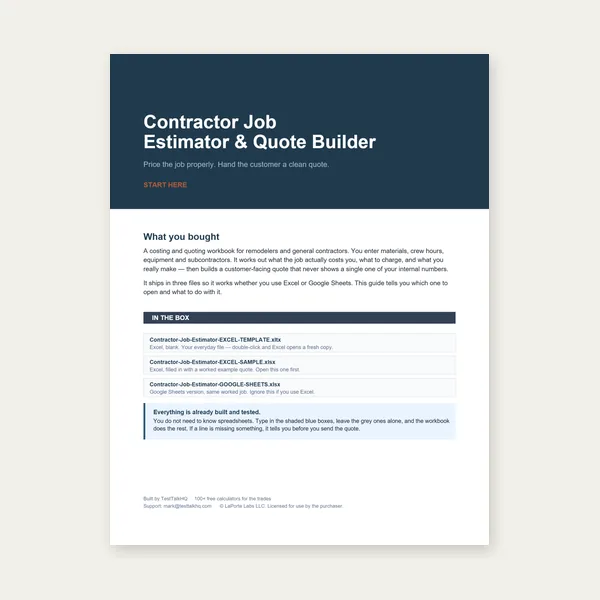
Contractor Job Estimator
$29.00
BuyFender-lip rub, strut and caliper rub, odd steering from scrub radius, and accelerated bearing wear — how to tell which one you have and what actually fixes it
Convert the wheel you have (or the wheel you are about to buy) on the offset & backspacing calculator so you know whether the inner lip moved toward the frame or the outer lip moved toward the fender. Geometry lesson: guide. Whether a spacer is the cheaper fix: comparison. Diameter rub (not offset rub): tire size mismatch.
Know which way the barrel moved. Compare stock vs proposed hub-to-inner-edge and hub-to-outer-edge before you cut or spacer.
Open Calculator →Contact is on the outboard side: fender lip, flare, liner edge, or the plastic cladding at full lock or over a bump. That is the outer lip moving out — less backspacing, more poke, usually a more-negative (or less-positive) offset than stock, a wider wheel at the same ET, or a spacer.
Confirm it. Chalk the fender lip, turn lock-to-lock on jack stands, then bounce the corner. The chalk wipe tells you height vs lock. A mark only at full bump with the wheel straight is a diameter / arch problem (see tire size mismatch), not an offset problem. A mark at lock on a stock-diameter tire is offset / width / spacer.
Fixes, in order. Remove spacers. Choose a wheel with more positive ET (more backspacing). Narrower wheel or less aggressive tire section. Last: roll or pull the fender, which is bodywork, not math.
$29.00
BuyCheckout opens here — you stay on this page.
Convert ET and backspacing first, then mock-fit. A caliper checks lip stack on a used wheel; a 1/2 in socket set and a click torque wrench put the wheel back on to spec.
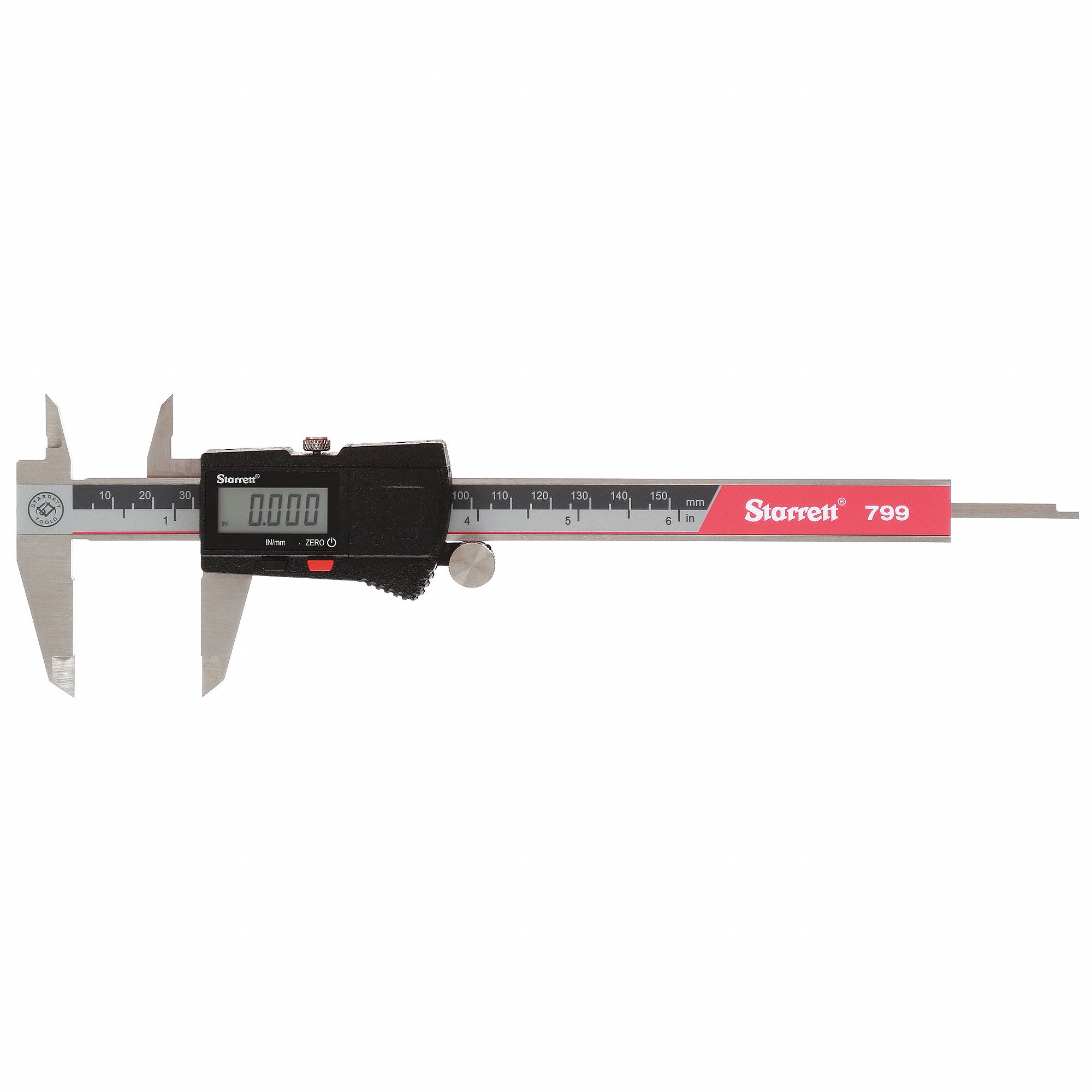
Measure lip thickness and hub-pad stack on a used wheel when the ET stamp is gone. Compare the tape backspace to the calculator before you order a replacement.
View on Amazon →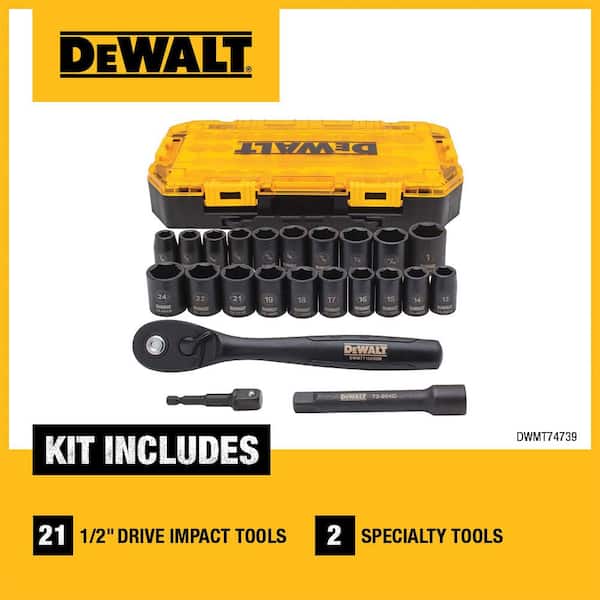
Lug nuts and hub-centric rings come off during a mock-fit. Use impact sockets on an impact, then finish to spec with a torque wrench.
View on Amazon →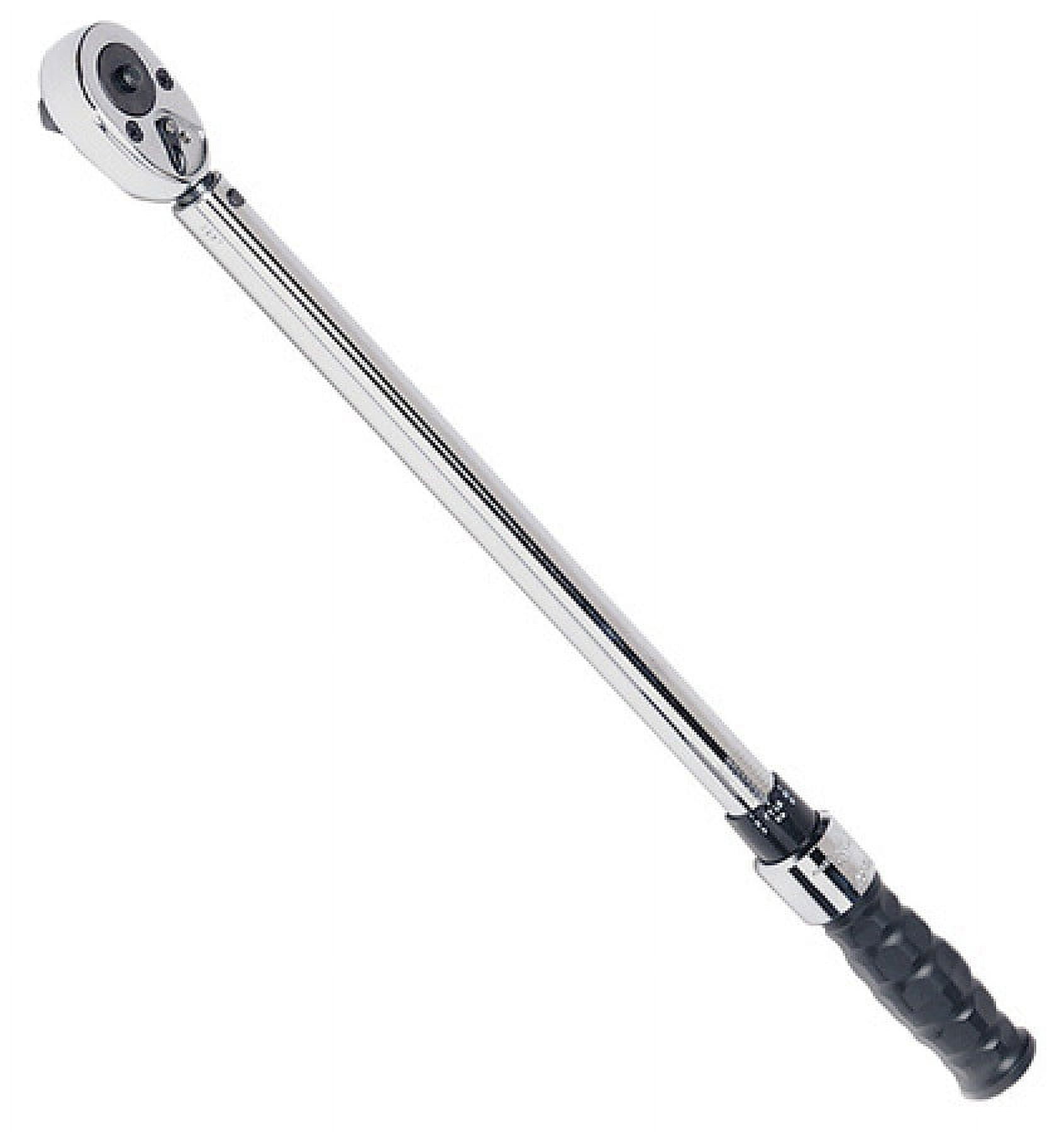
After a spacer or a new-offset wheel, lug torque is not optional. Click to the vehicle spec in a star pattern on the ground.
View on Amazon →
A new wheel often arrives with a new tire size. Diameter percent, true vs indicated speed, and the common ±3% band.
Open Tire Size Calculator →
Custom wheels on a tow vehicle still need tongue-weight discipline. 10–15% band from loaded trailer weight.
Open Tongue Weight Calculator →
Wheel offset does not raise hitch class. Leftover trailer budget after curb, passengers, and cargo.
Open Towing Capacity Calculator →As an Amazon Associate, TestTalkHQ earns from qualifying purchases.
Contact is on the inboard side: damper body, control arm, frame rail, sway-bar, or the caliper hitting a spoke. That is the inner lip moving in — more backspacing, more-positive ET, or a wider wheel whose extra width went inboard.
Confirm it. Look for witness marks on the inner barrel or the back of a spoke. Spin the wheel off the ground through the full steering arc. A caliper that clicks a spoke at one clock position is a spoke-design problem at that ET, not something a 3 mm spacer always solves.
Fixes, in order. More-negative ET (less backspacing) so the inner lip moves out. A wheel with better spoke clearance at the same ET. A thin spacer can buy caliper or strut room, but it also pokes the outer lip toward the fender and adds leverage on the bearing — that trade is the spacer vs different-offset decision, not a free lunch.
Scrub radius is the ground-level offset between the steering axis and the center of the tire contact patch. Changing wheel ET (or adding a spacer) moves that patch in or out. You feel it as torque steer on FWD, a heavier or darty wheel, and tramlining on ruts.
This is not a rub. The tire clears everything and the car still feels wrong. Compare proposed vs stock hub-to-outer-edge on the calculator. A 20 mm spacer on a FWD hatch is a different car; a 5 mm spacer on a truck that already had poke may be barely noticeable. There is no universal “safe mm” — stay near stock ET unless you are prepared to live with the steering change.
The hub bearing is designed around a load line through the tire. Poking the wheel out (spacers or more-negative ET) increases the bending moment on that bearing. The symptom is a growl that changes with speed, often worse in one direction of a slight turn, with play at the rotor if you jack the corner and rock the tire at 12 and 6 o’clock.
Offset is not the only cause (bad ABS rings, potholes, and cheap bearings exist), but a 25 mm spacer on a daily driver is a known way to shorten hub life. If you need that poke, a wheel with the correct ET and a load rating that matches the vehicle is the cleaner design. See the comparison article for stud length and hub-centric hardware if you still choose a spacer.
Squat from tongue weight changes ride height and can create arch rub that is not there unloaded. Check tongue weight on the tongue weight calculator and towing headroom on the towing capacity calculator before you order a different ET.
Some staggered setups do it on purpose. On AWD, mixed rolling diameter is a different failure (see tire mismatch). Mixed ET changes scrub front vs rear; it is a handling choice, not a calculator error.
Sometimes, if the spoke just kisses. Measure the gap. A 3 mm spacer also adds 3 mm of poke. Convert both conditions so you see the new hub-to-outer-edge before you order.