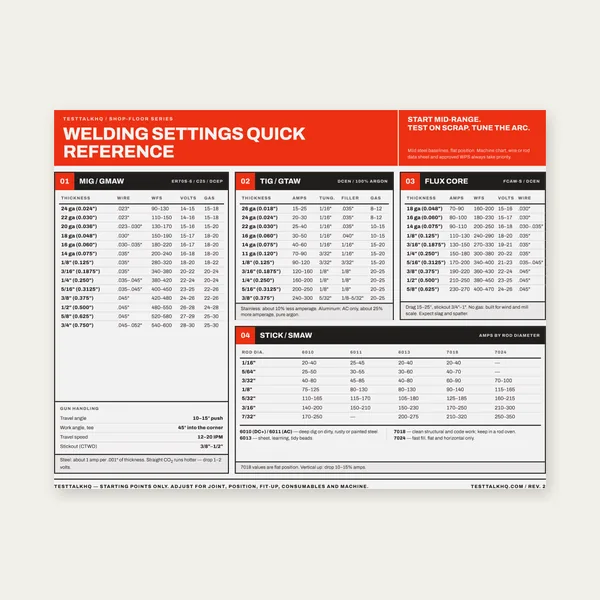
Welding Reference Card
One page. MIG, TIG, stick and flux core settings by thickness.
$3.99
BuyWhen the calculator looked profitable — but the job bled money in the shop
Use this when the Weld Cost Calculator printed a clean bid and actuals still lost money. How to set your true hourly rate, consumable markups, and profit targets live in the Weld Cost Estimation Guide. Fixed-price vs time-and-materials is covered in Fixed Bid vs Time & Materials. This page stays on diagnosis after the estimate.
Most “the calculator said we were fine” losses come from fantasy operating factor, deposition rates copied from a brochure, gas priced in the wrong units, fit-up/grind time left out of total hours, or overhead double-counted (or forgotten) against the same labor clock.
| Symptom | What it usually means | First fix | Next tool |
|---|---|---|---|
| Bid looked fat; shop hours ate the margin | Operating factor too high for the work class | Re-run OF at 20–30% job-shop / 10–20% field | Cost Calculator |
| Filler line OK on paper; spools vanish early | Deposition / efficiency inputs were optimistic | Weigh spool; match lbs/hr to measured | Deposition Rate |
| Gas cost tiny or absurd | $/ft³ vs cylinder rental / mix confusion | Convert real cylinder cost to $/ft³ at CFH | Gas Cost Calculator |
| Weld inches match; total hours don’t | Fit-up, tack, grind, wait time not in OF | Log non-arc time; lower OF or add hours | Cost Guide |
| Materials underbid only | Consumable estimate wrong (not labor) | Audit wire/rod weight methods | Wire Consumption Troubleshooting |
What it looks like: Labor in the calculator is a fraction of the invoice. Welders were “busy all day,” but arc-on time was maybe 15–25%. The bid assumed 40–50% production OF on a custom fab or field job.
Likely causes: Operating factor is arc time ÷ total paid time. Calculator defaults (often ~30%) are starting points, not guarantees. One-off fit-up, waits for inspection, and position changes crush OF without changing weld inches.
Fixes: Re-run the calculator with OF matched to work class: production fixtures 40–50%, job-shop custom 25–35%, field/repair often 10–25%. If you don’t know, time one similar job before quoting the next.
What it looks like: Filler weight on the estimate is half what left the spool. Or arc time is short on paper because lbs/hr was set to a brochure max that the machine never holds on that joint.
Likely causes: Deposition rate drives both arc time and (with efficiency) purchased filler. Default MIG “8 lbs/hr” is not your 0.030" short-circuit on thin tube. Stick efficiency ~60–70% means you buy more than you deposit.
Fixes: Measure: weigh spool before/after for a timed arc window, or use the Deposition Rate Calculator with your real wire feed / amps. Put measured lbs/hr and process efficiency into the cost calculator — don’t edit profit to hide bad inputs. Consumable-only failures: Wire Consumption Troubleshooting.
What it looks like: Gas cost is $2 on a day-long MIG job, or $400 when you meant a cylinder. Or argon mix was quoted like 100% CO₂ shop rate.
Likely causes: The calculator wants $/cubic foot at the flow (CFH) during arc time. Shops often remember cylinder rental + fill as a lump sum and type that into the $/ft³ field — or leave the default 0.15 without converting their real invoice.
Fixes: Convert: (fill cost ÷ usable cubic feet) ≈ $/ft³, then confirm CFH at the regulator. Use the Welding Gas Cost Calculator for cylinder math, then paste a realistic $/ft³ into weld cost. Stick jobs: set flow to 0 — don’t invent gas.
What it looks like: Weld inches and deposition look right. Total clock hours still blow the bid. Welders “weren’t welding” half the day — which is normal fab, not laziness.
Likely causes: The cost model’s total welding time is driven by deposition ÷ OF. If OF is set high, non-arc work is assumed small. Heavy prep, intermittent grinding, and heat waits are not free.
Fixes: Either lower OF to absorb non-arc time, or add explicit hours outside the weld model (and write them on the quote). Guide reminder for rate structure: common pricing mistakes — this page is about catching the hour leak after the fact.
What it looks like: Bid uses a fully loaded shop rate in “welder hourly” and again as “overhead $/hr.” Or the opposite: welder wage only, zero overhead, and rent/insurance vanish.
Likely causes: The calculator separates welder rate and overhead rate on purpose. If your “$85/hr shop rate” already includes burden, putting $85 + $25 overhead double-loads. If you enter wage-only with $0 overhead, you underbid.
Fixes: Pick one model: (A) wage + separate overhead, or (B) fully loaded rate with overhead ≈ 0. Document which you use. True rate building stays in the estimation guide.
What it looks like: Every rate input looked sober. Filler and hours still scaled wrong because fillet leg or total inches were optimistic (or a V-groove was entered as a fillet).
Likely causes: Cost scales with weld volume (size² × length). A 5/16" fillet instead of 1/4" is not a small bump. Counting blueprint weld symbols once but welding both sides doubles inches.
Fixes: Measure or take-off again. For volume/strength context use Joint Design and Filler Metal Weight, then re-enter length and size in the cost calculator.
Article 3: Choose contract shape before you fight the inputs — Fixed Bid vs Time & Materials for Welding.
Chart SKIPPED: Live cost-per-inch / cost-per-pound already come from the calculator; regional rate and formula tables already live in the guide. No unique 400+ word chart dataset beyond those pages.
One page. MIG, TIG, stick and flux core settings by thickness.
$3.99
Buy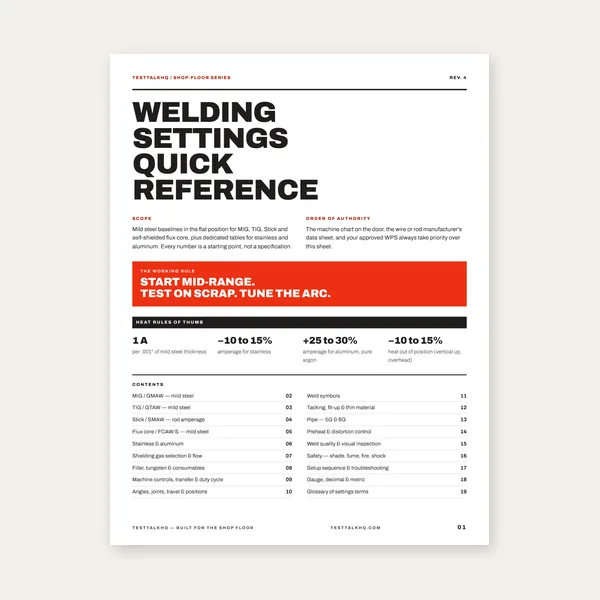
19 pages. Four processes, stainless and aluminum, symbols and inspection.
$12.99
Buy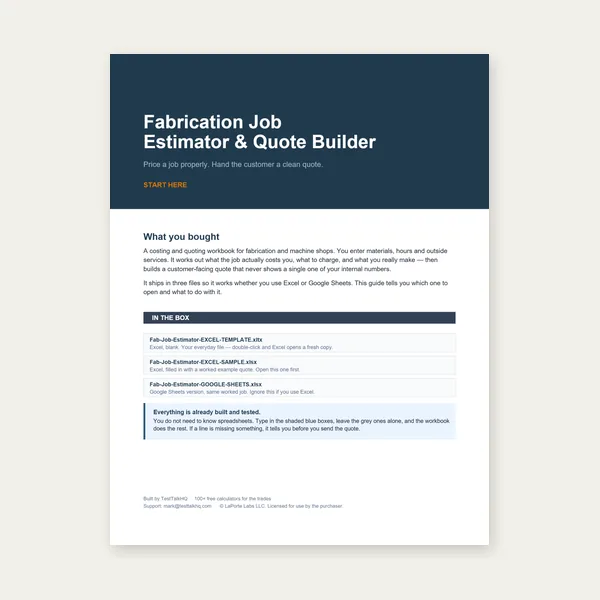
Price the job, then hand over a quote with no internal numbers.
Excel or Google Sheets. Best on a computer.
$29.00
Buy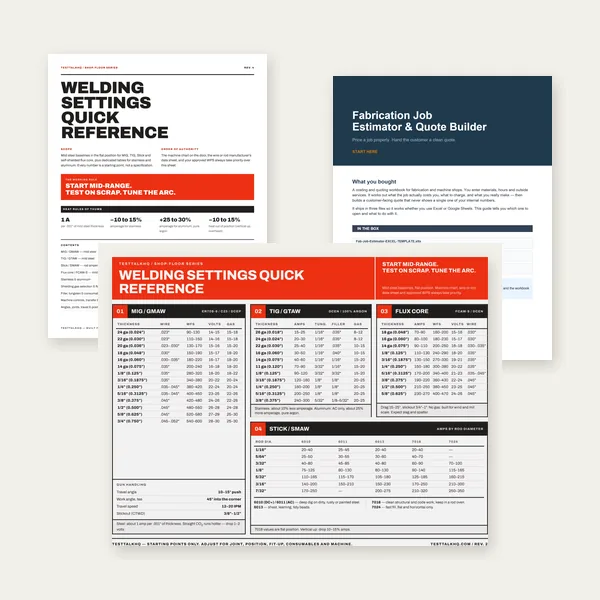
Card, 19-page guide and the estimator workbook. All six files.
Excel or Google Sheets. Best on a computer.
$34.99
$45.98 if bought separately — save $10.99
BuyCheckout opens in a new tab.
Five CSV catalog picks with verified Product Image URLs — weigh wire, control gas, and cut rework labor that blows the bid.
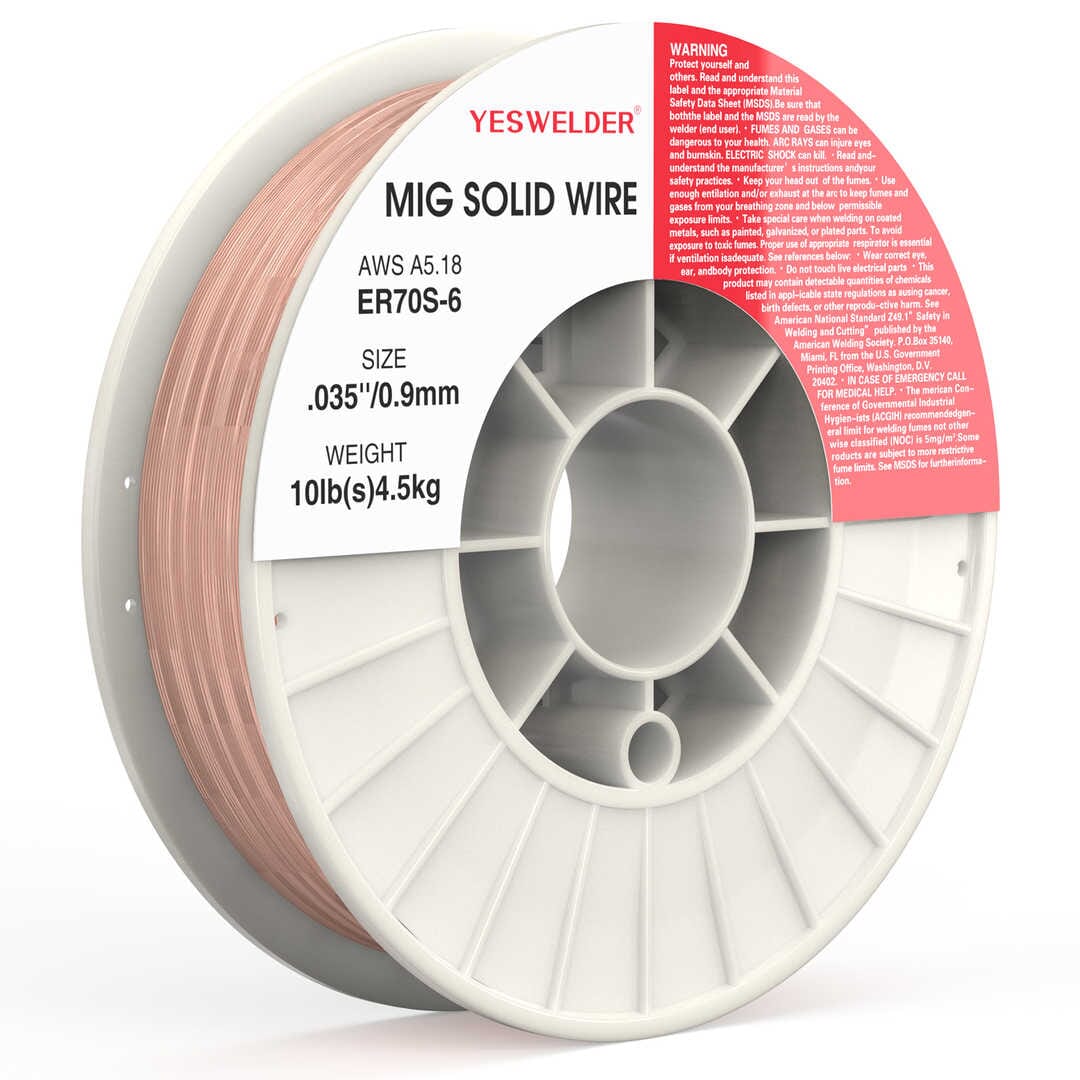
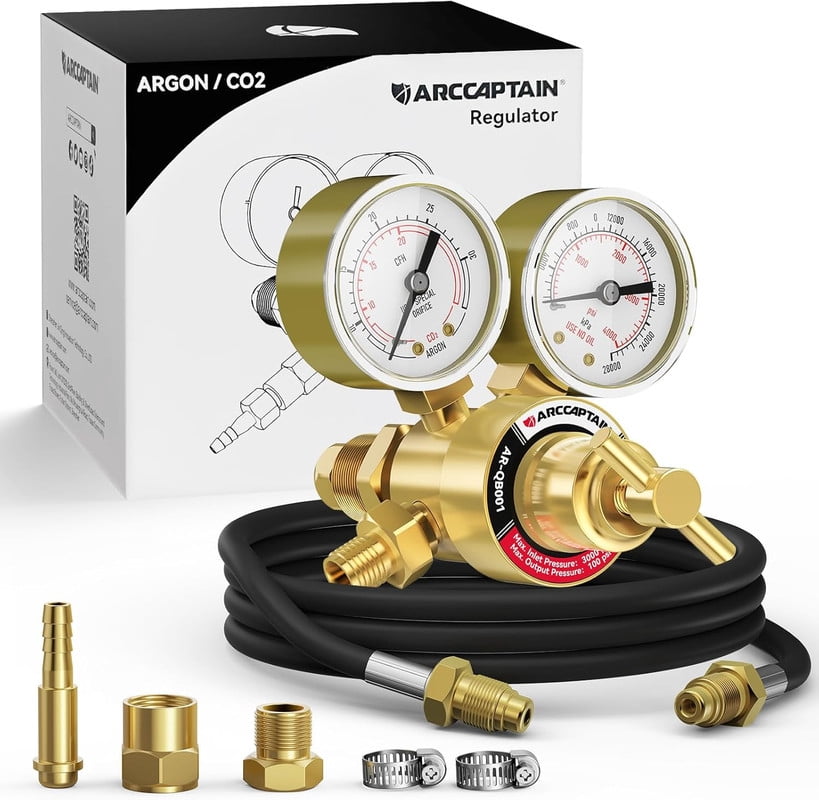
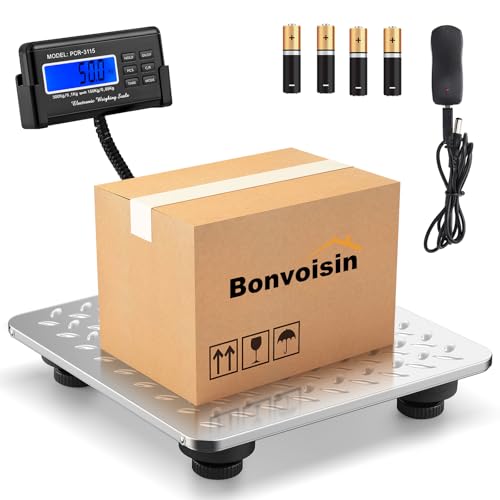
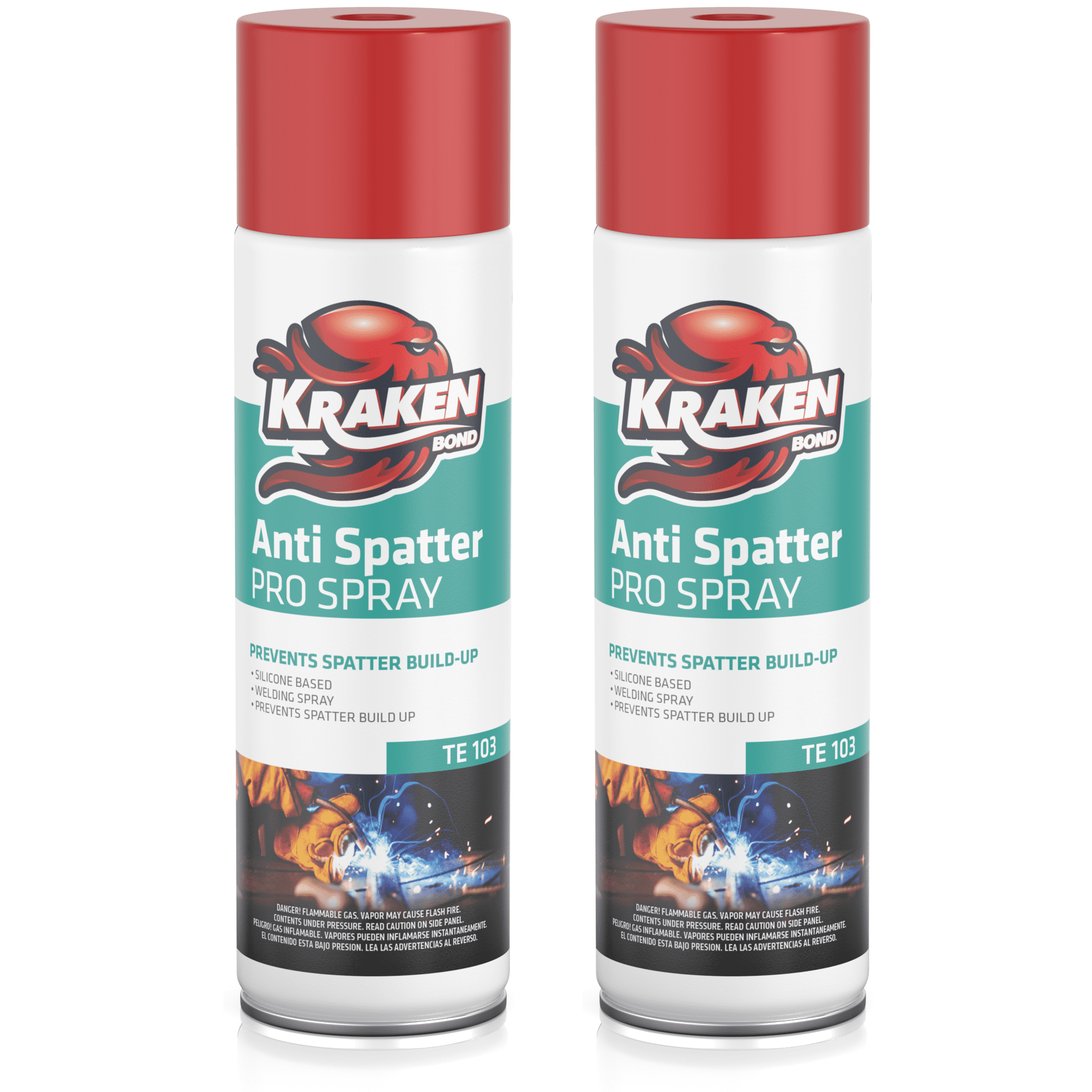

As an Amazon Associate, TestTalkHQ earns from qualifying purchases. Product images from the TestTalkHQ affiliate catalog.
Passing means the inputs are consistent with themselves. Fantasy OF, brochure deposition, wrong gas units, or missing non-arc hours still produce a clean total. Diagnose which line item failed, then re-run.
Usually no. Margin cannot fix a 12% OF job quoted at 40%. Fix inputs and contract type first; then set margin for risk.
No. That page isolates filler estimating methods and spool surprises. This page diagnoses the full bid model (labor OF, gas, overhead, geometry) after the quote.
Calculate wire feet and arc-on hours with the Wire Spool Runtime Calculator, review density and efficiency in the Wire Spool Runtime Guide, then compare changeover labor and inventory risk in 10 lb vs 33 lb Welding Wire Spools.