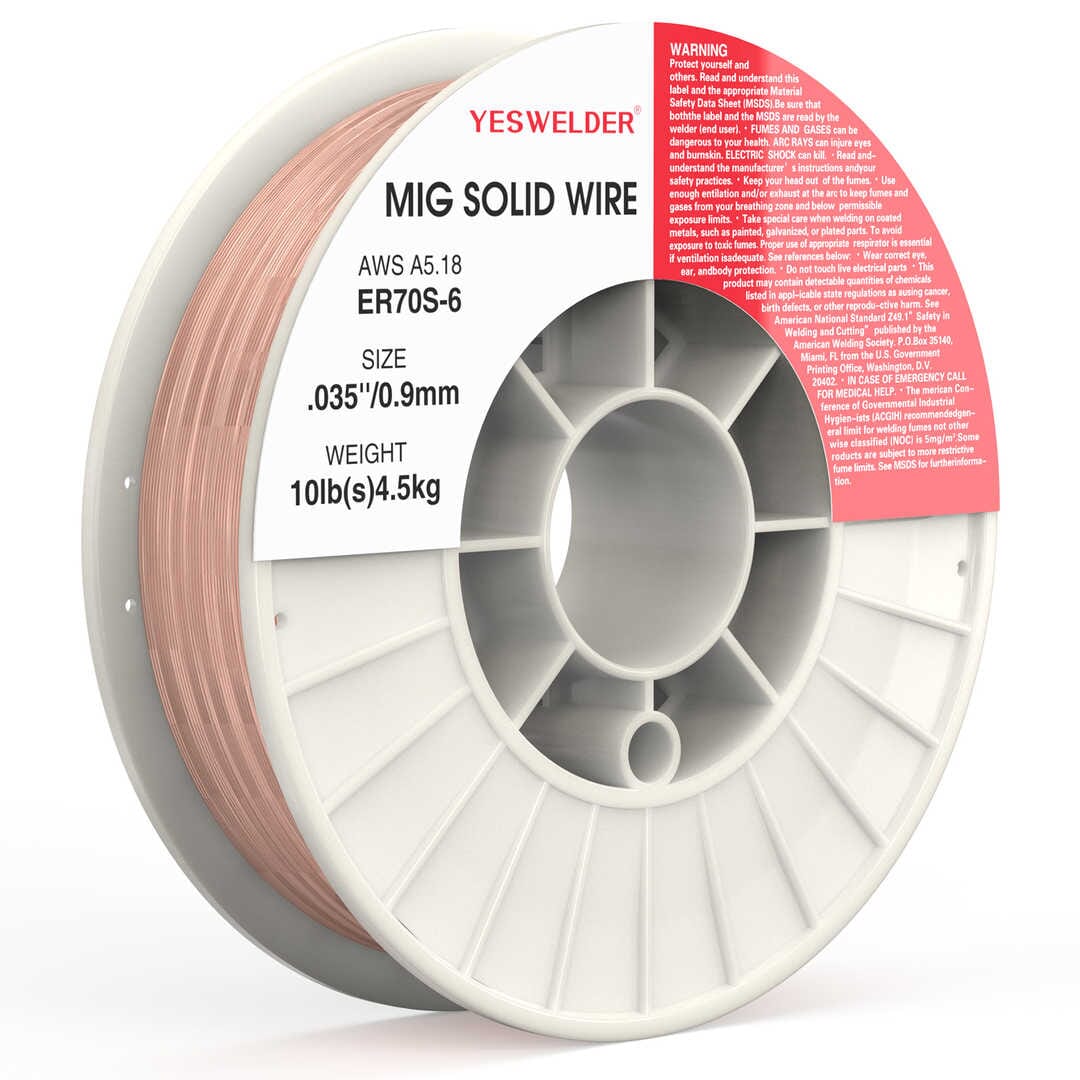
MIG Welding Wire ER70S-6 .035in 10LB Mild Steel Low Spatter
- Exact 10 lb trial baseline
- Measure pounds per shift
- Common mild-steel size
Choose package size from measured wire burn, changeover cost, feeder compatibility, and inventory turnover—not from the lowest advertised cost per pound.
First calculate actual arc-on life with the Wire Spool Runtime Calculator, then use this decision guide to choose the package that can survive your production and storage reality.
| Factor | 10–11 lb spool | 33 lb spool / larger package |
|---|---|---|
| Best fit | Job shops, hobby work, alloy changes, intermittent use | Repeat production, one wire specification, high arc-on hours |
| Changeovers | More frequent, but fast and light | About one-third as frequent at the same burn rate |
| Cash and inventory | Lower dollars tied up; easier FIFO | Lower cost/lb, but more stock exposed to demand changes |
| Contamination risk | Used sooner after opening | Longer exposure to rust, dust, humidity, and liner debris |
| Equipment | Fits most compact MIG feeders | Requires compatible hub, cabinet clearance, and drive capacity |
A 33 lb spool contains three times the net wire of an 11 lb spool at the same diameter and alloy, so its theoretical arc-on life is also three times longer. Calendar life is not three times longer unless operating factor stays constant. A manual booth that arcs only 25% of a shift can keep one large spool open for weeks.
Use actual pounds burned from weigh-back or calculate arc-on runtime from diameter and WFS. If a cell consumes 44 lb per week, 11 lb packages require roughly four spool loads while a 33 lb package requires one full change plus part of the next. If the same booth burns only 8 lb per month, the larger spool mostly increases storage exposure.
Feed-speed errors distort this decision. Verify IPM with the Wire Feed Speed to Amps Calculator, and use Weld Deposition Rate Troubleshooting when displayed WFS and weigh-back disagree.
The real changeover cost is not only the minute spent lifting a spool. It includes stopping the arc, opening the feeder, securing the loose wire end, mounting the package, routing wire through rolls and liner, trimming, purging, resetting tension, verifying feed, and sometimes making a test weld. Add retrieval and paperwork if inventory is controlled.
A larger spool wins only when avoided downtime exceeds those added costs. Do not use brochure deposition rate as shift output; apply the real arc-on fraction and validate cost assumptions with the Weld Cost Calculator.
Confirm maximum spool diameter, width, hub bore, spindle rating, brake adjustment, and door clearance in the feeder manual. Compact 120V machines commonly accept 2 or 10 lb packages but not 33 lb spools. Separate bench feeders may accept larger coils, while drums and bulk packs need dedicated dereelers and conduits.
More rotating mass changes spool braking. Too little brake can coast and bird-nest after trigger release; too much creates drag and unstable WFS. A large package does not fix poor drive-roll selection, a contaminated liner, or worn contact tips. If feed behavior changes after the swap, diagnose the path before blaming the wire.
Carbon-steel wire can rust when exposed to humidity; aluminum can pick up dust and handling damage; stainless inventory can become expensive dead stock after a procedure changes. Estimate days-open from actual pounds per shift. If a 33 lb spool remains mounted through long idle periods, the cost-per-pound discount can disappear in contaminated wire, liner wear, and rejected starts.
Small spools are usually safer when the shop alternates .030 and .035, switches ER70S-6 to stainless or aluminum, runs prototypes, or cannot dedicate a feeder. Large packages favor stable WPS families, repeat parts, climate-controlled storage, and disciplined first-in/first-out inventory.
If the package still empties earlier than planned, use Electrode & Wire Consumption Troubleshooting. That page isolates wrong diameter, efficiency, waste, pass count, and arc-on assumptions.
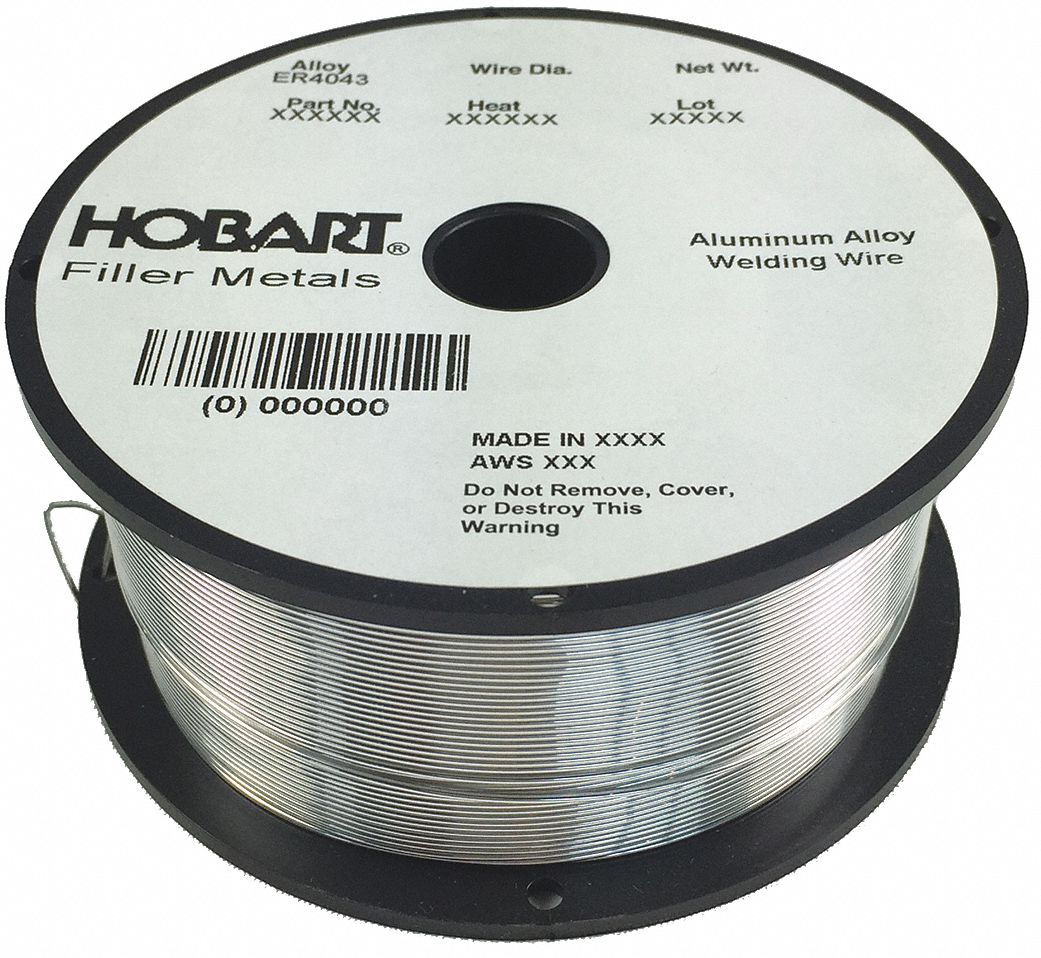
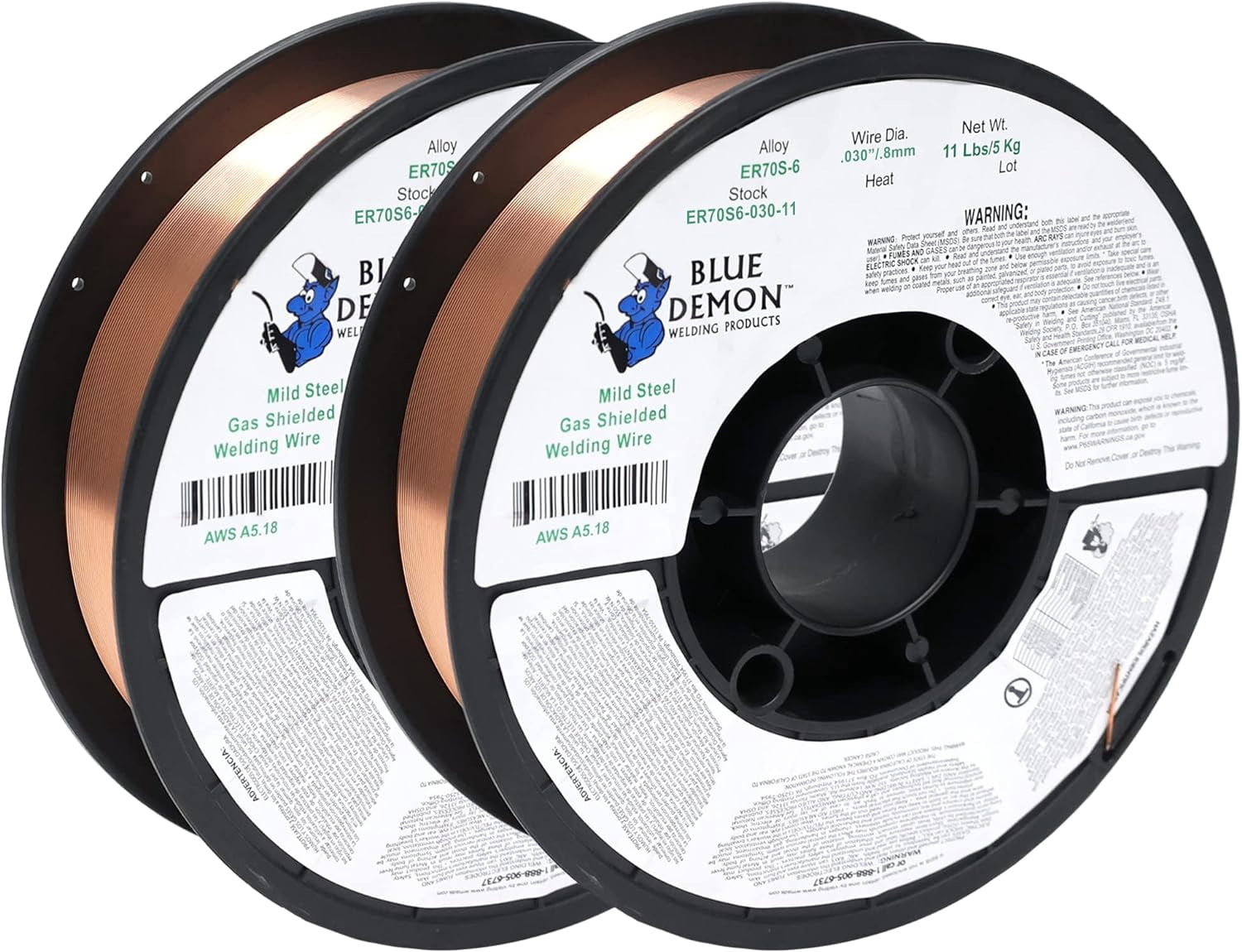
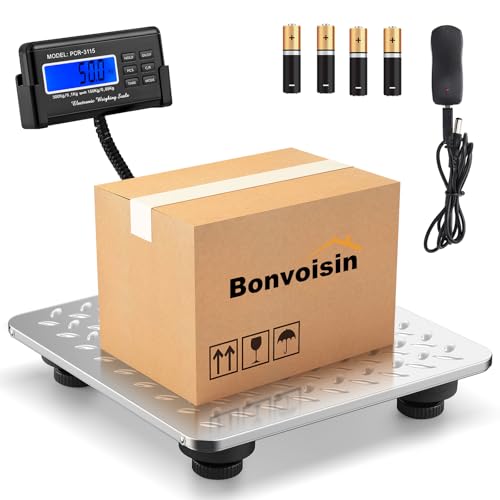
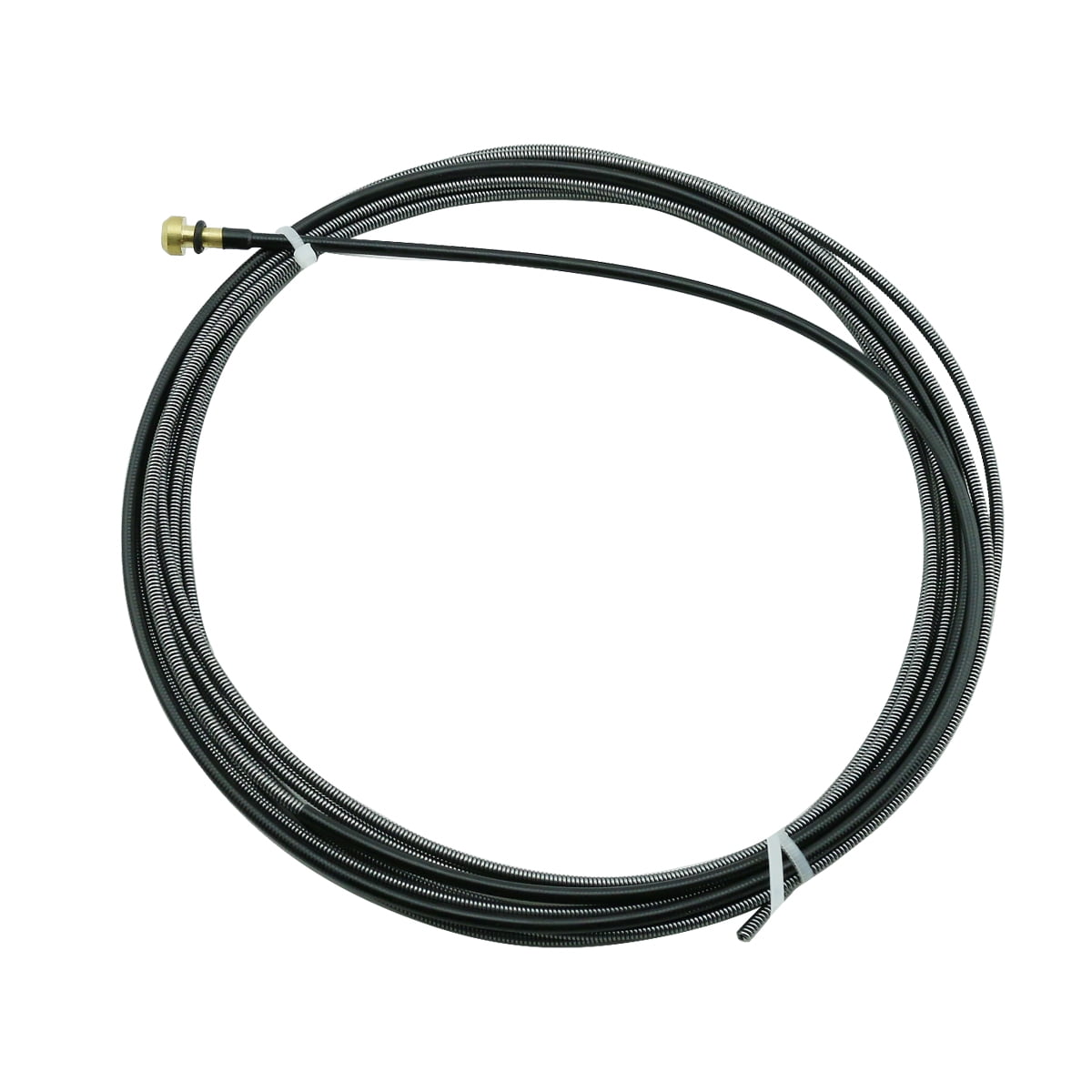
As an Amazon Associate, TestTalkHQ earns from qualifying purchases. All five names, links, and populated image URLs are exact rows from the affiliate catalog.
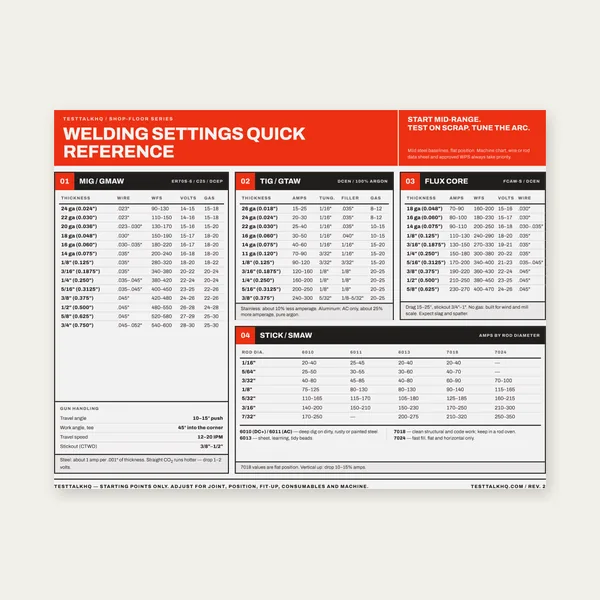
One page. MIG, TIG, stick and flux core settings by thickness.
$3.99
Buy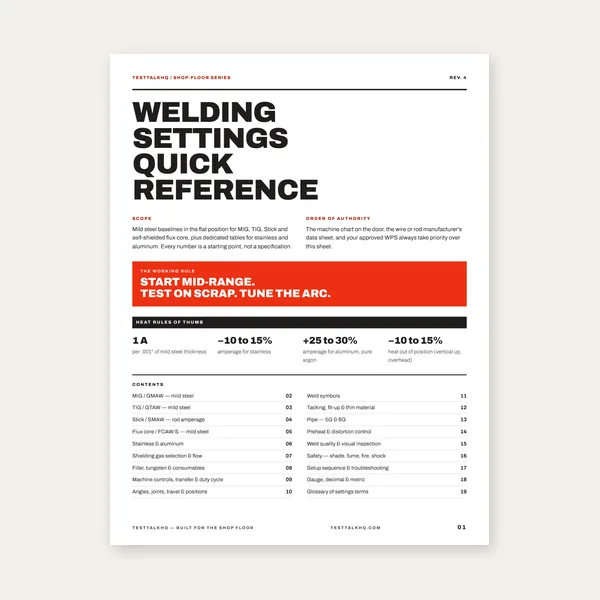
19 pages. Four processes, stainless and aluminum, symbols and inspection.
$12.99
Buy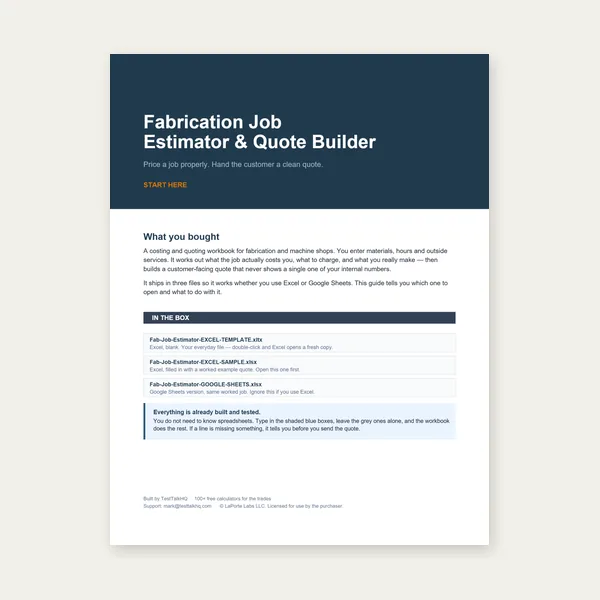
Price the job, then hand over a quote with no internal numbers.
Excel or Google Sheets. Best on a computer.
$29.00
Buy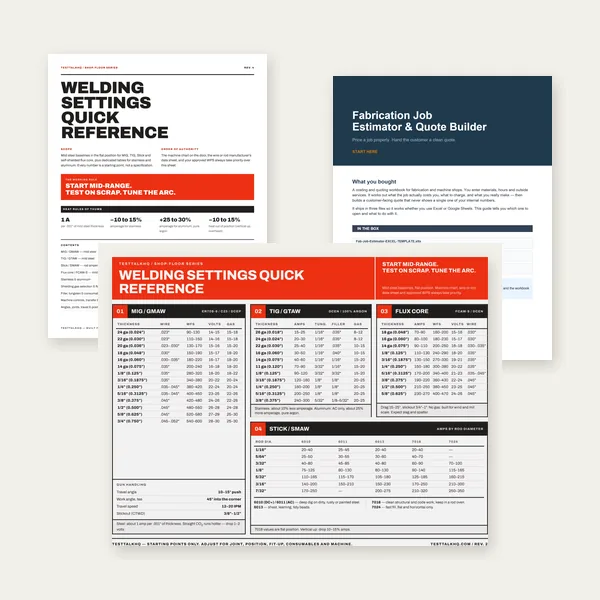
Card, 19-page guide and the estimator workbook. All six files.
Excel or Google Sheets. Best on a computer.
$34.99
$45.98 if bought separately — save $10.99
BuyCheckout opens in a new tab.