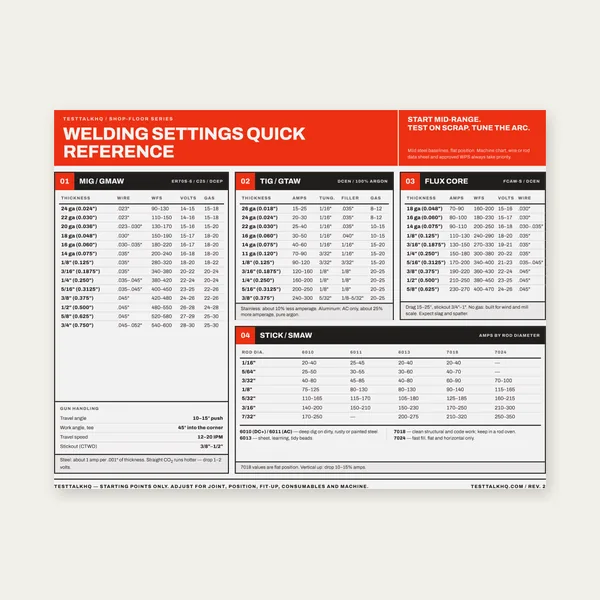
Welding Reference Card
One page. MIG, TIG, stick and flux core settings by thickness.
$3.99
BuyWhen the spool runs out sooner or later than the runtime calculator predicted
Estimate how long a spool lasts at your wire feed speed with the Wire Spool Runtime Calculator. Compare spool sizes: 10 lb vs 33 lb Welding Wire Spools. WFS changes affect runtime — see Wire Feed Speed Troubleshooting.

| Symptom | What it usually means | First fix | Next tool |
|---|---|---|---|
| Spool empty early | WFS higher than estimate or wrong spool weight | Log actual IPM; verify lb on label | Spool Runtime Calculator |
| Runtime longer than calc | Lower duty cycle or slip not feeding | Measure arc-on time; check drive | WFS Troubleshooting |
| 33 lb vs 10 lb math wrong | Used linear weight ratio without density check | Enter actual spool mass | 10 vs 33 lb Spools |
| Rusty wire, more stubbing | Consumption up from restarts | Store dry; discard damaged wire | Spool Runtime Calculator |
What it looks like: Runtime estimate based on 250 IPM but operator ran 350 IPM on thick passes; spool gone halfway through the quoted job.
Likely causes: Single WFS assumption across all passes; no duty-cycle weighting (arc-on vs total time). Pulse or dual-shield changes consumption mid-shift.
Fixes: Segment job by WFS setting; use weighted average in Wire Spool Runtime Calculator. Log arc-on time with meter if available.
What it looks like: "33 lb spool" runs like 25 lb; calculator used nominal weight but partial spool started mid-job; confused wire diameter with spool mass.
Likely causes: Spool label vs actual weigh-off; 12.5 kg vs 33 lb confusion; comparing 10 lb and 33 lb with wrong length/density factor from 10 lb vs 33 lb guide.
Fixes: Weigh spool at start; enter wire diameter and mass in calculator; read spool comparison article for size tradeoffs.
What it looks like: Flux-cored or solid wire runs out faster when rusty; more burnbacks and trim waste; birdnests discard wire.
Likely causes: Moisture on FCAW wire causes porosity retries; oxidized solid wire increases stub length; poor storage adds mechanical waste not in ideal runtime model.
Fixes: Store per manufacturer (heated cabinet for FCAW); add 5–15% waste factor to calculator input; fix feed issues on Wire Feed Speed Troubleshooting.
What it looks like: Calculator assumed 100% arc-on; real fabrication is 30% — spool lasts longer than predicted (good surprise) or opposite when fit-up ignored.
Likely causes: Runtime = wire consumed at WFS only when arc is on; total shift time ≠ arc time. Estimating from shift hours without duty factor.
Fixes: Multiply WFS runtime by arc-on percentage; time studies for production quotes.
Spool Runtime Calculator → 10 vs 33 lb Spools → WFS Troubleshooting →
One page. MIG, TIG, stick and flux core settings by thickness.
$3.99
Buy
19 pages. Four processes, stainless and aluminum, symbols and inspection.
$12.99
Buy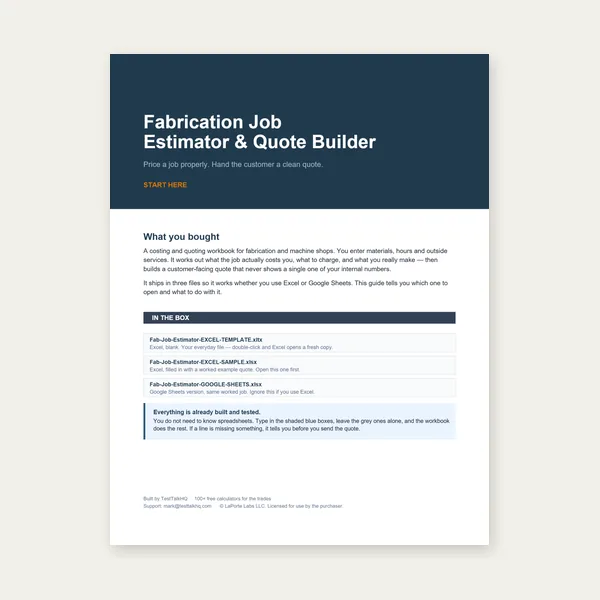
Price the job, then hand over a quote with no internal numbers.
Excel or Google Sheets. Best on a computer.
$29.00
Buy
Card, 19-page guide and the estimator workbook. All six files.
Excel or Google Sheets. Best on a computer.
$34.99
$45.98 if bought separately — save $10.99
BuyCheckout opens in a new tab.
Five CSV catalog picks with verified images — flowmeters, regulators, torch accessories, and PPE
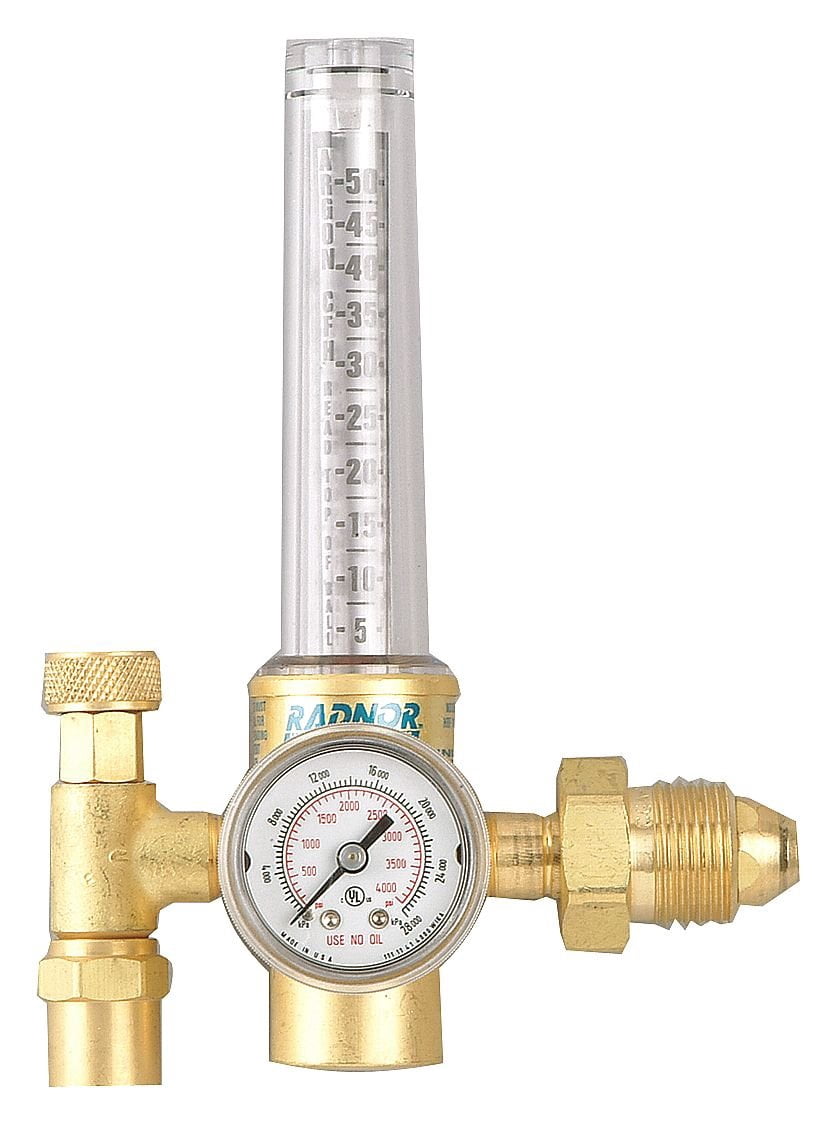
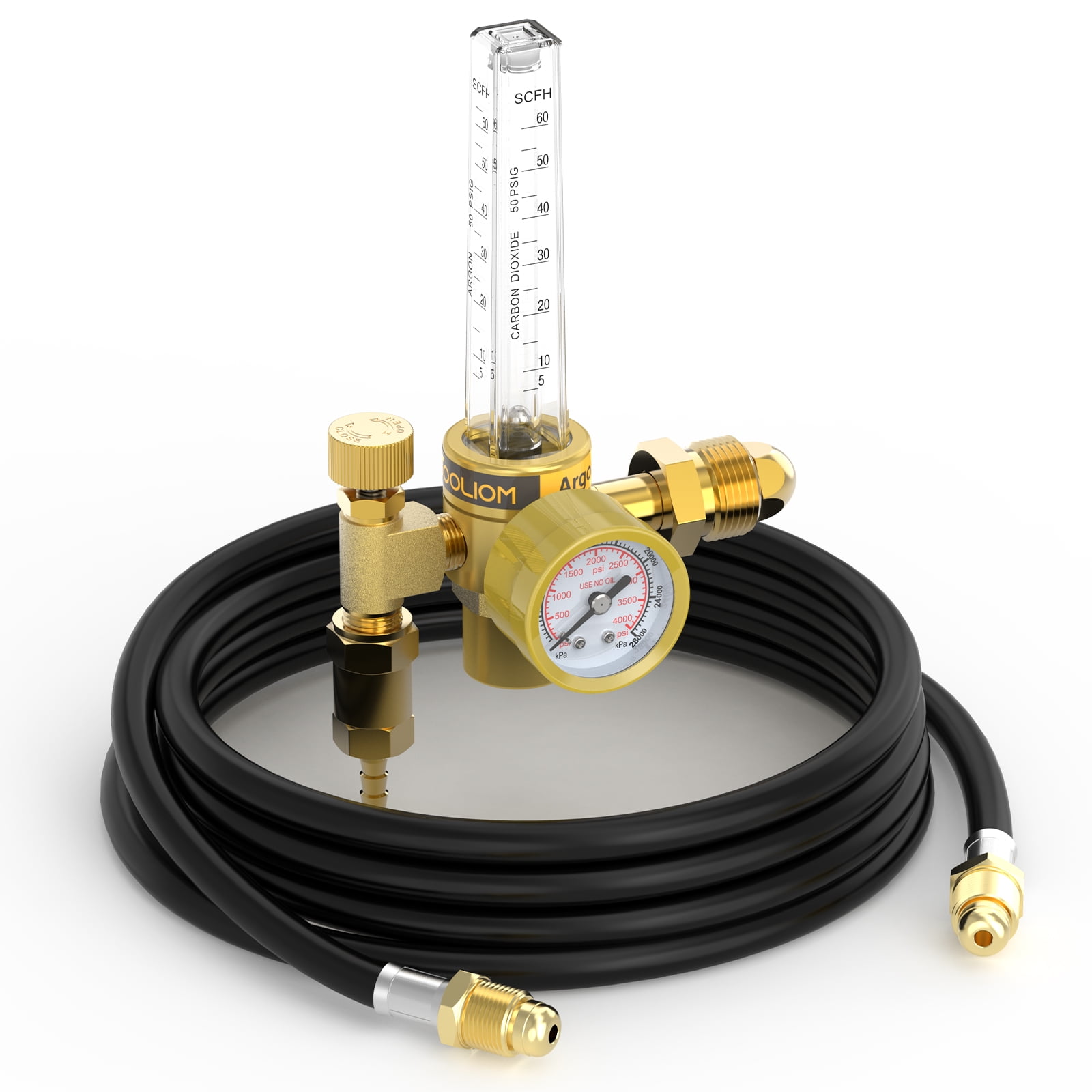
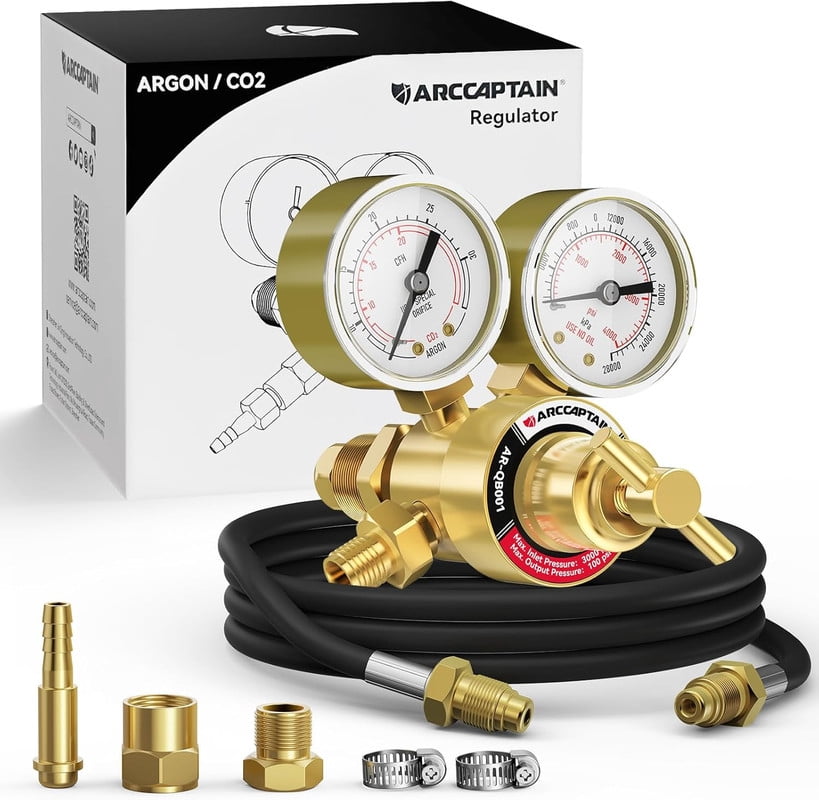
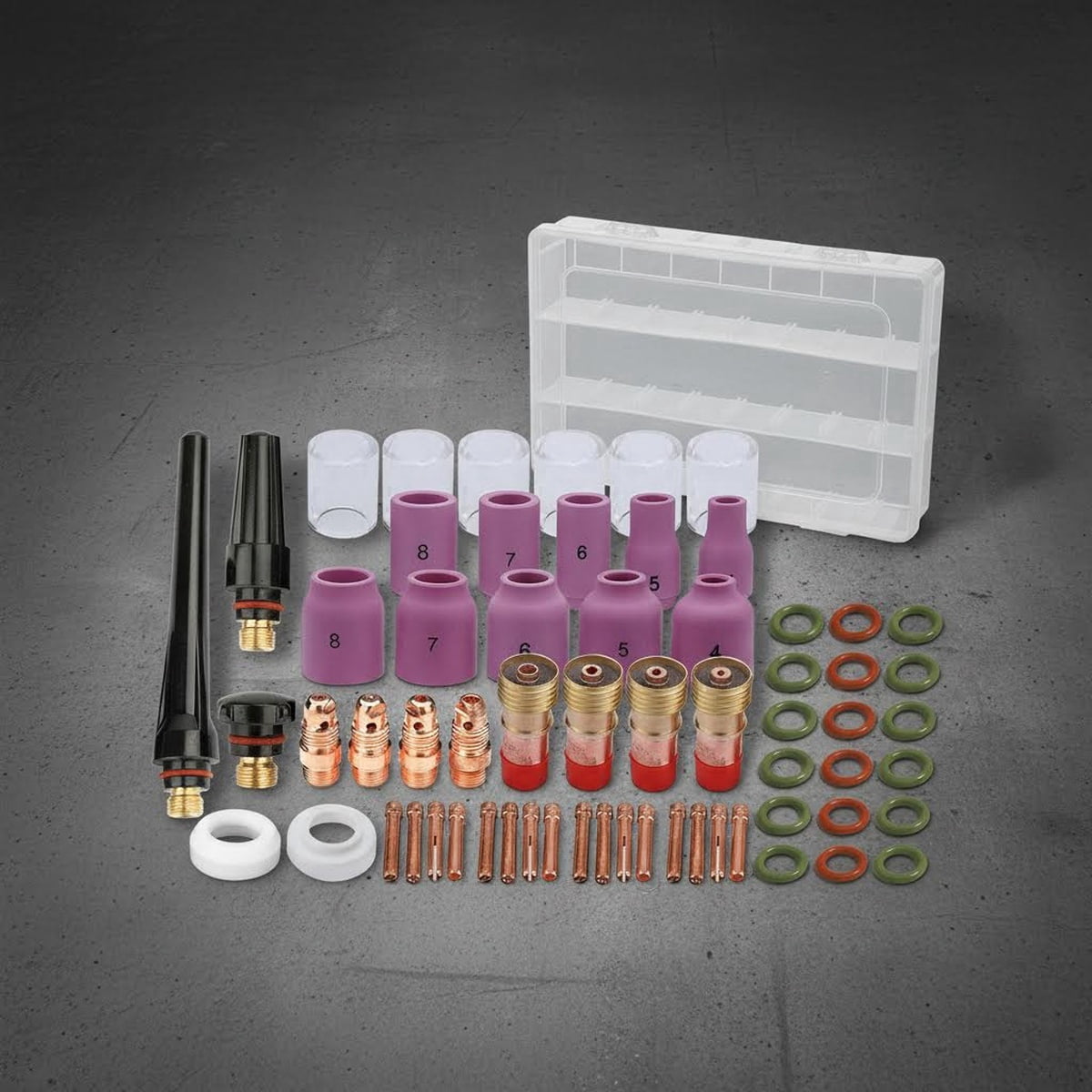

As an Amazon Associate, TestTalkHQ earns from qualifying purchases. All five cards are sourced only from the affiliate CSV with verified product images.
Usually higher actual WFS, lower starting weight, or more restarts/waste than modeled.
See 10 lb vs 33 lb Welding Wire Spools — depends on changeover vs bulk price.
Yes — only arc-on time consumes wire; fit-up time doesn't count unless you leave WFS idling.
Yes for production — stub loss, birdnest trim, and test coupons add 5–15% typically.