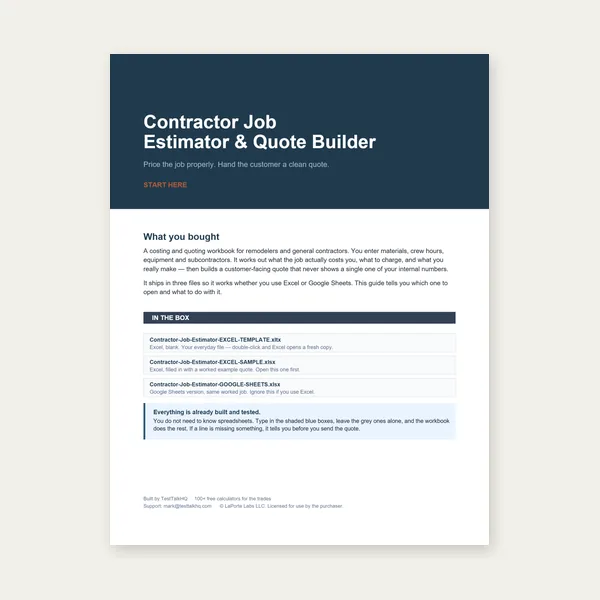
Contractor Job Estimator
$29.00
BuyGVWR, curb weight, tongue weight, and the formula that keeps people from confusing payload with towing capacity
Payload is what the vehicle can still carry after its own curb weight. Towing capacity is a different rating. Run your numbers in the payload capacity calculator. Compare the two ratings in payload vs towing capacity. If the truck already squats with no trailer, see overloaded payload troubleshooting. Automotive index: hub.
Run the formula with your sticker numbers.GVWR, curb, people, cargo, and tongue weight (0 if not towing).
Open Payload Capacity Calculator →Gross Vehicle Weight Rating (GVWR) is the maximum allowed weight of the vehicle itself plus everything added to it: passengers, cargo in/on the vehicle, and trailer tongue weight when you are towing. It is not “how much you can put in the bed” by itself, and it is not towing capacity.
Find GVWR on the driver’s door jamb sticker (Certification / Tire and Loading Information label). Owner’s manuals and OEM tow guides repeat it. Do not invent it from a sales brochure “max payload” marketing line without checking the sticker for your VIN/build.
Curb weight is the fueled vehicle with standard equipment, no passengers, no cargo. OEM curb figures are useful for planning. They are not always accurate to your specific build: bed length, cab style, 4WD, diesel, sunroof, winch bumper, and aftermarket armor all move the number.
The door sticker shows GVWR. It does not reliably show your true curb weight. For a real empty number, weigh the truck empty (or nearly empty) on a CAT scale or similar certified scale. That empty weigh is the curb figure you should trust for available-payload math.
Plug your own numbers into the payload capacity calculator. For the GCWR / trailer-budget side of the same trip, use the towing capacity calculator.
Trailer tongue weight feels like a “towing” number. Mechanically, it is a downward force on the hitch that the tow vehicle has to carry. That force is part of the vehicle’s gross weight. It counts against GVWR / payload, not only against GCWR / towing capacity.
This is how people get into trouble: the brochure tow rating still looks fine, GCWR headroom looks fine, and the truck is already over payload because passengers + bed cargo + tongue weight ate the GVWR budget. Symptoms show up as rear squat, high headlights, soft steering, and longer stops — even when the trailer itself is “within” the advertised tow number.
Measure tongue weight (scale or lever method). Feed that number into this payload math. Companion tools: tongue weight calculator and incorrect tongue weight troubleshooting. Hardware near capacity: WD vs standard hitch.
Spec sheets are planning. Scales are proof.
You do not need a perfect lab setup to catch an obvious overload. If the loaded truck alone is already over GVWR before the trailer mass is considered, unload. For GCWR-side symptoms while hitched (sway, transmission heat), use overloaded tow vehicle troubleshooting — that page is about combined weight, not bed-only payload.
Usually it is derived that way for a specific configuration, often assuming a light driver. Your actual remaining payload shrinks with real passengers, options, and tongue weight. Recalculate for the trip you are taking.
Curb weight is typically a fueled vehicle. Do not subtract a “full tank” again as cargo.
Enter tongue weight as 0. You can still overload payload with bed cargo alone — that is the most common real-world case on the troubleshooting page.
$29.00
BuyCheckout opens here — you stay on this page.
Payload math is only useful if you can weigh what is actually on the truck. Scale the tongue, weigh bed cargo, chock before you jack, and keep extinguisher and brake-check tools in the cab when the truck is loaded hard.

Tongue weight presses through the hitch onto the tow vehicle and counts against GVWR/payload. Weigh the loaded coupler instead of guessing.
View on Amazon →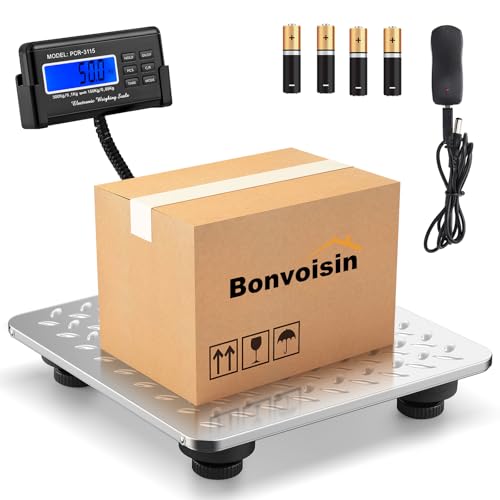
Weigh toolboxes, coolers, generators, and other bed cargo before you stack them. Spec-sheet curb weight is not a CAT-scale ticket.
View on Amazon →
Chock before you drop a coupler, shift bed cargo, or jack for a load move. A rolling trailer or truck is a crush hazard and a bad reading.
View on Amazon →
Overloaded trucks run hotter brakes and bearings. Keep a rated extinguisher in the cab, not buried under cargo.
View on Amazon →
Payload overload lengthens stops even with no trailer. Measure lining before you blame “just hills” or soft pedal feel.
View on Amazon →
Available payload remaining = GVWR − curb − passengers − cargo − tongue weight. Over GVWR gets a hard warning.
Open Payload Capacity Calculator →As an Amazon Associate, TestTalkHQ earns from qualifying purchases. Product links are from the live TestTalkHQ affiliate CSV only.