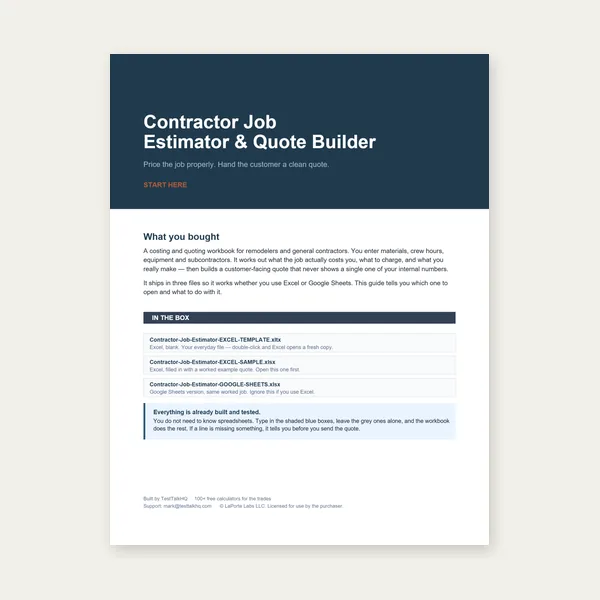
Contractor Job Estimator
$29.00
BuyGVWR / payload overload symptoms — including overloaded truck beds with zero trailer attached
This page is about exceeding GVWR / payload. That can happen with no trailer at all. If you are actively towing and seeing trailer sway, brake fade under tow, or transmission overheating on grades, see overloaded tow vehicle troubleshooting instead — that page covers GCWR / combined-weight problems while hitched. Run the numbers first: payload capacity calculator. Definitions: guide. Automotive index: hub.
Confirm you are over GVWR before you chase parts.Available remaining goes negative when passengers + cargo + tongue exceed payload.
Open Payload Capacity Calculator →Payload / GVWR overload is about mass on the vehicle: people, bed/cab/roof cargo, and tongue weight. It shows up in normal driving. An overloaded truck bed with no trailer is the most common case.
Towing / GCWR overload is about the combined weight of vehicle + trailer. Classic signs while hitched: trailer sway, transmission heat on grades, brake fade under tow. Use that page when the trailer is part of the story.
You can be under advertised towing capacity and still be over payload. Walk that trap in payload vs towing capacity.
Symptom: The rear sits down, fender-to-tire gap shrinks, suspension looks compressed even parked. Sometimes the bump stops are already kissing.
Why it fails: Extra mass on the rear axle (bed cargo, tongue weight, or both) exceeds what the springs were carrying at curb. You are using up suspension travel before you hit the first bump.
Diagnose: Compare empty vs loaded photos. Run the payload calculator. If you are towing and squat is mostly tongue-driven, also check incorrect tongue weight.
Fix: Remove or redistribute cargo forward. Reduce tongue weight (move trailer cargo). A weight-distribution hitch only helps when towing — see WD vs standard hitch. It does not invent GVWR capacity for a bed full of concrete bags.
Symptom: Light front end, wander in crosswinds, more steering correction on the highway. Worse when the bed is loaded.
Why it fails: Rear bias unloads the front axle. Less front tire normal force means less steering feel and less front braking share.
Diagnose: Does it clean up when you unload the bed? If yes, it is load distribution / GVWR, not a failing rack. Confirm with scale or calculator math.
Fix: Unload. Do not “fix” it with loftier tire pressure alone. Pressure cannot replace staying under GVWR and GAWR.
Symptom: Grocery-run brakes feel fine empty; the same truck needs more pavement when the bed is full. No trailer required.
Why it fails: Kinetic energy scales with mass. Soft front axle from rear squat also hurts brake balance. Pad heat builds faster.
Diagnose: Measure lining with a gauge if fade shows up. Pair a speed check with the stopping distance calculator so you stop treating the new distance as normal. Then re-run payload math.
Fix: Unload first. Inspect pads/rotors second. More aggressive pads do not excuse an over-GVWR truck.
Symptom: Rear tires wear faster or cup/shoulder more on the loaded axle. Sidewalls look rolled when parked loaded.
Why it fails: Overload and under-inflation (relative to the load) cook the rear tires. GVWR and tire load ratings are separate ceilings — both matter.
Diagnose: Cold pressures against the door sticker for the load you carry. Check remaining payload. Inspect for overload bulges.
Fix: Unload to rating. Inflate to the placard for the load. Replace damaged tires — do not keep rolling a carcass that already took an overload cycle.
Symptom: Oncoming drivers flash you after you load the bed or hook a tongue-heavy trailer. Empty, the aim looked fine.
Why it fails: Rear squat pitches the nose up. The lamps follow the body.
Diagnose: Park loaded vs empty against a wall. If aim rises with load, fix the load (or WD hitch when towing), not just the adjusters.
Fix: Reduce rear mass or redistribute. When towing near capacity, WD hardware may level the truck — it still does not raise GVWR. Comparison: WD vs standard hitch.
Done diagnosing?Confirm available remaining, then fix the load before you buy hardware.
Payload Capacity Calculator →$29.00
BuyCheckout opens here — you stay on this page.
Payload math is only useful if you can weigh what is actually on the truck. Scale the tongue, weigh bed cargo, chock before you jack, and keep extinguisher and brake-check tools in the cab when the truck is loaded hard.
Tongue weight presses through the hitch onto the tow vehicle and counts against GVWR/payload. Weigh the loaded coupler instead of guessing.
View on Amazon →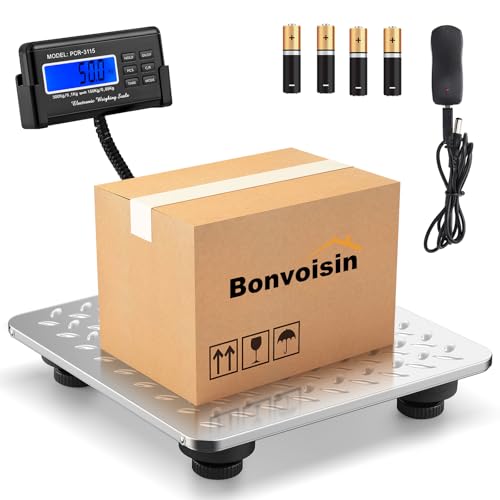
Weigh toolboxes, coolers, generators, and other bed cargo before you stack them. Spec-sheet curb weight is not a CAT-scale ticket.
View on Amazon →
Chock before you drop a coupler, shift bed cargo, or jack for a load move. A rolling trailer or truck is a crush hazard and a bad reading.
View on Amazon →
Overloaded trucks run hotter brakes and bearings. Keep a rated extinguisher in the cab, not buried under cargo.
View on Amazon →
Payload overload lengthens stops even with no trailer. Measure lining before you blame “just hills” or soft pedal feel.
View on Amazon →
Available payload remaining = GVWR − curb − passengers − cargo − tongue weight. Over GVWR gets a hard warning.
Open Payload Capacity Calculator →As an Amazon Associate, TestTalkHQ earns from qualifying purchases. Product links are from the live TestTalkHQ affiliate CSV only.