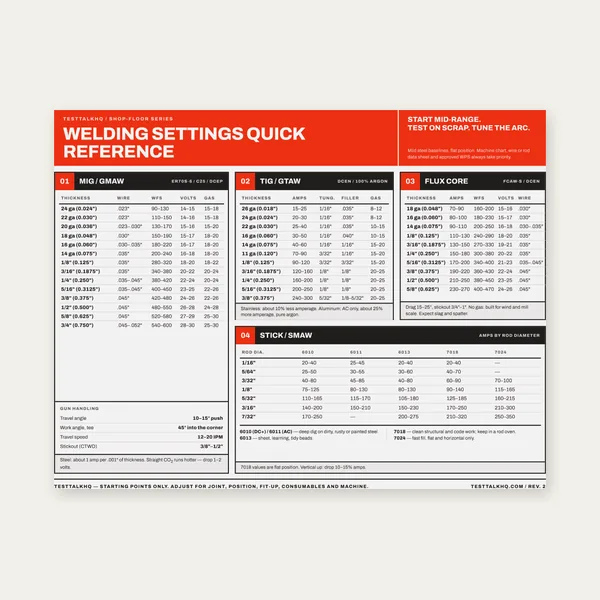
Welding Reference Card
One page. MIG, TIG, stick and flux core settings by thickness.
$3.99
BuyDiagnose bottles that die early, porosity blamed on “bad gas,” regulator freeze-up, flow set too high “just to be safe,” PSI mistaken for remaining volume, and CO₂ vs argon-mix behavior near empty
Duration-specific diagnosis — not a restatement of the size charts. Pair with the Gas Cylinder Duration Calculator for cu ft ÷ CFH ÷ duty math and the Gas Cylinder Duration Guide for the formula and size table. Set CFH with the Shielding Gas Flow Rate Calculator; coverage porosity that is really a flow/draft problem lives in the Welding Gas Flow Rate Guide. Cost and buy-vs-rent decisions: Welding Gas Cost Guide. This page stays on failures after the duration numbers looked right.

Use this when a 125 “should have lasted all day,” porosity shows up as the bottle drops, the regulator ices over at high CFH, someone reads cylinder PSI like a fuel gauge, or CO₂ acts weird near empty — supply and delivery failures, not “which gas to buy” restated.
| Problem | What it usually means | First fix | Next tool |
|---|---|---|---|
| Bottle empties faster than calc | CFH higher than assumed; duty underestimated; leaks; post-flow/purge; stuck-open solenoid | Meter flow at the torch; soap fittings; time a real duty sample; rerun calc with measured CFH | Duration Calculator |
| Porosity blamed on “bad gas” | Actually low effective flow from freeze-up, nearly empty bottle, draft, or wrong CFH — not mysterious chemistry | Check frost on regulator, remaining pressure, wind/screens, then CFH at torch | Flow Rate Calculator |
| Regulator freeze / frost | High flow + Joule–Thomson cooling; humid shop air; CO₂ especially at high CFH / cold ambient | Lower CFH to process range; pause to warm; keep bottle upright; never torch-heat a frozen regulator | Duration Guide |
| Flow “cranked safe” wastes gas | 25–40 CFH when 15–20 would shield — turbulence + empty bottles, no quality gain | Dial back into chart range; verify no porosity; leave it | Flow Rate Guide |
| PSI read as “how much left” | High-pressure argon/C25: PSI tracks content roughly; liquid CO₂: PSI stays high until liquid is gone | Know gas type; weigh CO₂ bottles or track fill dates; don’t trust CO₂ PSI as a fuel gauge | Duration Guide |
| CO₂ vs mix near empty | Liquid CO₂ phase change; pressure collapse late; argon mixes behave more linearly | Plan reserve earlier on CO₂; keep upright; don’t run into the red mid-pass | Duration Calculator |
What it looks like: The duration calculator said ~14 shop hours on a 125 at 20 CFH / 40% duty — you are swapping by lunch. The guide’s FAQ (“Why did my 125 last only a few hours?”) points here; this section expands the diagnosis.
Likely causes:
Fixes: Time a real hour of work (arc-on vs clock). Meter flow at the torch. Soap the entire train. Rerun the calculator with measured CFH and a honest duty. The calc FAQ already notes leaks/purge/post-flow — treat those as first-class defects, not rounding error.
What it looks like: Welds go porous late in the bottle or after the regulator frosts; the crew blames “bad argon” or “wrong mix.” Coverage troubleshooting in the flow rate guide still applies for draft and CFH — but duration/pressure failures mimic those symptoms.
Likely causes:
Fixes: Check frost, remaining pressure/weight, and torch CFH before changing gas chemistry. Screens before CFH for wind. If porosity is classic coverage failure with a full warm bottle and correct CFH, stay on the flow-rate guide — do not invent a second porosity encyclopedia here.
What it looks like: Frost or ice on the regulator/flowmeter body; flow surges then starves; porosity appears mid-bead on a cold morning or after long continuous MIG at high CFH. CO₂ setups show this more often than dry argon at modest flow.
Likely causes:
Fixes: Drop CFH into the process range from the flow calculator. Pause to let the regulator warm. Keep cylinders upright. Never apply an open flame to a frozen regulator. If you must run high CFH outdoors, expect shorter duration and freeze risk — windscreens beat CFH bravado.
What it looks like: Regulator parked at 30–40 CFH “so we never get porosity”; bottles die early; sometimes porosity gets worse from turbulence pulling air into the shield. The flow guide’s “Cost of Running Too Much Gas” covers the money math — here the diagnostic angle is duration mismatch.
Likely causes:
Fixes: Set MIG ~15–25 CFH and TIG ~10–20 CFH (lens-dependent), verify a clean coupon, then leave it. Recalculate duration at the new CFH — a drop from 30 to 20 CFH is a ~50% gain in continuous hours on the same cylinder. Detail tables stay on the Shielding Gas Flow Chart and flow guide.
What it looks like: Someone says “we still have 800 PSI so we’re fine for the afternoon” on a CO₂ bottle — then the arc goes porous and the bottle is effectively empty. Or they panic at 500 PSI on argon when hours of gas remain at modest CFH.
Likely causes:
Fixes: Identify the gas. For argon mixes, estimate remaining hours from known fill size, measured CFH, and duty (or weigh / track exchanges). For CO₂, prefer weight, fill logs, and earlier bottle swaps — not a glance at PSI. Duration planning stays on the guide table and calculator.
What it looks like: Argon/C25 fades predictably; CO₂ runs “fine” then suddenly starves, frosts harder, or throws porosity in the last fraction of a fill. Same labeled cu ft, different end-of-bottle behavior.
Likely causes:
Fixes: Keep CO₂ upright. Honor the ~10% reserve in the guide. Plan swaps earlier on high-draw CO₂ MIG than on argon TIG at low CFH. Chemistry and $/CF comparisons belong on the gas cost guide and how to choose shielding gas — not duplicated here.
If cu ft, CFH, or duty are wrong, stay on the duration calculator and guide. If the real question is small portable vs large shop bottles, or rent vs own, that fork is already covered in the Welding Gas Cost Guide (Buy vs Rent vs Exchange; small/medium/large cylinder economics) and the Welding Gas Cost Calculator tank-size and buy-vs-rent sections — do not invent a second decision article.
One page. MIG, TIG, stick and flux core settings by thickness.
$3.99
Buy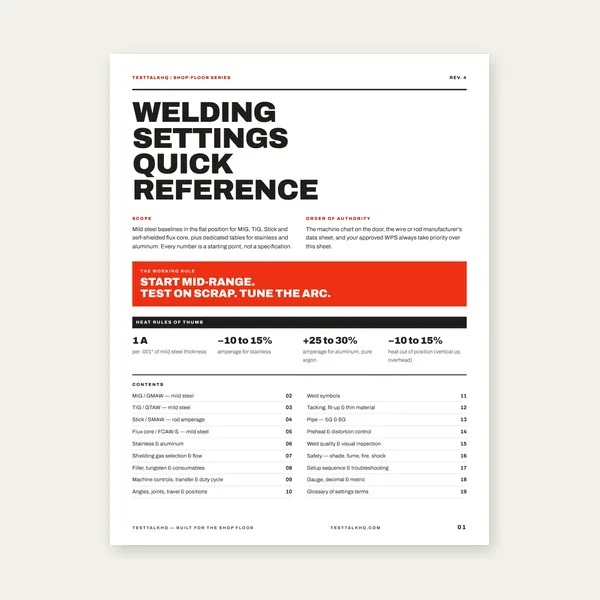
19 pages. Four processes, stainless and aluminum, symbols and inspection.
$12.99
Buy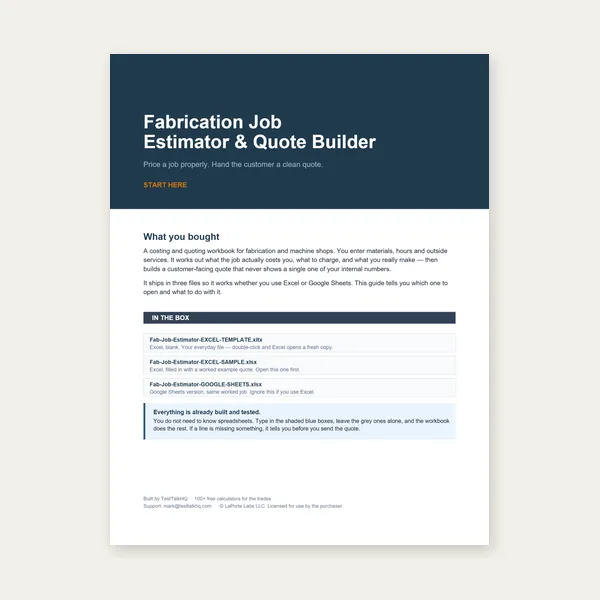
Price the job, then hand over a quote with no internal numbers.
Excel or Google Sheets. Best on a computer.
$29.00
Buy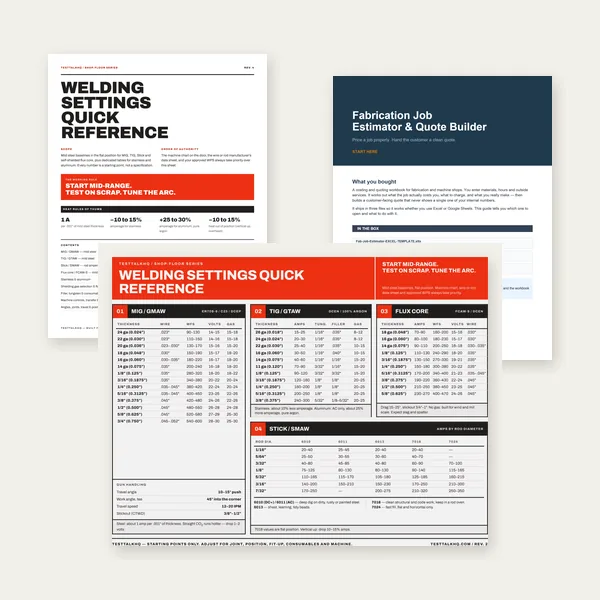
Card, 19-page guide and the estimator workbook. All six files.
Excel or Google Sheets. Best on a computer.
$34.99
$45.98 if bought separately — save $10.99
BuyCheckout opens in a new tab.
Six CSV-sourced picks — flowmeters/regulators, a cylinder cart, a CGA adapter, and leak detection for early-empty hunts
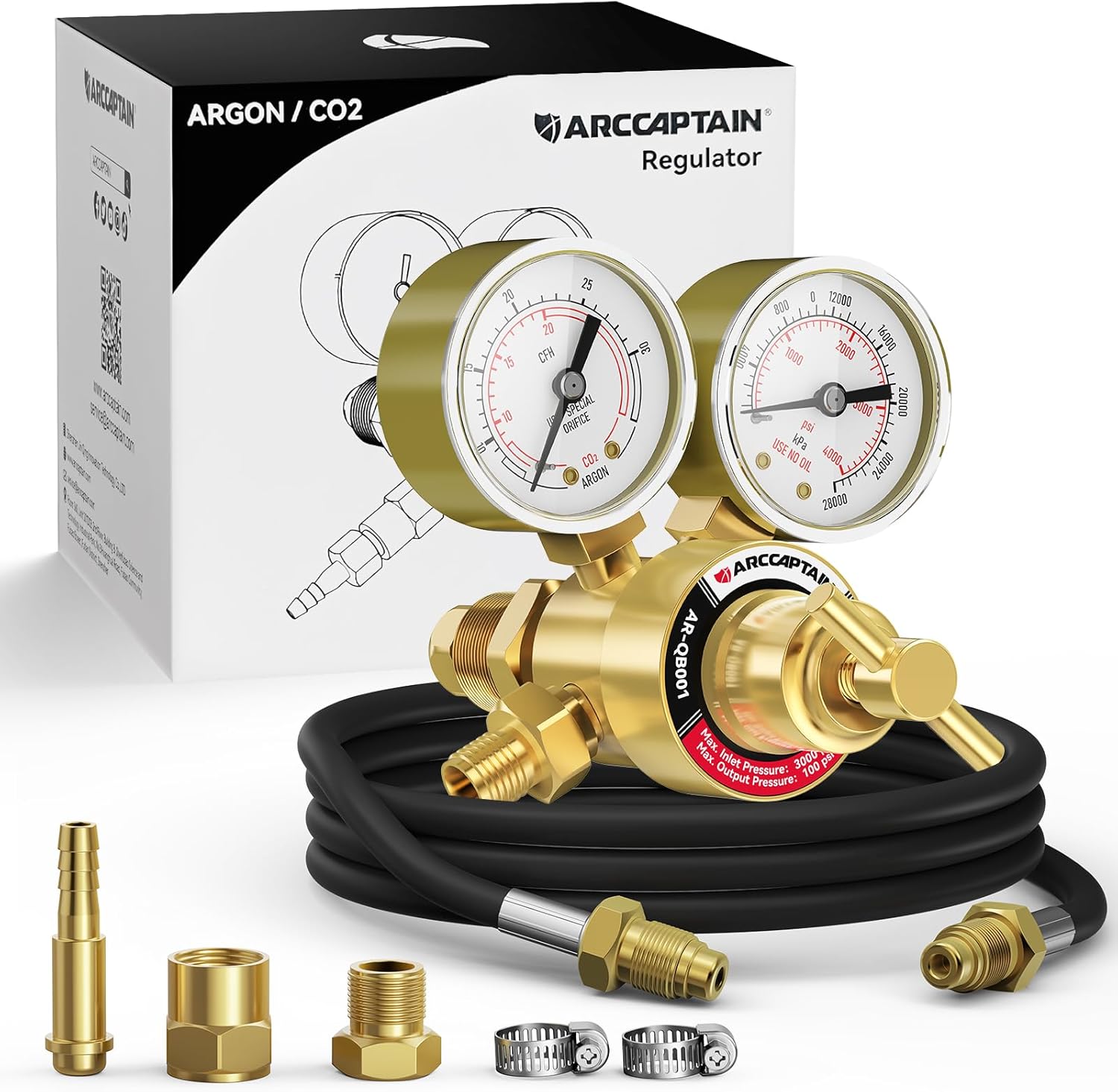
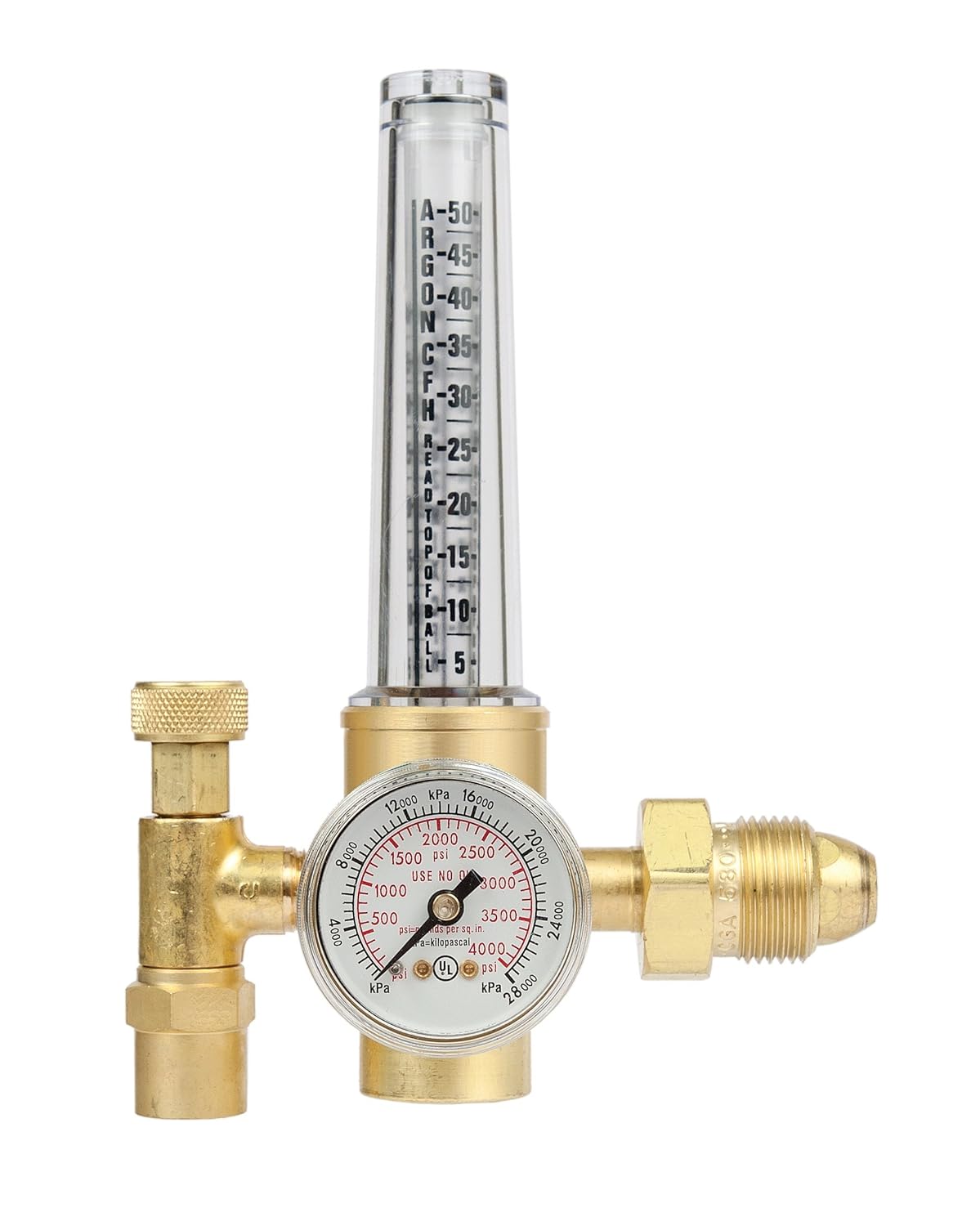
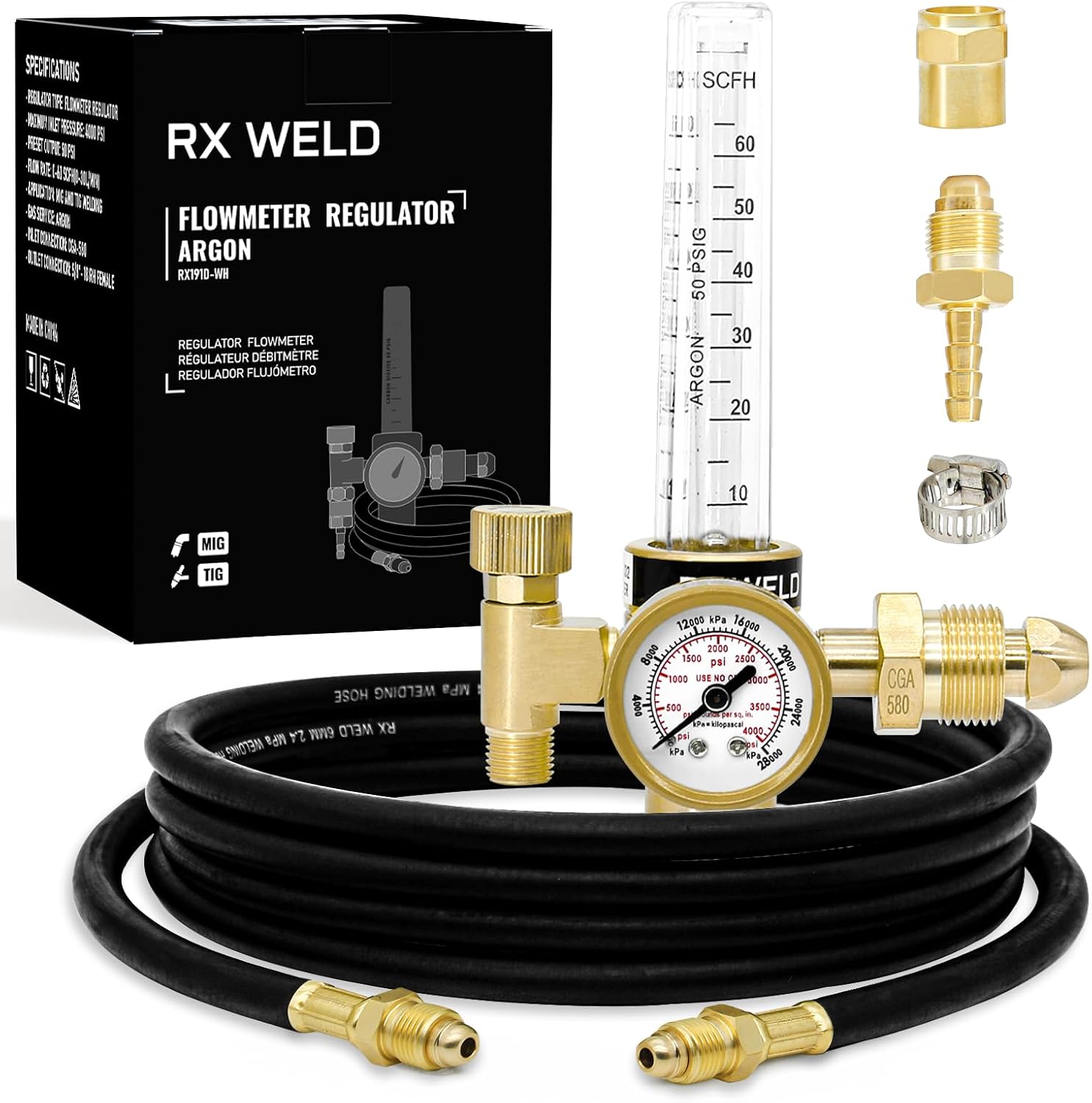
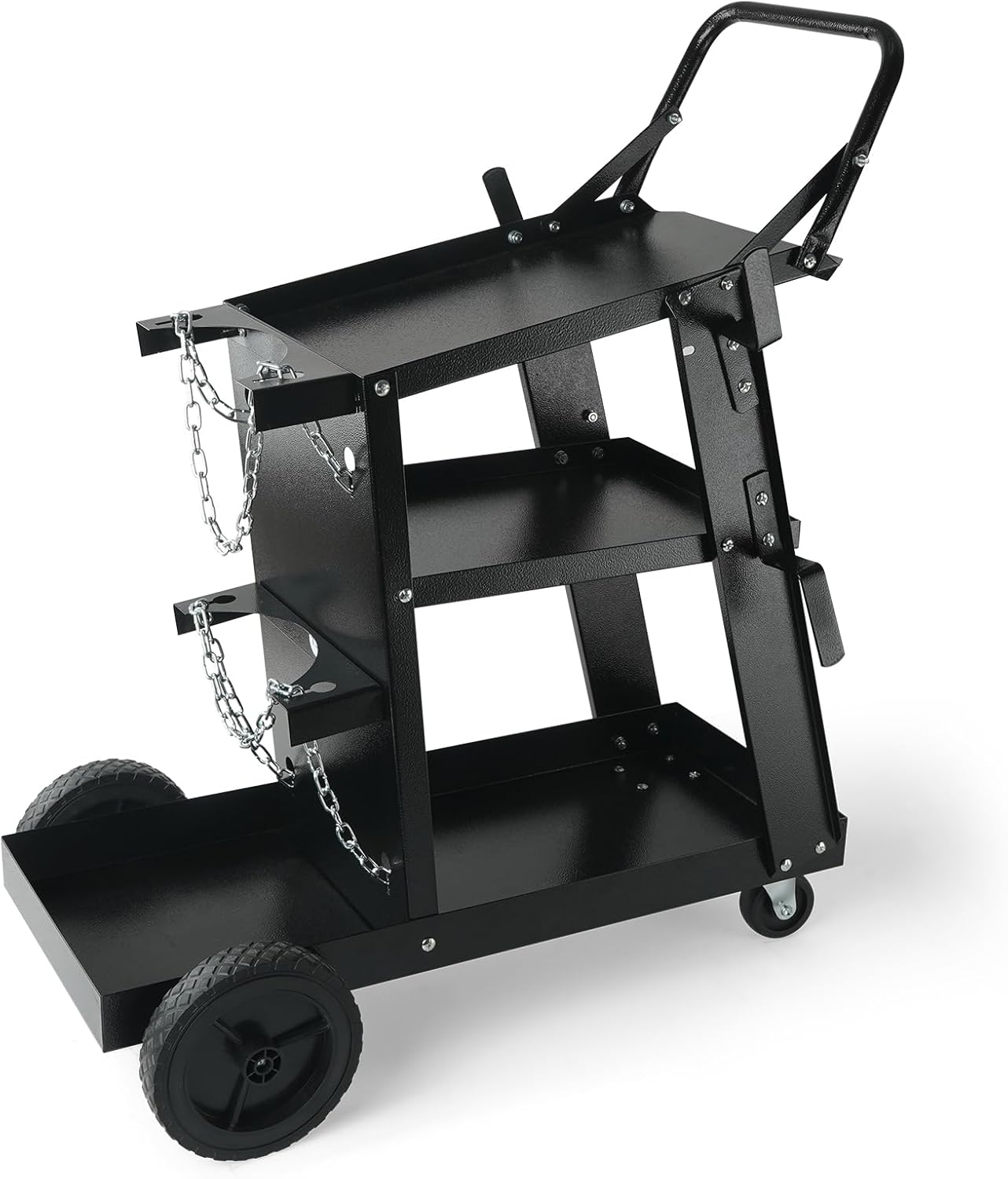
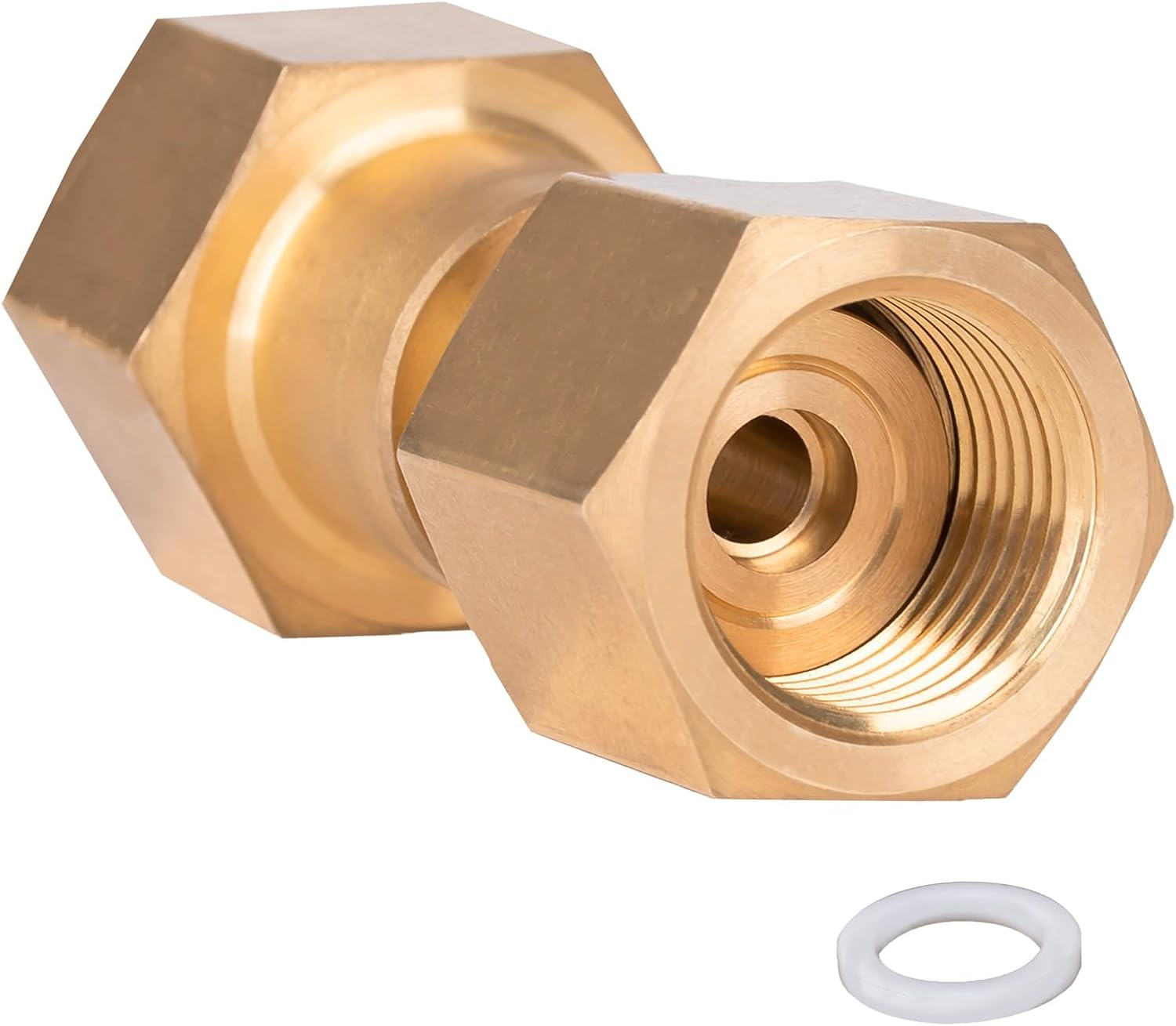
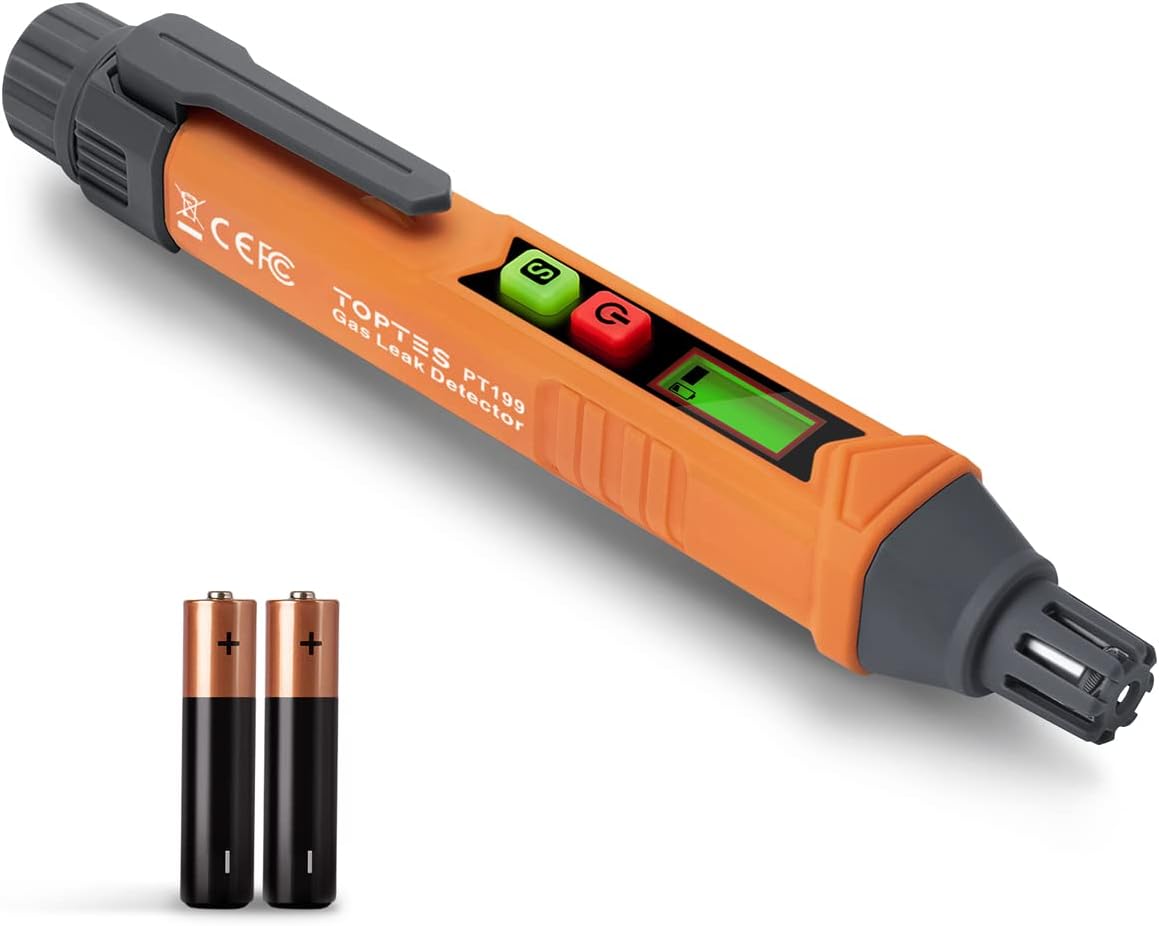
As an Amazon Associate, TestTalkHQ earns from qualifying purchases. Catalog gap: no dedicated cylinder valve wrench / tank key SKU in the live affiliate CSV — regulators, cart, CGA adapter, and leak detection cover the delivery diagnosis path.
Measured CFH is usually higher than the assumed input, duty is underestimated, or gas is leaking/purging while the arc is off. Meter the torch, soap fittings, and rerun the duration calculator with real numbers.
Yes. Frost starves effective flow even when the bottle is not empty. Lower CFH, warm the regulator, and keep CO₂ upright — then recheck coverage.
No. Excess flow wastes gas and can increase turbulence. Fix draft with screens and set CFH in the process range from the flow calculator/chart.
Only roughly on compressed argon/C25 — and poorly on liquid CO₂, where pressure can stay high until the liquid is gone. Use cu ft, CFH, duty, and (for CO₂) weight or earlier swaps.
No. Cost/rent/size economics live on the gas cost guide. CFH setup and coverage porosity live on the flow rate guide. This page diagnoses duration and delivery failures.
Convert CFH, arc-on time, local gas price, and cylinder size into daily and annual spend with the Welding Gas Cost Calculator. Compare owned, rental, and exchange programs in the Welding Gas Cost Guide.