Calculators & guides only — no articles or blog noise.
EV Charger Circuit Troubleshooting
Breaker trips on a “correctly sized” circuit, slow charging, panel capacity that fails after a passing load calc, multi-EVSE demand mistakes, and EV-specific GFCI nuisance trips
Use this when a Level 2 circuit was sized per NEC continuous-load math and still trips, under-delivers, or cannot be added to a panel that “passed” a load calculation.
Symptom
What it usually means
First fix
Next tool
Breaker trips on a sized EV circuit
EVSE not limited to 80% continuous; wrong breaker type; voltage drop raising current
Clamp charge amps vs EVSE setting; verify OCPD listing; check run length
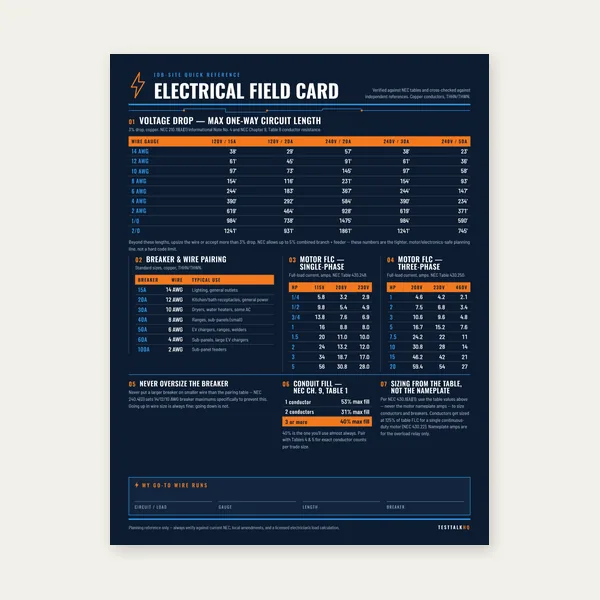
Diagnose in 60 seconds: (1) clamp the EVSE branch during a real charge, (2) read the EVSE amp setting and vehicle onboard limit, (3) compare to breaker rating × 0.8 continuous, (4) if amps are correct and the breaker still opens, chase OCPD type / heat / voltage drop — do not upsize the breaker on the same conductors.
1. Breaker Trips Repeatedly on a “Correctly Sized” EV Circuit
What it looks like: Math says 32A EVSE → 40A breaker / 8 AWG copper. Install passes inspection. Weeks later the 2-pole trips mid-session, especially on hot days or long overnight charges.
Why sizing can be right and the circuit still fails:
EVSE not actually limited to 80% continuous. Branch OCPD is sized at 125% of the maximum continuous EVSE rating. If the wall unit is set (or defaults) to draw near the breaker rating instead of ≤80%, thermal trip is expected. Confirm dip switches, commissioning app, and nameplate max vs configured max.
Wrong breaker type for the AHJ / listing. Some jurisdictions and manufacturers expect a breaker listed for EV charging duty or a specific AFCI/GFCI combination. A generic 2-pole of the right amp number is not always the listed companion. Check the EVSE installation manual and local amendments before assuming “40A QO” is finished.
Voltage drop on a long run. Low voltage at the EVSE can push current up for the same power delivery, heat terminations, and nudge thermal magnetic breakers. Garage at the far end of a 100+ ft feed is a classic trap. Re-check with the voltage drop calculator and clamp amps under load.
Loose / Al terminations. Contact resistance looks like “nuisance” trips and warm lugs — same story as other continuous loads, but EV sessions run for hours so heat accumulates.
Fixes:
Clamp during charge. If measured amps ≈ breaker rating, reduce EVSE setting to ≤80% of OCPD (or re-size the circuit properly — do not just swap a larger breaker on the same wire).
Match OCPD to the EVSE listing and AHJ notes; replace only with the listed type/amp combination.
For long runs, upsize conductors for voltage drop after ampacity still passes. Diagnose measurement mistakes with Voltage Drop Troubleshooting.
Retorque lugs; on Al use listed connectors and inhibitor (Noalox-class) per listing.
Misdiagnosis: Do not “fix” trips by installing the next larger breaker on the same conductors. That turns a continuous-load problem into a fire-code problem.
2. Charger Is Slower Than the Circuit Should Allow
What it looks like: 60A circuit / 48A-capable EVSE installed. Vehicle reports 24–32A AC or “miles per hour” far below the Level 2 expectation. Breaker never trips.
Likely causes (circuit size is not the bottleneck):
EVSE amperage setting below circuit capacity. Many units ship conservative (e.g., 32A) until commissioned. App, DIP pack, or rotary must be set to the ampacity the branch actually supports.
Vehicle onboard charger limit. The wall circuit only supplies what the car’s AC charger can accept. A 48A wall unit cannot push 48A into a car limited to 32A or 40A AC. Check the vehicle manual — this is independent of NEC branch sizing.
Shared / managed current. If an energy management system or PowerShare-style link is active, the EVSE may throttle when the house peaks even though the branch breaker is large.
120V / adapter path accidentally in use. Cord-and-plug installs sometimes fall back to a lower-amp adapter profile.
Fixes:
Set EVSE continuous output to match the circuit (never above 80% of OCPD).
Confirm vehicle max AC charge rate; if the car caps lower, the circuit is already oversized for that vehicle — that is not a wiring fault.
If load management is installed, read the EMS live limit during the session before chasing wire size.
Field rule: Circuit capacity is a ceiling. EVSE setting and vehicle onboard charger are successive ceilings. The slowest ceiling wins.
3. Panel “Passes” a Load Calc but Still Can’t Take the EV Circuit
What it looks like: Spreadsheet or residential load calculator shows spare amps. Electrician / inspector still rejects a new 40–60A 2-pole, or the bus has no spaces / main is already near nameplate under real diversity.
Why a “passing” calc can still block the install:
Demand factors miscounted. Optional method vs standard method mix-ups, missing HVAC, wrong EV VA (NEC 220.57 / continuous treatment), or optimistic diversity that the AHJ will not accept.
Physical spaces vs calculated amps. Calc capacity ≠ empty breaker slots. A full 200A panel can still need a subfeed or replacement for a 2-pole EVSE.
Ignoring NEC 625.42 load management. A listed EV energy management system can allow the EV load to be controlled so the service is not required to carry every EVSE at full nameplate simultaneously. Skipping that option forces a panel/service upgrade that may not be the only compliant path.
Fixes:
Re-run the dwelling calc with EV continuous load entered correctly; fix HVAC and range/dryer nameplates first if the sheet was soft.
Inventory spaces and bus rating separately from “spare amps.”
What it looks like: Two wall connectors, a shop charger, or a duplex garage. Someone multiplies each nameplate × 1.25 and declares the service impossible — or the opposite: invents a 50% diversity factor with no listing to back it.
What code actually cares about:
Dedicated branch circuits still apply per EVSE (NEC 625.40) unless the equipment and installation method are specifically listed otherwise.
NEC 625.42 permits automatic load management systems that are listed for EVSE to control the maximum load. Demand reduction is a product listing + settings problem, not a spreadsheet guess.
Feeder / service calc must use the managed maximum when the EMS is installed and commissioned per instructions — not the sum of every wall unit’s marketing peak if the system will not allow that simultaneous draw.
Fixes:
Do not share a single branch breaker across two EVSE units unless the listing explicitly allows that topology.
For multiple chargers, prefer a listed EMS (or manufacturer PowerShare / power cabinet) and document the maximum controlled amps for the load calc.
Re-size service/feeder from the controlled maximum, then confirm each branch still meets continuous-load conductor/OCPD rules for its local rating.
Misdiagnosis: “We’ll never charge both cars at once” is not a demand factor. Inspectors accept listing + settings, not household habits.
5. GFCI Nuisance Tripping Specific to EV Charging Circuits
What it looks like: Plug-in EVSE on a GFCI receptacle or GFCI breaker trips at plug-in, during rainy weather, or mid-charge. Kitchen / bath GFCI troubleshooting tips do not transfer cleanly.
Why EV GFCI faults are different:
EVSE already monitors ground-fault / isolation on many hardwired units. Stacking an extra GFCI device can create coordination issues or nuisance trips from normal leakage on long cords and damp outdoor enclosures.
NEC 625.54 requires GFCI for receptacles used to connect EVSE. Hardwired paths are AHJ-dependent — many still want GFCI on the breaker. The failure mode is EVSE + environment, not a hairdryer on a bathroom circuit.
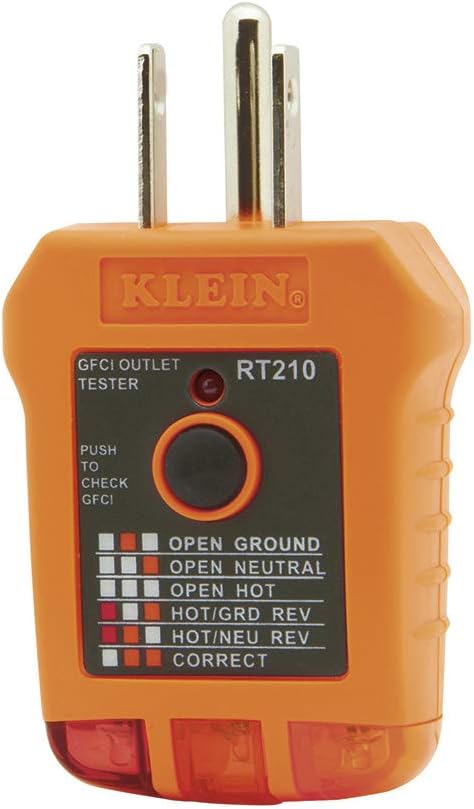
Open EGC / bootleg ground will trip EVSE protective functions even when a cheap outlet tester looked “OK” unloaded.
Moisture in the pin-and-sleeve / 14-50 creates leakage paths that only appear under charge current.
Fixes:
Confirm whether the install is cord-and-plug (625.54 GFCI required) or hardwired; follow the EVSE manual’s required OCPD / GFCI combination.
Verify equipment grounding conductor continuity under load; fix corrosion and outdoor covers before replacing the EVSE.
Do not remove required GFCI to “stop nuisance trips.” Correct the leakage path or move to the listed hardwire method your AHJ accepts.
If the real constraint is service/panel capacity — not branch ampacity — choose deliberately between a dedicated circuit after a panel/service upgrade and a listed EV energy management system under NEC 625.42.
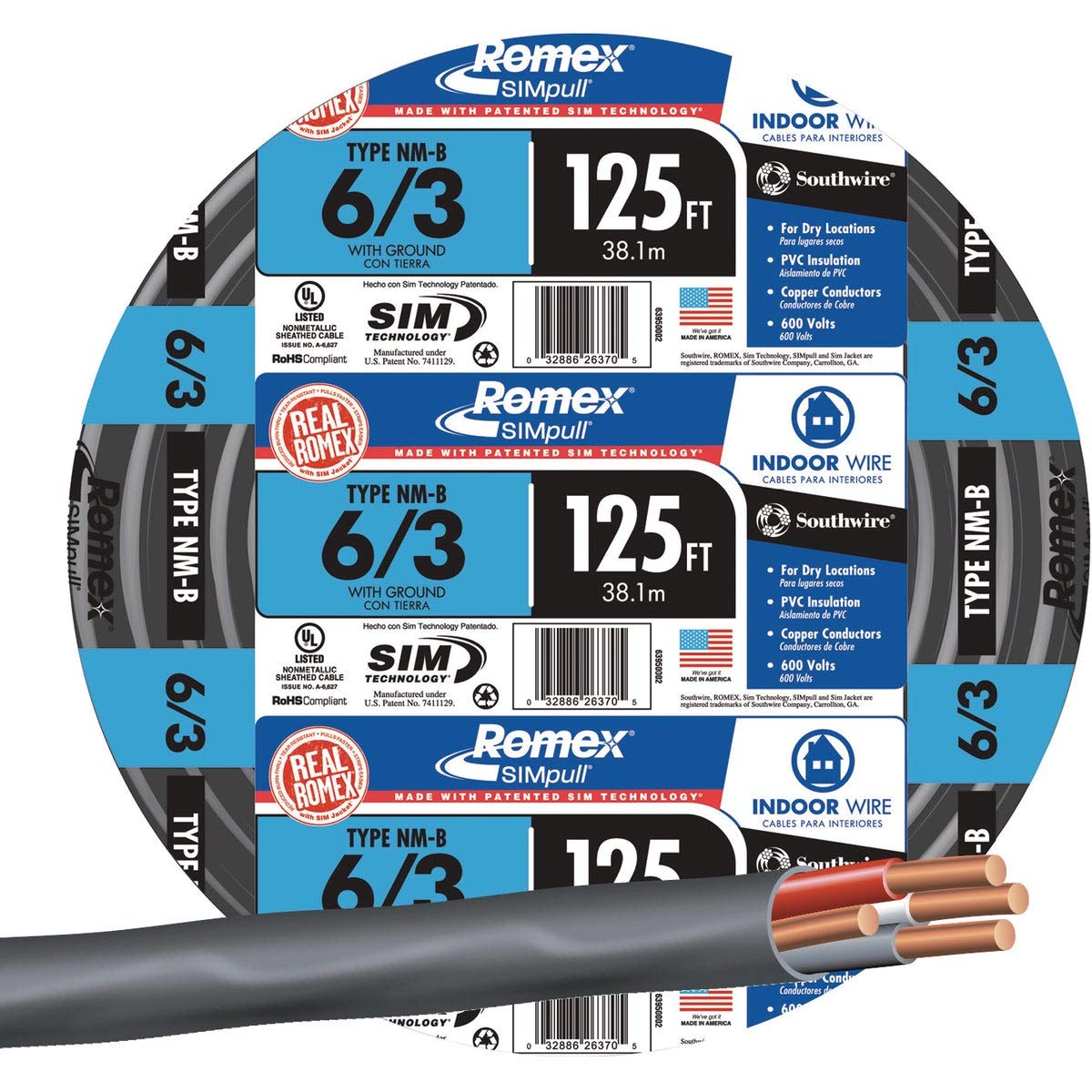
Circuit hardware and meters for verifying continuous-load ampacity, terminations, and GFCI behavior. Catalog gap: the affiliate CSV has no listed EVSE units and no 40/50/60A two-pole EV-rated breakers — use these electrical products for the branch and panel side only.
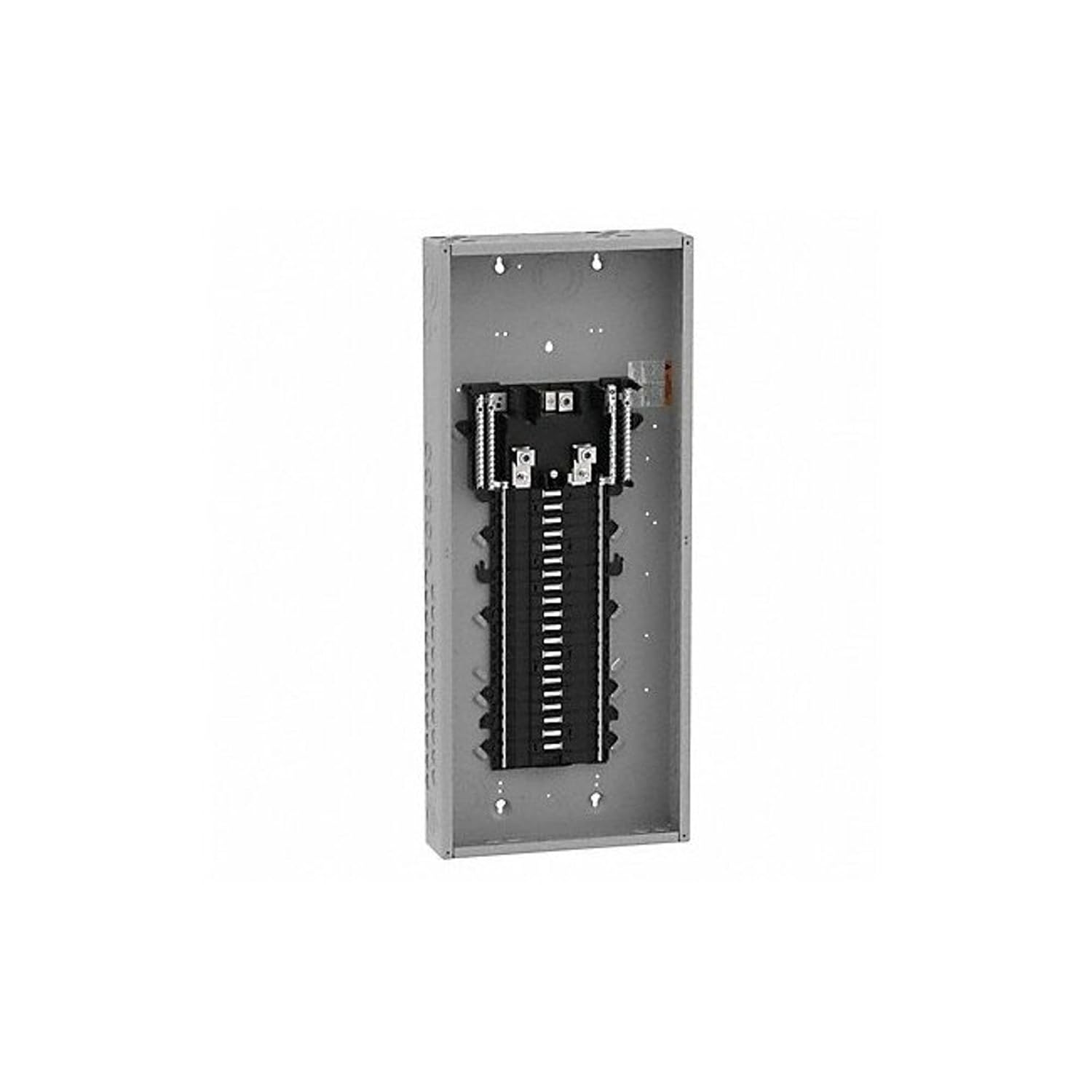
Panel
Square D QO140L200PG 200A Load Center
Spaces for a dedicated 2-pole EVSE breaker
Common path when a load calc forces a panel upgrade
Verify bus rating before adding continuous EV load
As an Amazon Associate, TestTalkHQ earns from qualifying purchases. Always follow manufacturer torque, listing, and AHJ requirements. EVSE hardware is a catalog gap in the affiliate CSV — do not substitute unrelated products for a charger.
Frequently Asked Questions
Why does my EV breaker trip if the calculator sized it correctly?
Usually the EVSE is drawing closer to the breaker rating than the continuous 80% limit, the OCPD type is wrong for the listing/AHJ, or voltage drop / hot terminations are adding thermal stress. Clamp the charge current before upsizing anything.
Can the car limit charge speed even on a 60A circuit?
Yes. The vehicle onboard AC charger is an independent ceiling. Match EVSE settings to the circuit, then accept the lower of circuit, EVSE setting, and vehicle capability.
My load calculation shows spare amps — why can’t I add the charger?
Spare calculated amps, empty breaker spaces, and AHJ acceptance of demand factors are three different checks. Also consider a listed 625.42 load management system before assuming a full panel upgrade is mandatory.
Can two EV chargers share one breaker?
Not as a casual “shared circuit.” Each EVSE generally needs a dedicated branch per NEC 625.40 unless the equipment is specifically listed for another arrangement. Multiple units on one service usually need listed load management for demand — not a single shared OCPD.
Is EV GFCI tripping the same as a bathroom GFCI trip?
No. EVSE leakage, outdoor moisture, stacked GFCI devices, and EGC issues dominate. Keep required protection in place and fix the EV-specific leakage path.
Where do I go to size the circuit correctly (not diagnose it)?