A diagnostic order for backup heat that runs more than the balance point says it should: prove it with an amp reading first, then the five control causes above the balance point, then airflow, charge and defrost below it, and the three situations that look like a fault and are not.
Start by proving there is a problem
“The strip heat runs all the time” is a complaint about a feeling, not a measurement, and half the time the system is behaving exactly as designed. Before chasing causes, establish two things: what the balance point should be, and what the resistance heat is actually doing.
The calculated balance point is your yardstick. If the machine is rated 34,000 Btu/h at 47 °F and 21,000 at 17 °F, and the house needs 36,000 Btu/h at 5 °F, the balance point is 24.5 °F. Resistance heat below that is the system working. Resistance heat at 40 °F is not.
Write down the outdoor temperature at every reading. Everything below depends on knowing whether the resistance heat came on above or below the calculated balance point, and a complaint without an outdoor temperature attached to it cannot be diagnosed at all.
Above the balance point: it is nearly always a control
If the strips run at outdoor temperatures where the compressor can demonstrably carry the house, the compressor is not the problem. Work these in order.
1. Auxiliary heat lockout left at a default
Many thermostats will energise backup heat at any outdoor temperature unless told not to. If there is an aux lockout parameter and it has never been set, set it a few degrees above the calculated balance point. This is the single most common finding and the cheapest to fix.
2. Compressor lockout set too high
The opposite setting, and worse. A compressor lockout switches the compressor off below a set temperature regardless of what it was still capable of producing. In the example above, a 30 °F lockout shuts down a machine still making over 26,000 Btu/h and hands a 21,000 Btu/h load entirely to resistance elements. Check whether one is set, and whether anyone chose it.
3. Setback recovery calling for aux
Most thermostats bring on backup heat when the setpoint is raised by more than a degree or two, on the reasoning that the occupant wants heat now. A deep night setback on a heat pump therefore buys cheap heat overnight and pays for it in resistance heat every morning. Either shrink the setback, or use the intelligent-recovery feature if the stat has one, or accept the trade knowingly. On a heat pump, aggressive setbacks are frequently a net loss.
4. Wiring: a stage that is energised when it should not be
W and aux terminals miswired, an outdoor thermostat jumpered out during a service call and never restored, a sequencer stuck closed, or a defrost board holding the W output on. A clamp on the heater kit while forcing the system through its modes finds all of these. A sequencer that never opens will show a steady draw with no call at all.
5. Emergency heat left on
It sounds too simple to list. It is also extremely common, especially after an occupant has had a cold night and reached for the switch. Emergency heat locks the compressor out entirely and runs the house on resistance heat at every outdoor temperature. Check the mode before anything else, and check it again if the complaint is “the bill tripled”.
HVAC
HVAC Refrigerant Charging Card
$3.99
Buy
Complete HVAC Charging Guide
$12.99
Buy
HVAC Job Estimator
$29.00
Buy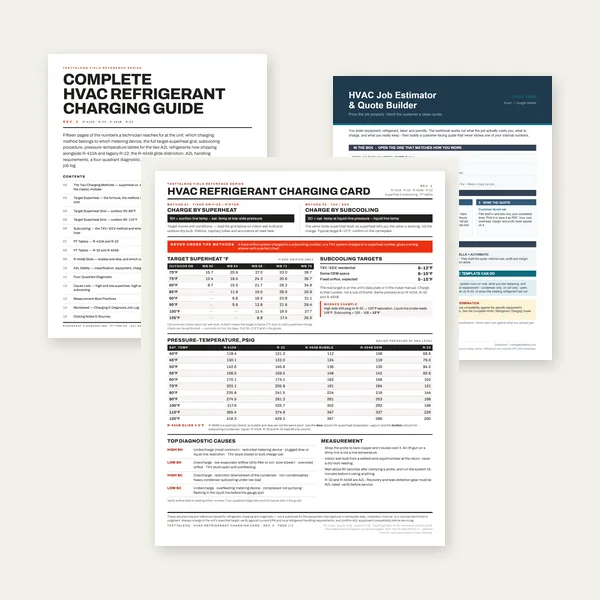
HVAC Complete Bundle
$39.00
BuyCheckout opens here — you stay on this page.
Where the answer actually gets applied
A balance point that lives only in a spreadsheet changes nothing. Two settings in the thermostat decide how much of the winter runs on the compressor and how much runs on resistance heat, and a clamp on the heater kit is the only way to find out which of them is winning. These are the parts of the job that turn the calculation into a lower bill.
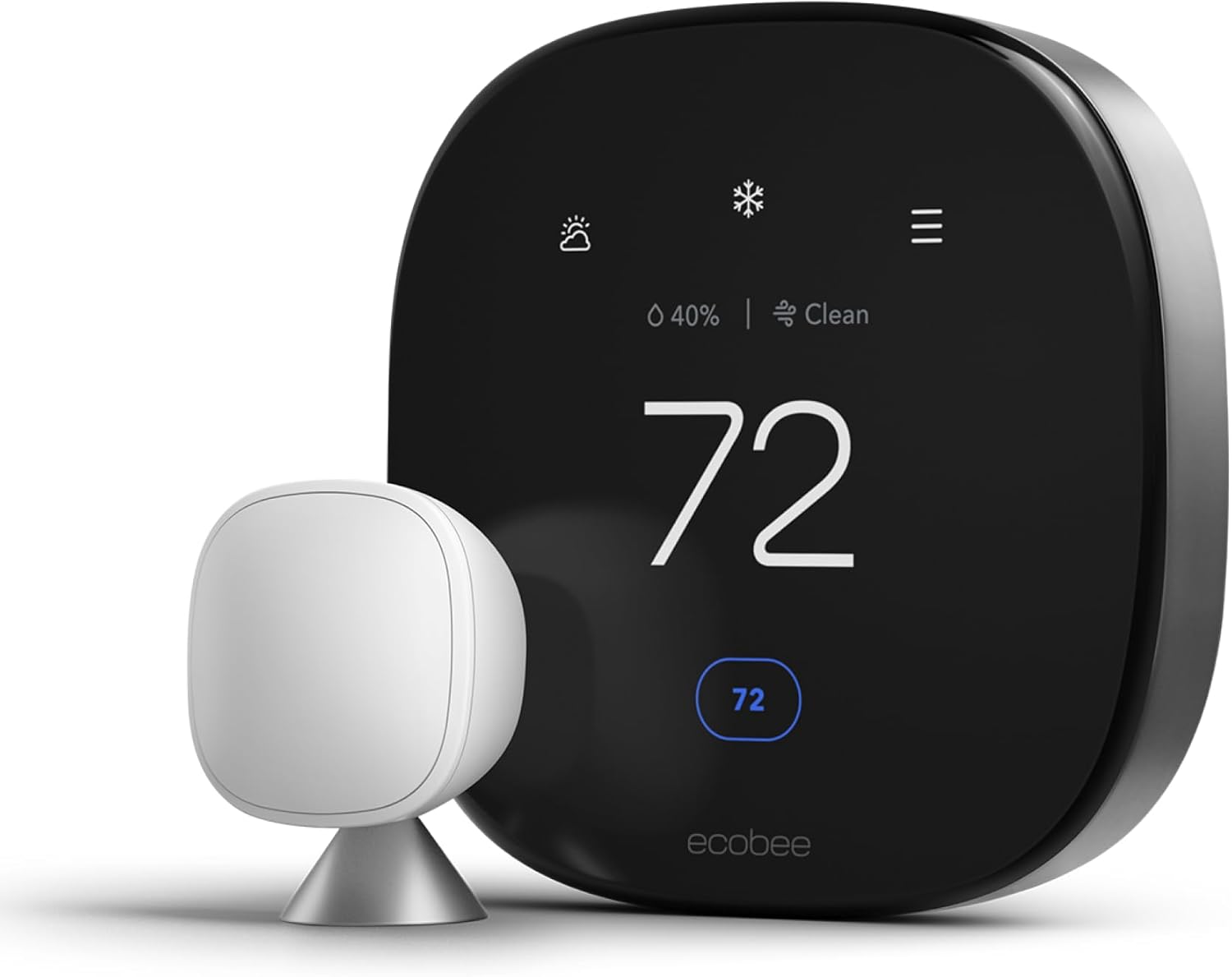
ecobee Smart Thermostat Premium
- Runtime history separates compressor hours from aux hours
- Remote sensors show whether the house really drifts at design
- Heat pump settings include compressor and aux temperature limits
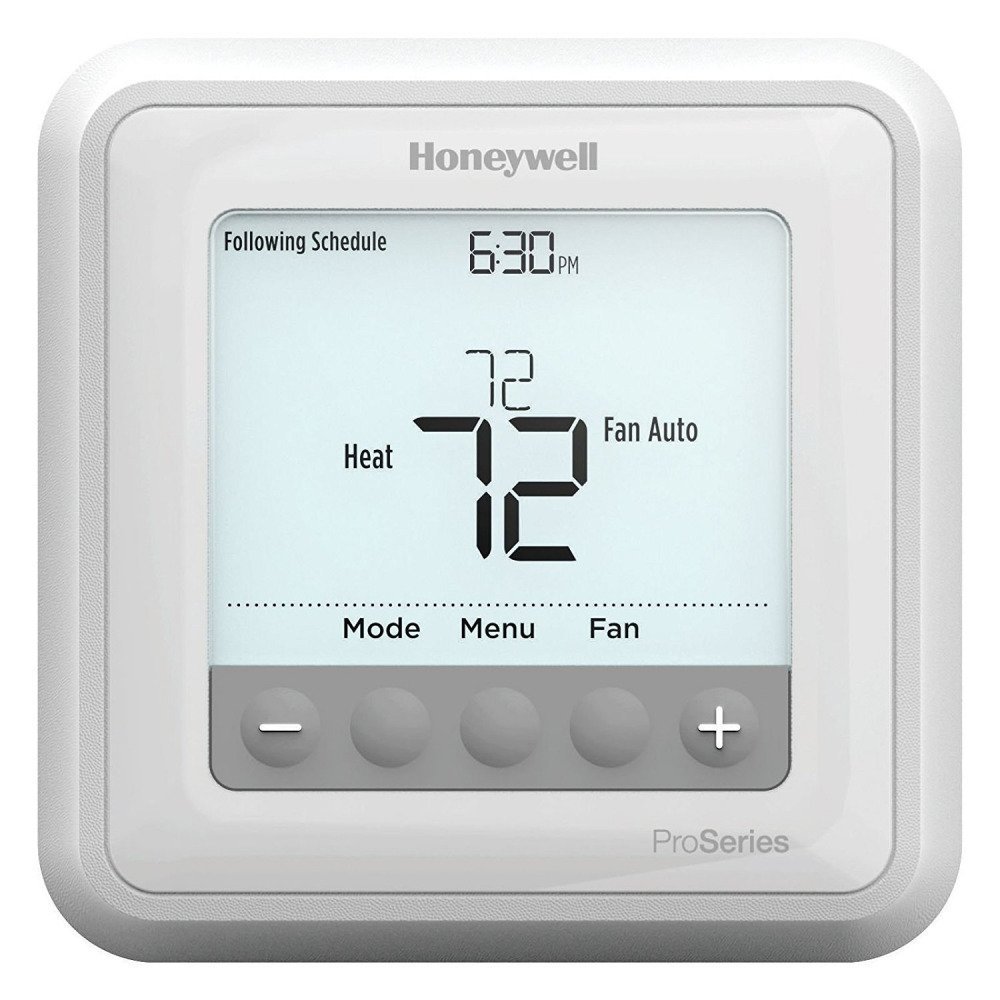
Honeywell T6 Pro Thermostat
- Installer setup exposes the heat pump staging parameters
- A stable setpoint is what makes a balance point observable
- The common replacement when a factory default was never changed
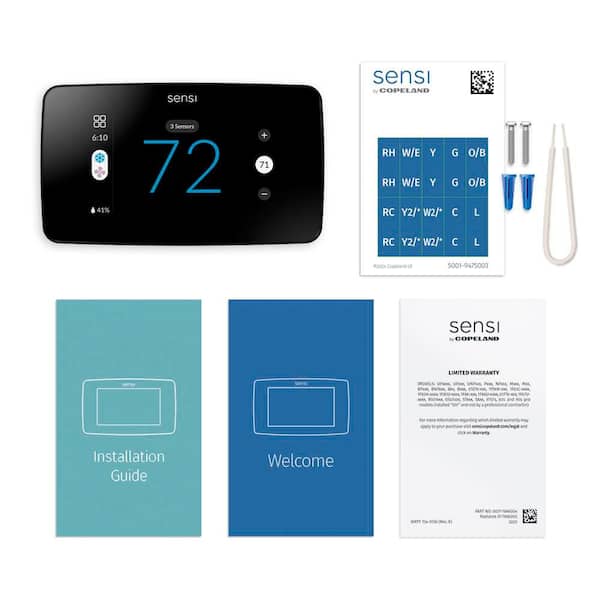
Sensi Touch 2 Smart Thermostat
- Usage reporting makes an always-on aux stage obvious
- C-wire required, which most heat pump air handlers already have
- Cheap way to catch a winter of unnecessary resistance heat
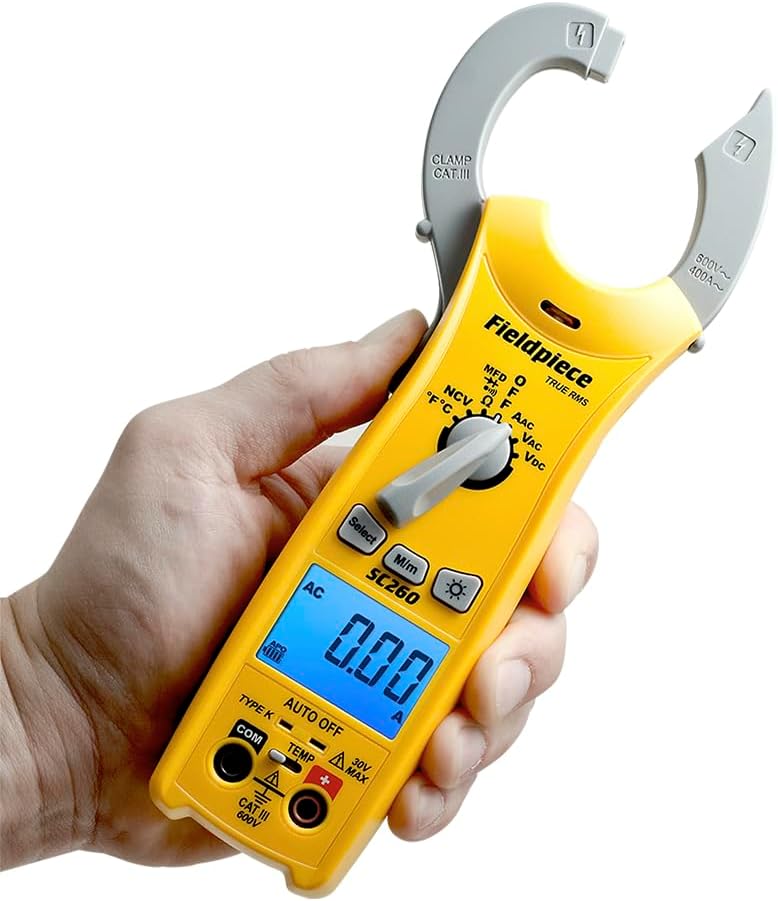
Fieldpiece SC260 Clamp Multimeter
- Clamp the heater kit legs and see which stages energise
- True RMS, compact enough for an air handler cabinet
- Turns “the strips come on a lot” into an amp reading

Klein Tools CL800 Digital Clamp Meter
- 1000V rating covers commercial air handler backup heat
- Amps times volts is how kW of strip heat gets confirmed
- True RMS matters on anything fed from a drive or inverter
As an Amazon Associate, TestTalkHQ earns from qualifying purchases. Prices and availability can change.
Below the balance point: is the machine actually making its rating?
If the strips only run below roughly the calculated balance point, the system is doing what it was designed to do, and the conversation should move to whether the design was right. But if they come on ten degrees warmer than calculated, the machine is not delivering its rated capacity. That is a mechanical problem and it has its own order.
6. Airflow
Rated capacity assumes rated airflow, and nothing else on this list costs capacity as quietly. A loaded filter, a crushed flex run, a closed damper, undersized return, or a blower tap set for a smaller system all reduce output. Measure total external static pressure against the blower table before touching refrigerant. A delta-T reading across the coil tells you quickly whether the air side is moving what it should.
7. Refrigerant charge
Undercharge costs heating capacity, and it costs the most at low outdoor temperature — precisely where you are trying to avoid resistance heat. Overcharge costs efficiency and risks the compressor. Verify with superheat and subcooling against the manufacturer’s charging chart for heating mode, and remember that a system charged by feel in July may be wrong in January.
8. Defrost running too often or too long
Every defrost cycle is time spent not heating, and on a reversing-valve defrost the indoor coil is actively cooling the house while the strips cover for it. A demand-defrost board with a failed sensor, a coil packed with leaves or lint, a unit sitting in its own meltwater, or a fan cycling incorrectly will all drive excess defrost. If the strips are cycling on at intervals rather than running steadily, watch the outdoor unit for a full cycle before anything else.
Then: the load, and the selection
If the machine is charged correctly, the airflow is right, defrost is normal and the strips still come on a long way above the calculated balance point, the load figure was probably wrong. That is not a repair, it is a measurement problem — and it usually means the original selection was made from a rule of thumb rather than a room-by-room load calculation. Re-run the load, re-run the balance point, and you will at least know whether the customer has a fault or a machine that was never big enough. The same question from the opposite direction — equipment that is too big rather than too small — is worked through in oversized versus undersized troubleshooting.
When there is nothing wrong at all
Three situations look like a fault and are not.
A genuinely cold snap. Design temperature is a statistical threshold, not a floor. Weather beats it every few years. At 15 °F below a 5 °F design temperature, a system whose balance point is 24.5 °F will be running resistance heat hard, and that is the design working as intended.
Defrost. Backup heat energising for a few minutes at a time while the outdoor unit steams is not a malfunction. It is the strips covering for a reversing valve that is temporarily running the system backwards. Frequent or very long defrosts are a problem; periodic short ones are not.
A high balance point that was always going to be high. If the equipment was selected primarily for the cooling load, as it often is in a mixed climate, its heating capacity may genuinely be well under the heating load. The bill is then a consequence of the selection rather than of a fault, and the honest answer to the customer is about equipment rather than about a repair.
Putting a cost on what you found
A control fault is much easier to sell a fix for when it has a dollar figure attached, and the arithmetic is short enough to do on a tailgate.
Heat delivered, Btu/h = kW × 3,412
Cost per hour = kW × price per kWh
That 3,412 Btu/h per kilowatt is the conversion the federal appliance rules use for electric resistance heat, and it is exact in a way almost nothing else in this trade is: resistance heat is 100% efficient at the appliance by definition, so every watt in becomes a watt of heat out. That is also precisely why it is expensive compared with a compressor, which moves two or three units of heat for every unit of electricity it consumes.
At 38 °F the house wants 600 × (65 − 38) = 16,200 Btu/h. The compressor at 38 °F is making 21,000 + 433.3 × 21 = 30,100 Btu/h — nearly twice the load. The strips are contributing nothing the compressor could not supply, and they are doing it at 10 kW.
Every hour they run in that condition is 10 kWh of electricity for heat that was already available at a fraction of the cost. Multiply by the hours the runtime log shows and by the local rate, and the aux lockout parameter pays for the service call several times over.
The mirror image is worth checking too. If the strips genuinely are needed — the outdoor temperature is below the balance point and the shortfall is real — then compare the installed kilowatts against the calculated requirement. A kit that is far larger than the design-day shortfall is not costing energy by itself, but a control that stages all of it in at once will bring on more heat than the house needs and overshoot the setpoint, which is its own kind of waste.
Frequently asked questions
Why does my heat pump use emergency heat when it is not that cold?
Almost always a control setting. Either emergency heat mode is selected at the thermostat, or the auxiliary heat lockout was never set so backup can energise at any outdoor temperature, or a deep setback is causing the recovery logic to call for backup every morning. A miswired W terminal or a stuck sequencer will do it too. Establish the balance point first so you know what “not that cold” means for that specific system.
How do I know if my strip heat is running?
Clamp one leg of the heater kit with the system running and note the outdoor temperature at the same time. Thermostat runtime history is the second source: most modern stats log compressor hours and auxiliary hours separately, and a season of that data answers the question without a visit. A rising electric bill with no change in weather is a symptom, not a measurement.
Should the strip heat come on during defrost?
Yes, and that is not a fault. A reversing-valve defrost runs the system backwards for a few minutes, which cools the indoor air while the outdoor coil is cleared. Backup heat covers for that. Short periodic defrost cycles are normal; very frequent or very long ones point at a failed demand-defrost sensor, a blocked or flooded outdoor coil, or a fan not cycling correctly.
Can low refrigerant charge make the strip heat run more?
Yes, and it does the most damage at low outdoor temperature, which is exactly where you are trying to keep the compressor working. An undercharged heat pump loses heating capacity, so the balance point rises and backup heat starts earlier in the season. Verify with superheat and subcooling in heating mode against the manufacturer’s chart before concluding anything about the equipment selection.
Is a night setback bad on a heat pump?
Often, yes. Most thermostats call for backup heat when the setpoint is raised by more than a degree or two, so a deep setback buys cheap heat overnight and pays for it in resistance heat every morning. Either reduce the setback, use intelligent recovery if the stat offers it, or accept the trade deliberately rather than by accident.
How much backup heat should the system have?
Enough to cover the gap between the building load and the heat pump capacity at the winter design temperature, at 3,412 Btu/h per kW. For a 36,000 Btu/h load at 5 °F against 15,800 Btu/h of compressor capacity, that is 20,200 Btu/h or 5.92 kW. Available kit ratings, the air handler’s minimum airflow and the electrical design then constrain the final selection, and all of that is work for a qualified installer rather than a calculation.