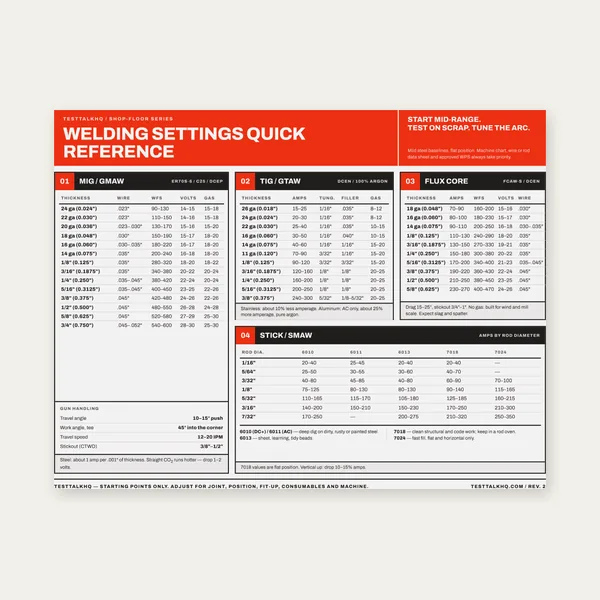
Welding Reference Card
One page. MIG, TIG, stick and flux core settings by thickness.
$3.99
BuyDiagnose rod sticking, spatter & arc blow, stick-specific porosity, undercut/bead profile, and burn-through vs lack of penetration
Shared diagnosis for the stick / rod-selection family — not another “which rod to buy” page. Pair with the Stick Welding Calculator for amp/polarity/dig and the Welding Rod Selection Calculator when the electrode choice itself is wrong. Rod charts and selection live in the Stick Welding Rod Chart & Selection Guide. Amperage math and dig tuning: Stick Welding Settings Guide. This page stays on failures after the rod and numbers looked right.
Use this when the rod freezes to the plate, the arc sprays or wanders, pores show after slag chip, toes undercut, or heat is wrong for thickness — SMAW process failures, not MIG gas problems restated.
| Problem | What it usually means | First fix | Next tool |
|---|---|---|---|
| Rod sticks on strike / mid-weld | Amps low for diameter, damp 7018, wrong polarity, dig too low, long strike drag | Bump amps; confirm DCEP/AC per rod; dry low-hy; raise dig slightly | Stick Calculator |
| Spatter / arc blow | Long arc; magnetic blow near ends/corners on DC; polarity mismatch; dirty ground | Shorten arc; move ground; try AC on 6011/7018; demag path | Settings Guide |
| Porosity (stick-specific) | Wet 7018, paint/oil/rust under low-hy, long arc, travel too fast | Fresh dry rods; clean joint; tighten arc; slow travel | Rod Chart |
| Undercut / poor bead | Wrong angle, travel too fast/slow, amps high for position, long arc | Drag/whip per rod; match travel; drop amps overhead/vert | Settings Guide |
| Burn-through vs no penetration | Diameter/amps vs thickness mismatch; wrong rod family for job | Downsize rod / cut amps on thin; upsize dig/amps or penetrating rod on thick | Rod Selection Calc |
What it looks like: Electrode freezes on strike; rod snuffs into the puddle mid-bead; you pry the stinger free and leave a stub welded on.
Likely causes:
Fixes: Walk amps up inside the published range; verify polarity before technique lectures; discard or rebake compromised 7018; raise dig a notch if the rod snuffs without blowing holes. Recalculate with the Stick Welding Calculator and dig notes in the settings guide.
What it looks like: Balls of metal around the joint; arc wanders off the seam near plate ends, corners, or fixtures; bead looks sprayed.
Likely causes:
Fixes: Shorten the arc; relocate the ground; weld toward/away from the clamp to balance magnetism; on AC-capable rods (6011, 6013, 7018) try AC if blow is severe. Technique detail: Stick Welding Settings Guide.
What it looks like: Pinholes or worm tracks after slag chip; X-ray rejects on 7018; worse on humid days or after rods sat open.
Likely causes:
Fixes: Fresh oven-dry 7018; clean or switch to a penetrating rod on dirty metal; tighten arc and moderate travel. Selection of dirty-metal vs low-hy rods is chart territory — Stick Rod Chart & Selection Guide — not a substitute for drying wet 7018.
What it looks like: Grooves at the toes; tall ropey bead; flat cold-looking ridge; undercut worse overhead or vertical-up.
Likely causes:
Fixes: Match technique to coating (drag low-hy, whip/cellulosic open-root as trained); derate amps for vertical/overhead; keep arc short. Use position factors in the calculator.
What it looks like: Holes on sheet with 1/8" rods; or cold lap / lack of fusion on heavy plate with tiny rods and timid amps.
Likely causes:
Fixes: Downsize diameter and amps on thin; open the root or step up diameter/amps (and often 6010/6011 or proper 7018 procedure) on thick. Confirm electrode choice with the Welding Rod Selection Calculator before rewriting travel speed forever.
If the electrode family itself is wrong (dirty metal vs code low-hy vs thin sheet), use the existing selection chart — do not invent a second decision article. If Stick is the wrong process entirely (windy outdoor vs clean shop production), use the process comparison.

One page. MIG, TIG, stick and flux core settings by thickness.
$3.99
Buy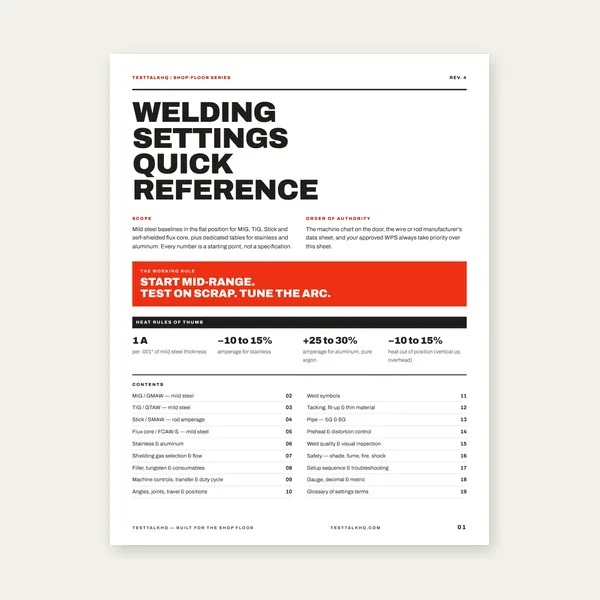
19 pages. Four processes, stainless and aluminum, symbols and inspection.
$12.99
Buy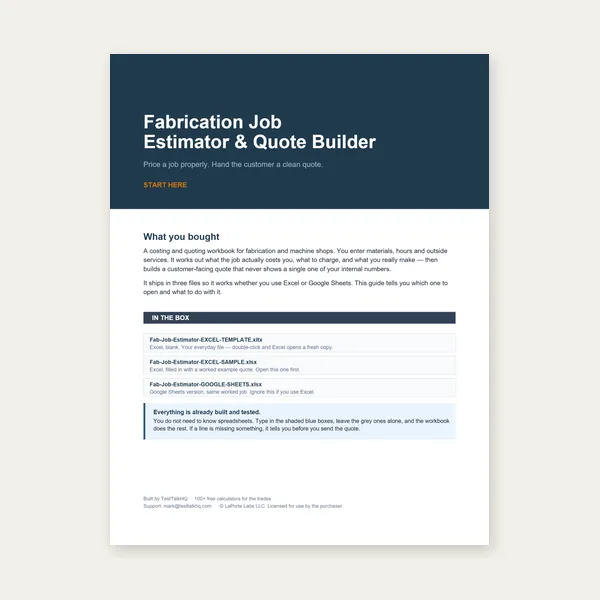
Price the job, then hand over a quote with no internal numbers.
Excel or Google Sheets. Best on a computer.
$29.00
Buy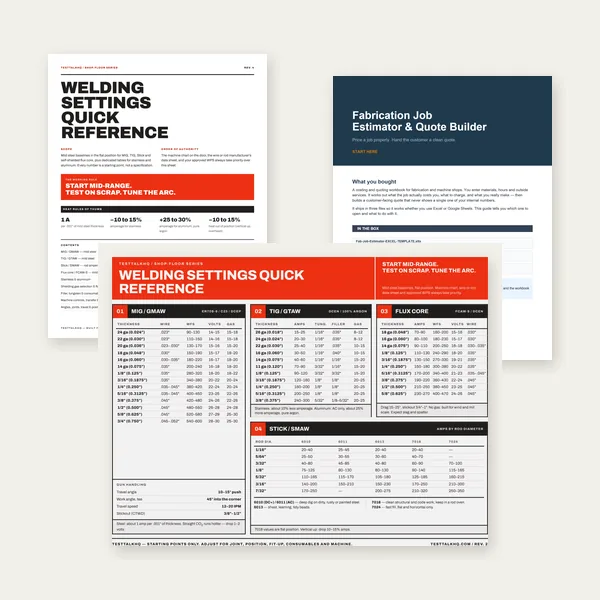
Card, 19-page guide and the estimator workbook. All six files.
Excel or Google Sheets. Best on a computer.
$34.99
$45.98 if bought separately — save $10.99
BuyCheckout opens here — you stay on this page.
Five CSV-sourced stick picks — dry 7018, a solid stinger, PPE, slag cleanup, and a machine with Stick mode
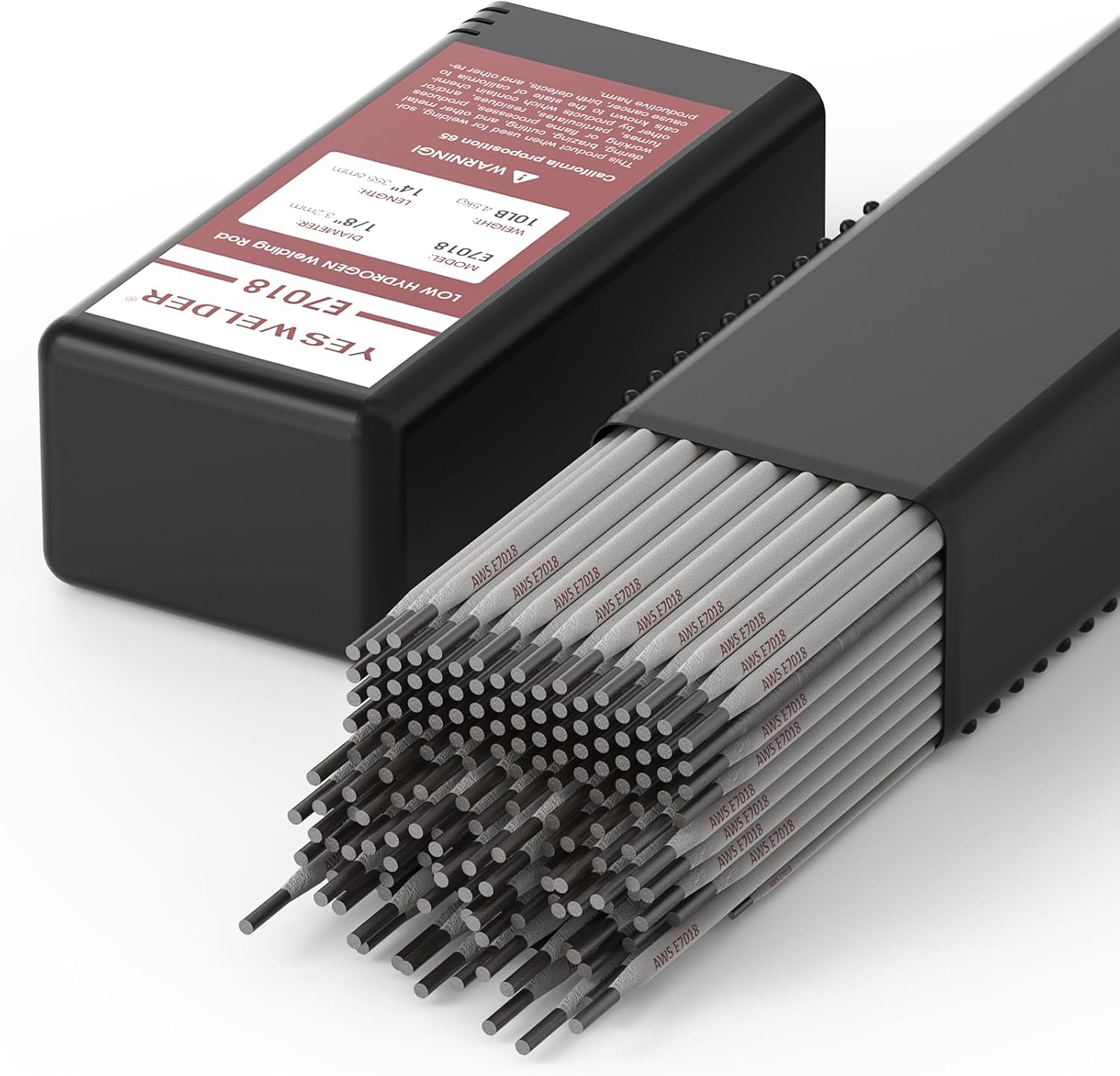
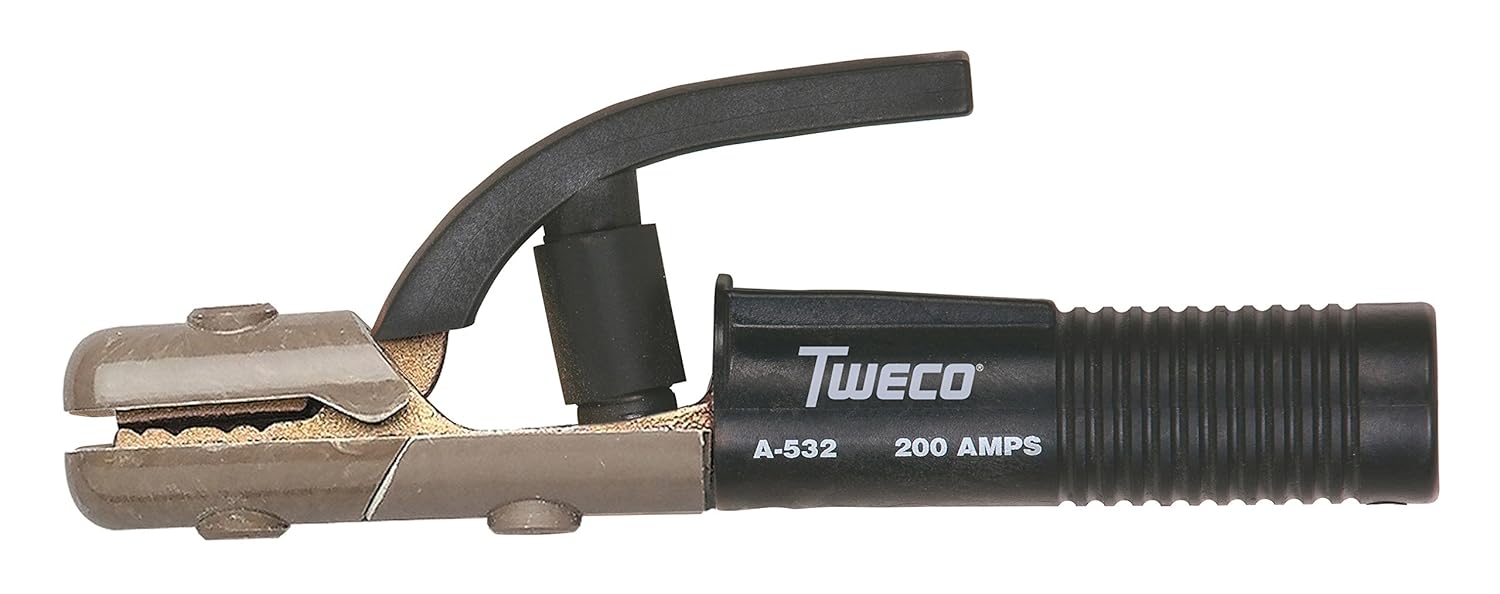
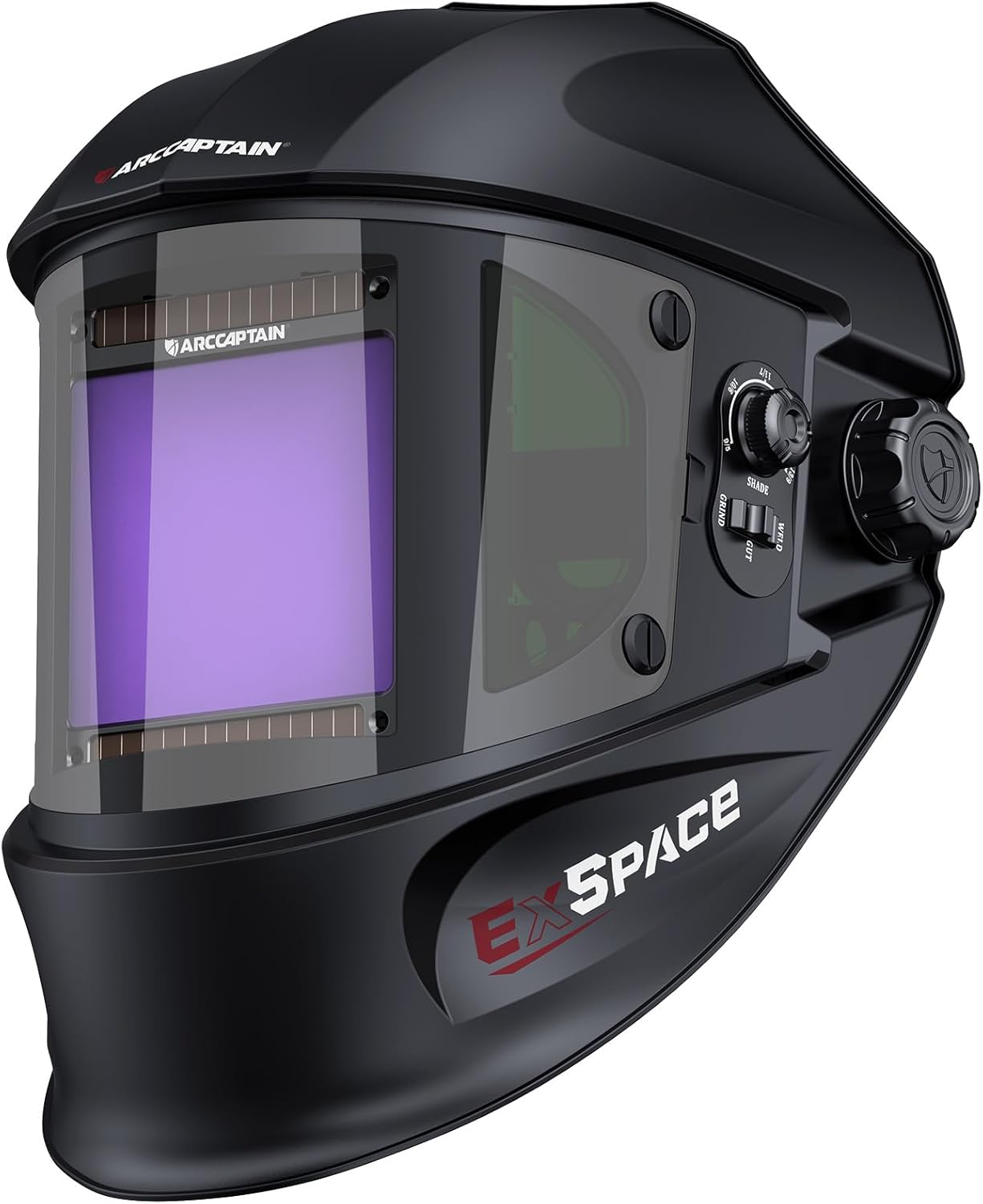
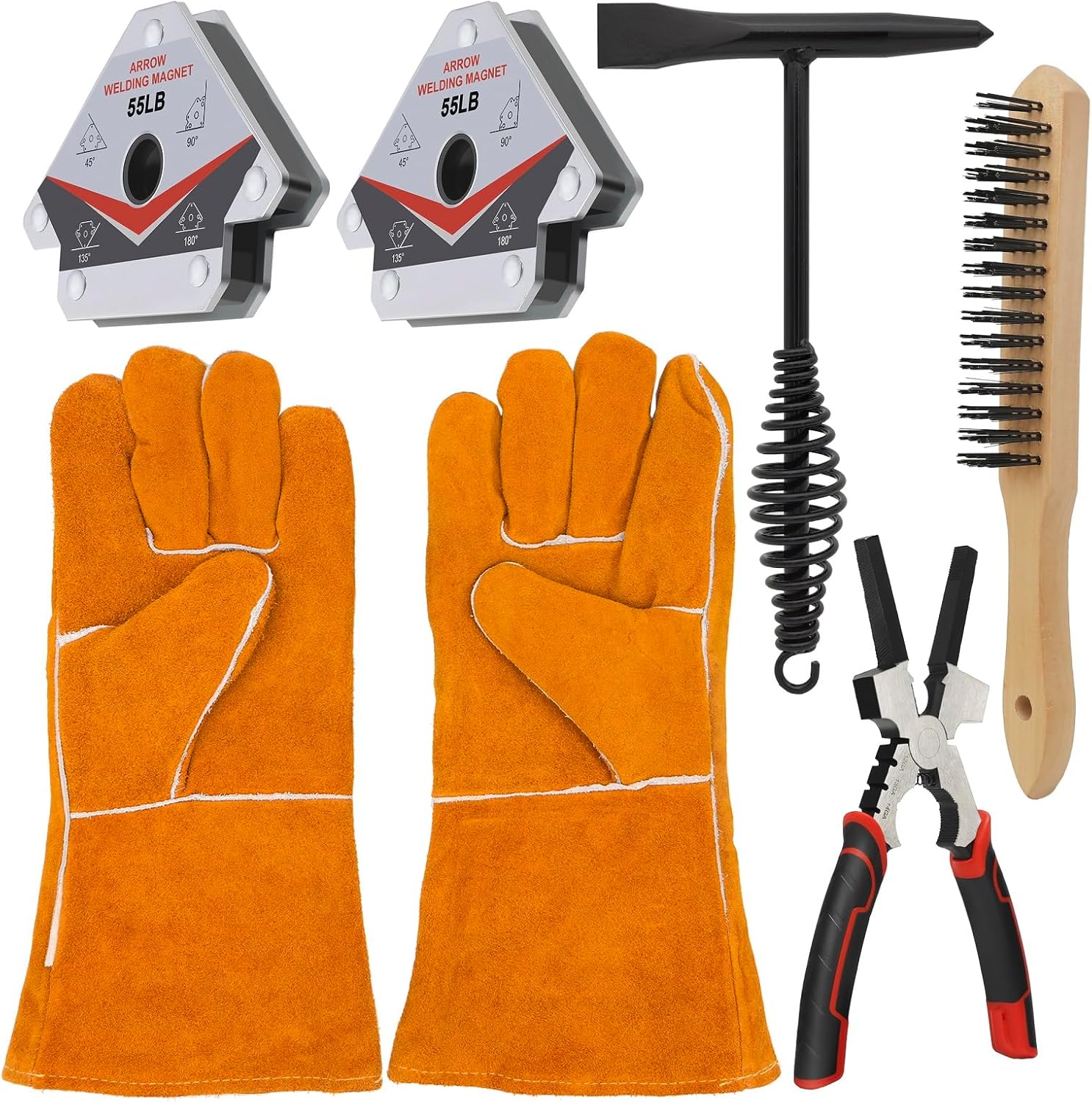
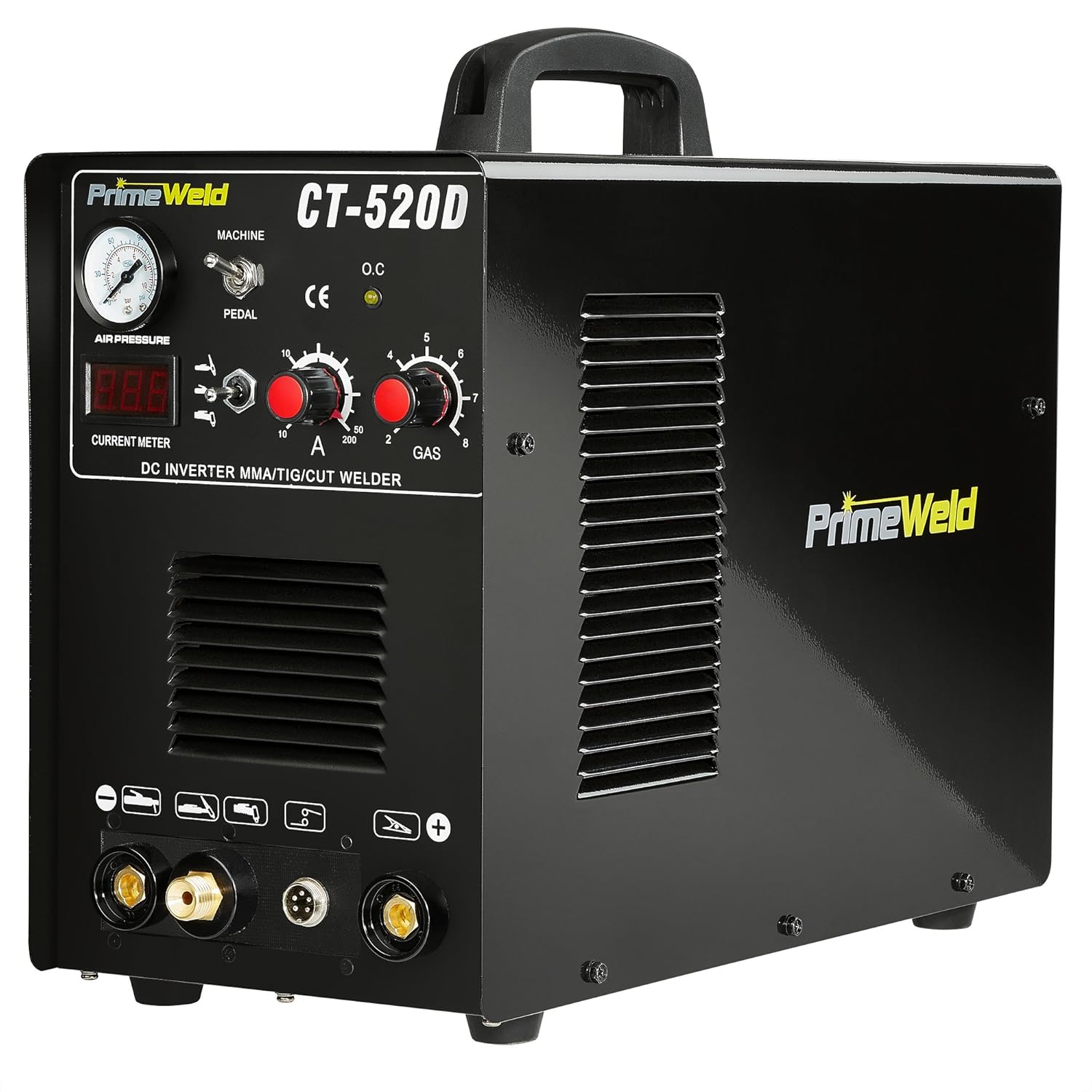
As an Amazon Associate, TestTalkHQ earns from qualifying purchases. Catalog gap: no 6011/6013 rod boxes or rod oven SKU in the affiliate CSV — those would pair tightly with moisture and cellulosic diagnosis.
Usually low amps for the diameter, wrong polarity, wet 7018, or dig set too soft. Fix machine settings and rod condition before technique.
Long arc length and DC magnetic blow near ends/corners are common. Shorten the arc, move the ground, or try AC on rods that allow it.
Moisture in the low-hydrogen coating is the top stick-specific cause. Use oven-dry rods and clean base metal; long arcs make it worse.
Both. High amps with a long arc and wrong travel angle undercut. Match technique to the rod (don’t whip 7018 like 6010) and derate for position.
No. Rod selection belongs on the chart/selection guide. This page diagnoses arc and bead failures after that choice.