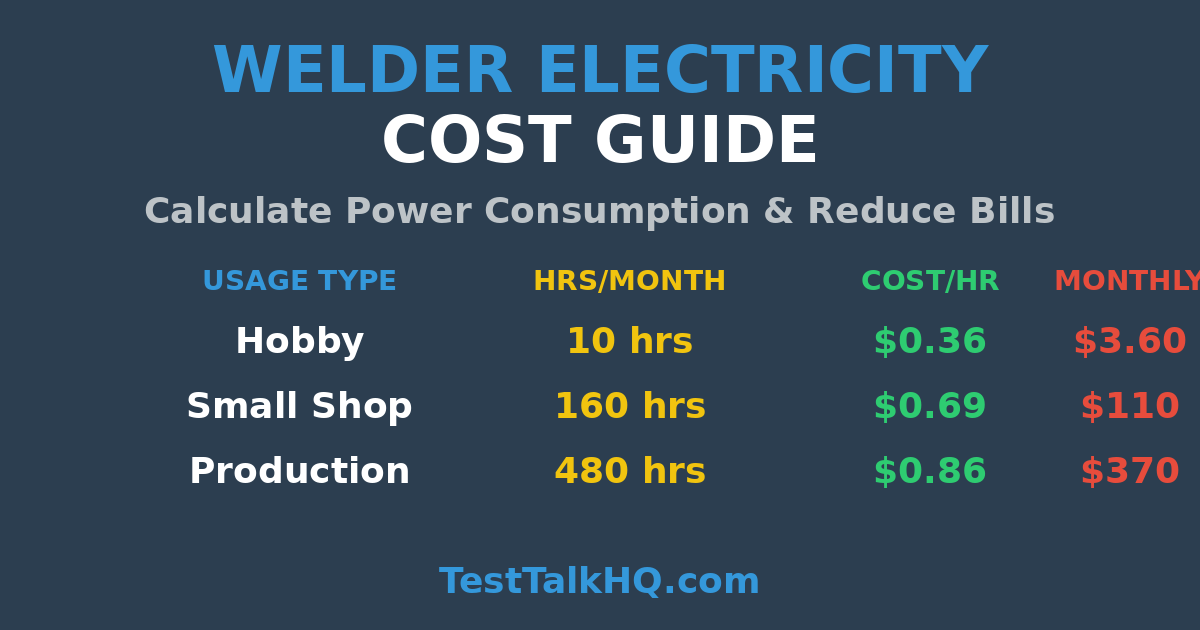
You’re running a 240V MIG welder at 200 amps for 3 hours of fabrication work, and you’re wondering: how much is this actually adding to my electric bill? A typical 240V welder at 50% duty cycle costs about $0.70-1.20 per hour to run depending on your local electricity rates, which means a weekend project with 6 hours of welding adds $4-7 to your monthly bill. That’s manageable. But run that same welder 8 hours a day in a production shop and you’re looking at $140-190 per month in electricity costs just for one welding station—multiply that across three welders and you’ve got a $420-570 monthly overhead expense that most shop owners never track.
Welder electricity costs are invisible expenses because they blend into your overall power bill. Unlike wire or gas where you see the spool empty or cylinder run out, electricity consumption is hidden until the bill arrives. Professional shops track welder power consumption because it’s 8-15% of total operating costs on high-volume work, and residential welders often get sticker shock when they discover their hobby welder added $30-80 to last month’s electric bill without realizing it.
This guide shows you how to calculate welder electricity cost using nameplate data (input voltage, amperage, and duty cycle), explains why 240V welders are 10-15% more efficient than 120V models, and breaks down actual cost per hour for MIG, TIG, and Stick welding at different amperages. You’ll learn how duty cycle affects real power consumption (a 60% duty cycle welder doesn’t use 60% of rated power—it’s more complex), and get seven practical ways to reduce electricity costs by 20-30% without changing how you weld.
Use our free Welder Power Cost Calculator to estimate your monthly electricity expenses based on your specific welder and usage patterns.
Jump to what you need
Why Welder Electricity Costs Matter
Electricity costs for welding vary dramatically based on usage patterns. A hobbyist welding 2-3 hours per week spends $8-15 per month on electricity. A small fabrication shop running one welder 40 hours per week spends $140-280 per month. A production facility with three welding stations running 160 hours per week spends $1,200-2,400 per month just on welder electricity.
The Hidden Cost in Your Electric Bill
Unlike consumables (wire, gas, electrodes) where you see immediate costs when purchasing, electricity costs accumulate invisibly throughout the month. Most welders don’t realize their weekend fabrication project added $25-40 to the electric bill until they compare usage to non-welding months.
Real-world example: Hobby welder
Scenario: Weekend warrior, 240V MIG welder, 6 hours of arc-on time per month
Electricity rate: $0.12 per kWh (national average)
Monthly cost: $4.20-7.20 for electricity
Annual cost: $50-86
Not catastrophic, but over 10 years that’s $500-860 in electricity just for hobby welding.
Real-world example: Small fabrication shop
Scenario: One 240V MIG welder, 160 hours per month (40 hrs/week)
Electricity rate: $0.12 per kWh
Monthly cost: $110-190
Annual cost: $1,320-2,280
That’s a legitimate operating expense that affects profit margins on every job.
Welder Electricity as Percentage of Operating Costs
| Shop Type | Electricity % of Overhead | Monthly Cost (1 welder) |
|---|---|---|
| Hobby/residential | 2-5% | $5-15 |
| Small shop (1-2 welders) | 8-12% | $110-280 |
| Production shop (3+ welders) | 12-18% | $600-1,400 |
The more you weld, the more critical it becomes to track and optimize electricity consumption.
Why 240V Matters for Cost Efficiency
240V welders are 10-15% more electrically efficient than equivalent 120V models because they draw lower amperage for the same power output, reducing resistive losses in wiring and components.
Example comparison:
- 120V welder drawing 20A = 2,400 watts input, ~2,100 watts output (87.5% efficient)
- 240V welder drawing 10A = 2,400 watts input, ~2,200 watts output (91.7% efficient)
Over a year, that 4% efficiency gain saves $50-100 on electricity for a shop welder.
How to Calculate Welder Electricity Cost
Calculating welder electricity cost requires three pieces of information from the welder nameplate and one from your utility bill:
Basic Electricity Cost Formula
Cost per Hour = (Input Voltage × Input Amperage × Duty Cycle Factor) ÷ 1000 × Electricity Rate ($/kWh)
Step-by-Step Calculation
Step 1: Find input voltage and amperage on nameplate
Example welder nameplate data:
- Input: 240V, 50A
- Output: 30-225A
- Duty cycle: 60% @ 200A
Step 2: Determine duty cycle factor
Duty cycle affects actual power consumption. A 60% duty cycle at maximum output doesn’t mean the welder uses 60% of rated power continuously—it means it can weld 6 minutes out of every 10 at that amperage before overheating.
For cost calculations, use these duty cycle factors based on actual welding patterns:
- Continuous production welding: 0.50-0.70 (welder runs hot most of the time)
- Intermittent fabrication: 0.30-0.50 (frequent starts/stops, positioning)
- Hobby/project welding: 0.20-0.35 (lots of setup, grinding between welds)
Step 3: Find your electricity rate
Check your electric bill for cost per kilowatt-hour (kWh). National average is $0.12/kWh, but varies by location:
- Hawaii, California: $0.20-0.35/kWh
- Louisiana, Washington: $0.08-0.10/kWh
- Most states: $0.10-0.16/kWh
Step 4: Calculate cost per hour
Using our example welder (240V, 50A input) with intermittent welding (0.40 duty cycle factor) at $0.12/kWh:
Cost per hour = (240V × 50A × 0.40) ÷ 1000 × $0.12
Cost per hour = (4,800 × 0.40) ÷ 1000 × $0.12
Cost per hour = 1.92 kWh × $0.12
Cost per hour = $0.23 per hour of shop time
This is cost per hour you’re in the shop welding, not per hour of arc-on time (which would be higher).
Simplified Quick Estimate
For rough estimates without detailed calculations:
Cost per hour ≈ Input Watts ÷ 1000 × Duty Factor × Electricity Rate
Where Input Watts = Voltage × Amperage from nameplate
Example: 240V welder, 40A input, 0.35 duty factor, $0.12/kWh
Cost ≈ (240 × 40) ÷ 1000 × 0.35 × $0.12
Cost ≈ 9.6 × 0.35 × $0.12
Cost ≈ $0.40 per hour
Use our Welder Power Cost Calculator for instant results without manual calculations.
Understanding Welder Nameplate Data
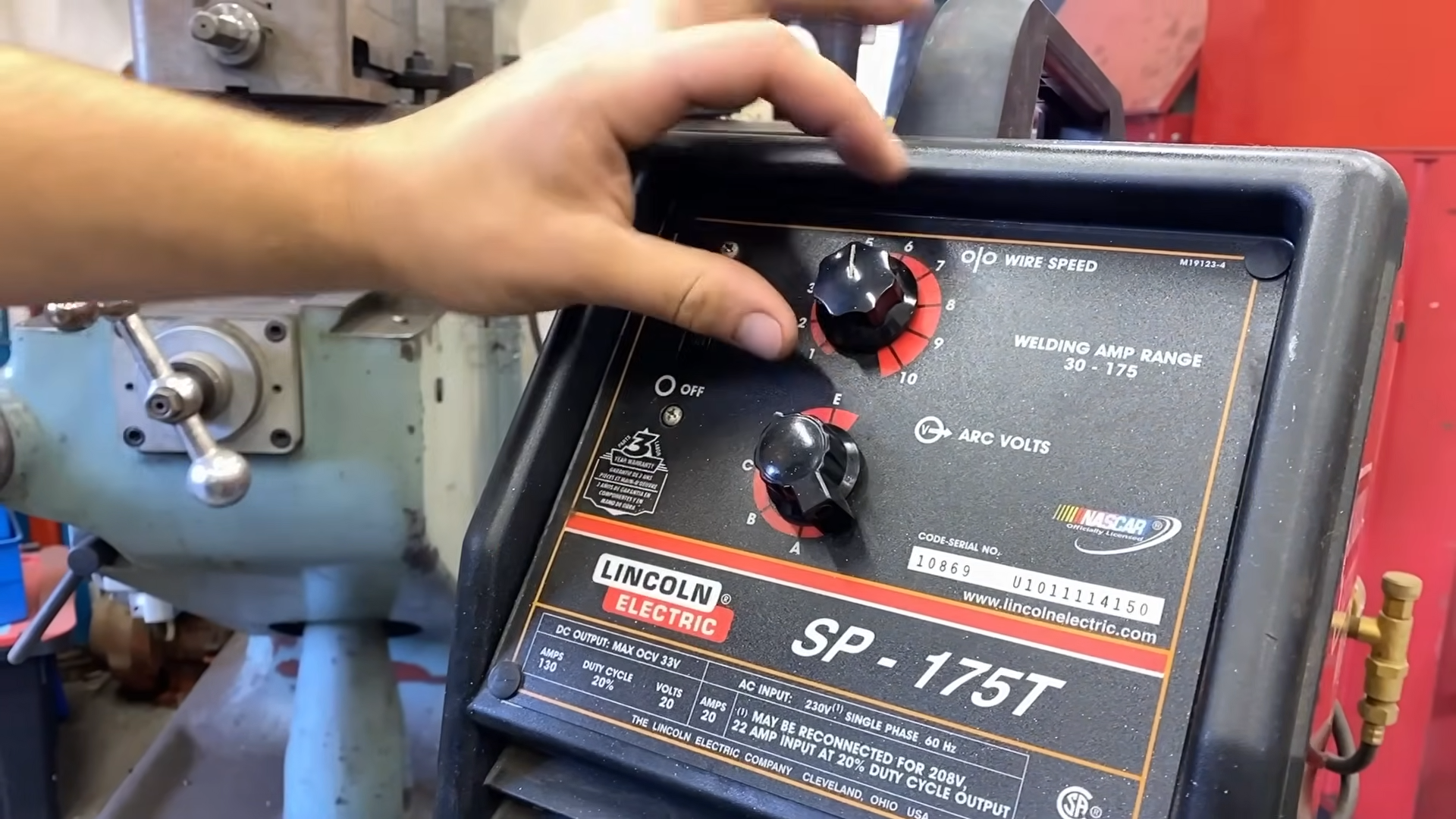
Every welder has a nameplate (data plate) that lists electrical specifications. Understanding this data is critical for cost calculations and electrical safety.
What’s on a Welder Nameplate
Input specifications (what you pay for):
- Input voltage: 120V, 240V, or dual-voltage (120/240V)
- Input amperage: Maximum current draw from wall outlet
- Input frequency: 60 Hz (North America), 50 Hz (most other countries)
- Input phase: Single-phase (residential) or three-phase (industrial)
Output specifications (what you weld with):
- Output amperage range: Minimum to maximum welding current
- Duty cycle rating: Percentage of 10-minute period welder can operate
- Output voltage: Open circuit voltage (OCV) and arc voltage range
Example Nameplate Interpretation
Nameplate reads:
- Input: 230V, 1-phase, 60Hz, 50A
- Output: 30-250A, 60% duty cycle @ 200A
What this means:
- Requires 240V circuit (230V nominal)
- Draws up to 50 amps from wall outlet (requires 50A breaker minimum)
- Maximum power consumption: 11.5 kW (230V × 50A)
- Can weld at 200A output for 6 minutes, must cool 4 minutes
- Can weld continuously at lower amperages (typically 130-150A)
Input Power Rating
Input power is what determines your electricity cost:
Input Power (watts) = Input Voltage × Input Amperage
Examples:
- 120V @ 20A = 2,400 watts (2.4 kW)
- 240V @ 30A = 7,200 watts (7.2 kW)
- 240V @ 50A = 12,000 watts (12 kW)
This is maximum rated power. Actual consumption varies based on welding amperage and duty cycle.
Input Amperage vs. Output Amperage
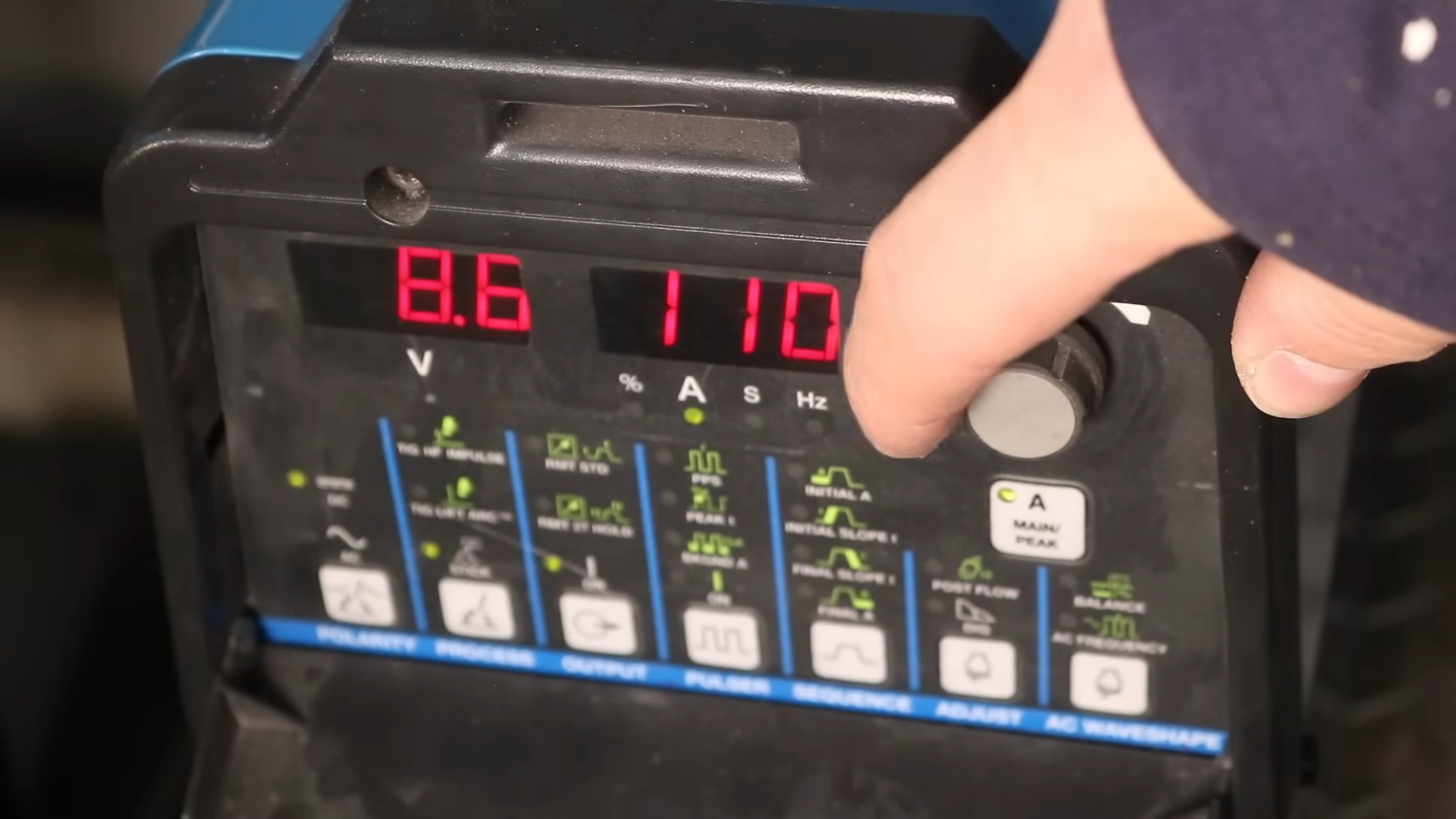
This is where most people get confused: input amperage and output amperage are completely different values.
Input Amperage (What You Pay For)
Definition: Current drawn from the wall outlet
What it affects: Your electric bill, required circuit breaker size, wire gauge
Example: 240V welder with 50A input amperage
This means:
- Welder can draw up to 50 amps from wall
- Requires 50A breaker (or 60A for safety margin)
- Maximum power draw: 12,000 watts (12 kW)
- Maximum cost: 12 kWh per hour at 100% utilization
Output Amperage (What You Weld With)
Definition: Welding current delivered to the arc
What it affects: Weld penetration, bead size, heat input
Example: Same welder outputs 30-250A welding current
This means:
- You can weld from 30A (thin sheet metal) to 250A (thick plate)
- Output amperage does NOT equal power consumption
- Higher output requires more input power (but not 1:1 ratio)
The Power Efficiency Relationship
Welders are not 100% efficient at converting input power to output power. Typical efficiency:
| Welder Type | Efficiency | Loss |
|---|---|---|
| Inverter-based (modern) | 85-92% | 8-15% |
| Transformer-based (older) | 70-80% | 20-30% |
| Engine-driven (portable) | 60-75% | 25-40% |
Power loss becomes heat in the welder’s internal components—this is why welders have cooling fans and duty cycle limits.
Example: Input vs. Output Power
Welder welding at 200A output, 25V arc voltage:
Output power = 200A × 25V = 5,000 watts (5 kW)
Welder efficiency = 85% (inverter model)
Input power required = 5,000 ÷ 0.85 = 5,882 watts (~5.9 kW)
So to deliver 5 kW to the arc, the welder draws 5.9 kW from the wall. The missing 0.9 kW becomes heat inside the welder.
How Duty Cycle Affects Power Consumption
Duty cycle is one of the most misunderstood aspects of welder electricity consumption. Many people assume a 60% duty cycle welder uses 60% of rated power—this is incorrect.
What Duty Cycle Actually Means
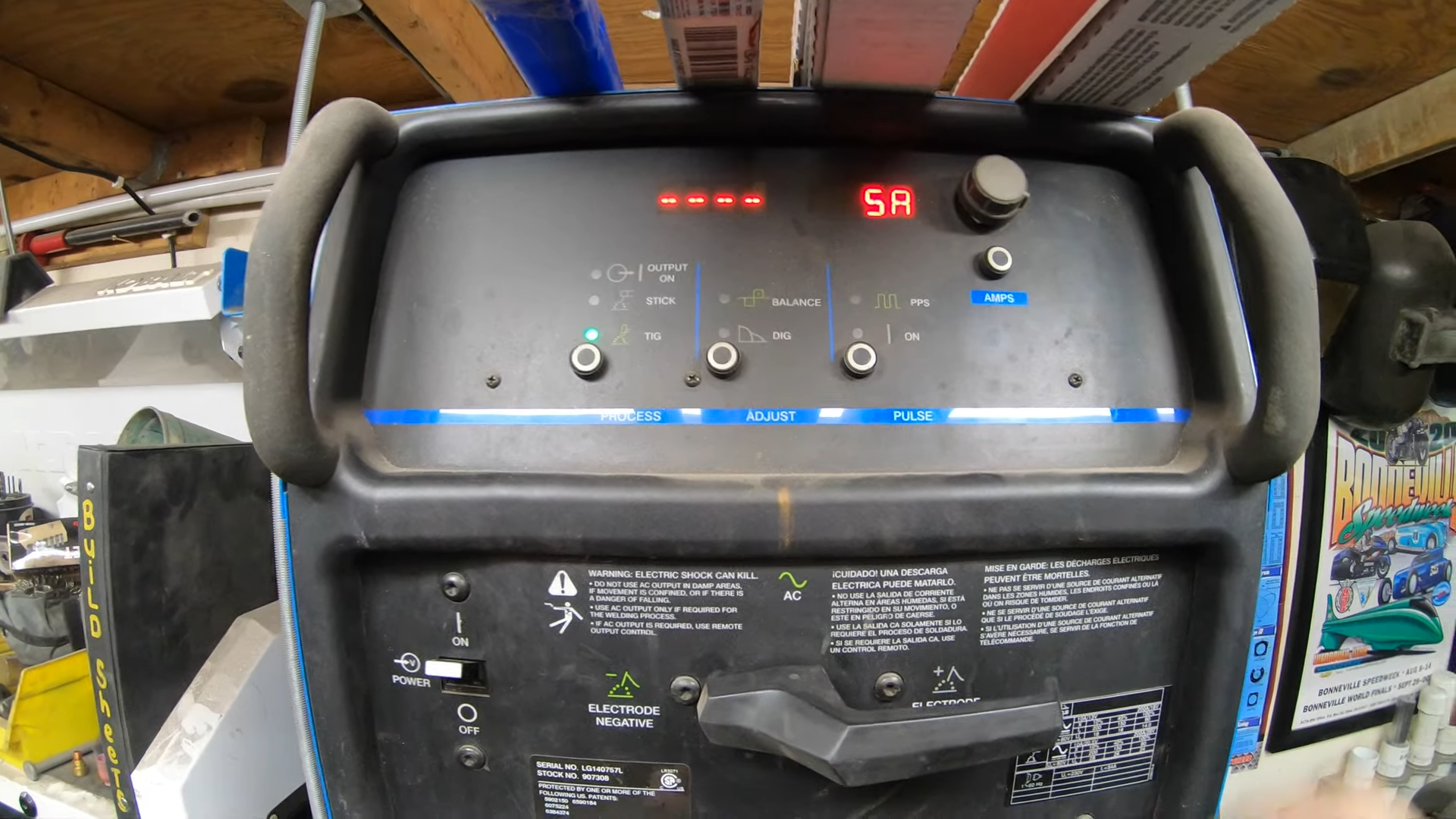
Duty cycle definition: Percentage of a 10-minute period the welder can operate at a given amperage before thermal overload protection kicks in.
60% duty cycle @ 200A means:
- Weld for 6 minutes at 200A output
- Must cool for 4 minutes
- Cycle repeats every 10 minutes
Learn more with our Duty Cycle Calculator to calculate exact weld time and cool-down periods.
Duty Cycle vs. Actual Power Consumption
Here’s the critical distinction: duty cycle limits how long you can weld continuously, but it doesn’t directly limit power consumption during welding.
Example scenario: 240V welder, 50A input, 60% duty cycle @ 200A
While actually welding at 200A:
- Welder draws near maximum input power (~11-12 kW)
- Power consumption is close to 100% of rated input
- After 6 minutes, thermal protection forces cool-down
During 4-minute cool-down:
- Welder draws idle power (cooling fan, controls: ~100-300 watts)
- Nearly zero power consumption compared to welding
Average power over 10 minutes:
- 6 minutes @ 12 kW = 1.2 kWh
- 4 minutes @ 0.2 kW = 0.013 kWh
- Total: 1.213 kWh per 10-minute cycle
- Average: 7.28 kWh per hour (61% of maximum)
So a 60% duty cycle welder running at rated duty cycle amperage consumes roughly 60% of maximum power—but only if you’re pushing it to duty cycle limits.
Real-World Duty Cycle Usage
Most welders don’t run at duty cycle limits. Real-world usage patterns:
| Usage Pattern | Actual Duty Factor | Power Consumption |
|---|---|---|
| Production line welding | 50-70% | High – minimal downtime |
| General fabrication | 30-50% | Medium – positioning, measuring |
| Hobby/project work | 20-35% | Low – grinding, fitting, setup |
| Repair welding | 15-25% | Very low – disassembly, prep, cleanup |
A hobby welder spending 3 hours in the shop might only have 40 minutes of actual arc-on time (22% duty factor), meaning electricity consumption is far lower than rated input power suggests.

Electricity Cost by Welder Type
Different welder types have different power requirements and efficiencies, affecting operating costs:
120V Hobby MIG Welders
Typical specs: 120V, 15-20A input, 30-140A output
Input power: 1,800-2,400 watts
Efficiency: 75-85% (older transformer models) or 85-90% (newer inverters)
Cost per hour @ $0.12/kWh:
- Light fabrication (25% duty): $0.05-0.07/hour
- Active welding (40% duty): $0.12-0.17/hour
- Continuous (60% duty): $0.18-0.26/hour
Best for: Thin sheet metal, automotive bodywork, light repairs
Limitation: Cannot weld thick material, limited to 15-20A household circuits
240V MIG Welders (Small/Medium)
Typical specs: 240V, 30-40A input, 40-180A output
Input power: 7,200-9,600 watts
Efficiency: 85-92% (modern inverters)
Cost per hour @ $0.12/kWh:
- Light fabrication (25% duty): $0.22-0.29/hour
- General fabrication (40% duty): $0.35-0.46/hour
- Heavy welding (60% duty): $0.52-0.69/hour
Best for: General fabrication, structural steel, automotive chassis
Sweet spot: Most versatile for small shops and serious hobbyists
240V MIG Welders (Large/Industrial)
Typical specs: 240V, 50-60A input, 40-300A output
Input power: 12,000-14,400 watts
Efficiency: 88-93%
Cost per hour @ $0.12/kWh:
- Light welding (25% duty): $0.36-0.43/hour
- Production welding (50% duty): $0.72-0.86/hour
- Heavy continuous (70% duty): $1.01-1.21/hour
Best for: Production shops, thick plate, aluminum, high-amperage work
Note: Higher idle power consumption (fans, advanced controls)
TIG Welders
Typical specs: 240V, 30-50A input, 5-200A output
Input power: 7,200-12,000 watts
Efficiency: 85-91%
Cost per hour @ $0.12/kWh:
- Precision work (20% duty): $0.17-0.29/hour
- General TIG fabrication (30% duty): $0.26-0.43/hour
- Production TIG (45% duty): $0.39-0.65/hour
Best for: Precision work, stainless steel, aluminum, thin materials
Note: Lower actual duty factor due to precise, intermittent nature of TIG
Stick Welders
Typical specs: 240V, 40-60A input, 40-225A output
Input power: 9,600-14,400 watts
Efficiency: 70-85% (older transformer) or 85-90% (inverter)
Cost per hour @ $0.12/kWh:
- Light repair welding (25% duty): $0.29-0.43/hour
- General fabrication (35% duty): $0.40-0.61/hour
- Heavy structural (50% duty): $0.58-0.86/hour
Best for: Outdoor work, structural steel, heavy repair, thick plate
Note: Older transformer models use 15-20% more electricity than inverters
120V vs. 240V Efficiency Comparison
240V welders are measurably more efficient than 120V models, saving 10-15% on electricity costs for equivalent welding output.
Why 240V is More Efficient
Lower current for same power:
For 2,400 watts of power:
- 120V welder draws 20 amps
- 240V welder draws 10 amps
Resistive losses (I²R losses):
Power lost to heat in wiring = Current² × Resistance
For same wiring resistance (0.1 ohms):
- 120V: 20² × 0.1 = 40 watts lost to heat
- 240V: 10² × 0.1 = 10 watts lost to heat
The 120V circuit loses 4x more power to heat in the wiring.
Real-World Efficiency Comparison
| Welder Type | Input Power | Output Power | Efficiency | Cost/Hour |
|---|---|---|---|---|
| 120V inverter MIG | 2,400W | 2,100W | 87.5% | $0.29 |
| 240V inverter MIG | 2,400W | 2,200W | 91.7% | $0.26 |
| Savings: $0.03/hour (10% reduction) | ||||
Assumes 40% duty cycle @ $0.12/kWh
Annual savings (40 hours/month welding):
$0.03/hour × 40 hours × 12 months = $14.40/year
Not huge for hobbyists, but for shops running 160 hours/month: $57.60/year per welder.
Additional 240V Benefits
Beyond efficiency, 240V welders offer:
- Higher output capacity: 200-300A vs 120-140A maximum
- Better arc stability: More consistent voltage regulation
- Faster wire feed: Higher deposition rates for productivity
- Lower circuit load: 30-50A vs 15-20A (less breaker tripping)
If you’re welding regularly (monthly or more), 240V is worth the circuit installation cost.
Need help sizing electrical wire for your welder? Use our Wire Gauge Calculator to determine proper wire size for your circuit.
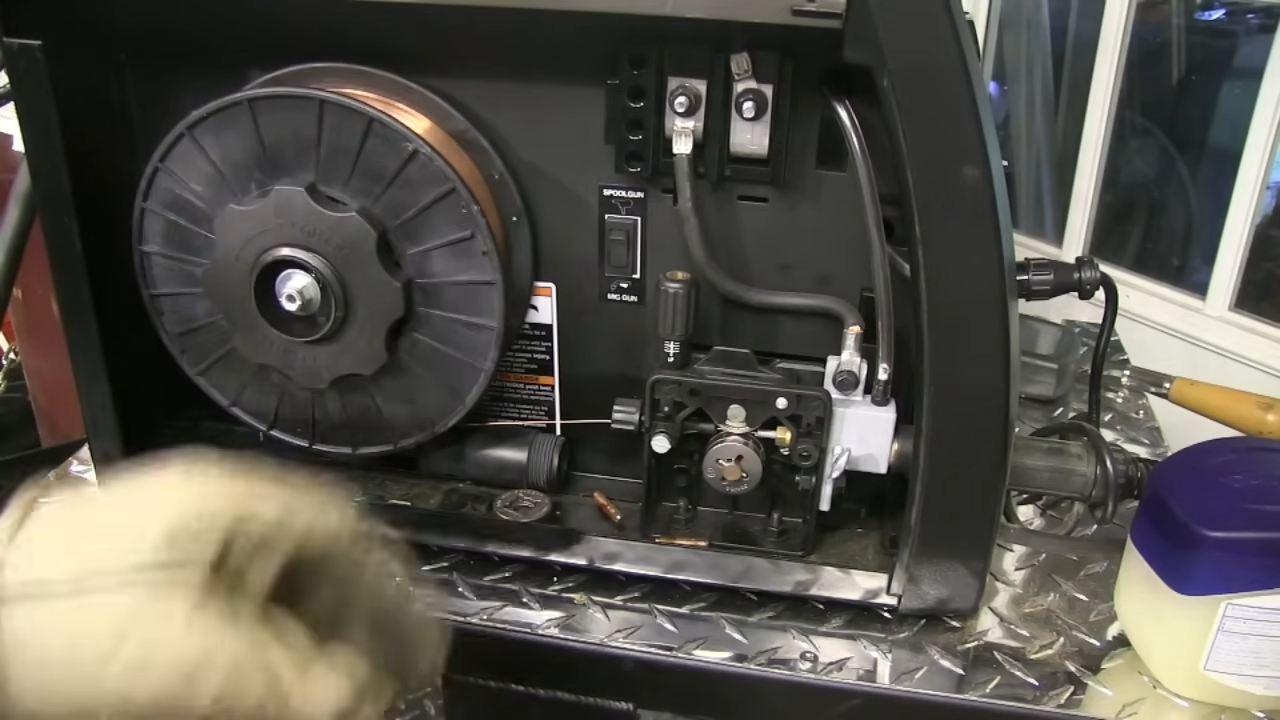
Cost Per Hour by Welding Process
Different welding processes have different power consumption patterns and duty factors, affecting hourly operating costs:
MIG Welding (Short-Circuit Transfer)
Typical settings: 150-200A output, 240V 40A input welder
Average duty factor: 35-45% (intermittent fabrication)
Input power during welding: 8,000-9,600 watts
Cost per shop hour @ $0.12/kWh:
- Hobby use (30% duty): $0.29-0.35/hour
- Fabrication (40% duty): $0.38-0.46/hour
- Production (55% duty): $0.53-0.63/hour
Characteristics:
- Fast welding = higher duty factor = higher costs
- Less grinding between welds than Stick
- Good for continuous seam welding (higher consumption)
MIG Welding (Spray Transfer)
Typical settings: 250-300A output, 240V 50A input welder
Average duty factor: 45-60% (production work)
Input power during welding: 11,000-12,000 watts
Cost per shop hour @ $0.12/kWh:
- Aluminum fabrication (40% duty): $0.53-0.58/hour
- Production welding (55% duty): $0.73-0.79/hour
- Continuous operation (70% duty): $0.92-1.01/hour
Characteristics:
- Higher amperage = higher power consumption
- Faster deposition = more arc-on time
- Typically used in production environments (long run times)
TIG Welding
Typical settings: 80-150A output, 240V 35A input welder
Average duty factor: 20-35% (precision work with frequent stops)
Input power during welding: 6,000-8,400 watts
Cost per shop hour @ $0.12/kWh:
- Precision fabrication (20% duty): $0.14-0.20/hour
- General TIG work (30% duty): $0.22-0.30/hour
- Production TIG (45% duty): $0.32-0.45/hour
Characteristics:
- Lowest duty factor (lots of setup, positioning, filler dab technique)
- Lower average amperage than MIG
- Most economical per shop hour (but slowest welding speed)
Stick Welding
Typical settings: 100-160A output, 240V 45A input welder
Average duty factor: 25-40% (frequent electrode changes, slag chipping)
Input power during welding: 8,000-10,800 watts
Cost per shop hour @ $0.12/kWh:
- Repair welding (25% duty): $0.24-0.32/hour
- Fabrication (35% duty): $0.34-0.45/hour
- Structural welding (45% duty): $0.43-0.58/hour
Characteristics:
- Lower duty factor (electrode changes every 8-14 inches)
- Slag removal time between passes
- Moderate power consumption
Process Comparison Chart
| Process | Avg Duty Factor | Cost/Hour (Shop) | Annual Cost (160hr/mo) |
|---|---|---|---|
| MIG Short-circuit | 40% | $0.38-0.46 | $730-880 |
| MIG Spray | 55% | $0.73-0.79 | $1,400-1,515 |
| TIG | 30% | $0.22-0.30 | $422-576 |
| Stick | 35% | $0.34-0.45 | $653-864 |
Based on $0.12/kWh electricity rate

Monthly and Annual Cost Estimates
Understanding long-term electricity costs helps with budgeting and comparing welders:
Hobby Welder (Weekend Fabrication)
Usage pattern: 6-10 hours per month in the shop
Welder: 240V, 30A input MIG
Duty factor: 30% (lots of prep, measuring, fitting)
Monthly electricity cost @ $0.12/kWh:
- 6 hours/month: $2.16-2.88
- 10 hours/month: $3.60-4.80
Annual cost: $26-58
Verdict: Negligible cost, not worth worrying about
Serious Hobbyist / Part-Time Fabricator
Usage pattern: 20-40 hours per month
Welder: 240V, 40A input MIG or TIG
Duty factor: 35%
Monthly electricity cost @ $0.12/kWh:
- 20 hours/month: $8.40-11.20
- 40 hours/month: $16.80-22.40
Annual cost: $101-269
Verdict: Noticeable but manageable, less than one spool of wire per month
Small Fabrication Shop (1 Welder)
Usage pattern: 160 hours per month (40 hrs/week)
Welder: 240V, 50A input MIG
Duty factor: 45%
Monthly electricity cost @ $0.12/kWh: $86-115
Annual cost: $1,032-1,380
Verdict: Legitimate operating expense, track and optimize
Production Shop (3 Welders)
Usage pattern: 480 hours per month total (3 welders × 160 hrs each)
Welders: Mix of 240V, 40-60A input
Duty factor: 50-60% (production environment)
Monthly electricity cost @ $0.12/kWh: $620-1,150
Annual cost: $7,440-13,800
Verdict: Major overhead expense, 5-10% reduction saves $370-1,380 annually
High-Volume Production (10+ Welders)
Usage pattern: 3,200+ hours per month (10+ stations)
Welders: Industrial 240V/480V, 60-100A input
Duty factor: 60-75%
Monthly electricity cost @ $0.12/kWh: $5,760-11,520
Annual cost: $69,120-138,240
Verdict: Critical to optimize, justify energy audits and power monitoring
Calculate your specific costs with our Weld Cost Calculator, which includes electricity, wire, gas, and labor.
7 Ways to Reduce Welder Electricity Costs
Professional shops implement these strategies to cut electricity costs by 20-30% without sacrificing weld quality:
1. Turn Off Welder When Not in Use
Idle power consumption: 50-300 watts (fans, displays, standby power)
Savings: 5-10% reduction in electricity costs
Leaving a welder on all day while you’re grinding, fitting, or measuring wastes $0.05-0.35 per day in idle power. Over a month, that’s $1.50-10.50 wasted.
Best practice: Turn off welder during lunch, breaks, and when leaving the shop. Modern inverters boot up in seconds, so there’s no productivity loss.
2. Upgrade to 240V if Running 120V
Efficiency gain: 10-15% more efficient
Savings: $50-150/year for active welders
If you’re welding regularly (monthly or more) and still using a 120V welder, the circuit installation cost ($200-500) pays for itself in 3-5 years through electricity savings and increased capability.
Bonus: 240V welders handle thicker material and weld faster, improving productivity.
3. Replace Old Transformer Welders with Inverters
Efficiency gain: 15-25% more efficient
Idle power reduction: 80-90% lower standby consumption
Savings: $100-300/year per welder
Old transformer-based welders (pre-2000s) are 70-80% efficient and consume 200-500 watts on idle. Modern inverter welders are 85-92% efficient with 50-100 watt idle consumption.
Payback period: 3-7 years for active shop use, plus you get better arc quality and portability.
4. Weld at Lowest Effective Amperage
Power reduction: 20-40% lower consumption
Savings: $0.10-0.25 per welding hour
Many welders run higher amperage than necessary “just to be safe.” Every 20-30 amps of unnecessary output increases power consumption by 10-15%.
Example: Welding 3/16″ steel at 180A when 140A would work:
- 180A: ~9 kW input power = $1.08/hour
- 140A: ~7 kW input power = $0.84/hour
- Savings: $0.24/hour
Over 160 hours/month, that’s $38.40 saved monthly, $460 annually.
Use our MIG Welding Calculator to find optimal settings for your material thickness.
5. Minimize Arc-On Time (Improve Efficiency)
Typical improvement: 15-25% reduction in shop time per project
Savings: 15-25% electricity reduction
Welders who pre-fit, pre-tack, and organize work efficiently spend less time with the arc running. Reduce downtime by:
- Batch similar welds together
- Pre-cut and pre-fit all pieces before welding
- Use jigs and fixtures for consistent positioning
- Minimize grinding between welds (better technique = less cleanup)
Example: Job takes 5 hours in shop, 2 hours arc-on time (40% efficiency)
After optimization: 4 hours in shop, 1.8 hours arc-on time (45% efficiency)
Savings: 20% reduction in electricity + 20% faster completion
6. Use Power Factor Correction (Industrial Shops)
Savings: 5-12% reduction in demand charges (commercial rates)
Cost: $500-2,000 per installation
Large shops on commercial/industrial electric rates pay demand charges based on peak power consumption. Power factor correction capacitors reduce reactive power, lowering demand charges.
Payback period: 1-3 years for shops with 5+ welders
Note: Only beneficial on commercial rates with demand charges
7. Schedule High-Power Welding During Off-Peak Hours
Savings: 30-50% reduction in electricity cost for shifted work
Availability: Requires time-of-use (TOU) rate plan
Some utilities offer time-of-use rates where electricity costs less during off-peak hours (typically 9 PM to 7 AM or weekends).
Example TOU rates:
- Peak hours (2-8 PM): $0.22/kWh
- Off-peak (9 PM-7 AM): $0.08/kWh
- Savings: 64% cheaper during off-peak
For shops that can shift heavy welding to night/weekend shifts, savings can be substantial ($200-600/month for 3-welder shop).

Comparing Welder Operating Costs
When buying a welder, electricity cost is often overlooked. Here’s how different welders compare over their lifetime:
5-Year Total Cost of Ownership
Assumptions: Hobby use, 30 hours/month, $0.12/kWh electricity
| Welder Type | Purchase Price | 5-Year Electricity | Total Cost |
|---|---|---|---|
| 120V entry MIG (old) | $300 | $216 | $516 |
| 120V inverter MIG | $500 | $180 | $680 |
| 240V inverter MIG | $800 | $162 | $962 |
Does not include consumables (wire, gas, electrodes)
Key insight: Over 5 years of hobby use, electricity is only 20-30% of initial purchase price. For hobbyists, buy based on capability, not electricity cost.
5-Year Cost for Production Shop
Assumptions: 160 hours/month per welder, $0.12/kWh
| Welder Type | Purchase Price | 5-Year Electricity | Total Cost |
|---|---|---|---|
| Transformer MIG (old) | $1,500 | $8,280 | $9,780 |
| Inverter MIG (entry) | $2,000 | $6,600 | $8,600 |
| Premium inverter MIG | $3,500 | $6,180 | $9,680 |
Key insight: For production shops, electricity cost over 5 years equals or exceeds purchase price. A premium inverter saves $1,680-2,100 in electricity over 5 years, justifying the higher upfront cost.
Frequently Asked Questions
How much does it cost to run a welder per hour?
A typical 240V MIG welder costs $0.30-0.70 per hour of shop time at average residential electricity rates ($0.12/kWh). Actual cost depends on welder input power (240V × 30-50A = 7.2-12 kW), duty cycle (how often you’re actually welding vs. positioning/grinding), and local electricity rates. Light fabrication with frequent breaks costs $0.30-0.40/hour while continuous production welding costs $0.60-0.80/hour. Use our Welder Power Cost Calculator for your specific welder.
How do you calculate welder electricity cost?
Calculate electricity cost using: (Input Voltage × Input Amperage × Duty Factor) ÷ 1000 × Electricity Rate ($/kWh) = Cost per hour. Find input voltage and amperage on the welder nameplate. Duty factor is percentage of time actually welding (20-35% for hobby, 40-55% for production). Example: 240V welder, 40A input, 35% duty, $0.12/kWh = (240 × 40 × 0.35) ÷ 1000 × $0.12 = $0.40/hour.
Are 240V welders cheaper to run than 120V welders?
Yes, 240V welders are 10-15% more electrically efficient than equivalent 120V models. A 240V welder drawing 10A uses the same power as a 120V welder drawing 20A (both = 2,400 watts), but the 240V model converts 91-92% to welding output versus 87-88% for 120V, meaning less wasted energy as heat. Annual savings range from $15-60 for hobbyists to $50-150 for shops. Additionally, 240V welders can produce higher output amperage and better arc stability.
Does welding use a lot of electricity?
Moderate use. A typical MIG welder uses 7-12 kilowatts while actively welding, similar to running 2-3 electric space heaters or one electric clothes dryer. For hobbyists welding 6-10 hours monthly, this adds $3-8 to the electric bill. For shops welding 160 hours monthly (40 hrs/week), one welder adds $100-200 monthly. The key is duty cycle—you’re only drawing maximum power during actual arc-on time, which is 20-50% of total shop time depending on work type.
What size breaker do I need for a welder?
Breaker size = Input amperage × 1.25 (NEC requirement for continuous loads). A welder with 40A input requires a 50A breaker minimum. Common sizes: 30A input welder needs 40A breaker, 40A input needs 50A breaker, 50A input needs 60A breaker. Always check the welder nameplate for “minimum circuit” or “recommended breaker” specifications. Undersized breakers trip repeatedly, oversized breakers create fire hazards. Use our Wire Gauge Calculator to size both breaker and wire correctly.
Do inverter welders use less electricity than transformer welders?
Yes, inverter welders are 15-25% more efficient than transformer welders and use 80-90% less idle power. Transformer welders: 70-80% efficient, 200-500W idle power. Inverter welders: 85-92% efficient, 50-100W idle power. For a shop running 160 hours/month, an inverter saves $8-15 monthly ($96-180 annually) compared to a transformer welder. The efficiency gap widens with older transformer models. Inverters also weigh less, produce better arc quality, and offer more features.
How much does welding increase your electric bill?
Hobby welders (6-10 hours/month) see electric bills increase $3-12 monthly. Active hobbyists (20-40 hours/month) see $15-35 increases. Small shops (160 hours/month per welder) see $100-200 increases per welder. Actual impact depends on welder size (120V vs 240V, input amperage), usage patterns (duty cycle), and local electricity rates ($0.08-0.35/kWh). Track before/after bills for two months to establish your baseline, then compare usage during heavy welding months.
Does duty cycle affect electricity cost?
Yes, but not directly. Duty cycle limits how long you can weld continuously before thermal overload, which indirectly affects electricity cost. A 60% duty cycle welder running at rated output consumes power 60% of the time (6 minutes welding, 4 minutes cooling). However, most welders operate well below duty cycle limits—a hobbyist might have only 25% actual duty factor (15 minutes arc-on per hour), consuming far less power than rated capacity suggests. Higher duty cycle ratings allow more continuous work, potentially increasing electricity consumption in production environments.
What’s the cheapest welding process to run?
TIG welding has the lowest electricity cost per shop hour ($0.20-0.45/hour) due to lower average amperage and duty cycle (lots of precision work with frequent pauses). However, TIG is the slowest process. For cost per foot of weld deposited, MIG spray transfer is most economical due to high deposition rate despite higher electricity consumption ($0.70-1.00/hour). Stick welding falls in the middle. Calculate total job cost (electricity + consumables + labor) using our Weld Cost Calculator.
Can you weld on a solar-powered shop?
Yes, but requires significant solar capacity. A 240V, 50A welder draws up to 12 kW when welding. To run this welder during peak sun hours, you’d need 15-18 kW of solar panels (accounting for inverter losses and less-than-ideal conditions). For off-grid welding with battery backup, you’d need 20-30 kWh of battery storage to weld for 2-3 hours. Grid-tied solar can offset welding electricity costs—a 10 kW system generates enough power to cover 80-160 hours of welding monthly depending on location and panel orientation.
When the calculator result and the shop disagree, see Welder Power Cost Troubleshooting.
Conclusion: Track and Optimize Welder Electricity Costs
Welder electricity costs range from negligible for hobbyists ($3-12/month) to substantial for production shops ($600-2,400/month for multiple welders). The difference between ignoring electricity consumption and actively optimizing it is 20-30% savings—for a three-welder shop, that’s $180-720 saved annually through simple measures like turning off welders during breaks, upgrading to 240V, and welding at optimal (not excessive) amperage.
Key takeaways for minimizing electricity costs:
- Calculate your actual costs using nameplate data and realistic duty cycles—most welders overestimate consumption
- Upgrade to 240V if welding regularly—10-15% efficiency gain pays for circuit installation in 3-5 years
- Turn off welders when not actively using them—idle power consumption adds $1.50-10.50 monthly per welder
- Replace transformer welders with inverters if possible—15-25% efficiency improvement plus 80% lower standby power
- Weld at lowest effective amperage—every 30A of unnecessary output increases consumption 10-15%
For hobbyists, electricity cost is minor compared to wire and gas expenses—focus on capability and features when buying. For production shops, electricity becomes a major operating expense justifying efficiency investments and power monitoring.
Related calculators and tools:
- Welder Power Cost Calculator – Calculate monthly electricity expenses
- Weld Cost Calculator – Total job costs (electricity, wire, gas, labor)
- Wire Consumption Calculator – Estimate material costs
- Gas Cost Calculator – Calculate shielding gas expenses
- Duty Cycle Calculator – Calculate weld time and cool-down periods
- Wire Gauge Calculator – Size electrical wire for your welder
- MIG Welding Calculator – Optimal settings to minimize power waste
Have questions about welder electricity costs? Drop a comment below or reach out—we’re here to help!
Welding
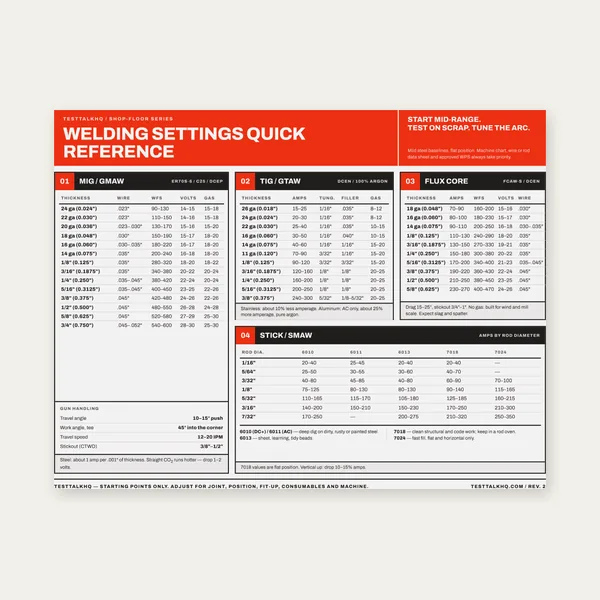
Welding Reference Card
One page. MIG, TIG, stick and flux core settings by thickness.
$3.99
Buy
Complete Welding Settings Guide
19 pages. Four processes, stainless and aluminum, symbols and inspection.
$12.99
Buy
Welding Job Estimator
Price the job, then hand over a quote with no internal numbers.
Excel or Google Sheets. Best on a computer.
$29.00
Buy
Welding Complete Bundle
Card, 19-page guide and the estimator workbook. All six files.
Excel or Google Sheets. Best on a computer.
$34.99
$45.98 if bought separately — save $10.99
BuyCheckout opens in a new tab.