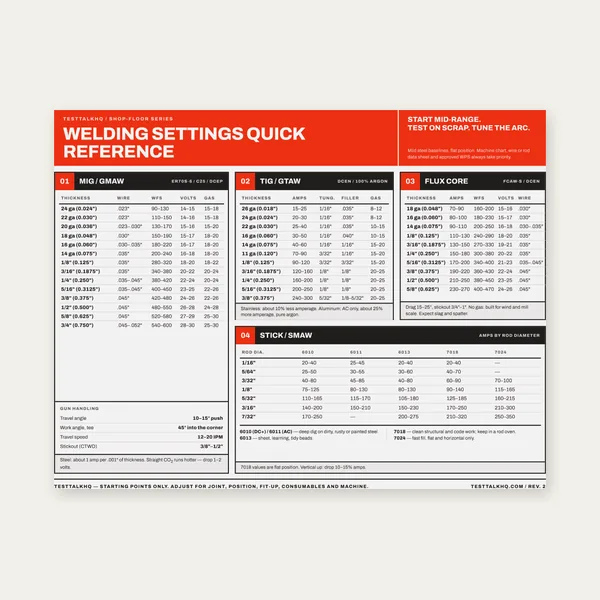
Welding Reference Card
One page. MIG, TIG, stick and flux core settings by thickness.
$3.99
BuyWhen the calculator’s $/hr looks fine — but the utility bill still jumped
Use this when the Welder Power Cost Calculator and your meter/bill disagree. Formulas, 120V vs 240V efficiency, and cost-reduction levers live in the Welder Electricity Cost Guide. Thermal shutdowns are a different problem — see Duty Cycle Troubleshooting.

Most “the math said $0.40/hr but the bill rose $80” surprises come from nameplate vs measured draw, idle/fan standby ignored, duty-cycle hours treated as wall-clock, wrong $/kWh (or demand charges), and long input cords that raise current for the same weld output.
| Symptom | What it usually means | First fix | Next tool |
|---|---|---|---|
| Estimate low vs Kill-A-Watt / clamp | Nameplate optimistic or wrong voltage selected | Clamp input amps at weld amps; re-enter real kW | Power Cost Calculator |
| Bill high with little welding | Idle/fan/coolers left on; shop loads mixed in | Meter welder circuit alone overnight | Guide idle tips |
| $/hr OK; monthly total wrong | Arc hours ≠ calendar hours (duty / OF) | Use real arc-on fraction, not 8× hourly | Duty Cycle Calculator |
| Same welds, higher bill after move | Rate schedule / demand / 120 vs 240 change | Confirm $/kWh and supply voltage under load | 120V vs 240V |
| Machine hot / trips — bill also up | Thermal duty problem, not just cost model | Diagnose cooling & duty rating first | Duty Cycle Troubleshooting |
What it looks like: Calculator uses nameplate input amps. Clamp meter shows higher draw at the same weld amps — or much lower when you’re feathering the pedal.
Fixes: Measure input current and voltage under a typical bead. Convert to kW and re-run the calculator. Guide nameplate walkthrough: understanding nameplate data.
What it looks like: Arc-on cost looks tiny; the circuit still burns kWh between shifts.
Fixes: Meter standby with the machine on but not welding. Add that kWh to monthly totals or shut machines down (guide tip #1). Don’t blame the weld $/hr model for always-on loads.
What it looks like: “8 hours × $/hr” used for a shift that was 25% arc-on.
Fixes: Monthly cost ≈ $/arc-hour × arc hours. Pair with realistic operating factor from job timing. Duty-cycle thermal limits are separate — Duty Cycle Troubleshooting.
What it looks like: Residential rate plugged into a shop with demand or TOU pricing.
Fixes: Use the rate you actually pay (blended or on-peak). Off-peak scheduling is a guide lever, not a calculator bug.
What it looks like: Long extension / undersized branch; weld amps OK but input amps climb and breakers warm.
Fixes: Measure voltage at the receptacle under load. Fix supply wiring; see also welding lead sizing for output leads (different wire decision).
What it looks like: Same weld amps, higher wall kWh on an old transformer set.
Fixes: Re-run with realistic efficiency. Upgrade economics live in the guide’s TCO and reduce-cost sections — not a separate decision page.
Article 3 SKIPPED: 120V vs 240V, inverter vs transformer, and the seven cost-reduction levers already live in the electricity cost guide (see 120V vs 240V and reduce costs).
Chart SKIPPED: Process $/hr and monthly estimate tables already in the guide; live kWh math is on the calculator.
One page. MIG, TIG, stick and flux core settings by thickness.
$3.99
Buy
19 pages. Four processes, stainless and aluminum, symbols and inspection.
$12.99
Buy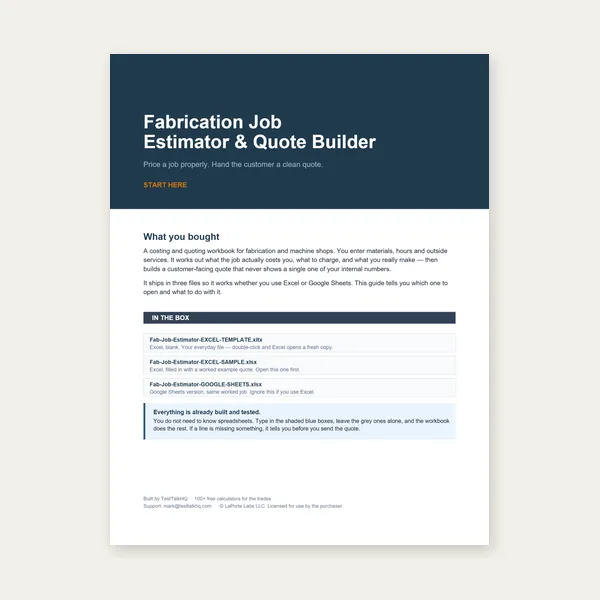
Price the job, then hand over a quote with no internal numbers.
Excel or Google Sheets. Best on a computer.
$29.00
Buy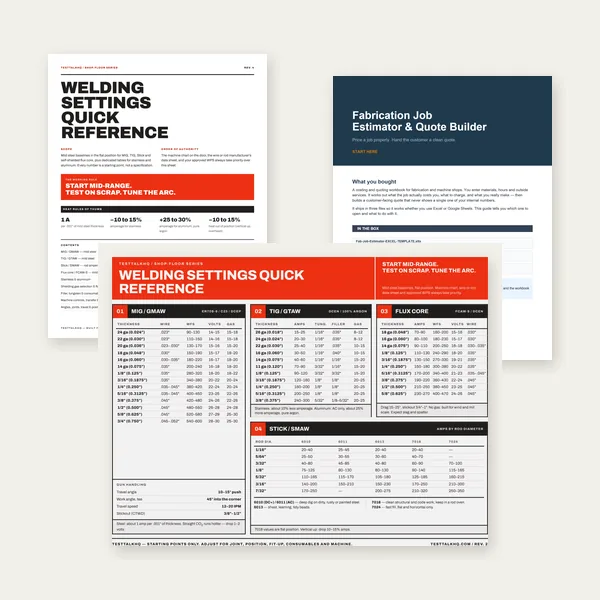
Card, 19-page guide and the estimator workbook. All six files.
Excel or Google Sheets. Best on a computer.
$34.99
$45.98 if bought separately — save $10.99
BuyCheckout opens in a new tab.
Five CSV catalog picks with verified Product Image URLs — measure real draw, then compare efficient machines.
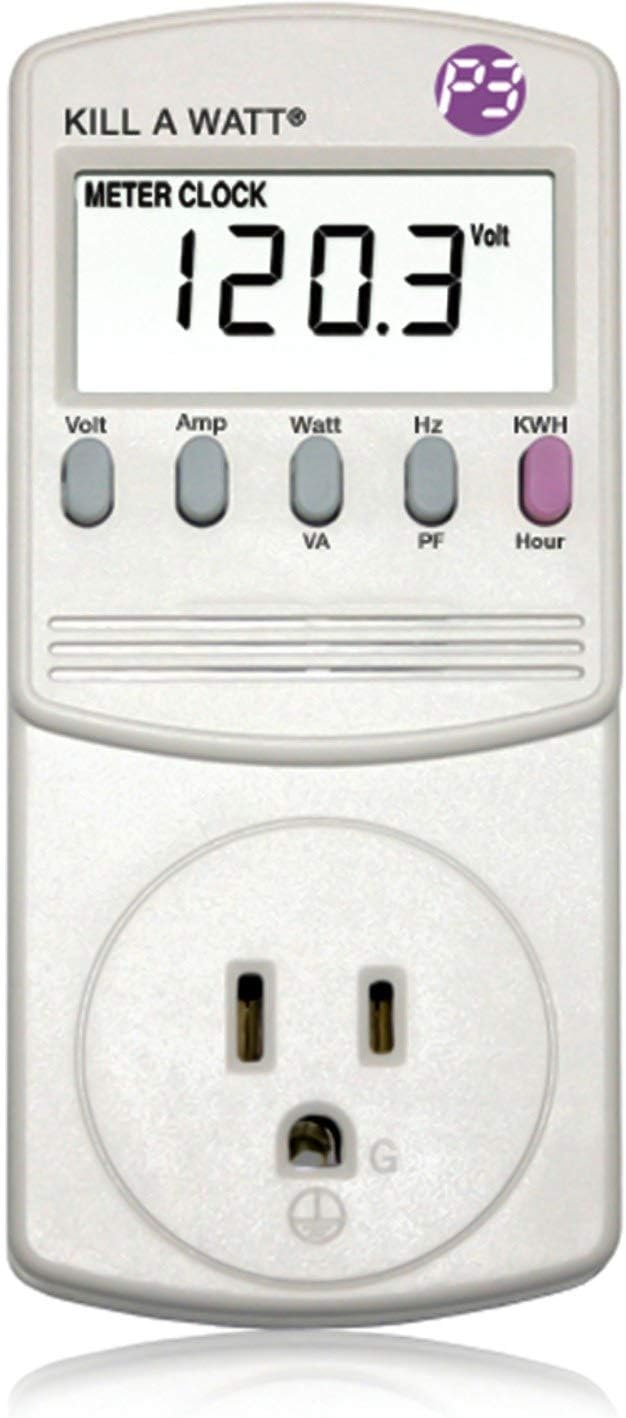

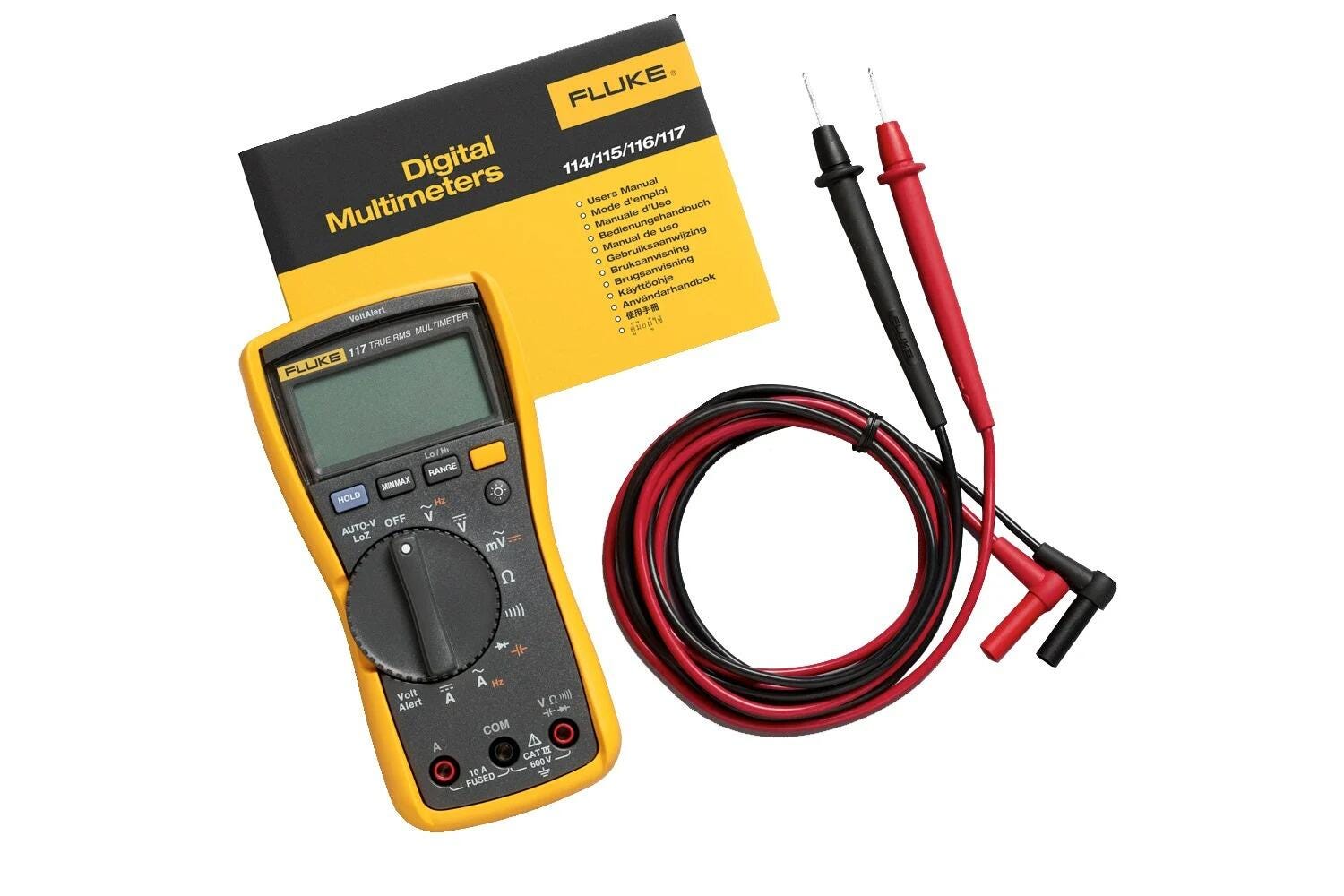
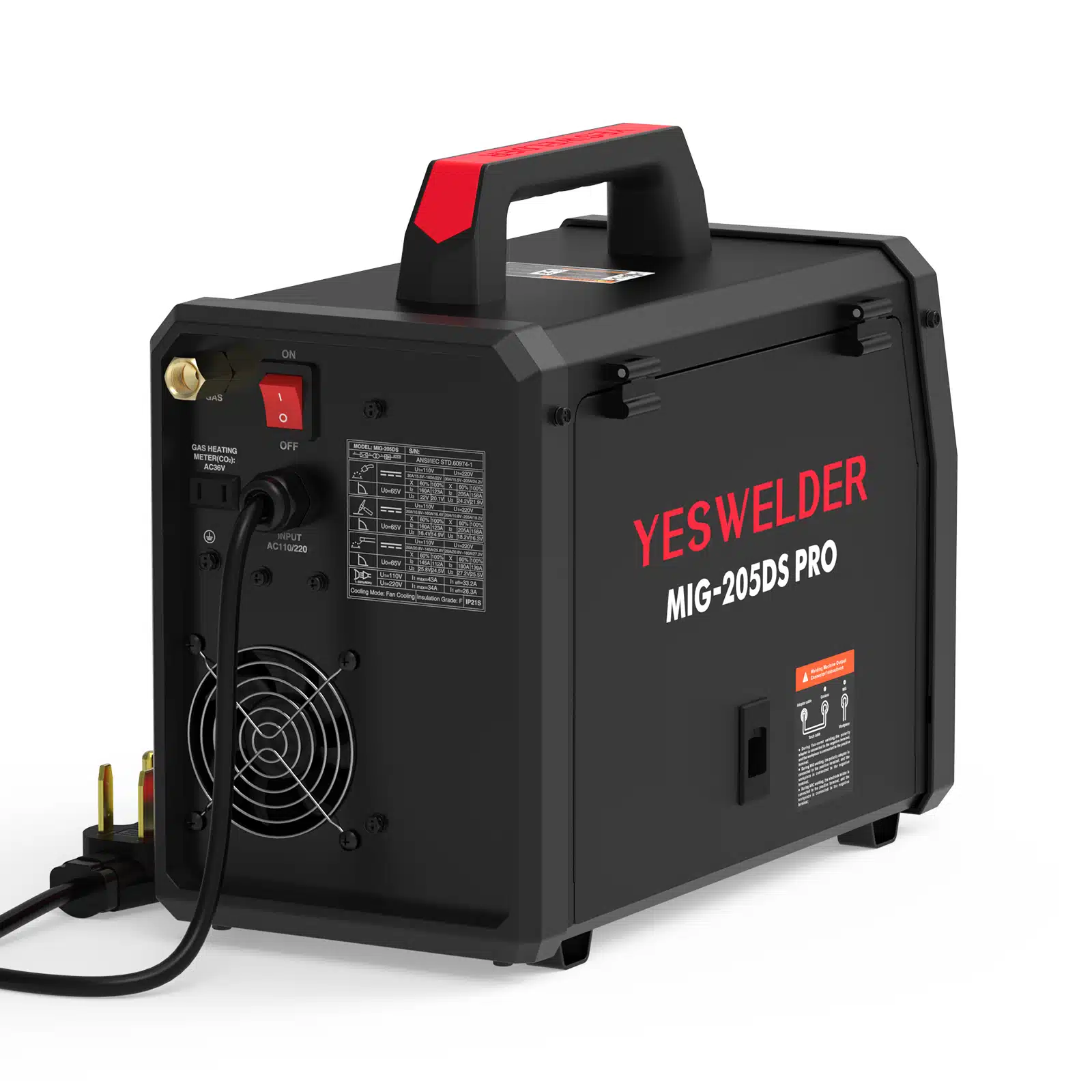
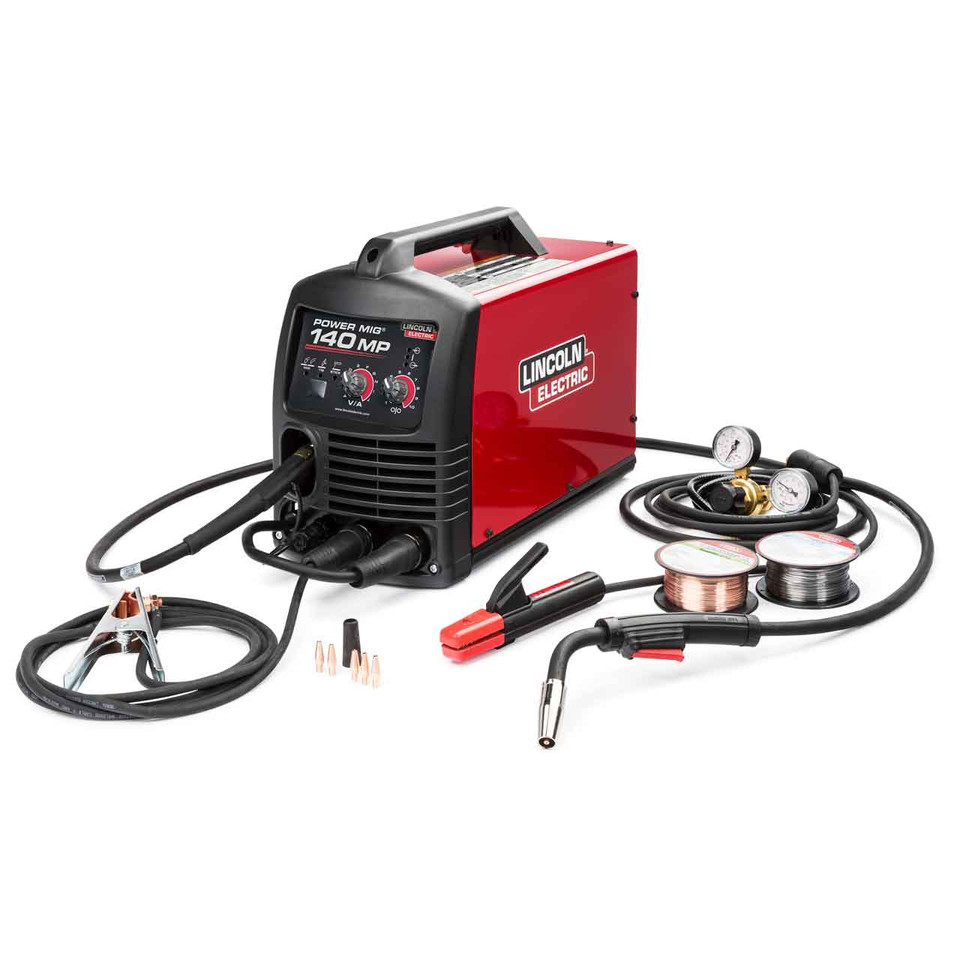
As an Amazon Associate, TestTalkHQ earns from qualifying purchases.
No. Duty-cycle pages diagnose thermal shutdowns and cool-down math. This page diagnoses kWh and bill mismatches.
As a starting point yes — verify with a clamp under your typical weld settings before arguing with the utility bill.