Three-Phase Power Troubleshooting
Phase imbalance, wye/delta confusion, PF assumptions, and line-vs-phase measurement errors
Estimate three-phase real, reactive, and apparent power with the Three-Phase Power Calculator. Learn wye/delta relationships and PF in the Three-Phase Power Guide. For broader electrical calculators, see the Electrical Hub.

Three-Phase Power Problems Quick Answer
Use this when your calculated kW, kVA, or current doesn't match the meter, bill, or motor nameplate — usually a connection-type error, imbalance assumption, or measuring at the wrong voltage point.
| Symptom | What it usually means | First fix | Next tool |
|---|---|---|---|
| √3 factor wrong by ~1.73× | Line vs phase voltage mixed up | Confirm wye (VL=√3 Vφ) vs delta | Three-Phase Power Calculator |
| One phase reads high/low | Phase imbalance not in model | Measure all three line currents | Three-Phase Power Guide |
| kVA matches, kW doesn't | Power factor assumption wrong | Measure PF or use motor nameplate PF | Three-Phase Power Calculator |
| Motor FLA doesn't reconcile | Used line V on delta, phase on wye | Re-enter connection type correctly | Three-Phase Power Guide |
| Neutral current surprises you | Unbalanced loads on wye | Sum phase currents vectorially | Three-Phase Power Calculator |
1. Phase Imbalance Skewing Power & Current Calculations
What it looks like: Calculated line current is lower than measured on the hottest phase, neutral carries unexpected current on a wye system, or motors run hot on one leg. Total kW from a balanced-load formula understates stress on the overloaded phase.
Likely causes: Single-phase loads tapped unevenly across phases, open neutral on wye, or a failed capacitor on one phase of a PF correction bank. Balanced three-phase formulas assume equal phase currents — real panels rarely are perfectly balanced.
Fixes: Measure all three line-to-line voltages and line currents. Recompute per phase or use the calculator's imbalance inputs if available. Redistribute single-phase loads toward balance. The guide covers vector sums for neutral current.
2. Wye vs Delta Connection Mix-Ups
What it looks like: Results off by √3 (≈1.732) or a factor of 3. Motor wired delta on nameplate but calculated as wye, or service entrance modeled wrong. Line voltage used where phase voltage belongs.
Likely causes: Wye: VL-L = √3 × VL-N; line current equals phase current on wye loads. Delta: Vphase = Vline; line current = √3 × phase current. Swapping these corrupts every power and current result.
Fixes: Confirm transformer secondary connection and load wiring. Enter line-to-line voltage for standard three-phase power formulas. See the Three-Phase Power Calculator connection selector.
3. Incorrect Power Factor Assumptions
What it looks like: kVA and breaker sizing match reality but kW and utility billing don't, or vice versa. Apparent power correct, real power wrong — classic PF mismatch.
Likely causes: Assuming PF = 1.0 for mixed loads, using motor nameplate PF at partial load, or ignoring leading PF from over-correction. kW = kVA × PF; a 0.05 PF error on 100 kVA is 5 kW.
Fixes: Measure PF with a power analyzer or use nameplate data at the operating load point. Enter measured or conservative PF in the calculator. The guide explains displacement vs total PF.
4. Wrong Measurement Point — Line vs Phase Voltage
What it looks like: Multimeter readings don't match what you typed into the calculator. 208 V vs 120 V confusion on a wye panel, or measuring across one winding on delta equipment.
Likely causes: Line-to-neutral measured but line-to-line entered (or reverse). Testing at a single-phase branch off a three-phase panel without noting which legs. Meters on different reference points than the load being modeled.
Fixes: For three-phase power math, use line-to-line voltage unless the tool explicitly asks for phase. Document which probes went where. Verify with a second leg pair on wye — all three L-L readings should be equal if balanced.
Run the Three-Phase Power Calculator With Verified Inputs
Reconcile every mismatch by confirming connection type, voltage reference, measured currents, and PF before changing equipment ratings.
Three-Phase Power Calculator → Three-Phase Power Guide → Electrical Hub →
Recommended Electrical Measurement Tools
Five CSV catalog picks with verified images — multimeters, clamp meters, and voltage testers for field verification

Fluke 117 Electricians True RMS Multimeter
- Node-to-reference voltage on each stage
- Resistance / continuity for isolated branches
- Finds opens (O.L.) and shorts (0 Ω)
- Electrical catalog
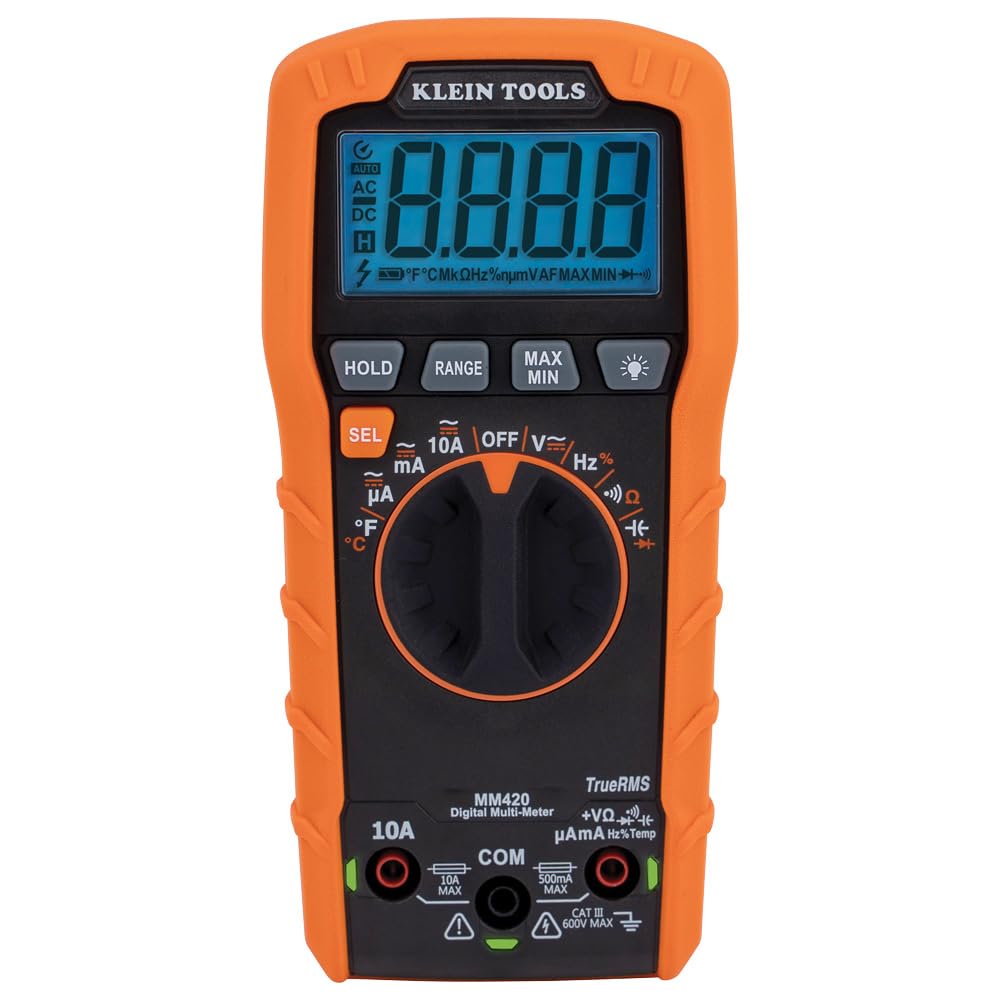
Klein Tools MM420 Auto-Ranging Multimeter
- TRMS V, resistance, and continuity
- Map each node vs the calculator model
- Budget bench/field diagnosis tool
- Electrical catalog

Ideal Industries 61-757 Clamp Meter
- 600A AC/DC TRMS branch current
- Measure current without breaking the branch
- Reconcile divider splits vs prediction
- Electrical catalog

Klein Tools CL800 Digital Clamp Meter
- 1000V class TRMS clamp
- Per-branch amps on live parallel groups
- Spot the branch that's shorted or open
- Electrical catalog

Klein Tools NCVT-3P Non-Contact Voltage Tester
- Confirm de-energized before ohms tests
- Dual-range presence check
- Prevents meter damage on in-circuit R
- Electrical catalog
As an Amazon Associate, TestTalkHQ earns from qualifying purchases. All five cards are sourced only from the affiliate CSV with verified product images.
Frequently Asked Questions
Why is my result off by 1.732?
Almost always a wye/delta or line-vs-phase voltage mix-up. Check connection type and whether you entered line-to-line voltage.
Do I need to measure all three phases?
For imbalanced panels, yes — the hottest phase sets breaker and conductor stress.
Can I assume PF = 0.85 for all motors?
Only as a rough starting point. Measure at actual load for billing or demand calculations.
What's the difference between kW and kVA?
kW is real power (work done); kVA is apparent power (what the conductors see). PF links them.
Where do I measure voltage on a 480Y/277 service?
Use 480 V line-to-line for three-phase power formulas; 277 V is line-to-neutral.