The capacity equation has no empirical term, so a wrong answer is a wrong input. A diagnostic order for negative latent capacity, a sensible heat ratio stuck at 1.0, capacity far below or well above the nameplate, readings that will not repeat, a small disagreement with a psychrometric chart, and the case where everything checks out and the customer is still unhappy.
Start from the assumption that the measurement is wrong
This is not pessimism, it is arithmetic. The capacity calculation has no empirical term, no fitted coefficient and no lookup table — it is an energy balance on the airstream using published psychrometric relations. The equations cannot be a bit off. So when the answer looks wrong, the cause is in the six numbers you fed it, and only after those are cleared is it in the equipment.
That order matters because the two failure modes look identical on screen. A system 30% down on capacity and a supply wet-bulb probe reading a degree high produce the same kind of alarming number, and one of them costs the customer a compressor.
What follows is a diagnostic order: the symptom, what causes it, and what to check, largest and most likely error first.
Symptom 1 — latent capacity came out negative
The calculator will flag this rather than report it, because it is not a result. Negative latent capacity means the supply air computed wetter than the return air, and a cooling coil cannot add water to an airstream. Something in the measurement is wrong. In rough order of likelihood:
- The supply wet-bulb probe is sitting in condensate. Supply air off a wet coil is nearly saturated, and a probe in the plenum can pick up carryover droplets off the coil face or the drain pan. A wet sensor reads the water, not the air.
- The return wick has dried out. Reads high, toward dry bulb, which understates the return moisture. Get the return low enough and the supply legitimately computes wetter.
- The two readings were taken minutes apart. Conditions move. If you walked the probe from the return to the supply and the compressor cycled in between, you are comparing two different operating states.
- A humidifier or a bypass is downstream of the coil. Rare in cooling season, but check what is in the plenum before you assume instrumentation.
- Two instruments with different biases. A sling on the return and a digital on the supply can easily differ by a degree in opposite directions.
Symptom 2 — the sensible heat ratio is at or above 1.0
SHR of exactly 1.0 means the coil is dry: nothing condensing, no latent capacity, every BTU going into temperature. Whether that is a fault depends entirely on the weather.
It is normal in a dry climate, on a cool day, in shoulder season, or any time the coil surface is running above the entering air’s dew point. No water at the drain is the correct outcome, and the system is working exactly as physics requires.
It is a finding in humid weather with a real call for cooling. If the space feels clammy and the coil is dry, the coil is not getting cold enough, and there are three common reasons:
- Airflow is too high. Air crossing the coil too fast never gets down to the dew point at the surface. This is the first thing to check because it is the easiest to change: drop a blower tap and re-measure.
- The coil is oversized for the load. Short cycling never lets the coil get properly wet, and the water that does condense re-evaporates off the fins between cycles. This one is a sizing problem, not a service problem — see Cooling Load & Tonnage.
- The charge is high. Raises evaporator pressure and temperature, which raises the coil surface temperature. Check on the refrigerant side with Superheat & Subcooling.
HVAC
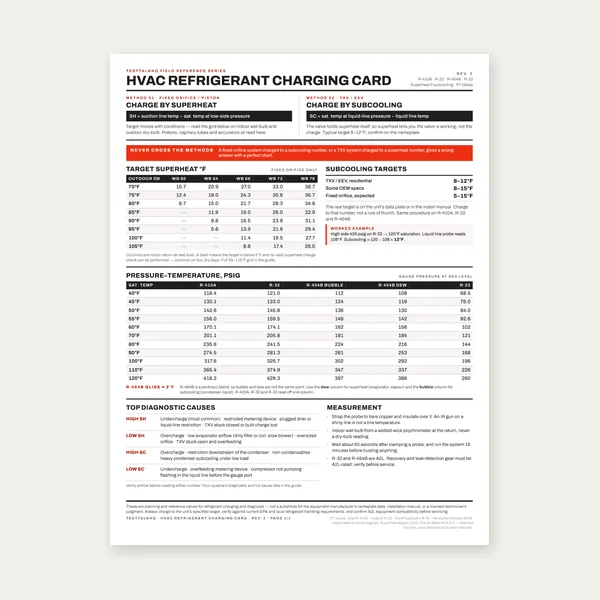
HVAC Refrigerant Charging Card
$3.99
Buy
Complete HVAC Charging Guide
$12.99
Buy
HVAC Job Estimator
$29.00
Buy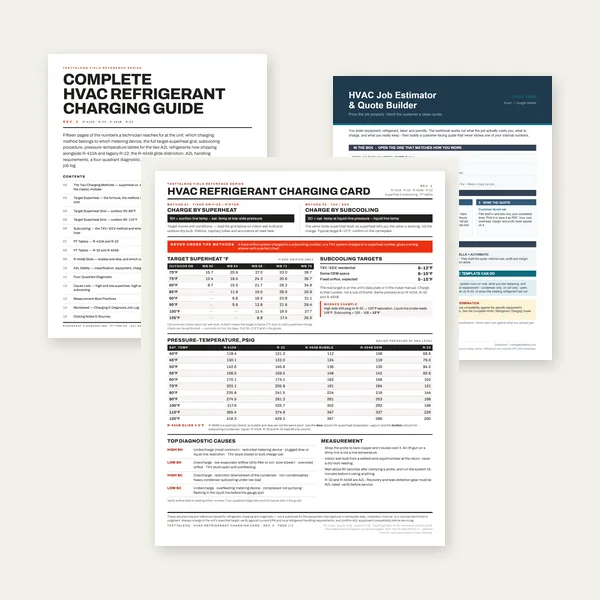
HVAC Complete Bundle
$39.00
BuyCheckout opens here — you stay on this page.
The instruments that decide whether the number is real
Six measurements go in and everything else is arithmetic. Airflow scales the whole answer; the supply wet bulb sets the latent half of it, and it is a small difference between two nearly equal numbers. No amount of care with the equations rescues a bad reading, which is why the instruments matter more here than the maths does.
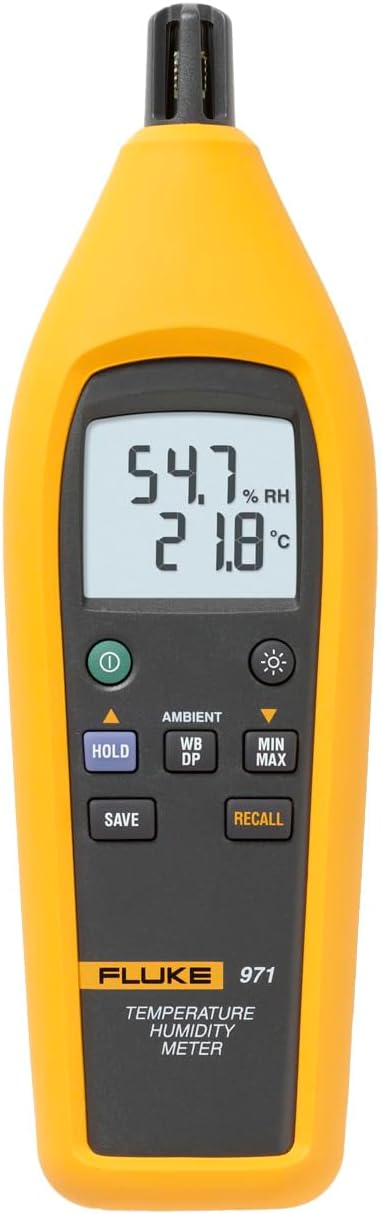
Fluke 971 Temperature Humidity Meter
- Dry bulb and relative humidity, with wet bulb and dew point computed
- Covers both humidity input modes with one instrument
- No wick to dry out, which removes the commonest wet-bulb fault
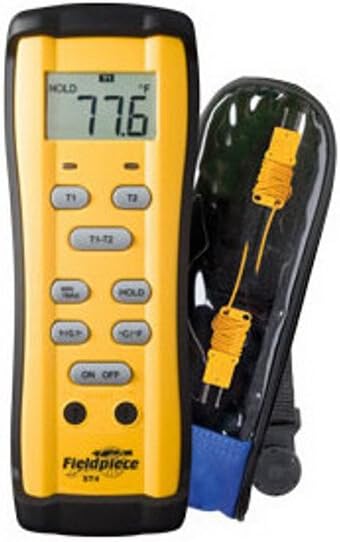
Fieldpiece ST4 Dual Temperature Meter
- Two probes so return and supply are read at the same moment
- Removes the drift you get walking one probe between two places
- Displays the difference directly
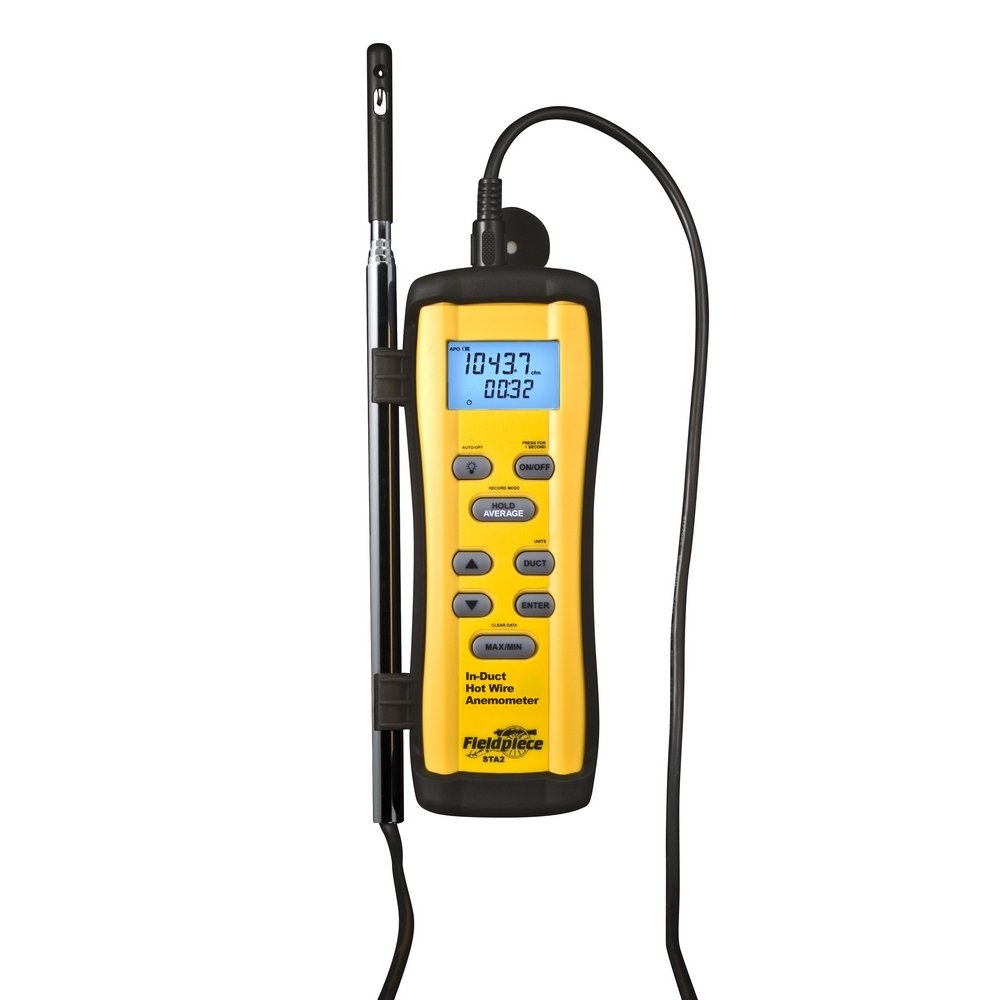
Fieldpiece STA2 In‑Duct Hot Wire Anemometer
- Telescoping hot wire for a proper in-duct traverse
- Airflow multiplies every BTU figure, in the same direction
- A measured traverse beats a nameplate CFM by a wide margin
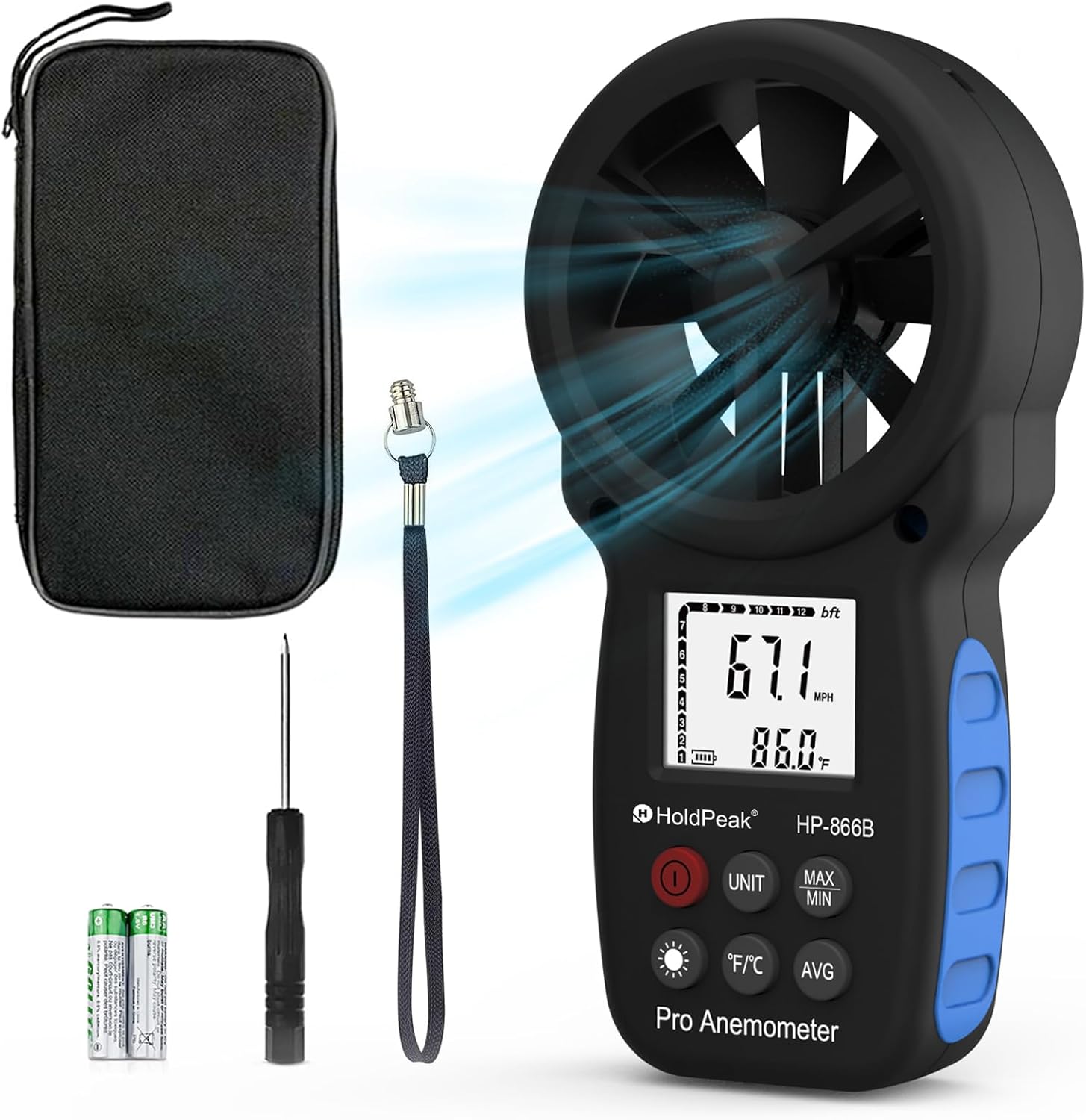
HoldPeak 866B Digital Thermo‑Anemometer
- Vane anemometer for register and grille face velocities
- Reads air temperature too, so one tool covers two inputs
- A useful cross-check when a duct traverse will not fit
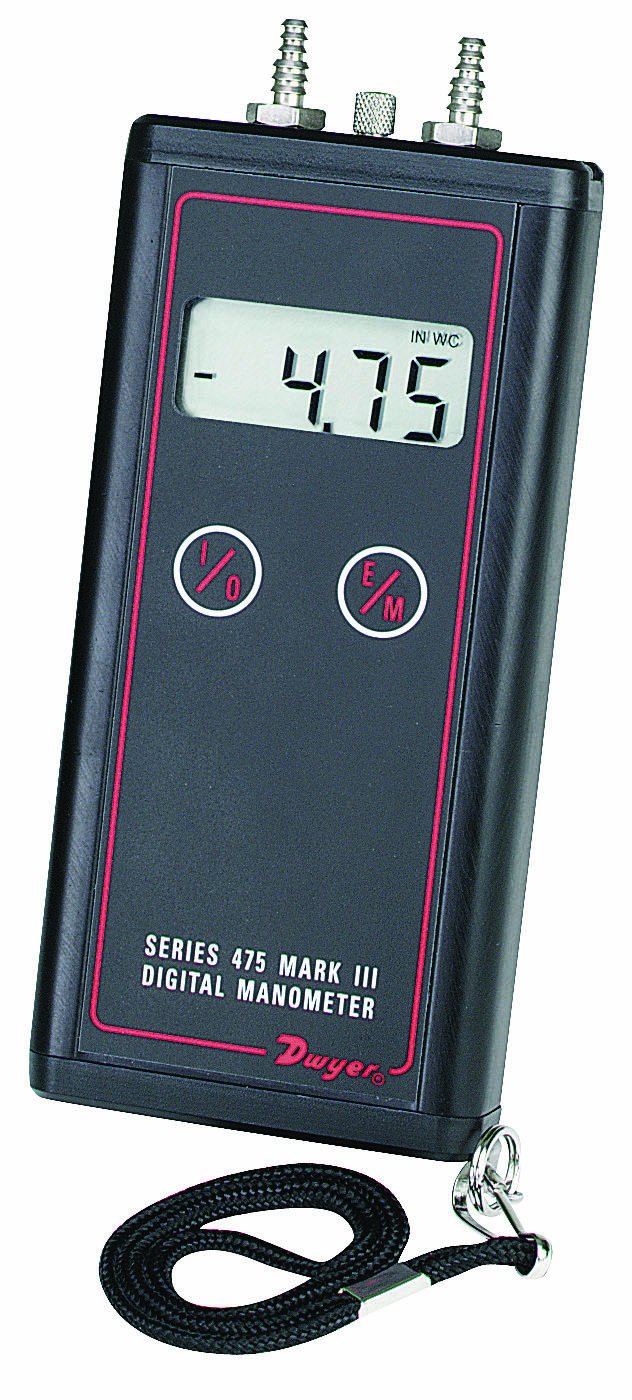
Dwyer Series 475 Mark III Digital Manometer
- Total external static pressure to 0.01 in w.c.
- Gets CFM off the manufacturer’s blower table
- High static is itself a common reason capacity comes up short
As an Amazon Associate, TestTalkHQ earns from qualifying purchases. Prices and availability can change.
Symptom 3 — total capacity is far below the nameplate
The most common reason for running this calculation, and the one where the diagnostic order saves the most time.
First: is the comparison even fair?
A nameplate is a rating at one condition. ANSI/AHRI Standard 210/240’s A test specifies 80.0 °F dry bulb and 67.0 °F wet bulb entering the indoor unit with 95.0 °F entering the outdoor unit. Return air cooler or drier than that gives the coil less to work with, and lower measured capacity is the correct result, not a fault. On a 72 °F, 45% relative humidity service call in October, a reading well under nameplate means nothing at all.
Second: did you overstate the air?
Two errors here both point the same way — they make capacity look lower than it is:
- Elevation left at zero. At 5,280 feet this alone accounts for around a fifth. If the calculation was done with sea-level assumptions and the job is in the mountains, fix that before anything else.
- Airflow understated. A traverse in a bad location, a blower table read at the wrong speed tap, or a flow-hood sum that missed a register. Every BTU figure moves with it, linearly.
Third: the airflow is genuinely low
Not a measurement error — the system really is not moving enough air. Dirty filter, dirty evaporator, crushed flex, closed dampers, undersized return, a blower on the wrong tap. High total external static pressure is the fingerprint; the External Static Pressure Calculator and its troubleshooting guide cover finding where the restriction is.
Low airflow has a signature in this measurement: total capacity falls, the dry-bulb split gets wider (which is why delta-T alone can make a starving system look healthy), and the SHR drops because the colder coil condenses more water per pound of air.
Fourth: the refrigerant side
Only once the air side is cleared. Undercharge, overcharge, a restricted metering device, non-condensables, a failing compressor. Air-side capacity tells you the magnitude of the shortfall precisely and tells you nothing about the cause; Superheat & Subcooling is the next instrument.
Fifth: duct leakage upstream of the return probe
The sneaky one. If the return duct pulls hot attic air in through leaks before your probe, you are measuring the equipment correctly — it really is removing that heat — but the house is not getting the benefit. Capacity reads fine and the customer is still uncomfortable. Symptoms: a return dry bulb noticeably above room temperature, and a return wet bulb that does not match what the space is doing.
Symptom 4 — capacity came out well ABOVE nameplate
People rarely question a flattering number, and they should. Over about 110% of rating, check these before celebrating:
- Airflow overstated. A traverse taken in a high-velocity part of the duct, a blower table read optimistically, a duct area calculated from outside dimensions rather than inside.
- The return air is much wetter or warmer than the rating condition. Genuinely more capacity. A coil at 80 °F / 72 °F wet-bulb return really does out-produce its 67 °F wet-bulb rating. This is a real result, not an error.
- Return wet bulb read high. A wet sensor, or condensation on the probe, inflates the entering enthalpy and with it the whole answer.
- Supply dry bulb read low by radiation. A probe in line of sight of the coil, or an infrared thermometer pointed at it. Widens the apparent split and inflates the sensible figure.
Symptom 5 — the numbers move between two measurements minutes apart
Air-side capacity is a snapshot, and a coil takes time to settle. Things that make two readings disagree without anything being broken:
- The system had not run long enough. Give it ten to fifteen minutes of continuous run before the first reading. A coil that has just started is still drying down from the last cycle, and the moisture re-evaporating off the fins is measured as reduced latent capacity.
- Return conditions drifted. The whole point of the equipment is to change the air it is measuring. As the space pulls down, the return gets cooler and drier, the coil gets less to work with, and capacity genuinely falls.
- Outdoor temperature moved. Condensing temperature follows it, and so does capacity.
- A variable-speed blower changed tap under you. Worth confirming what the equipment was actually doing during the measurement.
Symptom 6 — it disagrees with a psychrometric chart by a little
If you check the calculator’s humidity ratio against a printed chart and find a small discrepancy near saturation, that is expected and it has a specific cause.
ASHRAE publishes its psychrometrics twice. Chapter 1 of the Handbook—Fundamentals gives perfect-gas relations intended for calculation — the ones this calculator, PsychroLib and essentially every field tool use. Table 2 and the printed chart are computed from an exact formulation that carries an enhancement factor correcting for dissolved gases, the pressure effect on liquid water, and vapour–air interaction. That factor runs about 1.004 to 1.005 over normal HVAC temperatures, so a chart reading at saturation sits roughly 0.4% above the computed value.
Carried through to a delivered-capacity answer the difference is at most about 0.3%, and under 0.003 on the sensible heat ratio — far below the airflow measurement it gets multiplied by. But if you have been chasing a third-significant-figure disagreement, that is where it lives.
Symptom 7 — everything checks out and the customer is still unhappy
This is the outcome the measurement is actually best at producing, and it is worth recognising rather than re-measuring.
If the capacity is at or near what the conditions should give, the SHR is sensible, the airflow is right and the refrigerant side is clean, the equipment is not the problem. What is left:
- The equipment is oversized. Short cycles, never gets the coil properly wet, cold and clammy. The measurement will show a high SHR and short run times. Cooling Load & Tonnage is the tool for that conversation.
- Distribution, not production. The coil is delivering; the air is not arriving where it is needed. Duct design, register placement, room-by-room balance.
- Latent load the equipment was never sized for. Unsealed crawl space, high infiltration, indoor pool, a lot of occupants. The system is producing its rated dehumidification and the house is generating more.
- The complaint is not about temperature. Draughts, noise, uneven rooms. A capacity measurement cannot see any of those, and a good one is how you establish that it is not the equipment.
Frequently asked questions
Why is my latent capacity negative?
Because the supply air computed wetter than the return air, which a cooling coil cannot do. It is always a measurement problem: a supply wet-bulb probe in condensate, a dried-out return wick, readings taken minutes apart while conditions moved, two instruments with opposite biases, or something downstream of the coil adding moisture.
Is a sensible heat ratio of 1.0 a fault?
Not on its own. It means the coil is dry and removing no water, which is correct in a dry climate or on a cool day when the coil surface stays above the entering air’s dew point. It is a finding only in humid weather with a real cooling call, and then the usual causes are airflow that is too high, equipment that is oversized and short cycling, or an overcharge raising the coil temperature.
My measured capacity is 25% below the nameplate. Is the system broken?
Not necessarily, and check the comparison first. A nameplate is a rating at 80 °F dry bulb and 67 °F wet bulb entering the indoor coil with 95 °F outdoors. Cooler or drier return air legitimately gives less. After that, check elevation was entered, then the airflow figure, then whether airflow is genuinely low, then the refrigerant side.
How can I tell a bad airflow measurement from a real capacity problem?
Look at the sensible heat ratio. It is a ratio of two quantities that both scale with airflow, so an airflow error cancels out of it entirely. If the BTU figures look bad but the SHR is reasonable for the weather, suspect the CFM before the equipment.
Why do two measurements ten minutes apart disagree?
Usually because the system had not settled, or because the space is pulling down and the return air is genuinely getting cooler and drier as it does. Give the equipment ten to fifteen minutes of continuous running before the first reading, and take the return and supply pairs as close to simultaneously as your instruments allow.
Why does the calculator disagree slightly with my psychrometric chart?
Because the chart carries an enhancement factor of roughly 1.004 that the perfect-gas equations do not. ASHRAE publishes both: the equations for calculation, and Table 2 and the chart from an exact formulation. The difference on a delivered-capacity answer is at most about 0.3%.
What if the capacity is fine and the customer is still uncomfortable?
Then it is not a production problem, and the measurement has told you something useful. Look at oversizing and short cycling, at distribution and duct design, at a latent load the equipment was never sized for, or at a complaint that is really about draughts, noise or room-to-room balance rather than temperature.