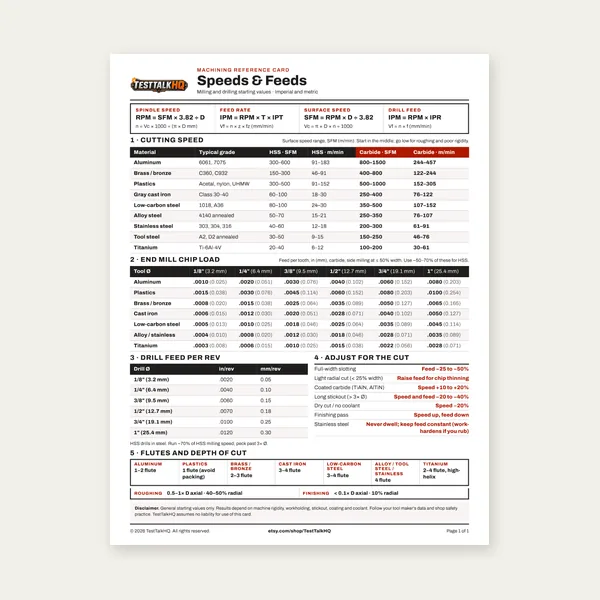
Machining Speeds & Feeds Card
One page. Speeds, chip load and drill feed, imperial and metric.
$3.99
BuyStop breaking parting blades — get the right RPM and feed rate the first time.
One page. Speeds, chip load and drill feed, imperial and metric.
$3.99
Buy
27 pages. Milling, drilling, tapping, turning and CNC routing.
$12.99
Buy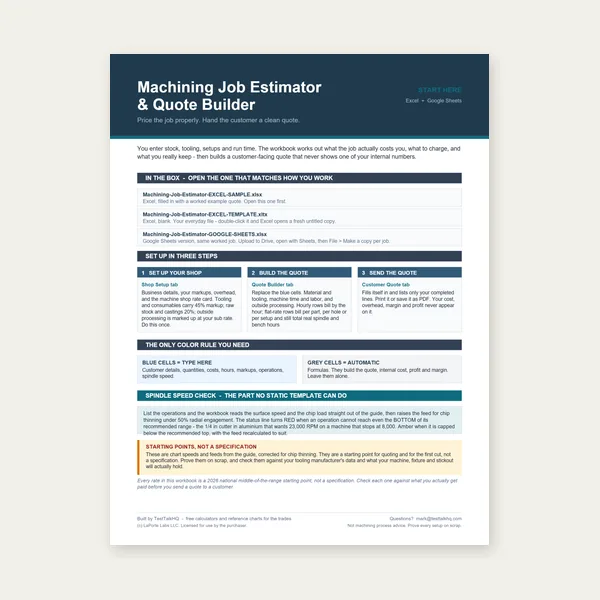
Quote shop work and check operations against your spindle's top speed.
Excel or Google Sheets. Best on a computer.
$29.00
Buy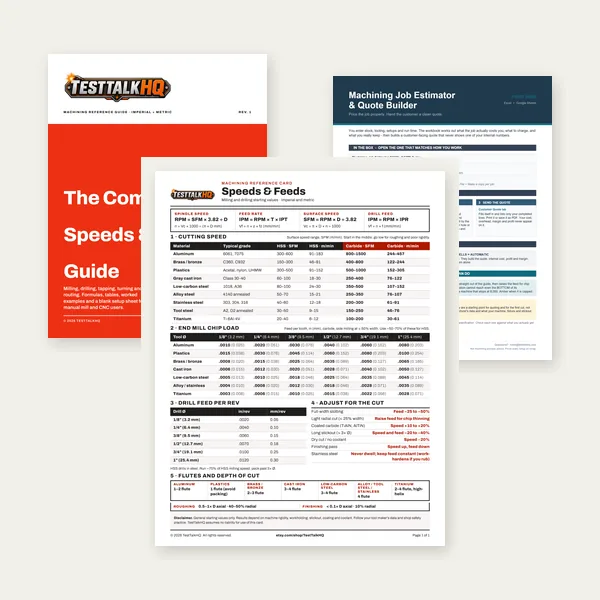
Card, 27-page guide and the estimator workbook. All six files.
Excel or Google Sheets. Best on a computer.
$34.99
$45.98 if bought separately — save $10.99
BuyCheckout opens in a new tab.
Measurement, cutting fluid, and assembly lubricants for reliable parting operations

Accurate measurement before and after parting keeps your workpieces in spec. The Starrett EC799A reads to 0.0005 inch with carbide-tipped jaws and a clear LCD display. When you’re parting to a shoulder or a specific length, this is the caliper that confirms you’re where you need to be before the blade completes the cut.
Check Price
Parting operations generate concentrated heat in a very narrow cutting zone. Without cutting fluid, that heat builds fast, work-hardens the cut face in stainless, and glazes the blade. Tap Magic applied to the parting blade and workpiece keeps temperatures down, prevents blade loading, and dramatically improves cut quality in steel and stainless.
Check Price
Anti-seize on toolpost bolts and parting blade holders prevents galling and makes future tool changes faster. On any threaded fixture that gets tightened repeatedly under vibration, a thin coat of anti-seize is cheap insurance against seized fasteners down the road.
Check PriceAs an Amazon Associate, TestTalkHQ earns from qualifying purchases.
Parting blade breakage almost always comes down to one of four causes: RPM too high, feed rate too low, blade sticking out too far, or inadequate cutting fluid. High RPM in parting creates chatter, and chatter breaks blades. Feed rate that’s too low causes rubbing instead of cutting — same result. Blade overhang amplifies deflection; keep it as short as possible while still clearing the workpiece. Cutting fluid is not optional in steel and stainless parting — it keeps the narrow cutting zone from overheating and work-hardening in seconds. Fix these four things and blade breakage becomes rare.
HSS parting blades are ground to a precise geometry, are resharpened when dull, and handle interrupted cuts and vibration better than carbide due to their toughness. They’re the right choice for most manual lathe work, especially in steel and difficult materials where chatter is a concern. Carbide insert parting blades are faster, don’t require resharpening, and excel in aluminum, brass, and production work where consistent tool geometry matters more than toughness. On a rigid CNC lathe with minimal vibration, carbide insert blades are the production choice. On a manual lathe with any flex in the setup, HSS is more forgiving.
Tool height is critical in parting — the blade must be exactly on center. Even a small amount above or below center creates a cutting geometry that rubs instead of shears, causes chatter, and loads the blade sideways. Use a center gauge or check against the tailstock center to confirm height before every parting operation. Blade overhang should be no more than necessary to clear the workpiece — every extra inch of overhang multiplies deflection and chatter risk. Tighten the toolpost as firmly as possible. Any movement in the toolpost under parting loads will go straight to the blade.
Parting through large-diameter or deep stock increases chatter risk significantly because the blade spends more time in the cut and deflection accumulates. For diameters over 2 inches, consider reducing RPM by 25–30% below the calculated value and increasing feed slightly to keep the blade cutting rather than rubbing. Tailstock support isn’t always possible when parting, but if the part geometry allows it, a live center greatly improves rigidity for the first half of the cut. Pecking — advancing the blade, retracting slightly, and advancing again — helps clear chips and reduce heat in deep parting operations in steel and stainless.