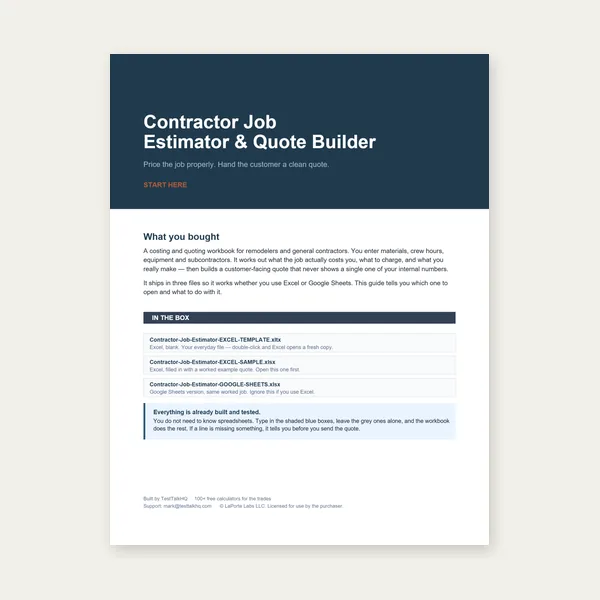
Contractor Job Estimator
Price remodels and GC work, then send a quote with no internal numbers.
Excel or Google Sheets. Best on a computer.
$29.00
BuyCoverage width vs nominal width, why panels are mill-cut to length, and standing seam vs exposed-fastener basics
The metal roofing panel calculator counts panels from net coverage width — not shingle squares. This page is the why: side laps, custom lengths, and the two fastener families you will actually bid.
Estimating mistakes: troubleshooting. Metal vs asphalt: comparison. Asphalt takeoff: shingle bundle calculator. Roofing hub: roofing calculators.
Need a panel count?Coverage width, mill-cut length, pitch, and waste.
Open Calculator →Overall (nominal) width is the full sheet from edge to edge. Coverage width is what remains after the side lap. Supplier guides such as Mid Florida Metal Roofing Supply’s coverage-width article exist because crews keep ordering from the bigger number and run short.
Shingles come in bundles sized to cover a fraction of a square. Metal panels are frequently mill-cut to the eave-to-ridge slope length so each sheet runs full length with fewer end laps. That is why the calculator asks for panel length in feet and prints total linear footage — the order ticket looks like “N pieces @ L feet,” not “M bundles.”
Stock lengths you cut on site need a higher waste pad. Mill-cut to the run length still needs waste for hips, valleys, and penetrations — just usually less than asphalt course waste.
Standing seam hides fasteners under clips or seamed ribs. Narrower coverage, more panels across, premium look, better thermal movement story. Hand seamers and seaming machines show up on the truck.
Exposed-fastener R-panel / PBR and corrugated through-fasten with hex-washer screws. Wider coverage (often 36 in on PBR), faster on ag and many residential jobs, more exposed fastener maintenance over decades.
Both still need underlayment decisions, ice & water in cold climates, and a structure that can carry snow load — see the ice & water calculator and snow load calculator.
Industry estimating notes commonly put mill-cut metal field waste around 5–10% on simple gables and 10–15% (sometimes more) on hips, valleys, and dormers — frequently lower than asphalt’s 10–25% style pads because you are not losing starter and end courses the same way. Using 0% because “it is custom-cut” is how hip roofs arrive short.
Ready to count panels?Edit coverage to your TDS, set length and waste.
Open Calculator →No. Squares help for underlayment and rough area, but metal orders need coverage width and panel length. Use the panel calculator; use the shingle calculator for asphalt.
No — it is a common residential planning default. Your profile may be 12, 14, 18, or something else. Edit the coverage field.
Price remodels and GC work, then send a quote with no internal numbers.
Excel or Google Sheets. Best on a computer.
$29.00
BuyCheckout opens in a new tab.
A coverage-width takeoff is a number until you cut, seam, and fasten the panels. Snips, a hand seamer, and painted hex-washer screws are how standing seam and exposed-fastener roofs leave the truck.
Self-tapping hex-washer head screws with sealing washers for exposed-fastener / R-panel installs. Standing seam uses concealed clips instead — still keep stitch screws for trim.
View on Amazon →
Malco M2006 left-offset snips for flashing, valleys, and the last panel cut. Metal panels are not shingles — you trim sheet, not tear tabs.
View on Amazon →
Malco S2R hand seamer for folding hem edges and detailing standing-seam / trim bends on the roof when a full seaming machine is not on the job.
View on Amazon →
Malco TS1 drill attachment for long straight cuts in sheet. Faster than hand snips when you are trimming a stock-length panel down to a hip cut.
View on Amazon →
Asphalt is sold by the square and the bundle. Run the shingle takeoff before you pick a material.
Open Shingle Bundle Calculator →
Coverage width, custom panel length, pitch multiplier, and waste — not a shingle-bundle worksheet.
Open Metal Panel Calculator →As an Amazon Associate, TestTalkHQ earns from qualifying purchases.