Compression ratio is a ratio of two volumes with no empirical term in it, so every wrong answer is a wrong input. How the swept volume and the four clearance volumes are built up, how to measure a chamber with a burette and a deck with a dial indicator, why the gasket slug uses the gasket bore, how to derive deck clearance from the block stack, and how quench falls out of the same two numbers.
It is two volumes, and that is the whole idea
Compression ratio has a reputation for being fiddly, and it is not. Heywood’s Internal Combustion Engine Fundamentals disposes of the definition in a line in section 2.2: it is the maximum cylinder volume divided by the minimum cylinder volume. The maximum is everything above the piston when it is at the bottom of the bore. The minimum is what is left above it at the top, which the textbooks call the clearance volume.
Vd = (π ÷ 4) × bore² × stroke (swept volume, one cylinder)
Vc = clearance volume at top dead centre
No coefficient. No test. No correlation anybody fitted to data. That is the entire reason this is worth doing carefully on paper before you buy parts: the arithmetic cannot betray you, so every wrong answer is a wrong input, and wrong inputs are findable.
The swept volume is the easy half
The swept volume is the cylinder the piston sweeps out on its way down the bore: a circle of the bore diameter, times the stroke. Gibtec Pistons give it in the form most engine shops write it in — 0.7854 × bore × bore × stroke × number of cylinders — where 0.7854 is just π÷4 rounded to four places. That gives cubic inches; multiply by 16.387 to get cubic centimetres, which is the unit everything else in this calculation arrives in.
The clearance volume is where the work is
Vc is one symbol in a textbook and four separate objects on a bench. HOT ROD’s How to Calculate Compression Ratio gives the decomposition every builder actually works in:
head gasket = (π ÷ 4) × gasket bore² × compressed thickness
deck = (π ÷ 4) × cylinder bore² × piston-to-deck clearance
piston = dish and valve reliefs (+) or dome (−)
Note the two different diameters. The gasket slug uses the hole in the gasket, which is normally a few tens of thousandths larger than the cylinder. The deck slug uses the cylinder bore, because that is the column of space between the crown and the block deck. Use one diameter for both and you will be out by a few tenths of a cc — not fatal, but there is no reason to be.
Chamber volume: measure it, do not look it up
Marks’ Standard Handbook says it flatly, and the Wikipedia summary of it repeats it: because of the complex shape of the clearance volume, “it is usually measured directly. This is often done by filling the cylinder with liquid and then measuring the volume of the used liquid.” That is cc’ing, and it is the one operation on this page that no amount of catalogue reading substitutes for.
The method is standard: invert the head on the bench, install the two valves and a plug, lay a thick acrylic plate with a small hole in it over the chamber, seal it with a smear of grease, and run coloured liquid in from a graduated burette until the chamber is full and the last bubble has gone. The reading is the chamber volume. Do it on every chamber, not one — castings vary, and so do the results of anybody’s valve job.
Piston volume, and the sign that catches everyone
Most piston manufacturers publish the volume of their dish or dome. HOT ROD states the convention in one sentence: “dish volume increases clearance volume, and dome volume reduces clearance volume.”
So a dish, or a set of valve reliefs, goes in as a positive number and lowers the compression ratio. A dome goes in as a negative number and raises it. Reverse the sign on a 7 cc piston and you are roughly two full compression points out, always in the flattering direction — a build that calculates at 10.5:1 and is really 12.5:1 finds the difference on the first hot lap, not on the spreadsheet.
Any trade

Contractor Job Estimator
$29.00
BuyCheckout opens here — you stay on this page.
The tools that decide whether the number is real
Everything on this page is arithmetic on four measurements. Three of them cannot be looked up in a catalogue with any confidence — the piston-to-deck clearance, the finished bore and the chamber volume of the head actually on your bench — and the fourth, the compressed gasket thickness, is a published figure that people routinely read off the wrong line. These are the tools that turn assumptions into inputs.
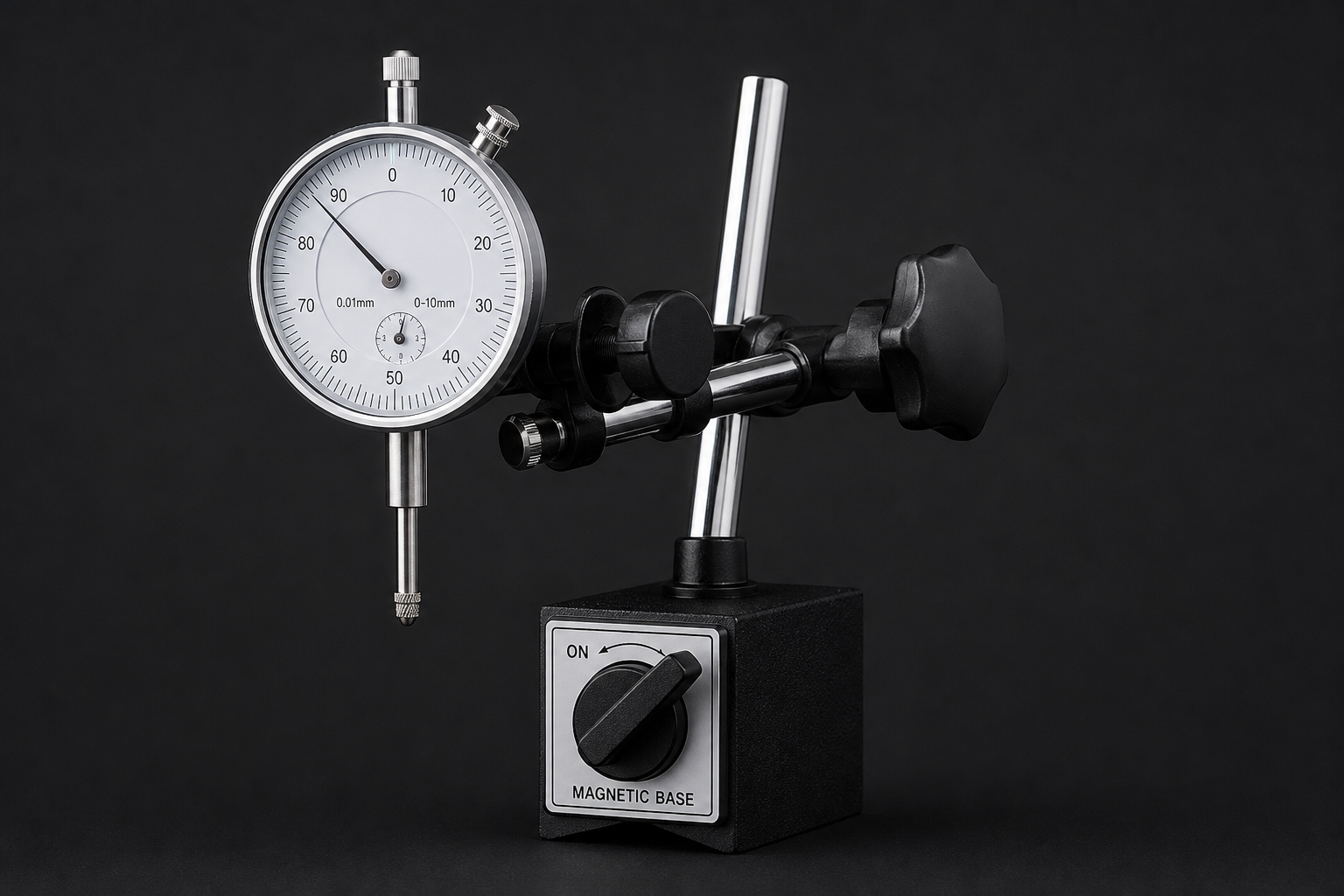
Dial Indicator Set with Magnetic Base
- The only honest way to get piston-to-deck at true TDC
- Rock the piston through TDC and take the highest reading, not the first
- Also finds a block that has already been decked once
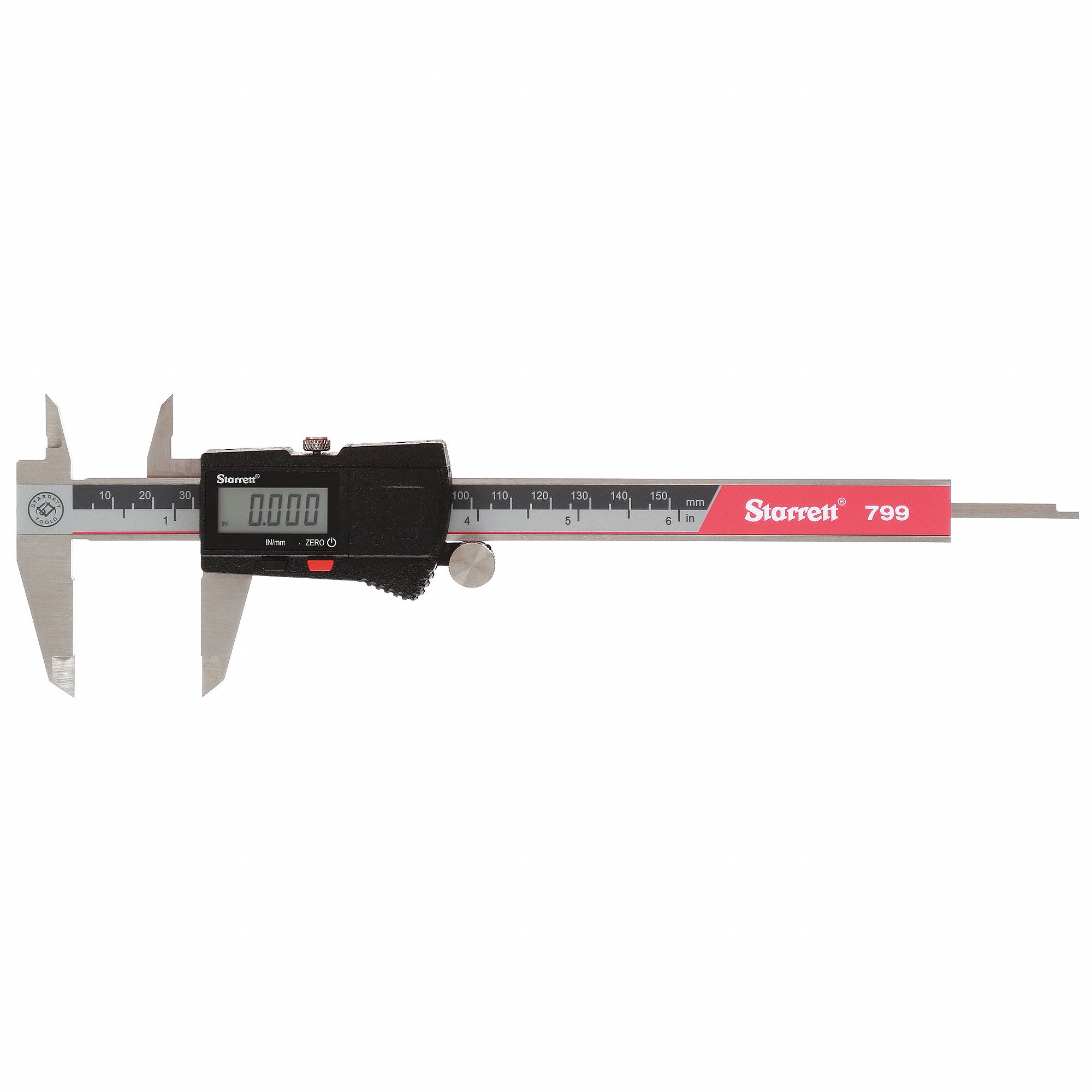
Starrett Electronic Slide Caliper 0–6 in
- Gasket bore, uncompressed thickness and piston compression height
- Enough resolution for the block stack, where tenths of a thou do not matter
- The calculation wants the compressed gasket figure, not this one
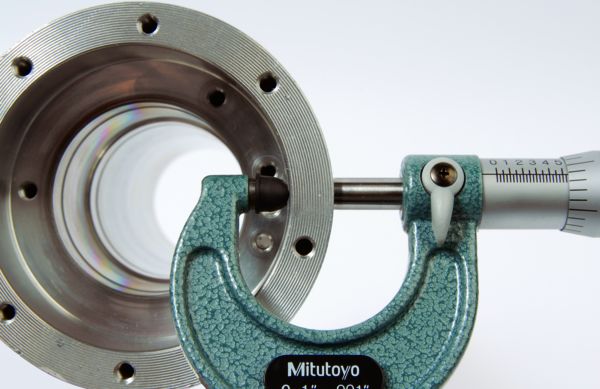
Mitutoyo 103‑177 Outside Micrometer 0–1 in
- Sets the bore gauge that measures the finished cylinder
- Bore enters the swept, deck and gasket volumes at the same time
- A caliper across a bore is a guess; a set micrometer is not
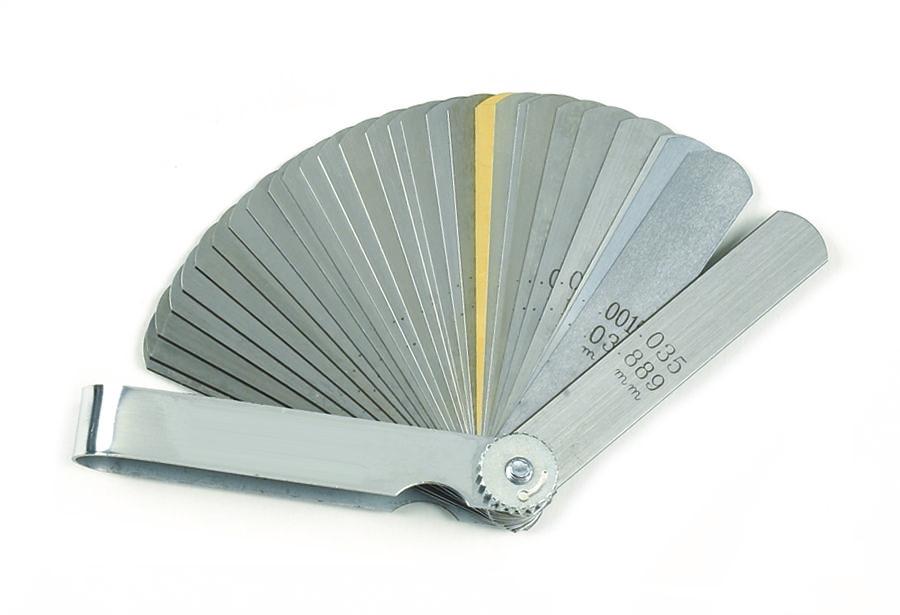
GEARWRENCH 161D 32‑Blade Feeler Gauge Set
- Sanity-checks the 0.035–0.045 in quench band by feel
- Also the tool for the clay check on valve-to-piston clearance
- Cheap insurance against a quench you calculated and never verified
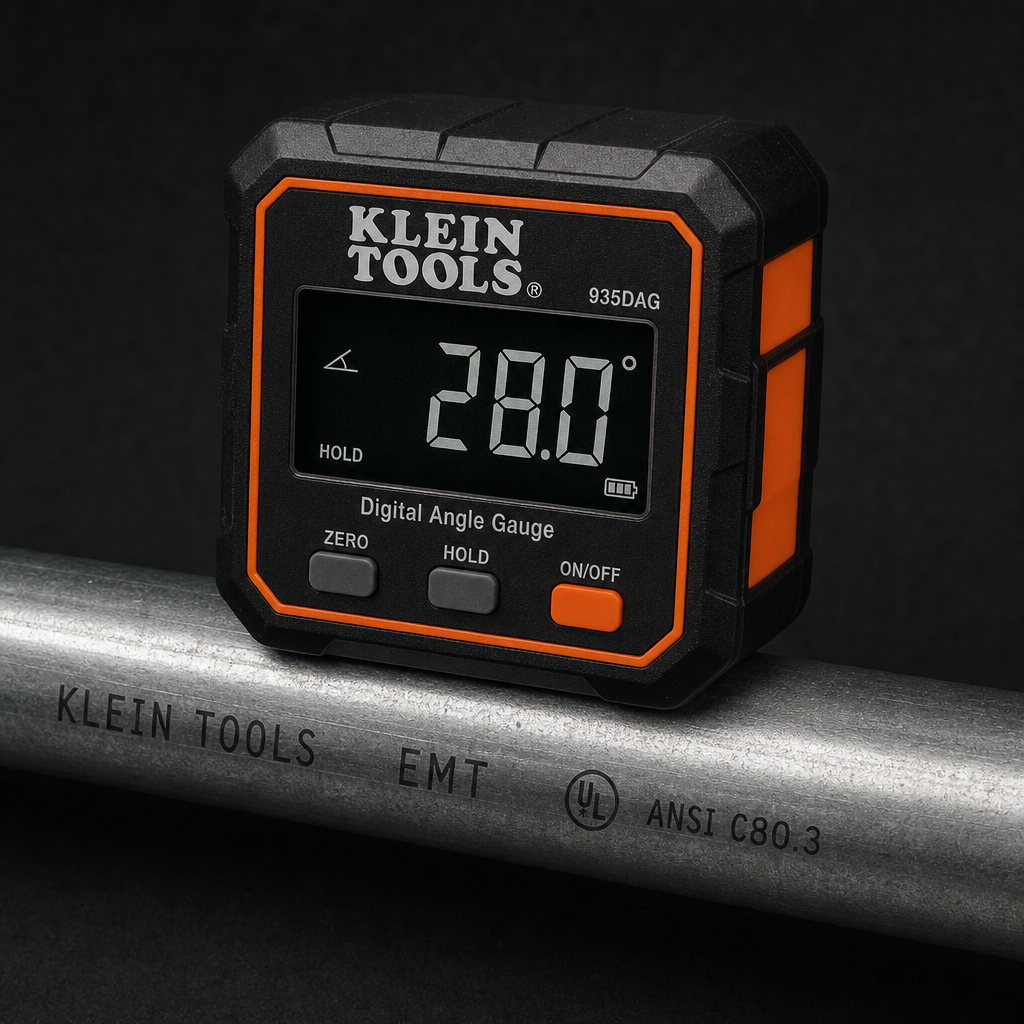
Klein Tools 935DGGP Digital Angle Gauge
- Crank degrees off the damper when a degree wheel is not fitted
- Intake closing angle is the input the dynamic ratio lives or dies on
- Magnetic base sticks to the balancer or the deck
As an Amazon Associate, TestTalkHQ earns from qualifying purchases. Prices and availability can change.
Deck clearance, measured and derived
Piston-to-deck clearance is how far the crown sits below the block deck at top dead centre. Positive is down the bore; negative means the piston stands proud of the deck, which is a real build and simply flips the sign of the deck volume.
Measure it with a dial indicator on a magnetic base, zeroed on the block deck and swept across the crown, with the crank rocked back and forth through top dead centre so you take the highest reading rather than the first one you see. That is the number.
But it is also derivable, and doing it both ways is how you catch a block that is not what you assumed. Jon Kaase Racing Engines describe checking the block deck height precisely because, as Motortopia puts it, “it is used to verify four vital measurements: half of the stroke dimension, rod length, compression height and the piston-to-deck dimension.” Those four stack:
Half the stroke is the crank throw, so that is the crank centreline to the top of the throw. Add the rod, add the compression height (wrist pin centre to crown), and you are at the piston crown at TDC. Whatever is left up to the deck surface is the clearance.
There is a reason most builders deliberately leave a few thousandths rather than going to a true zero deck. Motortopia again: “Most engine builders request the piston-to-deck dimension to be .005 inch or .010 inch down the bore. This small fudge factor gives them the ability to take a skim cut off the decks at a later date if needed.”
Quench comes free with the same two numbers
Quench — squish, piston-to-head clearance, the same thing under three names — is the gap between the flat of the crown and the head at top dead centre. Summit Racing’s technical article defines it with the two numbers you already have:
It belongs in a compression ratio guide rather than a separate one because the two are coupled, and people trade one against the other without noticing. Fit a thicker gasket to shed a bit of compression and you have opened the quench by exactly the same amount.
| Max RPM | Connecting rod type | Quench range |
|---|---|---|
| 6,000 or less | Steel | 0.035 – 0.045 in |
| 6,000 + | Steel | 0.038 – 0.043 in |
| Any | Aluminium | 0.050 – 0.065 in |
Reproduced from Summit Racing technical article SR‑04941, What is engine quench? Aluminium rods want the wider gap because they grow as they get hot.
A tight quench band squeezes mixture toward the plug as the piston arrives, which speeds the burn and buys real detonation margin — which is why two engines at the same compression ratio can behave completely differently on the same fuel. Summit’s own warning is the one to remember: “Don’t run more than 0.060 in. quench trying to lower Compression Ratio. This will slow the combustion process and could cause Detonation.” If you need to lose a point of compression, change the piston.
Which input actually moves the answer
Before you spend an evening arguing about a cubic centimetre, it is worth knowing the sensitivity. Run it on any ordinary V8 and the pattern holds:
- A thousandth of an inch of compressed gasket is worth a few hundredths of a compression point. Real, buyable, and the reason the step from a 0.039 in composition gasket to a 0.051 in one is a legitimate tuning lever.
- A cubic centimetre of chamber volume is worth about the same. Which means the precision of your burette reading is almost never the problem — whether you measured the right head is.
- Twenty thousandths of block deck height is worth most of a compression point, and it is the input most likely to be assumed rather than measured.
- A sign error on the piston volume is worth about two full points and is the only error on this list large enough to destroy an engine by itself.
The lesson is not to measure more precisely. It is to measure the right things at all. A chamber cc’d to half a cc on a head that turns out to have been milled is a precise answer to the wrong question.
A worked example you can check against print
HOT ROD publish a complete one, and it is worth running by hand once because it exercises every term including a negative piston volume.
Swept volume: (π÷4) × 4.030² × 3.000 = 38.27 cu in = 627.1 cc.
Deck volume: (π÷4) × 4.030² × 0.010 = 0.128 cu in = 2.09 cc.
Gasket volume: (π÷4) × 4.100² × 0.039 = 0.515 cu in = 8.44 cc.
Piston: a dome, so −7 cc.
Clearance volume: −7 + 2.09 + 8.44 + 60 = 63.53 cc.
Compression ratio: (627.1 + 63.53) ÷ 63.53 = 10.87:1, which HOT ROD print as 10.9:1.
Quench, as a bonus from the same numbers: 0.010 + 0.039 = 0.049 in, just outside the top of Summit’s 0.035–0.045 in steel-rod band.
Those are the calculator’s default inputs, deliberately, so that anyone landing on the tool can compare its output against a printed answer before trusting it with an engine.
What the calculation still cannot tell you
The ratio is geometry. Whether a given ratio is survivable is not, and nothing in this method touches it. There is no published relation from compression ratio to a required octane, because the answer depends on chamber shape, quench, cam timing, ignition advance, head material, intake air temperature, coolant temperature, altitude, mixture and knock strategy. Keeping the engine cool is part of that margin — see the coolant mix ratio guide for the concentration side of it.
And the ratio that matters to the burn is not quite this one. Compression does not begin at bottom dead centre; it begins when the intake valve seals, which on any performance cam is a long way after. That is the dynamic compression ratio, and it has its own article: static vs dynamic compression ratio.
EngineBasics puts the honest limit on all of it better than a disclaimer can: “Unless you have actually measured the engine (CCed the chambers and pistons in the bores), these calculations are estimations, at best. Treat them as such. The published volumes for heads and pistons can, and do, vary (crankshafts and rods, too). It is best to err on the low side.”