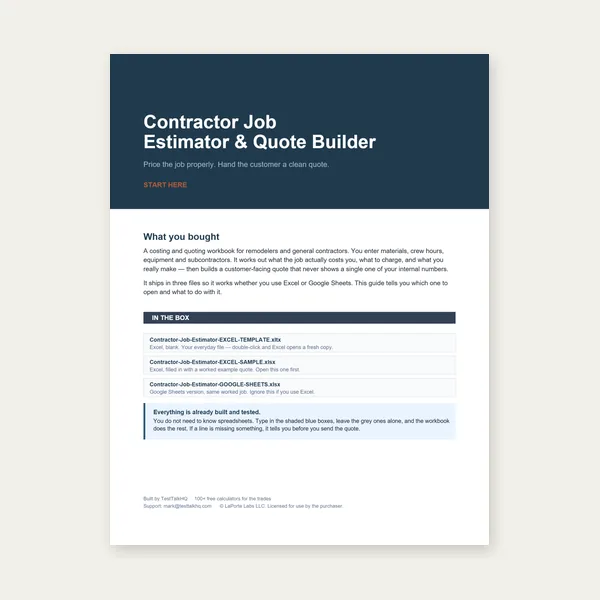
Contractor Job Estimator
Price remodels and GC work, then send a quote with no internal numbers.
Excel or Google Sheets. Best on a computer.
$29.00
BuyDemand vs meter mismatch, undersized service, wrong NEC 220 method, mixed-occupancy errors, and continuous-load misclassification
This is diagnosis — not a restatement of how to calculate commercial demand. For the Part III method walkthrough use the Commercial Load Calculation Guide. Run numbers in the Commercial Load Calculator. Unsure whether the building even belongs on the commercial path? Use Residential vs Commercial Load Calculation — Which Method Applies. Stay here when the calc already “passed” on paper and the utility, inspector, or tenant still disagrees.

Use this when calculated demand fights the utility bill or demand meter, the service comes back too small for a real building, optional vs standard methods were swapped, mixed occupancies were blended incorrectly, or continuous commercial equipment was treated like intermittent load.
| Symptom | What it usually means | First fix | Next tool |
|---|---|---|---|
| Calc demand ≪ utility / demand meter | Wrong occupancy demand factor, continuous 125% missed, or kitchen/HVAC loads omitted | Re-classify occupancy; add missed equipment; re-check continuous rules | Commercial Load Calculator |
| Service undersized after energize / TI | No expansion headroom, missed motors, wrong demand table for occupancy | Inventory nameplates; add future tenant VA; next standard service size | Calculation Guide |
| Result wildly different than expected | Wrong NEC 220 method for occupancy (dwelling optional vs Part III) | Confirm dwelling vs commercial path before re-running numbers | Which Method Applies |
| Mixed retail / office / kitchen fails review | One occupancy factor applied to the whole floor plate | Split areas by occupancy; sum demand VA | Calculator (per area) |
| Breakers trip on signage / HVAC / kitchen | Continuous loads not at 125% on feeder/OCPD after demand VA | Separate demand calc from continuous ampacity sizing | Feeder Guide |
What it looks like: Your Article 220 sheet says 180–220 A demand. The utility demand meter peaks at 280 A. Tenant bills show kW far above “calculated” after diversification. Plan review accepted the number; operations did not.
Why this is not “re-learn Part III”: The guide teaches lighting unit loads, receptacle VA, and kitchen demand tables. Here you hunt the three mistakes that survive a clean spreadsheet: wrong occupancy table, continuous load treated as diversified, and loads that never entered the sheet.
Likely causes:
What it looks like: Permit calc supported a 200 A or 400 A service. After fit-out, main trips on simultaneous kitchen + HVAC + lighting, or the next tenant improvement has no spare capacity. Utility or AHJ asks for a service upgrade within a year.
Likely causes:
Fixes: Build a nameplate inventory (even if estimated), separate shell vs TI loads, add known future loads as line items, then take the next standard commercial service size above calculated demand. Pair feeder/service ampacity with the feeder / service entrance guide — demand VA alone does not finish continuous-load conductor sizing.
Re-run with the real inventory Undersizing is usually missing loads, not a bad calculator. Thirty minutes of nameplates beats a service upgrade.
Open Commercial Load CalculatorWhat it looks like: Someone ran NEC 220.82 (dwelling optional method) on a storefront or live-work commercial bay and got a “nice” small service. Or they ran Part III commercial rules on a single-family dwelling and got a larger number than the residential calculator. Results disagree wildly with peer review.
The diagnostic rule: Dwelling optional method (220.82) is for qualifying dwelling units. Commercial / non-dwelling occupancy demand uses Article 220 Part III occupancy unit loads and equipment demand factors. Mixing them is a plan-review failure, not a rounding difference.
Common failure modes:
Fix: Stop and settle the method fork first. Use Residential vs Commercial — Which Method Applies, then re-run only the correct tool: residential or commercial.
What it looks like: One building contains retail frontage, second-floor offices, and a restaurant. The calc used one occupancy for the whole square footage. Reviewer asks for area-by-area breakdown; utility demand later proves the blended number was optimistic.
Likely mistakes:
Fixes: Split floor area by occupancy classification, run each block (the calculator is one occupancy per run — that is intentional), sum demand VA, then convert to amps at the correct system voltage. Document HVAC noncoincidence only when controls/interlocks support it.
What it looks like: Demand VA looks reasonable. Feeders or branch breakers still trip on storefront signage, kitchen hood heaters, HVAC compressors, or IT cooling that runs through the business day. Crew “upsized the service calc” again without fixing continuous ampacity.
Why demand ≠ continuous sizing: Article 220 demand factors answer how much diversification the code allows for service/feeder load calculation. Continuous-load rules (typically 125% on OCPD/ampacity unless 100%-rated equipment) answer how conductors and breakers carry loads that run three hours or more. You need both — in that order.
Commercial equipment that commonly gets misclassified:
Fix: Keep the demand calc for service sizing, then size feeders/branches with continuous rules. See the feeder guide and breaker sizing calculator after the building demand sheet is honest.
If the real question is whether a live-work, mixed-use, or small commercial space should use dwelling optional method vs commercial Part III, settle that first — then come back to diagnosis.
Price remodels and GC work, then send a quote with no internal numbers.
Excel or Google Sheets. Best on a computer.
$29.00
BuyCheckout opens in a new tab.
Five electrical picks from the TestTalkHQ affiliate catalog for service sizing, demand checks, and panel work after a commercial load calc.
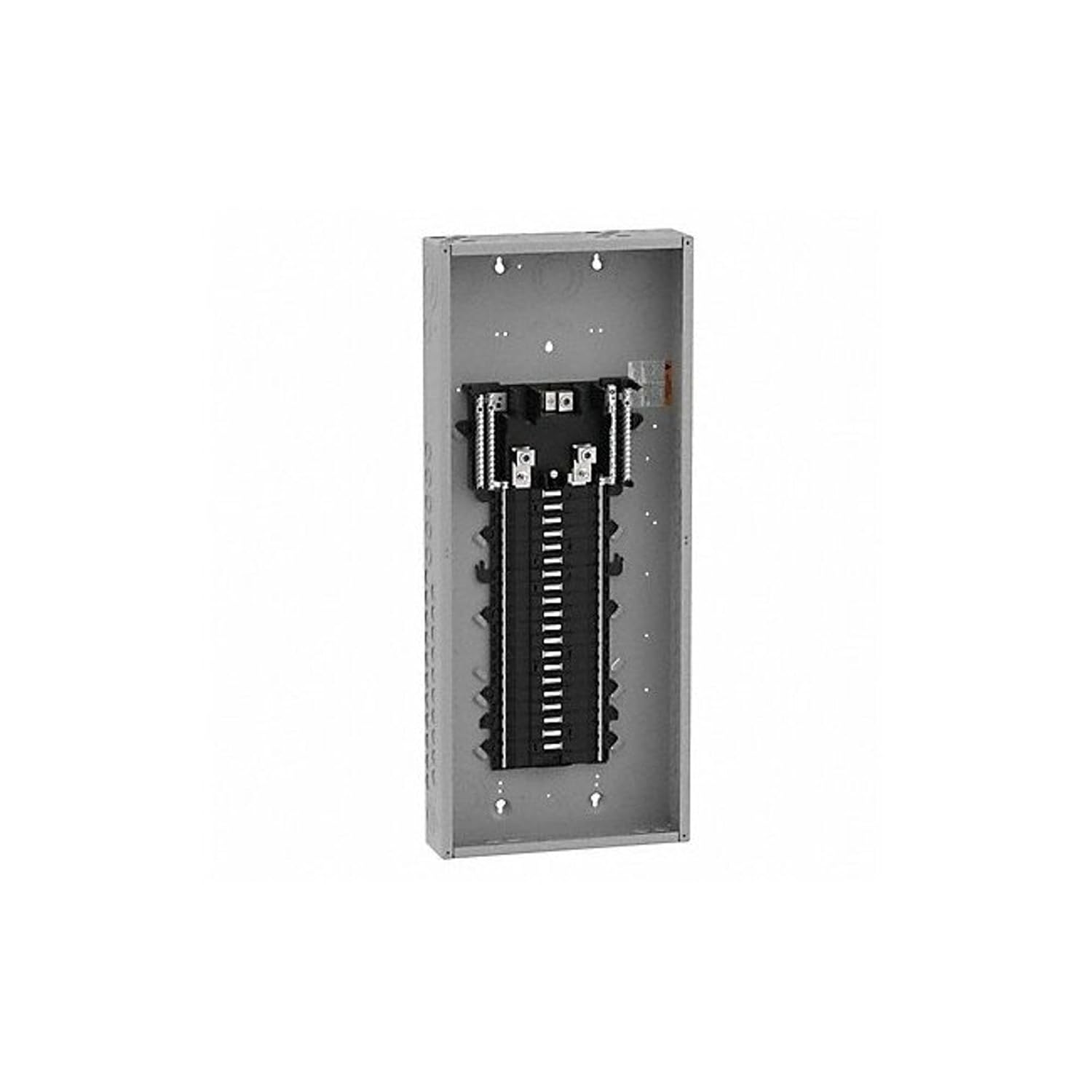


As an Amazon Associate, TestTalkHQ earns from qualifying purchases. All five cards are sourced from the TestTalkHQ affiliate CSV (panel, breakers, and meters). Catalog gap: no dedicated commercial demand meter / CT kit or 400A+ meter stack SKUs in the CSV — do not substitute unrelated HVAC-only tools for those roles.
Usually the inventory or occupancy classification is wrong, or continuous loads were never ampacity-sized after demand VA. Re-inventory HVAC, kitchen, motors, and signage; then re-run the commercial calculator.
Not if it is not a qualifying dwelling unit. Settle the method on which method applies before trusting either calculator.
No. Demand factors diversify calculated load. Continuous rules still govern OCPD and conductor ampacity for long-running equipment.
Split by occupancy area, calculate each, then sum. Do not invent a blended VA/ft² for the whole building.
No. The guide teaches how to calculate. This page diagnoses meter mismatches, undersized services, wrong methods, mixed-occupancy errors, and continuous-load misclassification.